Introduction
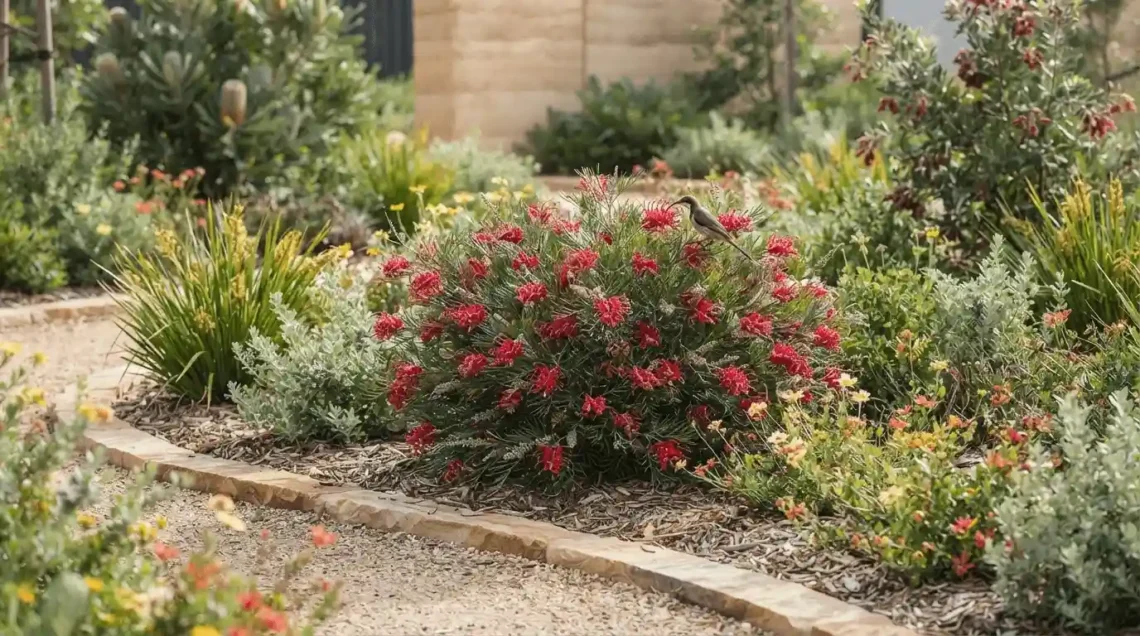
Grevillea Lady O is a compact Australian native shrub widely valued for its vibrant red flowers, resilience, and ability to attract birds and pollinators. In gardens where low maintenance and year-round visual interest are priorities, lady o grevillea has become a popular choice. Its dense growth habit and extended flowering period make it ideal for modern landscapes, small gardens, and native plant designs.
By Greenery Inside | Plant Care & Gardening Expert
The plant, often referred to as grevillea lady o, combines ornamental beauty with toughness, thriving in well-drained soils and sunny positions. In this guide, we explore everything from growth size and pruning techniques to common problems and landscaping uses.
Quick Summary
- Grevillea Lady O is a compact flowering Australian native shrub ideal for small gardens.
- It produces bright red flowers that attract birds and pollinators for most of the year.
- The plant prefers full sun, well-drained soil, and light regular pruning.
- It is drought-tolerant once established and low maintenance.
- Most issues occur due to poor drainage or overwatering.
What Is Grevillea Lady O?
Grevillea Lady O, commonly called lady o grevillea, is a hybrid Australian native plant from the Proteaceae family. It is bred for ornamental gardening and is known for its compact size, dense foliage, and striking red spider-like flowers.
Botanically, it belongs to the Grevillea genus, which includes many drought-tolerant shrubs and trees native to Australia. Unlike larger grevillea species, Lady O is specifically selected for controlled growth, making it suitable for residential gardens.
The plant, often shortened to lady o, is widely used in landscaping due to its reliability and long flowering season. Its bright blooms, sometimes referred to as grevillea red, provide strong visual contrast against its green foliage.
Unlike vigorous wild grevilleas, Grevillea Lady O maintains a tidy form without excessive spreading, making it ideal for structured planting designs.
Key Features of Grevillea Lady O
Flowers, foliage, and overall appearance
Grevillea Lady O produces vivid red spider-shaped flowers that appear in clusters along the stems. Flowering can occur throughout most of the year in warm climates, with peak blooms in spring and summer.
The foliage is fine-textured, deep green, and slightly soft to touch, forming a dense shrub that maintains shape naturally. The combination of foliage and flowers gives the plant a strong ornamental appeal.
Wildlife value is high, as nectar-rich blooms attract:
- Honeyeaters
- Native bees
- Butterflies
Why gardeners choose Lady O
Gardeners prefer Lady O for several practical and aesthetic reasons:
- Compact growth habit suitable for small spaces
- Low maintenance once established
- High drought tolerance
- Strong bird-attracting qualities
- Long flowering period compared to many ornamentals
- Excellent fit for native and coastal gardens
In our experience at Greenery Inside, Lady O performs best when planted in groups of three or used as a soft informal hedge, where its flowering density becomes visually impactful.
Feature Table
| Feature | Grevillea Lady O |
| Plant type | Evergreen shrub |
| Flower colour | Bright red |
| Mature size | Compact (small shrub) |
| Sun requirements | Full sun |
| Flowering season | Year-round in warm climates |
| Wildlife value | High (birds & pollinators) |
How Tall Does Grevillea Lady O Get?
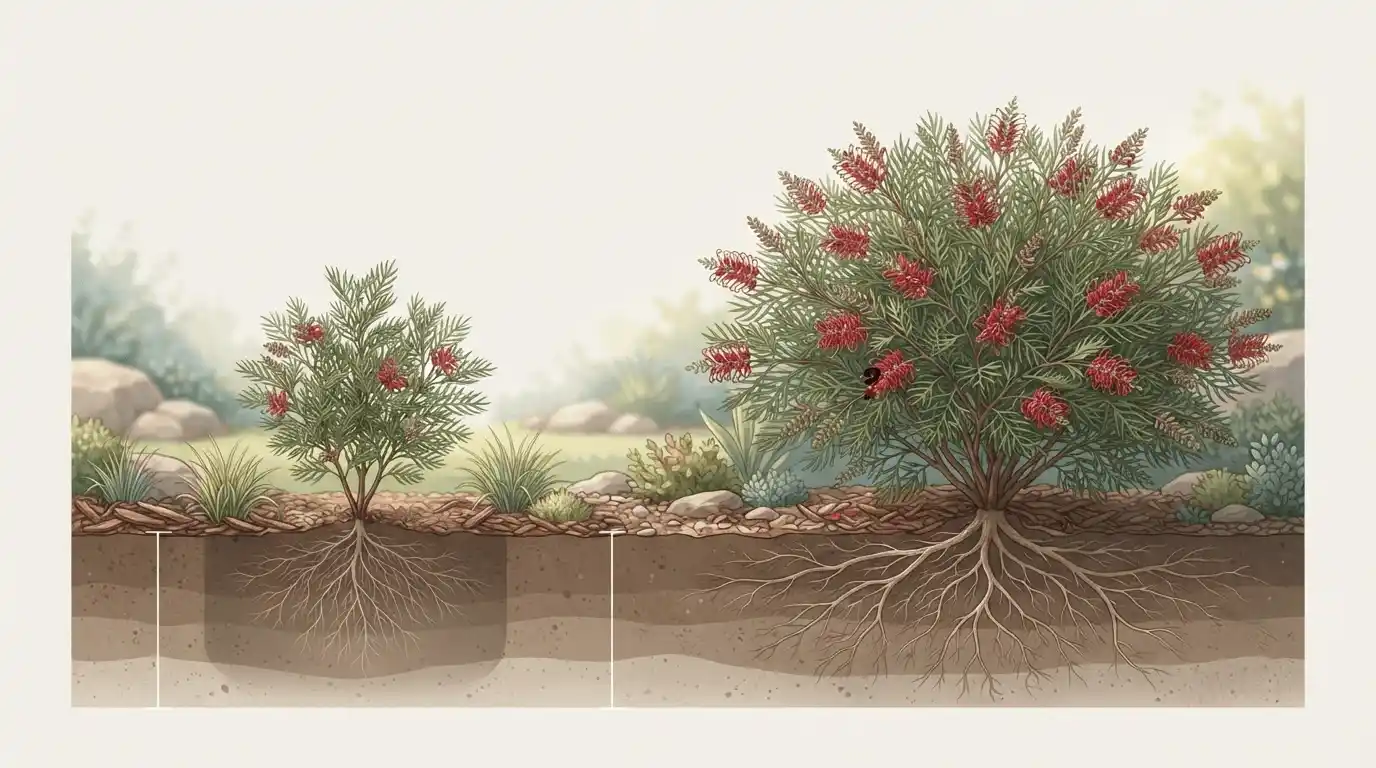
Grevillea Lady O is considered a compact grevillea, making it suitable for smaller landscapes and controlled garden designs. Its size is one of the main reasons it is widely used in residential planting.
Mature height and width
The typical grevillea lady o height reaches around 1 to 1.5 metres, with a similar spread. In ideal growing conditions, some plants may slightly exceed this, but they generally remain compact.
The grevillea lady o size makes it ideal for:
- Small garden beds
- Front yard planting
- Low hedges
- Container gardening
Unlike larger grevillea species, its growth habit stays dense rather than leggy, reducing the need for heavy shaping.
Factors that influence plant size
Several environmental and care factors affect final plant dimensions:
- Soil quality: Well-drained soils encourage stable growth
- Sunlight: Full sun promotes compact and flowering-rich growth
- Rainfall: Moderate water supports steady development
- Pruning: Regular trimming keeps size controlled
- Climate: Warmer climates often produce slightly larger plants
In shaded or poorly drained areas, growth may become weak and uneven.
Growth Rate of Grevillea Lady O
Grevillea Lady O has a moderate growth rate, meaning it is neither extremely fast nor slow to establish. Most plants take 1–2 growing seasons to fully settle into the landscape.
During the establishment phase, growth is focused on root development before visible top growth increases. Once established, the plant produces steady seasonal growth, especially during warmer months.
Growth is improved by:
- Full sun exposure
- Light native fertiliser
- Regular but not excessive watering
- Well-aerated soil
In our experience, plants that receive consistent sunlight develop noticeably denser foliage and more frequent flowering cycles.
Where Is the Best Place to Plant Grevillea Lady O?
Choosing the correct planting location is essential for long-term success with Grevillea Lady O.
Sunlight requirements
Lady O grows best in full sun, requiring at least 6 hours of direct sunlight daily. In partial shade, flowering is reduced, and growth may become sparse.
Soil preferences
The plant prefers:
- Well-drained sandy or loamy soils
- Slightly acidic to neutral pH
- Low phosphorus conditions
Heavy clay soils should be improved with organic matter or raised beds to prevent root issues.
Climate suitability
Grevillea Lady O performs well in:
- Warm temperate climates
- Coastal environments
- Mediterranean-style gardens
It has good heat tolerance but may struggle in humid, poorly ventilated environments.
Ideal landscape uses
This plant is highly versatile and is commonly used in:
- Native garden designs
- Pollinator-friendly landscapes
- Coastal gardens
- Informal hedges
- Feature planting in small yards
- Mixed shrub borders
Its structured growth makes it suitable for both modern minimalist gardens and naturalistic native planting schemes.
Grevillea Lady O Care Guide
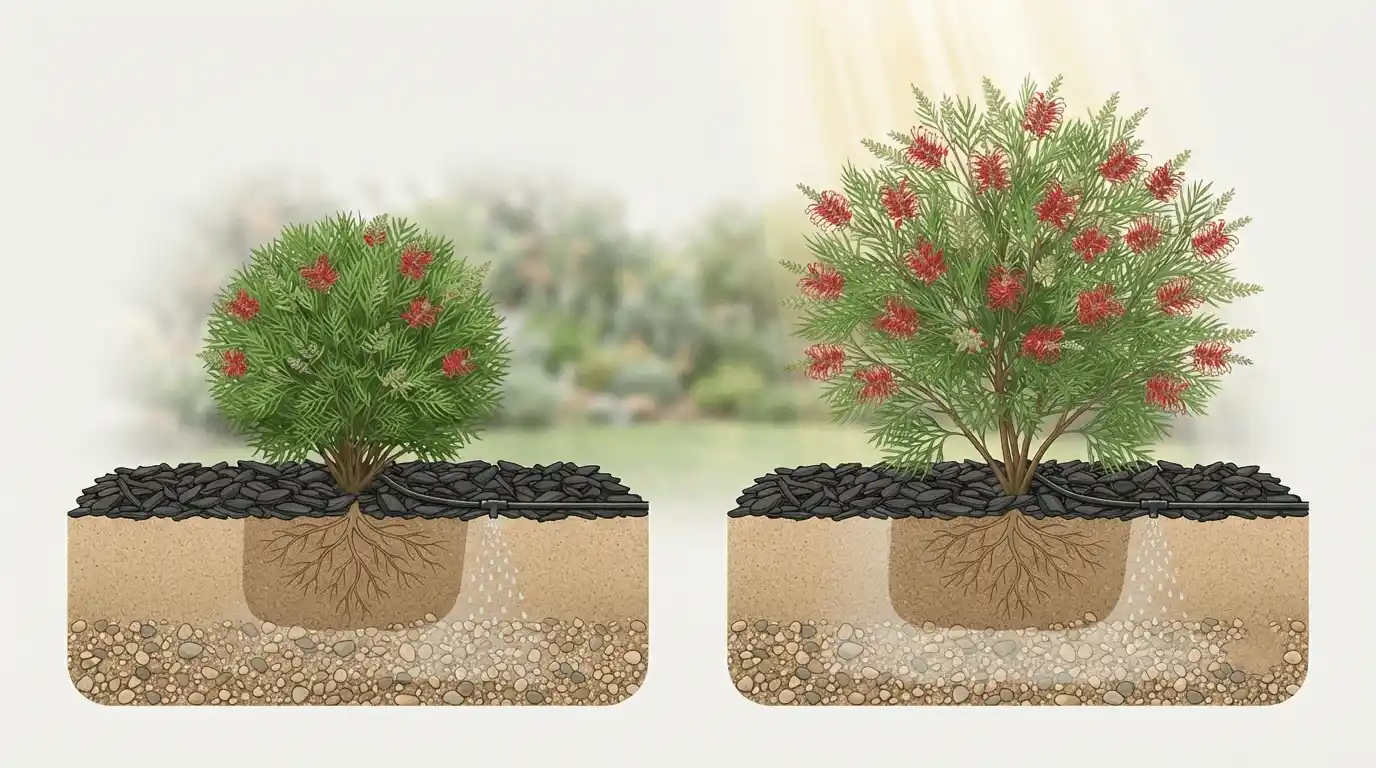
Grevillea Lady O care is generally simple, making it a reliable low-maintenance Australian native shrub once established. The key to healthy growth is balancing sunlight, drainage, and light feeding without over-fertilising.
Watering
Watering requirements differ between young and established plants. Newly planted Grevillea Lady O needs regular deep watering for the first 8–12 weeks to develop strong roots. After establishment, it becomes drought tolerant and only needs occasional watering during extended dry periods.
Overwatering is one of the most common issues and can quickly lead to root stress. In our experience at Greenery Inside, plants grown in well-drained soil often perform better with less frequent watering rather than consistent moisture.
Fertilising
Use a low-phosphorus native plant fertiliser once or twice a year, ideally in spring and late summer. Grevilleas are sensitive to high phosphorus levels, which can damage root systems.
Slow-release native blends support flowering without overstimulating foliage growth.
Mulching
Apply a light organic mulch layer around the base to:
- Retain soil moisture
- Suppress weeds
- Regulate soil temperature
Keep mulch slightly away from the stem to avoid rot.
Seasonal maintenance
Seasonal care includes:
- Removing spent flowers to encourage continuous blooming
- Light shaping after peak flowering
- Checking drainage during wet months
As of recent seasonal gardening updates (2026), gardeners are prioritising improved soil aeration due to increasing rainfall variability in many regions.
Climate and frost tolerance
Grevillea Lady O tolerates heat very well but has moderate frost sensitivity. Light frost may cause minor tip damage, while heavy frost can affect young plants.
Grevillea Lady O Pruning Guide
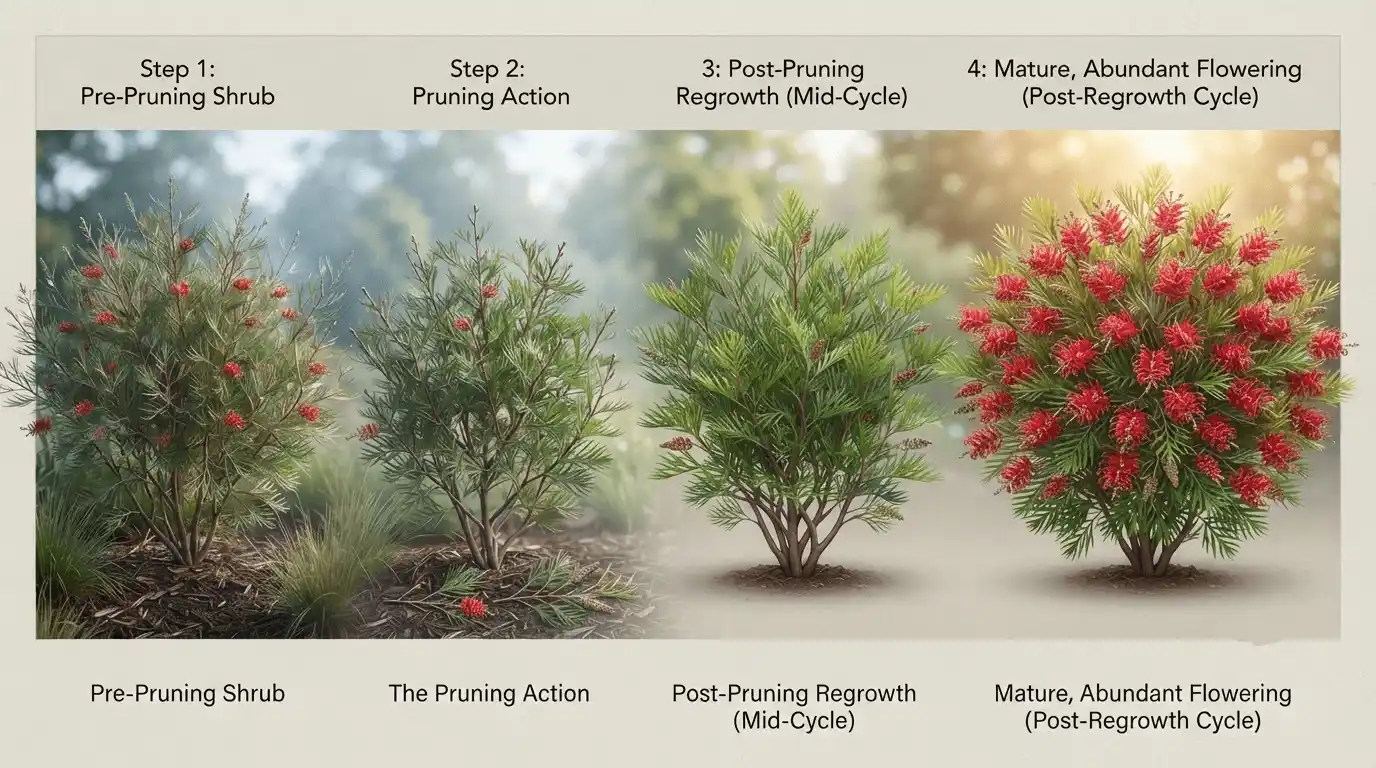
Pruning is essential for maintaining the compact shape and dense flowering habit of Grevillea Lady O.
Grevillea Lady O pruning should be done lightly but regularly to encourage branching and more flower production.
Best time to prune
The best time to prune is:
- Late spring after major flowering flush
- Or early autumn in mild climates
Avoid heavy pruning in winter or during active frost periods.
How much to remove
Only remove:
- Around 20–30% of the plant at a time
- Long or leggy stems
- Spent flowering tips
Light pruning encourages denser growth and prevents the plant from becoming woody.
Encouraging dense flowering
Regular tip pruning stimulates new shoots, which are where most flowers form. In our experience, lightly pruning after each flowering cycle can significantly increase bloom density.
Maintaining compact shape
To maintain the natural mound shape:
- Trim outer growth evenly
- Avoid cutting into old woody stems
- Shape gradually over multiple seasons
Mistakes to avoid
- Hard pruning into old wood (poor regrowth)
- Over-pruning during stress periods
- Ignoring drainage issues while pruning
Common Grevillea Lady O Problems and How to Fix Them
Grevillea Lady O problems are usually linked to environmental stress rather than pests or disease. Most issues are preventable with correct planting conditions.
Yellow leaves
Yellowing leaves are often caused by:
- Poor drainage
- Overwatering
- Nutrient imbalance
Solution: Improve soil drainage and reduce watering frequency. Use native-friendly fertiliser sparingly.
Poor flowering
If flowering is reduced, it may be due to:
- Insufficient sunlight
- Excess nitrogen fertiliser
- Lack of pruning
Solution: Move plant to full sun if possible and switch to low-phosphorus feeding.
Root rot from overwatering
Root rot occurs in waterlogged soils, especially clay-heavy areas.
Solution: Improve drainage, raise planting beds, and reduce watering. Severely affected plants may not recover.
Frost damage
Frost can cause leaf burn and tip dieback.
Solution: Protect young plants with frost cloth in colder months and avoid planting in exposed frost pockets.
Pests and diseases
Grevillea Lady O is generally resistant, but occasional issues include:
- Scale insects
- Caterpillars
- Leaf miners
Solution: Use gentle horticultural oil sprays or encourage natural predators like birds.
Is Grevillea Lady O a Tree or a Bush?
Grevillea Lady O is classified as a compact evergreen shrub, not a tree.
While the Grevillea genus includes both trees and shrubs, Lady O has been selectively bred for controlled, bushy growth. It typically maintains a rounded shrub form rather than developing a trunked structure.
In general:
- Trees (Grevillea species): Taller, single-trunked, often over 5 metres
- Shrubs (Lady O): Low-growing, multi-stemmed, compact
This makes Lady O ideal for hedging, borders, and small gardens where space is limited.
Grevillea Lady O Compared with Other Popular Grevilleas
Comparing Grevillea Lady O with other varieties helps highlight its suitability for compact landscapes.
Grevillea Lady O vs Grevillea Moonlight
grevillea moonlight / moonlight grevillea
- Lady O: Compact, red flowers, dense shrub
- Moonlight: Taller growth, cream-white flowers, more open habit
Lady O is better suited for small gardens, while Moonlight works well as a feature shrub.
Grevillea Lady O vs Grevillea Superb
grevillea superb
- Lady O: Smaller, controlled growth, red blooms
- Superb: Faster growth, larger spread, pink-red flowers
Superb requires more space, while Lady O is easier to maintain in tight layouts.
Which grevillea suits small gardens?
| Variety | Mature Height | Flower Colour | Best Use |
| Lady O | 1–1.5 m | Red | Small gardens, hedges |
| Moonlight | 2–4 m | Cream-white | Feature planting |
| Superb | 2–3 m | Pink-red | Mixed borders |
| Whiteana | 3–5 m | White-cream | Large landscapes |
For compact urban gardens, Grevillea Lady O is typically the most space-efficient option.
What Is the Most Attractive Grevillea?
The “most attractive grevillea” depends on design preference rather than a single absolute answer. Different varieties excel in different settings.
Factors influencing attractiveness include:
- Flower colour intensity
- Bloom duration
- Plant form and structure
- Wildlife attraction value
- Maintenance needs
Grevillea Lady O is often considered highly attractive for modern gardens due to its consistent red flowering and neat shape, while larger varieties like Grevillea Moonlight or Grevillea whiteana are preferred for bold landscape impact.
Landscaping Ideas Using Grevillea Lady O
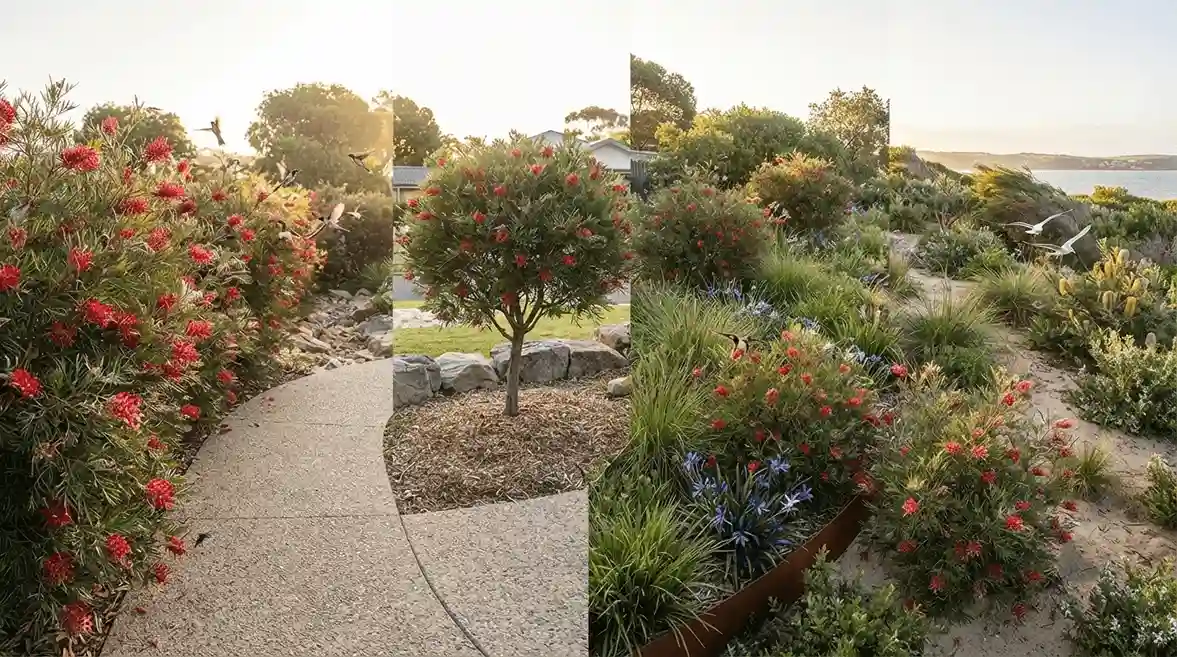
Grevillea Lady O is highly versatile in garden design:
- Native gardens: Combines well with kangaroo paws and grasses
- Bird-friendly gardens: Attracts nectar-feeding birds year-round
- Cottage gardens: Adds structure with soft flowering contrast
- Small front gardens: Works as a neat feature shrub
- Mixed borders: Blends with flowering perennials
- Informal hedges: Provides natural screening without rigidity
- Feature planting: Single specimen creates strong focal point
- Coastal landscapes: Tolerates salt exposure and wind
Its adaptability makes it a reliable choice for both structured and naturalistic designs.
Beginner Mistakes to Avoid
Common mistakes when growing Grevillea Lady O include:
- Planting in heavy clay without drainage improvement
- Overwatering young plants
- Using high-phosphorus fertilisers
- Growing in too much shade
- Hard pruning into old woody stems
- Poor spacing between plants, restricting airflow
Avoiding these issues significantly increases plant longevity and flowering performance.
Frequently Asked Questions
How tall do Lady O grevillea get?
Grevillea Lady O typically grows to 1–1.5 metres tall with a similar spread, making it a compact shrub ideal for small gardens.
Where is the best place to plant Grevillea Lady O?
The best location is full sun with well-drained soil. It performs well in native, coastal, and low-maintenance gardens.
How often should Grevillea Lady O be pruned?
Light pruning once or twice a year after flowering helps maintain shape and encourages more blooms.
Why is my Grevillea Lady O not flowering?
Common causes include too much shade, over-fertilising with nitrogen, or lack of pruning.
Is Grevillea Lady O suitable for hedging?
Yes, its compact and dense growth habit makes it suitable for informal low hedges.
Is Grevillea Lady O drought tolerant?
Yes, once established it is highly drought tolerant, though young plants need regular watering.
Conclusion
Grevillea Lady O is a reliable, compact Australian native shrub valued for its bright red flowers, manageable size, and low-maintenance nature. Its adaptability to full sun, drought conditions, and varied garden styles makes it an excellent choice for modern landscapes.
With proper planting, well-drained soil, and light regular pruning, Grevillea Lady O maintains dense growth and long-lasting blooms throughout much of the year. For gardeners seeking a resilient, wildlife-friendly shrub, it remains one of the most practical grevillea selections available.