Introduction
Philodendron billietiae growth rate is generally considered moderate to fast when the plant receives bright indirect light, warm temperatures, consistent moisture, and high humidity. Native to the tropical rainforests of South America, Philodendron billietiae is a climbing aroid admired for its long, narrow leaves and striking orange petioles. While it is not the fastest-growing philodendron, proper care allows it to produce steady new foliage throughout the active growing season. This guide explains its growth rate, mature size, environmental requirements, practical care tips, and common growth problems so you can help your plant develop healthy leaves and vigorous climbing growth.
If you’re building a collection of tropical houseplants, our comprehensive Guide to House Plants is an excellent resource for choosing species, understanding indoor growing conditions, and developing effective long-term care routines.
Quick Summary
- Philodendron billietiae has a moderate-to-fast growth rate when grown in warm, humid conditions with bright indirect light.
- Most healthy plants produce several new leaves during spring and summer, while growth slows significantly during winter.
- Light, humidity, temperature, nutrition, and climbing support are the biggest factors influencing growth speed.
- Providing a moss pole, chunky aroid soil, and consistent watering encourages stronger roots, larger leaves, and healthier overall development.
What Is Philodendron Billietiae?
Philodendron billietiae is a tropical climbing plant belonging to the Araceae family, commonly known as the aroid family. It has become one of the most recognizable collector philodendrons because of its dramatic foliage and bright orange leaf stalks (petioles).
Philodendron billietiae belongs to the Philodendron genus in the Araceae family, a diverse group of tropical climbing plants known for their ornamental foliage. Readers interested in the genus can explore the botanical overview on Wikipedia’s Philodendron page.
Unlike compact philodendrons, billietiae naturally develops long, narrow, elongated leaves that become increasingly impressive as the plant matures. Given proper climbing support, individual leaves can grow significantly larger over time.
Key identifying characteristics include:
- Botanical name: Philodendron billietiae
- Family: Araceae
- Growth habit: Evergreen climbing aroid
- Distinctive orange petioles
- Long, narrow, glossy green leaves
- Aerial roots that attach to climbing surfaces
In our experience growing Philodendron billietiae, plants that are allowed to climb instead of trail usually develop noticeably larger leaves and stronger stems within a single growing season.
Philodendron Billietiae in the Wild
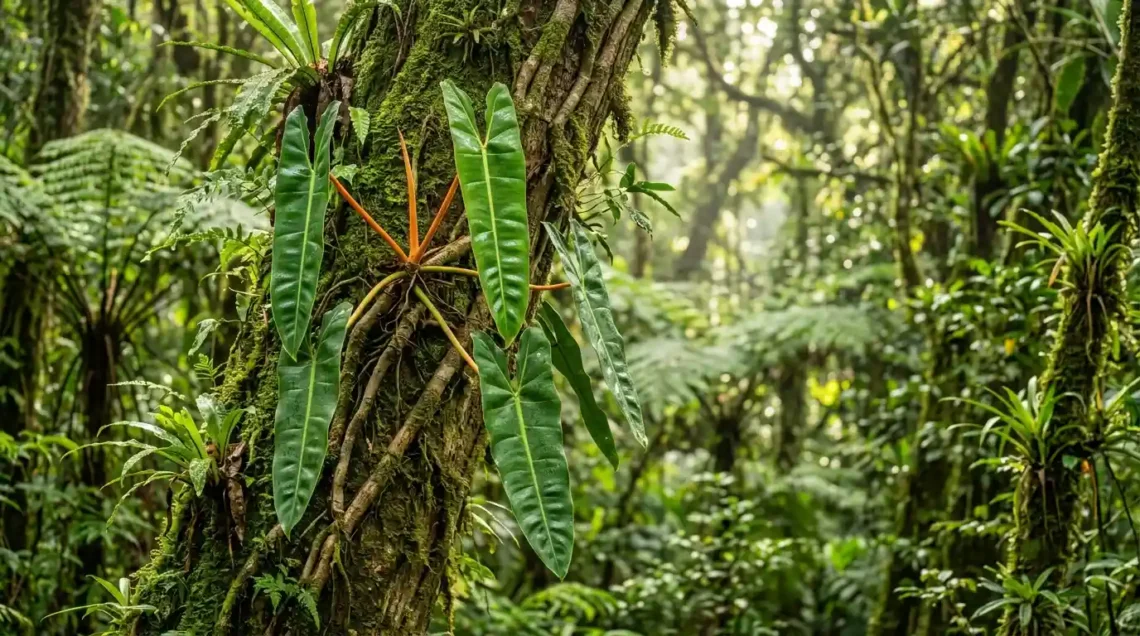
In its natural habitat, Philodendron billietiae grows in the humid tropical rainforests of countries including French Guiana, Brazil, Guyana, and Suriname. Rather than growing in direct sunlight, it begins life on the rainforest floor before climbing nearby trees in search of brighter filtered light.
Wild growing conditions include:
- Warm temperatures year-round
- High humidity, often above 70%
- Frequent rainfall
- Excellent air circulation
- Rich organic forest soil
- Bright filtered sunlight beneath the forest canopy
As the plant climbs higher, it receives more indirect light while remaining protected from harsh midday sun. This climbing behavior explains why mature wild specimens often display much larger leaves than indoor plants.
Compared to home cultivation, indoor environments usually provide:
| Growing Factor | Natural Habitat | Typical Indoor Conditions |
| Light | Bright filtered canopy light | Bright indirect light |
| Humidity | 70–90% | 40–60% |
| Temperature | 72–90°F (22–32°C) | 65–80°F (18–27°C) |
| Climbing Support | Large rainforest trees | Moss poles or trellises |
Greenery Inside recommends recreating these rainforest conditions as closely as possible to encourage healthier growth and larger foliage.
Philodendron Billietiae Growth Rate Explained
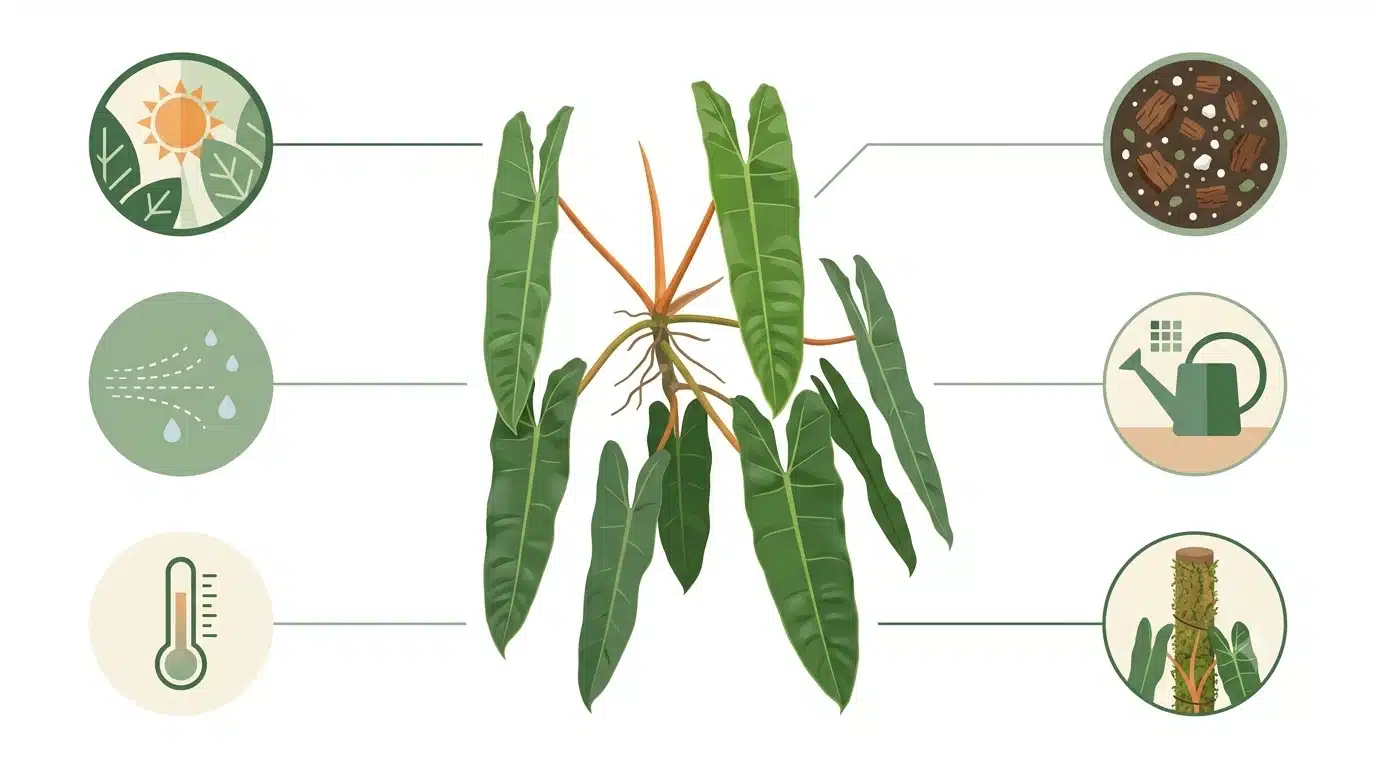
Philodendron billietiae has a moderate-to-fast growth rate under optimal growing conditions. During the active growing season, healthy plants produce new leaves regularly, while growth slows considerably during cooler months.
Most growth occurs from spring through early fall, when warmer temperatures and longer daylight hours stimulate photosynthesis and root activity. Winter is generally a period of slower growth or semi-dormancy, particularly for indoor plants grown in cooler climates.
A healthy, established plant typically shows:
- Continuous root development during warm months
- New leaves every few weeks under ideal conditions
- Gradually increasing leaf size as the plant matures
- Faster vertical growth once climbing support is available
Growth speed depends more on environmental conditions than age. Even young plants can grow vigorously when all care requirements are consistently met.
As of the current growing recommendations for 2026, many experienced indoor growers have shifted toward maximizing humidity, airflow, and vertical support rather than relying heavily on fertilizer alone. This approach generally produces healthier foliage with fewer nutrient-related issues.
Are Philodendron Billietiae Fast Growing?
Yes—but only under suitable growing conditions.
Compared to many common houseplants, Philodendron billietiae grows relatively quickly. However, when compared with vigorous climbers like Philodendron hederaceum, it grows at a more measured pace because it invests significant energy into producing large, durable leaves.
Generally speaking:
- Faster than many slow-growing tropical aroids
- Moderate compared to vigorous vining philodendrons
- Slower than highly aggressive climbing species
The plant’s growth often accelerates once it establishes a healthy root system and begins climbing vertically.
In our experience, many growers mistake slow establishment for poor growth. Newly purchased plants frequently spend several weeks expanding their root system before producing noticeable new leaves.
Growth Rate Indoors vs. Outdoors
Growing conditions have a significant influence on overall growth speed.
Indoor plants typically grow more slowly because humidity, light intensity, and seasonal changes are less favorable than those found outdoors or in controlled greenhouses.
Outdoor cultivation is only suitable in consistently warm tropical or subtropical climates.
| Growing Environment | Expected Growth |
| Indoor home | Moderate |
| Indoor greenhouse | Moderate to fast |
| Tropical outdoor garden | Fast |
| Controlled greenhouse | Fastest |
Indoor plants often produce fewer leaves each year than greenhouse-grown specimens, but proper care can substantially reduce this difference.
Factors That Affect Growth Speed
Several environmental factors determine how quickly Philodendron billietiae grows.
The most important include:
- Bright indirect light that supports efficient photosynthesis without scorching leaves.
- Humidity above 60%, which improves leaf expansion and aerial root development.
- Warm temperatures between 70–85°F (21–29°C).
- Balanced fertilization during spring and summer.
- Appropriate pot size that allows root growth without excessive unused soil.
- A moss pole or climbing support that encourages natural vertical development.
- Proper watering practices that maintain evenly moist—but never waterlogged—soil.
- Chunky, well-draining aroid soil that supplies oxygen to the roots.
Growth Conditions Comparison
| Factor | Low Conditions | Optimal Conditions |
| Light | Low indoor light | Bright indirect light |
| Humidity | Below 40% | 60–80% |
| Temperature | Below 65°F (18°C) | 70–85°F (21–29°C) |
| Feeding | Rare or none | Monthly during growing season |
| Climbing Support | None | Moss pole or tree fern pole |
How to Make Billietiae Grow Faster
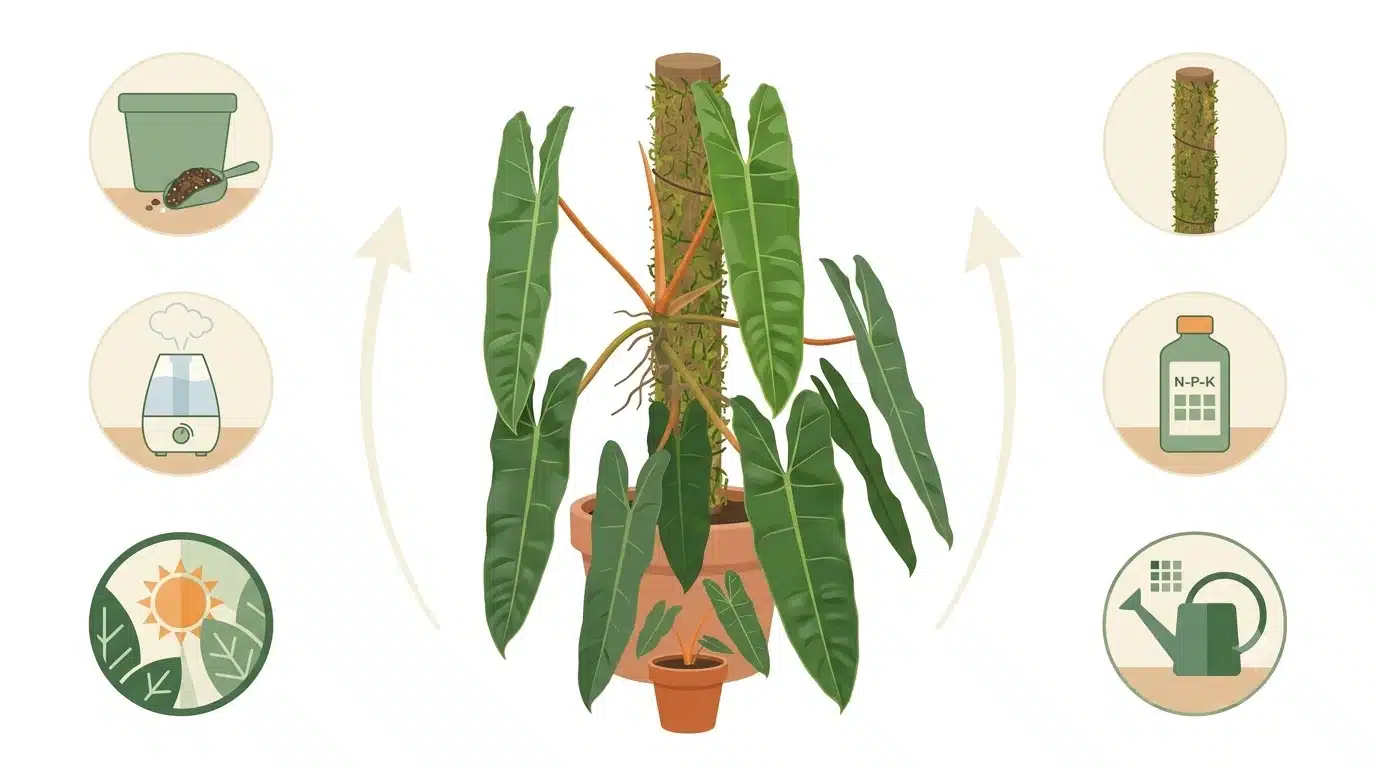
Helping Philodendron billietiae grow faster involves improving its environment rather than forcing rapid growth. Healthy, steady development always produces stronger plants than excessive fertilization or overwatering.
To encourage faster growth:
- Place the plant in bright indirect sunlight.
- Maintain humidity between 60% and 80%.
- Keep temperatures consistently warm.
- Use a chunky aroid potting mix with excellent drainage.
- Feed monthly during spring and summer using a balanced houseplant fertilizer at the recommended strength.
- Repot when roots begin circling the pot or emerging from drainage holes.
- Install a moss pole to encourage climbing and larger leaves.
- Rotate the plant occasionally for even growth.
- Keep leaves clean to maximize photosynthesis.
Greenery Inside recommends checking root health before increasing fertilizer. Healthy roots absorb nutrients efficiently, while stressed roots rarely benefit from additional feeding.
Do Philodendron Billietiae Need a Moss Pole?
Yes. Philodendron billietiae naturally prefers to climb, and providing a moss pole closely mimics its growth habit in tropical forests.
Although the plant can survive without one, climbing support offers several advantages:
- Produces noticeably larger mature leaves
- Encourages stronger aerial root development
- Supports thicker stems
- Promotes healthier vertical growth
- Creates a more natural appearance
Trailing plants often produce smaller foliage because they cannot anchor their aerial roots as they would in nature.
A moss pole that remains slightly moist allows aerial roots to attach securely, improving both stability and nutrient uptake over time.
Philodendron Billietiae Mature Size
Philodendron billietiae can become an impressively large climbing houseplant when given adequate light, humidity, and vertical support. While young plants remain compact for the first few years, mature specimens develop significantly longer leaves and thicker stems as they climb.
The plant’s final size depends on factors such as growing conditions, available support, root health, and whether it is grown indoors or outdoors. Plants grown in ideal tropical environments typically reach a much larger size than those kept indoors.
Typical Mature Size Indoors vs. Outdoors
| Growing Location | Mature Height | Mature Width | Leaf Length |
| Indoor Houseplant | 4–8 feet (1.2–2.4 m) with support | 2–4 feet | 18–30 inches |
| Greenhouse | 6–10 feet (1.8–3 m) | 3–5 feet | 24–36 inches |
| Tropical Outdoors | 10–20+ feet (3–6+ m) climbing trees | Variable | Up to 3 feet or more |
Because this species is a climber rather than a self-supporting shrub, its height largely depends on the available climbing structure.
How Long Do Billietiae Leaves Get?
One of the main reasons collectors admire Philodendron billietiae is its elongated foliage.
Typical leaf sizes include:
- Juvenile leaves: 6–12 inches (15–30 cm)
- Developing plants: 12–20 inches (30–50 cm)
- Mature indoor plants: 18–30 inches (45–75 cm)
- Mature greenhouse or tropical plants: 30–36+ inches (75–90+ cm)
The leaves also become wider, thicker, and darker green as the plant matures.
Environmental Factors That Influence Mature Size
Several conditions determine whether a plant reaches its full potential.
The most influential factors include:
- Bright indirect light throughout the year
- High humidity that supports healthy leaf expansion
- Consistent warmth during the growing season
- A sturdy moss pole or climbing support
- Proper watering and fertilization
- Regular repotting when rootbound
- Good airflow around the foliage
In our experience growing Philodendron billietiae, the biggest improvement in leaf size often occurs after the plant begins climbing a moss pole. Even plants that previously produced medium-sized leaves may begin developing noticeably larger foliage within one or two growing seasons.
Philodendron Billietiae Care Guide
Healthy growth depends on consistently meeting the plant’s environmental needs rather than making occasional adjustments. Philodendron billietiae thrives when its care closely resembles the warm, humid conditions of its native rainforest habitat.
While every philodendron species has unique characteristics, understanding general philodendron care principles can also help you grow healthier tropical plants. You may also enjoy our Dwarf Xanadu Care Guide: Indoor & Outdoor Philodendron Tips for another popular member of the genus.
Light Requirements
Philodendron billietiae prefers bright, indirect light. This provides enough energy for vigorous growth without exposing the leaves to damaging direct sunlight.
Ideal lighting includes:
- Bright east-facing windows
- Filtered south-facing light
- Bright rooms with sheer curtains
- Quality full-spectrum grow lights indoors
Avoid:
- Deep shade
- Prolonged direct afternoon sun
- Sudden exposure to intense sunlight
Too little light usually results in:
- Smaller leaves
- Longer spaces between leaves (leggy growth)
- Slower development
- Less vibrant foliage
Too much direct sun may cause:
- Brown patches
- Bleached leaves
- Crispy leaf edges
If you’re interested in growing other collector philodendrons with similar tropical care requirements, our Philodendron Gloriosum Care Guide for Healthy Growth provides additional tips on lighting, humidity, and long-term maintenance.
Watering Needs
Many people ask, “How often should I water billietiae?”
The answer depends on temperature, humidity, pot size, and season rather than following a fixed schedule.
Although watering frequency varies between species, many of the same moisture-management principles apply. Our guide on How Often to Water Heartleaf Philodendron explains how to judge soil moisture instead of relying on a fixed watering schedule.
Instead of watering on specific days:
- Check the top 1–2 inches of soil.
- Water thoroughly when this layer becomes slightly dry.
- Allow excess water to drain completely.
- Never leave the pot sitting in standing water.
Typical watering frequency:
| Season | General Watering Frequency |
| Spring | Every 7–10 days |
| Summer | Every 5–8 days |
| Autumn | Every 8–12 days |
| Winter | Every 10–18 days |
These are general guidelines. Always check soil moisture before watering.
Greenery Inside recommends using your finger or a moisture meter rather than watering by calendar alone. Environmental conditions inside each home vary considerably.
Best Soil for Billietiae
A chunky, well-draining aroid mix is the best growing medium for Philodendron billietiae because it provides both moisture retention and airflow around the roots.
An ideal mix contains:
- Orchid bark
- Perlite or pumice
- Coco coir or peat moss
- High-quality potting soil
- Horticultural charcoal (optional)
- Worm castings or compost (optional)
This combination helps:
- Prevent root rot
- Improve oxygen availability
- Support healthy microbial activity
- Encourage vigorous root growth
Avoid dense garden soil or compacted potting mixes that retain excessive moisture.
Pot Size and Type
Many growers wonder whether philodendrons prefer wide or deep pots.
For Philodendron billietiae, choose a pot that is only slightly larger than the existing root ball.
The best options include:
- Plastic nursery pots for easier moisture management
- Terracotta pots if overwatering is a concern
- Pots with multiple drainage holes
- Containers deep enough to support climbing growth
Avoid dramatically oversized pots because excess soil retains water longer and increases the risk of root rot.
When repotting, increase the container size by approximately 1–2 inches in diameter.
Fertilization and Pruning
Regular feeding supports healthy foliage production during active growth.
A balanced liquid fertilizer applied every four to six weeks during spring and summer is usually sufficient.
General feeding schedule:
- Spring: Begin monthly fertilization.
- Summer: Continue regular feeding.
- Early autumn: Reduce feeding gradually.
- Winter: Pause or fertilize very lightly if growth slows.
Pruning should focus on:
- Removing yellow leaves
- Trimming damaged foliage
- Cutting unhealthy stems
- Encouraging better airflow
Avoid heavy pruning unless necessary, as healthy leaves contribute significantly to photosynthesis.
Climate Tolerance
Because Philodendron billietiae originates from tropical forests, it performs best under warm and humid conditions.
Ideal climate:
| Environmental Factor | Recommended Range |
| Temperature | 70–85°F (21–29°C) |
| Minimum Temperature | About 60°F (16°C) |
| Humidity | 60–80% |
| Airflow | Moderate |
Avoid:
- Frost
- Cold drafts
- Heating vents
- Air conditioners blowing directly on the plant
- Sudden temperature fluctuations
As of 2026, many indoor growers have found that combining moderate humidity with good air circulation helps reduce fungal problems while maintaining healthy growth.
Are Philodendron Billietiae Hard to Care For?
Compared with many rare aroids, Philodendron billietiae is considered moderately easy to care for. It is more demanding than beginner-friendly heartleaf philodendrons but considerably less challenging than some highly specialized tropical species.
| Feature | Philodendron Billietiae | Beginner Philodendrons |
| Growth Rate | Moderate to fast | Moderate to fast |
| Humidity Needs | Medium to high | Moderate |
| Light Needs | Bright indirect | Moderate indirect |
| Watering | Consistent moisture | Slightly more forgiving |
| Overall Difficulty | Moderate | Easy |
With stable environmental conditions and a proper climbing support, most growers find Philodendron billietiae to be a rewarding and manageable houseplant.
Philodendron Billietiae Propagation
Philodendron billietiae propagation is most successful through stem cuttings that include at least one healthy node. The node contains the tissue required to produce both roots and new shoots.
The best time to propagate is during spring or early summer when the plant is actively growing.
Step-by-Step Propagation
- Select a healthy stem with one or more nodes.
- Use sterilized pruning shears.
- Make a clean cut below a node.
- Remove the lowest leaf if necessary.
- Place the cutting in water or moist sphagnum moss.
- Keep it warm with bright indirect light.
- Wait until strong roots develop before potting.
Water vs. Soil Propagation
| Method | Advantages | Disadvantages |
| Water Propagation | Easy to monitor root growth | Roots must adapt after transplanting |
| Soil Propagation | Less transplant shock | Root development cannot be observed |
Both methods are widely used and produce good results when proper warmth and humidity are maintained.
How Long Does Rooting Take?
Most healthy cuttings begin producing roots within:
- 2–4 weeks under ideal conditions
- Slightly longer in cooler environments
Rooting speed depends on:
- Temperature
- Humidity
- Light
- Overall health of the cutting
Avoid propagating stressed or unhealthy plants, as success rates are significantly lower.
Variegated Philodendron Billietiae
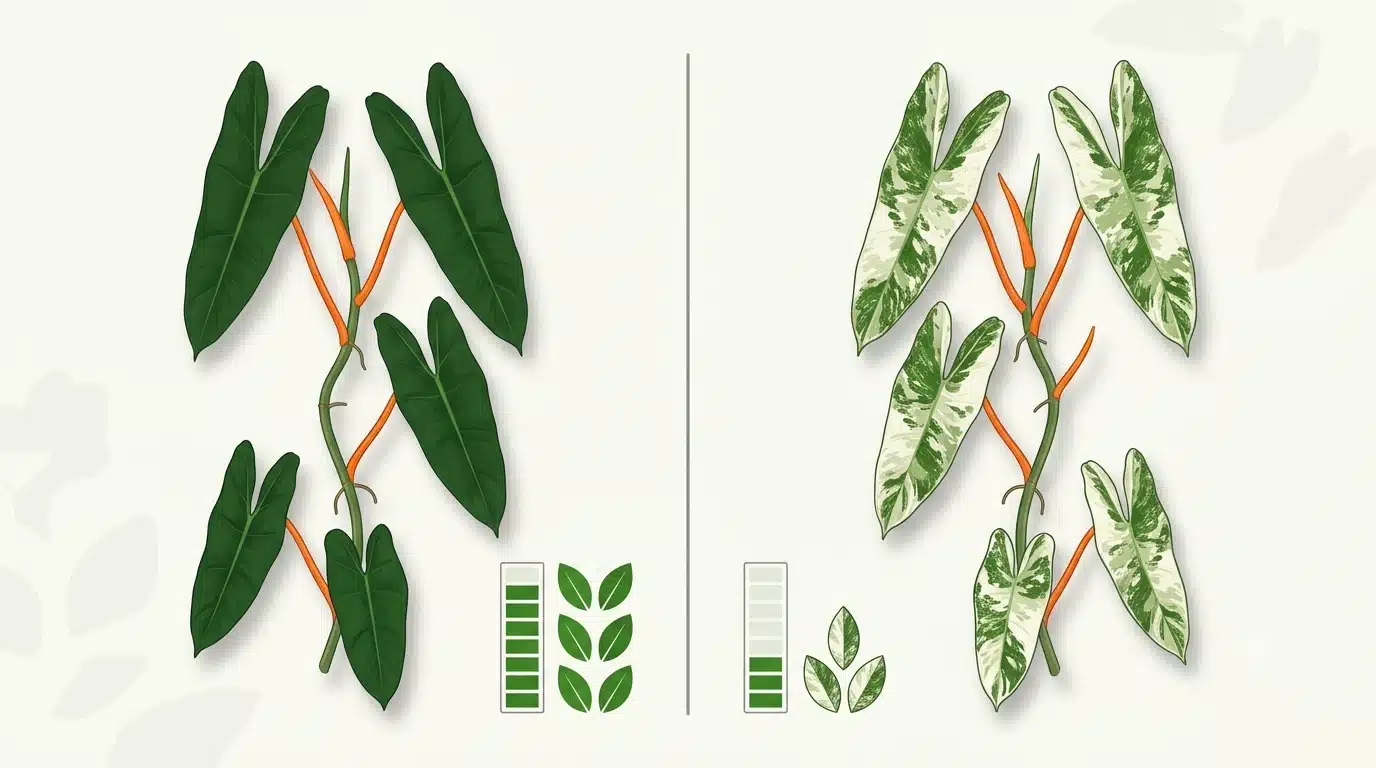
Variegated Philodendron billietiae is a naturally occurring or cultivated form of the species that displays cream, yellow, white, or light green patterns across its leaves. These striking color variations make it one of the most desirable collector philodendrons.
Because each leaf develops unique patterns, no two variegated plants appear exactly alike.
Common names include:
- Variegated billietiae
- Variegated Philodendron billietiae
- Billie philodendron
- Billie plant
Like the standard form, variegated plants retain the characteristic orange petioles and climbing growth habit.
What Makes Variegated Billietiae Rare?
Variegation occurs because certain leaf tissues contain reduced amounts of chlorophyll, the pigment responsible for photosynthesis.
This unusual genetic characteristic makes naturally stable variegation relatively uncommon.
Reasons collectors value variegated plants include:
- Unique leaf patterns
- Limited availability
- Slower propagation rates
- High ornamental appeal
Although enthusiasts often discuss “holy grail” philodendrons, the title is subjective and usually refers to exceptionally rare or highly sought-after varieties rather than a single species.
Growth Rate Differences in Variegated Plants
Variegated Philodendron billietiae generally grows more slowly than the standard green form.
The primary reason is reduced chlorophyll.
Since white or cream-colored portions of the leaf cannot photosynthesize efficiently, the plant produces less energy overall.
Typical differences include:
- Slower leaf production
- Smaller annual growth
- Greater sensitivity to lighting
- Higher importance of proper care
Providing bright indirect light becomes even more important because the plant must maximize photosynthesis through its green leaf tissue.
Standard vs. Variegated Billietiae
| Feature | Standard Billietiae | Variegated Billietiae |
| Growth Rate | Moderate to fast | Moderate to slow |
| Leaf Color | Solid green | Green with white, cream, or yellow variegation |
| Chlorophyll | Full | Reduced |
| Care Difficulty | Moderate | Moderately high |
| Light Requirements | Bright indirect | Bright indirect with consistent lighting |
| Rarity | Uncommon | Rare |
Common Problems With Philodendron Billietiae
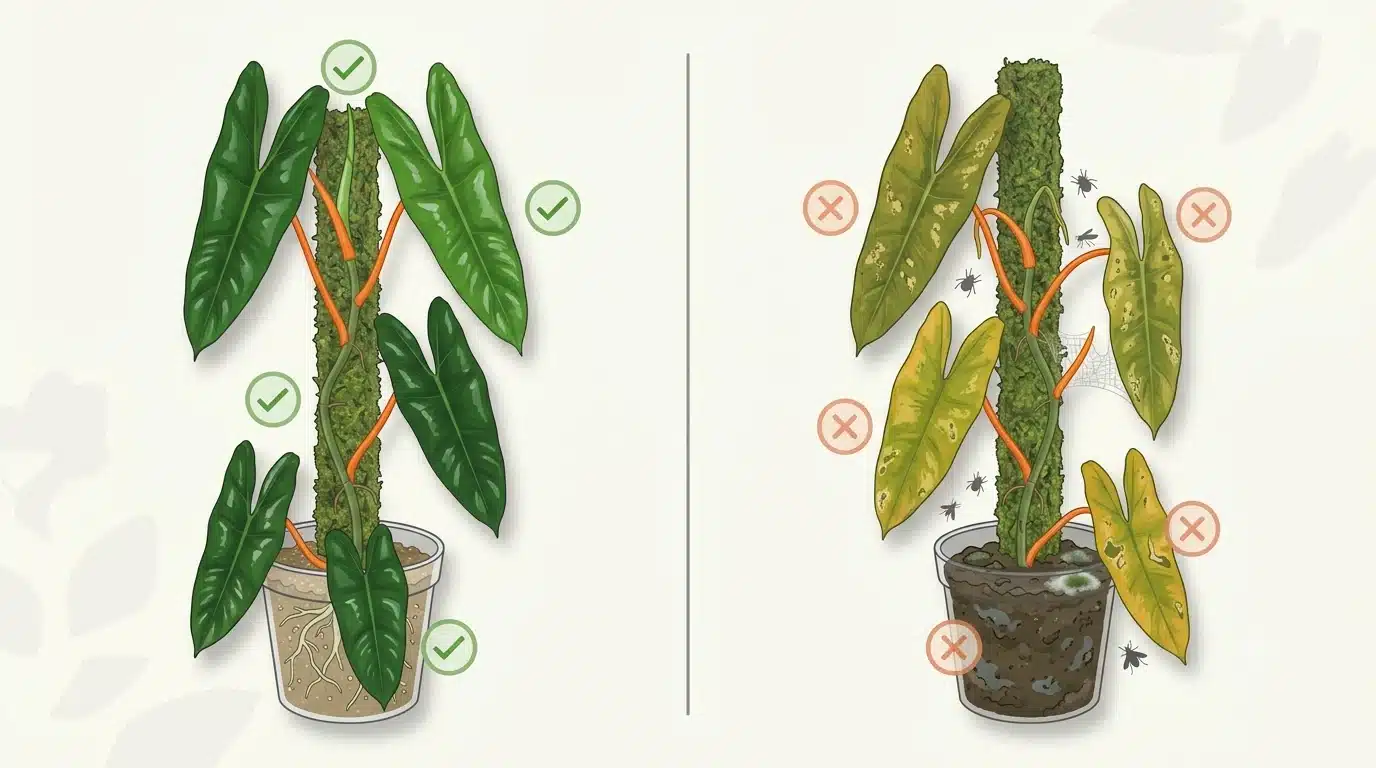
Even with proper care, Philodendron billietiae can occasionally develop growth or health issues. Most problems are linked to watering, lighting, humidity, or pest pressure rather than disease. Identifying the cause early helps the plant recover more quickly and maintain a healthy growth rate.
Yellowing Leaves
Yellow leaves are one of the most common concerns among growers. While an occasional older leaf naturally yellows and drops as the plant matures, multiple yellowing leaves usually indicate an environmental issue.
Common causes include:
- Overwatering
- Poor soil drainage
- Low light
- Nutrient deficiencies
- Natural aging of older foliage
How to fix it:
- Check soil moisture before watering.
- Ensure the pot has adequate drainage holes.
- Move the plant to brighter indirect light if needed.
- Remove severely yellow leaves using sterilized pruning shears.
- Fertilize during the growing season if nutrient deficiency is suspected.
How to prevent it:
- Use a well-draining aroid potting mix.
- Avoid watering on a strict schedule.
- Inspect the plant regularly for changes in leaf color.
Overwatering Issues
Overwatering is the leading cause of root problems in Philodendron billietiae.
When soil remains saturated for extended periods, oxygen levels decrease around the roots, allowing root rot organisms to develop.
Signs of overwatering include:
- Soft yellow leaves
- Drooping despite wet soil
- Mushy stems
- Unpleasant odor from the pot
- Black or brown roots
How to fix it:
- Remove the plant from the pot.
- Inspect the root system.
- Trim soft or black roots using sterilized scissors.
- Repot in fresh, chunky, well-draining soil.
- Reduce watering until healthy growth resumes.
How to prevent it:
- Water only when the upper soil has partially dried.
- Always empty drainage trays after watering.
- Avoid oversized pots that retain excessive moisture.
Greenery Inside recommends checking the weight of the pot before watering. A noticeably lighter pot often indicates that the growing medium has dried sufficiently.
Pest Infestations
Although generally resilient, Philodendron billietiae can occasionally attract common houseplant pests.
The most frequent pests include:
- Spider mites
- Mealybugs
- Scale insects
- Thrips
- Fungus gnats
Symptoms may include:
- Tiny spots on leaves
- Sticky residue
- White cotton-like clusters
- Fine webbing
- Distorted new growth
Treatment options:
- Isolate affected plants.
- Wipe leaves with a damp cloth.
- Spray with insecticidal soap or neem oil.
- Repeat treatments according to product instructions.
- Improve airflow around the plant.
Prevention tips:
- Inspect new plants before bringing them indoors.
- Keep foliage clean.
- Maintain good air circulation.
- Avoid overcrowding plants.
Slow Growth Troubleshooting
If your Philodendron billietiae growth rate seems slower than expected, the plant is usually responding to one or more environmental limitations rather than a disease.
Check the following factors:
- Is the plant receiving enough bright indirect light?
- Has growth naturally slowed because of winter dormancy?
- Is humidity consistently below 50–60%?
- Has the plant become rootbound?
- Is fertilizer being applied during the growing season?
- Does the plant have a moss pole for climbing?
- Are temperatures remaining consistently warm?
Ways to improve growth:
- Increase humidity.
- Move the plant closer to a bright window.
- Install a moss pole.
- Feed monthly during spring and summer.
- Repot if roots completely fill the container.
In our experience, many growers expect continuous year-round growth. However, slower winter growth is normal for indoor Philodendron billietiae and does not necessarily indicate a problem.
Beginner Mistakes to Avoid
Many issues with Philodendron billietiae can be avoided by following a few simple care practices. Beginners often make mistakes that unintentionally slow growth or reduce overall plant health.
Common mistakes include:
Placing the Plant in Low Light
Insufficient light leads to:
- Smaller leaves
- Longer stem spacing
- Slower growth
- Reduced vigor
Always choose bright, indirect light whenever possible.
Overpotting
Using a container that is much larger than the root ball allows excess soil to retain moisture for longer periods.
This increases the likelihood of:
- Root rot
- Slow root development
- Poor oxygen availability
Choose a pot only slightly larger than the existing root system.
Skipping a Moss Pole
Because Philodendron billietiae is a natural climber, allowing it to trail instead of climb often limits leaf size and vertical development.
Providing climbing support encourages:
- Larger mature foliage
- Stronger stems
- Better aerial root development
Inconsistent Watering
Alternating between very dry and waterlogged soil stresses the root system.
Aim for consistent moisture while allowing the upper portion of the growing medium to dry slightly before watering again.
Ignoring Humidity
Dry indoor air can reduce growth and cause leaf edges to brown.
Simple ways to increase humidity include:
- Using a humidifier
- Grouping tropical plants together
- Placing the plant in naturally humid rooms
- Growing it in a greenhouse cabinet
Philodendron Billietiae vs. Similar Philodendrons
Although several climbing philodendrons have elongated leaves, Philodendron billietiae stands out because of its distinctive orange petioles and narrow, elegant foliage.
One species frequently compared with it is Philodendron bipennifolium, but the two plants differ in several important ways.
Billietiae vs. Similar Philodendron Varieties
| Feature | Philodendron billietiae | Philodendron bipennifolium | Other Climbing Philodendrons |
| Leaf Shape | Long and narrow | Horse-head shaped | Variable |
| Petiole Color | Bright orange | Green | Usually green |
| Growth Rate | Moderate to fast | Moderate | Moderate |
| Growth Habit | Strong climber | Climber | Mostly climbing |
| Care Difficulty | Moderate | Easy to moderate | Varies |
What Makes Billietiae Unique?
Several characteristics distinguish this species from similar philodendrons.
These include:
- Bright orange petioles
- Extremely elongated foliage
- Graceful climbing growth
- Progressive increase in leaf size with maturity
- Strong ornamental appeal for indoor collections
While related philodendrons share similar care requirements, Philodendron billietiae is especially valued for its dramatic foliage and elegant architectural appearance.
Conclusion
Philodendron billietiae growth rate is best described as moderate to fast when the plant receives bright indirect light, warm temperatures, high humidity, and appropriate climbing support. During spring and summer, healthy plants produce steady new growth, while cooler winter conditions naturally slow development.
Providing a chunky aroid soil mix, watering only when needed, fertilizing during the active growing season, and using a moss pole all contribute to stronger roots, larger leaves, and healthier long-term growth. With consistent care and patience, Philodendron billietiae can mature into an impressive tropical houseplant with striking elongated foliage and vibrant orange petioles.
Frequently Asked Questions
Are Philodendron billietiae fast growing?
Yes. Philodendron billietiae is considered a moderate-to-fast-growing philodendron under ideal conditions. It grows most actively during spring and summer when provided with bright indirect light, warm temperatures, high humidity, and regular feeding.
What are the common problems with Philodendron billietiae?
The most common problems include yellowing leaves, overwatering, root rot, low humidity, pest infestations, and slow growth caused by insufficient light or poor growing conditions. Most issues can be prevented with proper watering, well-draining soil, and adequate humidity.
What is the fastest growing Philodendron?
Several philodendron species are known for vigorous growth, including Philodendron hederaceum (Heartleaf Philodendron), Philodendron erubescens, and Philodendron domesticum. While Philodendron billietiae grows steadily, these species generally produce vines more rapidly under similar conditions.
How to make billietiae grow faster?
To encourage faster growth:
- Provide bright indirect light.
- Maintain humidity between 60% and 80%.
- Keep temperatures warm.
- Feed monthly during the growing season.
- Use a moss pole.
- Repot when the plant becomes rootbound.
- Water consistently without overwatering.
How often should I water billietiae?
Water when the top 1–2 inches (2.5–5 cm) of soil feel slightly dry. During spring and summer, this is often every 5–10 days, while winter watering is usually less frequent. Always adjust based on your home’s temperature, humidity, and soil moisture.
Do Philodendron billietiae need a moss pole?
Yes. A moss pole is highly beneficial because Philodendron billietiae is a natural climber. Climbing support encourages larger leaves, stronger stems, healthier aerial roots, and a more natural growth habit.
How big does a billietiae get?
Indoors, mature Philodendron billietiae typically reaches 4–8 feet (1.2–2.4 meters) in height with climbing support, while leaves commonly grow 18–30 inches (45–75 cm) long. In tropical outdoor environments or greenhouses, plants can become considerably larger.