Introduction
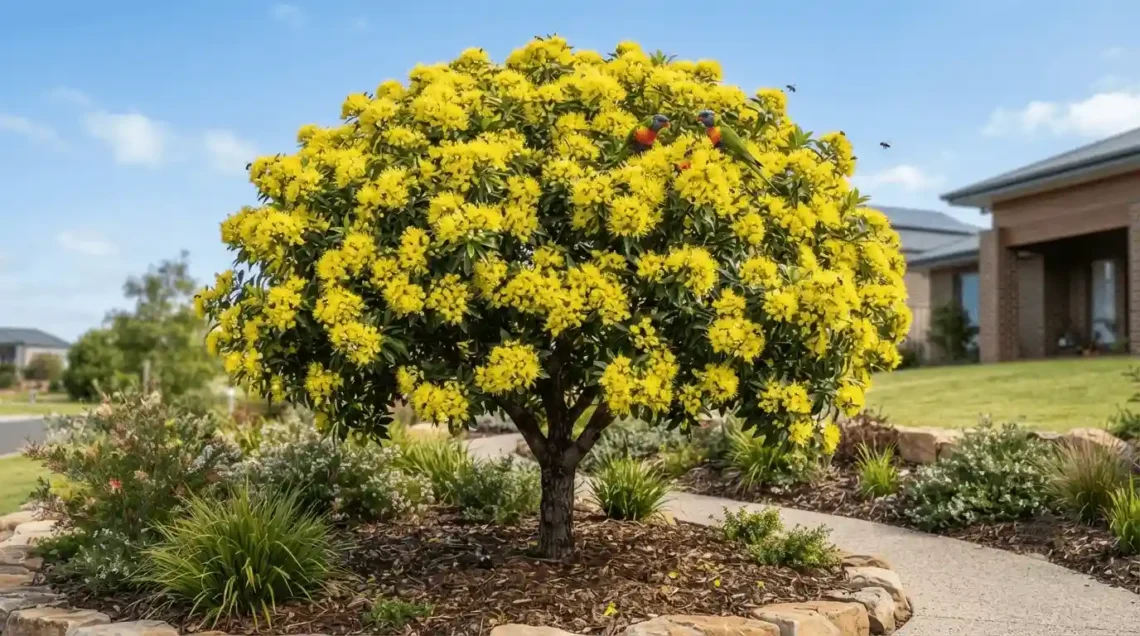
Xanthostemon chrysanthus, commonly known as Golden Penda, is one of Australia’s most admired native flowering trees. Renowned for its spectacular golden-yellow flower clusters, evergreen foliage, and attractive rounded canopy, Xanthostemon chrysanthus Golden Penda has become a popular choice for residential gardens, streetscapes, parks, and commercial landscapes. Native to the tropical rainforests of northeastern Queensland, this ornamental tree combines vibrant seasonal colour with relatively low maintenance, making it suitable for both home gardeners and landscape professionals. Whether planted as a feature specimen or a shade tree, Golden Penda offers year-round visual appeal while attracting birds, bees, and other pollinators to the garden.
By Greenery Inside | Plant Care & Gardening Expert
Quick Summary
- Xanthostemon chrysanthus (Golden Penda) is an evergreen Australian native tree famous for its bright golden flower clusters.
- It performs best in full sun, warm climates, and well-drained soil.
- Mature size varies according to climate, soil quality, and cultivar selection.
- Regular watering during establishment and occasional pruning encourage vigorous growth and reliable flowering.
- Compact cultivars make Golden Penda suitable for both large landscapes and smaller residential gardens.
What Is Xanthostemon chrysanthus?
Xanthostemon chrysanthus is an evergreen flowering tree native to Australia’s tropical rainforests and is widely cultivated for its ornamental beauty. It belongs to the myrtle family (Myrtaceae), which also includes bottlebrushes, lilly pilly, eucalyptus, and paperbarks. Its most distinctive feature is the large clusters of brilliant golden flowers that cover the tree during its blooming season. Golden Penda is one of the most popular choices in modern landscapes, especially when selecting from a wider range of Australian native garden trees.
The genus Xanthostemon contains several species distributed throughout Australia, Papua New Guinea, Southeast Asia, and nearby Pacific regions. Among them, Xanthostemon chrysanthus is the best-known ornamental species due to its reliable flowering, glossy foliage, and attractive growth habit.
The scientific name reflects important botanical characteristics:
- Xantho comes from the Greek word for “yellow.”
- Stemon refers to the numerous showy stamens that form the striking flower clusters.
- Chrysanthus means “golden flowered,” accurately describing its vibrant blossoms.
Its combination of evergreen foliage, manageable canopy, and long-lasting flowers makes it one of Australia’s premier native landscape trees.
From our experience at Greenery Inside, Golden Penda performs exceptionally well when planted where it receives uninterrupted sunlight and has room for its canopy to mature naturally.
Common Name and Botanical Classification
The most widely used Xanthostemon chrysanthus common name is Golden Penda, a name inspired by its brilliant golden flower clusters that bloom across much of the tree’s canopy.
Botanical Classification
| Classification | Details |
| Scientific Name | Xanthostemon chrysanthus |
| Common Name | Golden Penda |
| Family | Myrtaceae |
| Genus | Xanthostemon |
| Plant Type | Evergreen flowering tree |
| Native Region | Tropical northeastern Queensland, Australia |
Golden Penda naturally occurs in rainforest margins and moist forests where warm temperatures and seasonal rainfall promote vigorous growth. Although native to tropical regions, it is now extensively planted throughout subtropical Australia because of its adaptability and ornamental value.
Unlike deciduous trees, Golden Penda retains its foliage throughout the year, providing continuous greenery even when not in flower.
Plant Characteristics and Identification
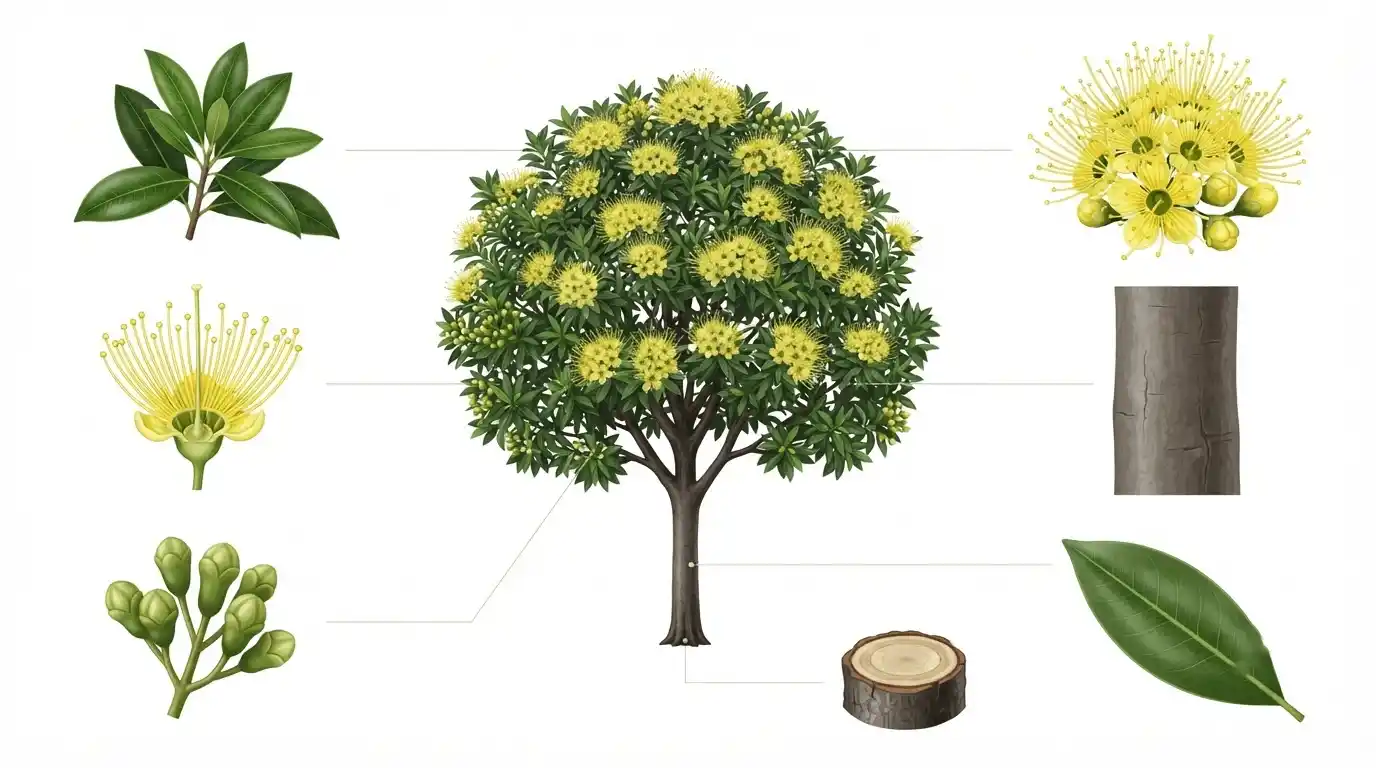
Xanthostemon chrysanthus is easily identified by its dense evergreen canopy, glossy green foliage, smooth trunk, and spectacular golden flower clusters. Its symmetrical growth habit makes it equally attractive as a specimen tree or avenue planting.
Young trees develop an upright form before gradually producing a rounded, spreading canopy with age. Healthy specimens maintain a dense crown that offers moderate shade while showcasing abundant flowers during the blooming season.
The tree’s ornamental appeal comes from the combination of:
- Bright golden blossoms
- Glossy evergreen leaves
- Smooth to lightly textured bark
- Dense rounded canopy
- Attractive branching structure
These characteristics allow Golden Penda to provide year-round landscape interest rather than relying solely on seasonal flowering.
In our experience growing Australian native trees, selecting nursery-grown specimens with a single dominant leader usually results in stronger long-term structure and reduced corrective pruning later.
Flowers, Leaves and Overall Appearance
Golden Penda is prized primarily for its spectacular flowers, although its foliage remains attractive throughout the year.
Flowers
The flowers consist of hundreds of long golden stamens grouped into rounded clusters that can almost completely cover mature trees during peak flowering.
Flower characteristics include:
- Brilliant golden-yellow colour
- Rounded flower heads
- Nectar-rich blossoms
- Attractive to birds and pollinating insects
- Long-lasting display under favourable conditions
Rather than relying on petals for colour, the flowers derive their striking appearance from their numerous bright yellow stamens.
Leaves
The foliage is equally ornamental.
Leaf characteristics include:
- Glossy dark green surface
- Oval to elliptical shape
- Smooth leaf margins
- Leathery texture
- Dense evergreen coverage
Young leaves often emerge with bronze or reddish tones before maturing to deep green, adding seasonal colour contrast even outside the flowering period.
Bark
The bark is generally smooth to lightly textured and grey-brown in colour. As the tree matures, slight fissures and natural texture may develop without becoming heavily rugged.
Overall Tree Form
Golden Penda develops a naturally balanced canopy with:
- Upright central trunk
- Rounded crown
- Moderate branching density
- Attractive symmetrical shape
This architectural form contributes significantly to its popularity in urban landscaping, streetscapes, and public gardens.
Xanthostemon chrysanthus Size and Growth
The mature Xanthostemon chrysanthus height depends largely on climate, soil quality, available moisture, and the selected cultivar. Standard forms grow into medium-sized shade trees, while dwarf cultivars remain compact enough for suburban gardens. It is commonly grouped with other long-lived species in discussions about native trees of Australia that perform well in both urban and natural environments.
Understanding the expected Xanthostemon chrysanthus size helps gardeners choose the most appropriate planting location and avoid overcrowding as the tree matures.
Mature Height and Width
A mature Golden Penda height varies considerably between cultivated landscapes and its natural rainforest habitat.
In residential gardens, regular maintenance and less competitive growing conditions usually produce more compact trees than those found in the wild.
| Growing Condition | Typical Height | Canopy Width |
| Home gardens | 6–10 m | 4–7 m |
| Parks and streets | 8–12 m | 5–8 m |
| Natural habitat | 15–20+ m | 8–12 m |
Environmental factors influencing mature size include:
- Climate
- Annual rainfall
- Soil fertility
- Available root space
- Sunlight exposure
- Pruning practices
Compact cultivars such as ‘Little Goldie’ and ‘Little Penda’ remain substantially smaller, making them suitable for courtyards, smaller gardens, and urban landscapes where space is limited.
Greenery Inside recommends allowing enough room for the tree’s mature canopy rather than planting solely based on its nursery size. Proper spacing reduces future pruning requirements and promotes healthier branching.
Growth Rate
Xanthostemon chrysanthus generally has a moderate to fast growth rate when planted under ideal conditions.
Young trees often establish slowly during the first year as roots develop. Once established, annual growth becomes more vigorous, especially in warm climates with adequate rainfall.
Factors influencing growth include:
- Climate: Warm tropical and subtropical regions encourage the fastest growth.
- Sunlight: Full sun supports stronger stems and denser canopies.
- Soil Quality: Fertile, well-drained soils promote consistent development.
- Water Availability: Regular moisture during establishment accelerates root growth.
- Nutrition: Balanced fertilisation supports healthy foliage without excessive leafy growth.
Typical growth expectations:
- Years 1–2: Root establishment with moderate top growth.
- Years 3–6: Rapid canopy development.
- Years 7 onward: Growth gradually slows as the tree approaches mature size.
Seasonal conditions also influence annual growth. As of current horticultural recommendations for 2026, maintaining even soil moisture during prolonged hot, dry periods has become increasingly important in many Australian regions experiencing variable rainfall. Deep, infrequent watering is generally preferred over frequent shallow irrigation because it encourages deeper root development and improves drought resilience.
Flowering Season and Bloom Performance
Xanthostemon chrysanthus is prized for its spectacular golden flower display, which can transform the entire canopy into a mass of bright yellow blooms. Flower production is influenced by climate, tree maturity, sunlight, and overall plant health. In warm regions, established trees often flower consistently each year, while younger or stressed specimens may bloom less reliably.
Unlike many ornamental trees that produce flowers for only a short period, Golden Penda often provides an extended display under favourable growing conditions. Mature, healthy trees typically produce the most abundant flowering.
When Does Golden Penda Flower?
The Xanthostemon chrysanthus flowering season generally occurs from late spring through summer, although flowering periods vary depending on local climate and weather conditions. In tropical regions, some mature trees may also produce lighter flushes of flowers outside the main blooming season.
Environmental factors that encourage flowering include:
- Full sun exposure
- Warm temperatures
- Consistent soil moisture
- Healthy root development
- Balanced fertilisation
- Tree maturity
Flowering characteristics include:
| Feature | Details |
| Main flowering season | Late spring to summer |
| Flower colour | Bright golden yellow |
| Flower type | Dense clusters of stamens |
| Pollinators | Bees, butterflies, nectar-feeding birds |
| Flower longevity | Several weeks under favourable conditions |
From our experience at Greenery Inside, Golden Penda produces its best floral display after a warm growing season with adequate rainfall followed by consistent sunshine. Trees growing in shaded locations rarely match the flowering intensity of those planted in full sun.
Why Is My Golden Penda Not Flowering?
A Golden Penda may fail to flower because of insufficient sunlight, immaturity, excessive nitrogen fertiliser, improper pruning, water stress, or seasonal environmental variations. Identifying the underlying cause helps restore healthy blooming.
Common Causes
Insufficient sunlight
Golden Penda requires at least six to eight hours of direct sunlight daily. Trees planted in excessive shade often develop lush foliage but produce very few flowers.
Immature trees
Young trees usually prioritise root and branch development before investing energy in flowering. Depending on growing conditions, flowering may begin after several years.
Too much nitrogen
Nitrogen-rich fertilisers encourage vigorous leaf growth at the expense of flower production. Excessive feeding can delay or significantly reduce blooming.
Incorrect pruning
Heavy pruning shortly before the flowering season removes developing flower buds. Light structural pruning immediately after flowering is generally preferable.
Water stress
Both prolonged drought and waterlogged soil can reduce flowering. Consistent moisture supports healthy bud formation without encouraging root problems.
Seasonal variation
Temperature fluctuations, unusually cool weather, or prolonged cloudy periods may temporarily reduce flowering even in healthy trees.
How to Fix Poor Flowering
- Plant or relocate trees to full sun whenever possible.
- Use a balanced, slow-release fertiliser formulated for flowering trees.
- Avoid excessive nitrogen applications.
- Water deeply during extended dry periods.
- Prune only after flowering has finished.
- Allow young trees sufficient time to mature.
Prevention Tips
- Select a sunny planting site from the beginning.
- Maintain healthy soil drainage.
- Fertilise according to seasonal needs.
- Avoid severe pruning.
- Monitor irrigation during prolonged dry weather.
Growing Conditions and Care Guide
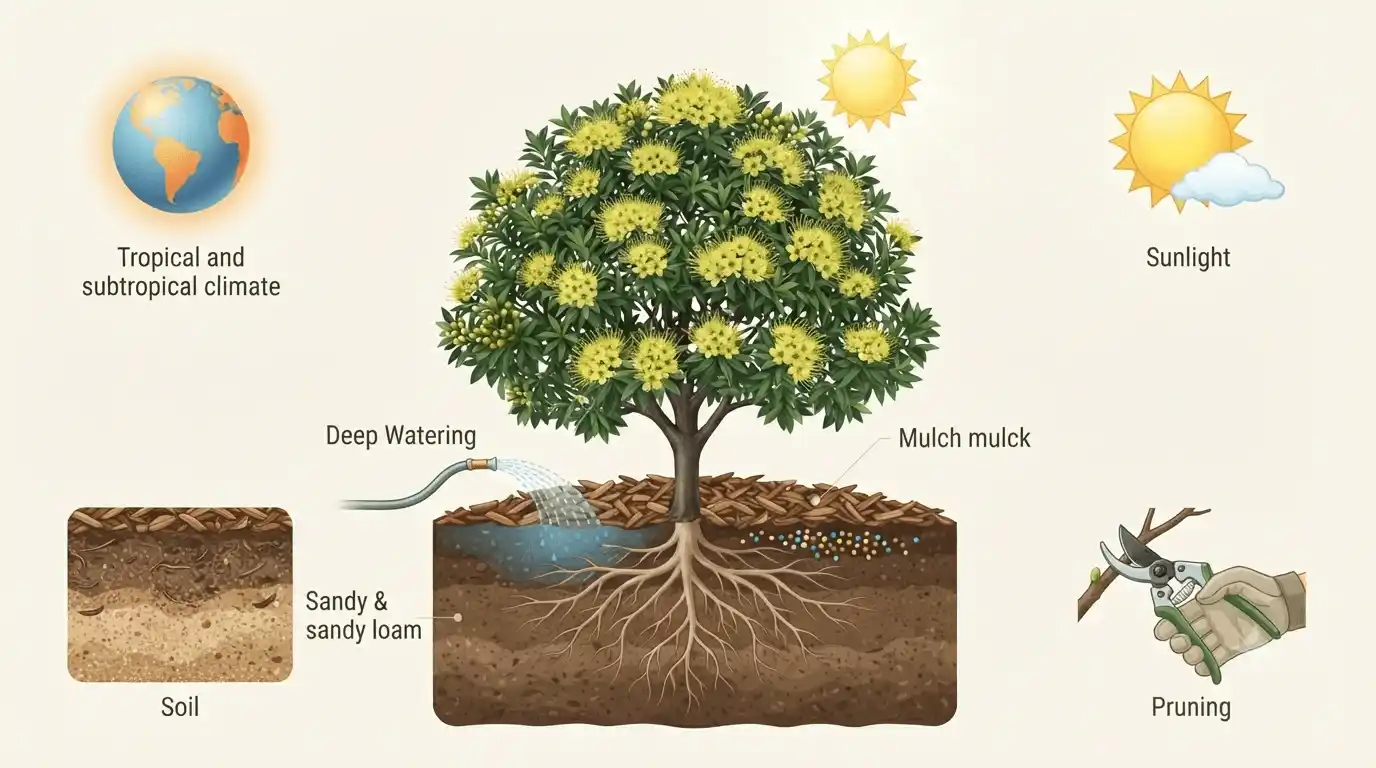
Providing the right growing conditions is the key to maintaining a healthy Xanthostemon chrysanthus. Once established, Golden Penda is relatively low maintenance, but proper light, soil, watering, fertilising, and pruning significantly improve flowering and long-term health.
Light Requirements
Golden Penda grows best in full sun. Direct sunlight promotes vigorous growth, dense branching, and abundant flower production.
Light recommendations include:
- Full sun is ideal.
- Minimum 6–8 hours of direct sunlight daily.
- Light afternoon shade is tolerated in extremely hot regions.
- Dense shade reduces flowering and canopy density.
Trees grown in shaded locations often produce elongated branches with fewer flower clusters.
Soil Preferences
Golden Penda performs best in well-drained, fertile soils containing organic matter. Although adaptable to several soil types, drainage remains the most important factor.
Ideal soil characteristics include:
| Soil Factor | Preferred Condition |
| Drainage | Excellent |
| Texture | Sandy loam to loam |
| Fertility | Moderate to high |
| Organic matter | Beneficial |
| Soil pH | Slightly acidic to neutral (approximately 5.5–7.0) |
Heavy clay soils can be improved by incorporating compost and organic matter before planting.
Avoid permanently waterlogged locations, as poor drainage increases the risk of root decline.
Water Requirements
Proper watering is essential during establishment and remains beneficial during prolonged dry periods.
Newly Planted Trees
During the first 12–18 months:
- Water deeply once or twice each week.
- Adjust irrigation according to rainfall.
- Keep soil consistently moist but not saturated.
- Apply mulch to conserve moisture.
Established Trees
Once established, Golden Penda develops moderate drought tolerance.
Watering recommendations:
- Deep watering during extended dry weather.
- Reduce irrigation during periods of regular rainfall.
- Avoid frequent shallow watering.
Deep irrigation encourages stronger root development and improves drought resilience.
Fertilising
Golden Penda responds well to balanced fertilisation, particularly during active growth.
Suitable fertilisers include:
- Slow-release native plant fertilisers
- Controlled-release balanced fertilisers
- Organic compost applications
Typical feeding schedule:
| Season | Recommendation |
| Early spring | Apply balanced fertiliser |
| Mid-summer | Light feeding if needed |
| Autumn | Organic compost or mulch |
| Winter | Usually unnecessary |
Avoid excessive nitrogen because it encourages foliage growth while reducing flowering.
Greenery Inside recommends applying fertiliser evenly beneath the drip line rather than directly against the trunk.
Pruning
Golden Penda generally requires only light maintenance pruning.
Best pruning practices include:
- Remove dead, damaged, or diseased branches.
- Maintain natural canopy shape.
- Remove crossing branches.
- Prune immediately after flowering if shaping is necessary.
Avoid:
- Heavy pruning before flowering.
- Removing more than one-third of the canopy in a single season.
- Excessive topping, which spoils the tree’s natural form.
Regular light pruning usually produces healthier structure than infrequent severe pruning.
Climate and Frost Tolerance
Golden Penda is naturally adapted to tropical and subtropical climates, where warm temperatures support vigorous growth and reliable flowering.
Climate performance:
| Climate | Suitability |
| Tropical | Excellent |
| Subtropical | Excellent |
| Warm temperate | Good |
| Cool temperate | Limited |
Heat tolerance is excellent once trees are established.
However, young Golden Penda trees are sensitive to frost, particularly during their first few winters. Mature specimens can tolerate occasional light frost, although repeated freezing temperatures may damage new growth and flower buds.
As of 2026, horticultural best practice recommends protecting young trees with frost cloth during unexpected cold events in marginal growing regions. Applying mulch around the root zone also helps moderate soil temperatures.
Uses of Xanthostemon chrysanthus
Xanthostemon chrysanthus uses extend well beyond ornamental flowering. Its attractive evergreen canopy, manageable growth habit, and wildlife value make it one of Australia’s most versatile native landscape trees. Because of its dense canopy and seasonal flowering, Golden Penda is often included among the best flowering evergreen trees for warm-climate gardens and public landscapes.
Golden Penda is commonly used as:
Feature Tree
Its brilliant golden flowers create a striking focal point in residential gardens, public parks, and commercial landscapes.
Street Tree
Many councils plant Golden Penda along streets because of its:
- Attractive canopy
- Seasonal colour
- Moderate maintenance requirements
- Urban adaptability
Shade Tree
The dense evergreen canopy provides pleasant shade for:
- Lawns
- Outdoor seating areas
- Playgrounds
- Public open spaces
Wildlife Garden Tree
Its nectar-rich flowers attract numerous beneficial wildlife species, including:
- Native bees
- Honeybees
- Butterflies
- Rainbow lorikeets
- Honeyeaters
- Other nectar-feeding birds
Supporting pollinators helps improve overall biodiversity within the garden.
Urban Landscaping
Golden Penda is frequently selected for:
- Shopping precincts
- Schools
- Office developments
- Streetscapes
- Large residential properties
- Community gardens
Its year-round foliage combined with spectacular flowering provides both aesthetic and ecological benefits.
Root System and Planting Considerations
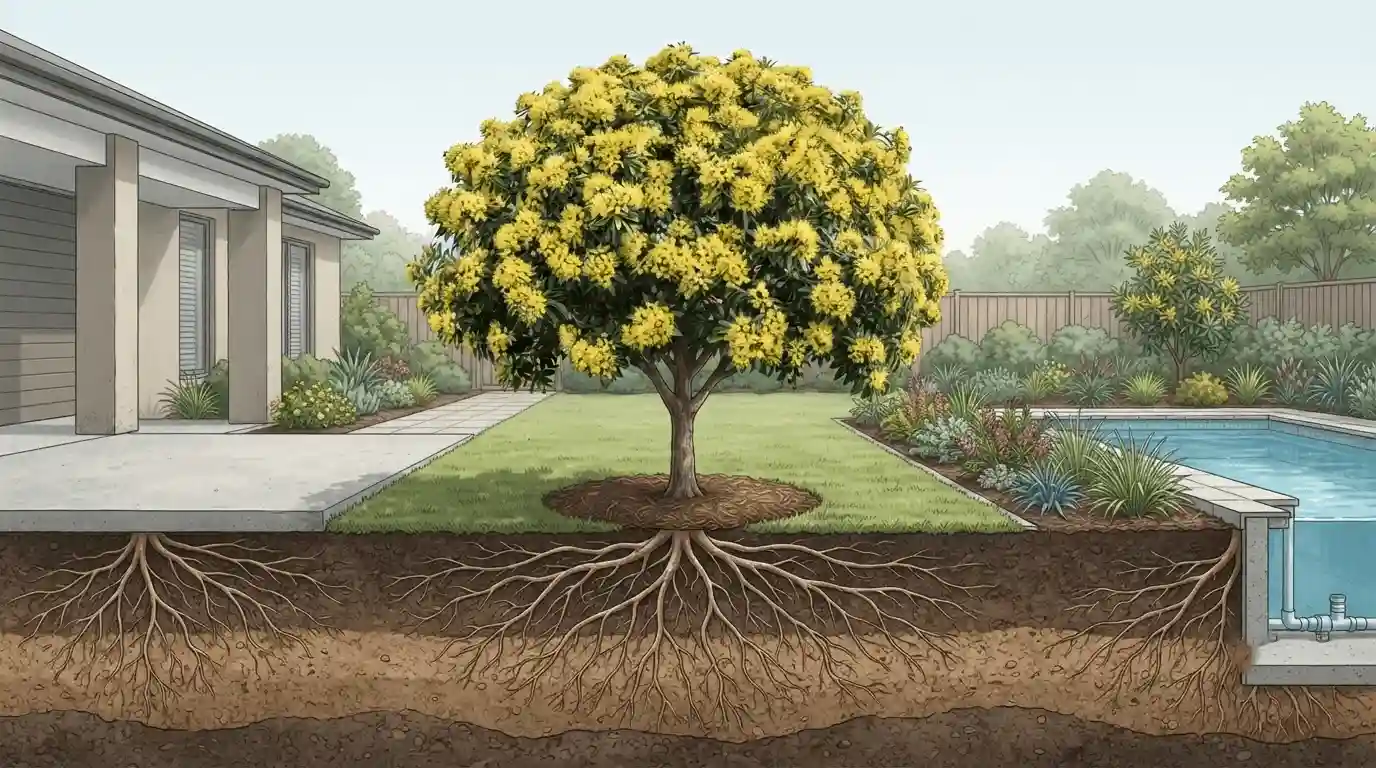
Golden Penda generally does not have aggressively invasive roots. Its root system is considered relatively non-invasive when planted in suitable soil with adequate growing space. However, like most medium-sized trees, roots naturally spread beyond the canopy in search of moisture and nutrients.
Proper planting location reduces the likelihood of future conflicts with buildings and infrastructure.
Recommended planting considerations include:
- Allow sufficient space for canopy expansion.
- Plant away from underground services.
- Maintain appropriate clearance from foundations.
- Avoid permanently wet sites.
- Improve drainage before planting if necessary.
Recommended Planting Distances
| Planting Location | Suitable | Notes |
| Near house | Yes | Maintain several metres from foundations |
| Along driveway | Yes | Allow room for mature canopy |
| Garden beds | Excellent | Popular feature planting |
| Parks | Excellent | Ideal for open landscapes |
| Near pools | Generally suitable | Avoid planting too close to paving |
Although Golden Penda roots are not usually considered invasive, compacted soil and restricted planting spaces may encourage surface root development over time.
Greenery Inside recommends selecting a planting site based on the tree’s mature size rather than its young nursery dimensions. Providing adequate root space from the outset results in healthier growth and fewer maintenance issues later.
Popular Varieties and Cultivars
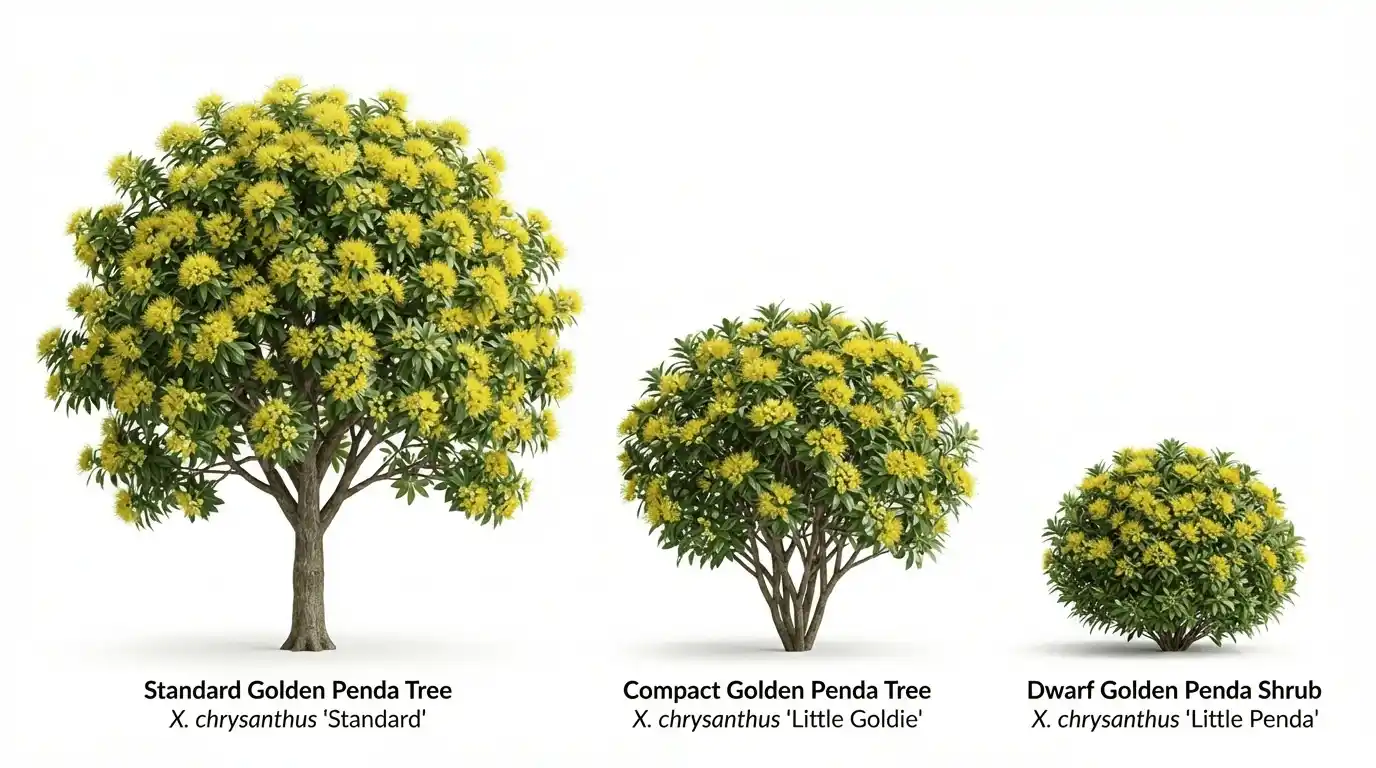
Several cultivars of Xanthostemon chrysanthus have been developed to suit different landscape sizes and design preferences. While the standard Golden Penda remains the best choice for large gardens and public spaces, compact selections are ideal for smaller residential landscapes, courtyards, and even large containers.
Popular Golden Penda varieties differ in mature size, growth habit, flower colour, and maintenance requirements. Choosing the right cultivar depends on the available planting space and the desired landscape effect.
Standard Golden Penda vs Little Goldie vs Little Penda
The standard Golden Penda is valued for its broad canopy and impressive floral display, while dwarf cultivars provide similar ornamental appeal in a much smaller form.
Some specialty selections with pink or red-toned flowers are occasionally available through specialty nurseries, although they are less common than the traditional golden-flowering forms.
| Variety | Mature Height | Flower Colour | Best Use |
| Standard Golden Penda (Xanthostemon chrysanthus) | 8–12 m | Golden yellow | Large gardens, parks, streetscapes |
| Xanthostemon chrysanthus ‘Little Goldie’ | 3–5 m | Golden yellow | Small gardens, courtyards, feature planting |
| Xanthostemon little penda | 3–6 m | Golden yellow | Residential landscapes, screening, compact spaces |
| Xanthostemon chrysanthus red | Varies by cultivar | Red to crimson tones | Collector gardens, ornamental displays |
| Xanthostemon chrysanthus pink | Varies by cultivar | Pink shades | Specialty landscapes and botanical collections |
Which Variety Should You Choose?
Choose your cultivar based on the available space and intended use:
- Standard Golden Penda for spacious landscapes and shade.
- Little Goldie for compact gardens and modern landscape designs.
- Little Penda where a smaller evergreen flowering tree is preferred.
- Red or pink selections for collectors seeking unusual flowering forms.
From our experience at Greenery Inside, compact cultivars perform exceptionally well in suburban gardens where maintaining a manageable canopy is important without sacrificing flowering performance.
Propagation Methods
Xanthostemon chrysanthus can be propagated from seed, although commercial nurseries commonly use vegetative propagation to ensure plants remain true to the selected cultivar.
Growing from Xanthostemon chrysanthus seeds is rewarding but requires patience, as seedlings may take several years to reach flowering maturity.
Seed Propagation
Fresh seed generally provides the highest germination success.
Basic propagation steps include:
- Collect ripe seed capsules once they mature.
- Allow capsules to dry naturally until seeds are released.
- Sow seeds in a well-drained propagation mix.
- Keep the growing medium consistently moist.
- Place trays in a warm, bright location with indirect sunlight.
Germination usually occurs within several weeks under warm conditions.
Nursery Propagation
Commercial growers often propagate cultivars through:
- Cuttings
- Grafting (occasionally)
- Tissue culture for selected cultivars
These methods ensure the new plants retain the growth habit, flower colour, and size of the parent plant.
Caring for Young Plants
Young Golden Penda plants benefit from:
- Regular watering
- Protection from frost
- Light applications of slow-release fertiliser
- Gradual exposure to full sun
- Weed-free growing conditions
Avoid allowing young seedlings to dry out completely, as developing root systems are still relatively shallow.
Common Problems and Solutions
Although Golden Penda is generally a hardy tree, occasional problems can occur if environmental conditions are unsuitable. Most issues are related to watering, nutrition, planting location, or seasonal stress rather than serious diseases.
Yellow Leaves
Yellowing leaves usually indicate an environmental or nutritional imbalance.
Common causes
- Overwatering
- Poor drainage
- Nitrogen deficiency
- Iron deficiency in alkaline soils
- Root stress
How to fix it
- Improve drainage.
- Adjust watering frequency.
- Apply a balanced fertiliser.
- Correct nutrient deficiencies if confirmed.
Prevention
- Plant in well-drained soil.
- Avoid prolonged waterlogging.
- Maintain an organic mulch layer.
Poor Flowering
Poor flowering is usually caused by inadequate growing conditions rather than disease.
Common causes
- Too much shade
- Excess nitrogen
- Heavy pruning
- Immature trees
- Water stress
How to fix it
- Increase sunlight exposure.
- Switch to a balanced fertiliser.
- Reduce nitrogen applications.
- Prune only after flowering.
- Water consistently during dry periods.
Prevention
- Select a sunny planting location.
- Follow a regular fertilising schedule.
- Avoid unnecessary pruning.
Slow Growth
Golden Penda may grow more slowly than expected if growing conditions are less than ideal.
Common causes
- Poor soil fertility
- Root competition
- Compacted soil
- Limited sunlight
- Cool climate
How to fix it
- Improve soil with compost.
- Apply slow-release fertiliser.
- Water deeply during dry periods.
- Reduce competition from nearby plants.
Prevention
- Prepare the planting site thoroughly.
- Mulch annually.
- Maintain healthy soil structure.
Pest and Disease Issues
Golden Penda experiences relatively few serious pest or disease problems.
Occasional pests include:
- Scale insects
- Aphids
- Leaf-chewing caterpillars
Possible diseases include:
- Root rot in poorly drained soils
- Minor fungal leaf spots during prolonged wet weather
Management
- Maintain good air circulation.
- Avoid overwatering.
- Remove heavily affected branches.
- Encourage beneficial insects.
- Use appropriate horticultural treatments only when necessary.
Healthy, vigorously growing trees are naturally more resistant to pests and diseases than stressed specimens.
Common Beginner Mistakes
Many Golden Penda problems can be avoided by following a few basic planting and maintenance principles.
Common mistakes include:
Planting in Too Much Shade
Insufficient sunlight leads to weaker growth and significantly reduced flowering.
Choosing Poorly Drained Soil
Constantly wet soil increases the likelihood of root problems and poor growth.
Overwatering Established Trees
Once established, Golden Penda requires only occasional deep watering during extended dry periods.
Heavy Pruning Before Flowering
Removing developing flower buds can dramatically reduce seasonal blooms.
Planting Too Close to Buildings
Always consider the tree’s mature canopy and root spread before planting.
Greenery Inside recommends planning for the tree’s mature dimensions rather than its size at purchase. This simple step prevents many long-term maintenance problems.
Xanthostemon chrysanthus Compared with Similar Landscape Trees
Golden Penda is often compared with other Australian native flowering trees because all provide ornamental value while supporting local wildlife. However, it stands out for its dense evergreen canopy and brilliant golden flower clusters.
| Feature | Golden Penda | Similar Australian Native Flowering Trees |
| Mature size | Medium to large | Small to large depending on species |
| Flower display | Dense golden flower clusters | Red, pink, white, or cream flowers depending on species |
| Evergreen foliage | Yes | Most are evergreen |
| Shade value | Excellent | Moderate to excellent |
| Wildlife attraction | Excellent for birds and bees | Generally high |
| Maintenance | Low to moderate | Low to moderate |
Compared with many flowering natives, Golden Penda offers:
- Longer-lasting ornamental value
- Attractive foliage throughout the year
- Dense shade canopy
- Strong urban landscape performance
- High value for pollinators
Its combination of reliable flowering, evergreen foliage, and manageable maintenance makes it one of Australia’s most versatile native ornamental trees.
Conclusion
Xanthostemon chrysanthus (Golden Penda) is one of Australia’s finest native flowering trees, combining spectacular golden blooms with evergreen foliage, a well-balanced canopy, and excellent adaptability to warm climates. Whether used as a feature tree, shade tree, street tree, or wildlife-friendly addition to the landscape, it delivers year-round ornamental value with relatively low maintenance.
Providing full sun, well-drained soil, regular watering during establishment, and occasional pruning helps promote healthy growth and abundant flowering. Selecting the appropriate cultivar is equally important, with compact forms such as Little Goldie and Little Penda offering excellent options for smaller gardens, while the standard Golden Penda is better suited to larger landscapes.
With proper planting location and ongoing care, Xanthostemon chrysanthus can remain a vibrant and long-lived feature that enhances gardens, attracts pollinators, and showcases the beauty of Australian native plants.
Frequently Asked Questions (FAQs)
What is the common name of Xanthostemon chrysanthus?
The common name of Xanthostemon chrysanthus is Golden Penda. It is named for its large clusters of bright golden-yellow flowers and is widely grown as an ornamental tree throughout warm regions of Australia.
How big do Xanthostemon chrysanthus get?
Standard Golden Penda trees typically reach 8–12 metres in height with a canopy spread of 5–8 metres in cultivated landscapes. In their natural rainforest habitat, they may grow over 20 metres tall. Compact cultivars remain much smaller.
What is Xanthostemon chrysanthus used for?
Golden Penda is commonly used as a feature tree, shade tree, street tree, and ornamental landscape specimen. It is also valued in wildlife gardens because its nectar-rich flowers attract bees, butterflies, and nectar-feeding birds.
When is the flowering season of Golden Penda?
Golden Penda usually flowers from late spring through summer, although flowering times vary with climate and local weather conditions. Mature trees grown in full sun generally produce the most abundant blooms.
Why is my Golden Penda not flowering?
Poor flowering is most often caused by insufficient sunlight, excessive nitrogen fertiliser, heavy pruning before flowering, water stress, or the tree not yet reaching maturity. Improving growing conditions usually restores flowering over time.
Do Golden Penda have invasive roots?
No. Golden Penda generally has a non-invasive root system when planted in suitable soil with adequate space. Allowing sufficient distance from buildings, driveways, and underground utilities helps prevent future issues.
Can Golden Penda grow in pots?
Yes. Compact cultivars such as Little Goldie and Little Penda can grow successfully in large containers with excellent drainage, high-quality potting mix, regular watering, and periodic fertilising. Standard Golden Penda is generally too large for long-term container cultivation.
How long does Golden Penda take to reach full size?
Golden Penda has a moderate to fast growth rate under ideal conditions. Most trees develop a well-formed canopy within 7–10 years, while reaching full mature size may take 15 years or more, depending on climate, soil, and maintenance.