Introduction
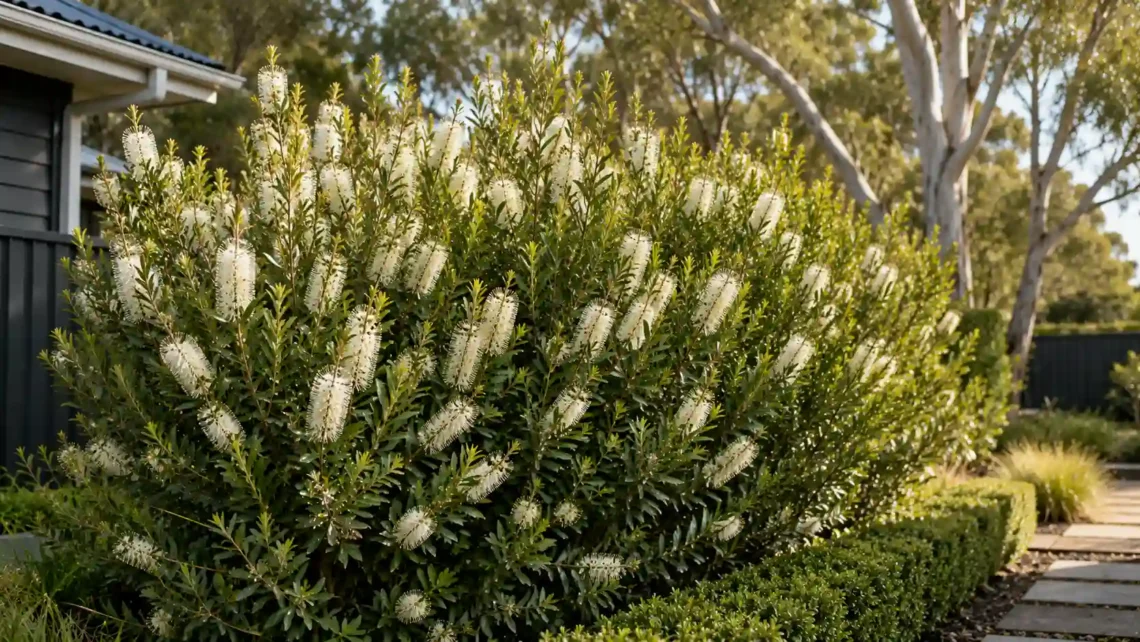
Callistemon White Anzac is a compact evergreen Australian native shrub valued for its attractive creamy-white bottlebrush flowers and easy-care growth habit. Commonly known as the white anzac bottlebrush, this cultivar is botanically classified as Callistemon citrinus ‘White Anzac’. Its distinctive cylindrical flower spikes create a striking contrast against green foliage, making it a popular choice for hedging, screening, borders, and ornamental garden displays. Gardeners across Australia appreciate its drought tolerance, wildlife-friendly flowers, and adaptability to various growing conditions. Whether used as a feature shrub or planted in groups, Callistemon White Anzac offers year-round structure and seasonal floral interest. White Anzac belongs to the broader group of dwarf bottlebrush varieties, which are widely used in compact Australian gardens.
Quick Summary
- Callistemon White Anzac is a compact native shrub producing creamy-white bottlebrush-style flowers.
- Botanical name: Callistemon citrinus ‘White Anzac’; common name: White Anzac Bottlebrush.
- Mature height typically ranges from 1–2 metres, making it ideal for hedges and borders.
- Hardy, low-maintenance, and suitable for a wide range of Australian climates.
- Attracts native birds and pollinators while providing year-round garden structure.
What Is Callistemon White Anzac?
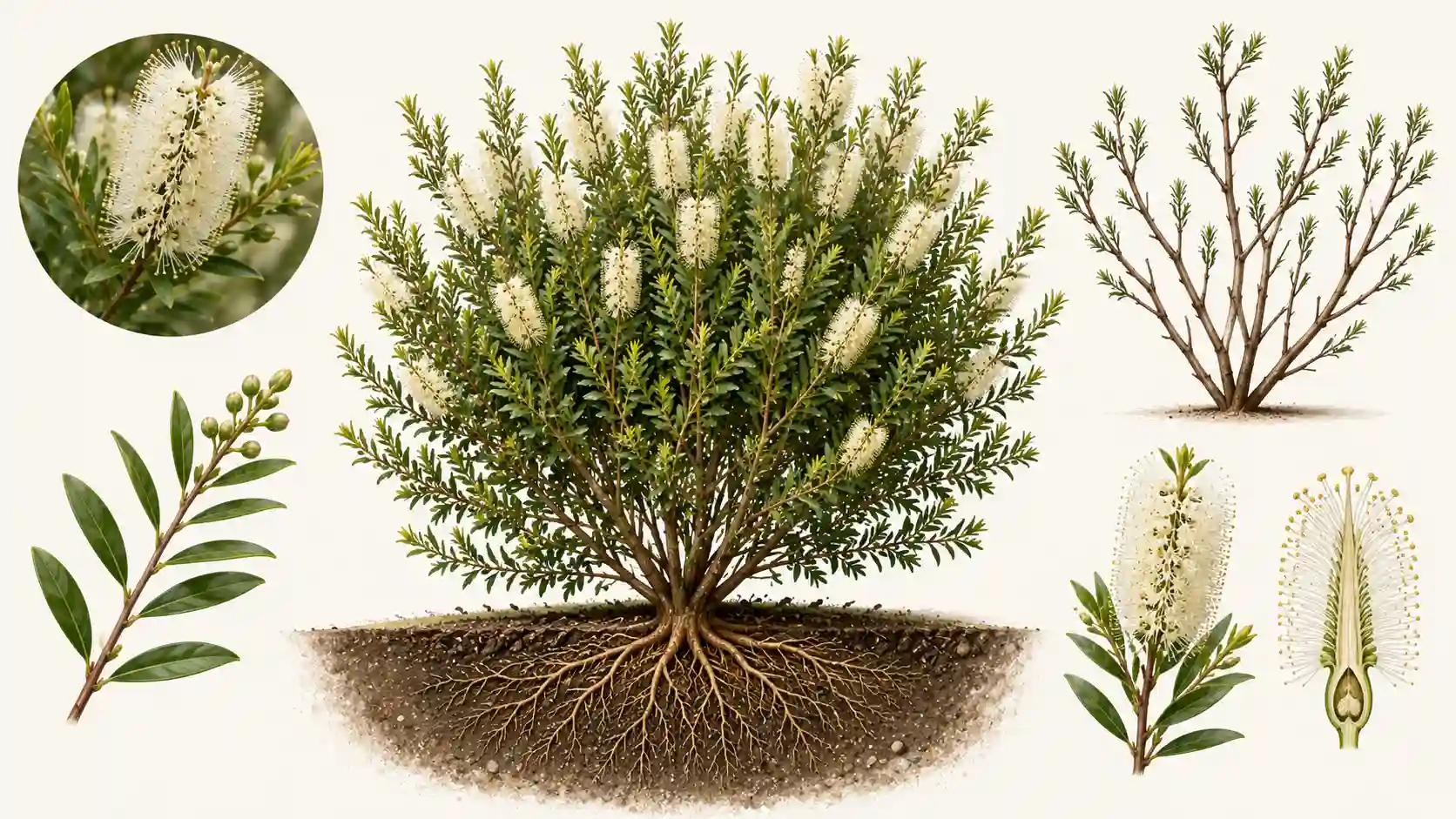
Callistemon White Anzac is a selected cultivar of Callistemon citrinus grown primarily for its creamy-white bottlebrush flowers and compact growth habit. It is an Australian native shrub widely used in residential landscapes, native gardens, and public plantings.
Unlike traditional callistemons that produce bright red flowers, White Anzac develops pale creamy-white cylindrical flower spikes. These blooms maintain the classic bottlebrush appearance that gives the plant its common name. Callistemon species belong to a group of Australian native flowering plants commonly known as bottlebrushes, widely documented in botanical references such as Callistemon.
As a compact and dense-growing shrub, it is particularly suitable for smaller gardens, hedges, and border plantings where a tidy appearance is desired.
Callistemon White Anzac Common Name and Botanical Classification
The common name of Callistemon citrinus ‘White Anzac’ is White Anzac Bottlebrush.
Botanical classification includes:
- Species: Callistemon citrinus
- Cultivar: ‘White Anzac’
- Common name: White Anzac Bottlebrush
In some botanical references, many callistemons have been reclassified into the Melaleuca genus. However, the name Callistemon remains widely used by gardeners, nurseries, and landscaping professionals.
Naming confusion occasionally occurs with Callistemon viminalis ‘White Anzac’. While both feature white flowers, they are different plants with distinct growth habits. The citrinus form is generally more compact and bushy, whereas viminalis forms often display a more weeping structure.
Callistemon White Anzac Size and Height

Callistemon White Anzac is considered a compact shrub with a naturally dense and bushy growth habit. Most mature specimens reach between 1 and 2 metres in height and approximately 1 to 1.5 metres in width.
The final size depends on environmental conditions, maintenance practices, and planting location.
| Feature | Typical Range |
| Mature height | 1–2 metres |
| Mature width | 1–1.5 metres |
| Growth habit | Dense, compact, bushy |
| Best use | Hedging, borders, mass planting |
Plants grown as formal hedges may be maintained below their natural height through regular pruning. Container-grown specimens generally remain smaller than those planted directly in the ground.
Factors affecting mature size include:
- Soil quality
- Water availability
- Sunlight exposure
- Pruning frequency
- Climate conditions
Callistemon White Anzac is not typically grown indoors, as it performs best in outdoor environments with ample sunlight.
Growth Rate of Callistemon White Anzac
Callistemon White Anzac has a moderate growth rate.
Most active growth occurs during spring and summer when temperatures are warmer and daylight hours are longer. Under favourable conditions, plants establish steadily and develop dense branching over time.
Conditions that encourage healthy growth include:
- Full sun exposure
- Well-drained soil
- Consistent watering during establishment
- Light annual fertilisation
Pruning after flowering helps stimulate fresh growth while maintaining a compact appearance. Regular maintenance can also increase flowering potential in subsequent seasons.
Callistemon White Anzac Care Guide
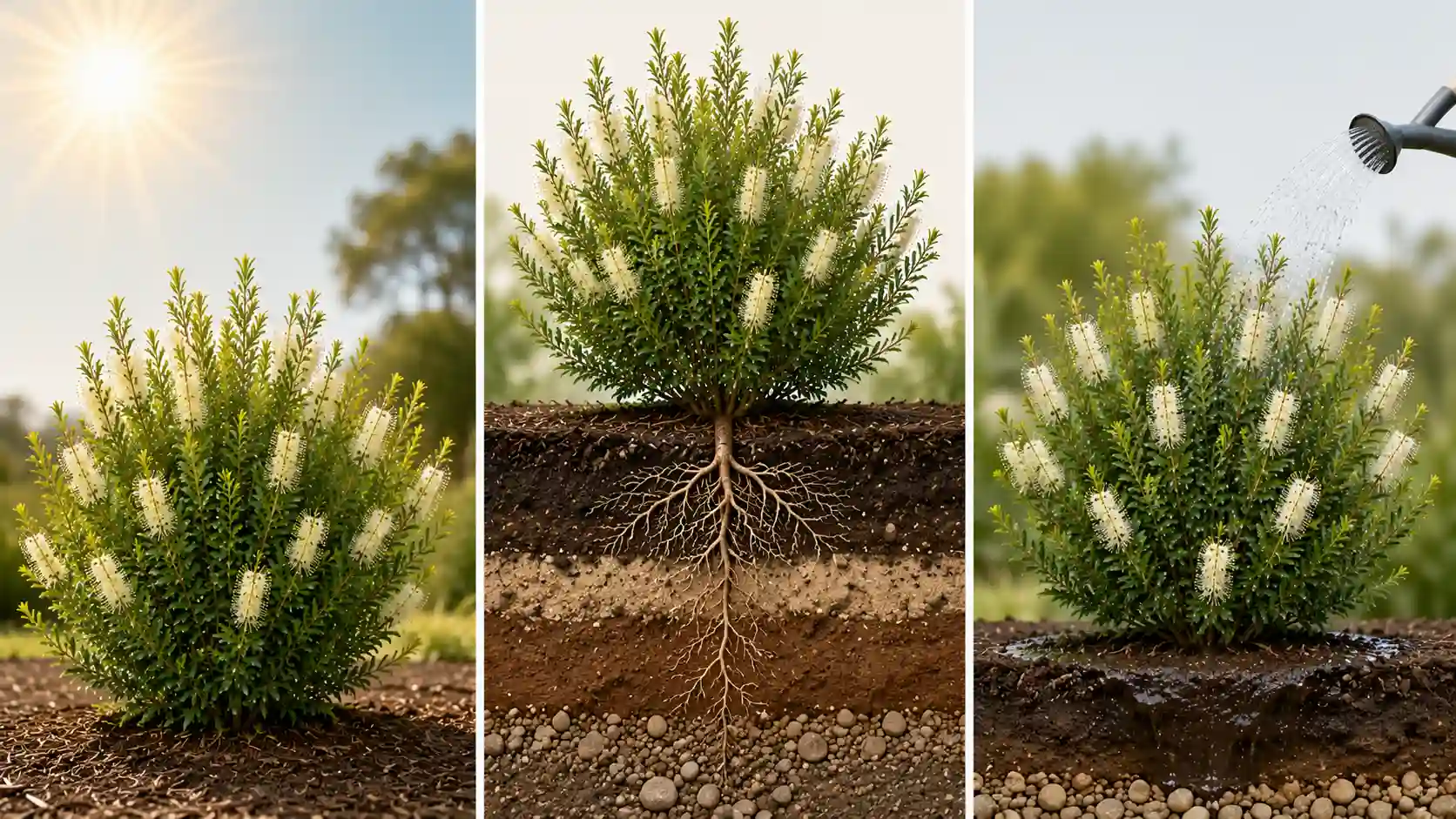
Proper care helps maintain healthy foliage, abundant flowering, and long-term plant performance.
Sunlight Requirements
Callistemon White Anzac prefers full sun to part shade.
For maximum flowering, choose a location receiving at least six hours of direct sunlight daily. Plants grown in partial shade often remain healthy but may produce fewer flower spikes.
Watering Requirements
This shrub becomes drought-tolerant once established.
During the first growing season, regular watering is important to support root development. After establishment, watering can be reduced significantly.
Avoid:
- Constantly wet soil
- Poor drainage
- Frequent overwatering
These conditions can contribute to root health issues.
Soil Preferences
Callistemon White Anzac grows best in well-drained soil.
Suitable soil types include:
- Sandy soils
- Loamy soils
- Clay soils with improved drainage
A slightly acidic to neutral pH is generally preferred. Rich soils are not necessary, making this shrub suitable for many Australian garden conditions. It shares adaptability traits with other hardy natives like Australian Willow, which also perform well in varied soil conditions.
Fertilisation
Apply a slow-release native plant fertiliser in spring.
Avoid high-phosphorus fertilisers because many Australian native plants are sensitive to excessive phosphorus levels.
Pruning
Light pruning after flowering helps maintain shape and encourages denser growth.
Benefits of pruning include:
- Improved flowering
- Compact growth habit
- Enhanced hedge appearance
Avoid cutting deeply into old wood that lacks foliage, as recovery may be slow.
Climate Tolerance
Callistemon White Anzac adapts well to diverse Australian climates.
It is suitable for:
- Coastal gardens
- Suburban landscapes
- Inland regions
Established plants also demonstrate good frost tolerance and perform well in water-wise landscapes.
Using Callistemon White Anzac as a Hedge
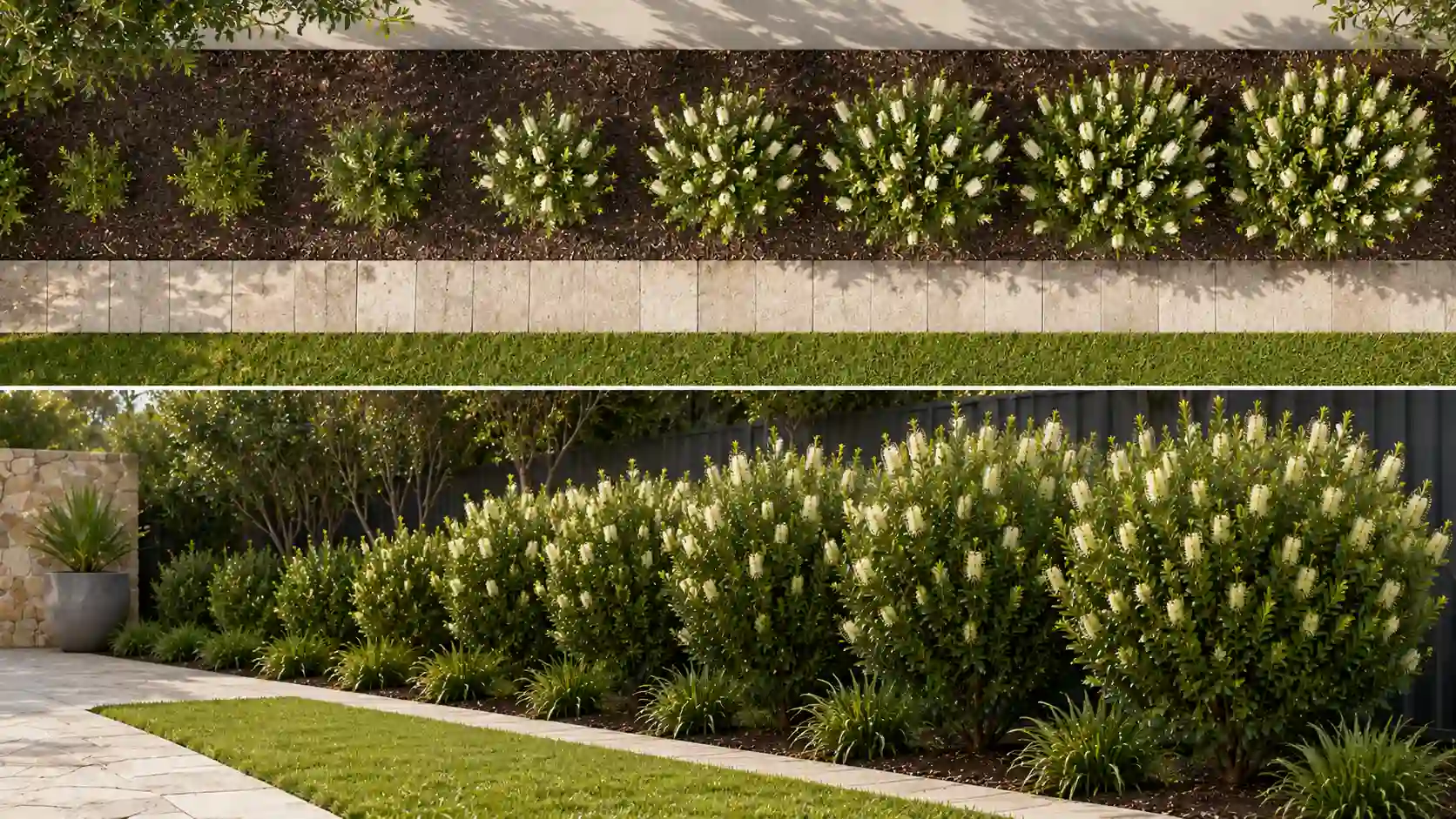
Callistemon White Anzac is highly valued as a hedge because of its dense branching, compact size, and reliable growth habit.
For hedge planting, recommended spacing is:
- 60–90 cm apart for dense hedges
- 1–1.5 metres apart for mass planting
Formal hedges can be maintained through regular trimming, while informal hedges allow the plant’s natural shape to develop.
Additional benefits include:
- Privacy screening
- Wind protection
- Wildlife habitat
- Seasonal floral display
The flowers attract honeyeaters, native birds, and beneficial pollinating insects, making it a valuable wildlife-friendly planting option. Like Lemon Myrtle Hedge plantings, White Anzac is commonly used in structured native hedging designs for privacy and fragrance-friendly landscapes.
Callistemon White Anzac vs. Similar Cultivars
Several white-flowering bottlebrush cultivars are available, but each differs in size, growth habit, and landscape use.
| Feature | Callistemon White Anzac | Callistemon Wilderness White | Callistemon viminalis White Anzac |
| Mature height | 1–2 m | 2–3 m | 2–4 m |
| Flower colour | Creamy white | Soft white | White |
| Growth habit | Compact, bushy | Upright, moderate | Weeping |
| Best use | Hedge, border | Screening, backdrop | Feature planting |
| Frost tolerance | Good | Moderate | Moderate |
Choose White Anzac when a compact, manageable shrub is required for hedging, borders, or smaller landscapes.
Where Is Callistemon White Anzac Grown? — Distribution and Suitability in Australia and New Zealand
Callistemon White Anzac is widely cultivated throughout Australia.
It performs successfully in:
- New South Wales
- Victoria
- Queensland
- South Australia
- Western Australia
- Tasmania
Its adaptability allows it to grow in coastal regions, urban environments, and many inland locations.
In New Zealand, White Anzac generally performs well in mild climates with well-drained soil and adequate sunlight. It is commonly used in residential gardens, public landscaping projects, and native-style planting schemes.
Gardeners should always check current regulations regarding the importation and movement of Australian native plants.
Common Problems with Callistemon White Anzac and How to Fix Them
Leaves Turning Yellow or Dropping
Yellow leaves often result from overwatering, poor drainage, or nutrient deficiencies.
Fixes include:
- Improving drainage
- Reducing watering frequency
- Applying suitable native plant fertiliser
Prevention begins with planting in well-drained soil.
Poor or No Flowering
Poor flowering is usually caused by insufficient sunlight, excessive nitrogen, or improper pruning.
Solutions include:
- Increasing sun exposure
- Using appropriate fertiliser
- Pruning after flowering
Annual maintenance encourages consistent blooming.
Pest Issues
Common pests include:
- Scale insects
- Webbing caterpillars
Treatment options include horticultural oils and native-safe insecticides when required.
Healthy plants are generally more resistant to pest problems.
Slow Growth
Slow growth may result from:
- Compacted soil
- Poor drainage
- Limited sunlight
Improving soil conditions and relocating plants to sunnier positions often improves performance.
Beginner Mistakes to Avoid When Growing Callistemon White Anzac
Many growing issues can be prevented by avoiding common mistakes.
These include:
- Overwatering established plants
- Planting in excessive shade
- Using high-phosphorus fertilisers
- Pruning too aggressively into old wood
- Ignoring mature spacing requirements
One of the most common beginner errors is treating White Anzac as a water-loving shrub after establishment. In most situations, it performs better with moderate watering and good drainage.
Callistemon White Anzac in Broader Garden Design
Callistemon White Anzac plays an important role in Australian native garden design.
It combines effectively with other native plants such as:
- Grevilleas
- Banksias
- Lomandras
Its wildlife value is significant because the flowers attract:
- Honeyeaters
- Lorikeets
- Native pollinators
- Beneficial insects
The shrub also suits:
- Water-wise landscapes
- Native garden borders
- Formal hedges
- Informal mixed plantings
Propagation is commonly achieved through cuttings, allowing gardeners and nurseries to maintain cultivar characteristics. Callistemon White Anzac fits perfectly into broader landscaping systems described in Australian Native Garden Trees, especially in water-wise and biodiversity-focused garden designs.
Conclusion
Callistemon White Anzac is one of Australia’s most versatile and dependable compact native shrubs. Its attractive creamy-white bottlebrush flowers, manageable size, hedge suitability, drought tolerance, and wildlife-friendly nature make it an excellent choice for a wide variety of landscapes. Whether used as a formal hedge, garden border, or feature planting, it delivers reliable performance with relatively little maintenance. For gardeners seeking a hardy and visually appealing native shrub, Callistemon White Anzac remains an outstanding option.
FAQs
What is the common name for Callistemon White Anzac?
The common name for Callistemon citrinus ‘White Anzac’ is White Anzac Bottlebrush. Some botanical references may place it within the Melaleuca genus, but the Callistemon name remains widely used in horticulture.
How tall does Callistemon White Anzac grow?
Callistemon White Anzac typically reaches 1–2 metres in height and 1–1.5 metres in width. Its compact growth habit makes it suitable for hedges, borders, and smaller gardens.
How far apart should I plant Callistemon White Anzac for a hedge?
For dense hedging, plant shrubs approximately 60–90 centimetres apart. For mass planting or informal groupings, spacing of 1–1.5 metres is generally recommended.
Is Callistemon White Anzac drought-tolerant?
Yes. Once established, Callistemon White Anzac is considered drought-tolerant. Regular watering is most important during the first growing season while roots are becoming established.
What is the difference between Callistemon White Anzac and Callistemon Wilderness White?
White Anzac is generally more compact, reaching 1–2 metres tall. Wilderness White tends to grow larger, often reaching 2–3 metres, making it more suitable for screening and larger landscape applications.
Can Callistemon White Anzac be grown in New Zealand?
Yes. Callistemon White Anzac adapts well to many New Zealand growing conditions, particularly in mild climates with good drainage and adequate sunlight.
Why is my Callistemon White Anzac not flowering?
Insufficient sunlight, excessive nitrogen fertiliser, and a lack of post-flowering pruning are common causes. Improving sunlight exposure and following proper maintenance practices usually encourages better flowering.