Introduction: Understanding Crassula Campfire
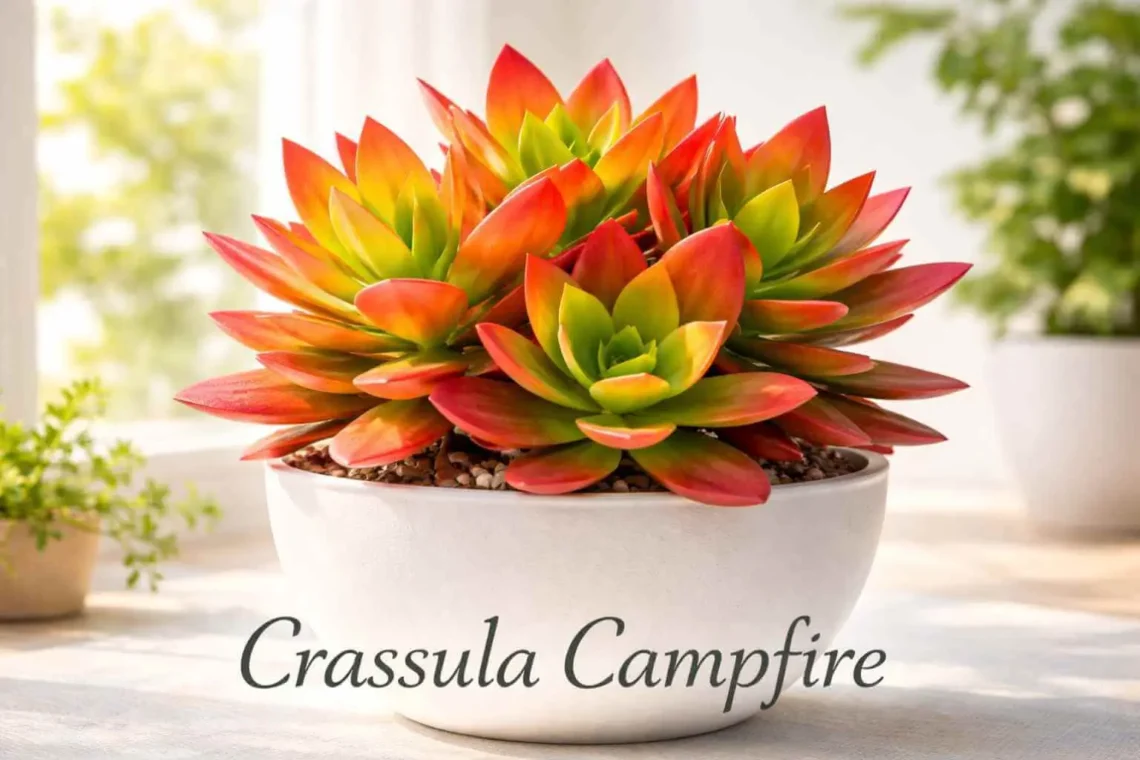
Crassula Campfire is a succulent plant recognized for its vibrant seasonal foliage that shifts from bright green to fiery red and orange hues. Botanically classified as Crassula capitella, this plant is a popular addition to both indoor and outdoor succulent collections due to its compact growth and visual appeal. Its adaptability allows it to thrive in pots, rock gardens, or as part of mixed succulent arrangements. The plant’s distinct coloring and hardy nature make it highly sought after among enthusiasts. Supporting terms include crassula campfire succulent, crassula campfire plant, and suculenta crassula campfire. Like the Crassula Campfire, other popular succulents such as Panda Plants thrive in indoor collections and require similar attention to light and soil.
Botanical Characteristics of Crassula Campfire
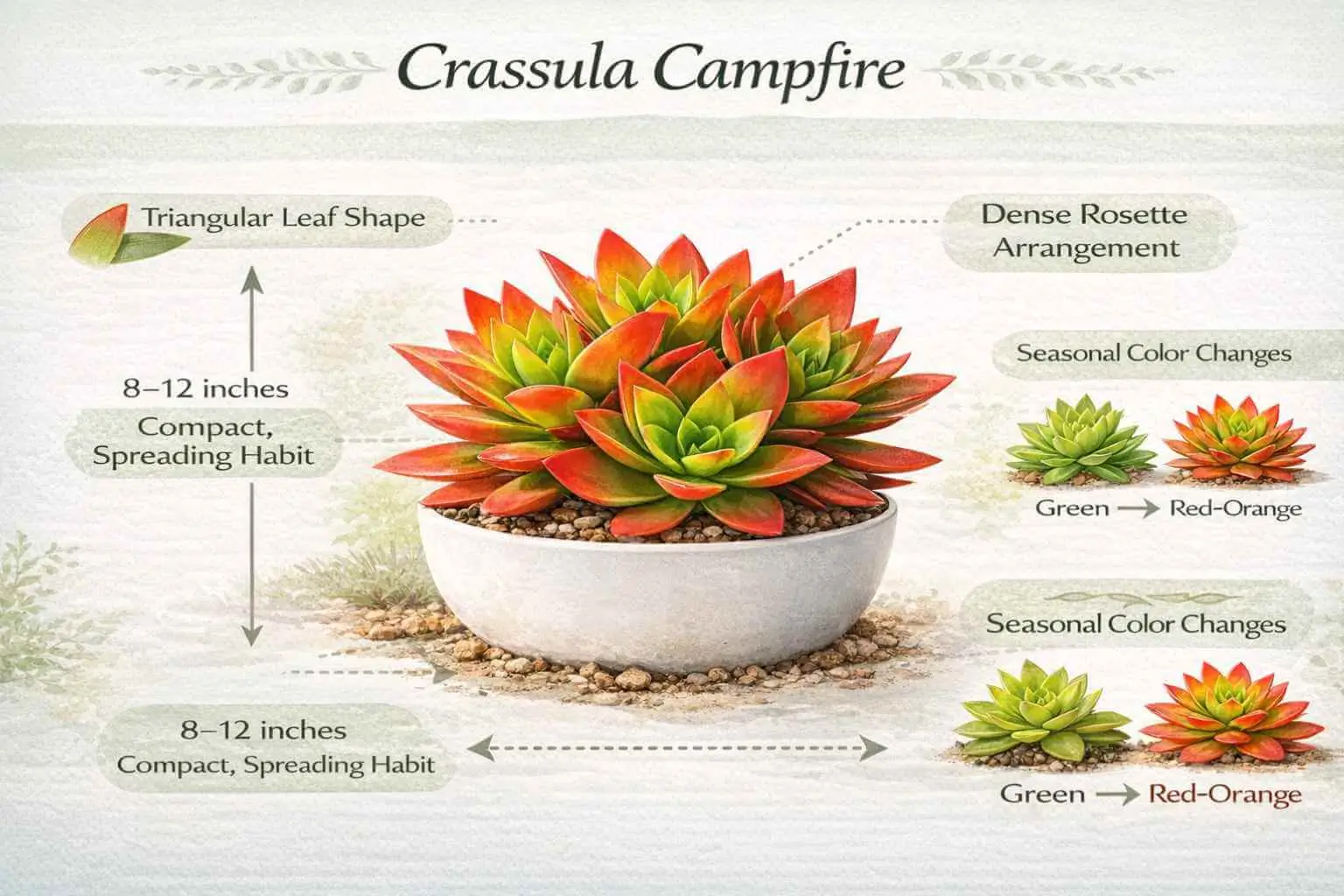
Crassula Campfire features thick, triangular leaves arranged in dense rosettes. The foliage transitions seasonally, turning bright red or orange in full sun while remaining green under lower light. Typically, the plant reaches a height of 8–12 inches with a spreading growth habit, forming tight clusters that enhance its visual impact. Its compact size and color-changing leaves contribute to its popularity in decorative succulent displays. Relevant keywords include crassula campfire colors, crassula campfire height, and crassula capitella campfire. Crassula Campfire belongs to the Crassulaceae family, a group of succulent plants known for their water-storing leaves and adaptability to dry conditions (Wikipedia).
Varieties and Variegation
Several variegated forms of Crassula Campfire exist, displaying cream or yellow stripes along the leaf edges. These variegated variants, known as crassula campfire variegated or variegated crassula campfire, differ from standard forms primarily in leaf coloration and intensity. Variegation adds ornamental value, especially in mixed succulent collections, and requires careful light management to maintain vibrant hues.
Care Requirements
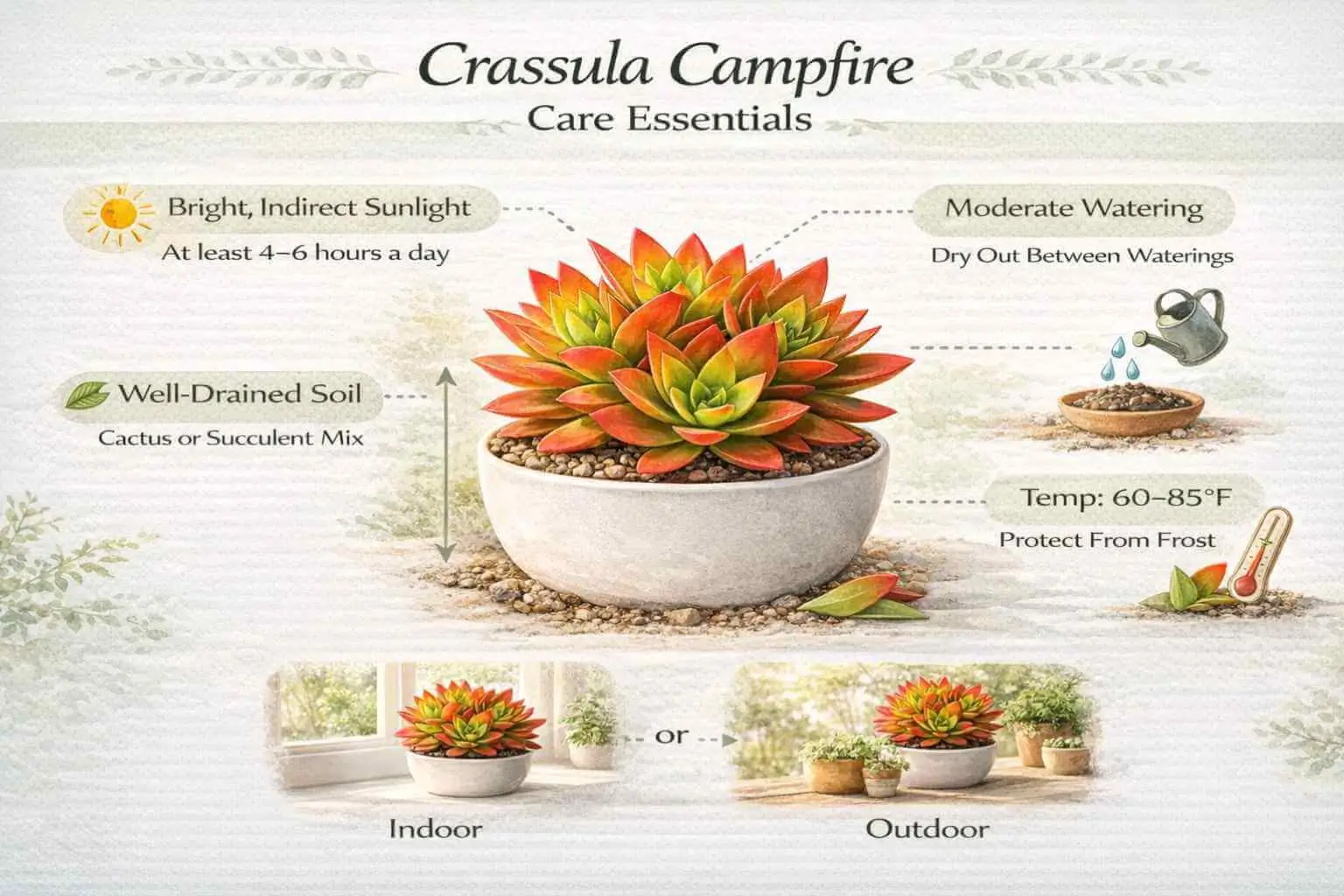
Crassula Campfire thrives in bright, indirect sunlight, with at least 4–6 hours of light daily to achieve optimal coloration. Well-drained soil, such as a cactus or succulent mix, prevents root rot. Watering should be moderate, allowing soil to dry completely between sessions. Temperature tolerance ranges from 60–85°F (15–29°C), making the plant suitable for both indoor placement and outdoor gardens in frost-free regions. Keywords include crassula campfire care, crassula campfire indoors, and crassula capitella campfire care.
Common Problems and How to Address Them
Crassula Campfire may encounter pests like mealybugs or aphids, fungal infections, overwatering, and leaf discoloration. Symptoms such as soft, blackened leaves indicate root rot, while pale or yellow leaves suggest insufficient sunlight. Proper care involves adjusting watering frequency, improving soil drainage, and using insecticidal soap when necessary. Keywords: crassula campfire problems.
Propagation Techniques
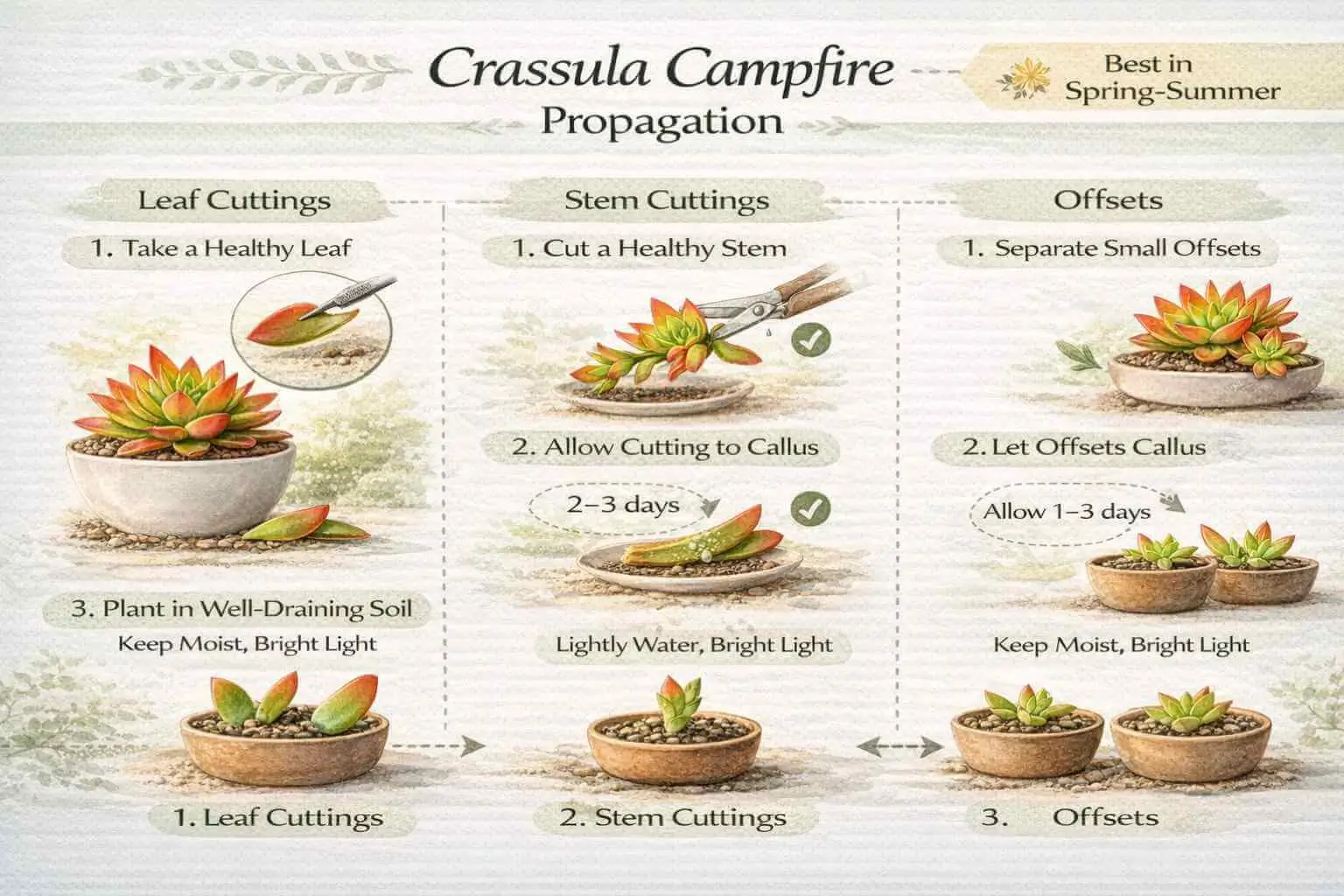
Propagation is achievable via leaf cuttings, stem cuttings, or offsets. Select healthy leaves or stems and allow them to callus for 2–3 days before planting in well-drained soil. Offsets can be separated during the growing season for immediate planting. Spring and summer provide the best conditions for propagation due to warmer temperatures and active growth. Keywords include crassula campfire propagation, how to propagate crassula campfire, how do you propagate a crassula campfire?, and crassula capitella campfire propagation.
Flowering and Reproduction
Crassula Campfire produces small, star-shaped flowers, typically in late summer to fall. Flowers are white or pinkish and emerge at the tips of mature stems. While ornamental, flowering is secondary to foliage in visual appeal. The plant reproduces primarily via vegetative propagation, ensuring consistent color and form. Keywords: crassula campfire flower, crassula campfire flor, campfire succulent flower.
Safety and Benefits
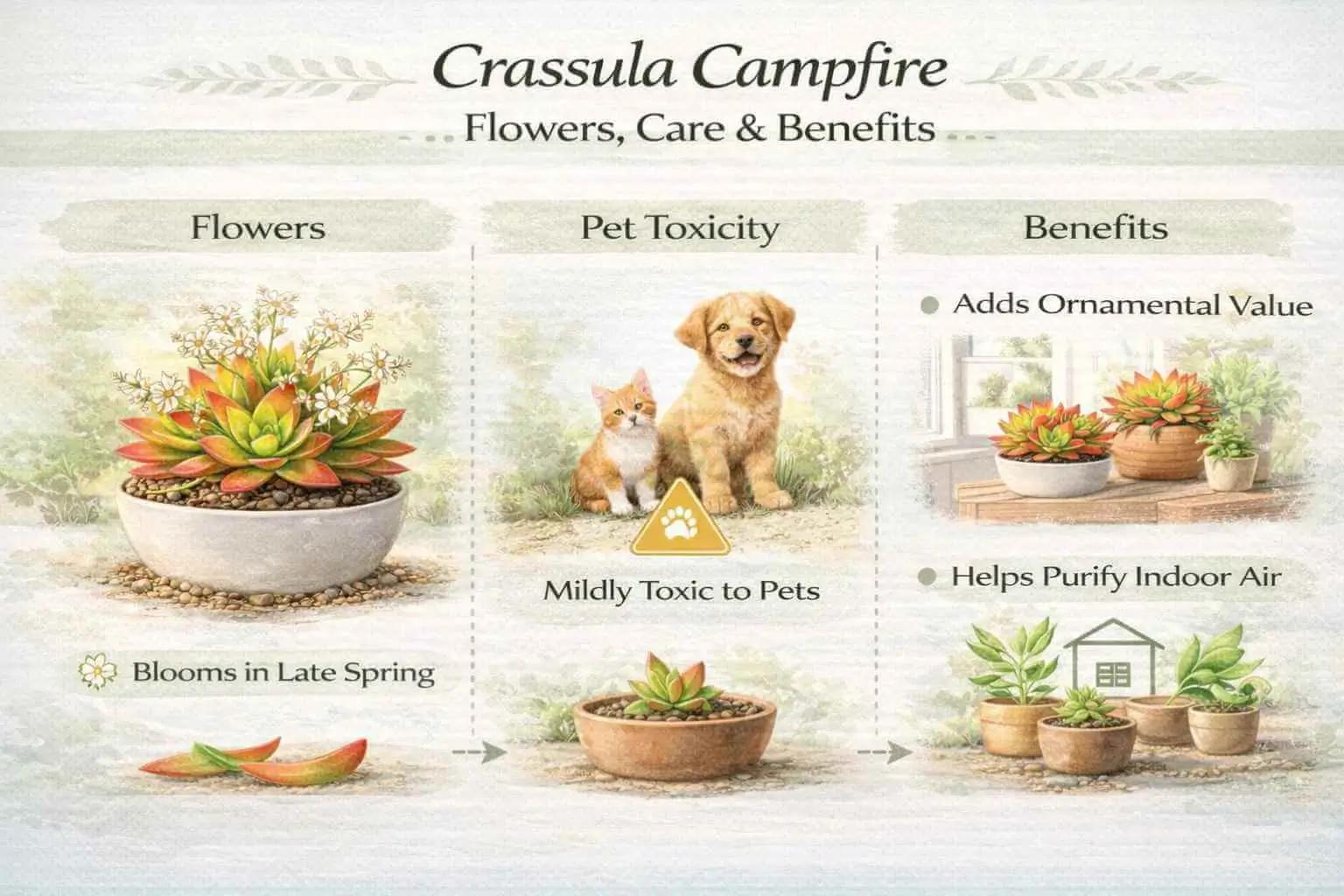
Crassula Campfire is mildly toxic if ingested, posing a risk to pets and small children. Handling generally poses no danger, and the plant can be enjoyed safely out of reach. Benefits include aesthetic enhancement in gardens or indoor settings, potential air purification, and low-maintenance care. Keywords: crassula campfire poisonous, campfire crassula toxic, crassula campfire benefits.
Pruning and Maintenance
Pruning involves removing leggy stems and dead leaves to maintain a compact shape and promote new growth. Regular pruning supports vibrant coloration and prevents overcrowding. Excessive stretching indicates inadequate sunlight. Keywords: how to prune crassula campfire.
Related Species and Comparisons
Crassula Campfire is part of a diverse genus, including species like Crassula ovata, Crassula pagoda, and Crassula thyrsiflora. Crassula capitella green maintains greener foliage, while Crassula red pagoda displays red-hued leaves similar to Campfire. Shark tooth crassula presents unique serrated leaves, highlighting the genus’s morphological variety. Keywords: crassula capitella, crassula capitella green, crassula red pagoda, shark tooth crassula. For gardeners interested in compact, visually striking plants beyond Crassula, Dwarf Myrtle Shrub offers another option for indoor or patio displays.
Conclusion
Crassula Campfire offers striking seasonal colors, manageable care requirements, and straightforward propagation methods. Its compact growth and adaptability make it an excellent choice for succulent enthusiasts. Proper care, sunlight exposure, and pruning ensure long-term health and visual appeal, encouraging exploration of additional Crassula species and hybrid adaptations.
FAQs
- What is Crassula Campfire?
Crassula Campfire is a succulent plant from the Crassula genus, known for its colorful, seasonal foliage and easy-to-care growth habits. - How do I propagate Crassula Campfire successfully?
Propagation is best via leaf or stem cuttings in spring or summer, ensuring healthy, well-drained soil and moderate sunlight. - Does Crassula Campfire flower, and when?
Yes, it produces small star-shaped flowers, usually in late summer to fall, adding ornamental value to gardens and indoor collections. - Is Crassula Campfire safe for pets?
The plant can be mildly toxic if ingested, so it should be kept out of reach of cats, dogs, and small children. - What are the ideal care conditions for Crassula Campfire?
Bright sunlight, well-drained soil, minimal watering, and moderate temperatures are essential for vibrant colors and healthy growth. - How do I maintain the shape and color of Crassula Campfire?
Prune leggy stems, remove dead leaves, and ensure sufficient sunlight to maintain compact growth and seasonal red-orange hues.