Introduction: What an Evergreen Pear Tree Is and Why It’s Different
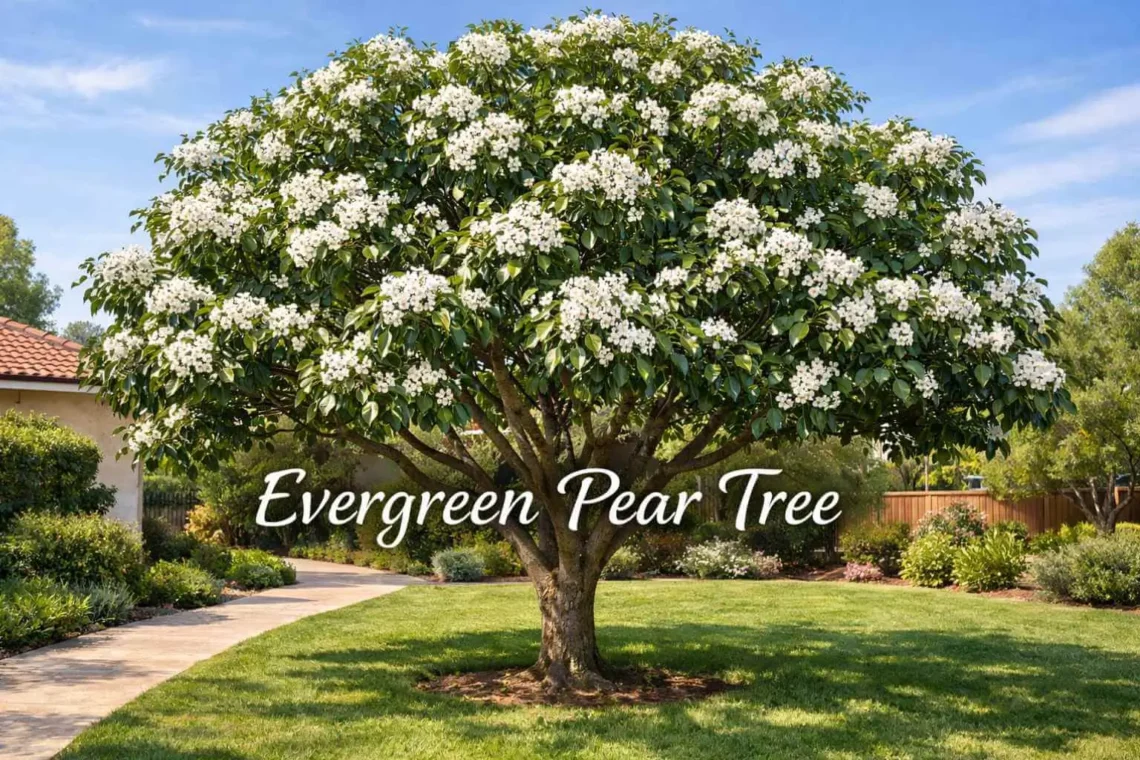
An evergreen pear tree is a type of pear that retains its foliage year-round, unlike typical deciduous pear trees that shed leaves each fall. These trees maintain a continuous green canopy, providing consistent shade and ornamental value. Often referred to as the Chinese evergreen pear tree or Pyrus kawakamii, they are distinguished by their glossy leaves and small, fragrant white flowers. Some confusion exists between fully evergreen and semi-evergreen varieties, which may lose a portion of their foliage in colder climates. Evergreen pear trees are primarily ornamental, valued for visual appeal rather than fruit production. Like other ornamental species such as dwarf evergreen shrubs, these trees provide year-round greenery and visual appeal, similar to a dwarf myrtle shrub in compact gardens.
Are Pear Trees Evergreen or Deciduous?
Most pear trees are naturally deciduous, losing their leaves during winter dormancy. Deciduous behavior helps the tree conserve energy and survive cold climates. Evergreen pear trees, however, can retain foliage in mild or warm regions, such as parts of the southern United States or coastal climates. The question “are pear trees evergreen?” depends on species and climate. True evergreen pears, like Pyrus kawakamii, maintain leaves year-round, while standard fruiting pears remain leafless in winter. References to “evergreen pear” or “evergreen pears” typically indicate ornamental cultivars with extended foliage retention.
Evergreen Pear Tree Species and Varieties
The most recognized evergreen pear tree species is the Chinese evergreen pear tree (Pyrus kawakamii). It is classified as an evergreen ornamental pear tree because of its persistent foliage and attractive white flowers. Dwarf evergreen pear trees and other ornamental varieties have been bred for smaller landscapes and decorative purposes. Popular evergreen pear tree varieties include standard Pyrus kawakamii evergreen pear forms and compact dwarf types suited for residential gardens. Collectively, these cultivars fall under evergreen pear tree varieties or evergreen ornamental pear tree varieties in horticultural listings. The most recognized evergreen pear tree species is the Chinese evergreen pear tree (Pyrus kawakamii) (Wikipedia), classified as an evergreen ornamental pear due to its persistent foliage and white flowers.
Growth Habit, Size, and Mature Form
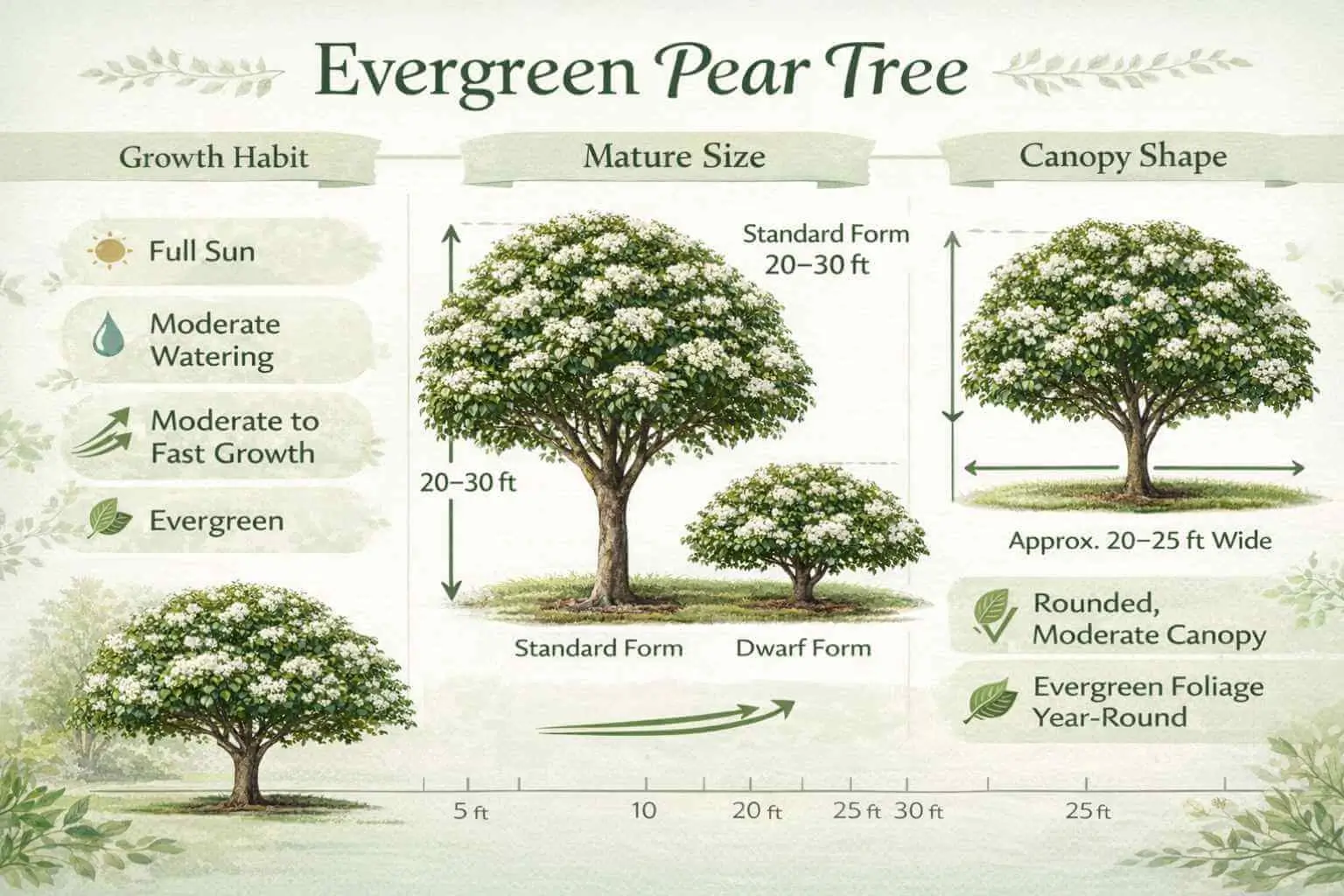
A full-grown evergreen pear tree typically reaches 20–30 feet in height, with a rounded or slightly conical canopy. Growth rate is moderate, averaging 12–18 inches per year, though dwarf forms expand more slowly. Standard forms exhibit a broader canopy suitable for shading lawns or entryways. Seasonal structural expectations include dense foliage in spring and summer, some leaf thinning in cooler months, and limited winter dormancy. Dwarf varieties maintain a compact shape, ideal for smaller spaces without extensive pruning.
Evergreen Pear Tree Leaves, Flowers, and Seasonal Behavior
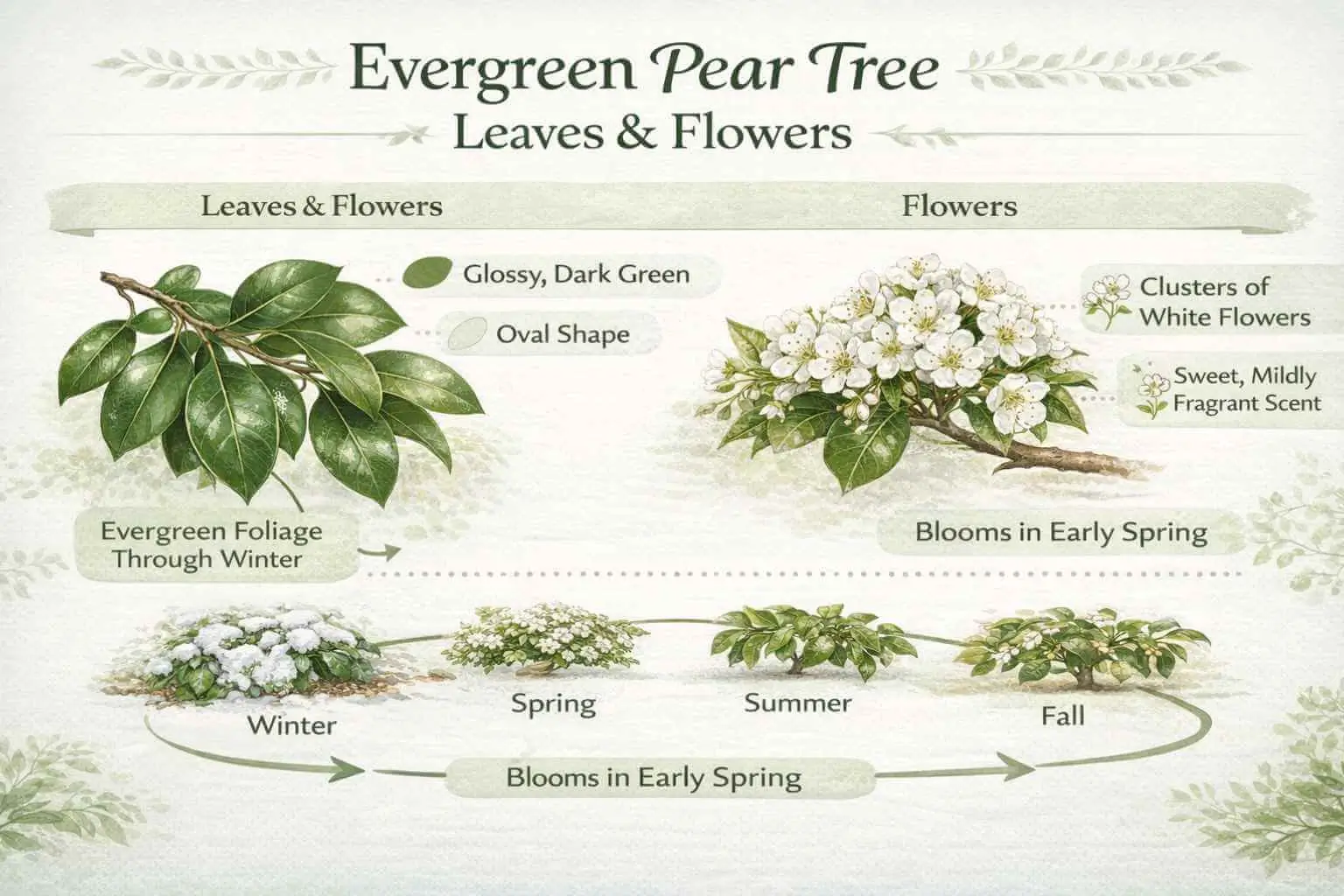
Leaves of evergreen pear trees are glossy, dark green, and oval-shaped. Leaf retention is high, with most foliage remaining through mild winters. Flowering occurs in late winter to early spring, producing clusters of fragrant white blooms. Unlike deciduous pears, evergreen pear trees display minimal leaf drop in fall, maintaining a visually consistent canopy. Seasonal color variation is limited, as these trees prioritize persistent greenery over autumnal display.
Do Evergreen Pear Trees Produce Fruit?
Ornamental evergreen pear trees rarely produce significant fruit. While some may develop small, inedible pears, fruiting is generally limited compared to standard pear varieties. The key distinction lies in breeding: ornamental pears emphasize appearance and flowering, while fruiting pears are cultivated for edible production. Questions like “do ornamental pear trees bear fruit?” or “pear tree with no fruit” reflect this differentiation.
Root System Characteristics and Invasiveness
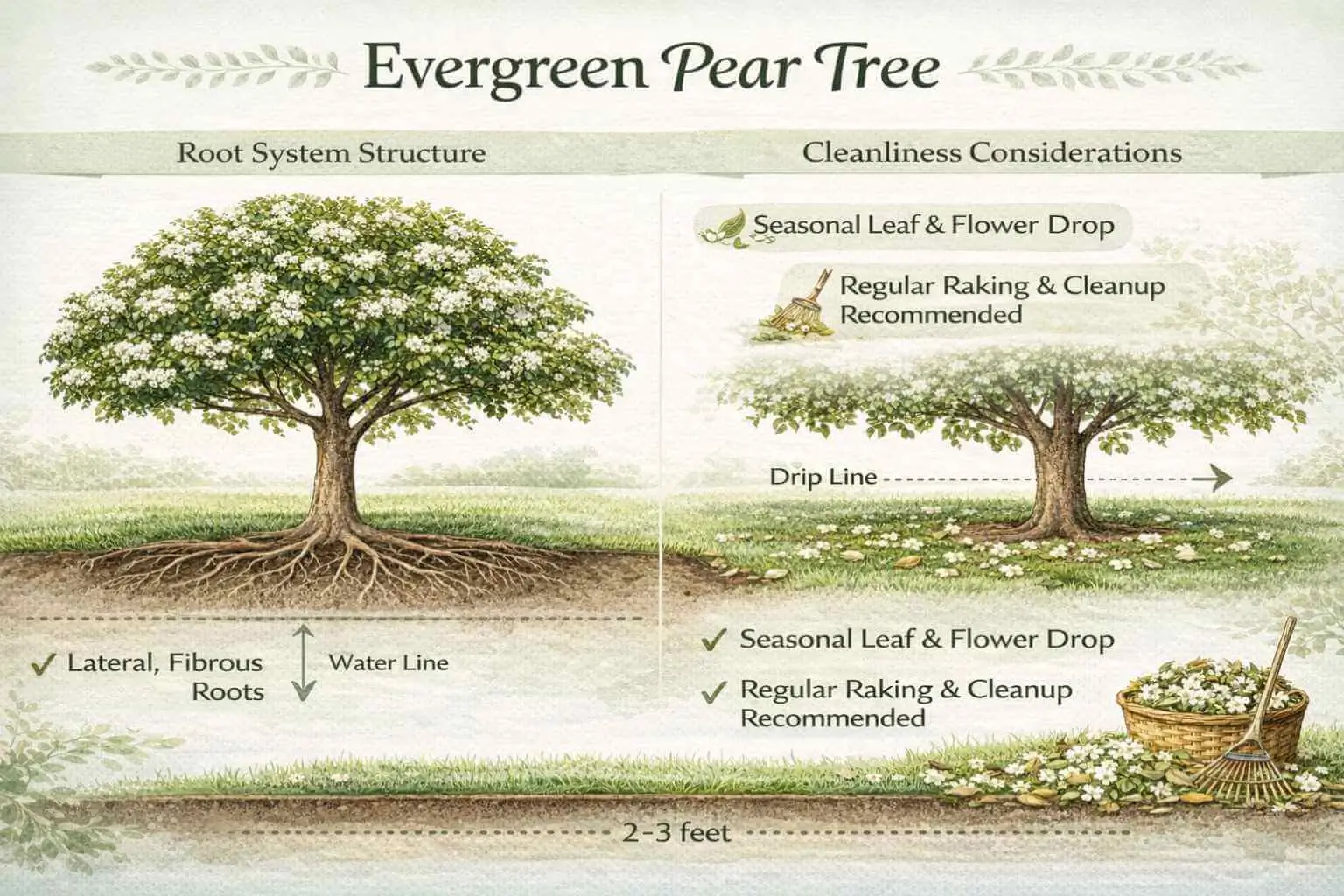
Evergreen pear trees have moderately shallow, fibrous root systems. Roots spread laterally rather than deeply, which can affect nearby soil and minor landscaping features. Concerns about invasiveness are minimal; they are generally non-aggressive near foundations. Common queries such as “are pear tree roots invasive?” or “do ornamental pears have invasive roots?” are addressed by noting that proper planting distance mitigates structural risks.
Common Diseases and Health Issues
Evergreen pear trees are susceptible to fungal infections, bacterial blights, and environmental stress. Common diseases include fire blight, leaf spot, and powdery mildew. Early detection and prevention involve regular inspection, proper spacing, and maintaining soil health. Environmental factors like excessive moisture or drought can exacerbate vulnerability.
Smell and Flower Odor — Why Some Evergreen Pear Trees Stink
White flowers of evergreen pear trees produce strong odors to attract pollinators. Scientifically, volatile organic compounds in the blooms create scents often described as “fishy” or unpleasant. Searches for “tree smells like fish” or “trees with white flowers that stink” reflect this common characteristic. Though aromatic intensity varies, the scent is generally more noticeable in warmer conditions.
Is the Evergreen Pear Tree Messy?
Evergreen pear trees can be considered messy due to leaf drop, fallen flowers, and occasional fruit debris. While not excessively burdensome, maintenance may involve raking during peak flowering and minor leaf cleanup. The term evergreen pear tree messy is commonly used to describe this seasonal litter.
Pros and Cons of Evergreen Pear Trees
Pros: Year-round greenery, ornamental flowers, moderate shade, compact dwarf forms for small spaces.
Cons: Strong flower odor, occasional leaf and flower drop, minor surface root spread.
Overall, evergreen pear tree pros and cons balance aesthetic value with manageable maintenance requirements.
Climate Suitability and Regional Performance
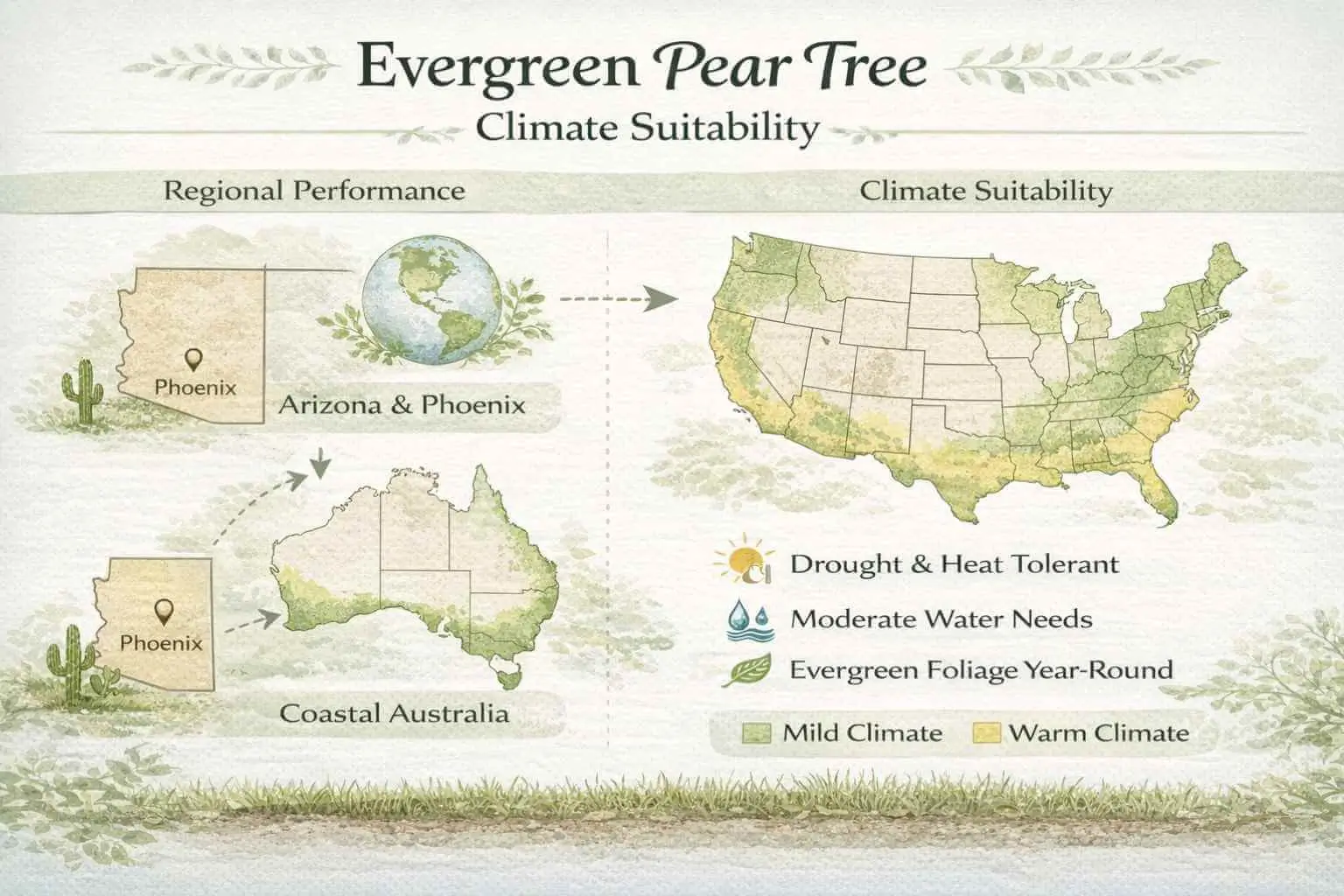
Evergreen pear trees thrive in warm or mild climates. They perform well in Arizona, Phoenix, and similar U.S. regions, as well as in parts of Australia. These trees tolerate moderate drought and heat but require well-drained soil. Performance declines in harsh cold or highly humid areas. Understanding climate compatibility is essential for successful growth. Evergreen pear trees thrive in warm climates and can complement other hardy plants like bamboo for resilient, low-maintenance landscaping.
How Evergreen Pear Trees Compare to Other Ornamental Pears
Compared with deciduous pyrus flowering pear types, evergreen pears retain foliage longer, have more consistent canopy coverage, and produce less edible fruit. Flower odor is often stronger, and leaf retention differentiates evergreen forms from seasonal deciduous varieties. This makes evergreen pears ideal for continuous visual appeal rather than fruit production.
Conclusion: Understanding Evergreen Pear Trees Before Planting
Evergreen pear trees offer year-round greenery, fragrant flowers, and manageable size for ornamental use. Understanding species traits, climate compatibility, and maintenance requirements allows informed selection. Consider leaf retention, odor, and root behavior to match landscape goals and personal preferences. Evaluating these factors ensures that planting an evergreen pear tree aligns with expectations and environmental conditions.
FAQs
- Are evergreen pear trees truly evergreen year-round?
Evergreen leaf retention depends on climate. In mild regions, most foliage persists year-round, while colder areas may cause partial leaf loss. - Why do evergreen pear tree flowers smell bad?
Flowers emit strong scents through volatile organic compounds to attract pollinators. The odor is naturally pungent and often described as fishy. - Do evergreen pear trees produce edible fruit?
Ornamental evergreen pears rarely produce edible fruit. Small fruit may appear but is generally inedible, unlike standard fruiting pear trees. - Are evergreen pear tree roots invasive near foundations?
Roots are moderately shallow and spread laterally. They are typically non-aggressive if planted at a safe distance from structures. - Is an evergreen pear tree a good choice for residential landscapes?
Yes, they provide year-round foliage, moderate shade, and ornamental flowers. Consider odor, leaf drop, and climate suitability before planting.