Introduction
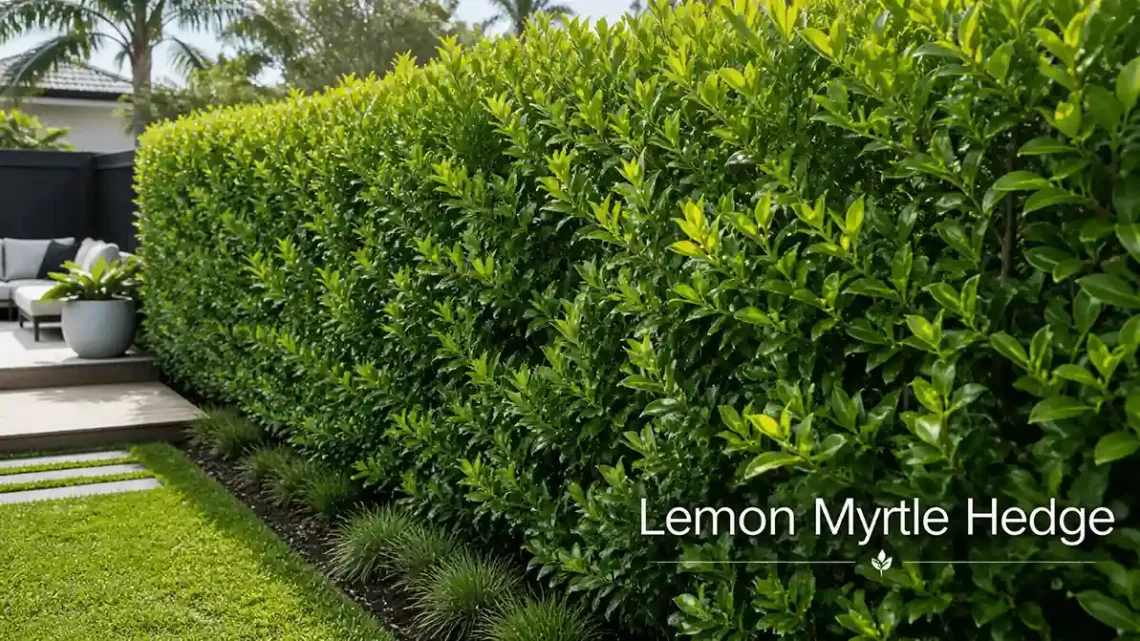
A lemon myrtle hedge is a structured planting of the evergreen tree Backhousia citriodora, shaped and maintained as a dense screen or boundary. Known for its strong citrus fragrance and glossy green foliage, this plant is widely used in landscaping for both functional and aesthetic purposes. Native to Australia, lemon myrtle serves a dual role as an ornamental hedge and an aromatic herb plant. Its leaves contain high levels of citral, giving it a distinct lemon scent. Gardeners use it for privacy hedging, decorative borders, and culinary applications, making it a versatile and practical choice for modern gardens. The plant Backhousia citriodora, commonly known as lemon myrtle, is a native Australian species valued for its high citral content and aromatic leaves.
Quick Summary
- Lemon myrtle hedge is a dense, evergreen screening plant with a strong citrus fragrance
- It can be shaped into a hedge or grown as a full-sized tree depending on pruning
- Thrives in warm climates with well-drained soil and consistent moisture
- Suitable for hedging, pots, and backyard landscaping
What Is a Lemon Myrtle Hedge?
Definition and Plant Overview
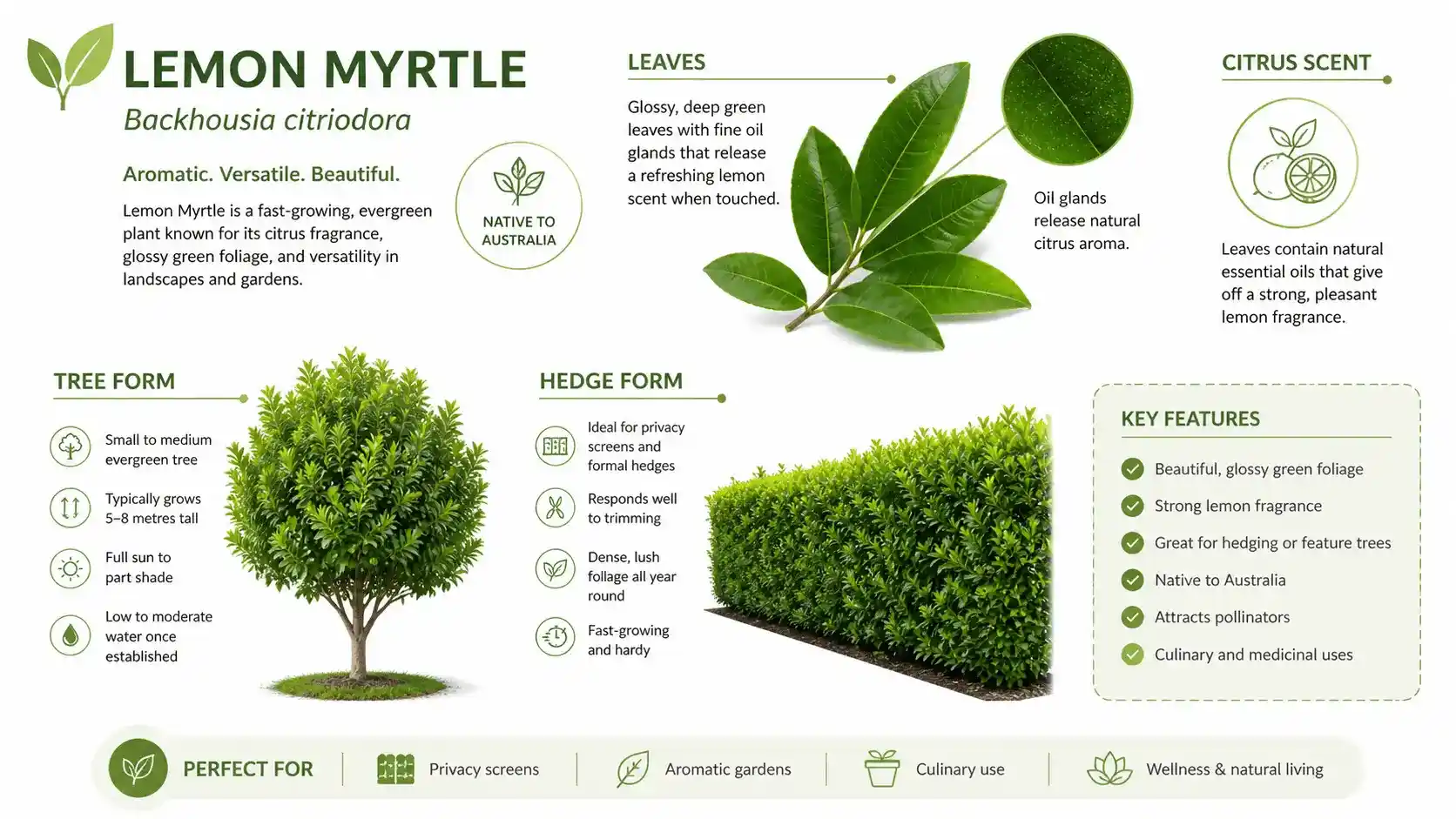
A lemon myrtle hedge is a cultivated row of Backhousia citriodora plants pruned to form a dense, uniform barrier. This plant, also known as lemon scented myrtle, is an evergreen tree with glossy, lance-shaped leaves that release a strong lemon aroma when crushed.
In its natural form, lemon myrtle grows as a tall tree, but regular pruning transforms it into a compact hedge. The term “lemon mirtle” is a common misspelling, but it refers to the same plant. Its dense foliage and fragrant leaves make it ideal for privacy screens and decorative hedges.
Natural Habitat and Origin
Lemon myrtle is native to the subtropical rainforests of eastern Australia, particularly Queensland. It naturally grows in warm, humid environments with rich, well-drained soils.
The plant adapts well to similar climates worldwide, especially in frost-free or mild regions. It thrives in areas with consistent rainfall and moderate temperatures, making it suitable for warm-temperate and subtropical zones.
Lemon Myrtle Tree vs Hedge: How Growth Form Changes
Tree Form vs Hedge Form
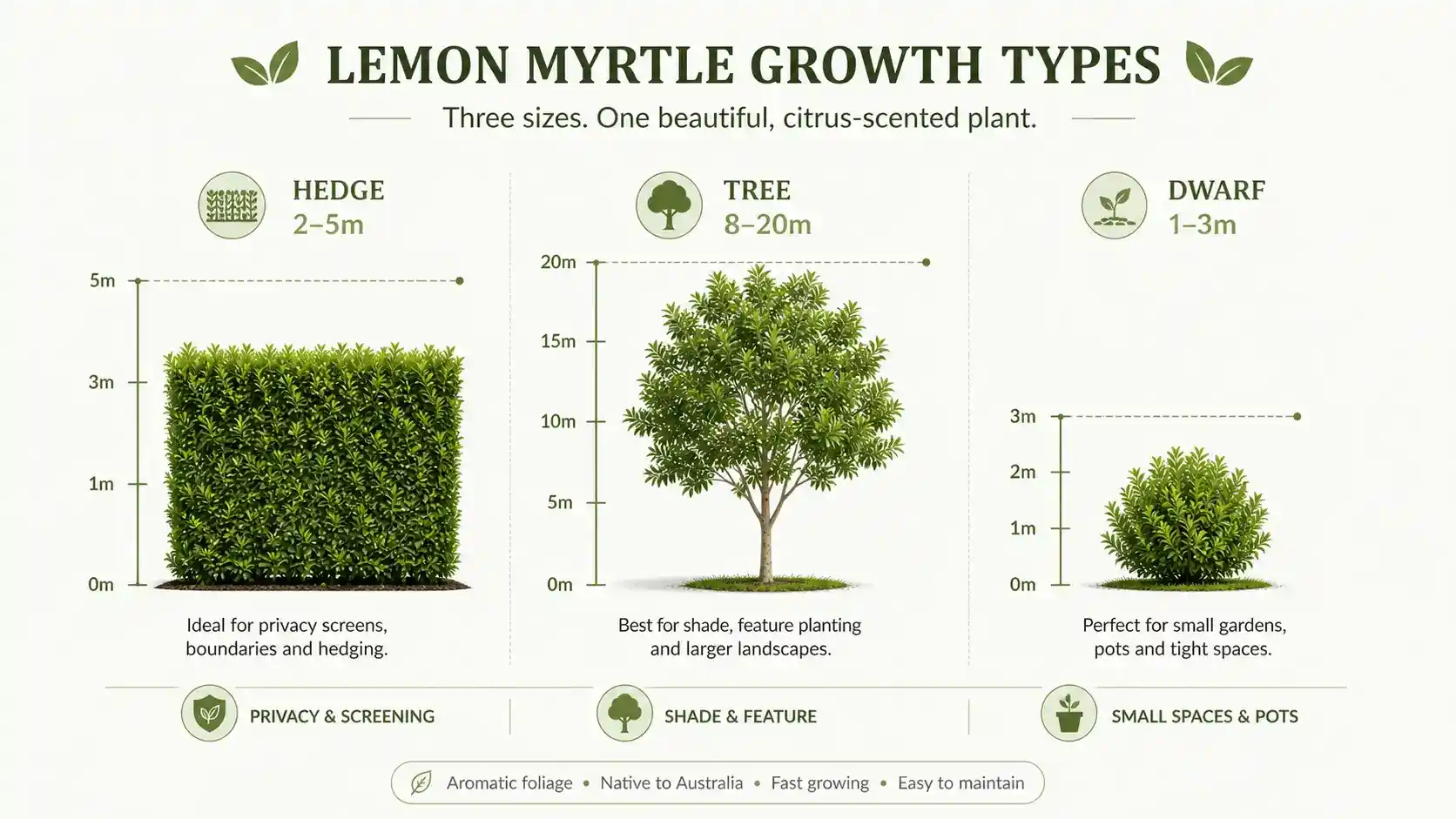
Lemon myrtle can grow as a full-sized tree or be maintained as a hedge depending on pruning practices. As a tree, it can reach heights of 8–20 meters with a broad canopy.
When shaped into a hedge, its height and width are controlled through regular trimming. This encourages lateral growth, resulting in a dense and compact form suitable for screening. Hedge shaping focuses on maintaining uniform height and promoting bushy growth.
Dwarf vs Standard Varieties
Standard lemon myrtle varieties grow tall and are best suited for larger landscapes. In contrast, dwarf lemon myrtle trees remain compact, typically reaching 1–3 meters in height.
Dwarf varieties are ideal for small gardens, patios, and container planting. Seedlings grow more slowly and require careful care in early stages, while mature plants establish faster and are easier to shape into hedges.
Lemon Myrtle Height and Width (Size Guide)
Typical Growth Dimensions
Lemon myrtle size varies depending on pruning and growing conditions. In natural form, Backhousia citriodora can become a tall tree with a wide canopy. As a hedge, its size is controlled to suit landscape needs.
Size Table
| Growth Type | Height | Width | Notes |
| Hedge | Moderate (2–5 m) | Dense spread | Controlled via pruning |
| Tree | Tall (up to ~8–20 m) | Wide canopy | Natural growth form |
| Dwarf | Smaller (1–3 m) | Compact | Ideal for pots |
Lemon Myrtle Growing Conditions (Essential Requirements)
Climate, Soil, and Light Needs
Lemon myrtle grows best in warm climates with moderate humidity. It prefers well-drained, slightly acidic soil rich in organic matter.
Full sun to partial shade is ideal for optimal growth. In Australia and similar climates, it performs well outdoors year-round, provided it is protected from frost.
Watering and Environmental Factors
Consistent moisture is essential, especially during establishment. However, the soil should not become waterlogged.
- Water regularly but allow the soil to drain
- Protect plants from strong winds
- Increase watering during hot, dry periods
- Reduce watering in cooler seasons
How to Grow a Lemon Myrtle Hedge Successfully
Step-by-Step Growing Process
To grow a lemon myrtle hedge, start with healthy plants or propagate from seeds. Seeds require warm conditions and consistent moisture to germinate.
Young plants should be planted in prepared soil with good drainage. Regular watering and gradual exposure to sunlight help establish strong growth.
Hedge Establishment Tips
- Choose healthy lemon myrtle plants
- Prepare soil with organic matter
- Space plants correctly
- Water consistently during establishment
Lemon Myrtle Hedge Spacing and Layout
Optimal Spacing for Dense Hedges
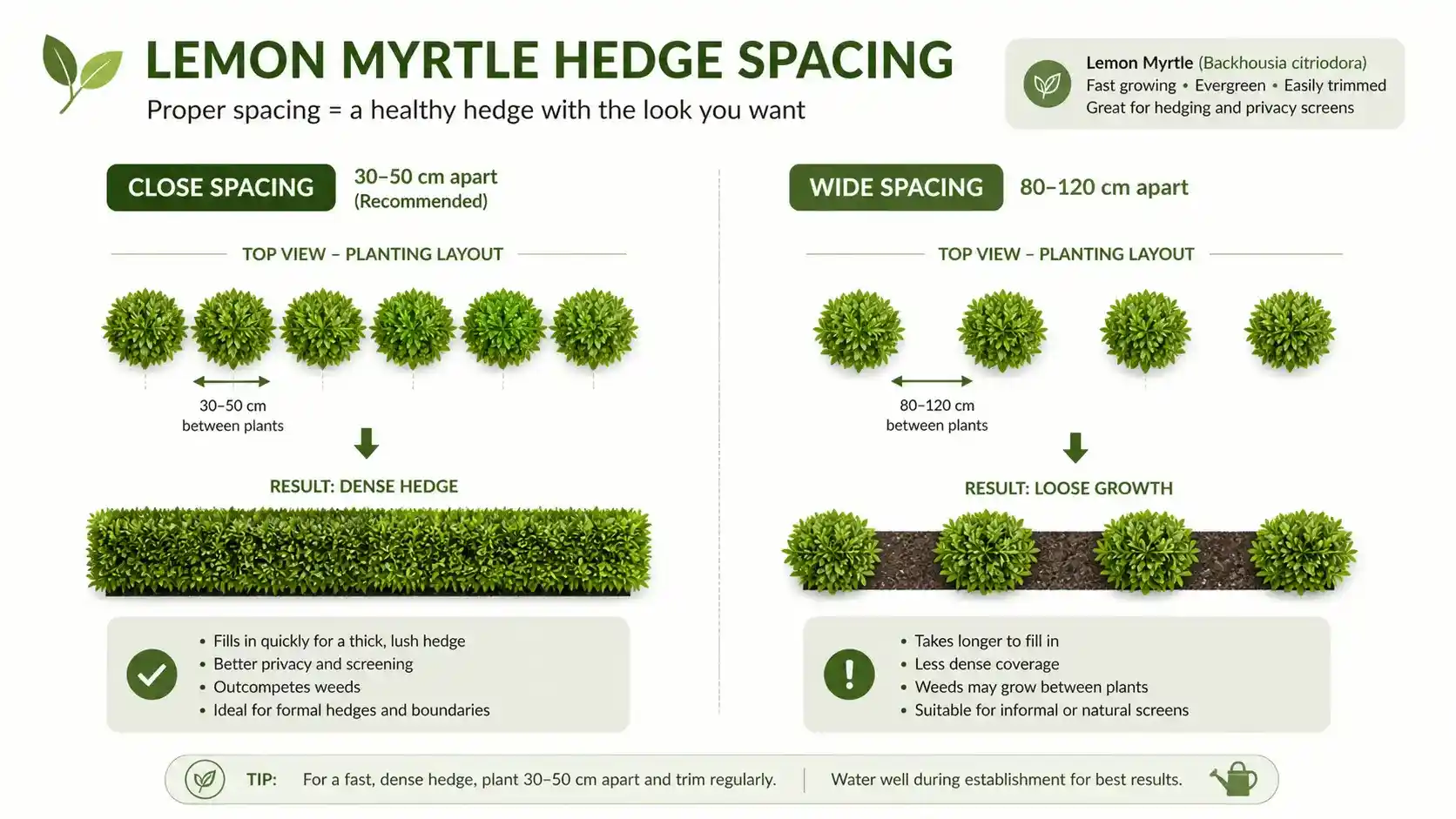
Lemon myrtle hedge spacing directly affects density and growth pattern. Closer spacing creates a fuller hedge, while wider spacing allows faster vertical growth.
Proper layout ensures even growth and effective screening.
Spacing Guidelines
- Closer spacing = denser hedge
- Wider spacing = faster vertical growth
- Adjust based on desired hedge height
Similar spacing principles apply to other hedge plants, as explained in this detailed guide on waxleaf privet hedge spacing, which helps achieve dense and uniform growth.
Lemon Myrtle Hedge Pruning and Maintenance
Pruning Techniques for Shape and Density
Pruning is essential to maintain a dense lemon myrtle hedge. Regular trimming encourages lateral branching and prevents the plant from becoming leggy.
Cutting back new growth helps control height and width while improving overall structure.
Maintenance Checklist
- Regular trimming
- Fertilization schedule
- Mulching for moisture retention
Growing Lemon Myrtle in Pots (Container Guide)
When to Use Pots Instead of Ground Planting
Lemon myrtle can be grown in pots when space is limited or climate conditions are unsuitable for ground planting. Container growing allows better control over soil and moisture.
Container Care Tips
- Use well-draining soil mix
- Choose large pots for root growth
- Water more frequently than ground plants
If you’re exploring more indoor-friendly plants, this complete guide to house plants provides broader insights into container care, lighting, and plant selection.
Lemon Myrtle Flowering and Seasonal Behavior
When Does Lemon Myrtle Flower?
Lemon myrtle flowers typically appear in summer, producing clusters of small, creamy-white blossoms. These flowers are highly aromatic and attract pollinators.
Growth Rate and Development
Lemon myrtle has a moderate growth rate. Growth speed depends on climate, soil quality, and care practices. Warm temperatures and consistent watering promote faster development.
Common Lemon Myrtle Hedge Problems (Problem-Solution Section)
Typical Issues and Causes
Common lemon myrtle hedge problems include yellowing leaves, slow growth, and pest infestations. These issues are often caused by poor drainage, inconsistent watering, or lack of maintenance.
Solutions and Prevention
- Improve drainage to avoid root rot
- Adjust watering practices
- Prune to improve airflow
- Use pest control when needed
If pests become an issue, especially sap-sucking insects, this guide on aphids on plants provides practical solutions for quick control and prevention.
Comparison: Lemon Myrtle Hedge vs Other Screening Plants
Structured Comparison Block
| Feature | Lemon Myrtle Hedge | Other Common Hedges |
| Fragrance | Strong citrus scent | Usually none |
| Growth Rate | Moderate | Varies |
| Maintenance | Medium | Low to high |
| Climate Suitability | Warm climates | Wider range |
Lemon myrtle stands out due to its strong fragrance and dual use as both a hedge and an herb plant, unlike most traditional hedging species. For example, options like the Carolina cherry laurel hedge offer a low-maintenance alternative, but lack the strong citrus fragrance that makes lemon myrtle unique.
Beginner Mistakes to Avoid
Common mistakes when growing lemon myrtle hedges include improper watering and spacing.
- Overwatering young plants
- Incorrect spacing
- Lack of pruning leading to sparse hedge
- Poor soil drainage
Lemon Myrtle Uses Beyond Hedging
Culinary and Medicinal Uses
Lemon myrtle leaves are widely used in cooking and herbal preparations. They contain high levels of citral, giving them antimicrobial and aromatic properties.
They are used in teas, spice blends, and essential oils.
Landscaping and Garden Integration
Lemon myrtle is commonly used in privacy screens and garden borders. It pairs well with other subtropical plants and can be integrated into mixed landscape designs.
Conclusion
Lemon myrtle hedge is a versatile and practical landscaping solution known for its dense growth and strong citrus fragrance. Its ability to be shaped into a hedge, grown as a tree, or maintained in pots makes it suitable for various garden types. By understanding its growing conditions, spacing, and pruning requirements, gardeners can create an attractive and functional natural screen. Proper care ensures long-term health and consistent performance in suitable climates.
FAQs
1. Can you hedge lemon myrtle successfully?
Yes, lemon myrtle can be shaped into a hedge with regular pruning and proper spacing, which encourages dense and uniform growth.
2. How fast does a lemon myrtle hedge grow?
Lemon myrtle has a moderate growth rate, influenced by climate, soil quality, and watering practices.
3. What is the ideal spacing for a lemon myrtle hedge?
Ideal spacing depends on desired density, but closer planting results in a fuller hedge more quickly.
4. Can lemon myrtle be grown in pots long-term?
Yes, especially dwarf varieties, though they require large containers and consistent care.
5. What are common problems with lemon myrtle hedges?
Common problems include poor drainage, pests, and lack of pruning, all of which can be managed with proper maintenance.