Introduction
Neem oil is a natural oil extracted from the seeds of the neem tree (Azadirachta indica) and is widely used as a pesticide, fungicide, and insecticide for plants. Its effectiveness in controlling pests makes it a popular choice for gardeners, but understanding which plants should not be treated with neem oil is essential to prevent damage. Awareness of neem oil safety, both for humans and plants, is crucial for indoor, outdoor, and edible plants, ensuring proper use without harming delicate species. Proper knowledge allows gardeners to maximize benefits while avoiding plant stress or toxicity.
Understanding Neem Oil
What is Neem Oil?
Neem oil is derived from the seeds of the neem tree, native to India, and contains compounds such as azadirachtin, which act as natural pesticides. It is commonly used for pest control, serving as an insecticide and fungicide for various plants. Neem oil’s properties make it effective against aphids, whiteflies, mites, and fungal infections, while remaining biodegradable and low in toxicity when used properly. Its versatility has made it a staple in organic and conventional plant care. Neem oil is extracted from the seeds of the neem tree (Azadirachta indica), a plant widely recognized for its medicinal and pesticidal properties Wikipedia.
How Neem Oil Works on Plants
Neem oil works primarily by disrupting the feeding and reproduction of pests and inhibiting fungal growth. It interacts with plant tissues in a mostly safe manner but can cause phytotoxicity if overapplied or used on sensitive species. While neem oil is generally safe for many plants, certain species may experience leaf burn, wilting, or stunted growth if exposed to high concentrations. Understanding these interactions is vital for safe, effective use.
Plants That Should Not Be Treated With Neem Oil
-
Indoor Plants Sensitive to Neem Oil
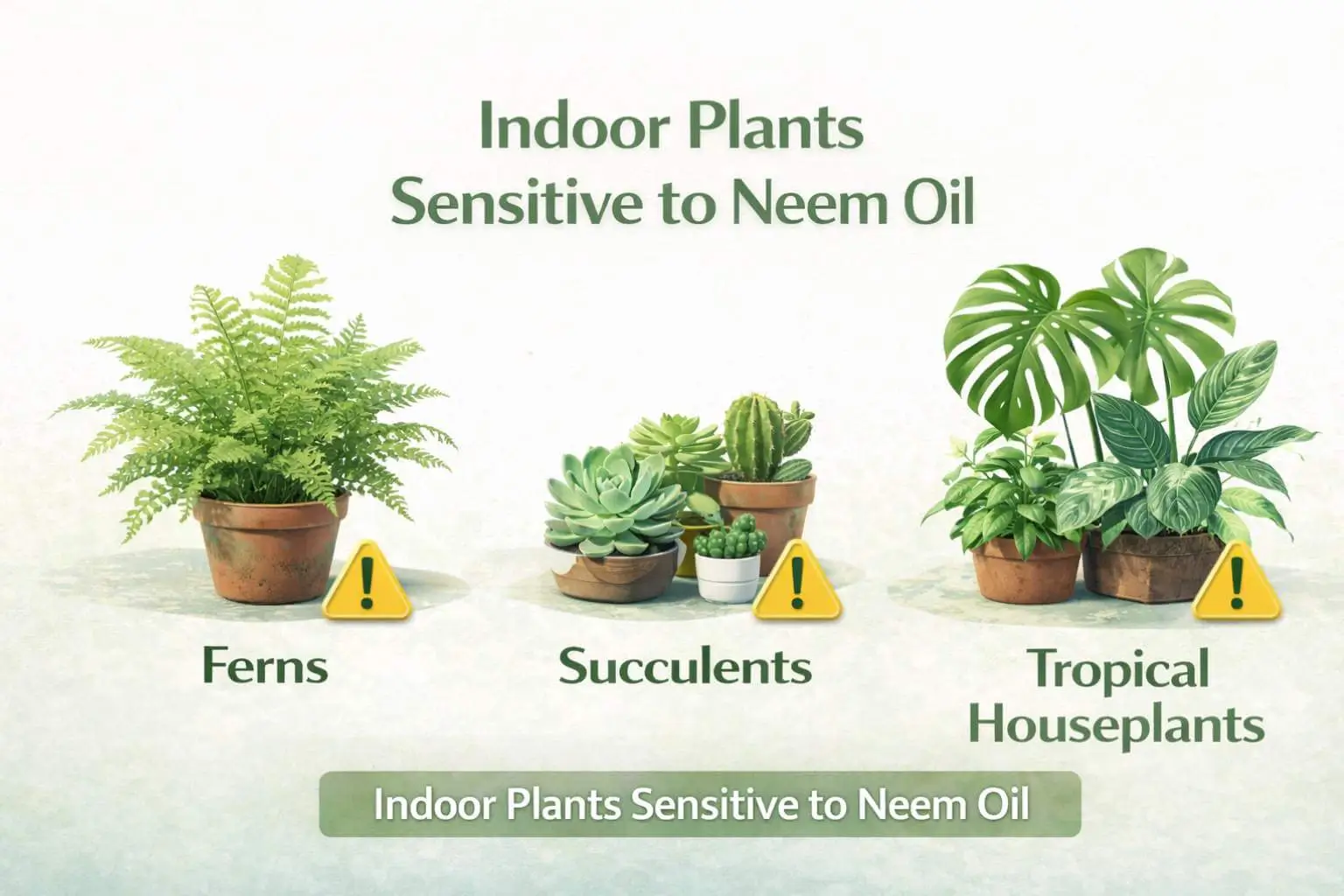
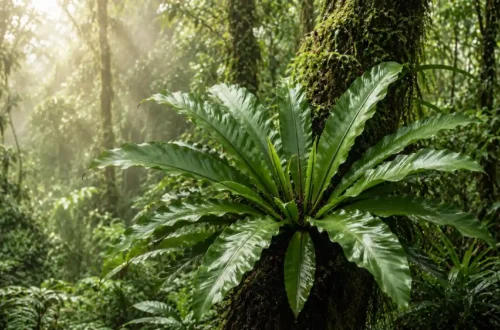
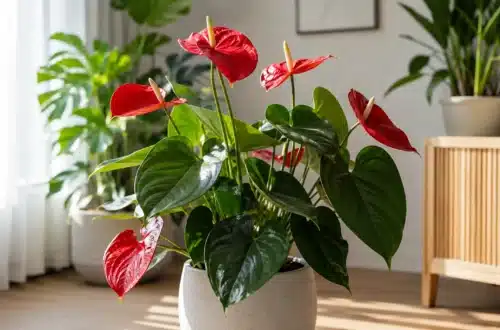
Some houseplants are particularly sensitive to neem oil, including ferns, succulents, and certain tropical species. These plants may show yellowing, leaf burn, or stunted growth when exposed. When using neem oil on indoor plants, proper dilution and testing on a small area first can reduce risk. Awareness of what plants not to use neem oil on indoors prevents accidental damage and ensures plant health. Some common indoor plants like ferns, succulents, and spider plants are sensitive to neem oil, so it’s important to test a small area first.
-
Outdoor Plants That May Be Harmed
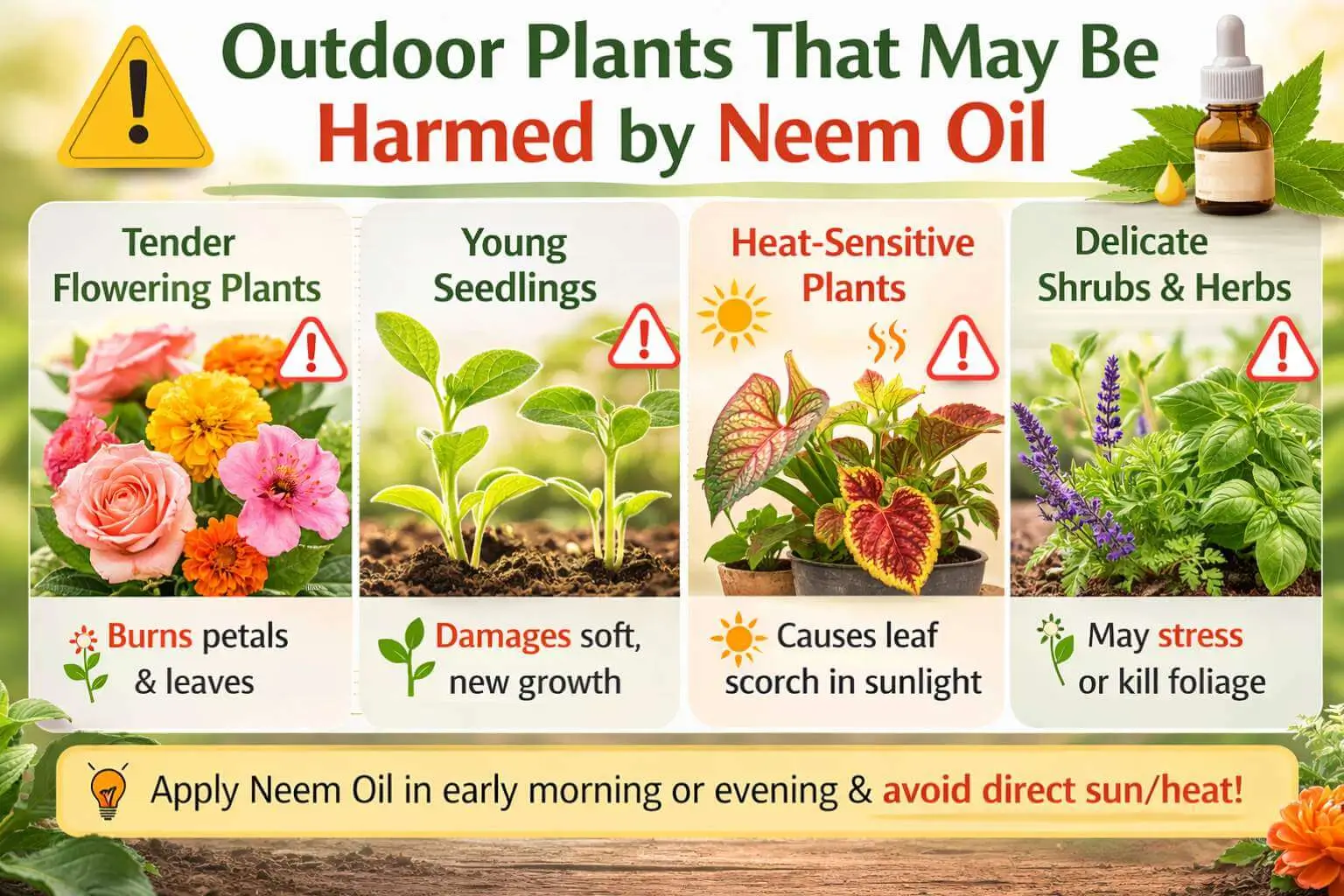
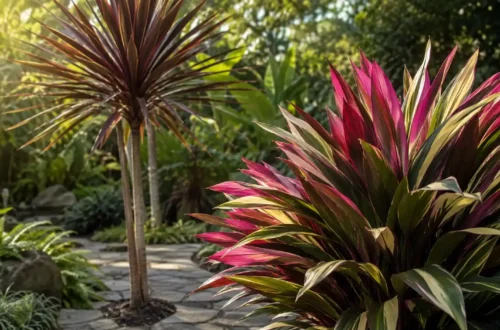
Certain outdoor plants, including tender flowering species and young seedlings, can be harmed by neem oil. Environmental factors such as high sunlight, heat, or wind increase the risk of phytotoxicity. Applying neem oil during cooler parts of the day and avoiding direct sunlight on freshly sprayed leaves helps prevent damage. Knowing what plants not to use neem oil on outside maintains garden vitality. Tender grasses such as Japanese sweet flag may be prone to leaf burn if neem oil is applied in direct sunlight.
-
Edible Plants and Neem Oil Safety
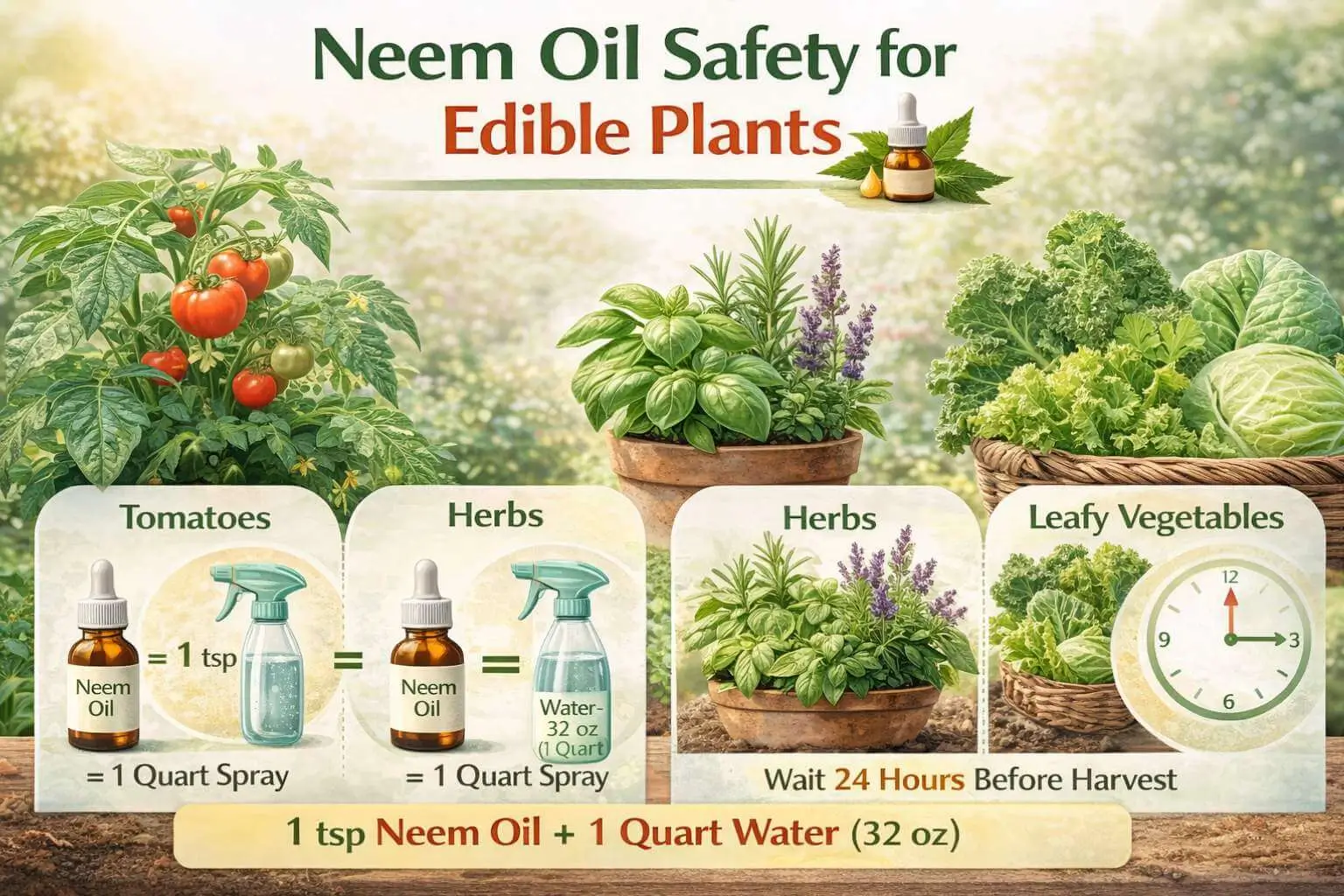
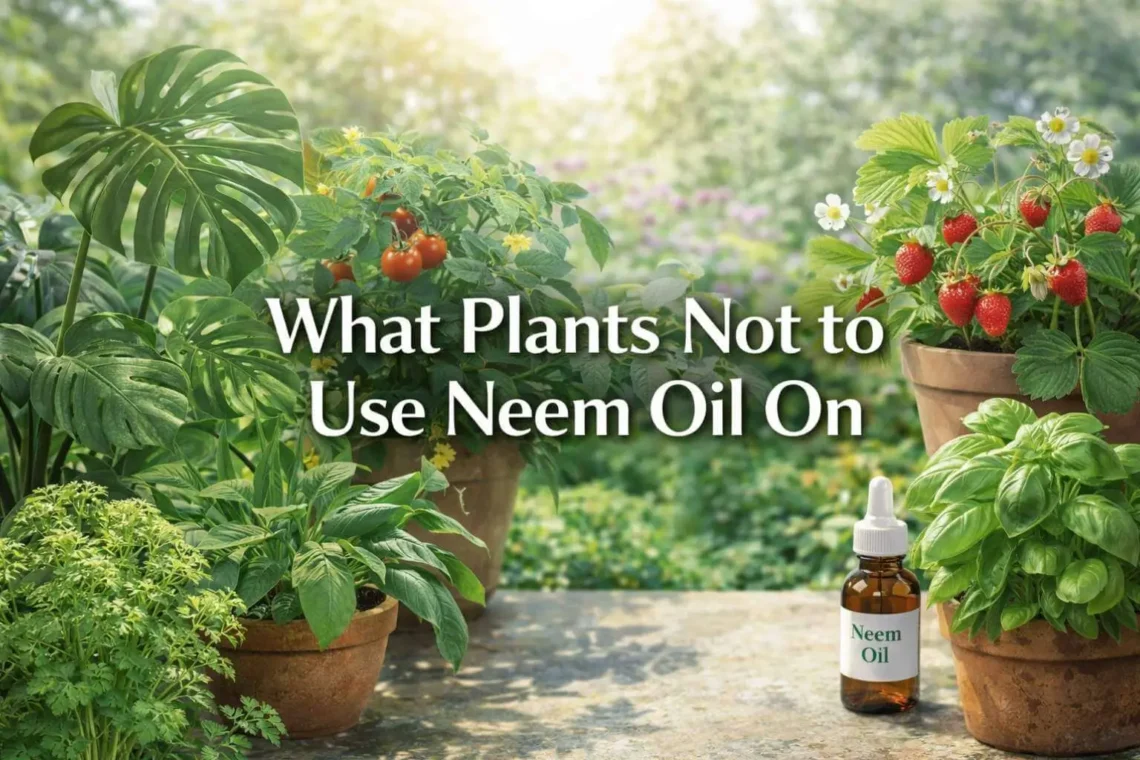
Neem oil can be used safely on many fruits, vegetables, and herbs when diluted correctly. However, sensitive plants like tomatoes and some leafy greens may suffer leaf burn or growth inhibition. For edible plants, follow recommended dilution ratios and allow sufficient time between application and harvest. Understanding how to use neem oil on edible plants ensures both pest control and food safety.
Application Guidelines for Neem Oil
How to Mix and Apply Neem Oil
Neem oil should be diluted with water, typically at a ratio of 1–2 tablespoons per liter, and mixed with an emulsifier like mild soap. Spray applications can target leaves, stems, and soil, depending on the pest or fungal issue. Proper mixing ensures even coverage and reduces the risk of plant stress. Gardeners should follow instructions carefully to determine whether soil or leaf spraying is more appropriate.
Indoor vs. Outdoor Application Considerations
Indoor plants require lower concentrations and careful attention to humidity and light conditions. Outdoor applications can tolerate slightly higher concentrations but must account for environmental factors such as temperature, sunlight, and wind. Timing and frequency of application should align with plant type and pest activity, optimizing safety and effectiveness.
Common Plant Problems Linked to Neem Oil
Signs Neem Oil Is Harming Plants
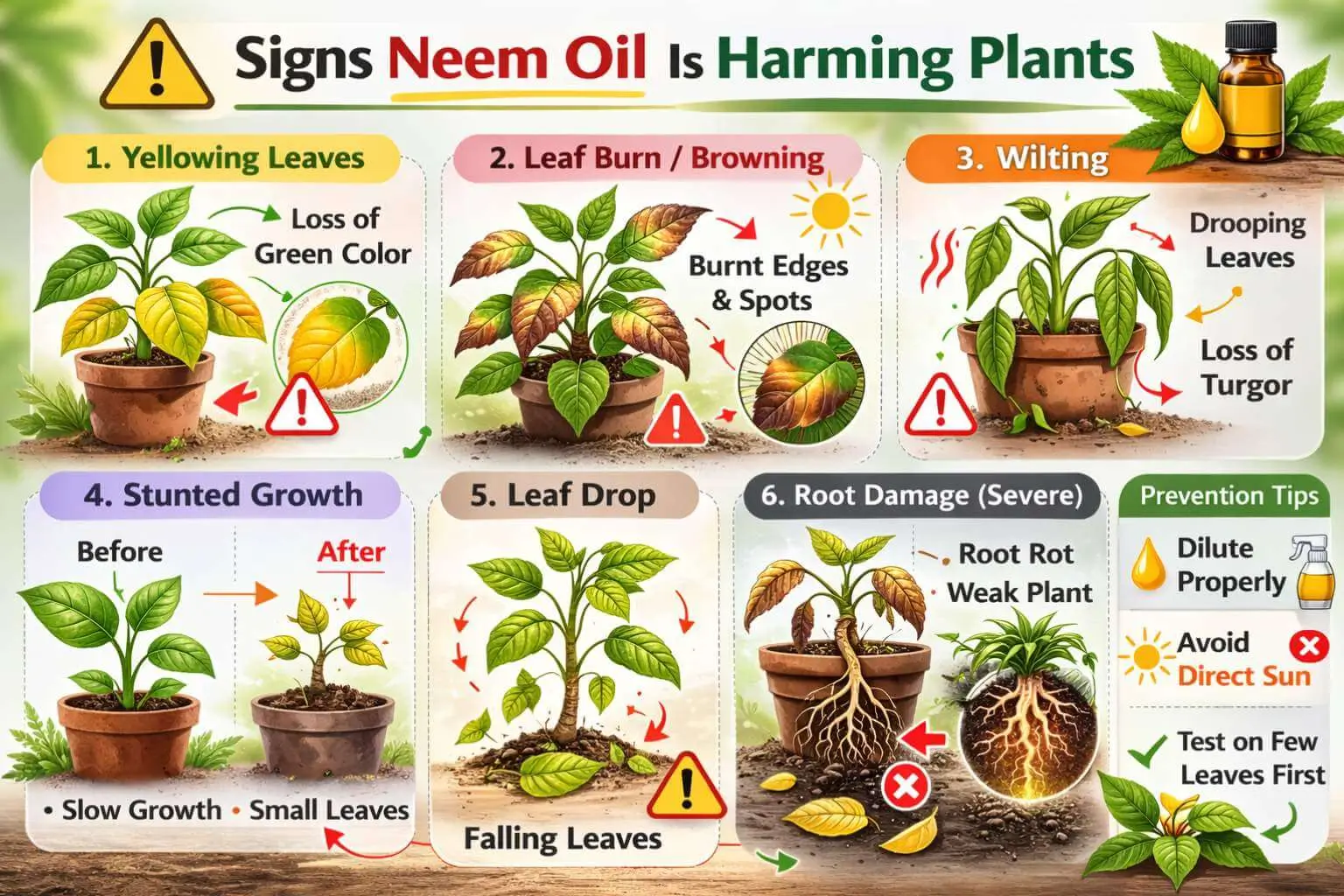
Excessive neem oil or high concentrations can cause yellowing leaves, wilting, stunted growth, or leaf drop. Overuse, application in direct sunlight, or on sensitive species are common causes of toxicity. Recognizing early signs allows gardeners to intervene before permanent damage occurs.
Troubleshooting and Prevention
Minor damage from neem oil can often be reversed by rinsing leaves, reducing application frequency, or using a lower concentration. Preventive strategies include testing a small leaf area first, avoiding applications during peak sunlight, and monitoring plant response. These steps minimize risks for sensitive species.
Differentiating Neem Oil Use
Comparison With Other Natural Pesticides
Neem oil offers advantages over alternatives like insecticidal soaps or horticultural oils due to its broad-spectrum pest control and systemic effects. However, it may be slower acting and can harm sensitive species if misapplied. Understanding its benefits and limitations helps gardeners select the most effective solution.
Common Misconceptions About Neem Oil
Neem oil is often assumed to be completely safe for humans, indoor plants, or all edible crops. While generally low in toxicity, concentrated solutions can cause skin irritation and certain plants may be harmed. Proper handling, dilution, and application prevent adverse effects and ensure safe use.
Seasonal conditions like heat or frost influence neem oil effectiveness and plant tolerance. Beginners often make mistakes such as overapplication, applying in direct sun, or neglecting dilution guidelines. Safe practices include adjusting concentration, timing applications carefully, and monitoring plant response. Indoor and outdoor care strategies differ, so context-specific adjustments improve outcomes.
Conclusion
Neem oil is a valuable tool for plant care when used safely and appropriately. Certain indoor, outdoor, and edible plants are sensitive and should be avoided or treated with caution. Following proper dilution, application methods, and seasonal adjustments maximizes benefits while preventing plant harm. Awareness of potential toxicity and preventive care ensures healthy growth and effective pest control for a wide range of plants.
FAQ
- Can neem oil harm my indoor plants?
Yes, sensitive indoor plants such as ferns, succulents, and tropical species can be harmed. Proper dilution and testing on a small area first reduce risk. - Which outdoor plants should avoid neem oil?
Tender flowering plants, young seedlings, and species prone to leaf burn are most at risk. Avoid spraying in direct sunlight or extreme heat. - Is neem oil safe for edible plants like tomatoes and herbs?
Neem oil can be safe if diluted correctly and applied with proper timing before harvest. Avoid overconcentration to prevent leaf damage. - How do I apply neem oil without harming my plants?
Mix at recommended dilution, spray evenly on leaves or soil, and apply during cooler parts of the day. Test on a small area for sensitive species. - What signs indicate neem oil is hurting a plant?
Look for yellowing leaves, wilting, stunted growth, or leaf drop. Reduce concentration and adjust application frequency to reverse minor damage.