Introduction
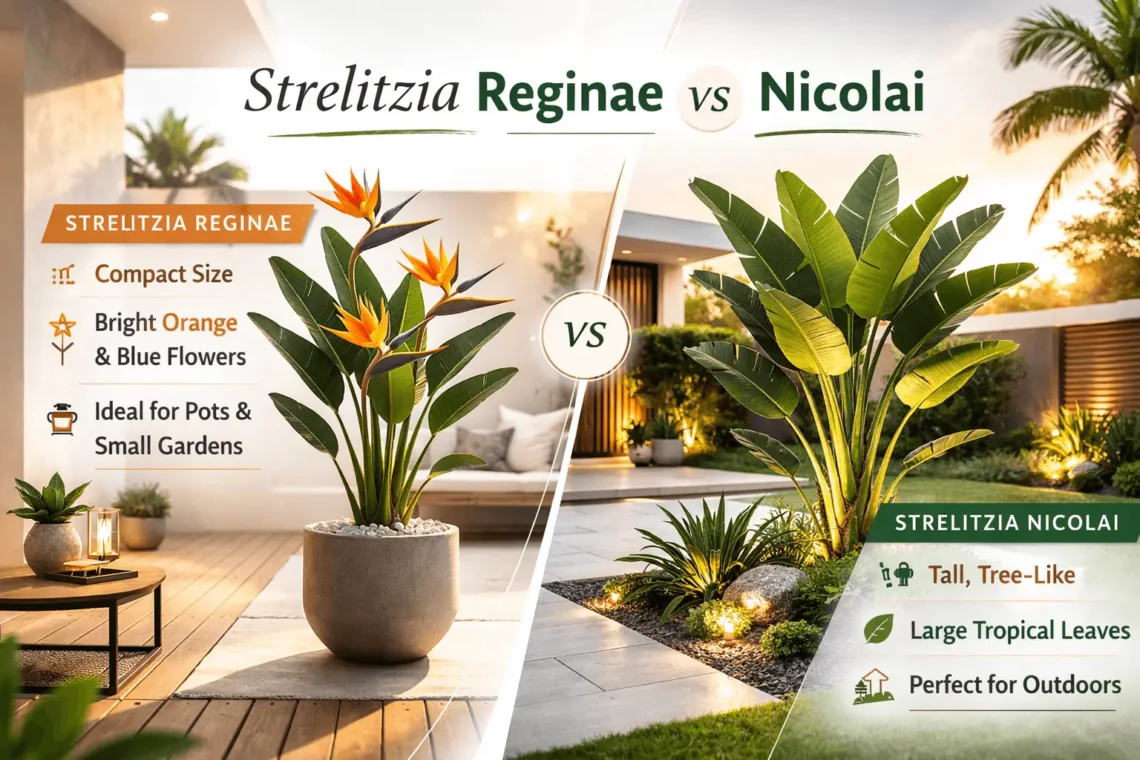
Strelitzia reginae vs nicolai refers to a comparison between two popular bird of paradise plant varieties known for their striking appearance and tropical appeal. Both plants belong to the Strelitzia genus, yet they differ significantly in size, structure, and practical use. While Strelitzia reginae is compact and commonly grown indoors, Strelitzia nicolai develops into a large, tree-like plant suited for outdoor landscapes or spacious interiors. This distinction often causes confusion among gardeners, especially when identifying bird of paradise tree types versus ornamental varieties used in decorative settings.
Quick Summary
- Strelitzia reginae is compact, colorful, and suitable for indoor or decorative planting.
- Strelitzia nicolai is large, tree-like, and best suited for outdoor landscapes or tall interiors.
- Key differences include plant size, leaf structure, flower appearance, and growth habit.
- Both species belong to broader types of strelitzia and bird of paradise plants.
What Is Strelitzia? (Bird of Paradise Overview)
The Strelitzia genus is a group of tropical plants in the family Strelitziaceae, commonly known as bird of paradise plants due to their flower shape resembling a bird in flight. These plants are native to southern Africa and are widely cultivated for ornamental use. For a deeper botanical classification, refer to the Wikipedia entry on Strelitzia, which details its taxonomy and native habitat.
Major species include:
- Strelitzia reginae
- Strelitzia nicolai
- Strelitzia alba
- Strelitzia caudata
- Strelitzia juncea
They are called bird of paradise plants because their flowers mimic the vibrant colors and form of exotic birds, making them highly valued in landscaping and interior design. You can also explore similar tropical species in this guide on Mexican Bird of Paradise Plant, which highlights another popular ornamental variety used in warm climates.
Strelitzia reginae vs nicolai: Key Differences Explained
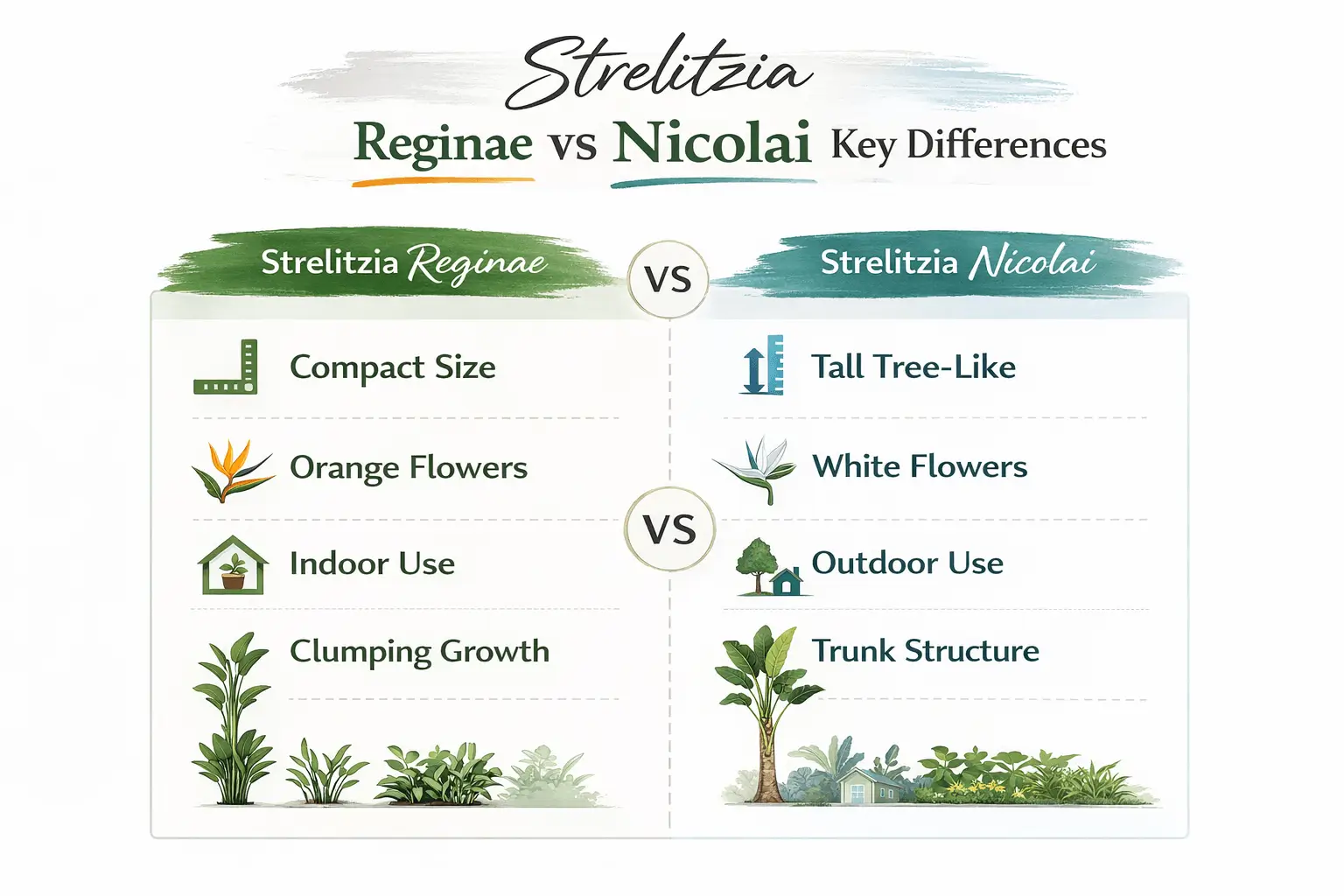
The main difference between strelitzia nicolai vs reginae lies in size, growth habit, and visual characteristics. While both belong to the same genus, they serve very different purposes in gardening and design.
Core Differences
- Size and height: Reginae remains compact, while nicolai grows tall and tree-like
- Leaf structure: Reginae has smaller upright leaves; nicolai has large, banana-like leaves
- Flower appearance: Reginae produces bright orange blooms; nicolai produces white flowers
- Growth habit: Reginae forms clumps; nicolai develops a trunk-like structure
- Usage: Reginae suits indoor spaces; nicolai suits outdoor or large interiors
Size and Growth Comparison
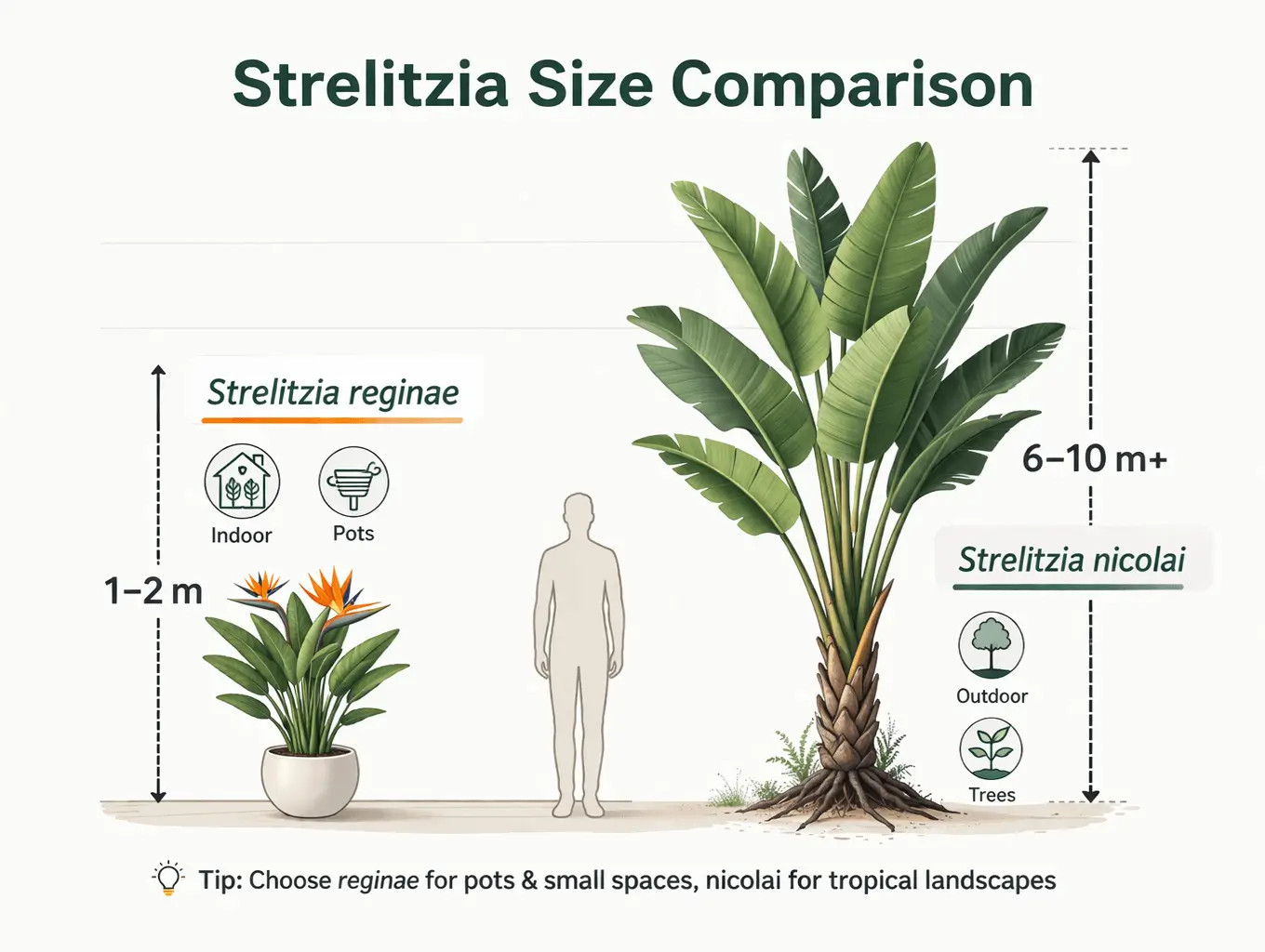
The size difference between strelitzia reginae vs nicolai is one of the most defining factors influencing plant selection.
Table: Reginae vs Nicolai Size
| Feature | Strelitzia reginae | Strelitzia nicolai |
| Mature Height | Compact (1–2 m) | Tall (6–10 m+) |
| Growth Form | Clumping plant | Tree-like structure |
| Indoor Size | Manageable | Large, space-demanding |
Indoor growth is typically smaller due to limited light and root space, but nicolai still requires significantly more room than reginae.
Leaf and Structure Differences
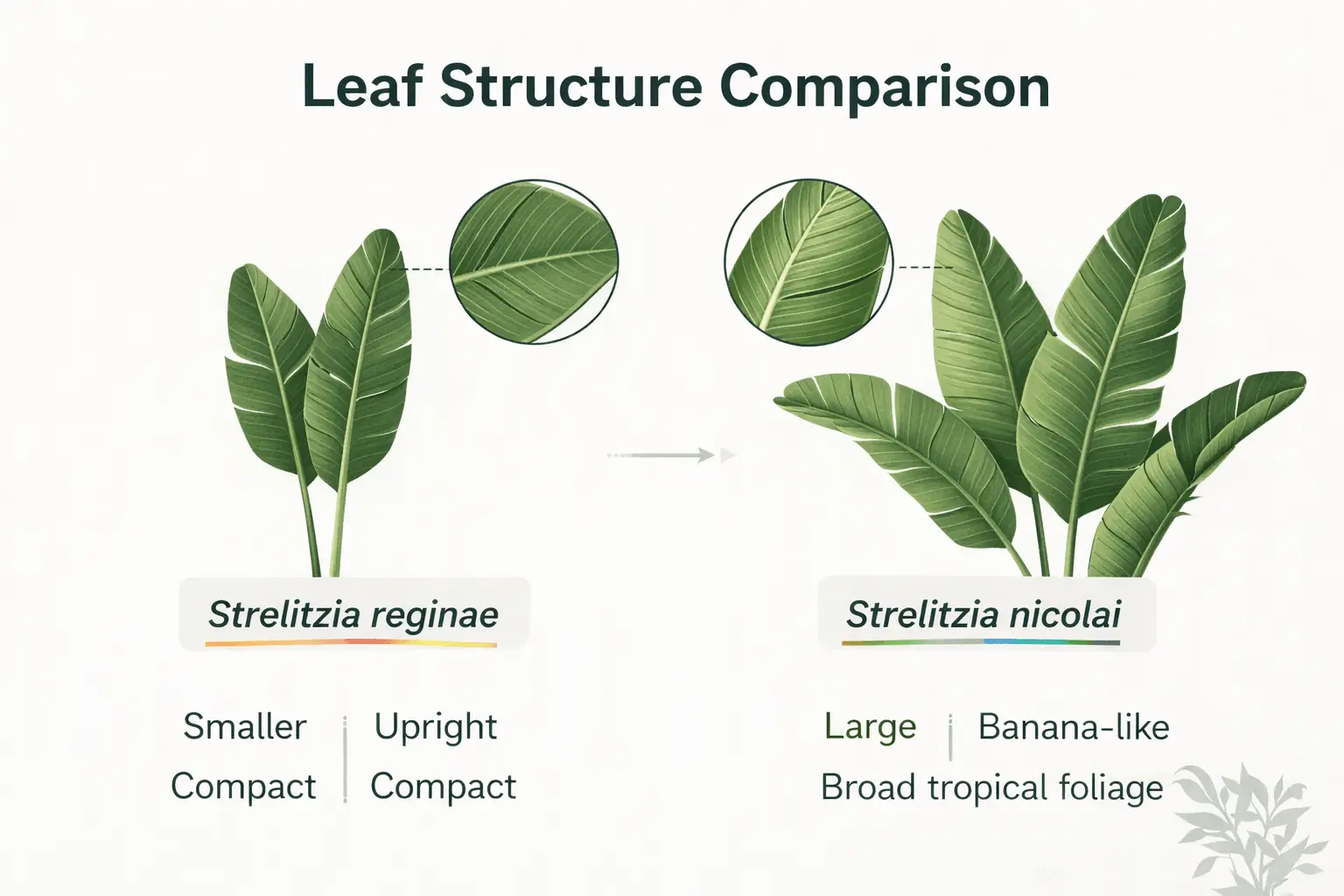
The difference between strelitzia reginae vs nicolai leaves is visually distinct and easy to identify.
Leaf Characteristics
Strelitzia reginae:
- Smaller, upright leaves
- Thick and structured foliage
- Maintains a compact form
Strelitzia nicolai:
- Large, broad, tropical leaves
- Banana-like appearance
- Often mistaken for banana plants due to size and shape
The structural difference makes nicolai more suitable for creating a tropical landscape effect. For a closer look at plants with similar large foliage, see Red Leaved Banana, which explains how banana-like plants differ from true bird of paradise species.
Flower Differences and Visual Appeal
The primary visual distinction between these species lies in their flowers.
Flower Comparison
Reginae:
- Bright orange and blue flowers
- Iconic bird-like shape
- Frequently blooms with proper care
Nicolai:
- White and blue flowers
- Larger but less vibrant
- Rarely flowers indoors
For ornamental flowering, reginae is generally preferred.
Indoor vs Outdoor Suitability
Strelitzia reginae vs nicolai indoor suitability depends mainly on space and light conditions.
Where Each Plant Performs Best
Reginae:
- Ideal indoor plant
- Suitable for containers, patios, and small gardens
- Adapts well to moderate indoor light
Nicolai:
- Better suited for outdoor landscaping
- Requires high ceilings and bright light indoors
- Best used as a statement plant in large spaces
Care Requirements Comparison
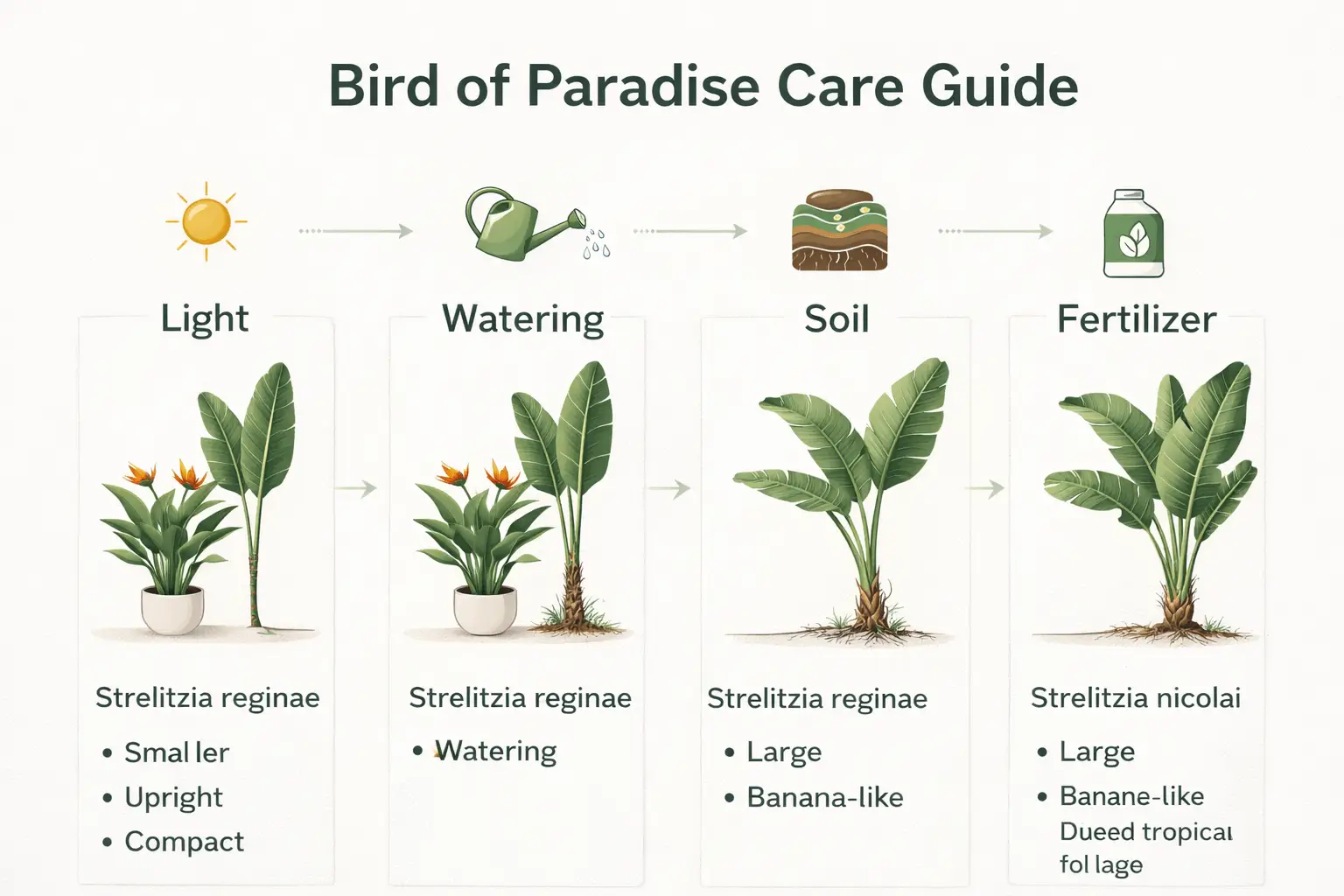
Both species share similar care needs, though size affects maintenance.
Key Care Factors
- Light: Bright indirect light to full sun
- Watering: Moderate watering with well-draining soil
- Soil: Rich, aerated, and well-draining mix
- Fertilization: Apply during active growing season
Common beginner mistake: overwatering, which can lead to root rot, especially in poorly draining soil. If you want exact figures to reference while shopping or setting a care schedule, this strelitzia care specs spreadsheet breaks down watering frequency, light requirements, and soil mix side by side.
It’s a handy printable reference to keep next to your plants once you’ve decided between reginae and nicolai.
Other Types of Strelitzia and Bird of Paradise Varieties
Beyond reginae and nicolai, several other species contribute to the diversity of bird of paradise plants.
Common Species Comparison
- Strelitzia alba (white bird of paradise)
- Strelitzia caudata
- Strelitzia juncea (narrow-leaved or leafless bird of paradise)
Comparison Block: Alba vs Nicolai
- Size similarities: Both can grow large and tall
- Structural differences: Alba has a slightly different leaf and flower structure
- Landscaping use: Both are used in large-scale outdoor planting
For a deeper side-by-side breakdown of every major variety, browse this full bird of paradise comparison database, covering reginae, nicolai, alba, caudata, and juncea in one place.
It expands on the size and structural notes above with additional cultivar-level detail not covered in this article.
Strelitzia reginae vs nicolai: Which One Should You Choose?
The best choice depends on space, purpose, and aesthetic goals.
Best Choice Based On
- Space availability: Reginae for small spaces; nicolai for large areas
- Indoor vs outdoor use: Reginae indoors; nicolai outdoors
- Desired aesthetics: Reginae for flowers; nicolai for foliage impact
- Maintenance level: Reginae is easier to manage
Still unsure which variety fits your space? Try this free bird of paradise plant selector tool to compare your room size, light levels, and climate against both species instantly.
It walks you through the same decision factors above — space, light, and indoor vs outdoor use — and gives you a tailored recommendation in seconds.
Common Problems and Growing Mistakes
Common issues with bird of paradise plants are often related to environmental conditions.
Common Issues
- No flowering
- Yellowing leaves
- Overwatering
- Slow growth
Solutions
- Increase light exposure
- Improve soil drainage
- Feed during growing season
- Use appropriately sized containers
Environmental Limitations and Growth Conditions
Successful growth depends on matching environmental conditions to plant needs.
Key Factors
- Temperature: Sensitive to cold; prefers warm climates
- Humidity: Moderate to high humidity preferred
- Wind exposure: Large leaves can tear in strong winds
Beginner Tips for Growing Bird of Paradise Plants
Proper setup and care significantly improve plant success.
Practical Tips
- Start with strelitzia reginae for easier indoor care
- Use large containers when growing nicolai indoors
- Rotate plants regularly for balanced growth
Conclusion
The comparison of strelitzia reginae vs nicolai highlights clear differences in size, growth habit, care requirements, and usage. Reginae is compact, colorful, and ideal for indoor environments, while nicolai is large, structural, and better suited for outdoor landscapes or spacious interiors. Choosing between them depends primarily on available space, climate conditions, and design goals. Understanding these differences allows for more effective plant selection and long-term success.
FAQs
1. What is the main difference between strelitzia reginae and nicolai?
The main difference is size, flower color, and growth habit. Reginae is compact with orange flowers, while nicolai is tall, tree-like, with white flowers.
2. Which bird of paradise is better for indoor use?
Strelitzia reginae is better suited for indoor environments due to its manageable size and adaptability.
3. How tall does strelitzia nicolai grow compared to reginae?
Nicolai can grow up to 6–10 meters or more, while reginae typically remains around 1–2 meters.
4. Do both strelitzia types produce flowers indoors?
Reginae can produce flowers indoors under ideal conditions, while nicolai rarely flowers indoors.
5. Are strelitzia alba and nicolai the same?
No, they are different species with similar appearances but distinct structural and growth characteristics.