Introduction
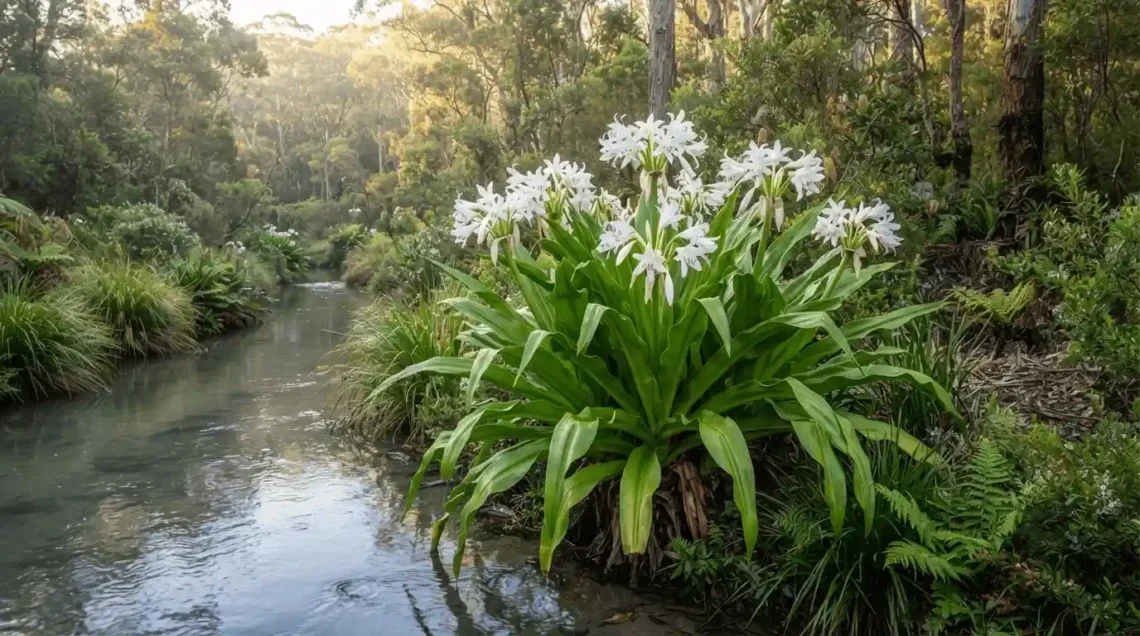
Crinum lily Australia refers to several large, bulb-forming flowering plants that are widely grown throughout Australian landscapes for their striking blooms, lush foliage, and long lifespan. Among them, Crinum pedunculatum, commonly known as the River Lily, is one of Australia’s most recognised native species, naturally growing along waterways, wetlands, and coastal forests. Other ornamental species, including Crinum asiaticum and pink-flowering hybrids, are introduced plants valued for tropical-style gardens. Whether used in native landscapes or feature plantings, Crinum lilies thrive under many Australian growing conditions, making them a reliable choice for home gardeners seeking hardy, low-maintenance flowering plants.
By Greenery Inside | Plant Care & Gardening Expert
Quick Summary
- Crinum pedunculatum (River Lily) is one of Australia’s best-known native Crinum lilies, prized for its fragrant white flowers and robust growth.
- Crinum lilies perform best in moist, sunny locations but adapt well to tropical, subtropical, coastal, and many temperate Australian regions.
- Popular cultivated varieties include Crinum asiaticum, Giant Crinum Lily, and several pink-flowering Crinum hybrids.
- Proper spacing, consistent moisture, fertile soil, and regular maintenance encourage healthy foliage and abundant flowering.
- Their long lifespan and bold architectural appearance make Crinum lilies valuable for native, tropical, and waterside landscape designs.
What Is a Crinum Lily?
Botanical Classification
A Crinum lily is a bulb-forming perennial belonging to the genus Crinum, which is part of the Amaryllidaceae (amaryllis) family. The genus contains more than 100 recognised species distributed across tropical and subtropical regions worldwide, with several naturally occurring in Australia.
Crinum lilies are characterised by their:
- Large underground bulbs
- Long, strap-shaped leaves
- Tall flowering stems
- Clusters of fragrant trumpet-shaped flowers
- Exceptional longevity
Unlike true lilies (Lilium species), Crinum lilies belong to a completely different botanical family. Their bulb stores water and nutrients, allowing established plants to survive seasonal dry periods and recover quickly when favourable conditions return.
One reason gardeners value Crinum lilies is their ability to remain productive for decades with minimal disturbance. In our experience growing Crinum in Australian gardens, mature bulbs often flower more heavily each year when left undisturbed in suitable conditions.
Common Names in Australia
Crinum lilies are known by several common names depending on the species, flower colour, or growing habitat.
Common Australian names include:
- River Lily
- Native Lily
- White Lily
- Swamp Lily
- Crinum Lily
- River Lilly (an alternative spelling occasionally seen in gardening publications and online searches)
Among these, River Lily most commonly refers to Crinum pedunculatum, Australia’s native species found naturally along rivers, creeks, wetlands, and coastal environments.
The name White Lily usually describes its large white blooms, while Swamp Lily reflects its preference for consistently moist soils. Although these common names are widely used, the scientific name provides the most accurate identification because several different Crinum species share similar appearances.
Are Crinum Lilies Native to Australia?
Native Australian Species
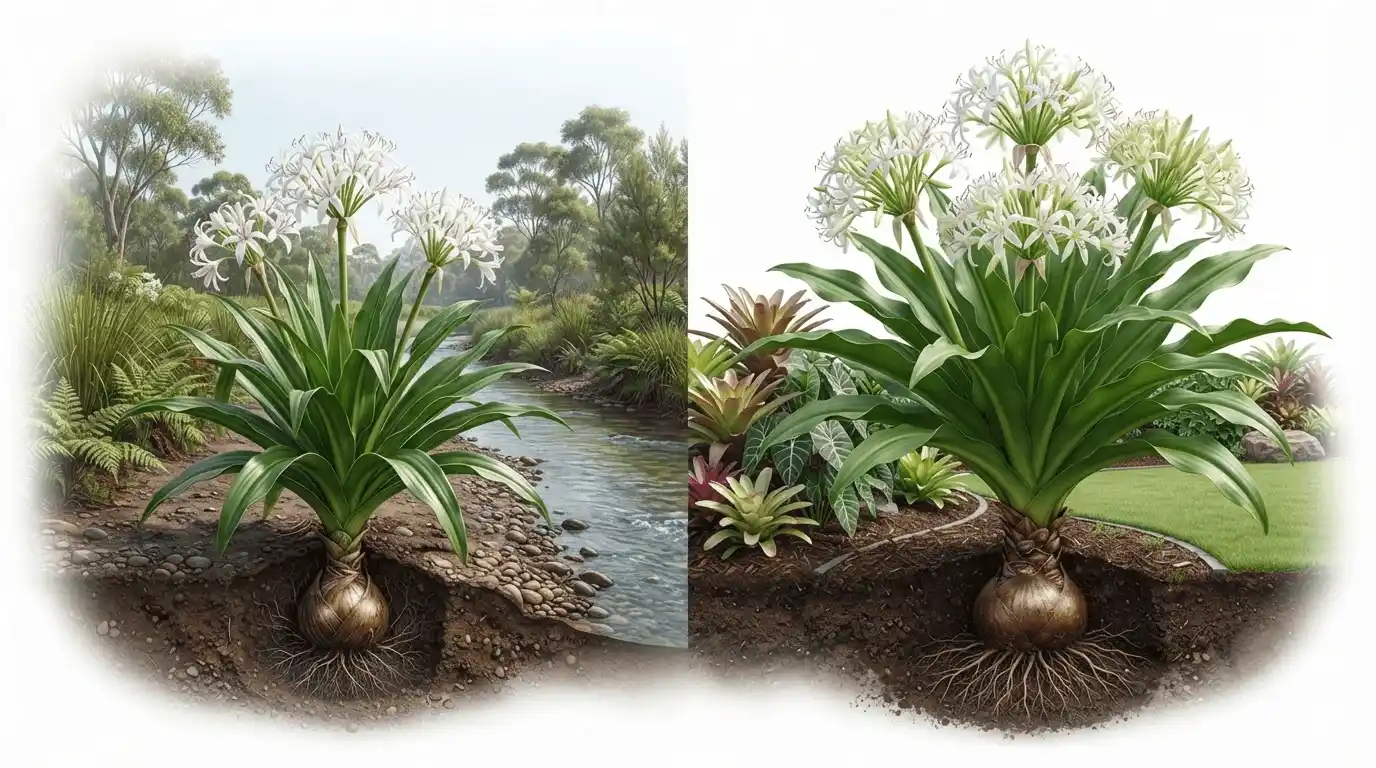
Yes, some Crinum lilies are native to Australia. The best-known native species is Crinum pedunculatum, commonly called the River Lily.
This species naturally occurs along Australia’s eastern coastline, particularly in:
- Coastal forests
- Riverbanks
- Freshwater wetlands
- Floodplains
- Moist woodland edges
Its natural range extends from northern New South Wales into Queensland, where warm temperatures and reliable moisture support vigorous growth.
As a native species, Crinum pedunculatum has adapted well to Australian environmental conditions. It tolerates seasonal flooding, humid summers, occasional dry periods, and coastal exposure better than many ornamental flowering plants.
Greenery Inside recommends the River Lily for gardeners seeking a native alternative that combines ecological value with ornamental appeal. Once established, it requires relatively little maintenance compared with many exotic flowering bulbs.
Introduced Crinum Species Grown in Australia
In addition to native River Lily populations, several introduced Crinum species are widely cultivated across Australia.
Popular examples include:
Crinum asiaticum
Often called the Giant Crinum Lily, Crinum asiaticum produces enormous glossy leaves and dramatic clusters of white flowers with long, narrow petals. It is commonly planted in tropical and subtropical gardens throughout northern Australia.
Giant Crinum Lily
This name generally refers to large-growing cultivated forms, especially Crinum asiaticum, which develops a bold architectural presence suitable for feature planting and large landscapes.
Pink Crinum Lily Australia
Australian nurseries also sell numerous Pink Crinum Lily hybrids. These ornamental cultivars produce attractive pink, rose, or blush-coloured flowers while retaining the robust growth habit typical of the genus.
Although introduced species are not native, many have adapted successfully to Australian climates and are valued for their ornamental qualities, drought tolerance after establishment, and impressive floral displays.
As of 2026, Australian growers continue to favour disease-resistant hybrid selections that combine improved flowering with greater tolerance to varying soil moisture levels.
Crinum Lily Varieties Found in Australia
Australia grows both native and introduced Crinum lilies, giving gardeners a wide selection of plants suitable for different climates and landscape styles.
Native species such as Crinum pedunculatum support biodiversity and blend naturally into Australian landscapes, while introduced varieties contribute tropical texture, colourful flowers, and dramatic focal points.
| Variety | Flower Colour | Mature Size | Native or Introduced | Best Landscape Use |
| Crinum pedunculatum | White | 1.5–2 m | Native | Native gardens, wetlands, waterside planting |
| Crinum asiaticum | White | 1.5–2.5 m | Introduced | Tropical gardens, feature planting |
| Pink Crinum hybrids | Pink to rose | 1–1.8 m | Introduced hybrids | Cottage gardens, borders, feature beds |
| Giant Crinum Lily | White | Up to 2.5 m | Introduced | Large landscapes, specimen planting |
When selecting a variety, consider:
- Local climate
- Available garden space
- Desired flower colour
- Moisture levels
- Maintenance expectations
In our experience, native River Lily performs exceptionally well in gardens with naturally moist soils, while pink hybrids provide greater ornamental diversity in formal landscape designs.
How to Identify Crinum pedunculatum (River Lily)
Leaves
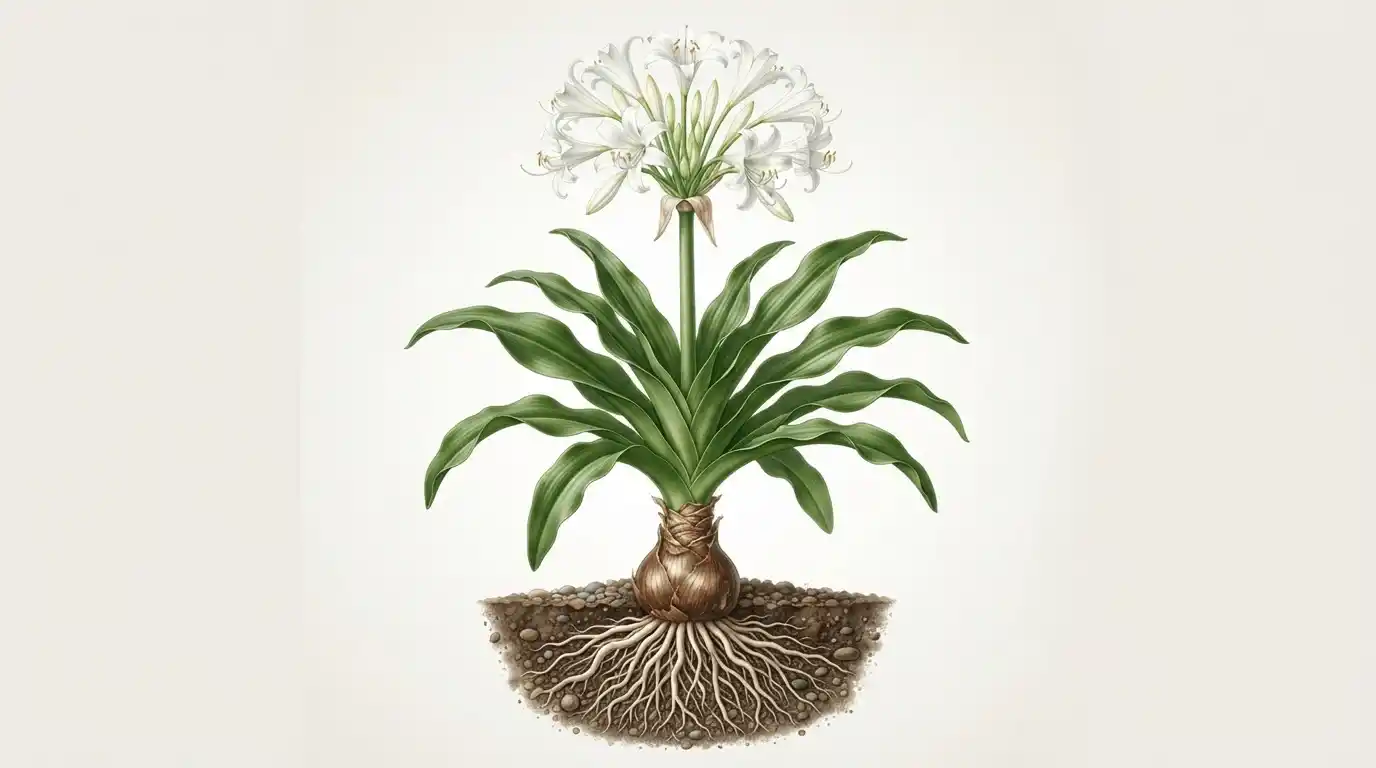
The River Lily produces long, arching, strap-like leaves that are glossy green and may reach over one metre in length.
Identification features include:
- Broad, flexible foliage
- Smooth leaf margins
- Dense clumping habit
- Bright to deep green colour
- Evergreen growth in warmer regions
The foliage forms an attractive architectural mound even when the plant is not flowering.
Flowers
The flowers are among the easiest identifying characteristics.
Crinum pedunculatum produces:
- Large clusters of fragrant flowers
- Pure white petals
- Long projecting stamens
- Trumpet-shaped blooms
- Umbel-like flower heads carried on sturdy stems
Flower clusters often contain numerous blossoms that open gradually, extending the display over several weeks.
Unlike many ornamental bulbs that flower briefly, mature River Lily plants often produce abundant blooms annually under favourable growing conditions.
Bulbs
The bulb is exceptionally large compared with many other ornamental flowering plants.
Key features include:
- Rounded to oval shape
- Thick fleshy scales
- Partial exposure above soil level when mature
- Extensive root system
Because the bulb stores moisture and nutrients, established plants tolerate temporary dry periods despite preferring consistently moist soil.
Gardeners should avoid unnecessarily disturbing mature bulbs, as established plants usually flower more reliably when left in place for many years.
Flowering Season
In Australia, Crinum pedunculatum generally flowers from late spring through summer, although timing varies depending on regional climate.
Flowering is usually encouraged by:
- Warm temperatures
- Adequate soil moisture
- Full sun or light partial shade
- Mature, undisturbed bulbs
Plants growing in tropical and subtropical regions often produce longer flowering periods than those grown in cooler temperate climates.
As seasonal growing conditions vary across Australia, consistent watering during extended dry spells can help maintain vigorous growth and improve flowering performance in cultivated gardens.
Where Do Crinum Lilies Grow Best?
Preferred Climate
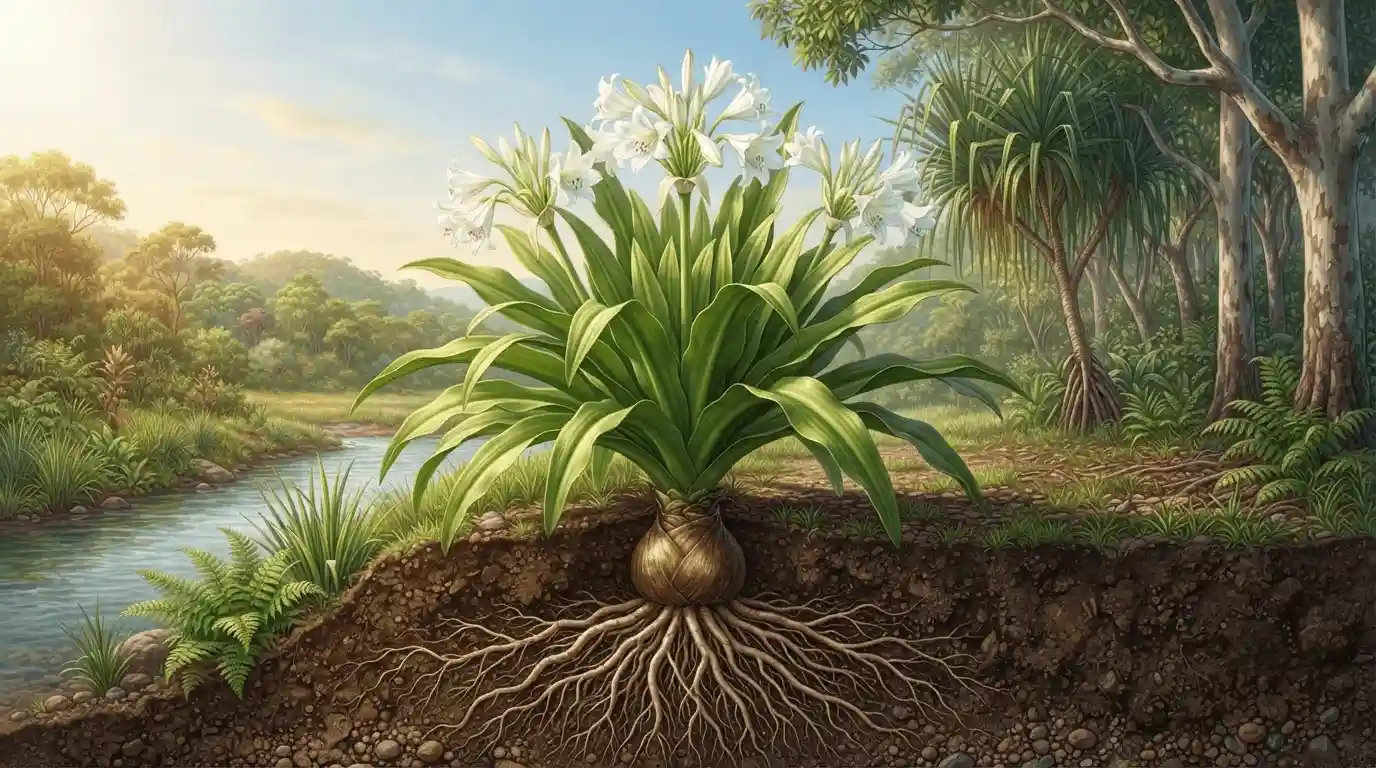
Crinum lilies grow best in warm climates with consistent moisture, although established plants adapt well to many Australian regions. Most species thrive in tropical, subtropical, and coastal environments but can also succeed in temperate areas where severe frost is uncommon.
Suitable Australian growing regions include:
- Tropical northern Australia
- Subtropical Queensland and northern New South Wales
- Coastal regions with mild winters
- Sheltered temperate gardens
- Areas near ponds, creeks, or rain gardens
Native Crinum pedunculatum naturally grows in humid environments and tolerates seasonal flooding better than many ornamental bulbs.
Sunlight Requirements
Most Crinum lilies flower most heavily in full sun, receiving at least six hours of direct sunlight daily. However, they also tolerate partial shade, particularly in hotter inland regions where afternoon protection reduces heat stress.
For best flowering:
- Full sun encourages more flower stalks.
- Partial shade helps prevent leaf scorch in extreme summer heat.
- Dense shade reduces flowering and may produce elongated, weaker foliage.
In our experience, plants receiving morning sun and light afternoon shade perform particularly well in Australia’s hotter inland gardens.
Soil Conditions
Crinum lilies prefer fertile, well-drained soil that retains consistent moisture. Although adaptable, they grow most vigorously in soils enriched with organic matter. Crinum lilies perform particularly well in consistently moist environments, making them a great match for gardens designed around plants that tolerate wet soil conditions in Australia.
Ideal soil characteristics include:
- Loamy texture
- Good drainage
- Moderate water retention
- Rich organic content
- Slightly acidic to neutral pH
Native River Lily also tolerates heavier soils provided they do not remain permanently waterlogged.
Moisture Needs
Although Crinum bulbs store water, consistent moisture supports healthier foliage and more reliable flowering.
Recommended watering conditions include:
- Evenly moist soil during active growth
- Deep watering during prolonged dry periods
- Reduced irrigation during cooler months
- Avoid prolonged standing water around cultivated bulbs
As of the 2026 growing season, many Australian horticulturists recommend deep, infrequent watering rather than frequent shallow irrigation, as this promotes stronger root development and greater drought resilience.
Plant Size and Growth Habit
Mature Height and Spread
Most Crinum lilies become substantial landscape plants.
Typical mature dimensions are:
| Plant Type | Height | Spread |
| Crinum pedunculatum | 1.5–2 m | 1.2–2 m |
| Crinum asiaticum | 1.5–2.5 m | Up to 2 m |
| Pink hybrids | 1–1.8 m | 1–1.5 m |
Plant size varies according to:
- Climate
- Soil fertility
- Moisture availability
- Plant age
- Sunlight exposure
Outdoor-grown plants generally become much larger than container-grown specimens.
Clumping Growth
Crinum lilies grow as slowly expanding clumps.
Rather than spreading aggressively, new bulbs gradually develop beside the parent bulb, producing wider foliage masses over many years.
Benefits of this growth habit include:
- Excellent long-term structure
- Low maintenance
- Minimal invasive behaviour
- Attractive architectural appearance
- Easy landscape planning
Large clumps often become more spectacular with age, producing increasing numbers of flowering stems each season.
Root and Bulb Development
Crinum develops an extensive underground system consisting of:
- Large storage bulbs
- Thick fleshy roots
- Long-lived perennial root systems
Unlike many flowering bulbs that require regular lifting, Crinum bulbs prefer remaining undisturbed.
Greenery Inside recommends planting bulbs where they can remain permanently. Mature clumps frequently outperform recently divided plants in both foliage quality and flower production.
Growth Rate
Growth Speed
Crinum lilies have a moderate growth rate.
Young plants establish steadily during their first few years before developing into large, long-lived specimens.
Growth is fastest when plants receive:
- Warm temperatures
- Consistent moisture
- Rich soil
- Full sunlight
- Adequate space
Once established, foliage becomes increasingly vigorous each growing season.
Flowering Maturity
Newly planted Crinum bulbs may require two to four years before reaching peak flowering performance.
Mature plants generally produce:
- More flower stems
- Larger flower clusters
- Longer flowering periods
- Stronger foliage
Patience is rewarded, as many Crinum lilies continue flowering reliably for decades.
Factors Affecting Growth
Several environmental factors influence overall growth.
| Factor | Effect on Growth |
| Moisture | Encourages vigorous leaf production |
| Sunlight | Improves flowering and foliage density |
| Soil fertility | Supports larger bulbs and stronger blooms |
| Temperature | Warm climates accelerate growth |
| Drainage | Prevents bulb diseases |
Poor drainage and excessive shade remain the two most common causes of reduced growth.
Crinum Lily Care Guide
Water Requirements
Crinum lilies appreciate regular watering while becoming relatively drought tolerant after establishment.
General watering schedule:
- Water deeply once or twice weekly during dry weather.
- Reduce watering during cool winter periods.
- Keep newly planted bulbs consistently moist.
- Avoid saturated soils around the bulb.
Deep watering encourages deeper root systems and healthier long-term growth.
Light Requirements
Provide:
- Full sun for maximum flowering.
- Partial shade in very hot inland climates.
- Bright open positions with good air circulation.
Plants grown in dense shade usually produce abundant foliage but relatively few flowers.
Soil Preferences
The ideal growing medium contains:
- Compost-enriched soil
- Good drainage
- Organic matter
- Moderate moisture retention
Before planting, incorporate compost or well-rotted organic material to improve soil structure.
Fertilising
Feed Crinum lilies during active growth using a balanced slow-release fertiliser.
Recommended schedule:
- Early spring
- Mid-summer if required
Avoid excessive nitrogen, as this promotes leafy growth at the expense of flowers.
In our experience, annual compost applications combined with a balanced fertiliser produce healthier plants than repeated applications of high-nitrogen products.
Mulching
Mulch provides several benefits:
- Conserves soil moisture
- Suppresses weeds
- Moderates soil temperature
- Improves soil structure over time
Apply a 5–8 cm layer of organic mulch while keeping material away from direct contact with the bulb neck.
Pruning and Maintenance
Routine maintenance is simple.
Tasks include:
- Remove spent flower stems.
- Trim damaged or yellowing leaves.
- Divide overcrowded clumps only when necessary.
- Remove accumulated debris around mature bulbs.
Because Crinum lilies dislike disturbance, frequent division is unnecessary.
Climate Tolerance
Crinum lilies demonstrate impressive adaptability.
Most varieties tolerate:
- High humidity
- Coastal salt spray
- Short dry periods
- Heavy rainfall
- Warm summers
Some species tolerate light frost, but prolonged freezing temperatures may damage foliage.
Crinum Lily Australia Spacing Guide
Recommended Spacing
Proper Crinum lily Australia spacing allows plants to mature without overcrowding.
Recommended spacing:
- Small hybrids: 1 metre
- Native River Lily: 1.5 metres
- Giant varieties: 1.8–2 metres
Adequate spacing improves:
- Air circulation
- Flower production
- Disease prevention
- Maintenance access
Spacing for Borders
When planted along borders:
- Space plants according to mature width rather than current size.
- Allow foliage room to arch naturally.
- Avoid planting too close to paths.
This creates a balanced landscape while reducing future maintenance.
Mass Planting
Mass planting creates dramatic visual impact.
For large landscape beds:
- Plant in staggered groups.
- Maintain consistent spacing.
- Repeat groups for rhythm.
- Combine with lower-growing native groundcovers.
Large drifts produce impressive displays during flowering season while maintaining year-round foliage interest.
Feature Planting
Individual Crinum lilies also make outstanding focal points.
Feature planting works well:
- Near entrances
- Beside ponds
- Around patios
- Within tropical gardens
- In spacious lawn areas
Providing sufficient space allows the plant’s bold foliage and flowers to become the centrepiece of the landscape.
Landscaping Uses of Crinum Lilies
Waterside Gardens
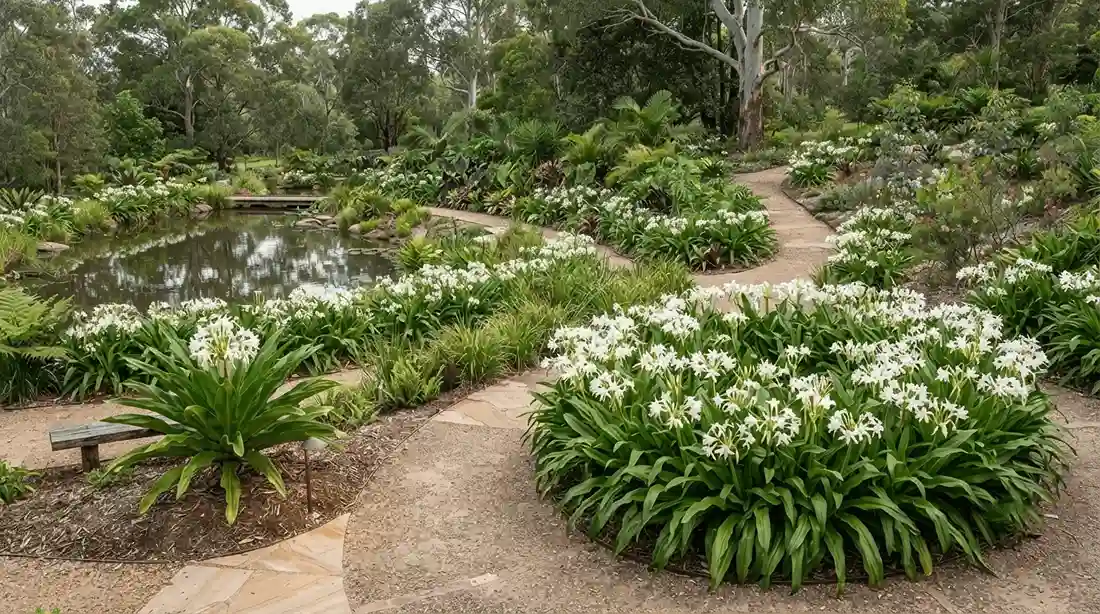
Because many species naturally grow near waterways, Crinum lilies excel around:
- Ponds
- Creeks
- Rain gardens
- Wetland restoration projects
Their moisture tolerance makes them dependable choices for these environments.
Tropical Gardens
Large leaves and dramatic flowers complement tropical planting schemes alongside palms, gingers, heliconias, and bird of paradise plants.
Their evergreen foliage provides year-round structure. For lush, layered garden designs, Crinum lilies blend beautifully with other bold foliage species commonly used in tropical plants for backyard landscaping in Australia.
Native Gardens
Crinum pedunculatum integrates naturally into Australian native gardens. In shaded or partially sheltered landscapes, Crinum pedunculatum can be paired with other resilient species featured in native plants that grow in shade.
Its ecological advantages include:
- Supporting local biodiversity
- Blending with indigenous plant communities
- Requiring relatively little maintenance once established
It pairs well with native grasses, lomandras, dianellas, and paperbarks.
Feature Planting
The impressive foliage makes Crinum an excellent specimen plant.
Feature planting highlights:
- Architectural form
- Large flower clusters
- Evergreen presence
- Long lifespan
A single mature clump often provides substantial visual impact.
Mass Planting
Mass plantings create bold displays in:
- Public landscapes
- Resort gardens
- Commercial developments
- Large residential properties
Repeating groups of Crinum lilies produces a cohesive, low-maintenance planting design.
Crinum Lily vs Other Australian Lily Types
Although several flowering plants are commonly called lilies, they differ significantly in origin, appearance, and growing requirements.
| Plant | Native Status | Flower Colour | Size | Growing Conditions | Landscape Use |
| Crinum Lily | Native and introduced species | White, pink | Large | Moist, sunny sites | Feature planting, tropical gardens |
| River Lily (Crinum pedunculatum) | Native | White | Large | Wetlands, coastal forests | Native landscapes, waterside gardens |
| Flax Lily (Dianella spp.) | Native | Blue-violet | Small to medium | Sun to shade | Borders, mass planting |
| Mat Rush (Lomandra spp.) | Native | Cream-yellow | Medium | Wide range of soils | Erosion control, native gardens |
| Bulbine Lily (Bulbine bulbosa) | Native | Yellow | Small | Well-drained soils | Wildflower and native meadows |
Understanding the differences between Australian lily types, types of Australian lilies, types of lilies in Australia, and other lily varieties Australia helps gardeners choose plants that best suit their climate, available space, and landscape goals.
Common Problems and Solutions
Although Crinum lilies are hardy and long-lived, they can develop problems if growing conditions are unsuitable. Identifying the cause early helps restore healthy growth and flowering.
Yellow Leaves
Yellow leaves are most often caused by overwatering, poor drainage, nutrient deficiencies, or natural aging of older foliage.
How to fix it:
- Check that excess water drains away quickly.
- Water only when the top layer of soil begins to dry.
- Apply a balanced slow-release fertiliser in spring.
- Remove naturally yellowing older leaves.
Prevention tips:
- Plant in well-drained soil.
- Avoid constant waterlogging.
- Feed annually with compost and balanced fertiliser.
Poor Flowering
Healthy foliage with few flowers usually indicates insufficient sunlight, excessive nitrogen, immature bulbs, or overcrowded clumps.
How to fix it:
- Move or plant Crinum lilies in full sun where possible.
- Reduce high-nitrogen fertilisers.
- Allow young bulbs time to mature.
- Divide only severely overcrowded clumps.
Prevention tips:
- Provide at least six hours of direct sunlight.
- Fertilise appropriately.
- Avoid disturbing mature bulbs unnecessarily.
Bulb Rot
Bulb rot is commonly associated with prolonged wet soil and poor drainage. Soft, discoloured bulbs and collapsing foliage are typical symptoms.
How to fix it:
- Remove severely affected bulbs.
- Improve drainage before replanting.
- Avoid planting bulbs too deeply.
Prevention tips:
- Use well-drained soil.
- Water deeply but infrequently.
- Keep mulch away from the bulb neck.
Pest Damage
Crinum lilies generally experience few serious pest problems, but snails, slugs, caterpillars, grasshoppers, and sap-sucking insects may occasionally damage leaves or flower stems.
How to fix it:
- Remove pests by hand where practical.
- Encourage beneficial insects and birds.
- Use appropriate garden-safe pest controls when infestations become severe.
Prevention tips:
- Maintain good airflow.
- Keep the garden free from excessive debris.
- Inspect foliage regularly during the growing season.
Overcrowded Clumps
As mature bulbs multiply, flowering may gradually decline due to overcrowding.
How to fix it:
- Divide large clumps every 8–10 years if flowering noticeably decreases.
- Replant divisions with adequate spacing.
Prevention tips:
- Allow sufficient room when planting.
- Avoid frequent division, as Crinum lilies prefer to remain undisturbed.
From our experience at Greenery Inside, many gardeners divide Crinum bulbs too often. Mature, undisturbed clumps typically produce more impressive flowering displays than recently divided plants.
Are Crinum Lilies Poisonous?
Toxicity to People
Yes, Crinum lilies contain naturally occurring alkaloids that are toxic if ingested. However, they are not considered poisonous simply to touch.
The bulbs contain the highest concentration of these compounds, although leaves and flowers also contain smaller amounts.
Possible symptoms after ingestion include:
- Nausea
- Vomiting
- Stomach pain
- Diarrhoea
For this reason, Crinum lilies should never be consumed.
Pets and Livestock
Crinum lilies are considered toxic to many animals, including:
- Dogs
- Cats
- Horses
- Livestock
If a pet chews the bulb or foliage, symptoms may include digestive upset, drooling, lethargy, or vomiting.
Pet owners should contact a veterinarian promptly if ingestion is suspected.
Safe Garden Handling
Is Crinum lily poisonous to touch?
No. Simply touching a Crinum lily is not generally harmful. Most people can safely handle the plant during normal gardening.
However, sensible precautions include:
- Wear gardening gloves when dividing bulbs.
- Wash hands after handling plant sap.
- Avoid touching your eyes while working.
- Keep bulbs away from children and pets.
These precautions are recommended because some individuals may experience mild skin irritation from prolonged contact with plant sap.
Common Beginner Mistakes When Growing Crinum Lilies
Many Crinum lilies fail to reach their full potential because of avoidable planting and maintenance mistakes.
Common beginner errors include:
Planting Too Deeply
Bulbs should sit with the neck at or slightly above the soil surface. Deep planting may reduce flowering and increase the risk of bulb rot.
Poor Drainage
Although River Lily enjoys moist conditions, permanently saturated soil can damage the bulb and roots.
Too Much Shade
Heavy shade encourages leafy growth while significantly reducing flower production.
Overwatering
Established Crinum lilies tolerate short dry periods. Constant watering is usually unnecessary and may encourage disease.
Dividing Bulbs Too Early
Young plants establish slowly. Allow bulbs several years to mature before considering division.
Insufficient Spacing
Crowded planting restricts airflow, limits mature growth, and makes maintenance more difficult.
Greenery Inside recommends planning for the plant’s mature size rather than its appearance at planting time. Proper spacing produces healthier, longer-lived landscape displays with less maintenance.
Conclusion
Crinum lily Australia encompasses both native and introduced species that bring bold foliage, striking flowers, and exceptional longevity to Australian gardens. Among them, Crinum pedunculatum (River Lily) remains one of Australia’s most significant native lilies, naturally thriving in wetlands, riverbanks, and coastal forests.
Whether you choose the native River Lily, the dramatic Crinum asiaticum, or colourful pink Crinum hybrids, success depends on providing fertile, well-drained soil, adequate sunlight, consistent moisture during establishment, and sufficient planting space. Once mature, these bulb-forming perennials require relatively little maintenance while rewarding gardeners with impressive seasonal blooms for decades.
By selecting the right variety for your local climate and following sound horticultural practices, Crinum lilies can become long-lasting focal points in native, tropical, waterside, or formal Australian landscapes.
Frequently Asked Questions
Where do Crinum lilies grow best?
Crinum lilies grow best in tropical, subtropical, coastal, and mild temperate regions with fertile, well-drained soil, regular moisture, and full sun or light partial shade. Native Crinum pedunculatum performs especially well near waterways and in moist landscapes.
Are Crinum lilies native to Australia?
Some species are native. The best-known native Australian species is Crinum pedunculatum, commonly called the River Lily. Other cultivated Crinum species, including Crinum asiaticum and many pink hybrids, were introduced for ornamental gardening.
What is the common name for Crinum lily?
Depending on the species and region, common names include River Lily, Native Lily, White Lily, Swamp Lily, and simply Crinum Lily. “River Lilly” is also occasionally used as an alternative spelling.
Is Crinum lily poisonous to touch?
No. Touching a Crinum lily is generally safe. However, all parts of the plant—especially the bulb—contain toxic alkaloids if ingested. Wearing gloves while dividing bulbs or handling sap is recommended as a sensible gardening precaution.
How often should Crinum lilies be watered?
Newly planted Crinum lilies should be watered regularly to establish strong roots. Once established, deep watering during extended dry periods is usually sufficient, while allowing the soil to drain well between waterings.
How long do Crinum lilies live?
Crinum lilies are exceptionally long-lived perennials. With suitable growing conditions and minimal disturbance, individual clumps can survive and flower for several decades, often becoming more productive as they mature.
Can Crinum lilies grow in pots?
Yes. Smaller varieties and young plants grow well in large containers with excellent drainage. Regular watering, occasional feeding, and periodic repotting are important because container-grown plants dry out more quickly than those planted in the ground.
When do Crinum lilies flower in Australia?
Most Crinum lilies flower from late spring through summer, although flowering times vary depending on species, local climate, rainfall, and temperature. Established plants in warmer regions often enjoy a longer blooming season than those grown in cooler areas.