Introduction
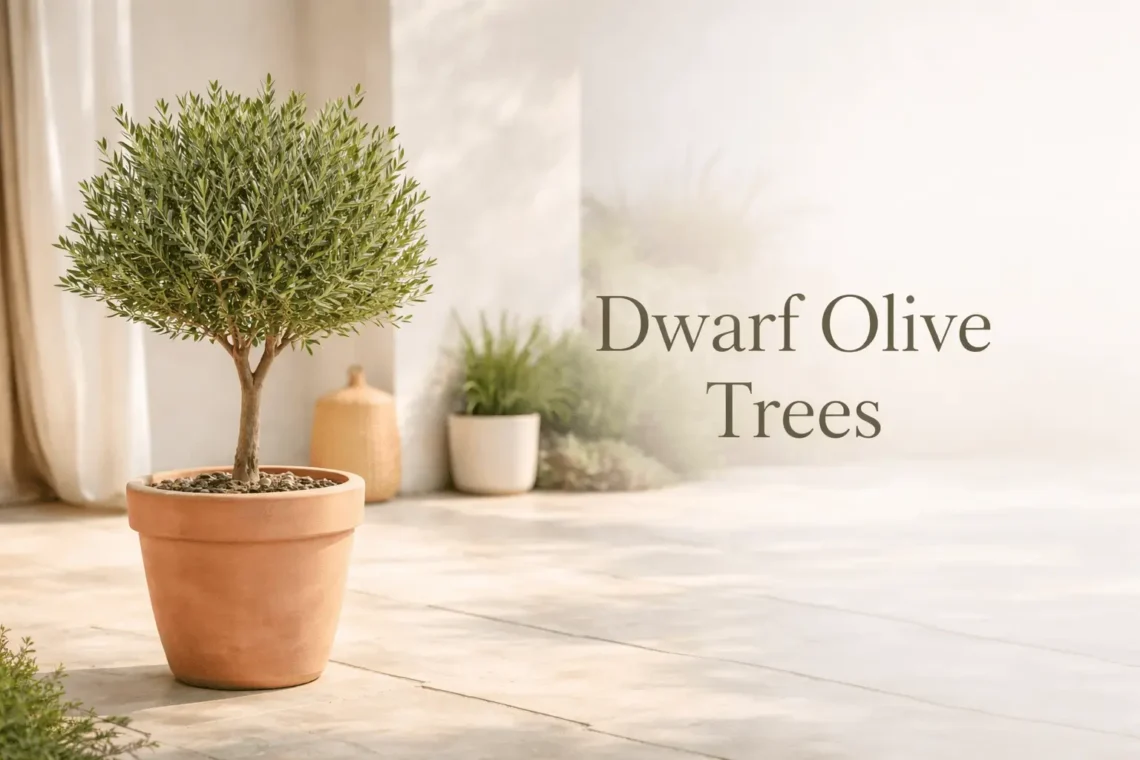
Dwarf olive trees are compact varieties of the traditional olive tree (Olea europaea), specifically bred for smaller spaces and container growing. These small olive trees retain the aesthetic appeal and structure of full-sized olives while offering easier maintenance for indoor or limited outdoor environments. Whether used decoratively or for limited fruit production, a dwarf olive tree adapts well to patios, balconies, and modern landscapes. Understanding their size, growth patterns, and care requirements helps ensure long-term success, especially in warm climates where olive trees naturally thrive.
Quick Summary
- Dwarf olive trees are compact versions of traditional olive trees suitable for pots and small gardens.
- They can be fruiting or fruitless, depending on the variety.
- Most mini olive trees thrive in full sun and well-draining soil.
- Ideal for indoor-outdoor use, especially in warm climates like Australia.
What Are Dwarf Olive Trees and How Do They Differ From Regular Olive Trees?
Dwarf olive trees are genetically compact cultivars of Olea europaea designed to grow smaller than standard olive trees while maintaining similar foliage and structure. A mini olive tree or olive tree miniature typically reaches a fraction of the height of a full-sized tree, making it suitable for confined spaces.
Key differences include:
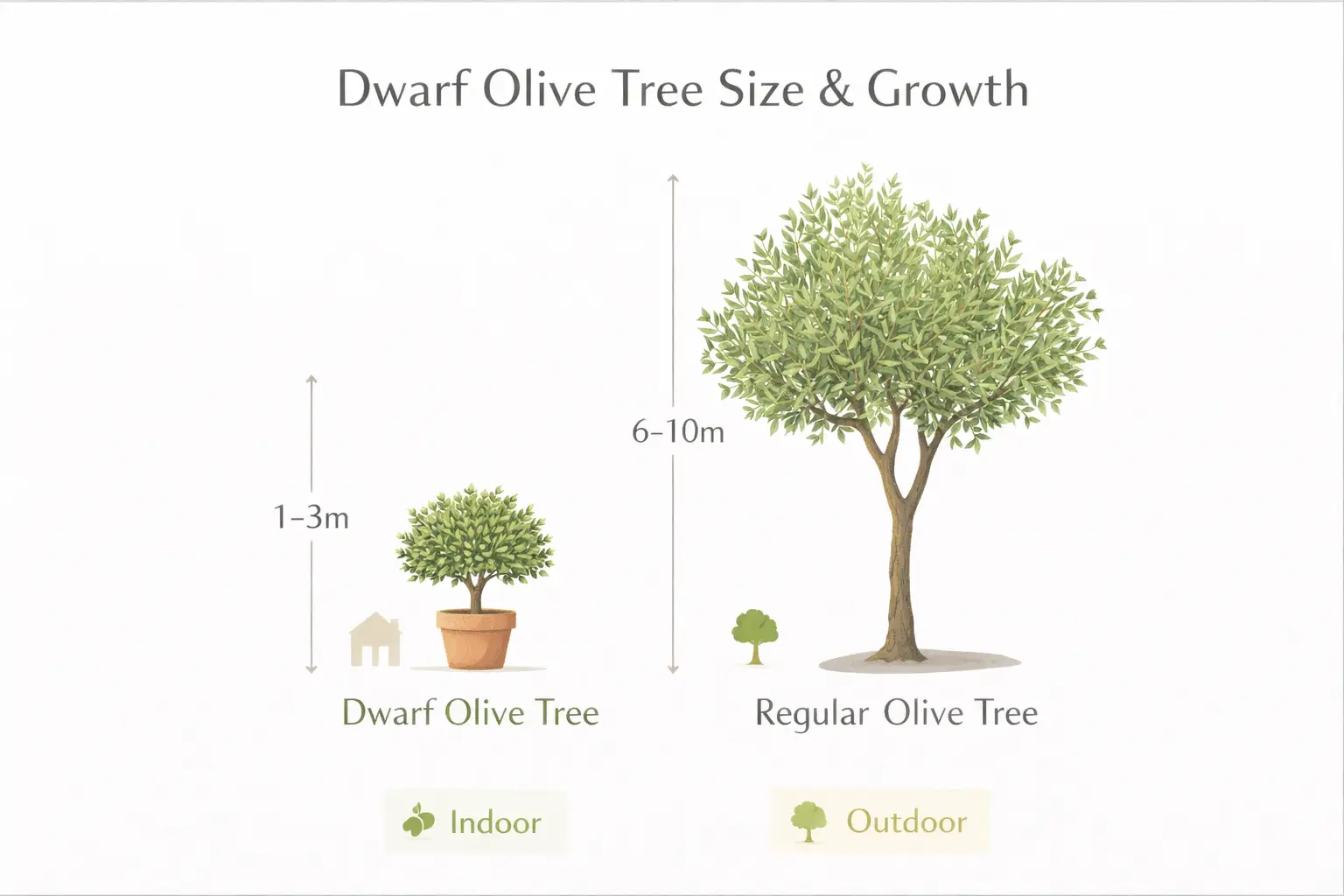
- Size limitation: Dwarf olive trees usually grow 1–3 meters tall, while standard olive trees can exceed 6–10 meters.
- Growth habit: Compact and controlled canopy compared to wide-spreading regular trees.
- Purpose: Some are ornamental (non-fruiting), while others produce small quantities of olives.
- Space adaptability: Ideal for containers and urban gardening.
Dwarf olive trees are often categorized into real fruit-bearing trees and ornamental olive tree types, which are bred primarily for visual appeal rather than production. Dwarf olive trees are compact cultivars of Olea europaea, the same species as traditional olive trees, which are widely studied and documented in botanical references such as Wikipedia’s page on Olea europaea.
Types of Dwarf Olive Trees (Fruit-Bearing vs Fruitless Varieties)
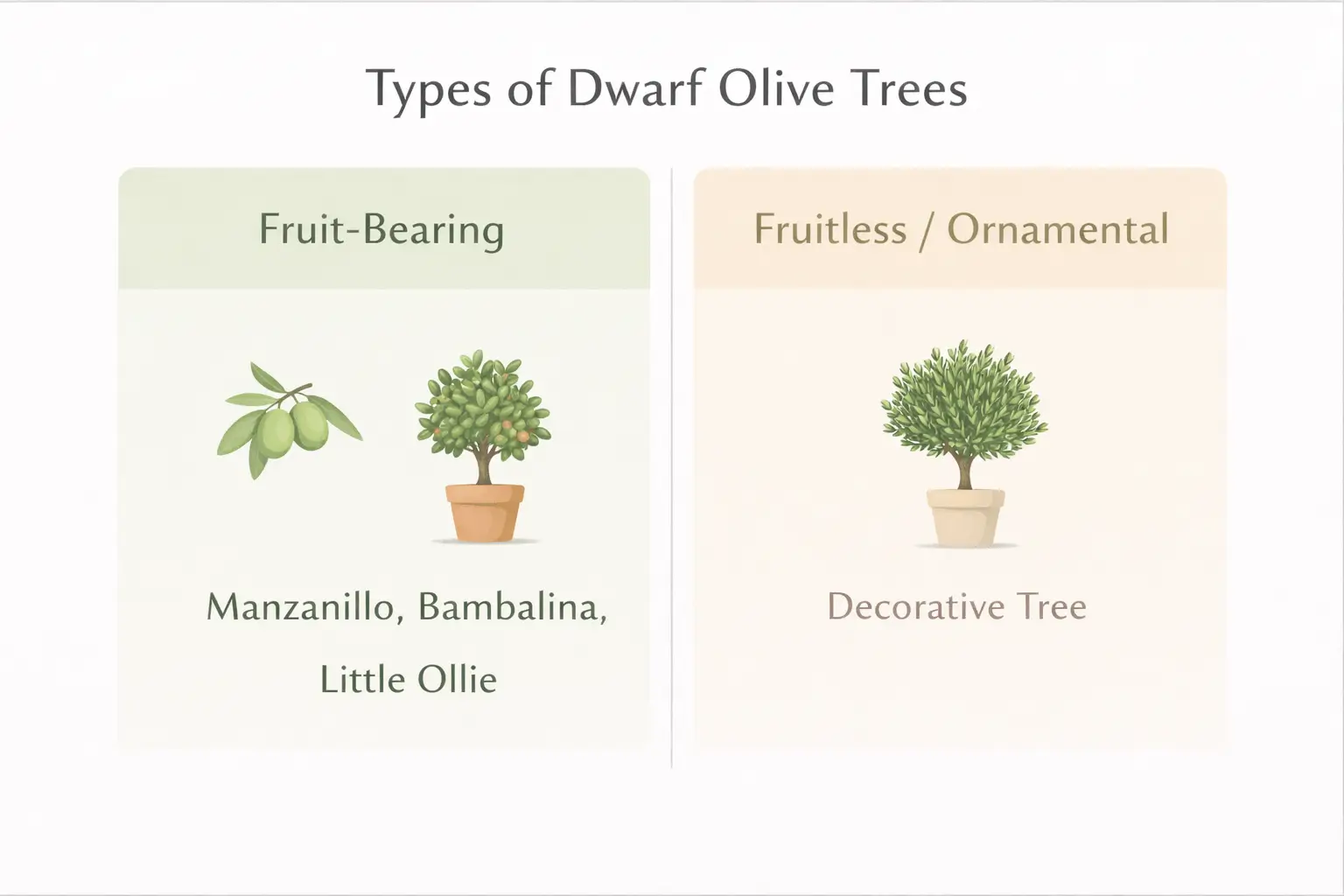
Dwarf varieties of olive trees can be divided into two main categories: fruit-producing and fruitless ornamental types. This distinction affects maintenance, purpose, and placement in landscapes.
Fruit-Producing Dwarf Olive Trees
Yes, dwarf olive trees can bear fruit if they belong to fruiting cultivars and receive adequate sunlight.
Common fruiting dwarf varieties include:
- Manzanillo – Known for reliable fruit production
- Bambalina (Olea europaea bambalina) – Compact and suitable for containers
- Other dwarf cultivars bred for small-scale harvesting
Best conditions for fruit production:
- Full sun exposure (6–8+ hours daily)
- Proper pruning and airflow
- Warm climates with mild winters
Fruitless and Ornamental Olive Trees
Fruitless olive tree dwarf varieties are cultivated for landscaping purposes, reducing mess from fallen olives.
Popular ornamental types:
- Little Ollie – A widely used dwarf non fruiting olive tree
- Decorative compact cultivars for hedging or patio styling
Benefits of ornamental olive trees:
- No fruit drop or staining
- Lower maintenance
- Ideal for decorative gardens and modern landscapes
How Big Do Dwarf Olive Trees Get? (Size, Height & Growth Limits)
Dwarf olive trees typically grow between 1 to 3 meters (3–10 feet) in height when fully mature. Their spread is also limited, usually around 1–2 meters.
Factors influencing size:
- Indoor vs outdoor growth
- Indoor: Smaller due to limited light
- Outdoor: Larger and more vigorous
- Container size
- Smaller pots restrict root expansion and overall growth
- Pruning practices
- Regular trimming maintains compact shape
A full grown dwarf olive tree remains significantly smaller than standard olive trees, making it manageable for patios and balconies.
Growth Rate of Dwarf Olive Trees (How Fast Do They Grow?)
Dwarf olive trees grow at a slow to moderate rate, typically adding 10–30 cm per year under optimal conditions.
Growth patterns:
- Faster growth in spring and summer
- Slower or dormant growth in cooler seasons
Factors affecting growth speed:
- Sunlight exposure
- Soil quality and drainage
- Temperature and climate conditions
Consistent care improves growth, but these trees are naturally slow growers compared to other ornamental plants.
Are Olive Tree Roots Invasive? (Space & Safety Considerations)
No, olive tree roots are generally not considered invasive, especially in dwarf olive trees.
Key characteristics:
- Shallow, fibrous root systems
- Limited spread in container environments
- Less aggressive compared to large trees
Comparison:
- Dwarf olive trees: Controlled root growth, suitable for pots
- Regular olive trees: Wider root spread but still non-invasive
They are safe to plant near structures when proper spacing and container use are maintained.
Growing Dwarf Olive Trees in Pots (Indoor & Outdoor Guide)
Dwarf olive trees adapt exceptionally well to container growing, making them ideal as a potted olive tree.
Best practices:
- Use pots with drainage holes
- Choose containers at least 30–50 cm wide
- Place in full sun locations
Indoor vs outdoor considerations:
- Indoor: Needs bright windows or supplemental light
- Outdoor: Thrives in open, sunny environments
For better indoor success, it also helps to understand general humidity and environmental control, as explained in How to Increase Humidity for Plant.
Proper drainage and sunlight are critical for maintaining a healthy olive tree mini in containers.
Care Guide for Dwarf Olive Trees (Complete Maintenance Overview)
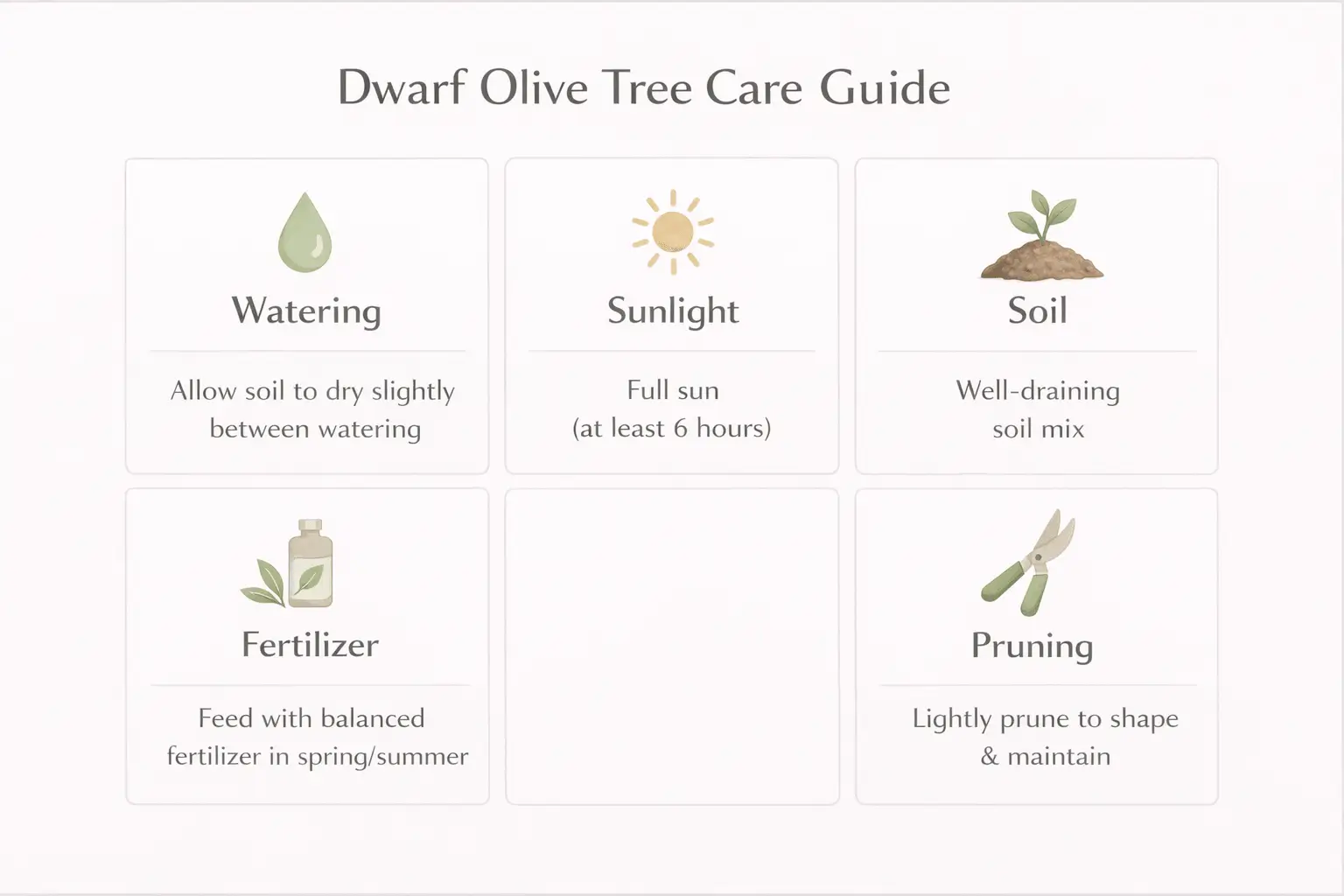
Dwarf olive tree care is relatively simple but requires consistency.
Watering schedule
- Water when top soil dries out
- Avoid overwatering
Sunlight requirements
- Requires full sun (minimum 6 hours daily)
Soil mix recommendations
- Well-draining, sandy or loamy soil
- Avoid heavy clay soils
Fertilizer timing
- Apply balanced fertilizer during growing season (spring–summer)
Pruning frequency
- Light pruning annually to maintain shape and airflow
Climate tolerance
- Prefers Mediterranean climates
- Suitable for regions like Australia, including coastal and warm inland areas
Best Dwarf Olive Trees for Pots and Small Spaces (Australia Focus)
Dwarf olive trees Australia gardeners prefer include compact, heat-tolerant varieties.
Recommended options:
- Bambalina olive tree – Excellent for containers
- Little Ollie – Ideal ornamental option
- Compact Manzanillo cultivars
Suitable regions:
- Brisbane – Warm, humid conditions
- Perth – Dry, Mediterranean climate
These dwarf olive trees thrive in Australia due to similar environmental conditions to their native habitat.
Comparison: Dwarf Olive Trees vs Regular Olive Trees
| Feature | Dwarf Olive Trees | Regular Olive Trees |
| Height | Compact | Large |
| Growth Rate | Slow–Moderate | Moderate |
| Container Friendly | Yes | No |
| Fruit Yield | Limited/Optional | High |
Dwarf olive trees are better suited for controlled environments, while regular olive trees are ideal for large-scale cultivation.
Common Problems With Dwarf Olive Trees (And How to Fix Them)
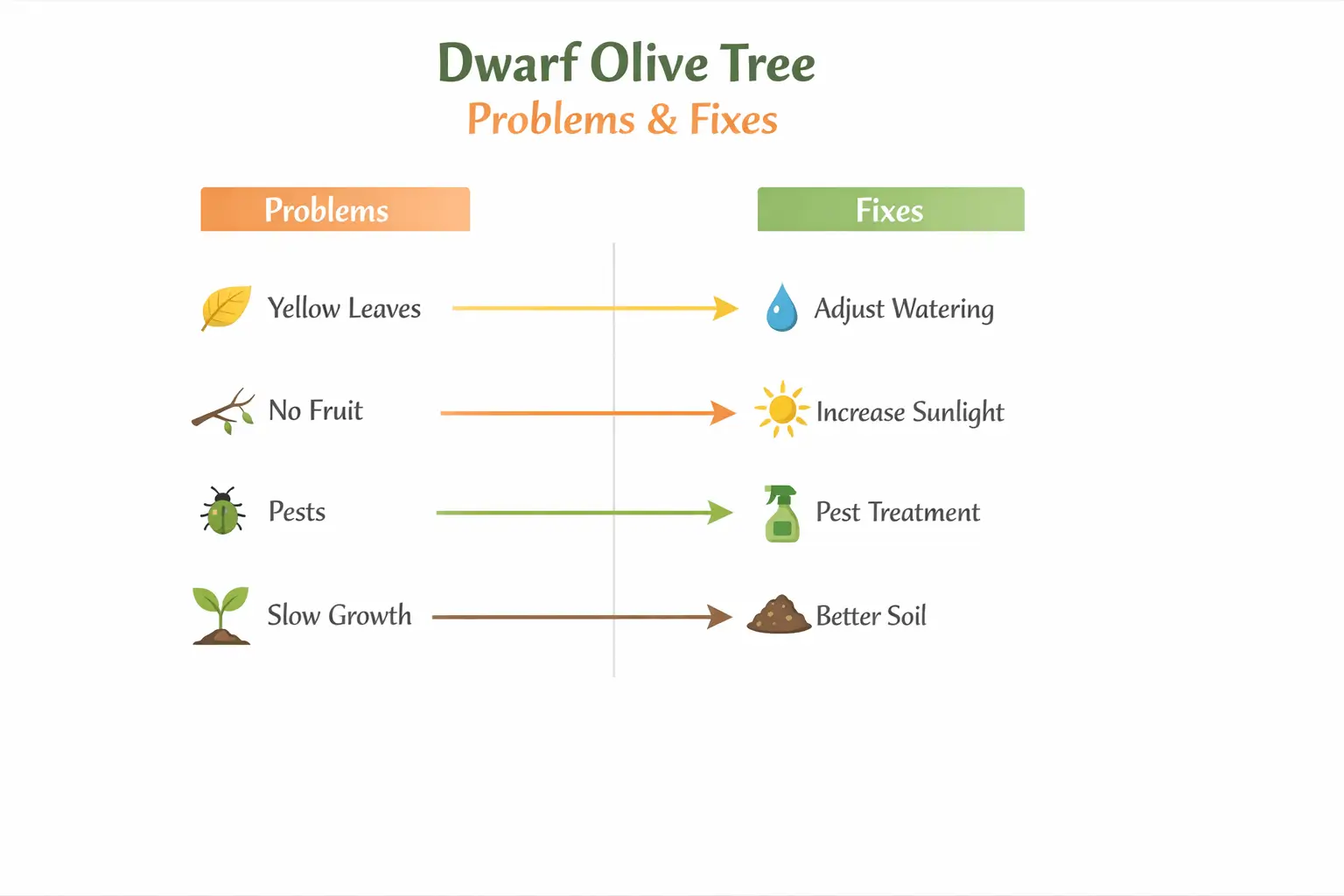
Yellowing Leaves
- Cause: Overwatering
- Fix: Reduce watering frequency
- Prevention: Ensure proper drainage
Lack of Fruit
- Cause: Insufficient sunlight
- Fix: Move to brighter location
- Prevention: Maintain full sun exposure
Slow Growth
- Cause: Poor soil or nutrients
- Fix: Improve soil and fertilize
- Prevention: Use nutrient-rich, well-draining mix
Pest Issues (Scale, Aphids)
- Cause: Infestation
- Fix: Use horticultural oil
- Prevention: Regular inspection
Beginner Mistakes to Avoid When Growing Dwarf Olive Trees (SERP Gap Section)
Common mistakes include:
- Overwatering roots
- Using poorly draining soil
- Providing insufficient sunlight
- Choosing pots that are too small
- Skipping regular pruning
Avoiding these issues improves long-term plant health and growth consistency.
Can You Grow Dwarf Olive Trees Indoors? (Environmental Limitations)
Yes, dwarf olive trees can grow indoors, but only under specific conditions.
Requirements:
- Bright, direct sunlight (south-facing windows)
- Good airflow
- Stable temperatures
Indoor growing works best in well-lit environments. Without sufficient light, growth weakens and fruiting becomes unlikely.
Where to Buy Dwarf Olive Trees (Availability & Regional Options Explained Informationally)
Dwarf olive trees are commonly available through:
- Local nurseries and garden centers
- Specialized plant growers
- Regional suppliers in Australia and New Zealand
Availability depends on climate suitability and seasonal demand. Garden centers often stock popular varieties adapted to local conditions.
How Dwarf Olive Trees Fit Into Modern Gardening & Landscaping
Dwarf olive trees are widely used in modern design due to their compact form and Mediterranean aesthetic.
Common uses:
- Patio and balcony containers
- Minimalist and Mediterranean landscapes
- Indoor decorative plants
They align with trends in small-space gardening and indoor plant styling, offering both functionality and visual appeal.
Dwarf olive trees are widely used in modern design due to their compact form and Mediterranean aesthetic. They work especially well when combined with other drought-tolerant species, similar to those featured in Tuscan Plants.
Conclusion
Dwarf olive trees provide a practical solution for growing olive trees in compact spaces without sacrificing visual appeal or functionality. Whether used as ornamental plants or for limited fruit production, these mini olive trees adapt well to containers, patios, and indoor environments. With proper care, including adequate sunlight, well-draining soil, and consistent maintenance, they can thrive in a variety of climates. Their versatility and manageable size make them a valuable addition to modern gardening and landscaping.
FAQs
1. Do dwarf olive trees produce olives?
Yes, some dwarf olive trees are fruit-bearing, while others are bred to be fruitless for ornamental use.
2. How tall do dwarf olive trees grow?
Most dwarf olive trees grow between 1 to 3 meters depending on variety and conditions.
3. Are dwarf olive trees suitable for pots?
Yes, they are ideal for containers due to their compact size and controlled root systems.
4. Can dwarf olive trees grow indoors?
They can grow indoors if provided with sufficient sunlight, ideally near a bright window.
5. How fast do dwarf olive trees grow?
Dwarf olive trees grow slowly to moderately, with growth depending on light, soil, and care.