Introduction
The Gumbi Gumbi tree (Pittosporum angustifolium), formerly known as Pittosporum phylliraeoides, is a distinctive Australian native tree admired for its elegant weeping branches, evergreen foliage, and long history of traditional use. Also commonly called Weeping Pittosporum or Gumby Gumby tree, it naturally occurs across much of inland Australia, where it thrives in dry climates and supports native wildlife. Beyond its ornamental value, Gumbi Gumbi has been used for generations in Indigenous Australian traditions, particularly for herbal preparations made from its leaves. However, while many health benefits are widely claimed, current scientific evidence remains limited, making it important to distinguish traditional knowledge from medically verified research.
By Greenery Inside | Plant Care & Gardening Expert
Quick Summary
- Gumbi Gumbi (Pittosporum angustifolium) is an Australian native tree recognized for its graceful weeping foliage and cultural significance.
- It is widely grown as an ornamental tree, shade tree, windbreak, shelterbelt, and habitat for native birds and beneficial insects.
- The leaves have traditionally been prepared as herbal tea, although modern scientific evidence supporting many medicinal claims remains limited.
- The tree is highly drought tolerant once established and adapts well to many Australian gardens.
- Proper identification, responsible cultivation, and cautious use are recommended before consuming any part of the plant.
What Is the Gumbi Gumbi Tree?
The Gumbi Gumbi tree is an evergreen Australian native species belonging to the Pittosporum family. Botanically identified as Pittosporum angustifolium, it was historically classified as Pittosporum phylliraeoides, a name still found in older gardening books, nursery catalogs, and scientific references. As a resilient Australian native, Gumbi Gumbi shares characteristics with other species featured in Native Trees of Australia, particularly Evergreen Shade Trees and Wind Tolerant Trees Australia, which thrive in harsh inland climates.
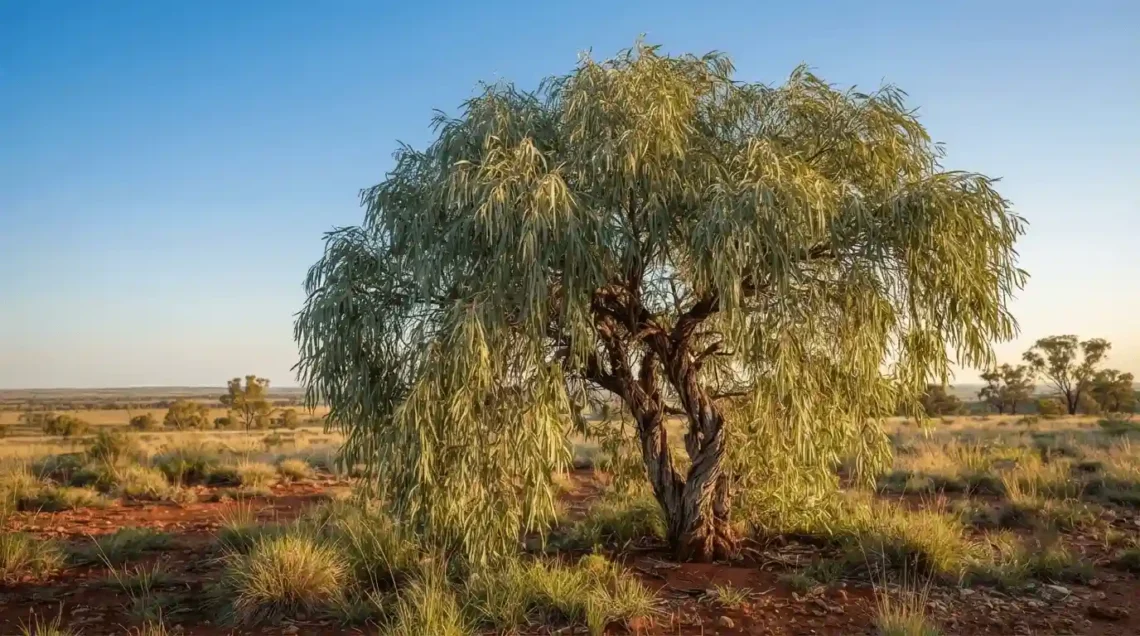
The tree is best known for its long, narrow leaves and graceful pendulous branches that create a soft, cascading appearance. This distinctive form explains its common name, Weeping Pittosporum.
Naturally distributed throughout much of inland Australia, the species has adapted to hot summers, prolonged dry periods, and nutrient-poor soils. These characteristics make it an increasingly popular choice for water-wise landscapes, native gardens, and rural shelterbelts.
In our experience growing Australian native trees, Gumbi Gumbi performs especially well in low-maintenance landscapes where drought tolerance and wildlife value are priorities. Its attractive foliage provides year-round interest while requiring relatively little intervention once established.
Although the tree has gained attention for its traditional medicinal uses, gardeners should recognize that many reported health benefits are rooted in Indigenous knowledge and anecdotal experience rather than large-scale clinical research.
Botanical Classification
| Classification | Details |
| Botanical name | Pittosporum angustifolium |
| Former scientific name | Pittosporum phylliraeoides |
| Plant family | Pittosporaceae |
| Common names | Gumbi Gumbi, Gumby Gumby, Weeping Pittosporum, Native Apricot (regional) |
| Plant type | Evergreen native tree |
| Native range | Australia |
| Growth habit | Small to medium-sized weeping tree |
The botanical reclassification from Pittosporum phylliraeoides to Pittosporum angustifolium reflects updated taxonomic understanding. However, both scientific names continue to appear in horticultural literature and plant databases. The species Pittosporum angustifolium is documented in botanical references, including Wikipedia, which provides additional taxonomic and distribution details for further scientific reading: Pittosporum angustifolium (Wikipedia).
Why Is It Also Called Gumby Gumby?
The names Gumbi Gumbi and Gumby Gumby generally refer to the same plant species, Pittosporum angustifolium. The different spellings have developed through regional pronunciation, historical records, and commercial marketing.
Common spelling variations include:
- Gumbi Gumbi
- Gumby Gumby
- Gumby Gumby Tree
- Gumbi Tree
Across Australia, the preferred spelling often depends on local communities, Indigenous language influences, or individual plant suppliers. Regardless of spelling, these names usually describe the same Australian native species.
The name Weeping Pittosporum focuses on the tree’s ornamental appearance rather than its traditional cultural associations. Gardeners often encounter this name in nurseries because it accurately describes the graceful drooping branches that distinguish the species from many other native trees.
Understanding these naming variations helps avoid confusion when researching cultivation, purchasing nursery stock, or reading older botanical publications that may still reference Pittosporum phylliraeoides.
How to Identify a Gumbi Gumbi Tree
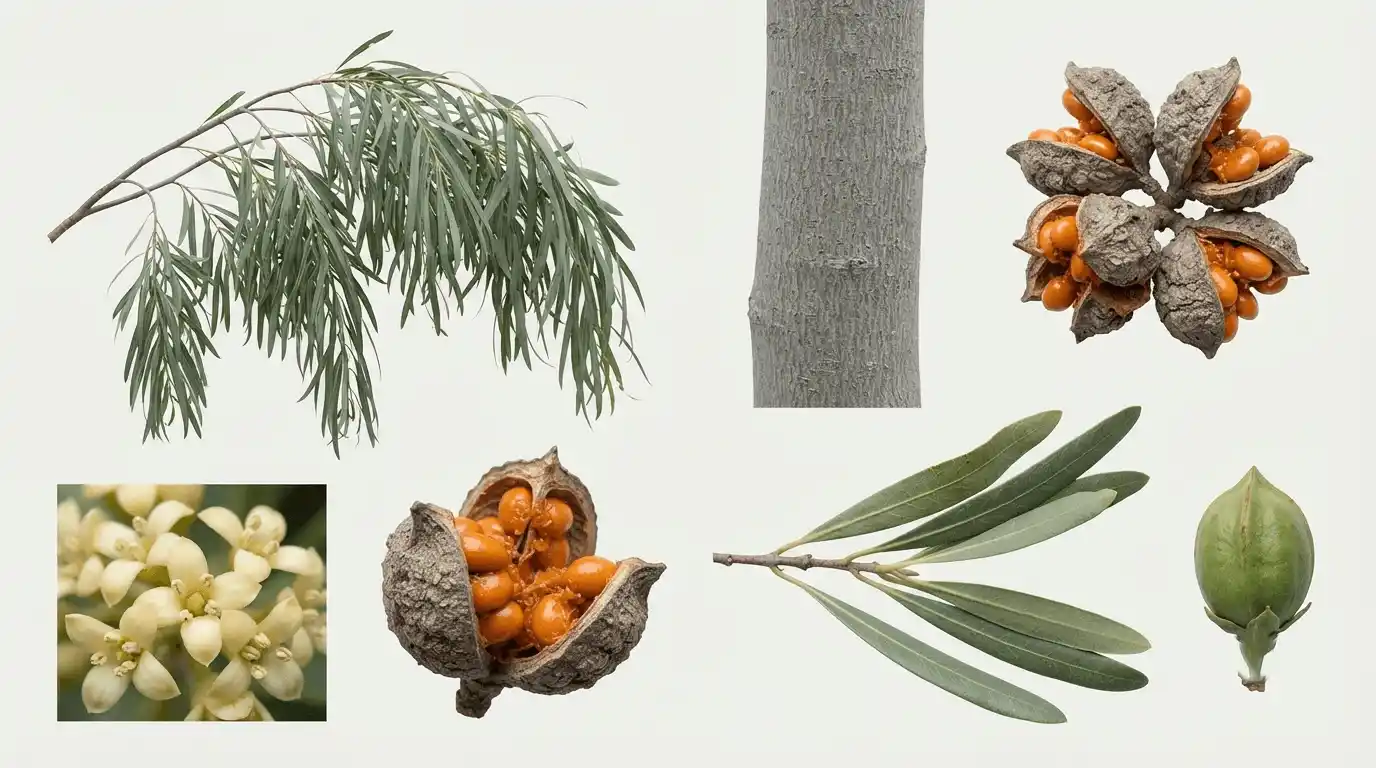
Correct identification is important because several Australian native trees share similar foliage or growth habits. Fortunately, the Gumbi Gumbi tree has several distinctive characteristics that make it relatively easy to recognize.
The most reliable identifying features include:
- Narrow, drooping evergreen leaves
- Graceful weeping branches
- Small yellow flowers
- Orange seeds inside woody capsules
- Smooth grey to dark brown bark
- Rounded canopy with pendulous growth
When all these characteristics occur together, they strongly indicate Pittosporum angustifolium.
Leaves
The Gumbi Gumbi leaf is one of the easiest ways to identify the tree.
Leaf characteristics include:
- Long, narrow lance-shaped leaves
- Usually 4–12 cm long
- Approximately 0.5–1.5 cm wide
- Smooth leaf margins
- Glossy olive green to grey-green color
- Slightly leathery texture
- Arranged alternately along slender branches
The leaves hang vertically from the branches, contributing to the tree’s elegant weeping appearance. Unlike many Australian native plants with coarse or highly divided foliage, Gumbi Gumbi leaves remain simple, narrow, and flexible throughout the year.
In our experience, healthy trees maintain dense evergreen foliage even during extended dry periods, although prolonged drought may cause some older leaves to shed naturally as part of the plant’s water-conservation strategy.
Flowers
The Gumbi Gumbi flower is relatively small but attractive upon close inspection.
Typical flower characteristics include:
- Creamy yellow to pale yellow coloration
- Star-shaped appearance
- Five delicate petals
- Mild sweet fragrance
- Approximately 10–15 mm across
- Produced singly or in small clusters
Flowering generally occurs from late winter through spring, although timing varies according to regional climate and seasonal rainfall.
The lightly scented blossoms attract numerous beneficial pollinators, including:
- Native bees
- Honeybees
- Hoverflies
- Small butterflies
- Various nectar-feeding insects
These pollinators contribute to seed production while supporting local biodiversity within Australian native gardens.
Fruit
Following successful pollination, the tree develops small woody seed capsules.
Fruit characteristics include:
- Round to oval capsules
- Green when immature
- Turning yellow-brown as they mature
- Splitting open naturally when ripe
- Bright orange or reddish sticky-coated seeds inside
The colorful seeds attract birds, which help disperse the species throughout its natural habitat.
Can You Eat Gumbi Gumbi Fruit?
The fruit is not commonly eaten by people and is not considered a traditional food source. While birds readily consume or disperse the seeds, there is limited reliable information confirming the fruit’s safety or nutritional value for human consumption.
For this reason, gardeners and home growers should avoid eating Gumbi Gumbi fruit unless guidance is obtained from qualified botanical or food safety experts. Traditional use has focused primarily on the leaves rather than the fruit.
Bark and Growth Habit
The bark and overall form provide additional clues for identification.
The bark is generally:
- Smooth to slightly rough with age
- Grey or dark brown
- Lightly fissured on mature trunks
The tree develops:
- Gracefully arching branches
- Pendulous branchlets
- Rounded to irregular canopy
- Fine-textured appearance
Unlike upright shade trees with dense branching, the Gumbi Gumbi tree creates a soft, flowing silhouette that moves attractively in the wind.
This elegant habit explains why Weeping Pittosporum has become increasingly popular in ornamental landscapes, streetscapes, and native garden designs.
Natural Habitat and Distribution
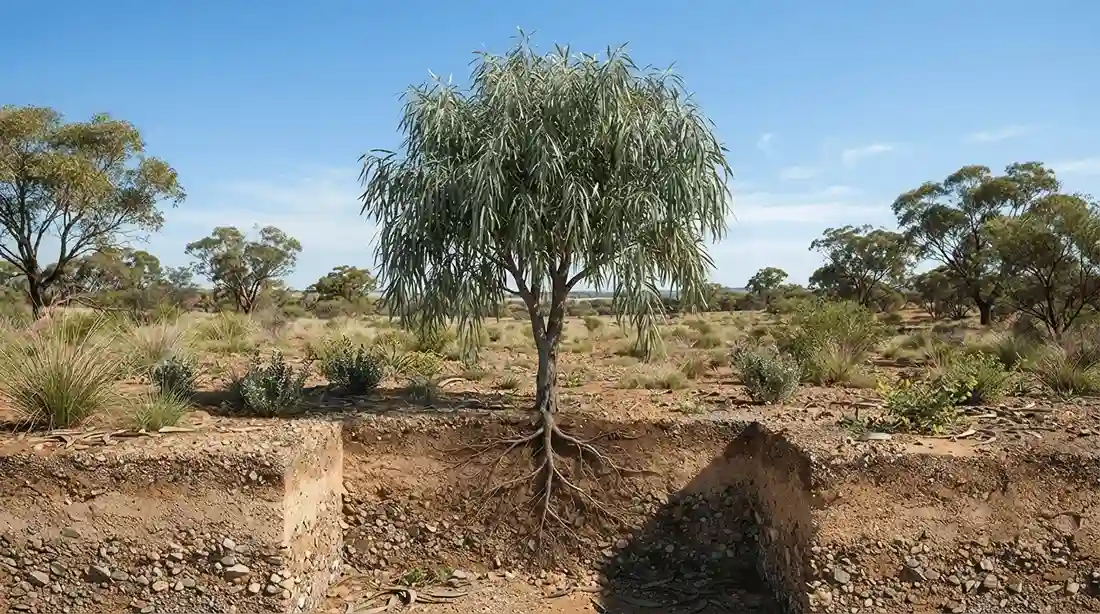
The Gumbi Gumbi tree is native to mainland Australia and occurs naturally across a broad geographic range. It is particularly common throughout inland and semi-arid regions, where it has evolved to withstand challenging environmental conditions. Gumbi Gumbi is one of the most valuable species used in modern sustainable landscaping, and it is widely featured in Australian Native Garden Trees for water-wise and biodiversity-focused planting.
Its natural distribution includes parts of:
- Queensland
- New South Wales
- Victoria
- South Australia
- Western Australia
- Northern Territory
The species is most frequently found in:
- Open woodlands
- Dry forests
- Grasslands
- River flats
- Rocky slopes
- Semi-arid shrublands
Climate Preferences
Pittosporum angustifolium thrives in climates characterized by:
- Hot summers
- Mild to cool winters
- Low to moderate annual rainfall
- Periodic drought
- High sunlight exposure
Its remarkable drought tolerance results from deep root development and efficient water-use strategies, making it well suited to Australia’s variable climate.
Preferred Soil Types
The tree adapts to a surprisingly wide range of soils, including:
- Sandy soils
- Loamy soils
- Gravelly soils
- Rocky ground
- Well-drained clay loams
Although adaptable, it performs best in soils with excellent drainage. Poorly drained or permanently waterlogged sites can reduce vigor and increase the likelihood of root problems.
Drought Tolerance
Once established, Gumbi Gumbi is considered highly drought tolerant.
Greenery Inside recommends providing regular irrigation during the first one to two growing seasons to encourage deep root development. Mature trees typically require minimal supplemental watering except during prolonged periods of extreme drought.
Ecological Importance
Within native ecosystems, Gumbi Gumbi provides several ecological benefits:
- Shelter for birds
- Nesting habitat
- Nectar for insects
- Seed resources for wildlife
- Shade for smaller native plants
- Increased biodiversity in revegetation projects
These qualities have made the species valuable for restoration planting and wildlife-friendly landscaping across many parts of Australia.
Gumbi Gumbi Tree Size and Growth Rate
Understanding the mature size and growth rate helps gardeners choose an appropriate planting location and manage long-term maintenance.
Mature Height and Width
The Gumbi Gumbi tree height varies according to soil quality, rainfall, and climate.
Under average garden conditions, mature trees generally reach:
| Characteristic | Typical Size |
| Height | 5–12 metres |
| Canopy spread | 3–6 metres |
| Trunk diameter | Up to 40 cm on mature specimens |
In ideal natural conditions, some trees may exceed these dimensions, while specimens growing in dry inland environments often remain smaller.
The moderate canopy spread makes Gumbi Gumbi suitable for:
- Medium-sized gardens
- Native landscapes
- Rural properties
- Shelterbelt plantings
- Parks
- Streetscapes
For smaller residential gardens, careful placement away from buildings allows the tree’s graceful form to develop without excessive pruning.
Growth Rate
Gumbi Gumbi is generally considered a moderate-growing tree.
Young trees establish steadily during their first few years before producing more vigorous canopy growth as their root systems mature.
Growth speed is influenced by several environmental factors, including:
- Soil drainage
- Available moisture
- Sunlight exposure
- Temperature
- Nutrient availability
- Competition from surrounding plants
Under favorable conditions, annual growth of approximately 30–60 cm is common.
The species is also relatively long-lived, with healthy trees capable of surviving for many decades in suitable environments.
In our experience, patience during the establishment phase is rewarded with a resilient, attractive tree that requires relatively little maintenance once mature. Proper site selection at planting time has a greater impact on long-term performance than frequent fertilization or intensive care.
How to Grow Gumbi Gumbi
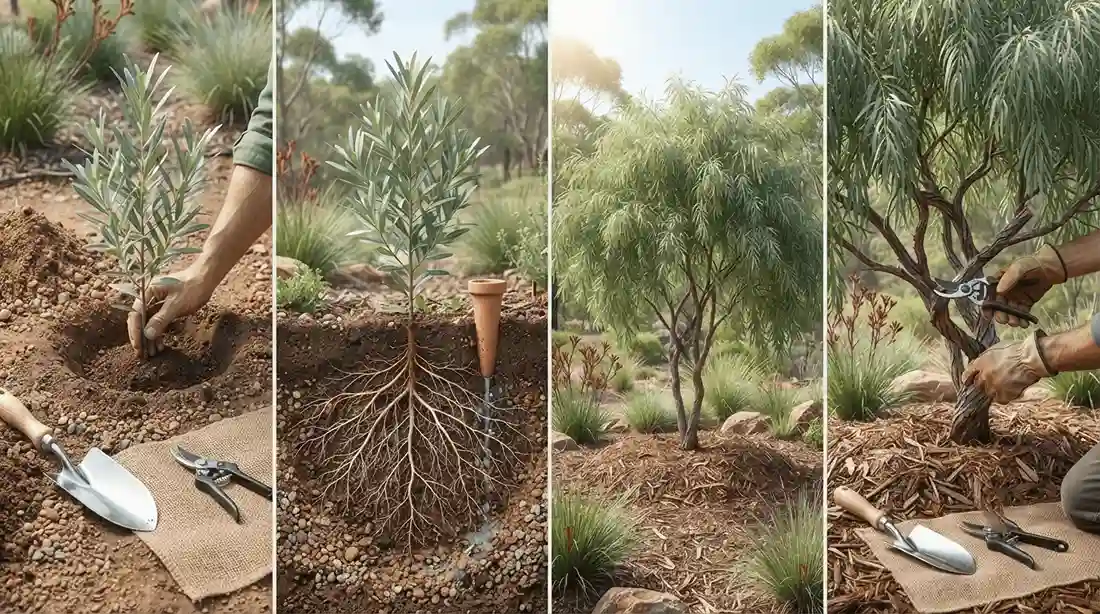
The Gumbi Gumbi tree (Pittosporum angustifolium) is relatively easy to grow when planted in conditions similar to its natural Australian habitat. It is valued for its drought tolerance, adaptability, and low-maintenance nature once established. Like many Australian native trees, success depends more on choosing the right location than on intensive care.
As of 2026, Australian horticultural experts continue to recommend planting Gumbi Gumbi in well-drained soils with full sun exposure rather than relying on excessive watering or fertilization. Healthy root establishment during the first one to two years is the most important factor for long-term success.
Light Requirements
Gumbi Gumbi performs best in full sun, where it develops dense foliage, stronger branches, and more consistent flowering.
Recommended light conditions include:
- Full sun (6–8+ hours daily)
- Light afternoon shade in extremely hot inland climates
- Open planting positions with good air circulation
Although the tree tolerates partial shade, insufficient sunlight often leads to:
- Sparse foliage
- Slower growth
- Reduced flowering
- Less compact canopy development
For ornamental landscapes, planting in an open position allows the tree’s graceful weeping habit to become its defining feature.
Soil Requirements
One of the strengths of Gumbi Gumbi is its ability to adapt to various soil types, provided drainage is adequate.
Ideal soil characteristics include:
- Well-drained sandy soils
- Sandy loams
- Gravelly soils
- Rocky native soils
- Moderately fertile loams
Suitable soil pH ranges from approximately 6.0 to 8.0, making the tree adaptable to both slightly acidic and alkaline conditions.
Avoid planting in:
- Permanently wet ground
- Heavy compacted clay
- Poorly drained depressions
- Areas prone to flooding
In our experience, improving drainage before planting is far more beneficial than adding large amounts of fertilizer. Australian native species generally perform best in relatively low-phosphorus soils.
Water Requirements
Although mature Gumbi Gumbi trees are highly drought tolerant, young trees require regular watering until established.
A practical watering schedule is:
| Tree Age | Watering Recommendation |
| Newly planted | Deep watering 1–2 times per week |
| 3–12 months | Weekly during dry weather |
| 1–2 years | Every 2–3 weeks if rainfall is low |
| Established trees | Occasional deep watering during prolonged drought |
Deep watering encourages roots to grow downward, improving drought resistance.
Common watering mistakes include:
- Frequent shallow watering
- Constantly wet soil
- Waterlogging around the trunk
- Poor drainage after irrigation
Greenery Inside recommends checking soil moisture several centimeters below the surface before watering rather than following a rigid schedule.
Temperature and Climate
Gumbi Gumbi naturally tolerates a wide range of Australian climates.
It performs well in:
- Semi-arid regions
- Mediterranean climates
- Warm temperate regions
- Dry inland environments
Once established, it tolerates:
- Extended dry periods
- Summer heat
- Moderate frost
- Strong winds
Young trees, however, may benefit from frost protection during unusually cold winters.
The species is particularly suitable for drought-conscious landscapes where reliable long-term resilience is important.
Fertilizing
Most established Gumbi Gumbi trees require little supplemental fertilizer.
If growth appears weak, apply:
- A slow-release fertilizer formulated for Australian native plants
- Low-phosphorus native plant fertilizer
- Well-aged compost around (not against) the root zone
Avoid:
- High-phosphorus fertilizers
- Excessive nitrogen
- Frequent fertilizing
Too much fertilizer may encourage excessive soft growth while reducing the tree’s natural drought tolerance.
Pruning
Minimal pruning is usually sufficient.
Prune to:
- Remove dead branches
- Eliminate damaged wood
- Improve canopy structure
- Maintain clearance over pathways
- Remove crossing branches
Avoid heavy pruning into older wood unless necessary.
The best pruning period is typically:
- Late winter
- Early spring before vigorous new growth begins
Retaining the naturally pendulous branches preserves the elegant appearance that makes Weeping Pittosporum desirable in landscapes.
Propagation
Gumbi Gumbi can be propagated from either seed or semi-hardwood cuttings.
Seed Propagation
Seed propagation is the most common method.
Basic steps include:
- Collect mature seed capsules after they split naturally.
- Remove sticky seed coating if necessary.
- Sow into free-draining propagation mix.
- Keep lightly moist.
- Maintain warm temperatures.
Germination may take several weeks depending on temperature and seed freshness.
Cutting Propagation
Semi-hardwood cuttings can also produce healthy plants.
Successful propagation usually involves:
- Healthy current-season shoots
- Rooting hormone
- Sterile propagation mix
- High humidity
- Bright indirect light
Cuttings often provide plants identical to the parent tree.
Germination Tips
For improved success:
- Use fresh seed whenever possible.
- Avoid overwatering.
- Provide consistent warmth.
- Maintain excellent drainage.
- Protect young seedlings from severe frost.
Common Uses of the Gumbi Gumbi Tree
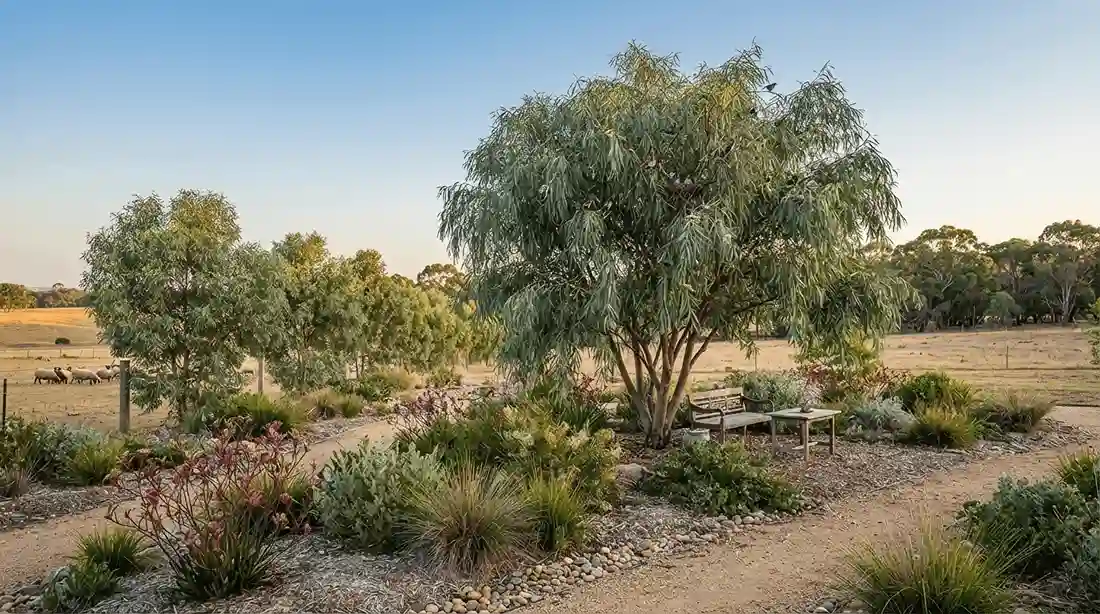
The Gumbi Gumbi tree has been valued for generations because of both its ornamental qualities and its practical uses across rural and urban landscapes.
Today, Gumbi Gumbi tree uses extend well beyond traditional medicine.
Common landscape uses include:
Shade Tree
Its graceful canopy provides filtered shade suitable for:
- Home gardens
- Parks
- Farmyards
- Outdoor seating areas
Unlike dense shade trees, the open canopy allows enough sunlight for many understory plants.
Windbreak
Its flexible branches tolerate wind well.
Rows of Gumbi trees are commonly planted to:
- Reduce wind speed
- Protect livestock
- Shelter crops
- Minimize soil erosion
Wildlife Habitat
The tree supports local biodiversity by providing:
- Nesting sites
- Bird shelter
- Pollinator resources
- Seed food sources
- Habitat for beneficial insects
Native birds frequently visit mature trees throughout the year.
Native Landscaping
Landscape designers increasingly include Gumbi Gumbi in:
- Water-wise gardens
- Native Australian gardens
- Council landscapes
- Ecological restoration projects
Its low maintenance requirements make it especially valuable for sustainable landscape design.
Ornamental Planting
The elegant weeping habit makes the species an attractive feature tree.
It is commonly planted:
- Along driveways
- Near entrances
- As a lawn specimen
- In public parks
- In botanical collections
Shelterbelts
On rural properties, Gumbi Gumbi is frequently incorporated into mixed native shelterbelts because it offers:
- Wind protection
- Wildlife habitat
- Drought resilience
- Long lifespan
- Attractive appearance
Traditional Uses and Claimed Health Benefits
For centuries, Gumbi Gumbi has been associated with traditional Indigenous Australian knowledge. Many reported medicinal uses originate from cultural practices that predate modern scientific research.
It is important to distinguish:
- Traditional knowledge, which reflects generations of cultural experience.
- Scientific evidence, which requires controlled research and clinical studies.
While both forms of knowledge are valuable, they serve different purposes and should not be considered equivalent.
Traditional Indigenous Uses
Various Aboriginal communities have traditionally used different parts of the tree, particularly the leaves.
Historical preparations reportedly included:
- Herbal infusions
- Leaf decoctions
- External washes
- Traditional remedies for general wellbeing
The specific methods and cultural significance vary among Indigenous groups across Australia.
These traditional practices form an important part of Australia’s ethnobotanical heritage and should be understood within their cultural context.
Gumbi Gumbi Benefits
Many people ask:
What is the benefit of Gumbi Gumbi?
Traditionally reported Gumbi Gumbi benefits include support for:
- General wellbeing
- Immune health
- Digestive comfort
- Respiratory health
- Skin care
- Overall vitality
However, these reported benefits are primarily based on:
- Traditional knowledge
- Historical use
- Anecdotal reports
Current scientific evidence supporting many of these health claims remains limited.
Laboratory studies have identified naturally occurring plant compounds such as antioxidants and various phytochemicals within Pittosporum angustifolium. However, laboratory findings do not necessarily demonstrate the same effects in humans.
Greenery Inside recommends viewing Gumbi Gumbi as a culturally important traditional plant rather than a scientifically proven treatment for medical conditions.
Individuals with health concerns should seek advice from qualified healthcare professionals rather than relying solely on herbal preparations.
Gumbi Gumbi Medicinal Uses
Historically, Gumbi Gumbi medicinal uses have centered primarily on the leaves.
Traditional preparations have reportedly included:
- Herbal teas
- Infusions
- Decoctions
- External applications
Historically, these preparations have been used in traditional settings for general wellness and other culturally specific purposes.
Current Scientific Research
Modern research into Pittosporum angustifolium remains relatively limited.
Researchers continue investigating:
- Plant chemistry
- Antioxidant compounds
- Bioactive constituents
- Potential pharmacological properties
Although preliminary laboratory studies have identified promising compounds, there is currently insufficient high-quality clinical evidence to confirm many of the medicinal claims circulating online.
Consequently:
- Gumbi Gumbi should not replace prescribed medicines.
- Herbal preparations should not be viewed as proven treatments for serious illnesses.
- More clinical research is needed before firm health conclusions can be made.
How to Prepare Gumbi Gumbi
Many gardeners grow Gumbi Gumbi primarily for ornamental purposes. Those interested in traditional herbal preparation should understand that preparation methods originate from traditional practices rather than standardized medical guidelines.
Traditional Leaf Preparation
Traditionally, healthy mature leaves are:
- Harvested from healthy trees
- Washed thoroughly
- Used fresh or dried
- Stored away from moisture
Avoid harvesting excessively from young trees, as heavy leaf removal may reduce plant vigor.
Gumbi Gumbi Tea
The most commonly reported traditional preparation is Gumbi Gumbi tea.
People often ask:
How to prepare Gumbi Gumbi?
A commonly described traditional method includes:
- Harvest clean mature leaves.
- Rinse thoroughly.
- Dry naturally in a shaded, well-ventilated location.
- Store dried leaves in an airtight container.
- Steep a small quantity of dried leaves in hot (not vigorously boiling) water for several minutes.
- Strain before drinking.
Preparation methods vary considerably among individuals and communities, and there is no universally accepted standardized recipe.
Drying Leaves
Proper drying helps preserve leaf quality.
Recommended practices include:
- Drying in shade
- Good airflow
- Low humidity
- Avoiding direct sunlight
- Turning leaves periodically
Leaves should become dry and brittle before long-term storage.
Storage Recommendations
Store dried leaves in:
- Airtight glass containers
- Cool, dry cupboards
- Dark storage areas away from sunlight
Properly stored dried leaves generally maintain better quality than leaves exposed to heat or moisture.
Is Gumbi Gumbi Safe?
The safety of Gumbi Gumbi preparations has not been extensively studied in humans.
Although traditional use spans many generations, modern medical research remains limited.
Therefore, herbal preparations should be approached cautiously.
Possible Side Effects
Reported Gumbi Gumbi side effects have not been comprehensively documented through large clinical studies.
Potential concerns may include:
- Allergic reactions
- Digestive upset
- Individual sensitivity
- Unknown interactions with medications
People with allergies to other plant species should exercise additional caution when trying any new herbal preparation.
Drug Interactions
Because research is limited, possible interactions with:
- Blood pressure medications
- Diabetes medications
- Blood-thinning drugs
- Immunosuppressants
cannot be ruled out.
Anyone taking prescription medication should consult a qualified healthcare professional before consuming herbal products.
Pregnancy and Breastfeeding
Due to the absence of sufficient safety studies, Gumbi Gumbi is generally not recommended during pregnancy or breastfeeding unless specifically advised by a qualified healthcare provider.
What Research Says
Current research provides an important perspective on Gumbi Gumbi.
Scientists have identified naturally occurring plant compounds with interesting biological activity under laboratory conditions. However:
- Human clinical trials remain limited.
- Many traditional claims have not been confirmed scientifically.
- Appropriate dosage has not been standardized.
- Long-term safety data are lacking.
For these reasons, medical experts generally advise interpreting health claims cautiously until stronger clinical evidence becomes available.
The most scientifically supported reasons to grow Pittosporum angustifolium remain its ornamental beauty, ecological value, drought tolerance, and cultural significance rather than proven medicinal effects.
Gumbi Gumbi vs Weeping Pittosporum and Other Native Pittosporum Species
The terms Gumbi Gumbi and Weeping Pittosporum are often used interchangeably because they generally refer to the same species, Pittosporum angustifolium. However, Australia is home to several other Pittosporum species that differ in appearance, habitat, and landscape use.
Understanding these differences helps gardeners select the right tree for their climate, available space, and planting goals.
| Feature | Gumbi Gumbi / Weeping Pittosporum | Other Native Pittosporum Species |
| Scientific name | Pittosporum angustifolium (formerly Pittosporum phylliraeoides) | Examples include Pittosporum undulatum, Pittosporum revolutum, Pittosporum multiflorum |
| Growth habit | Graceful weeping evergreen tree | Upright shrubs or trees depending on species |
| Mature height | 5–12 m | 2–20 m depending on species |
| Leaves | Long, narrow, drooping | Usually broader, thicker, or wavy |
| Flowers | Small, pale yellow, lightly fragrant | White, cream, yellow, or purple depending on species |
| Fruit | Woody capsules with orange sticky seeds | Similar capsules, varying in size and color |
| Native habitat | Inland semi-arid Australia | Rainforests, coastal forests, woodlands, and mountain regions |
| Drought tolerance | Excellent | Moderate to high, depending on species |
| Common uses | Shade tree, ornamental planting, shelterbelts, wildlife gardens | Hedging, screening, rainforest restoration, ornamental landscaping |
Although these species belong to the same genus, Gumbi Gumbi stands out for its exceptional drought tolerance and elegant weeping canopy, making it particularly suitable for water-wise Australian gardens.
Common Problems When Growing Gumbi Gumbi
Gumbi Gumbi is generally considered a hardy, low-maintenance tree. Nevertheless, unsuitable growing conditions can lead to several common problems. Fortunately, most can be corrected through improved care practices.
Yellow Leaves
Why it happens
Yellowing foliage is most commonly caused by:
- Overwatering
- Poor soil drainage
- Nutrient imbalance
- Root stress after transplanting
- Natural aging of older leaves
How to fix it
- Improve drainage if soil remains wet.
- Reduce watering frequency.
- Check soil moisture before watering.
- Apply a low-phosphorus native fertilizer only if nutrient deficiency is suspected.
Prevention
- Plant in well-drained soil.
- Avoid waterlogged locations.
- Water deeply but infrequently once established.
Slow Growth
Why it happens
Slow growth may result from:
- Heavy shade
- Poor soil drainage
- Extended drought during establishment
- Root competition
- Poor planting location
How to fix it
- Increase sunlight exposure where possible.
- Water consistently during the establishment period.
- Apply organic mulch around the root zone without touching the trunk.
- Ensure the tree has adequate growing space.
Prevention
Healthy site selection before planting is the best way to encourage steady growth.
Poor Flowering
Why it happens
Reduced flowering may occur because of:
- Too much shade
- Excess nitrogen fertilizer
- Immature trees
- Seasonal weather variation
How to fix it
- Move container-grown plants into full sun if possible.
- Reduce unnecessary fertilization.
- Allow young trees time to mature.
Flower production naturally improves as healthy trees become established.
Root Problems
Why it happens
Root issues usually develop from:
- Waterlogged soils
- Compacted clay
- Poor drainage
- Planting too deeply
How to fix it
- Improve drainage.
- Avoid standing water.
- Plant at the correct depth.
- Remove compacted soil where practical.
Prevention
In our experience, planting slightly above surrounding soil level in heavy soils significantly reduces the risk of root diseases.
Pests and Diseases
Gumbi Gumbi has relatively few serious pest or disease problems.
Occasional pests include:
- Scale insects
- Aphids
- Leaf-eating caterpillars
Potential diseases include:
- Root rot in poorly drained soils
- Minor fungal leaf spots during prolonged wet weather
Management Tips
- Encourage beneficial insects.
- Remove heavily damaged branches.
- Maintain good airflow.
- Avoid excessive watering.
- Monitor young trees regularly.
Healthy, well-established trees are naturally more resistant to most pest problems.
Common Beginner Mistakes
Many problems experienced by new gardeners can be avoided through proper planting and maintenance.
Overwatering
The most common mistake is watering too frequently.
Although young trees require regular moisture, mature Gumbi Gumbi trees are adapted to dry conditions. Constantly wet soil often causes more damage than occasional drought.
Planting in Heavy Clay
Poor drainage can quickly lead to root decline.
Where clay soils are unavoidable:
- Improve drainage before planting.
- Consider raised beds or mounded planting.
- Avoid low-lying areas.
Too Much Shade
Insufficient sunlight often results in:
- Thin canopy
- Weak growth
- Reduced flowering
- Poor overall appearance
Full sun generally produces the healthiest specimens.
Excess Fertilizer
Australian native plants typically require less fertilizer than many exotic ornamentals.
Using excessive fertilizer may:
- Produce weak, soft growth
- Reduce drought tolerance
- Cause nutrient imbalance
Choose fertilizers specifically formulated for native plants when needed.
Incorrect Pruning
Heavy pruning removes the graceful weeping habit that gives the tree its ornamental appeal.
Instead:
- Remove only dead or damaged branches.
- Prune lightly to maintain structure.
- Avoid severe canopy reduction.
Harvesting Leaves Improperly
Gardeners interested in traditional leaf use sometimes remove too much foliage.
Avoid:
- Stripping entire branches
- Harvesting from young trees
- Repeated heavy harvesting
Greenery Inside recommends harvesting only small amounts from healthy, mature trees so normal growth is not affected.
Landscaping Ideas for Gumbi Gumbi
The elegant shape, drought tolerance, and ecological value of Gumbi Gumbi make it an excellent addition to many Australian landscape styles.
Native Gardens
Gumbi Gumbi blends naturally with other Australian natives such as:
- Wattles (Acacia)
- Bottlebrush (Callistemon)
- Grevilleas
- Native grasses
- Banksias
These combinations create low-maintenance gardens that support local biodiversity.
Wildlife Gardens
Because the tree provides nectar, shelter, and seed resources, it helps attract:
- Native birds
- Bees
- Butterflies
- Beneficial insects
Pairing Gumbi Gumbi with flowering native shrubs can create year-round wildlife habitat.
Rural Landscapes
Large rural properties often use Gumbi Gumbi as:
- Shelterbelts
- Windbreaks
- Stock shade
- Farm entrance feature trees
Its drought tolerance makes it particularly valuable in inland regions.
Shelterbelts
Mixed native shelterbelts benefit from including Gumbi Gumbi because it offers:
- Wind protection
- Wildlife habitat
- Attractive foliage
- Long-term resilience
Combining several native tree species improves biodiversity and resilience against pests and climate extremes.
Street Planting
Many councils appreciate Gumbi Gumbi because it offers:
- Moderate mature size
- Attractive appearance
- Relatively low maintenance
- Good drought tolerance
Proper spacing allows the naturally weeping canopy to develop without interfering with nearby infrastructure.
Drought-Tolerant Gardens
As water conservation becomes increasingly important, Gumbi Gumbi remains an excellent choice for:
- Xeriscaping
- Water-wise landscapes
- Low-irrigation gardens
- Sustainable residential planting
Mulching around the base further improves water efficiency during hot summers.
Feature Specimen Tree
Perhaps the tree’s greatest landscape value lies in its use as a standalone specimen.
Its graceful canopy creates an attractive focal point in:
- Front gardens
- Courtyards
- Parks
- Native landscapes
- Large lawns
Allowing enough space for its mature spread showcases its distinctive weeping form.
Conclusion
The Gumbi Gumbi tree (Pittosporum angustifolium) is one of Australia’s most distinctive native trees, valued for its graceful weeping habit, exceptional drought tolerance, and ecological importance. Formerly classified as Pittosporum phylliraeoides and commonly known as Weeping Pittosporum or Gumby Gumby tree, it has become a popular choice for native gardens, rural landscapes, shelterbelts, and wildlife-friendly plantings.
Beyond its ornamental qualities, Gumbi Gumbi has a long history of traditional Indigenous use, particularly in herbal preparations made from its leaves. While many Gumbi Gumbi benefits and Gumbi Gumbi medicinal uses are widely discussed, current scientific evidence remains limited. Traditional knowledge provides valuable cultural insight, but it should not be interpreted as proof of medical effectiveness, and herbal preparations should never replace professional healthcare advice.
From a gardening perspective, Gumbi Gumbi is a resilient, low-maintenance tree that performs best in full sun and well-drained soils. Once established, it requires minimal watering, making it well suited to drought-prone regions and sustainable landscape designs.
Whether you are planting it for its elegant appearance, wildlife value, or cultural significance, proper identification, thoughtful cultivation, and responsible use will help you enjoy this remarkable Australian native tree for many decades.
Frequently Asked Questions
What is a Gumby Gumby tree?
A Gumby Gumby tree is another common name for the Gumbi Gumbi tree (Pittosporum angustifolium), an Australian native evergreen tree also known as Weeping Pittosporum. It is recognized for its narrow weeping foliage, drought tolerance, and long history of traditional Indigenous use.
What is the benefit of Gumbi Gumbi?
Traditionally, Gumbi Gumbi has been used in Indigenous Australian herbal practices to support general wellbeing. It is also valued as an ornamental shade tree, wildlife habitat, and drought-tolerant landscape plant. However, many reported health benefits are based on traditional knowledge, and modern scientific evidence remains limited.
Can you eat Gumbi Gumbi fruit?
Gumbi Gumbi fruit is not commonly eaten by people, and there is insufficient reliable evidence confirming its safety as a food. Traditional use has focused primarily on the leaves rather than the fruit, so consuming the fruit is generally not recommended.
How do you prepare Gumbi Gumbi tea?
Traditional Gumbi Gumbi tea is typically prepared by harvesting clean mature leaves, drying them in a shaded, well-ventilated location, and steeping a small amount of the dried leaves in hot water for several minutes before straining. Preparation methods vary, and there is no standardized medically approved recipe.
How tall does a Gumbi Gumbi tree grow?
A mature Gumbi Gumbi tree generally reaches 5 to 12 metres (16–39 feet) in height with a canopy spread of 3 to 6 metres (10–20 feet), depending on climate, soil conditions, and available moisture.
Is Gumbi Gumbi the same as Weeping Pittosporum?
Yes. Gumbi Gumbi and Weeping Pittosporum generally refer to the same species, Pittosporum angustifolium, which was formerly known as Pittosporum phylliraeoides.
Is Gumbi Gumbi safe to consume daily?
There is currently insufficient clinical research to confirm the long-term safety of consuming Gumbi Gumbi every day. Anyone considering regular use, especially individuals who are pregnant, breastfeeding, or taking prescription medications, should consult a qualified healthcare professional.
Can Gumbi Gumbi grow in home gardens?
Yes. Gumbi Gumbi grows well in many home gardens, provided it receives full sun, well-drained soil, and adequate space to reach its mature size. Once established, it is a hardy, low-maintenance tree that tolerates drought and supports native wildlife, making it an excellent choice for Australian native and water-wise landscapes.