Introduction
Magnolia Little Gem vs Teddy Bear is a common comparison for gardeners selecting compact evergreen magnolia trees. Both are cultivars of Magnolia grandiflora (Southern magnolia) known for glossy foliage and fragrant white blooms. However, they differ in size, density, and growth habit, which directly affects where and how they should be planted. Choosing the right variety depends on available space, desired height, and landscaping purpose. Understanding these distinctions helps ensure long-term success in hedging, screening, or decorative planting.
Quick Summary
- Little Gem grows taller and suits hedges and privacy screens
- Teddy Bear is compact with dense foliage, ideal for small gardens
- Both are evergreen with fragrant white flowers
- Final choice depends on space, height requirements, and maintenance preference
What Is the Difference Between Little Gem and Teddy Bear Magnolia?
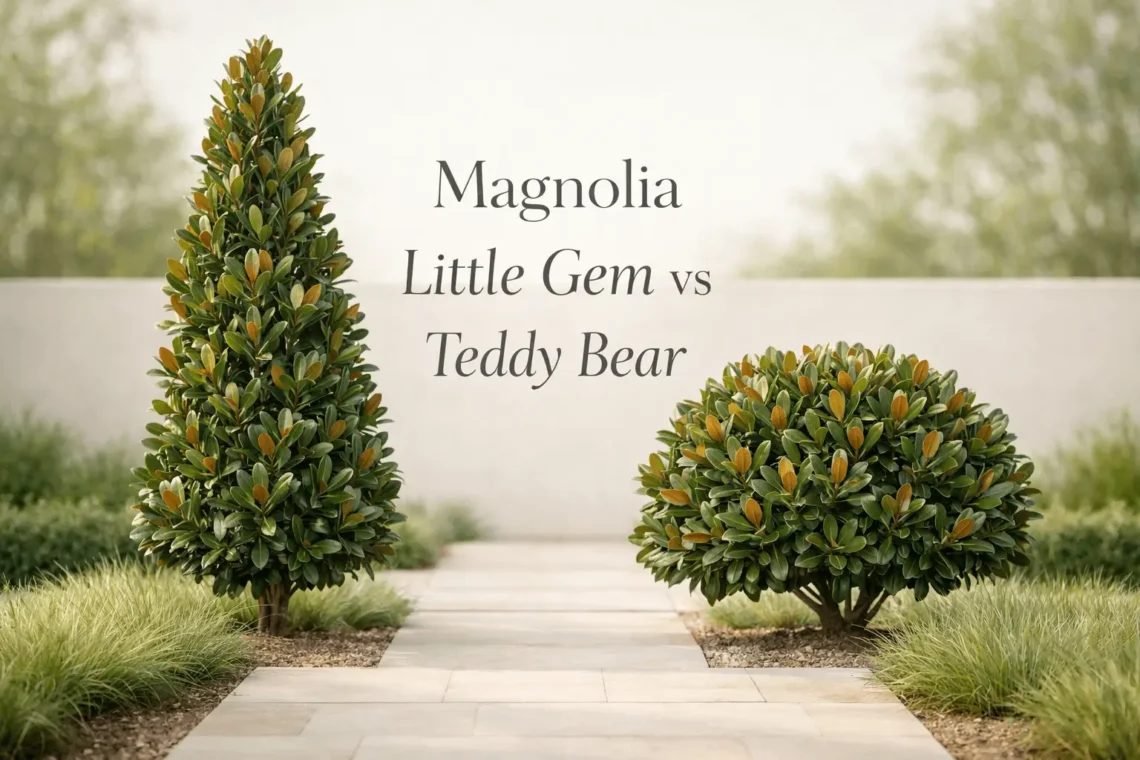
The main difference between Little Gem and Teddy Bear magnolia is their growth habit—Little Gem grows taller with a more open structure, while Teddy Bear is shorter, denser, and more compact. Both are cultivars of Magnolia grandiflora (Southern magnolia), a species widely known for its evergreen foliage and large fragrant blooms (learn more on Wikipedia: Magnolia grandiflora).
Structure and Growth Habit
Little Gem magnolia has an upright, columnar growth pattern with moderate spacing between branches. In contrast, Teddy Bear magnolia develops a rounded, bushy form with tightly packed foliage.
Foliage Density and Appearance
- Little Gem: glossy green leaves with a slightly more open canopy
- Teddy Bear: thicker, darker leaves with a velvety brown underside
Overall Visual Impact
- Little Gem creates a vertical, structured look ideal for screening
- Teddy Bear offers a fuller, decorative appearance suited for focal planting
Size and Height Comparison (Growth Dimensions)
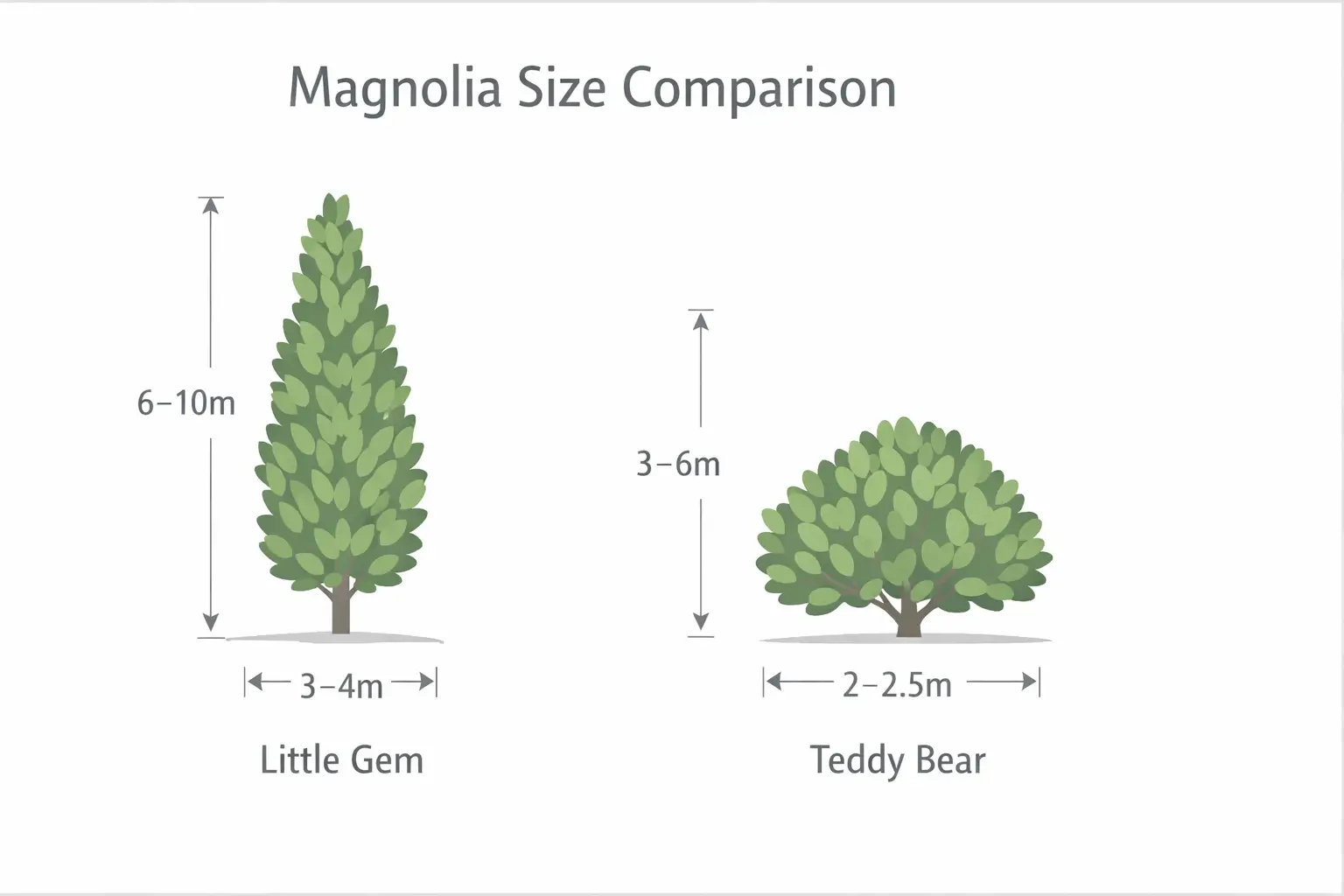
Understanding size differences is essential when planning garden layout or spacing.
Mature Size Comparison
| Feature | Little Gem Magnolia | Teddy Bear Magnolia |
| Height | Taller (6–10m) | Compact (3–6m) |
| Width | Narrow to medium | Dense and compact |
| Growth Habit | Upright | Rounded |
Practical Implications
- Little Gem is better suited for larger spaces or tall hedges
- Teddy Bear fits smaller gardens or confined areas
If you want to cross-check these figures against real-world measurements from multiple sources, this magnolia growth and size data spreadsheet compiles height, width, and growth-rate data points for easy comparison. It’s especially handy if you’re planning a large hedge run and need precise spacing math.
Growth Rate and Development Speed
Little Gem magnolia generally grows at a moderate to fast rate, while Teddy Bear magnolia grows slower and maintains a compact shape.
Growth Characteristics
- Little Gem: moderate to fast growth under optimal conditions
- Teddy Bear: slower, controlled growth
Factors Affecting Growth
- Soil quality and drainage
- Sunlight exposure (full sun to partial shade)
- Water availability and consistency
Key Insight
Little Gem is ideal when faster coverage is needed, such as hedge establishment, while Teddy Bear is better for low-maintenance shaping.
Best Use Cases (Hedge, Screen, or Feature Tree)
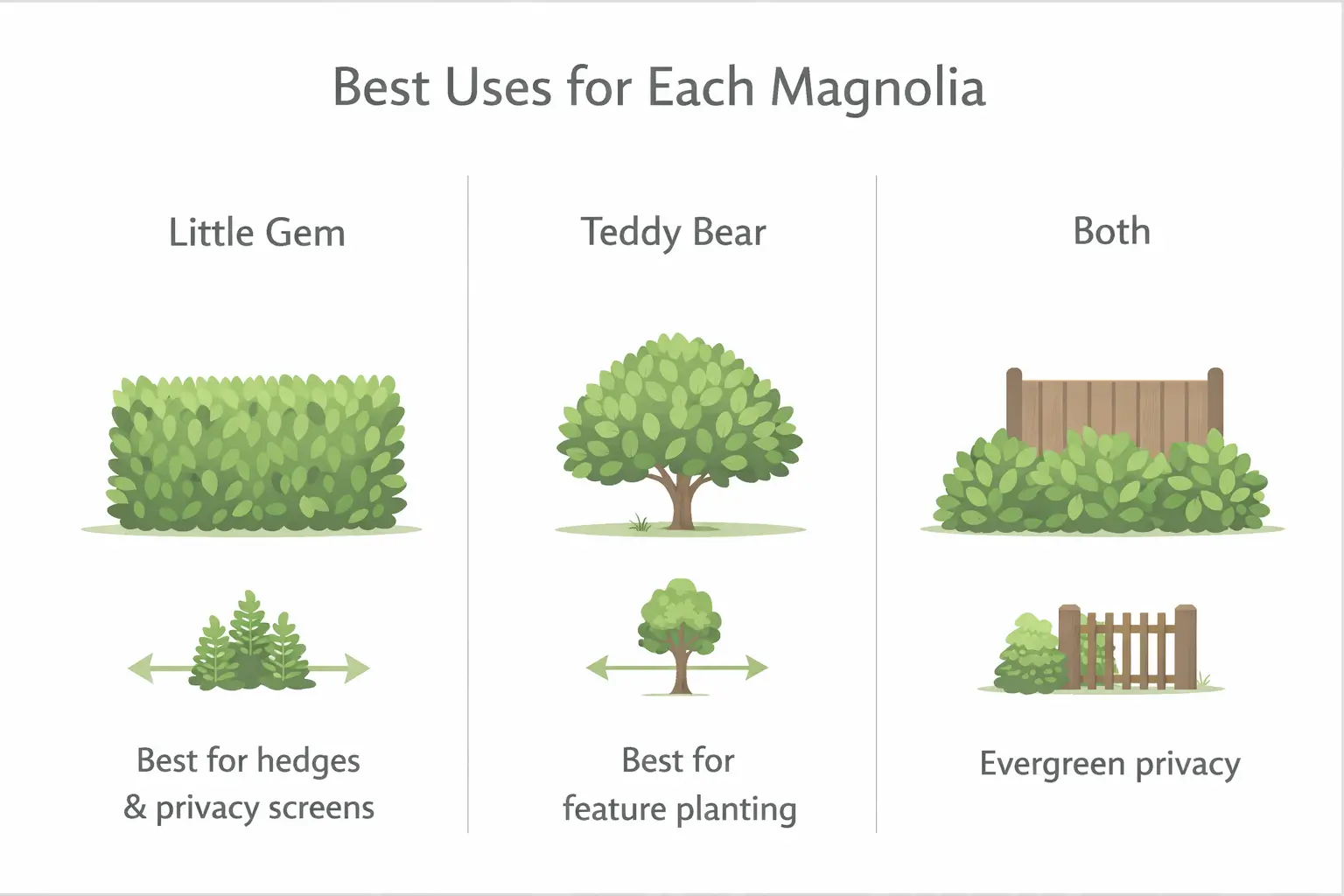
Each variety serves a different landscaping purpose based on its structure.
Ideal Uses
- Little Gem:
- Privacy hedges
- Tall screening trees
- Boundary planting
- Teddy Bear:
- Feature tree in gardens
- Decorative focal points
- Small landscape designs
Shared Benefits
- Both provide evergreen coverage year-round
- Both contribute to privacy and visual structure
Since both varieties are often shortlisted for boundary planting, it helps to check them against other dense evergreen options before committing to a hedge line. Use this evergreen hedge and screen plant lookup tool to compare Little Gem and Teddy Bear side-by-side with other screening species based on height, density, and spacing needs.
For gardeners specifically planning privacy screens, exploring Tropical Privacy Plants for Fast Screening can help compare magnolia hedges with faster-growing alternatives.
Magnolia Little Gem vs Teddy Bear for Pots and Small Spaces
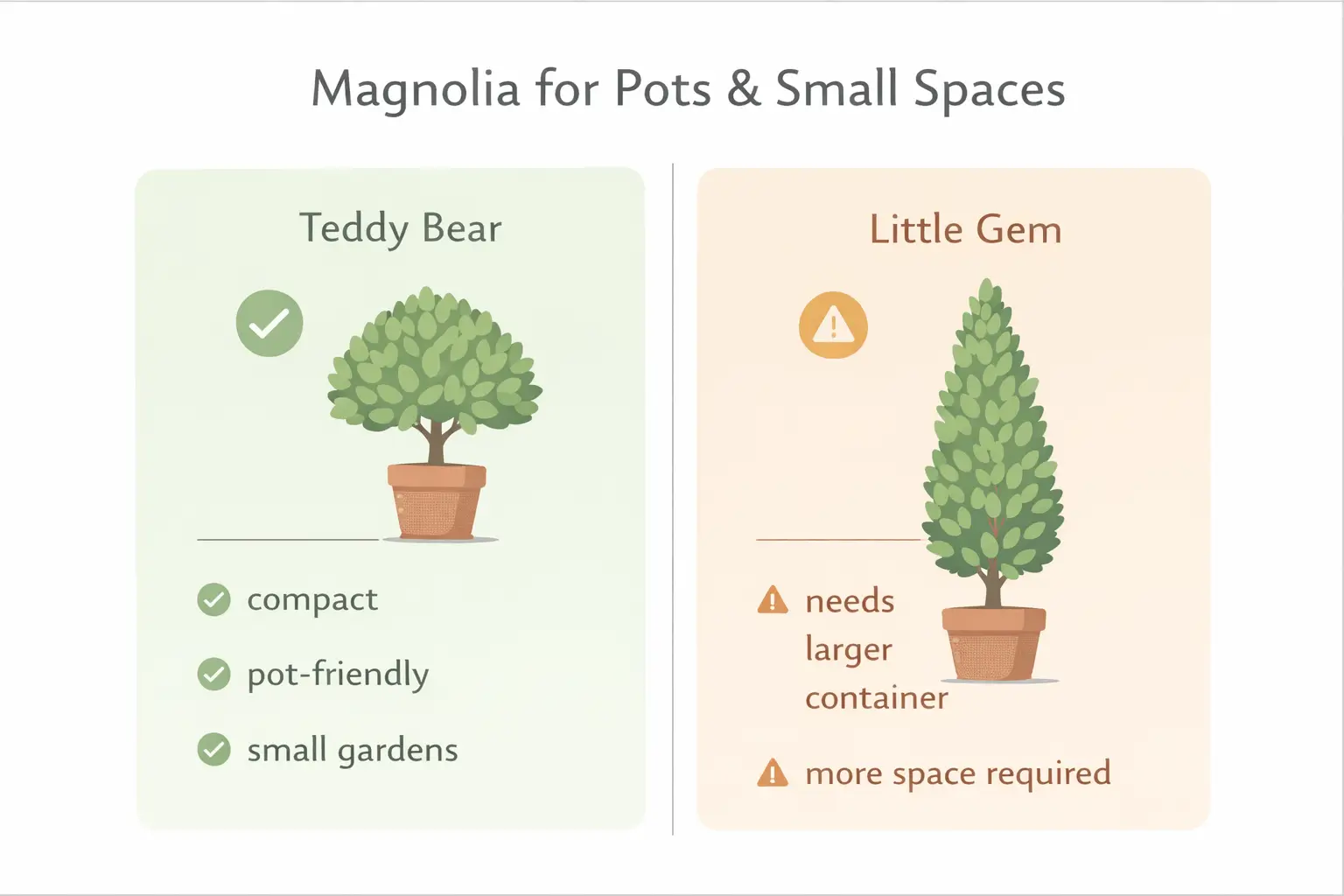
Teddy Bear magnolia is better suited for pots and small spaces due to its compact root system and controlled growth.
Container Suitability
- Teddy Bear:
- Ideal for patios, balconies, and small gardens
- Maintains shape without heavy pruning
- Little Gem:
- Can grow in pots but requires larger containers
- Needs more root space and maintenance
Important Considerations
- Use well-draining soil
- Ensure adequate pot size
- Maintain consistent watering
Flowering, Appearance, and Foliage Differences
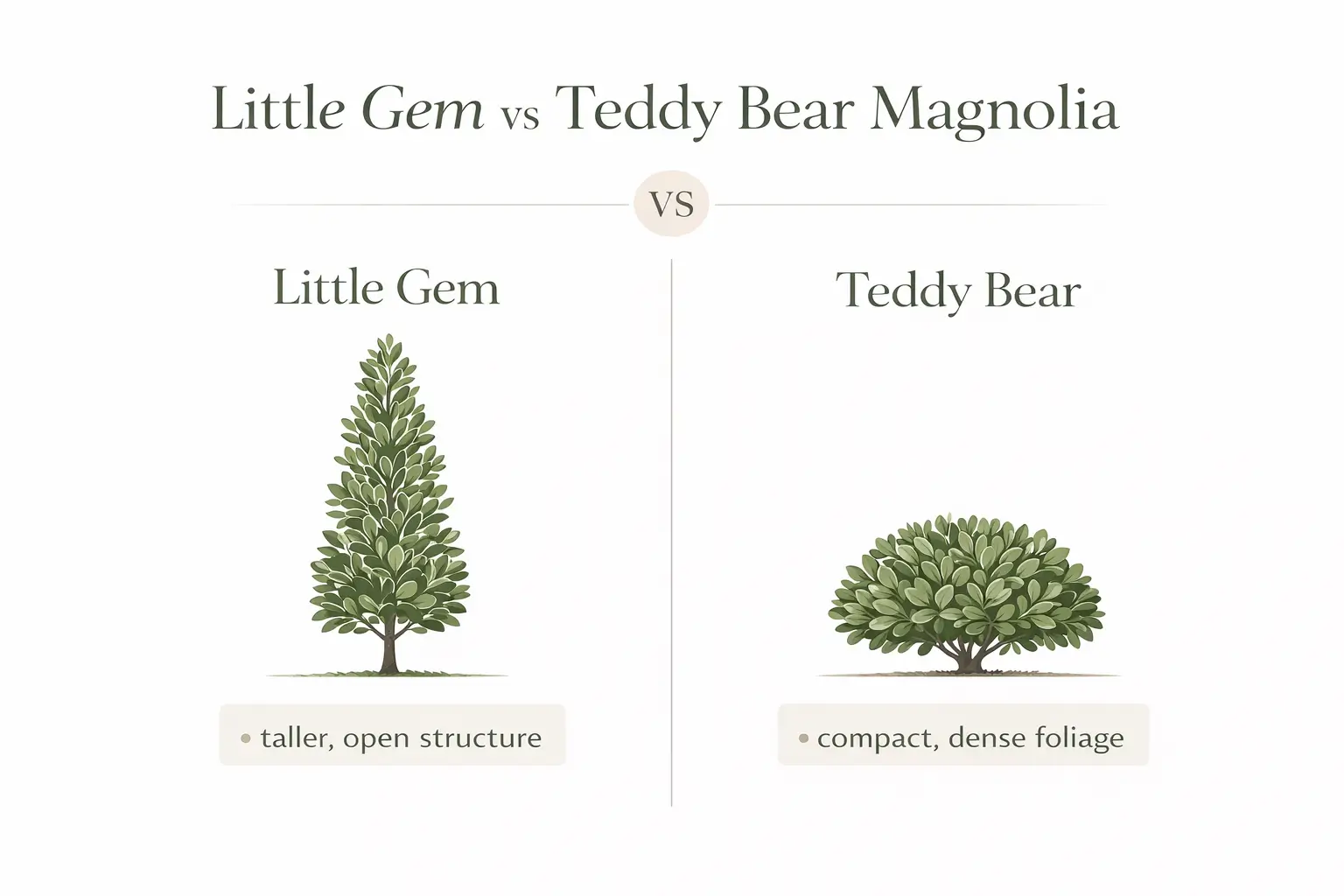
Both varieties produce large, fragrant white flowers, but their foliage texture and density differ.
Flowering Characteristics
- Large white blooms typical of Magnolia grandiflora
- Strong fragrance during flowering season
Foliage Differences
- Teddy Bear:
- Dense, compact foliage
- Thick leaves with brown undersides
- Little Gem:
- Slightly looser canopy
- More open visual structure
Seasonal Impact
Both maintain evergreen foliage year-round, providing consistent garden coverage.
Spacing and Planting Requirements
Proper spacing is essential to ensure healthy development and airflow.
Recommended Spacing
- Little Gem:
- Wider spacing for hedge rows
- Allows vertical growth without overcrowding
- Teddy Bear:
- Closer planting for compact hedges
- Creates dense visual barriers
Planting Tips
- Ensure well-draining soil
- Allow space for mature width
- Avoid overcrowding to reduce disease risk
Comparison with Other Magnolia Varieties
Comparing Little Gem and Teddy Bear with other magnolia types helps clarify their unique advantages.
Key Differences with Other Varieties
| Aspect | Little Gem / Teddy Bear | Other Magnolias |
| Size | Compact to medium | Often very large |
| Growth Habit | Controlled | Wide-spreading |
| Use | Small gardens, hedges | Large landscapes |
Common Alternatives
- Southern Magnolia (Magnolia grandiflora standard): much larger size
- Dwarf magnolia varieties: similar compact use but vary in density
For a deeper side-by-side look beyond this article, the Magnolia Variety Comparison Database breaks down dozens of cultivars — including Little Gem and Teddy Bear — by mature size, bloom time, and hardiness zone. It’s a useful reference if you’re still deciding between several Magnolia grandiflora dwarf types.
Insight
Little Gem and Teddy Bear are preferred for modern gardens where space efficiency is critical.
If you’re evaluating other compact feature trees alongside magnolias, consider options from Accent Trees to broaden your landscape choices.
Common Problems, Mistakes, and Solutions
Most magnolia issues arise from environmental stress or improper care.
Common Problems
- Yellowing leaves (nutrient deficiency or overwatering)
- Slow growth (poor soil or lack of sunlight)
- Poor flowering (insufficient light or stress)
Solutions
- Improve soil drainage
- Provide consistent sunlight
- Adjust watering schedule
Prevention Tips
- Maintain proper spacing
- Use well-draining soil
- Avoid overwatering
Which One Should You Choose?
Choose Little Gem if you need height and screening, and Teddy Bear if you prefer a compact, decorative tree.
Decision Guide
- Choose Little Gem:
- For tall hedges and privacy screens
- When faster growth is desired
- Choose Teddy Bear:
- For small gardens or pots
- When a dense, decorative look is preferred
Conclusion
Magnolia Little Gem vs Teddy Bear ultimately depends on size requirements, growth habit, and landscaping goals. Little Gem is ideal for creating tall, structured hedges or screens, while Teddy Bear excels as a compact, dense feature tree for smaller spaces. Both varieties offer evergreen foliage and fragrant blooms, making them valuable additions to modern gardens. Selecting the right type ensures better plant performance, easier maintenance, and a more balanced landscape design.
FAQs
What is the difference between Magnolia Little Gem and Teddy Bear?
Little Gem grows taller with a more open structure, while Teddy Bear is shorter, denser, and more compact.
How tall does a Little Gem magnolia grow?
Little Gem magnolia typically reaches 6–10 meters depending on growing conditions and care.
How big does a Teddy Bear magnolia get?
Teddy Bear magnolia grows around 3–6 meters, making it suitable for smaller gardens and compact spaces.
Which magnolia is better for hedges?
Little Gem magnolia is better for hedges due to its height, upright growth, and faster coverage.
Can you grow magnolia trees in pots?
Yes, magnolia trees can grow in pots, especially Teddy Bear magnolia, which adapts well to container environments.