Introduction
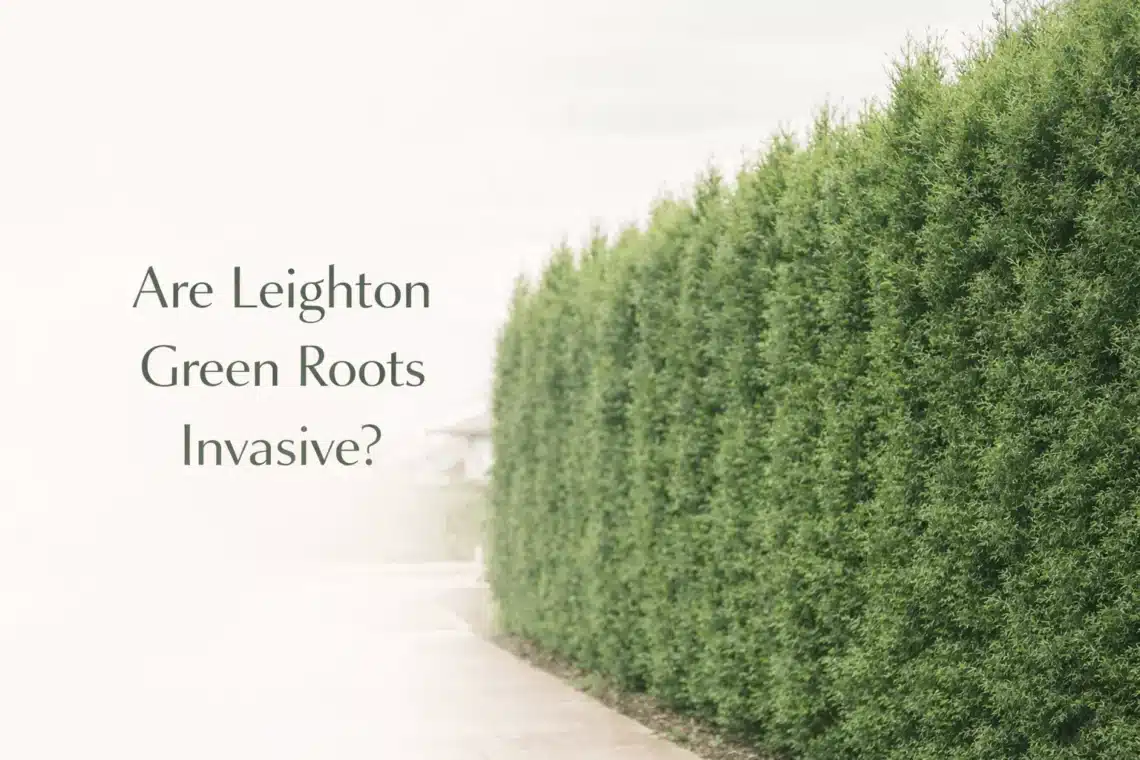
Are Leighton Green roots invasive? This question is common among homeowners planning hedges or privacy screens. The Leighton Green (a fast-growing cypress hedge) is widely used for screening, but its root system behavior depends on soil, water, and planting distance. Understanding how these roots grow helps prevent future issues with structures, paving, and nearby plants while ensuring a healthy and long-lasting hedge.
Quick Summary
- Leighton Green roots are not aggressively invasive, but they can spread moderately in search of moisture.
- The leighton green root system is typically shallow and wide, not deeply destructive like some trees.
- Problems arise when planted too close to structures or in poor conditions.
- There are evergreen trees with non invasive roots better suited for tight spaces.
What Is Leighton Green and Why Is It Popular for Hedges?
Leighton Green (Cupressocyparis leylandii ‘Leighton Green’) is a fast-growing evergreen conifer commonly used as a screening hedge. It belongs to a group of hybrid cypress trees valued for dense foliage and rapid vertical growth.
Key Characteristics
- Fast-growing evergreen conifer hedge
- Commonly used in Australia for screening and privacy
- Dense foliage that forms effective visual barriers
- Suitable for tall evergreen trees and windbreaks
It is often included among the best hedges for privacy due to its ability to quickly create tall screening trees. In regions like Australia, it is widely planted as a fast growing hedge for residential boundaries.
Leighton Green belongs to the hybrid cypress group Cupressocyparis leylandii, a widely recognized species used in hedging and landscaping (see: Leylan Cypress).
Are Leighton Green Roots Invasive? (Core Answer)
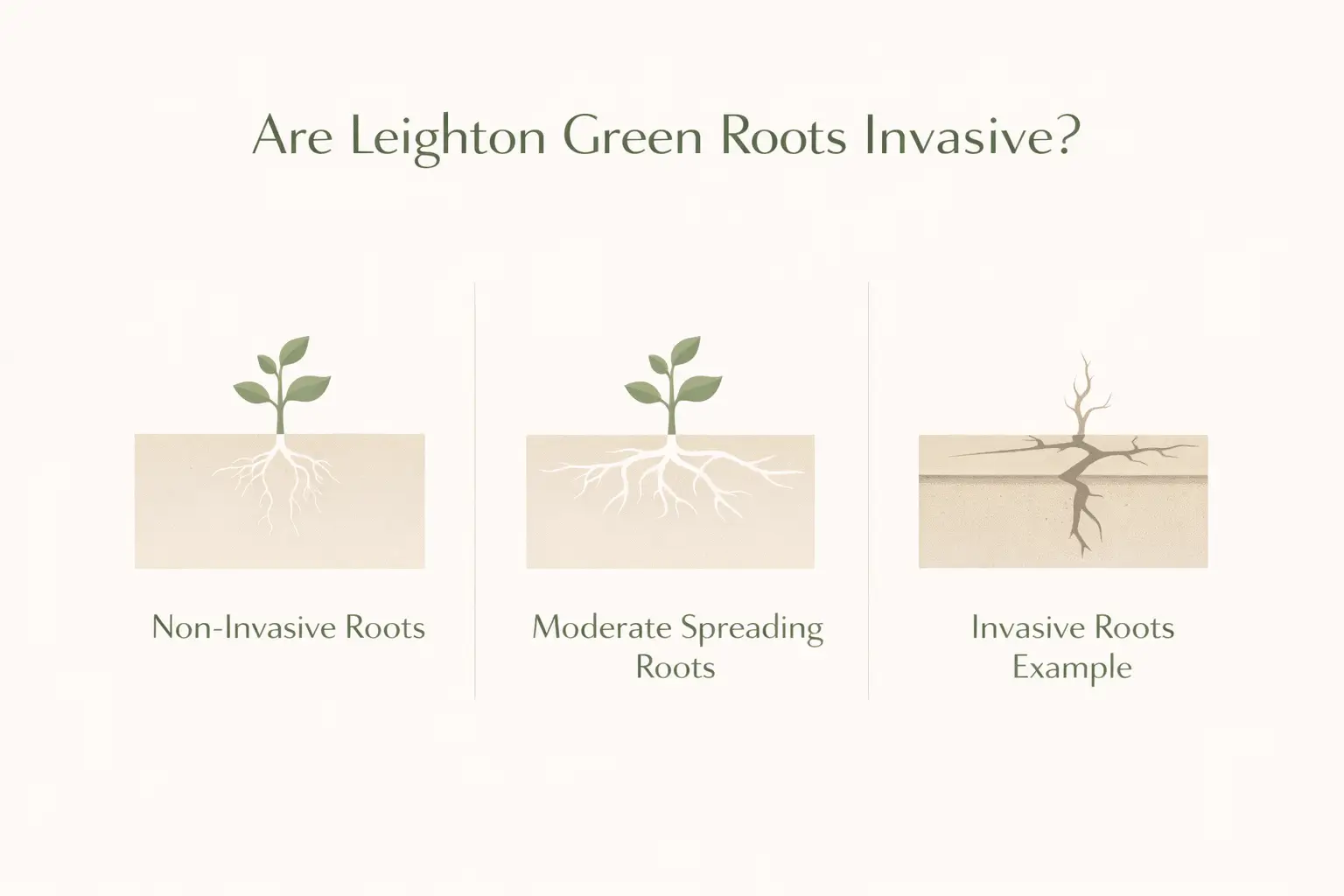
Leighton Green roots are not considered invasive, but they can spread moderately and cause issues if planted too close to structures.
“Invasive roots” typically refer to aggressive root systems that damage foundations, pipes, or underground infrastructure. In contrast, Leighton Green roots spread laterally but lack the force and depth associated with highly invasive species.
Key Points
- Not classified as invasive like aggressive tree species
- Roots spread outward rather than deeply
- May interfere with:
- Nearby paving
- Shallow pipes
- Garden beds
Compared to some conifers, their behavior is moderate. While some people ask “are conifer roots invasive,” the answer depends on species—Leighton Green falls on the less aggressive side.
Understanding the Leighton Green Root System
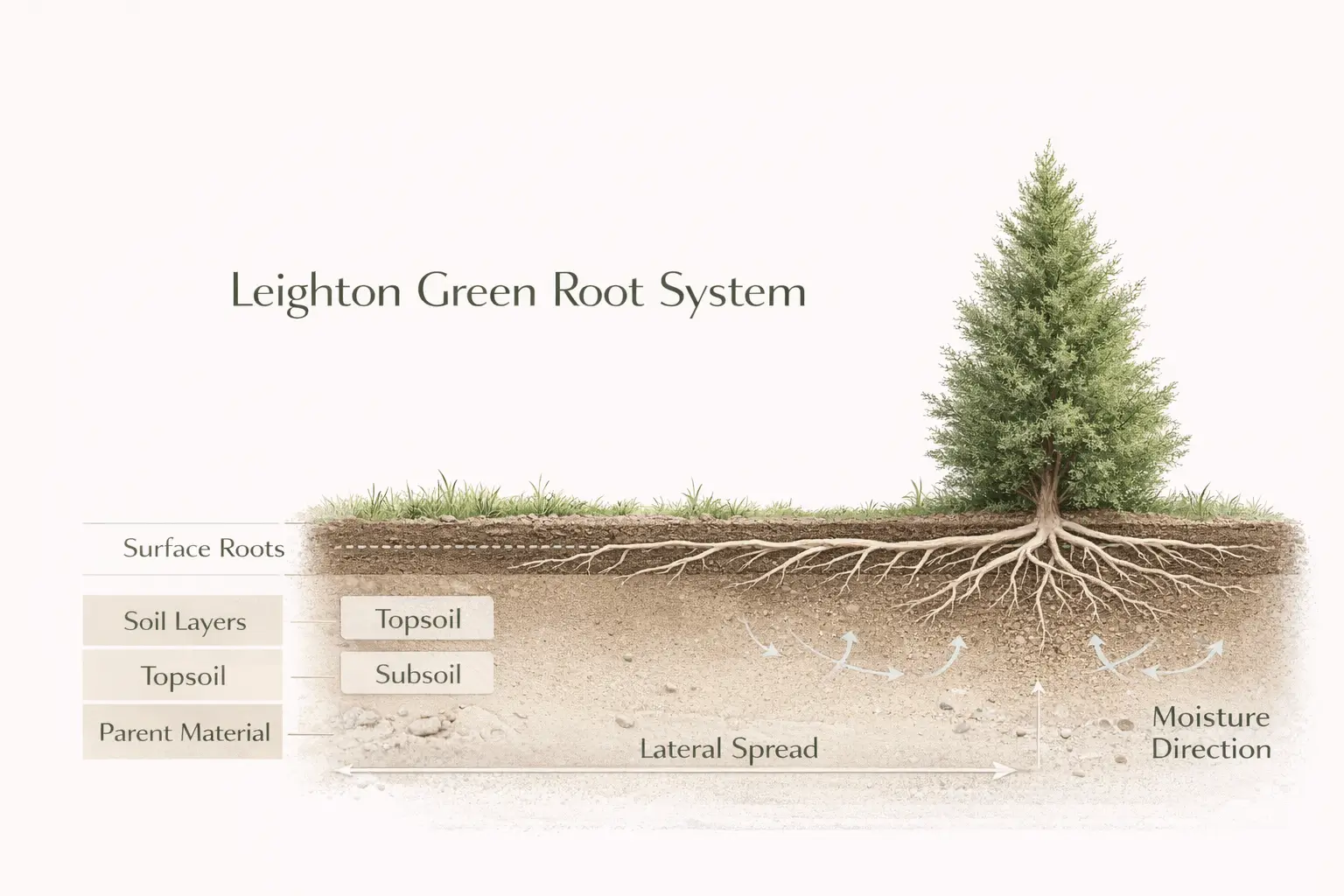
The leighton green root system is shallow, fibrous, and spreads horizontally rather than deeply.
Root Structure Overview
- Fibrous, non-taproot system
- Shallow root depth
- Wide lateral spread
Influencing Factors
Root growth is strongly affected by environmental conditions:
- Soil moisture: Roots grow toward consistent water sources
- Irrigation patterns: Frequent watering encourages surface spread
- Soil type:
- Clay soil → slower but denser root growth
- Sandy soil → faster but looser spread
This places Leighton Green among trees with shallow roots, meaning it is less likely to damage deep structures but more likely to affect surface-level features.
When Do Leighton Green Roots Become Problematic?
Leighton Green roots become problematic when planting conditions are poor or spacing is insufficient.
Common Triggers
- Planted too close to:
- Foundations
- Driveways
- Retaining walls
- Overcrowded hedge planting
- Poor drainage causing root stress
- Competition with nearby plants
These issues are often categorized as “leighton green problems,” and most are preventable with proper planning.
Growth Rate and Root Expansion Relationship
Leighton Green has a fast growth rate, which directly influences how quickly its roots expand.
Key Insights
- Fast growth leads to faster root expansion
- Dense mature hedges increase competition for nutrients and water
- Long lifespan requires long-term planning
As the hedge matures, the root system becomes more extensive, making early spacing decisions critical.
Comparison: Leighton Green vs Other Hedge Root Systems
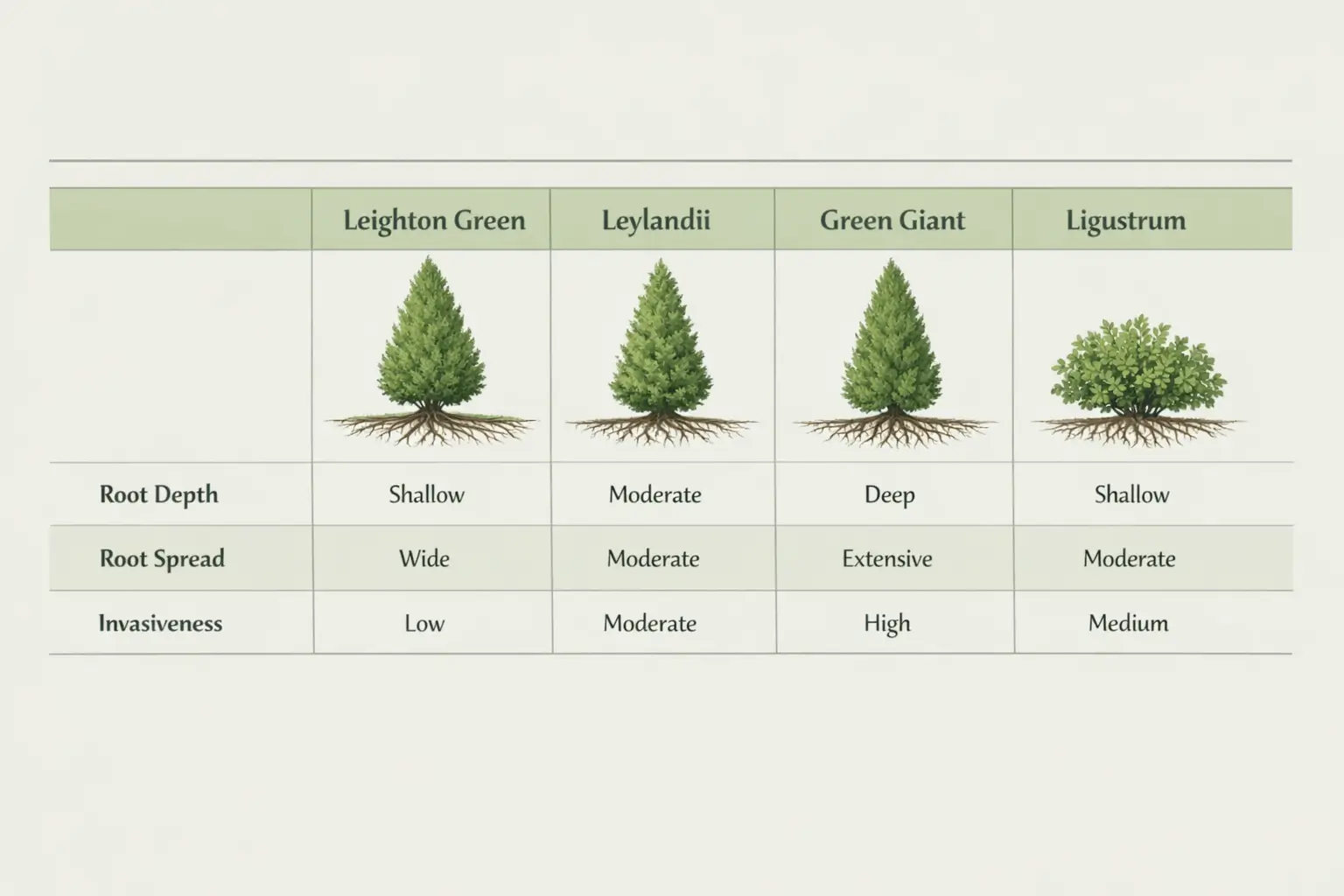
Different hedge plants have varying root behaviors and risk levels.
Hedge Root Behavior Comparison
| Plant Type | Root Behavior | Invasiveness Level | Best Use |
| Leighton Green | Shallow, spreading | Moderate | Privacy hedges |
| Leylandii pines | Vigorous, spreading | Higher risk | Large properties |
| Green Giant | Deep + wide | Moderate | Large screens |
| Ligustrum | Aggressive in some cases | High | Fast hedging |
- Leylandii roots are often more aggressive
- Green Giant roots combine depth and width
- Ligustrum can be invasive in certain conditions
This comparison helps clarify that Leighton Green is moderate rather than highly invasive.
Evergreen Trees with Non Invasive Roots (Better Alternatives)
For smaller spaces, evergreen trees with non invasive roots are often a safer choice.
Recommended Options
- Blueberry ash (Elaeocarpus reticulatus)
- Small trees with non invasive roots (Australia)
- Shade trees with non invasive roots
Ideal Uses
- Small gardens
- Planting near structures
- Urban landscapes
These alternatives reduce the risk of root-related issues while still providing privacy and greenery. You can also explore Australian Native Screening Trees for Privacy to find low-risk, non-invasive root options ideal for modern landscapes.
Best Hedge Plants and Privacy Trees for Safe Planting
Choosing the right hedge depends on more than appearance—it requires understanding root behavior.
Key Considerations
- Root spread and invasiveness
- Growth rate
- Maintenance requirements
Safer Hedge Options
- Native hedges adapted to local conditions
- Controlled-growth conifers
- Compact evergreen shrubs
Fast growing privacy trees should always be selected with long-term root impact in mind. For example, if you’re exploring alternative screening options, see Carolina Cherry Laurel Hedge for a dense, manageable privacy hedge with controlled root behavior.
How to Plant Leighton Green Safely (Prevent Root Issues)
Proper planting is the most effective way to avoid root-related problems.
Best Practices
- Plant at least 2–3 meters from structures
- Maintain proper hedge spacing
- Avoid planting near pipes
- Use root barriers if needed
- Improve soil drainage
Following these guidelines ensures healthy growth while minimizing interference with surrounding structures.
Common Mistakes When Growing Leighton Green Hedges
Many issues arise from avoidable planting mistakes.
Common Errors
- Planting too close together
- Ignoring mature size
- Overwatering or poor drainage
- Using as a small-space hedge
These mistakes increase competition, stress the plants, and lead to uneven growth.
Problem–Solution Guide for Leighton Green Issues
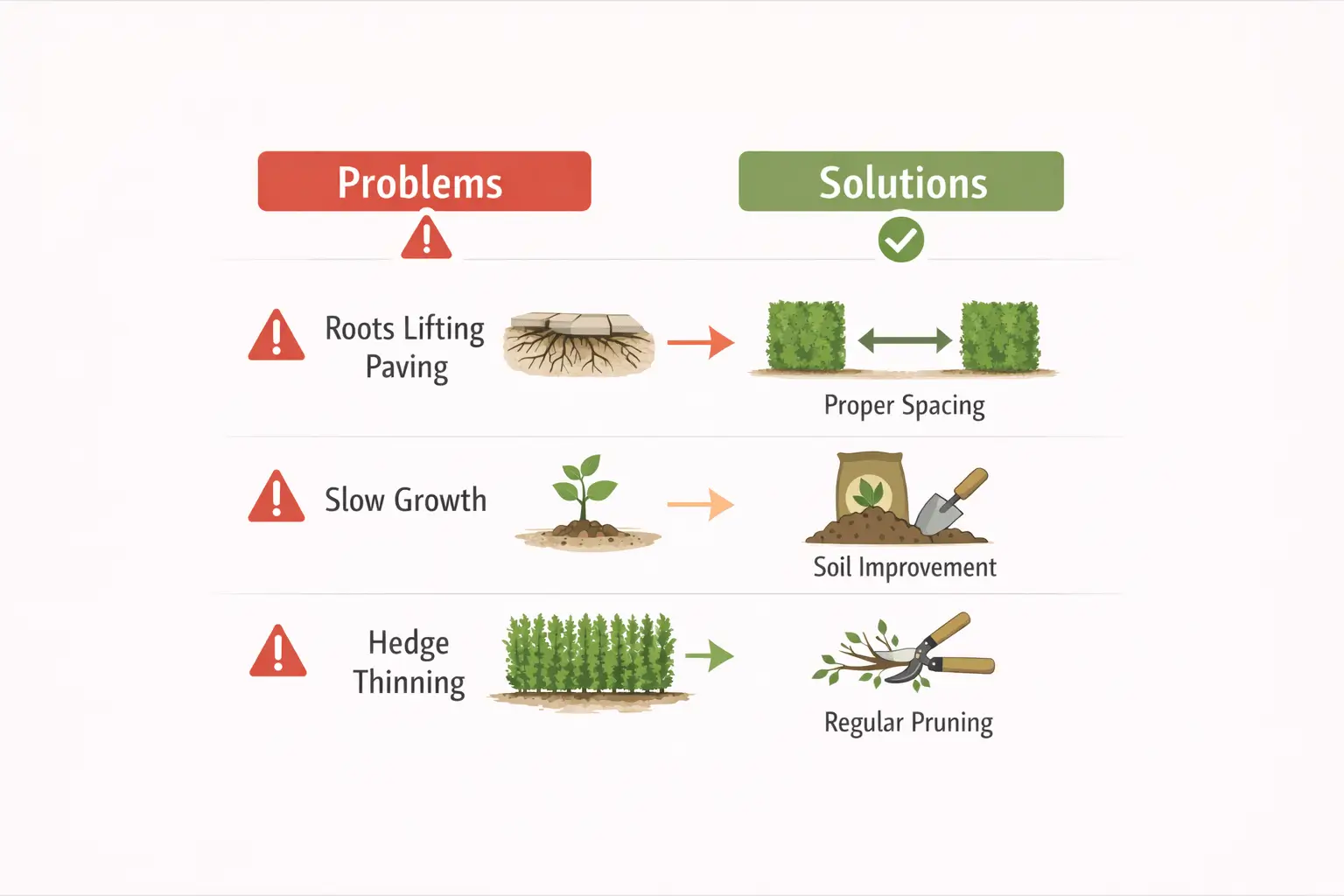
Common Problems and Fixes
Roots lifting soil or paving
- Cause: shallow spread near the surface
- Fix: increase planting distance, install root barriers
Slow or uneven growth
- Cause: poor soil or overcrowding
- Fix: improve spacing and fertilization
Hedge thinning
- Cause: lack of sunlight
- Fix: pruning and repositioning
This troubleshooting approach helps maintain hedge health and structural safety.
Are Other Common Plants’ Roots Invasive? (Contextual Comparison)
Different plants vary significantly in root behavior.
Key Comparisons
- Ivy: Highly invasive spreading behavior
- Bay trees: Generally non-invasive
- Linden trees: Moderate root spread
- Conifers: Vary depending on species
Understanding these differences helps in selecting the right plant for specific conditions.
Choosing the Right Hedge Based on Root Behavior
Selecting the correct hedge depends on available space and intended use.
Recommendations
- For small spaces → non invasive root trees
- For large privacy screens → fast growing hedge Australia options
- For low maintenance → native species
Matching plant type to location prevents long-term structural and maintenance issues.
Conclusion
Leighton Green roots are not truly invasive, but their shallow and spreading nature means they require careful placement. Understanding the leighton green root system helps prevent structural issues and ensures healthy hedge growth. For tighter spaces, evergreen trees with non invasive roots may be a safer alternative.
FAQs
Are Leighton Green roots damaging to foundations?
Leighton Green roots are not typically destructive, but planting them too close to foundations can lead to minor issues due to their shallow lateral spread.
How far should Leighton Green be planted from a house?
A minimum distance of 2–3 meters is recommended to reduce the risk of root interference with structures and paving.
Do Leighton Green hedges have deep roots?
No, they have shallow, fibrous roots that spread outward rather than forming deep taproots.
What are the best alternatives with non invasive roots?
Blueberry ash and other small evergreen trees with non invasive roots are suitable alternatives for tight spaces and urban planting.
Are conifer roots generally invasive?
Most conifers have moderate root systems, but some species like Leylandii can be more aggressive than others.
Can Leighton Green roots affect pipes?
They can only affect pipes if planted very close, as roots may grow toward moisture sources such as small leaks.