
Introduction
Crepe myrtle deciduous or evergreen is a common question among gardeners trying to understand how these popular flowering trees behave throughout the year. Crepe myrtle trees (Lagerstroemia indica and hybrids) are widely grown for their vibrant blooms, smooth bark, and seasonal color changes. Their leaf cycle depends on plant biology and climate conditions. Understanding whether they are deciduous or evergreen helps gardeners manage expectations for seasonal appearance, pruning, and care. These trees follow a predictable growth cycle that includes dormancy, making them reliable landscape plants in many regions.
Quick Summary
- Crepe myrtles are deciduous trees, meaning they lose their leaves in winter
- They go dormant in cooler months and regrow leaves in spring
- In warmer climates, leaf drop may be shorter or less noticeable
- No true evergreen crepe myrtle varieties exist
Are Crepe Myrtles Deciduous or Evergreen?
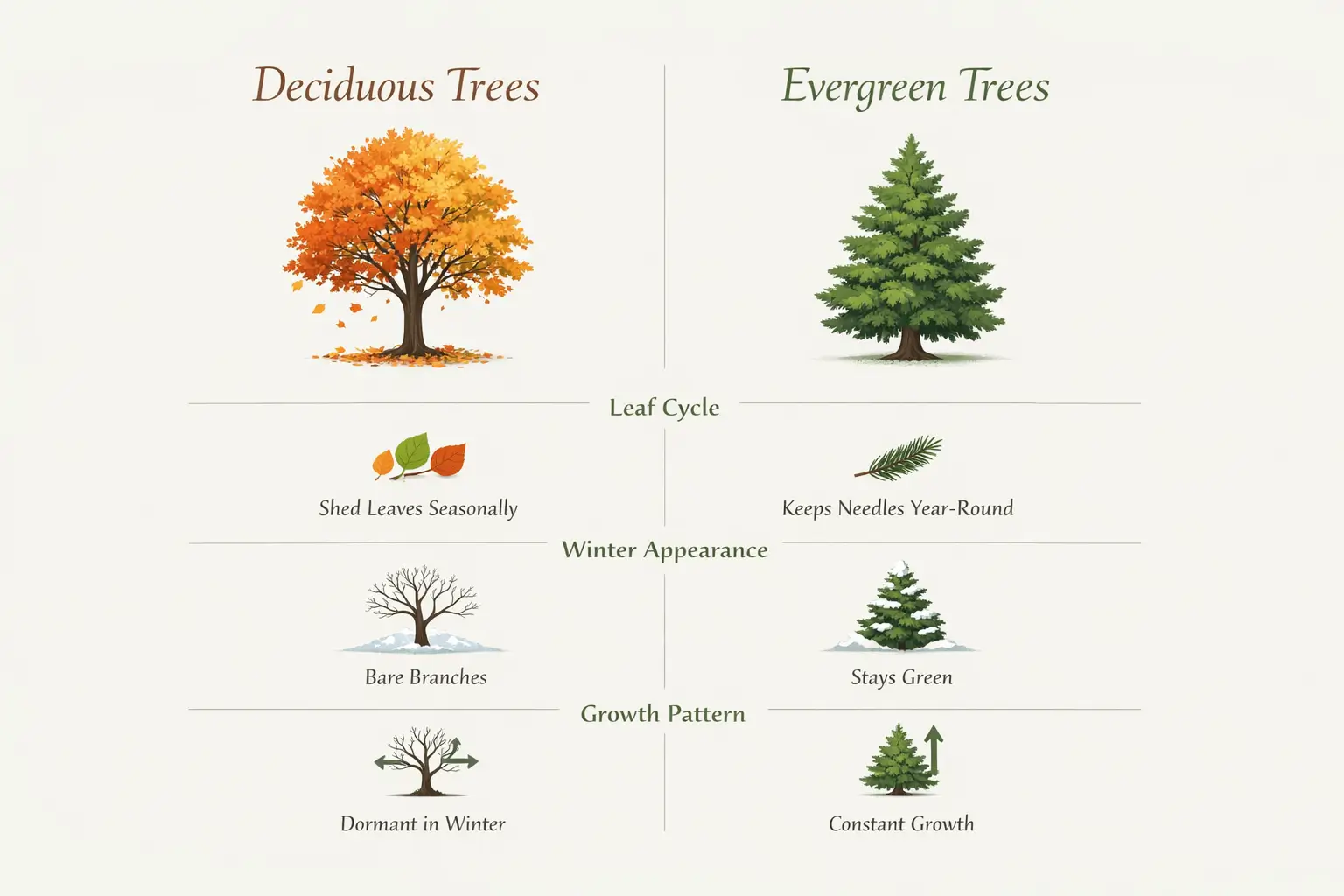
Crepe myrtles are deciduous trees, not evergreen, meaning they shed their leaves seasonally and enter dormancy during winter.
Key Explanation
Crepe myrtles, including Lagerstroemia indica and its hybrids, are classified as deciduous trees. This biological classification means they lose all leaves during a specific season, usually late autumn, as part of their natural lifecycle. Evergreen trees, by contrast, retain foliage year-round. Crepe myrtles, including Lagerstroemia indica, belong to the Lagerstroemia genus, which is botanically classified as deciduous flowering trees (see Wikipedia for detailed classification).
Expansion Notes
- Deciduous plants shed leaves to conserve energy during colder or dry periods
- Evergreen plants maintain leaves continuously but replace them gradually
- Climate can influence how noticeable leaf drop appears, but it does not change classification
- Crepe myrtles remain biologically deciduous regardless of region
Do Crepe Myrtles Lose Their Leaves?
Yes, crepe myrtles lose their leaves every year as part of their natural seasonal cycle.
Seasonal Behavior
During autumn, crepe myrtle leaves change color to shades of yellow, orange, or red before falling. After leaf drop, the tree enters a dormant phase in winter, where branches remain bare. New leaves and shoots emerge again in spring.
Expansion Notes
- Timing varies by region, with colder areas experiencing earlier leaf drop
- Growth stages follow a clear cycle:
- Spring → leaf emergence
- Summer → flowering
- Autumn → color change and leaf drop
- Winter → dormancy
Crepe Myrtle in Different Climates (Australia Focus)
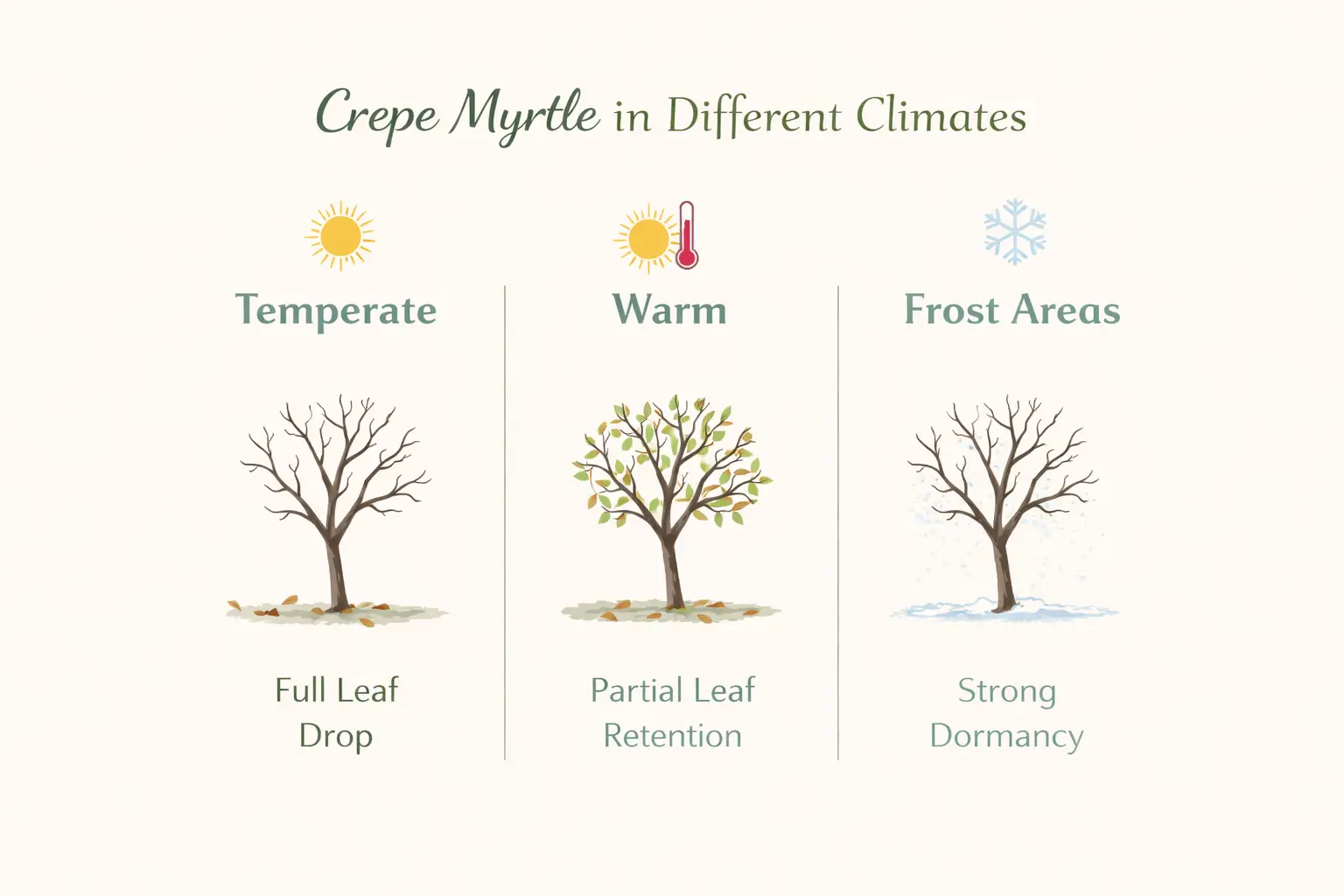
Crepe myrtle leaf behavior changes depending on climate, especially across Australian growing regions.
Climate Influence on Leaf Retention
In cooler regions, crepe myrtles show a full deciduous cycle with complete leaf drop. In warmer or tropical areas, leaf drop may be delayed, partial, or less noticeable due to mild temperatures.
Bullet Breakdown
- Temperate climates: clear seasonal leaf drop and dormancy
- Warm climates: shorter dormancy with some leaves retained temporarily
- Frost-prone areas: stronger and more consistent leaf drop
Expansion Notes
- In Australia, crepe myrtles adapt well to varied climates
- Seasonal timing shifts depending on temperature and daylight length
- Warmer regions may create the illusion of evergreen behavior
Are There Evergreen Crepe Myrtle Varieties?
No, there are no true evergreen crepe myrtle varieties; all are deciduous by nature.
Direct Answer
All crepe myrtle species and cultivars are deciduous, regardless of size or hybrid type.
Why Confusion Happens
- Mild climates can delay or reduce visible leaf drop
- Some trees may hold leaves longer in warm conditions
- This creates confusion, making them appear evergreen when they are not
Expansion Notes
The misunderstanding comes from environmental influence, not plant genetics. Crepe myrtle biology remains unchanged across regions.
Crepe Myrtle Varieties and Growth Differences
Crepe myrtle varieties differ in size, growth habit, and use, but all share the same deciduous nature.
Common Types
- Standard crepe myrtle trees
- Dwarf and miniature varieties
- Hybrids such as Indian Summer crepe myrtle
Popular cultivars such as Sioux, Lipan, and structured forms like Tuscarora are widely used in landscaping—explore Tuscarora Crape Myrtle Single Trunk to understand their growth habit and structure.
Table Section (Varieties Overview)
| Type | Height Range | Common Use | Notes |
| Dwarf | 1–3 m | Small gardens | Compact growth |
| Semi-dwarf | 3–6 m | Landscaping | Balanced size |
| Standard | 6–10 m | Shade trees | Large canopy |
Expansion Notes
- Popular cultivars include Sioux and Lipan
- Dwarf varieties are ideal for containers or limited spaces
- Larger varieties are suitable for streetscapes and shade planting
- Many varieties perform well in Australian conditions
For example, specific cultivars like white flowering types are valued for their ornamental appeal—see White Crepe Myrtle Tree for a detailed breakdown of visual and landscape benefits.
Growth Cycle of Crepe Myrtle Trees
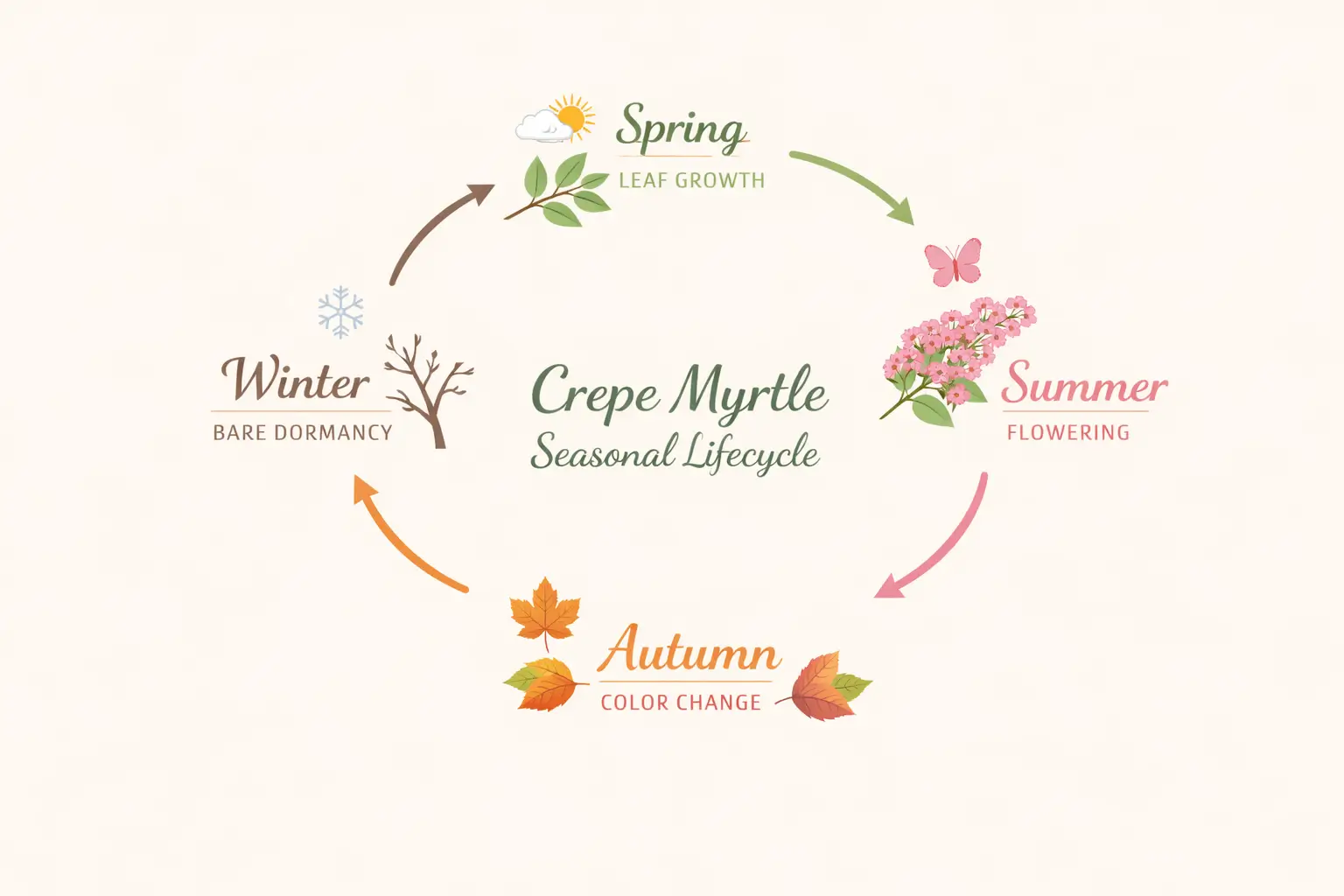
Crepe myrtle trees follow a seasonal growth cycle linked to temperature and daylight.
Seasonal Timeline
- Spring → new leaves emerge
- Summer → flowering stage begins
- Autumn → leaves change color
- Winter → tree becomes dormant
Bullet Highlights
- Flowers develop on new growth each season
- Bloom timing varies depending on regional climate
Expansion Notes
The flowering cycle is directly connected to new growth, which is why pruning is timed before spring. Dormancy during winter is a key trait of deciduous trees and supports healthy seasonal regeneration.
Care Guide for Healthy Crepe Myrtle Growth
Proper care supports strong growth and consistent flowering in crepe myrtles.
Light Requirements
Crepe myrtles require full sun exposure for optimal flowering and healthy growth.
Watering Needs
- Moderate watering is needed during establishment
- Mature trees tolerate some drought but benefit from consistent moisture
Soil Preferences
Well-drained soil is essential to prevent root issues and promote healthy development.
Pruning
Pruning is best done in late winter before new growth begins, allowing better structure and improved flowering.
Expansion Notes
- Avoid excessive watering during dormancy
- Adjust care based on local climate conditions
- Align pruning and watering with the plant’s seasonal cycle
Common Problems and Seasonal Issues (Problem-Solution Section)
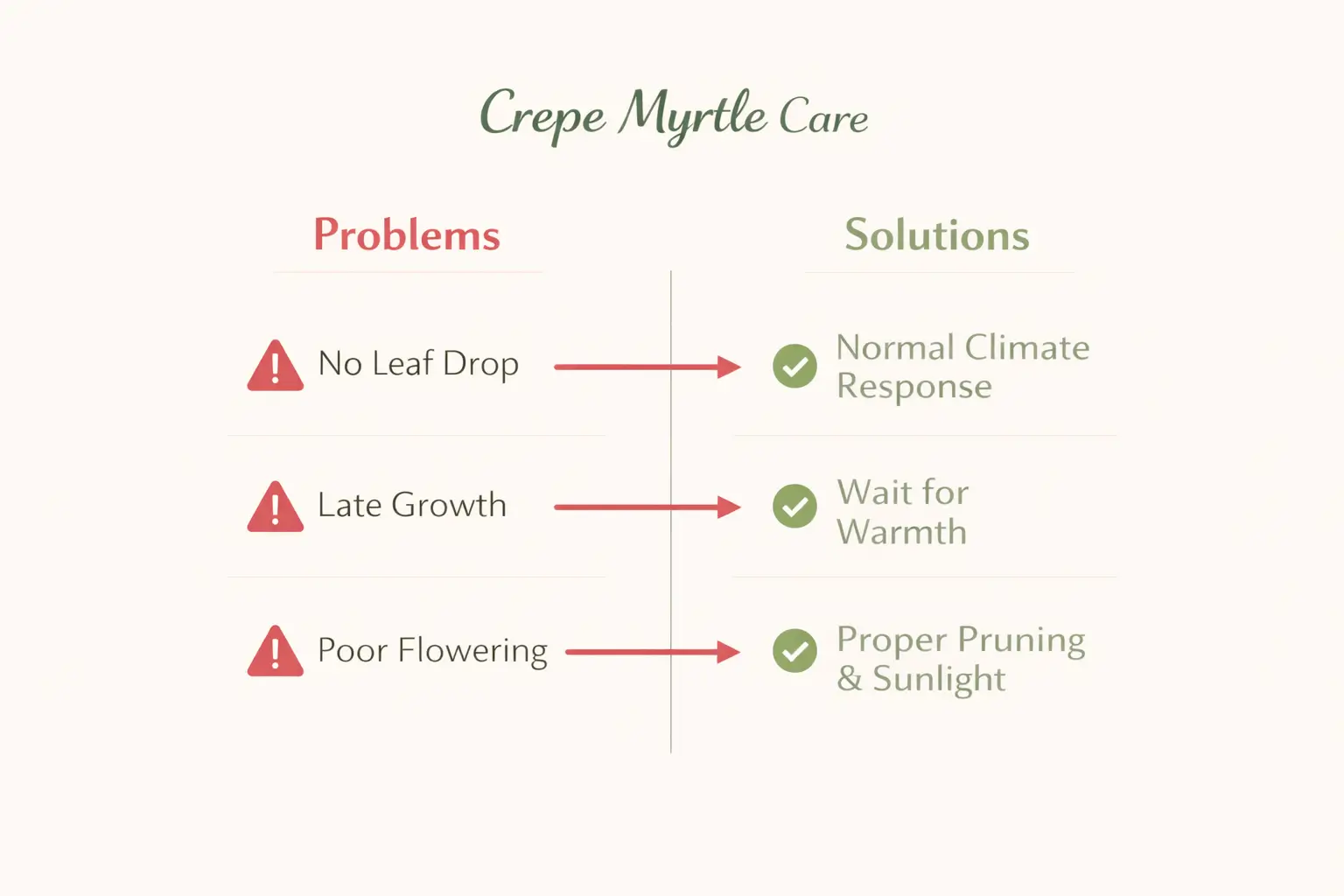
1. Leaves Not Falling in Winter
- Cause: Warm climate conditions
- Fix: This is normal and requires no action
2. Late Leaf Growth
- Cause: Cold spring or environmental stress
- Fix: Wait for consistent warmth before expecting new growth
3. Poor Flowering
- Cause: Insufficient sunlight or incorrect pruning
- Fix: Increase sun exposure and prune at the correct time
Expansion Notes
Many beginner concerns come from misunderstanding dormancy. Seasonal cycles vary slightly, but overall patterns remain consistent.
Comparison: Deciduous vs Evergreen Trees
| Feature | Deciduous Trees (Crepe Myrtle) | Evergreen Trees |
| Leaf cycle | Shed leaves annually | Keep leaves year-round |
| Winter appearance | Bare branches | Green foliage |
| Growth cycle | Seasonal dormancy | Continuous growth |
| Maintenance | Seasonal pruning | Year-round care |
Expansion Notes
Understanding these differences helps gardeners choose the right plants and care strategies. Crepe myrtles clearly fit the deciduous category.
Beginner Mistakes When Growing Crepe Myrtles
Common mistakes often relate to misunderstanding their deciduous nature.
- Assuming they are evergreen
- Overwatering during dormancy
- Pruning at the wrong time
- Planting in low-light areas
Expansion Notes
Correcting these mistakes improves plant health and flowering performance. Aligning care with seasonal behavior is essential for success.
Conclusion
Crepe myrtle deciduous or evergreen is a question best answered through plant biology. These trees are deciduous, shedding their leaves in winter and returning with new growth in spring. While climate can influence how noticeable this process is, their seasonal cycle remains consistent. Understanding this behavior helps gardeners provide proper care and set realistic expectations for year-round appearance.
FAQs
1. Are crepe myrtles deciduous or evergreen?
Crepe myrtles are deciduous trees that lose their leaves in winter and regrow them in spring.
2. Do crepe myrtles lose their leaves every year?
Yes, they shed their leaves annually as part of their natural dormancy cycle.
3. Can crepe myrtles stay evergreen in warm climates?
They may retain leaves longer in warm conditions, but they are still deciduous and will eventually shed them.
4. When do crepe myrtles get leaves again?
New leaves typically appear in spring when temperatures begin to rise.
5. Are all crepe myrtle varieties deciduous?
Yes, all crepe myrtle varieties are deciduous regardless of size, color, or hybrid type.