Introduction
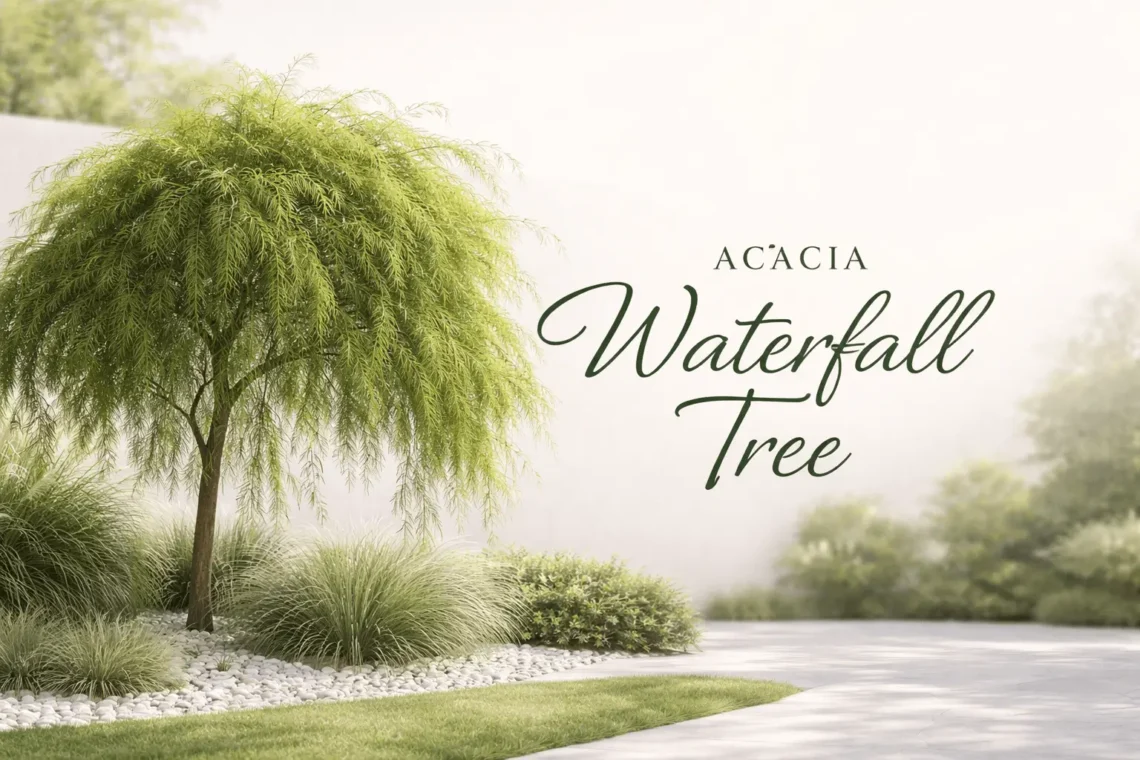
The acacia waterfall tree is a distinctive ornamental plant valued for its flowing, cascading foliage and elegant, sculptural shape. Derived from Acacia cognata, this weeping form is often grown as a standard tree, making it ideal for compact spaces and decorative landscapes. Its graceful “waterfall” appearance and adaptability have made it increasingly popular among gardeners seeking low-maintenance yet visually striking plants. Suitable for both containers and garden beds, it blends seamlessly into modern designs while requiring minimal upkeep. Understanding its structure, growth habits, and care needs allows gardeners to use this plant effectively as a focal feature. This ornamental tree also fits well within broader plant selection strategies covered in a complete Plants for Homes and Gardens Guide, especially for those designing balanced indoor-outdoor spaces.
Quick Summary
- The acacia waterfall tree is a weeping ornamental form of Acacia cognata
- Known for its cascading foliage and compact, grafted “standard” shape
- Ideal for small gardens, pots, and landscape focal points
- Requires well-drained soil, moderate watering, and minimal pruning
What Is the Acacia Waterfall Tree? (Definition & Plant Identity)
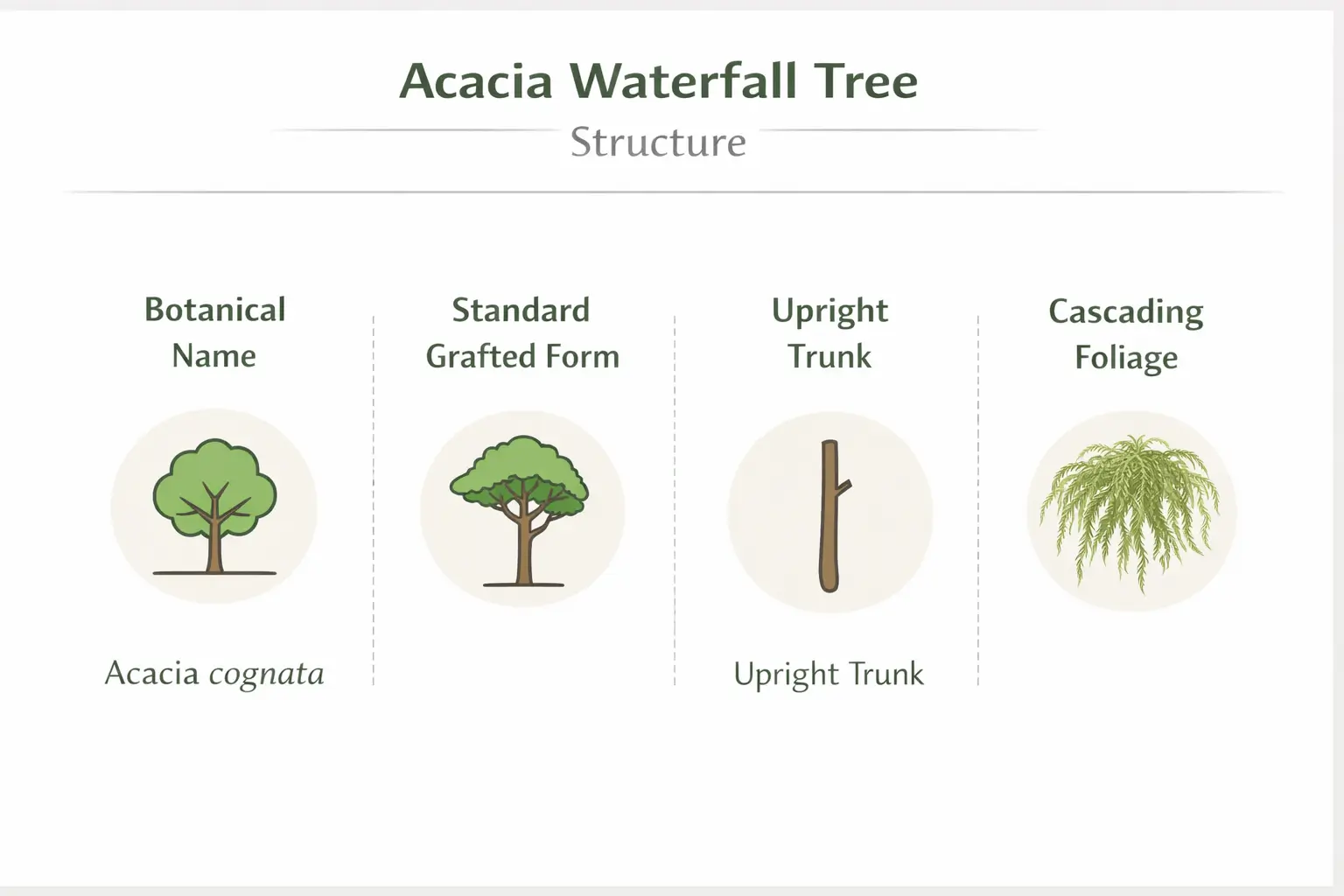
The acacia waterfall tree is a weeping ornamental variety of Acacia cognata characterized by its cascading foliage and grafted standard form, where the top growth is elevated on a straight trunk. It is commonly used as a decorative landscape feature due to its controlled structure and elegant appearance. The plant belongs to the Acacia genus, a diverse group of species explained in detail on Wikipedia’s Acacia page.
Key Points:
- Botanical name: Acacia cognata
- Common forms: Acacia waterfall standard, weeping ornamental tree
- Structure: Upright trunk with cascading foliage
- Use: Decorative feature tree in landscaping
The term “standard” refers to a grafted plant where the foliage grows from the top of a single stem, creating a tree-like form rather than a shrub.
Key Characteristics of the Waterfall Acacia
The waterfall acacia is defined by its soft, flowing foliage and naturally drooping growth habit, giving it a refined and graceful look. It maintains year-round greenery, making it a reliable evergreen feature.
Key Features:
- Fine, soft, thread-like leaves
- Evergreen foliage
- Elegant drooping branches
- Compact, rounded canopy
Its texture contrasts well with broader-leaf plants, enhancing visual diversity in landscapes.
Acacia Waterfall Tree Size and Height
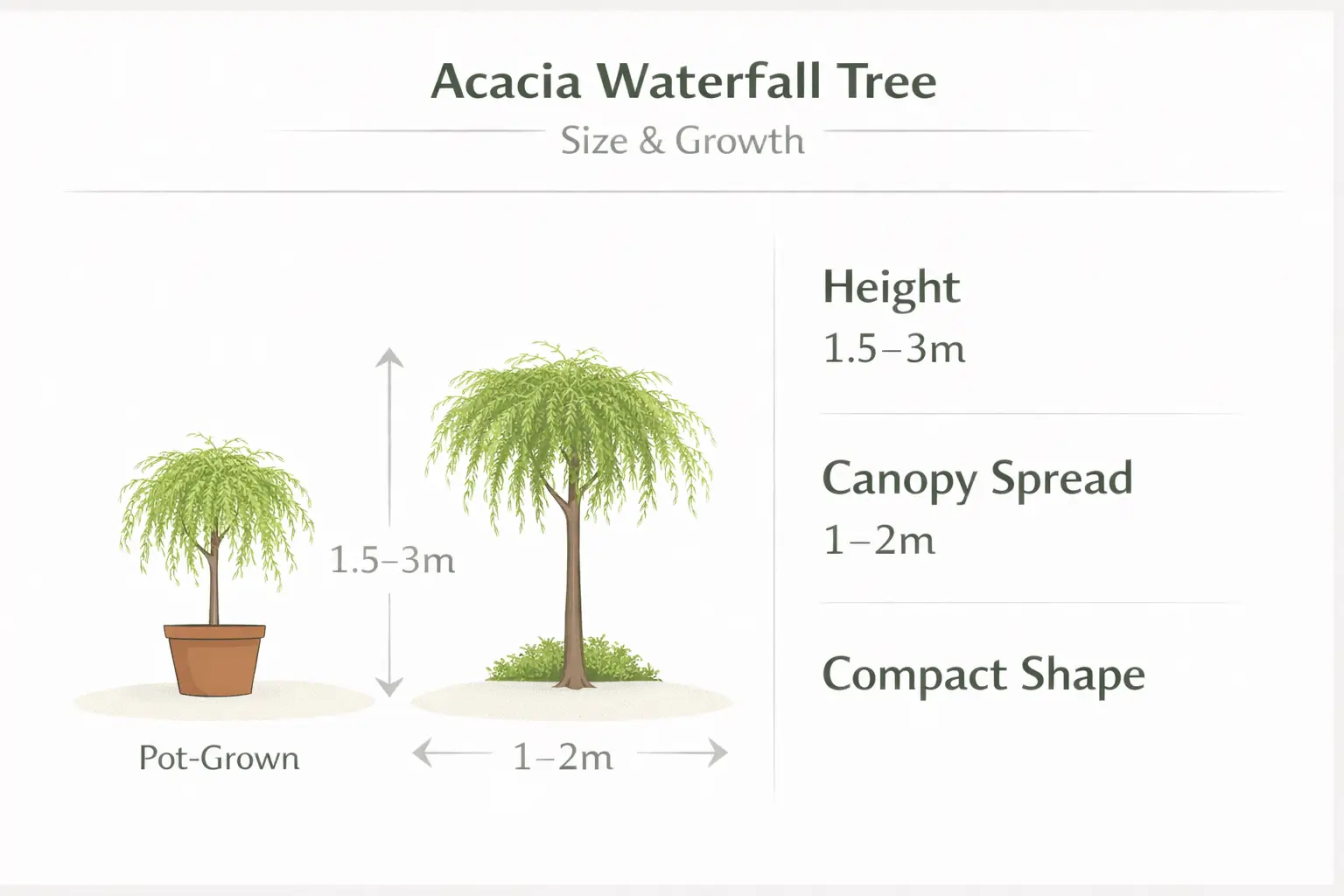
The size of an acacia waterfall tree varies depending on graft height, pruning, and growing conditions. Standard forms maintain a predictable structure, making them suitable for controlled spaces.
Size Overview
| Feature | Typical Range |
| Height (standard form) | 1.5 – 3 meters |
| Canopy spread | 1 – 2 meters |
| Growth habit | Compact, cascading |
| Pot vs ground size | Smaller in pots |
For raw, sortable data across cultivars, check the weeping ornamental tree comparison database on Google Sheets, which lists mature height and spread figures side-by-side. It’s handy for cross-checking the numbers above against other weeping varieties.
Additional Notes:
- Graft height determines trunk height
- Pruning helps maintain canopy size
- Growth may be slightly reduced in containers
Growth Rate and Development Pattern
The acacia waterfall tree has a moderate growth rate, allowing it to establish structure without becoming invasive or difficult to manage. Growth is influenced by climate, sunlight, and soil quality.
Growth Characteristics:
- Moderate growth rate
- Faster in warm climates
- Slower in poor soil or low sunlight
In optimal conditions, new growth is most active during warmer seasons.
Care Guide for Acacia Waterfall Tree
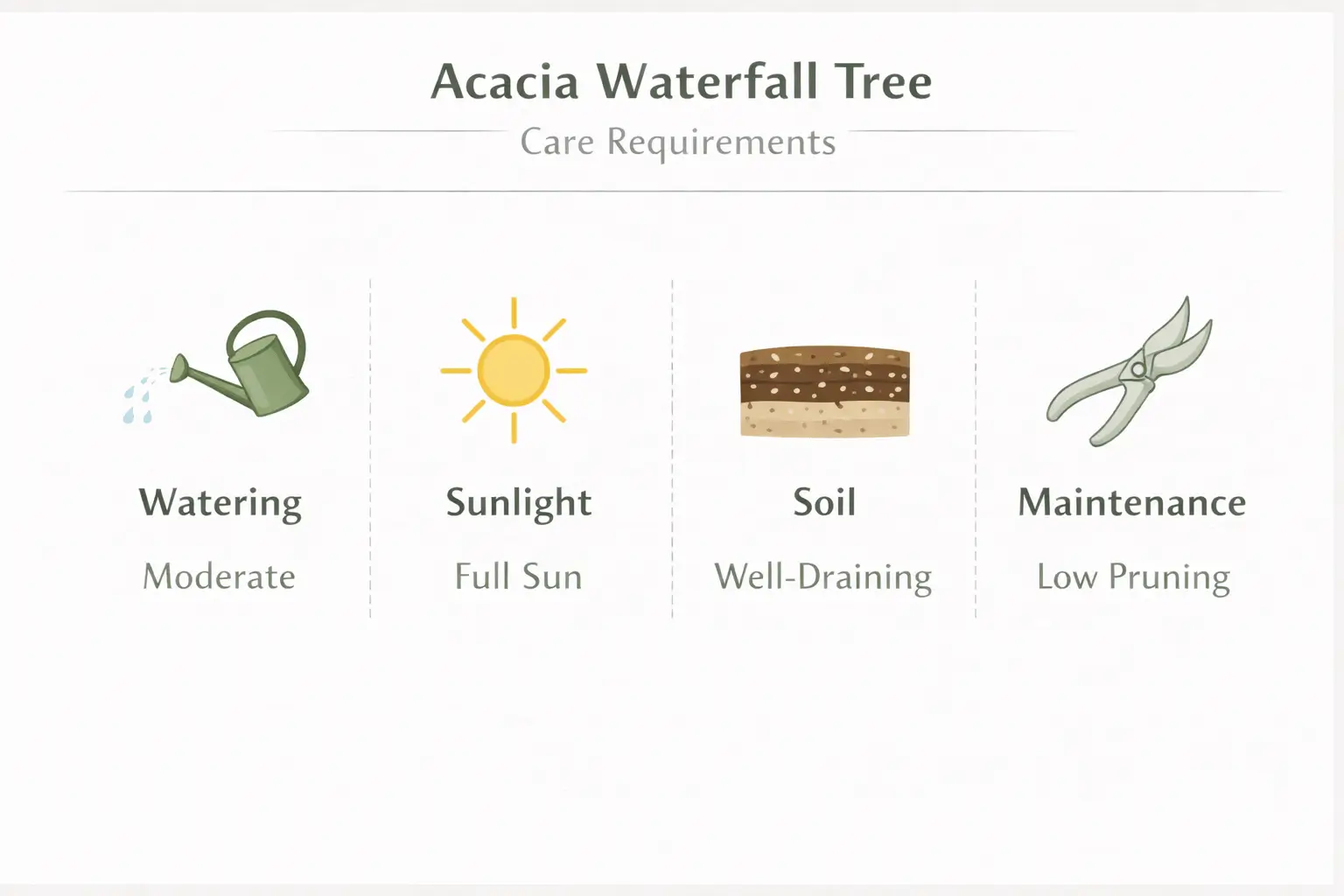
Watering Needs
The acacia waterfall tree requires moderate watering, with soil allowed to dry slightly between watering sessions. Once established, it becomes drought-tolerant.
- Avoid waterlogging
- Water more frequently in hot weather
- Reduce watering in cooler seasons
Light Requirements
This plant performs best in full sun but can tolerate partial shade.
- Full sun promotes dense growth
- Partial shade may reduce foliage density
Soil Preferences
Well-draining soil is essential to prevent root issues.
- Sandy or loamy soil is ideal
- Avoid heavy clay soils without amendments
Fertilization & Maintenance
Minimal feeding is required, but light fertilization during the growing season can improve vigor.
- Use balanced fertilizer in spring
- Minimal pruning needed to maintain shape
Where Are Acacia Trees Located and Grown Best?
Acacia trees are primarily native to Australia and thrive in warm, dry climates. They have adapted to various regions with similar environmental conditions.
Growing Regions:
- Native to Australia
- Widely grown in warm, dry climates
- Suitable for regions with mild winters
They are commonly used in Mediterranean, subtropical, and semi-arid landscapes.
Common Problems with Acacia Waterfall Tree (Causes & Fixes)
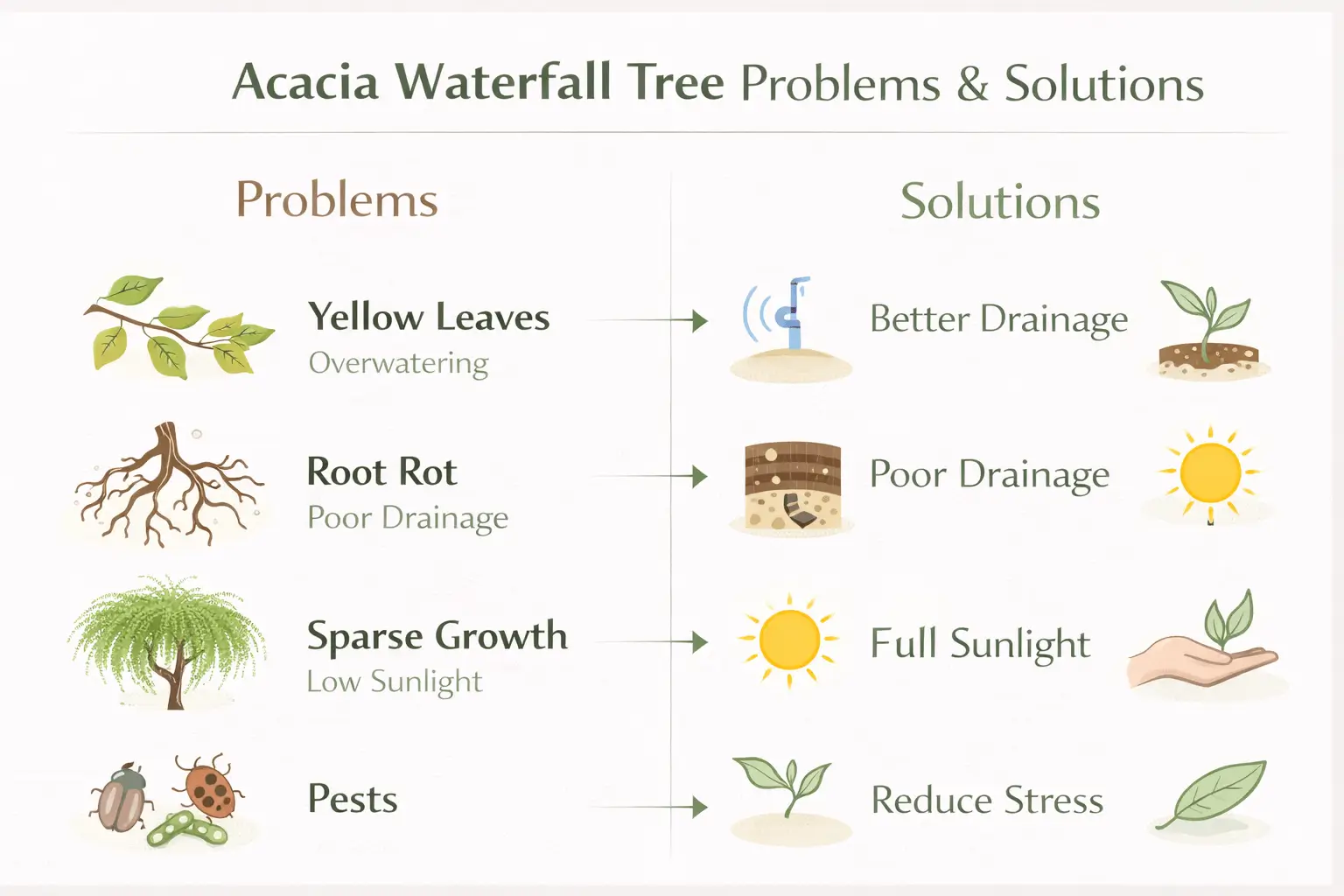
Common problems with the acacia waterfall tree are typically related to watering, soil conditions, or light exposure, and most issues can be corrected with simple adjustments.
Problems & Solutions:
- Yellowing leaves → Overwatering → Improve drainage
- Sparse growth → Lack of sunlight → Increase exposure
- Root rot → Poor soil drainage → Use well-draining mix
- Pests (rare) → Environmental stress → Improve plant health
Prevention Tips:
- Avoid overwatering
- Ensure proper airflow and sunlight
- Use suitable soil mix
Acacia Waterfall vs Other Weeping Trees (Comparison Section)
The acacia waterfall tree differs from other weeping trees mainly in its compact size, low maintenance, and fine-textured foliage.
| Feature | Acacia Waterfall | Typical Weeping Trees |
| Foliage type | Fine, soft | Broad or needle-like |
| Maintenance | Low | Moderate to high |
| Size | Compact | Often larger |
| Growth habit | Controlled cascading | Wide-spreading |
This makes it particularly suitable for small gardens and container planting. Compared to other ornamental species like those discussed in Australian Brush Cherry, the acacia waterfall tree offers a more compact and cascading growth habit. If you want to compare specs side-by-side across more than a dozen options, use the interactive weeping and cascading tree selector tool to filter by height, light, water needs, and container fit. It’s the fastest way to confirm Acacia Waterfall is the right pick before you decide against 15 other cascading alternatives.
Landscaping Uses and Design Ideas
The acacia waterfall tree is widely used in landscaping for its sculptural form and manageable size.
Design Ideas:
- Feature tree in front yards
- Container planting for patios
- Accent along pathways or entrances
- Ideal for modern minimalist landscapes
Its cascading structure creates movement and visual interest in structured garden layouts. As a compact feature tree, it aligns with expert recommendations found in Feature Trees Brisbane, where structured ornamental trees enhance modern landscapes.
Beginner Mistakes to Avoid
Avoiding common mistakes ensures healthy growth and long-term success with this plant.
Common Mistakes:
- Overwatering the plant
- Planting in heavy clay soil
- Placing in excessive shade
- Ignoring structural pruning
A frequent beginner error is watering too often, which can quickly lead to root issues.
Environmental Limitations and Growing Conditions
The acacia waterfall tree thrives in specific environmental conditions and may struggle outside its preferred climate range.
Limitations:
- Prefers warm climates
- Sensitive to heavy frost
- Requires protection from strong winds
Cold temperatures can damage foliage and slow growth significantly.
How the Acacia Waterfall Tree Fits Into Broader Gardening Topics
The acacia waterfall tree connects with several key gardening concepts, making it a versatile plant choice.
Related Topics:
- Ornamental landscaping trees
- Drought-tolerant plants
- Container gardening
- Low-maintenance garden design
For deeper botanical context beyond this guide, browse the Weeping & Cascading Ornamental Trees reference database on Notion, which catalogs related weeping species and their growing profiles. It’s a useful companion resource if you’re researching multiple ornamental options at once.
Its adaptability makes it valuable in both decorative and functional garden planning. It is also considered one of the most versatile choices among Accent Trees, particularly for small-space landscaping.
Conclusion
The acacia waterfall tree is a visually striking and low-maintenance ornamental plant that brings elegance to any landscape. With its cascading form, compact size, and adaptability, it stands out among modern waterfall trees. By understanding its care needs, growth habits, and common issues, gardeners can successfully grow and maintain this beautiful Acacia cognata waterfall as a long-lasting feature plant.
FAQs
1. What is an acacia waterfall tree?
The acacia waterfall tree is a weeping ornamental form of Acacia cognata, shaped with cascading foliage and often grown as a standard grafted tree.
2. How tall does an acacia waterfall tree grow?
It typically grows between 1.5 to 3 meters tall, depending on graft height, pruning, and environmental conditions.
3. Does the acacia waterfall tree need a lot of water?
No, it requires moderate watering and is drought-tolerant once established, but it needs well-drained soil to prevent root rot.
4. What are common problems with acacia waterfall trees?
Common issues include overwatering, poor drainage, lack of sunlight, and occasional pest stress, all of which can be managed with proper care.
5. Where can acacia waterfall trees grow best?
They grow best in warm climates with full sun and well-drained soil, similar to their native Australian environment.