Introduction: What Are Manchurian Pear Varieties?
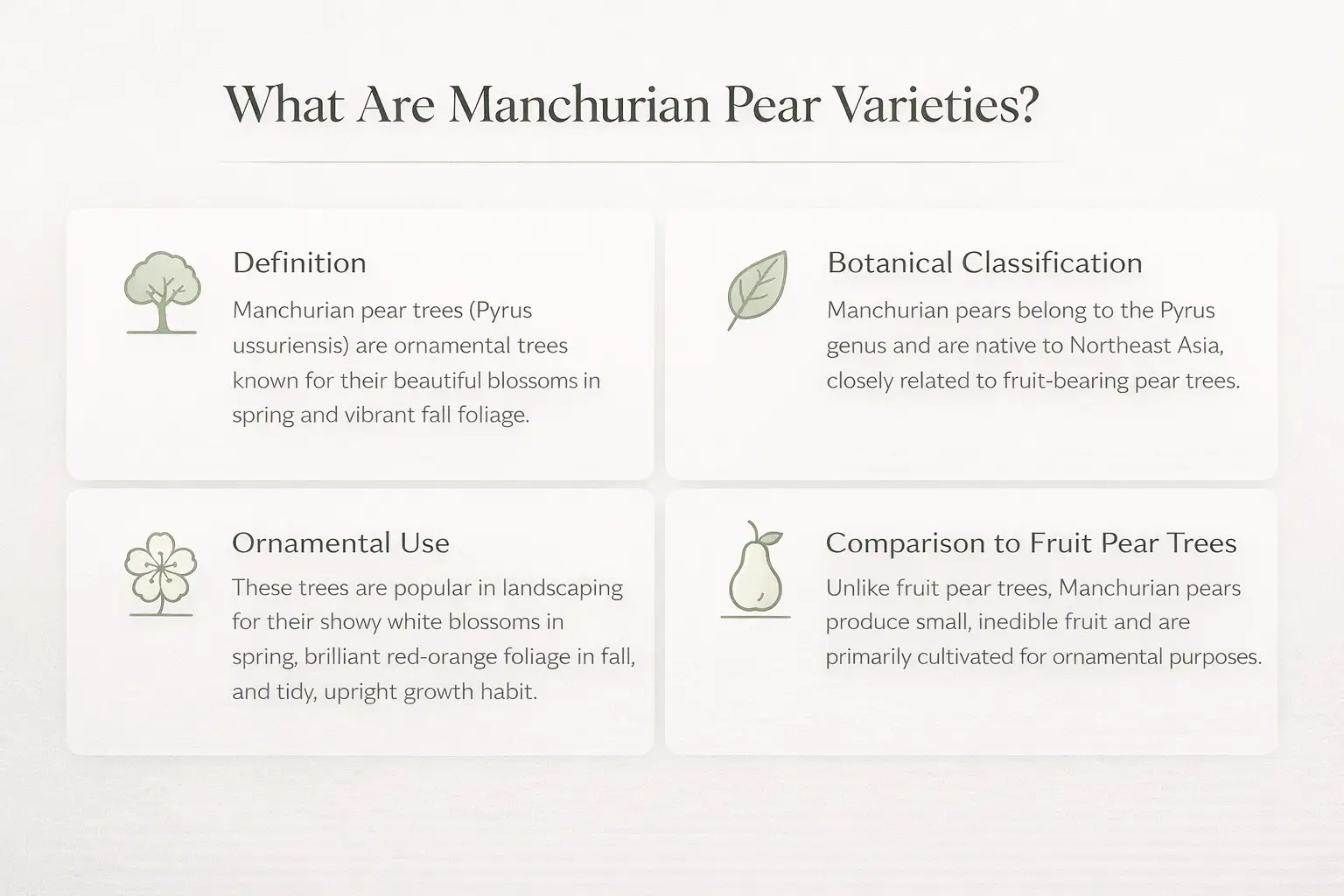
Manchurian pear varieties refer to a group of ornamental pear trees valued for their structure, seasonal color, and adaptability rather than fruit production. These trees are commonly associated with Pyrus ussuriensis (Manchurian pear) and sometimes overlap with ornamental species like Pyrus calleryana.
The term can include:
- Manchurian pear tree → cold-hardy ornamental species
- Ornamental pear tree → decorative pears used in landscaping
- Pear tree → broader category including fruit-bearing and ornamental types
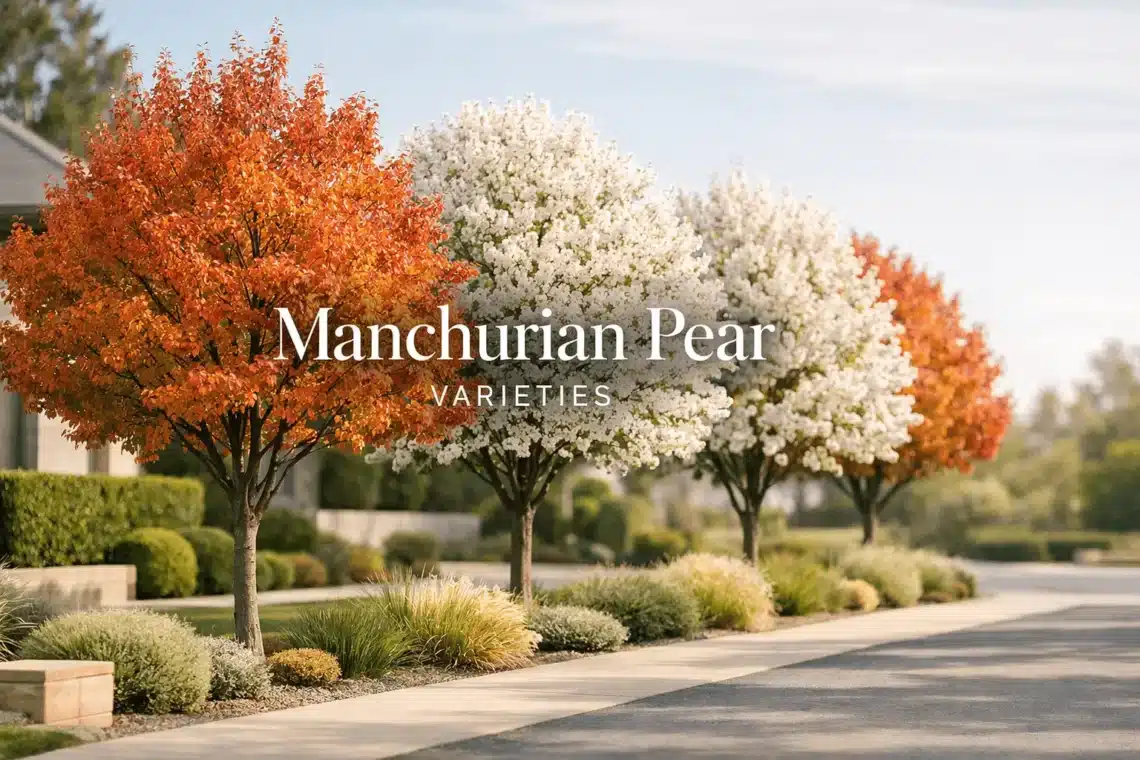
Most manchurian pear varieties are grown for flowers, foliage, and form, not edible fruit. They are especially popular in landscaping across regions like Australia due to their reliability, upright growth, and low maintenance.
Quick Summary
- Manchurian pear varieties are ornamental pear trees known for seasonal color and structure
- Common types include Capital, Cleveland Select, and dwarf forms
- Widely used as street trees, hedges, and feature trees
- Growth rate, size, and root behavior vary by variety
Understanding the Manchurian Pear Tree and Its Botanical Background
The Manchurian pear tree belongs to the genus Pyrus, within the Rosaceae family, which includes apples and other pear species. The Manchurian pear belongs to the Pyrus genus, a group of flowering trees in the Rosaceae family (see Pyrus genus on Wikipedia for full botanical classification).
It is primarily associated with:
- Botanical name: Pyrus ussuriensis
- Common names: Manchurian pear, snow pear tree, ornamental pear tree
Manchurian pear trees are closely related to other ornamental species, and understanding broader pear classifications—such as in this Evergreen Pear Tree guide—can help clarify how different ornamental pears are used in landscaping.
Key Points
- Native to northeast Asia, including China and Siberia
- Highly adaptable to cold climates and urban environments
- Often called an ornamental Manchurian pear tree due to its decorative use
Unlike fruit pears, these trees produce small, hard fruits that are not typically consumed. Their main value lies in:
- Spring blossoms
- Autumn foliage color
- Structured canopy shape
Types of Manchurian Pear Varieties (Main Categories Explained)
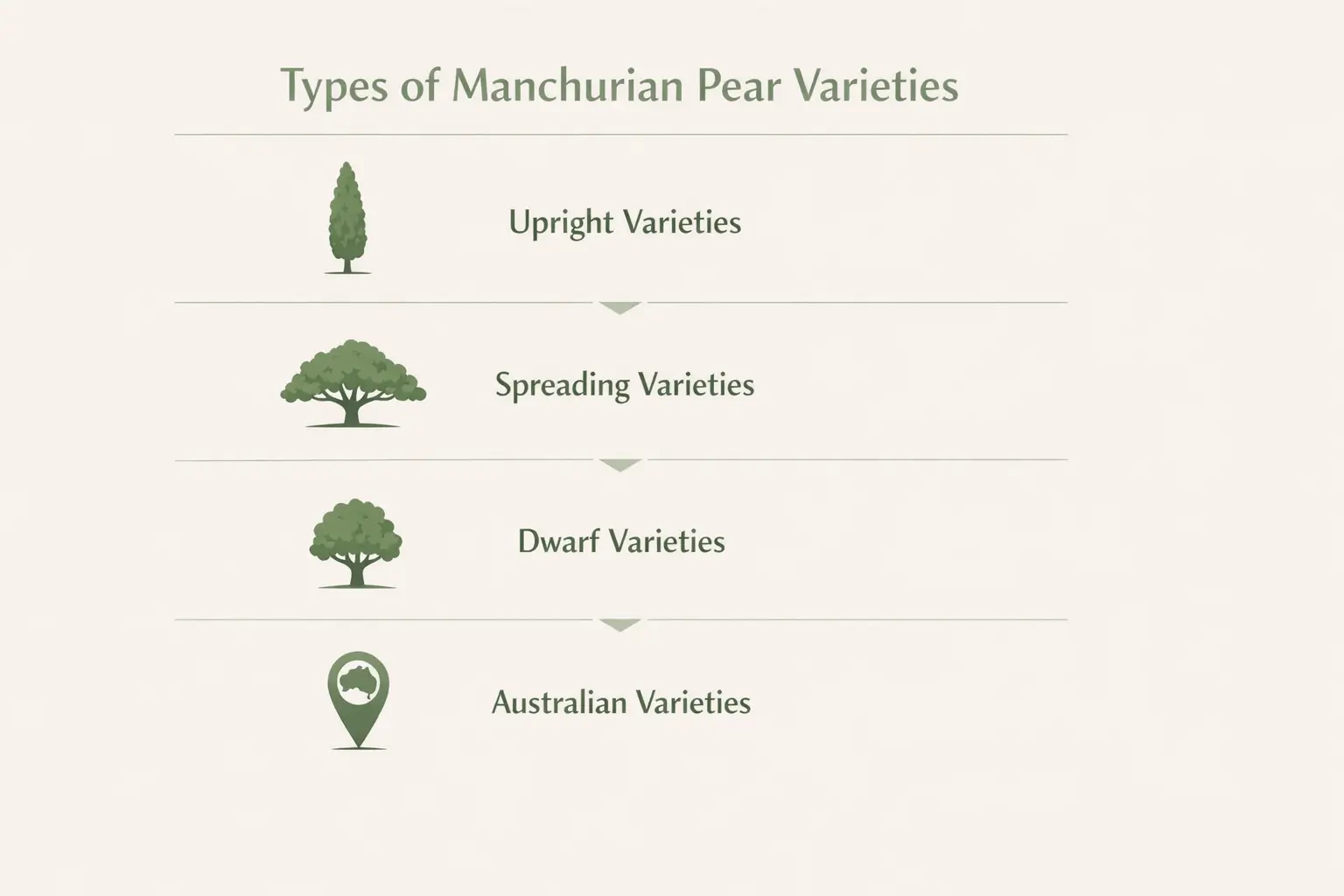
Popular Upright Varieties
Upright varieties such as the Pyrus capital ornamental pear tree are known for their tall, narrow form.
- Ideal for driveways and streets
- Minimal lateral spread
- Strong vertical structure
Rounded or Spreading Varieties
These varieties have a broader canopy and are commonly used for shade and visual balance.
- Wider crown shape
- Suitable for open gardens and parks
- Better shade coverage
Dwarf Manchurian Pear Varieties
Dwarf Manchurian pear tree varieties are designed for compact spaces.
- Smaller height and spread
- Suitable for small gardens or courtyards
- Easier maintenance
Australian-Specific Varieties
In Australia, specific varieties are selected for climate adaptability.
- Perform well in cities like Canberra and Perth
- Tolerate heat, frost, and dry conditions
- Commonly used in urban planning and streetscapes
For a side-by-side breakdown of mature height, spread, and planting cautions across every cultivar mentioned above, this Manchurian and ornamental pear variety selector is a useful filterable lookup. It lets you sort by tree form and space fit, which is handy if you’re still deciding between an upright, dwarf, or rounded type.
Comparison of Manchurian Pear vs Ornamental Pear Trees
| Feature | Manchurian Pear | Other Ornamental Pears |
| Botanical type | Pyrus ussuriensis | Often Pyrus calleryana |
| Growth habit | Upright and structured | Varies widely |
| Fruit | Small, mostly ornamental | Often non-edible |
| Climate tolerance | Cold-hardy | Moderate tolerance |
While the terms overlap, Manchurian pears are typically more cold-tolerant and structured, whereas other ornamental pears vary more in form. For a more granular, cultivar-by-cultivar version of this comparison, see this ornamental pear tree comparison spreadsheet, which breaks each variety down by growth habit, fruiting, and climate tolerance. It’s a handy sortable companion if the table above only gives you the high-level picture.
Growth Rate, Size, and Structure of Manchurian Pear Trees
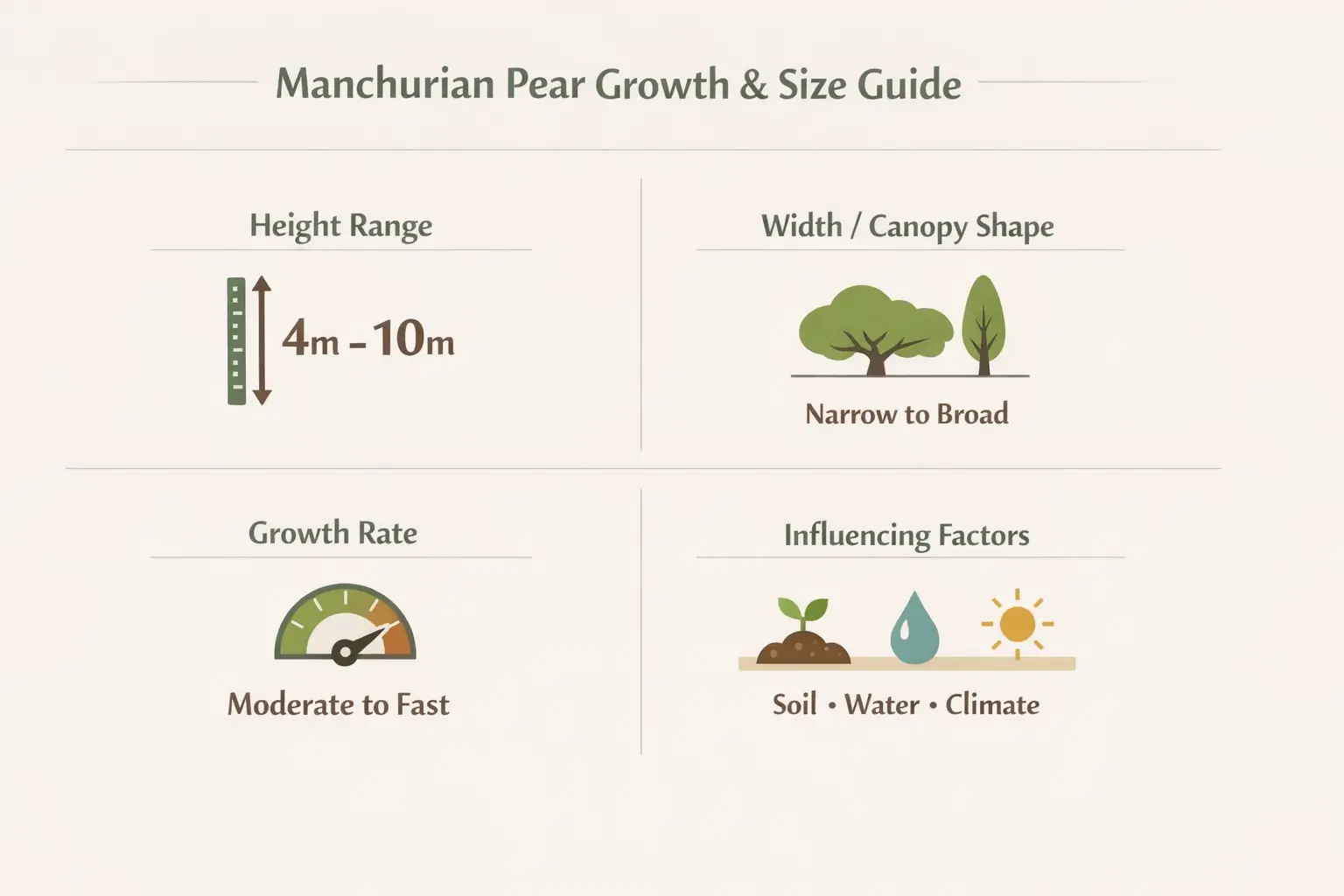
Manchurian pear growth rate is generally moderate to fast, depending on conditions.
Typical Growth Characteristics
- Height: 8–15 meters (Capital varieties may reach 10–12 m)
- Width: 3–8 meters depending on type
- Canopy shape: Upright, columnar, or rounded
Growth Speed
- Moderate to fast under optimal conditions
- Slower in poor soil or limited water
Factors Affecting Growth
- Soil quality: Well-drained soil promotes healthy growth
- Climate: Cold-hardy but performs best in temperate zones
- Water: Regular watering improves establishment
Root System and Planting Considerations
The Manchurian pear root system is generally non-invasive but spreading, making it suitable for urban environments.
Key Considerations
- Moderate root spread
- Usually safe near pavements and structures
- Avoid planting too close to foundations
Ideal Uses
- Street planting
- Driveways
- Garden borders
- Formal hedges (Manchurian pear hedge applications)
For hedge applications, Manchurian pear trees can be compared with other popular screening plants like those discussed in Best Lilly Pilly for Hedge.
Care Guide for Manchurian Pear Trees
Basic Care Requirements
- Watering: Regular during establishment; drought-tolerant once mature
- Light: Full sun preferred
- Soil: Well-drained, adaptable to various soil types
- Fertilization: Light feeding in early spring
- Pruning: Maintain shape and remove weak branches
Climate Tolerance
- Performs well in Australian climates
- Tolerates frost and moderate heat
Common Problems with Manchurian Pear Trees and How to Fix Them
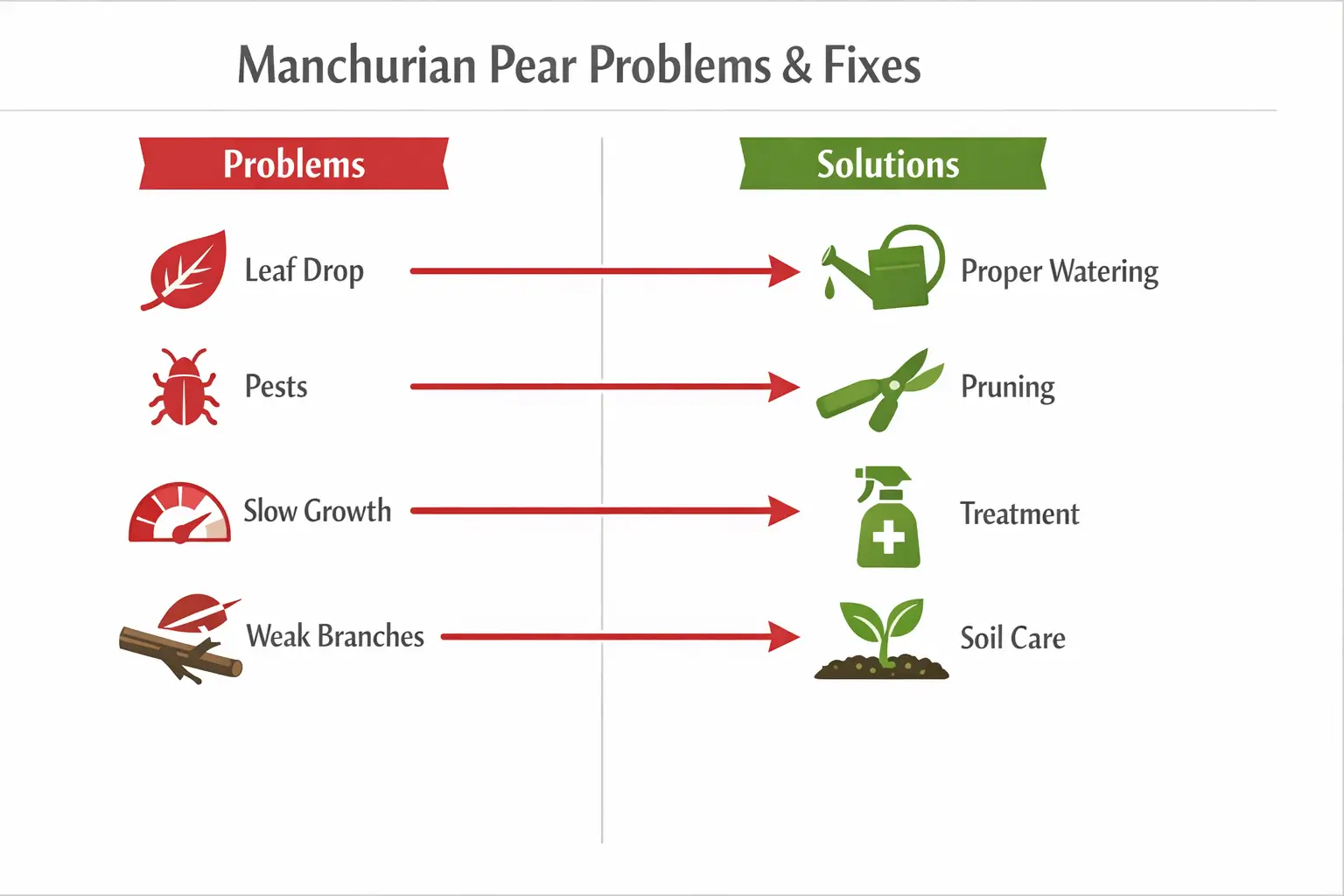
Leaf Drop or Poor Foliage
- Cause: Water stress or poor soil
- Fix: Improve irrigation and soil drainage
Slow Growth
- Cause: Nutrient deficiency or compacted soil
- Fix: Apply fertilizer and loosen soil
Pest or Disease Issues
- Cause: Aphids, fungal infections
- Fix: Use appropriate treatments and improve airflow
Structural Weakness
- Cause: Poor pruning or rapid growth
- Fix: Regular structural pruning early in growth
Ornamental Uses and Landscaping Applications
Manchurian ornamental pear trees are widely used in landscape design due to their visual appeal and structure.
Common Applications
- Avenue planting
- Privacy hedges
- Feature trees
- Seasonal interest (flowers and autumn foliage)
They provide:
- White spring blossoms
- Dense green foliage
- Vibrant autumn color
These trees are commonly selected for structured landscapes and urban planting, similar to other feature species highlighted in Feature Trees Brisbane, where form and seasonal interest are key considerations.
Choosing the Best Manchurian Pear Variety for Your Garden
The best ornamental pear tree depends on your specific garden conditions.
Key Decision Factors
- Space availability: Choose dwarf or upright types
- Desired height: Match tree size to landscape scale
- Climate zone: Ensure suitability for local conditions
- Maintenance level: Some varieties require more pruning
If low-maintenance or evergreen alternatives are preferred, it’s also useful to compare options like those listed in 7+ Smart Trees That Don’t Drop Leaves in Australia, especially for year-round foliage.
Differences Between Manchurian Pear and Similar Trees
Key Differences
- Mongolian pear tree: More fruit-focused, less ornamental
- Manchurian plum: Produces edible fruit, different genus
- Mandarin pears: Cultivated for fruit production
- Snow pear tree: Often overlaps with Manchurian pear naming
Comparison Summary
- Ornamental vs fruit purpose
- Structural vs spreading growth habits
- Climate adaptability varies across species
If you want a deeper dive into how Manchurian pear stacks up against Mongolian pear, Manchurian plum, and other look-alike species, this ornamental pear tree variety database catalogs each species with its distinguishing traits. It’s a good reference to bookmark before you buy a sapling based on name alone.
Beginner Mistakes and Practical Growing Tips
Common Mistakes
- Planting too close to structures
- Ignoring pruning needs
- Overwatering young trees
- Choosing the wrong variety for space
Practical Tips
- Allow adequate spacing for canopy growth
- Prune early to shape structure
- Adjust watering based on season
- Select varieties suited to your climate
Conclusion: Choosing and Understanding Manchurian Pear Varieties
Manchurian pear varieties are versatile ornamental trees known for their structure, adaptability, and seasonal beauty. Understanding the differences between varieties, growth patterns, and care requirements helps ensure successful planting. While Manchurian pear varieties are primarily outdoor landscape trees, understanding general plant care principles—like those covered in a broader Guide to House Plants—can help improve watering, soil, and growth management techniques.
Selecting the right variety depends on:
- Available space
- Climate conditions
- Intended landscape use
With proper care and planning, these trees provide long-term visual value in both residential and urban settings.
FAQs
1. What are the most popular Manchurian pear varieties?
The most popular Manchurian pear varieties include Capital, Cleveland Select, and dwarf forms, all chosen for their structure and adaptability.
2. How fast do Manchurian pear trees grow?
They typically grow at a moderate to fast rate, especially in well-drained soil with adequate sunlight and water.
3. Are Manchurian pears good for small gardens?
Yes, dwarf Manchurian pear varieties are well-suited for small gardens due to their compact size and manageable growth.
4. What problems do Manchurian pear trees commonly have?
Common issues include leaf drop, slow growth, pests, and structural weakness, often caused by poor watering, soil conditions, or lack of pruning.
5. What is the difference between Manchurian pear and ornamental pear trees?
Manchurian pears are a specific type of ornamental pear (Pyrus ussuriensis), while ornamental pears as a category include multiple species like Pyrus calleryana.