Introduction
Leptospermum ground cover refers to low-growing forms of the Australian tea tree plant that create dense evergreen coverage while producing masses of attractive flowers. Unlike upright tea trees, these spreading and cascading cultivars are ideal for rockeries, slopes, retaining walls, borders, and Australian native gardens. Popular varieties such as Leptospermum ‘Pink Cascade’, Leptospermum White Wave, and Leptospermum Lavender Queen combine ornamental beauty with excellent drought tolerance once established. As hardy native tea tree selections and versatile prostrate plants, they provide year-round structure, attract pollinators, and thrive with relatively little maintenance in suitable growing conditions.
By Greenery Inside | Plant Care & Gardening Expert
Last Updated: July 2026
Quick Summary
- Leptospermum ground cover varieties provide dense evergreen foliage with colourful seasonal flowers.
- Popular cultivars like Pink Cascade, White Wave, and Lavender Queen are excellent choices for Australian native gardens, slopes, and rockeries.
- These low-maintenance native tea trees thrive in full sun and well-drained soil.
- Individual varieties differ in flower colour, growth habit, mature size, and landscaping applications.
- Proper planting, pruning, and drainage help ensure long-lasting healthy growth.
What Is Leptospermum Ground Cover?
Leptospermum ground cover is a group of low-growing tea tree cultivars that spread across the ground instead of forming tall shrubs or trees. Their dense foliage, attractive flowers, and adaptable nature make them popular for erosion control, decorative planting, and Australian native landscapes.
Most members of the genus Leptospermum naturally grow as upright shrubs or small trees. However, selective breeding and natural variation have produced several compact and prostrate cultivars that remain low while spreading horizontally.
These ground-cover forms are valued because they:
- Suppress weeds through dense foliage.
- Stabilise soil on banks and slopes.
- Flower heavily during spring and early summer.
- Provide habitat and nectar for native pollinators.
- Require relatively little maintenance after establishment.
Unlike taller tea tree forms that create screening or hedging, ground-cover varieties are primarily used to soften hard landscaping, cascade over retaining walls, and fill difficult planting spaces.
Their evergreen foliage also provides year-round colour, making them suitable for residential gardens, public landscapes, coastal gardens, and water-wise designs.
In our experience at Greenery Inside, these plants perform best when given enough space to spread naturally rather than being confined between closely planted shrubs. Their graceful growth habit is one of their greatest ornamental features.
Are Leptospermum Native to Australia?
Yes. Most Leptospermum species are native to Australia, although the genus also includes several species found naturally in New Zealand and Southeast Asia.
Australia is home to more than 80 recognised Leptospermum species that grow across a wide range of climates, from coastal heathlands to alpine regions. These native tea trees have adapted to sandy soils, nutrient-poor environments, drought, wind, and coastal exposure.
One of the best-known New Zealand species is Leptospermum scoparium, commonly known as Manuka. It is famous worldwide as the source plant for Manuka honey.
Although Australian and New Zealand species belong to the same genus, they differ in several characteristics:
- Flower size and colour
- Leaf shape
- Growth habit
- Natural habitat
- Cold tolerance
Many popular ornamental cultivars—including Leptospermum scoparium ‘Pink Cascade’—originate from breeding programs involving New Zealand Manuka genetics, while others are selections from Australian native species such as Leptospermum rotundifolium and Leptospermum flavescens.
Today, gardeners grow both Australian and New Zealand tea tree varieties for their ornamental value, pollinator benefits, and adaptability to challenging garden conditions.
Popular Leptospermum Ground Cover Varieties
Numerous low-growing Leptospermum cultivars are available, each offering unique flower colours, growth habits, and landscape applications. Some spread widely across the ground, while others develop graceful cascading branches suitable for retaining walls and raised garden beds.
Choosing the right variety depends on your available space, local climate, and desired landscape effect.
Leptospermum ‘Pink Cascade’
Leptospermum ‘Pink Cascade’ is among the most widely planted ground-cover tea trees in Australia and New Zealand. Also sold as Pink Cascade Leptospermum, Pink Cascade Tea Tree, Tea Tree Pink Cascade, or Leptospermum scoparium ‘Pink Cascade’, this cultivar is prized for its graceful weeping habit and prolific pink flowers.
Unlike upright tea trees, its flexible branches spread outward before cascading downward, creating an elegant waterfall effect over rocks, embankments, and retaining walls.
Key characteristics include:
| Feature | Details |
| Botanical name | Leptospermum scoparium ‘Pink Cascade’ |
| Flower colour | Soft to bright pink |
| Foliage | Fine evergreen leaves |
| Growth habit | Weeping and spreading |
| Best flowering season | Spring to early summer |
This variety performs particularly well in:
- Rockeries
- Slopes
- Retaining walls
- Native cottage gardens
- Large containers
- Coastal landscapes
The abundant flowers attract bees and other beneficial pollinators, while the dense evergreen foliage provides year-round ornamental interest.
Greenery Inside recommends avoiding excessive pruning immediately after flower buds begin developing, as this can significantly reduce the following flowering display.
Leptospermum White Wave
Leptospermum White Wave is another popular spreading cultivar known for its masses of crisp white flowers and compact, mounding growth.
Compared with Pink Cascade, White Wave generally develops a denser, more rounded canopy while still spreading effectively across the ground.
Its main features include:
- Bright white flowers
- Dense evergreen foliage
- Excellent coastal tolerance
- Strong wind resistance
- Reliable performance in rockeries
- Attractive year-round appearance
White Wave is especially valuable for gardens that use white flowering plants as design highlights or contrast against darker foliage.
Its spreading habit also makes it effective for:
- Border planting
- Gravel gardens
- Dry landscapes
- Native garden beds
- Erosion control on gentle slopes
The white blooms provide an elegant display while attracting native bees and other beneficial insects throughout the flowering season.
Leptospermum Lavender Queen
Leptospermum rotundifolium ‘Lavender Queen’ is valued for its striking lavender-purple flowers that create strong colour contrast in native gardens.
Unlike the softer pink flowers of Pink Cascade, Lavender Queen produces richer purple-lavender blooms that become a focal point during spring flowering.
Characteristics include:
- Botanical background from Leptospermum rotundifolium
- Lavender to purple flowers
- Dense branching habit
- Compact spreading form
- Evergreen foliage
Compared with Pink Cascade:
| Feature | Lavender Queen | Pink Cascade |
| Flower colour | Lavender-purple | Soft pink |
| Habit | Dense spreading | Cascading |
| Best feature | Bold floral colour | Graceful weeping form |
| Garden style | Native borders | Rockeries and retaining walls |
Both cultivars attract pollinators and thrive in sunny, well-drained locations, but the choice often depends on the desired landscape aesthetic.
Other Ground Cover and Compact Varieties
Several additional Leptospermum cultivars provide attractive alternatives for smaller gardens or specialised landscaping projects.
Leptospermum Cardwell
Often associated with Leptospermum flavescens ‘Cardwell’, this compact native tea tree is appreciated for its naturally spreading habit and suitability for tropical and subtropical coastal gardens.
It performs well in:
- Coastal landscapes
- Native revegetation projects
- Slopes
- Informal garden borders
Leptospermum Little Bun
Leptospermum Little Bun forms a dense, rounded mound with compact evergreen foliage.
Its naturally tidy growth makes it ideal for:
- Small gardens
- Pathway edging
- Courtyard landscapes
- Low-maintenance native plantings
Because it requires only light pruning, it is well suited to gardeners seeking neat, formal-looking native plantings.
Leptospermum Cascade
Several nurseries market spreading forms simply as Leptospermum Cascade, referring to selections with trailing or arching branches.
These plants are commonly used to:
- Spill over retaining walls
- Cover embankments
- Soften hard landscape edges
- Fill large rockeries
Although growth habits vary slightly among selections, most develop broad evergreen coverage with abundant seasonal flowering.
Comparison of Popular Leptospermum Ground Cover Varieties
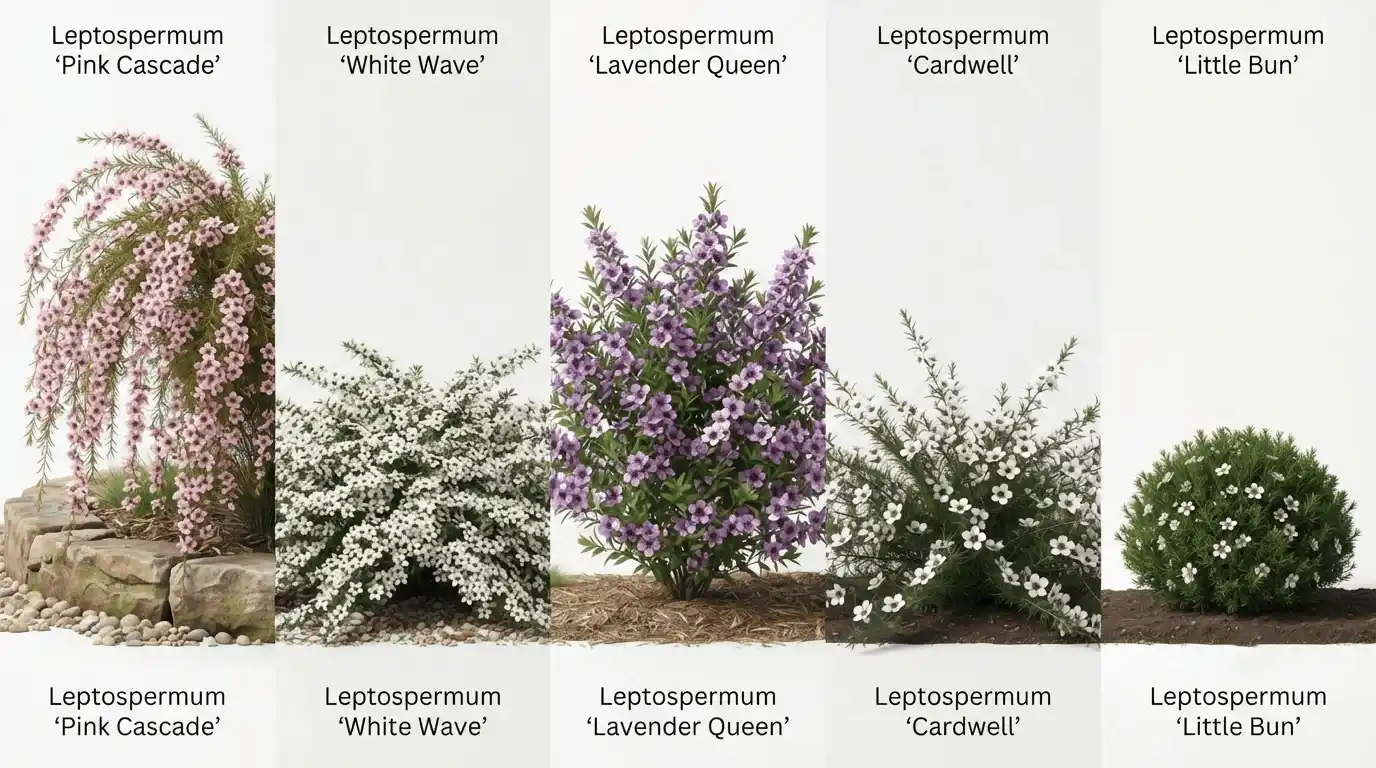
The following table highlights the key differences among commonly grown Leptospermum ground cover cultivars.
| Variety | Flower Colour | Mature Height | Mature Spread | Best Landscape Use |
| Pink Cascade | Soft pink | 0.5–1 m | 2–3 m | Retaining walls, slopes, cascading displays |
| White Wave | White | 0.4–0.8 m | 2–3 m | Rockeries, coastal gardens, borders |
| Lavender Queen | Lavender-purple | 1–1.5 m | 1.5–2 m | Native borders, feature planting |
| Cardwell | White to cream | 0.5–1 m | 2–3 m | Coastal gardens, erosion control |
| Little Bun | White or pale pink | 0.4–0.8 m | 1–1.5 m | Small gardens, edging, containers |
Seasonal update (2026): Australian native plant growers continue to recommend locally suited Leptospermum cultivars for water-wise landscaping, with full sun and well-drained soil remaining the key factors for reliable flowering and long-term plant health.
Plant Size and Growth Habit
Leptospermum ground cover varieties typically grow between 40 cm and 1.5 m tall while spreading 1 to 3 metres wide, depending on the cultivar. Their low, spreading habit makes them excellent choices for covering bare soil, stabilising slopes, and creating flowing landscape designs.
Unlike upright tea trees, ground-cover varieties direct much of their energy into lateral growth. Some develop dense, mounding forms, while others produce arching or cascading branches that drape naturally over retaining walls and rocks.
Several factors influence their mature size:
- Plant variety and genetics
- Soil drainage and fertility
- Available sunlight
- Local rainfall
- Climate
- Pruning practices
For example, Leptospermum ‘Pink Cascade’ develops long, graceful branches that create a weeping effect, whereas White Wave forms a denser, broader mat of evergreen foliage. Lavender Queen generally grows slightly taller, making it suitable as both a spreading shrub and an informal feature plant.
Most varieties maintain attractive foliage throughout the year, ensuring continuous structure even when not flowering.
In our experience growing Australian native tea trees, allowing each plant enough room to reach its natural spread results in healthier growth and a more attractive landscape than frequent hard pruning to restrict its size.
Growth Rate
Leptospermum ground cover has a slow to moderate growth rate, with the fastest development occurring during spring and early summer.
Young plants spend their first year establishing a healthy root system before producing vigorous top growth. Once established, they gradually spread outward each growing season.
Growth is influenced by several environmental factors:
- Rainfall: Consistent moisture during establishment encourages stronger root development.
- Sunlight: Plants in full sun generally produce denser foliage and more flowers.
- Soil quality: Well-drained soils encourage steady growth, while compacted or poorly drained soils reduce vigour.
- Pruning: Light pruning after flowering stimulates branching and maintains a compact habit.
- Climate: Warm temperate and coastal regions usually experience longer active growing seasons.
Growth often slows during winter as temperatures decline, although evergreen foliage remains attractive year-round.
Where to Plant Leptospermum Ground Cover
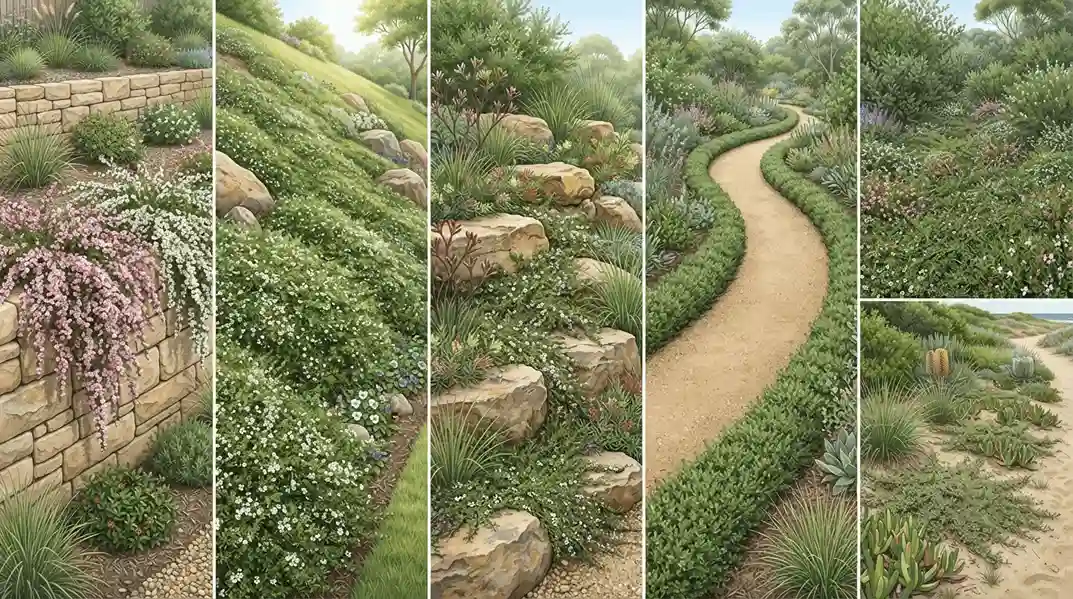
Leptospermum ground cover performs best in sunny locations with excellent drainage where its spreading habit has room to develop naturally.
These adaptable native shrubs tolerate challenging conditions better than many ornamental ground covers, making them suitable for a wide range of Australian landscapes.
Ideal planting locations include:
- Full sun garden beds
- Slopes and embankments
- Retaining walls
- Native garden borders
- Coastal gardens
- Dry landscape designs
- Gravel gardens
- Open rockeries
Because of their extensive branching habit, these plants are particularly effective at reducing exposed soil, limiting weed growth, and preventing erosion.
Although some cultivars tolerate light afternoon shade, flowering is generally most abundant when plants receive at least six hours of direct sunlight daily.
Avoid planting in low-lying areas where water collects after rain, as prolonged wet conditions increase the risk of root diseases.
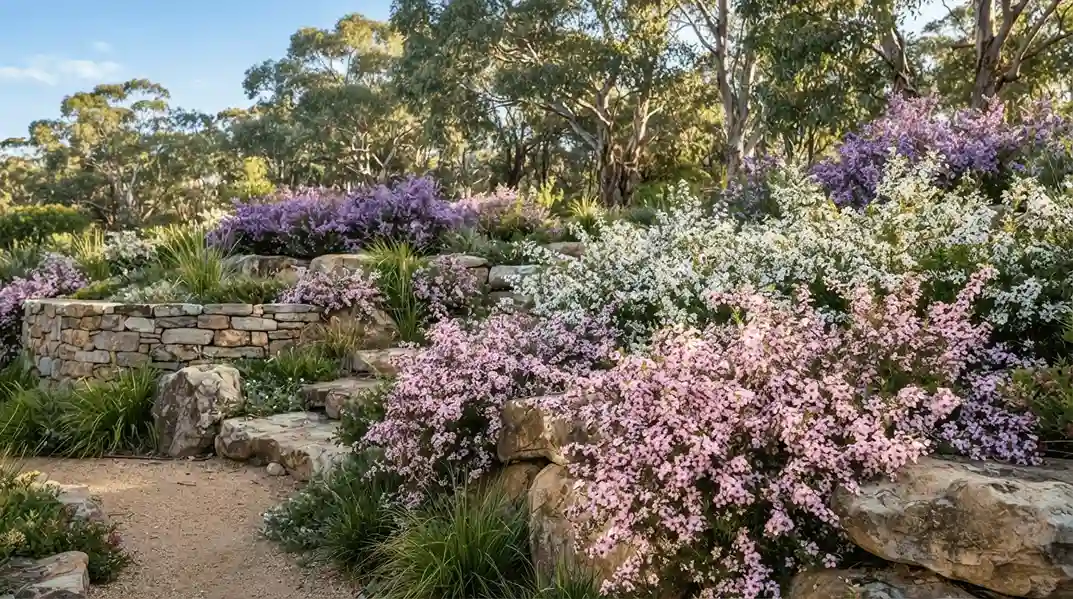
Ideal for Australian Native Rockery Gardens
Leptospermum ground cover is one of the most reliable plants for rockeries Australia has to offer. Its naturally spreading growth softens rocks while creating a layered, natural appearance.
An Australian native rockery garden benefits from combining prostrate shrubs with upright native species, ornamental grasses, and flowering ground covers to mimic natural bushland communities. An Australian native rockery garden benefits from combining prostrate shrubs with upright native species, ornamental grasses, and flowering ground covers to mimic natural bushland communities. For larger landscape designs, gardeners can also explore suitable Australian native garden trees to create height, structure, and habitat layers within the garden.
Suitable companion plants include:
- Grevillea ground covers
- Prostrate Banksia varieties
- Westringia cultivars
- Native daisies
- Myoporum species
- Correa varieties
- Dwarf Callistemon selections
Benefits of using Leptospermum in rockeries include:
- Excellent erosion control
- Weed suppression
- Seasonal flower displays
- Habitat for beneficial insects
- Year-round evergreen structure
- Low maintenance once established
The cascading forms are particularly attractive when planted above natural stone retaining walls, where branches can spill gracefully over the edges.
Greenery Inside recommends planting several compatible native species together rather than relying on a single ground cover. This creates greater biodiversity and extends flowering throughout the year, providing a more consistent food source for pollinators.
Care Guide for Leptospermum Ground Cover
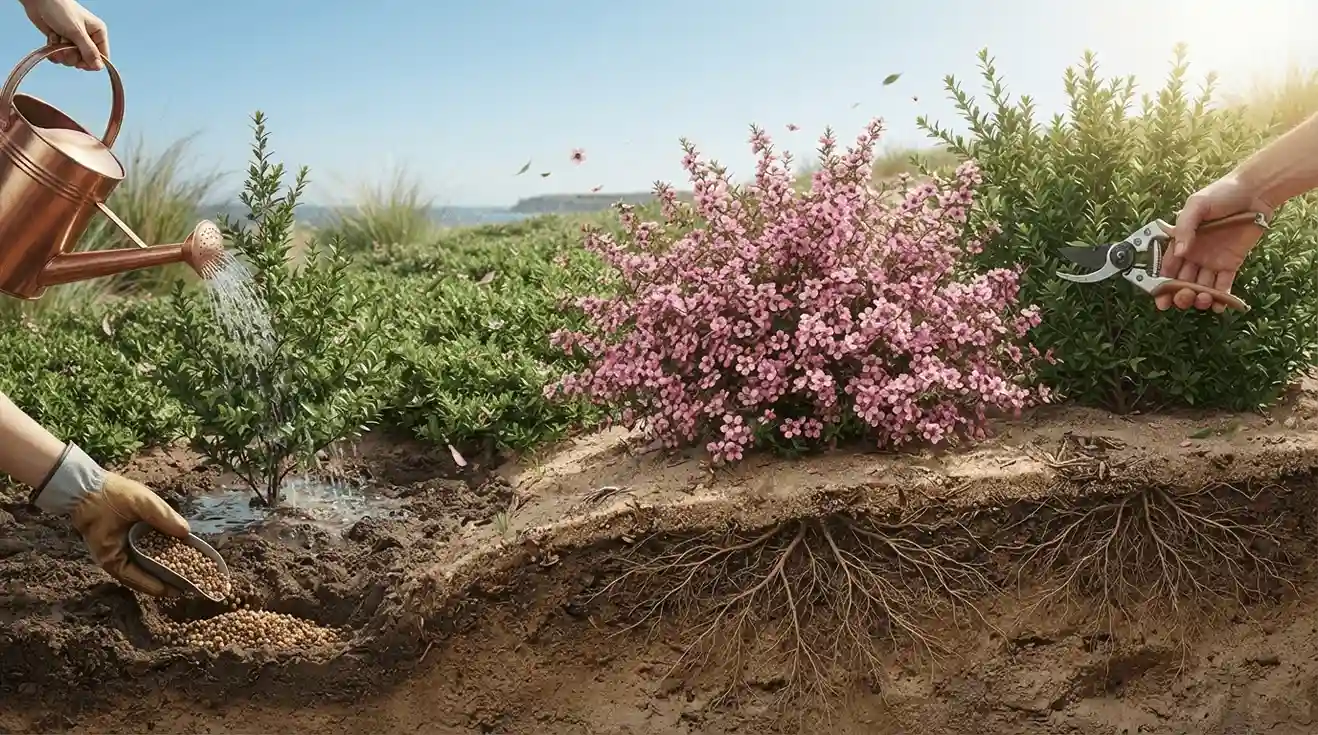
Leptospermum ground cover is considered a relatively low-maintenance Australian native once established. Providing suitable growing conditions during the first year helps develop a healthy root system that supports many years of vigorous growth.
Light Requirements
Full sun is the preferred growing condition for most Leptospermum ground cover varieties.
Six to eight hours of direct sunlight each day encourages:
- Dense foliage
- Heavy flowering
- Compact growth
- Strong branching
- Improved disease resistance
Some cultivars tolerate partial shade, particularly in hotter inland climates. However, reduced sunlight often results in fewer flowers and a more open growth habit. If your garden receives limited sunlight, consider exploring other native plants that grow in shade that are better adapted to lower-light conditions.
Soil Requirements
Well-drained soil is the single most important requirement for healthy Leptospermum plants.
Ideal soil conditions include:
| Soil Characteristic | Recommendation |
| Drainage | Excellent |
| Texture | Sandy to sandy loam |
| Organic matter | Moderate |
| Soil pH | Slightly acidic to neutral (approximately 5.5–7.0) |
| Compaction | Low |
These native tea tree varieties naturally grow in nutrient-poor environments and generally do not require highly fertile soils.
Heavy clay soils should be improved with coarse sand, gravel, or raised garden beds before planting to improve drainage.
Watering
Newly planted Leptospermum ground cover requires regular watering until its roots become established. Mature plants are considerably more drought tolerant.
A practical watering schedule is:
| Plant Age | Watering Frequency |
| First month | Two to three times per week |
| Months 2–6 | Once or twice weekly, depending on rainfall |
| Established plants | Only during prolonged dry periods |
Deep watering encourages roots to grow downward, increasing drought resilience.
Avoid frequent shallow watering, which encourages weak surface roots.
During extended summer heatwaves, occasional deep irrigation helps maintain flowering and healthy foliage without encouraging excessive soft growth.
Fertiliser
Leptospermum generally requires only modest fertilisation.
Choose:
- Low-phosphorus native plant fertilisers
- Slow-release formulations
- Fertilisers specifically labelled for Australian native plants
Avoid:
- High-phosphorus fertilisers
- Excessive nitrogen applications
- Frequent feeding schedules
Too much fertiliser often produces lush foliage at the expense of flowers and may stress sensitive native root systems.
Applying fertiliser once in early spring is usually sufficient for healthy established plants.
Pruning
Regular light pruning helps maintain an attractive, compact growth habit while encouraging future flowering.
Recommended pruning practices include:
- Lightly trim immediately after flowering finishes.
- Remove dead, damaged, or diseased branches.
- Thin crowded stems to improve airflow.
- Shape cascading branches only when necessary.
- Avoid cutting into old woody stems unless rejuvenation pruning is required.
One common mistake is pruning heavily after flower buds have already formed. This removes developing blooms and significantly reduces the next flowering display.
Climate Tolerance
Leptospermum ground cover adapts well to many Australian climates.
Most cultivars tolerate:
- Moderate frost
- Coastal winds
- Salt spray
- Summer heat
- Dry periods after establishment
Tolerance levels vary slightly among species and cultivars, so selecting a locally suited variety improves long-term performance.
Coastal selections such as White Wave and Cardwell generally perform particularly well in exposed seaside gardens, while many inland cultivars show excellent drought resilience when planted in well-drained soil.
As of the 2026 growing season, Australian native plant specialists continue to recommend selecting locally adapted Leptospermum cultivars to improve resilience to regional weather extremes and reduce long-term maintenance.
Landscaping Uses for Leptospermum Ground Cover
Leptospermum ground cover is one of the most versatile prostrate plants used in Australian landscaping. Its evergreen foliage, colourful flowers, and adaptable growth habit make it suitable for both formal and naturalistic garden designs.
Common landscaping applications include:
Ground Cover Plantings
Dense branching quickly fills open spaces, suppressing weeds while providing year-round greenery. This makes Leptospermum an excellent replacement for high-maintenance lawns in selected areas.
Slopes and Embankments
The spreading root system helps stabilise soil and reduce erosion on gentle to moderate slopes. Cascading varieties also soften the appearance of retaining walls and terraces.
Australian Native Gardens
As a native tea tree, Leptospermum blends naturally with other Australian species, creating landscapes that reflect local ecosystems while requiring relatively little supplemental water once established.
Cottage Gardens
The abundant spring flowers pair well with informal planting schemes, adding colour and texture without overwhelming neighbouring plants.
Coastal Gardens
Many cultivars tolerate salty winds and sandy soils, making them dependable performers in seaside environments where less resilient ornamental plants often struggle.
Rockeries
Low-growing varieties weave naturally between rocks, creating a mature, established appearance while reducing exposed soil.
Pathway Edging
Compact forms such as Little Bun produce tidy borders that soften hard paving while requiring only occasional trimming.
Pollinator Gardens
The nectar-rich flowers attract:
- Native bees
- Honeybees
- Hoverflies
- Butterflies
- Other beneficial insects
These pollinators contribute to healthier garden ecosystems and support surrounding flowering plants.
Whether used as a flowering tea tree plant, a practical erosion-control solution, or a decorative evergreen ground cover, Leptospermum offers exceptional versatility for Australian landscapes with minimal ongoing maintenance.
Leptospermum Ground Cover Compared with Other Ground Covers
Leptospermum ground cover stands out for its evergreen foliage, attractive flowers, drought tolerance, and value to pollinators. While many Australian ground covers provide colourful blooms, few combine ornamental appeal with the adaptability and wildlife benefits of low-growing tea tree cultivars.
The table below compares Leptospermum with other commonly used Australian ground covers.
| Feature | Leptospermum Ground Cover | Ground Cover with Yellow Flowers | Yellow Flower Ground Cover Australia | Other Australian Native Prostrate Shrubs |
| Typical flower colour | Pink, white, lavender | Yellow | Yellow | Varies by species |
| Growth habit | Dense, spreading or cascading | Spreading | Mat-forming or spreading | Prostrate to mounding |
| Evergreen | Yes | Usually | Usually | Most species |
| Drought tolerance | High once established | Moderate to high | High (species dependent) | High |
| Maintenance | Low | Low to moderate | Low | Low |
| Pollinator value | Excellent | Good | Good | Excellent |
| Best landscape uses | Rockeries, slopes, borders, coastal gardens | Colourful borders | Dry gardens | Native gardens and erosion control |
Compared with many flowering ground covers, Leptospermum offers several long-term advantages:
- Long-lived evergreen structure
- Excellent erosion control
- Seasonal masses of flowers
- Strong tolerance of poor soils
- Habitat for native insects and birds
- Adaptability to coastal and inland gardens
For gardeners seeking an Australian native that combines beauty with resilience, Leptospermum is often one of the most dependable choices. For gardeners seeking an Australian native that combines beauty with resilience, Leptospermum is often one of the most dependable choices. Other spreading natives such as Casuarina ground cover can also provide excellent erosion control and low-maintenance coverage in suitable landscapes.
Common Problems and How to Fix Them
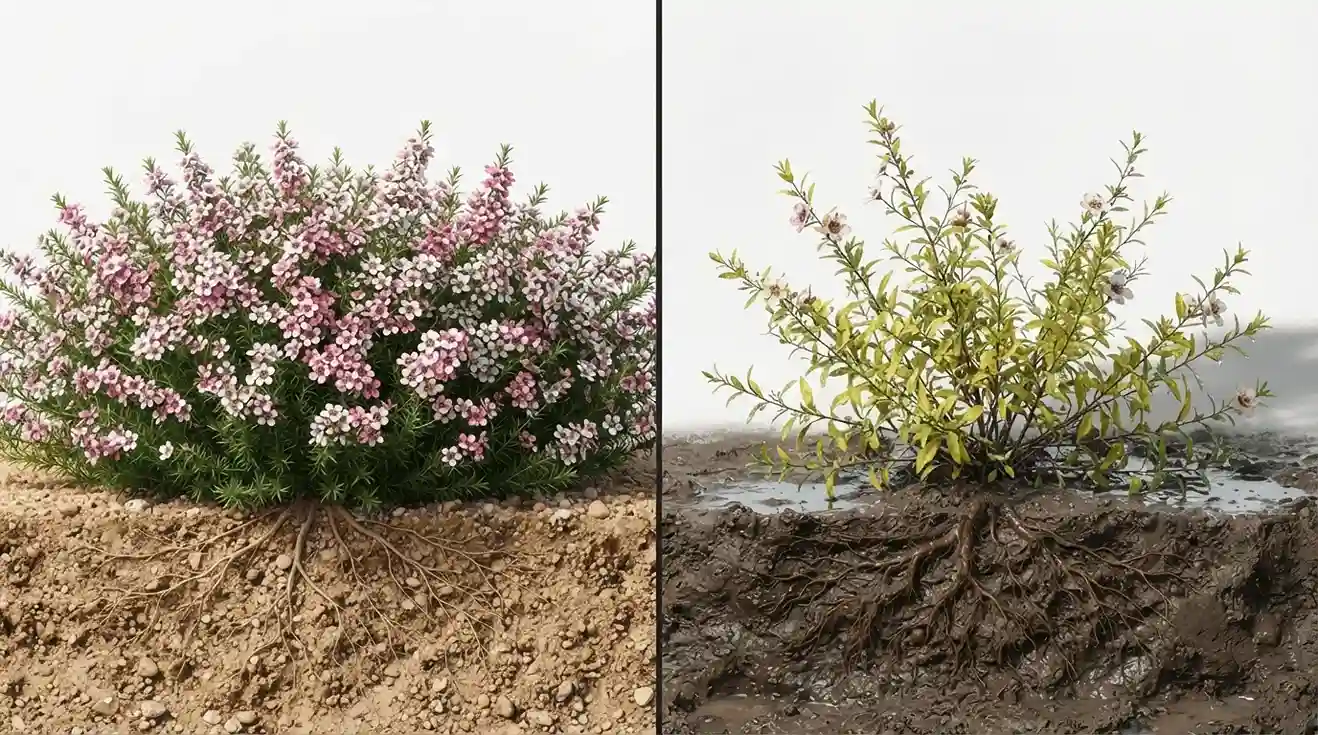
Although Leptospermum ground cover is relatively hardy, improper growing conditions can occasionally lead to reduced flowering or poor plant health. Most problems are easily prevented through correct site selection and routine maintenance.
Poor Flowering
Insufficient sunlight is the most common cause of poor flowering. Excess fertiliser and incorrect pruning can also reduce bloom production.
Common causes include:
- Too much shade
- High-nitrogen fertilisers
- Heavy pruning before flowering
- Young plants that have not fully established
Solutions:
- Plant in full sun whenever possible.
- Apply only low-phosphorus native fertilisers.
- Prune lightly after flowering rather than before buds develop.
- Avoid excessive feeding that encourages leafy growth instead of flowers.
Root Rot
Root rot is usually caused by consistently wet soil rather than disease alone.
Warning signs include:
- Yellowing foliage
- Wilting despite moist soil
- Blackened roots
- Gradual dieback
Prevention:
- Plant only in well-drained soil.
- Avoid overwatering established plants.
- Improve heavy clay with coarse sand or raised beds.
- Water deeply but less frequently.
Healthy drainage is the single most important factor in preventing root diseases.
Sparse Growth
If a Leptospermum appears thin or uneven, environmental conditions are usually responsible.
Possible causes include:
- Poor soil drainage
- Nutrient imbalance
- Extended drought during establishment
- Excessive shade
- Lack of pruning after flowering
To encourage fuller growth:
- Improve sunlight exposure.
- Apply an appropriate native fertiliser in spring.
- Prune lightly after flowering to stimulate branching.
- Water consistently while young plants establish.
In our experience at Greenery Inside, newly planted Leptospermum often appears slow during its first year. Once a healthy root system develops, growth usually becomes noticeably denser over the following growing seasons.
Is Leptospermum Ground Cover Invasive?
No. Most cultivated Leptospermum ground cover varieties are not considered invasive when planted appropriately.
These plants naturally spread by branching rather than aggressively invading surrounding areas. Their growth remains predictable and can easily be managed with occasional pruning.
Responsible gardening practices include:
- Allowing sufficient spacing at planting.
- Removing unwanted branches if they spread beyond their intended area.
- Preventing overcrowding with neighbouring plants.
- Selecting cultivars suited to the available space.
Because they are Australian native plants or carefully developed cultivars, they integrate well into native landscapes without exhibiting invasive behaviour under normal garden conditions.
Beginner Mistakes to Avoid
Many Leptospermum problems result from simple planting or maintenance errors. Avoiding these common mistakes greatly improves long-term success.
Planting in Heavy Clay
Poor drainage is one of the biggest causes of plant failure.
Instead:
- Improve drainage before planting.
- Use raised beds if necessary.
- Incorporate coarse sand or gravel into heavy soils.
Overwatering
Established Leptospermum is drought tolerant.
Avoid:
- Daily watering
- Permanently wet soil
- Waterlogged garden beds
Allow the soil surface to dry slightly between deep watering sessions.
Using Too Much Fertiliser
Australian native plants generally require less fertiliser than many exotic ornamentals.
Excess nutrients can lead to:
- Soft leafy growth
- Reduced flowering
- Nutrient stress
- Root damage
Choose fertilisers formulated specifically for native plants.
Planting in Excessive Shade
Although some afternoon shade is tolerated, dense shade usually reduces flowering and encourages open, leggy growth.
Whenever possible, select a site with:
- Full morning sun
- At least six hours of direct sunlight
- Good air circulation
Ignoring Mature Spread
Many gardeners focus only on plant height.
However, ground-cover varieties often spread two to three metres wide.
Proper spacing:
- Reduces overcrowding.
- Improves airflow.
- Minimises disease risk.
- Allows the natural cascading habit to develop.
Heavy Pruning After Flower Buds Form
Pruning at the wrong time removes developing flowers.
For best results:
- Prune immediately after flowering.
- Remove only light growth each year.
- Retain the plant’s natural shape whenever possible.
Choosing the Right Leptospermum Variety for Your Garden
Selecting the best Leptospermum ground cover depends on your landscape goals, available space, and local growing conditions.
| Garden Type | Recommended Variety | Why It Works |
| Small gardens | Little Bun | Compact, tidy growth |
| Rockeries | Pink Cascade | Cascading branches soften rocks |
| Slopes and embankments | White Wave | Dense spreading habit helps control erosion |
| Coastal landscapes | Cardwell or White Wave | Excellent wind and salt tolerance |
| Wildlife gardens | Pink Cascade or Lavender Queen | Nectar-rich flowers attract pollinators |
| Low-maintenance gardens | White Wave | Hardy and requires minimal pruning |
If colour is your priority:
- Pink Cascade offers graceful pink blooms with a weeping habit.
- White Wave provides elegant white flowers and dense evergreen coverage.
- Lavender Queen produces striking lavender-purple flowers that create bold seasonal displays.
When planning larger native landscapes, combining several Leptospermum cultivars can extend flowering interest while adding variation in colour, texture, and form.
Greenery Inside recommends selecting cultivars suited to your local climate and allowing adequate spacing between plants. This approach reduces maintenance, improves airflow, and produces healthier, longer-lived ground cover.
Conclusion
Leptospermum ground cover is one of the most versatile Australian native plants for creating attractive, low-maintenance landscapes. Its evergreen foliage, colourful spring flowers, and spreading growth habit make it an excellent choice for rockeries, slopes, borders, coastal gardens, and wildlife-friendly plantings.
Popular cultivars such as Leptospermum ‘Pink Cascade’, White Wave, and Lavender Queen each offer distinct ornamental qualities, from graceful cascading branches to dense mounding growth and vibrant flower colours. Selecting the right variety depends on your available space, garden style, and local climate.
With full sun, well-drained soil, sensible watering during establishment, and light pruning after flowering, Leptospermum ground cover provides years of reliable performance while supporting pollinators and enhancing Australian native landscapes.
Frequently Asked Questions
What is the best Leptospermum ground cover variety?
The best variety depends on your landscaping goals. Leptospermum ‘Pink Cascade’ is ideal for cascading over retaining walls and slopes, White Wave suits coastal gardens and dense ground coverage, while Lavender Queen is valued for its striking purple-lavender flowers in native borders.
How tall does Leptospermum ground cover grow?
Most Leptospermum ground cover varieties mature between 40 cm and 1.5 metres tall, with a spread of approximately 1 to 3 metres, depending on the cultivar and growing conditions.
Where should I plant Leptospermum ground cover?
Plant Leptospermum ground cover in full sun with well-drained soil. It performs particularly well in rockeries, slopes, retaining walls, coastal gardens, native landscapes, and dry garden beds where water does not collect.
Is Leptospermum ground cover drought tolerant?
Yes. Once established, Leptospermum ground cover is highly drought tolerant. Regular watering is important during the establishment phase, but mature plants generally require supplemental irrigation only during prolonged dry periods.
Are Leptospermum plants native to Australia?
Yes. Most Leptospermum species are native to Australia. The genus also includes species from New Zealand, such as Leptospermum scoparium (Manuka), which has been widely cultivated and used in ornamental breeding programs.
What is the difference between Pink Cascade and White Wave?
The main difference is their growth habit and flower colour. Pink Cascade has soft pink flowers with graceful cascading branches, making it ideal for retaining walls and slopes. White Wave produces white flowers and forms a denser, mounding ground cover that performs exceptionally well in coastal gardens and rockeries.
Can Leptospermum be used in rockeries?
Yes. Leptospermum ground cover is one of the best Australian native plants for rockeries. Its spreading habit softens rocky landscapes, helps control erosion, suppresses weeds, and provides colourful seasonal flowers while requiring relatively little maintenance once established.