Introduction
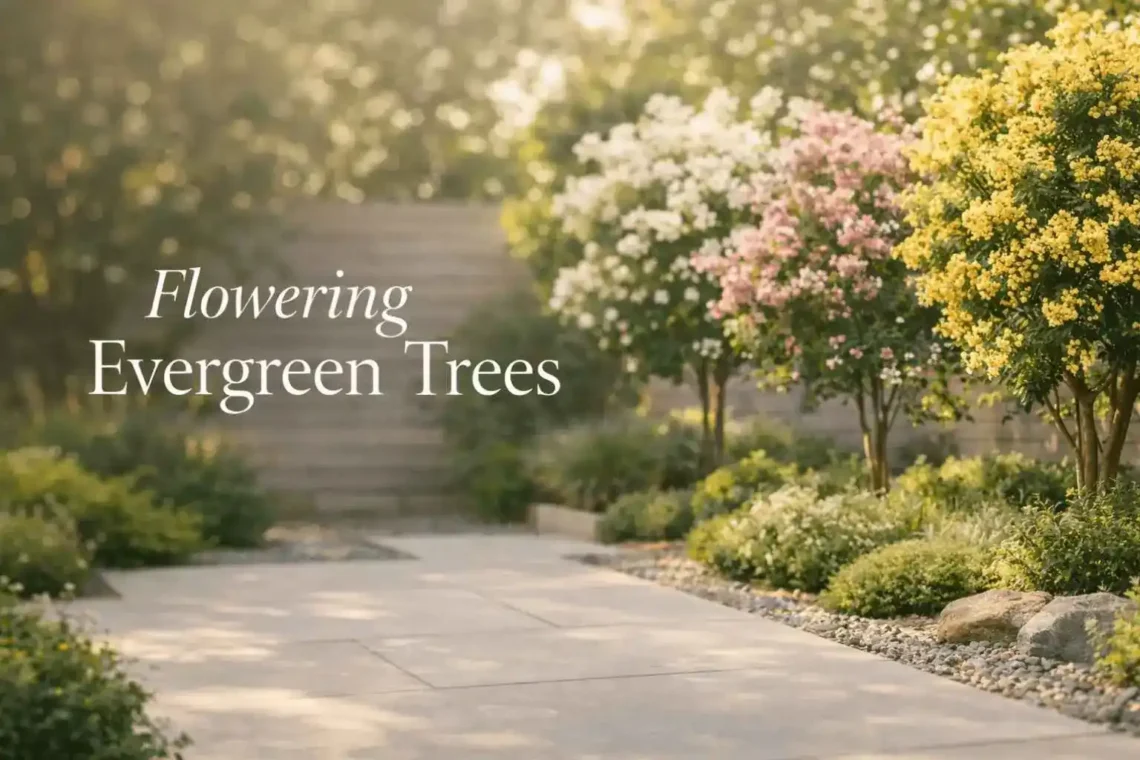
Flowering evergreen trees are unique plants that combine year-round foliage with seasonal blooms, making them highly valuable in landscaping and garden design. Unlike deciduous flowering trees, these trees retain their leaves throughout the year while also producing flowers, offering both structure and visual interest across seasons. They are widely used in front yards, privacy screens, and ornamental planting due to their low maintenance and aesthetic appeal.
Quick Summary
- Flowering evergreen trees provide year-round greenery with seasonal blooms.
- Ideal for privacy, structure, and low-maintenance landscaping.
- Available in small, dwarf, and tall varieties for different spaces.
- Many options exist for Australia, UK, NZ, and multiple climate zones.
What Are Flowering Evergreen Trees?
Flowering evergreen trees are plants that retain their foliage throughout the year while also producing seasonal flowers, offering both structural greenery and decorative blooms in one plant type. This dual function makes them highly desirable in landscaping. Evergreen species maintain foliage year-round, a defining trait explained in detail in Evergreen.
Evergreen trees differ from deciduous trees in that they do not shed all their leaves at once. Instead, they maintain continuous foliage, replacing leaves gradually. In evergreen flowering trees, blooming cycles typically occur once or multiple times a year depending on species, climate, and care conditions.
These trees serve a dual-purpose role:
- Structural function: consistent greenery for privacy and design
- Ornamental function: seasonal flowers for visual appeal
They fall under broader categories such as evergreen plants, evergreen trees, and evergreen flowering trees, all sharing the characteristic of year-round foliage. For a deeper understanding of how evergreen trees differ from seasonal leaf-shedding varieties, see our detailed guide on Deciduous vs Evergreen: 7+ Key Differences Guide.
Types of Flowering Evergreen Trees
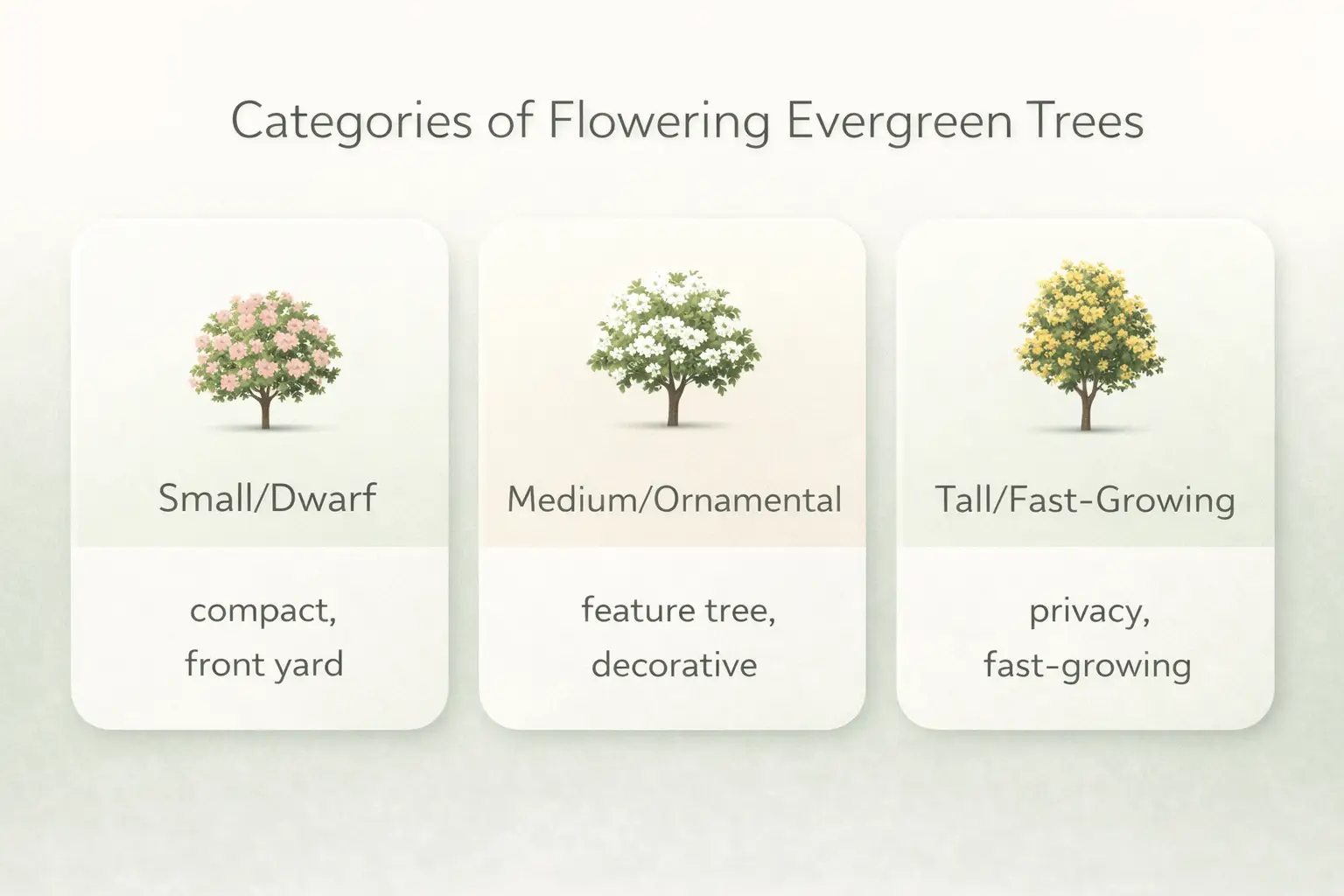
Flowering evergreen trees can be categorized based on size, bloom characteristics, and landscaping use. This diversity allows them to fit a wide range of garden styles and functional needs.
Small and Dwarf Flowering Evergreen Trees
Small and dwarf flowering evergreen trees are ideal for compact spaces, including front yards, patios, and small gardens. They offer decorative blooms without overwhelming limited space.
Key characteristics:
- Compact growth habit
- Suitable for containers or tight planting areas
- Easier maintenance and pruning
Common uses:
- Front yard focal points
- Border planting
- Urban gardens
If you’re planning a compact landscape, explore more ideas in our guide to 7+ Smart Small Feature Trees in Australia Guide.
Medium and Ornamental Evergreen Trees
Medium-sized evergreen trees are commonly used as feature or decorative trees in landscaping. They balance size and visual impact, making them versatile for residential gardens.
Key characteristics:
- Moderate height and spread
- Strong ornamental value
- Suitable for mixed garden designs
Common uses:
- Centerpiece planting
- Garden layering
- Decorative accents
Tall and Fast-Growing Evergreen Trees
Tall flowering evergreen trees are best suited for privacy screening, windbreaks, and large landscape areas. Fast-growing varieties are particularly useful when quick coverage is needed.
Key characteristics:
- Rapid vertical growth
- Dense foliage for screening
- High visual impact
Common uses:
- Privacy hedges
- Boundary planting
- Large-scale landscaping
For more dense screening options, see our expert picks in Best Hedging Trees: 6+ Essential Types for Privacy.
Best Flowering Evergreen Trees for Landscaping
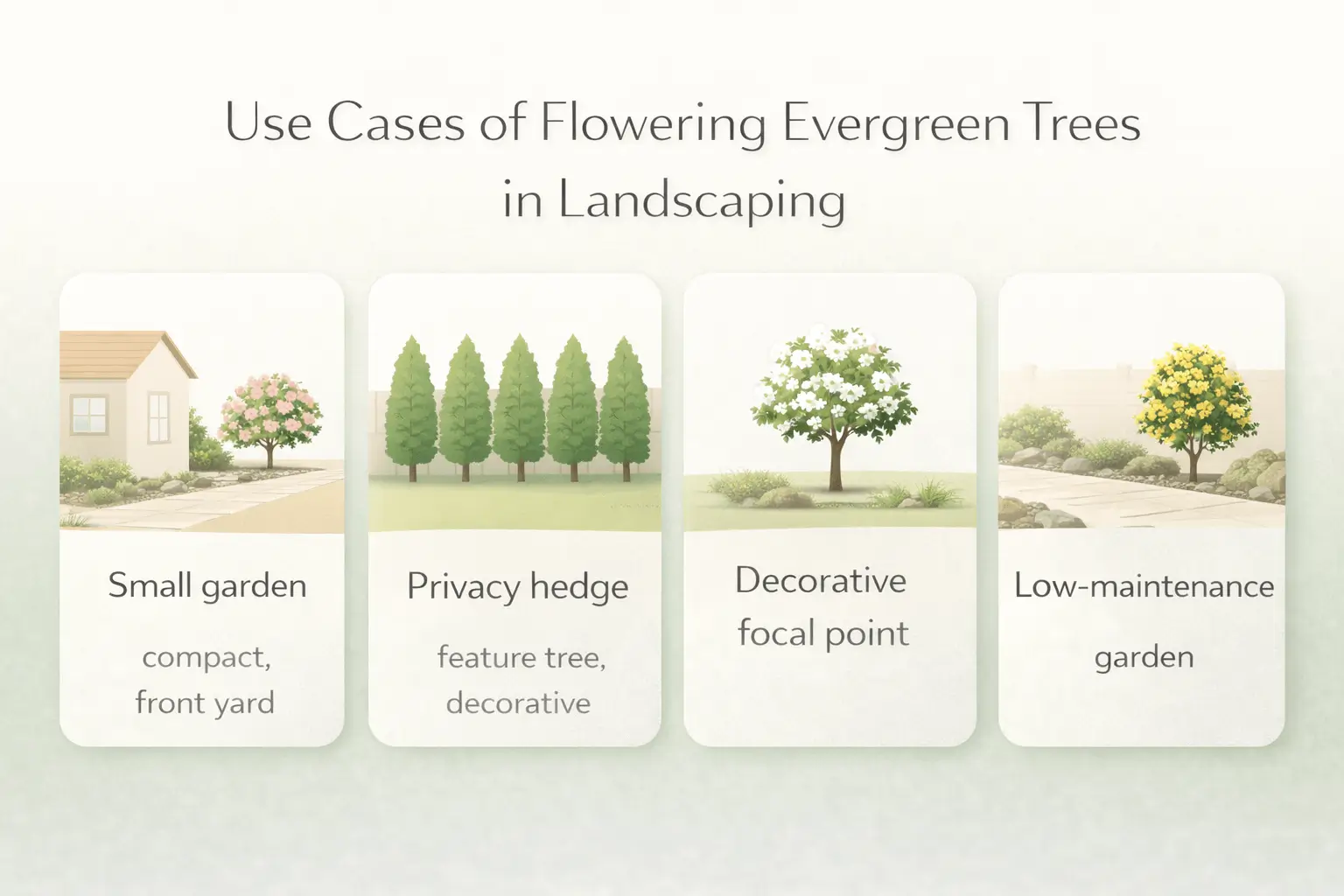
The best flowering evergreen trees are those that combine adaptability, visual appeal, and ease of care. Their selection depends on the intended landscape function.
Best options based on use:
- Best for small gardens: dwarf evergreen flowering trees with compact growth
- Best for privacy hedging: tall, dense evergreen trees with fast growth
- Best low-maintenance options: drought-tolerant and hardy evergreen species
- Best for decorative focal points: ornamental trees with vibrant or long-lasting blooms
These trees are commonly used in front yards, privacy screens, and decorative planting schemes.
Flowering Evergreen Trees in Different Regions and Climates
Flowering evergreen trees adapt differently depending on regional climate conditions, including temperature, rainfall, and soil type.
Australia
In Australia, flowering evergreen trees must tolerate heat, drought, and varied soil conditions. Native species are particularly well-suited due to their resilience.
Key considerations:
- Drought tolerance
- Well-draining soils
- Heat resistance
UK & NZ
In the UK and New Zealand, cooler climates require trees that can withstand mild frost and higher moisture levels.
Key considerations:
- Frost tolerance
- Moisture-retentive soils
- Moderate sunlight conditions
USDA Climate Zones
Flowering evergreen trees are often categorized by USDA zones (typically zones 5–9). These zones define temperature ranges and help determine plant suitability.
- Zone 5–6: Cold-tolerant species required
- Zone 7–8: Wide range of adaptable species
- Zone 9: Heat-tolerant evergreen varieties perform best
Evergreen Trees with Non-Invasive Roots
Evergreen trees with non-invasive roots are ideal for residential areas where underground infrastructure must be protected.
These trees are specifically selected to minimize damage to:
- Foundations
- Pipes
- Driveways
Best uses:
- Suitable near homes
- Ideal for driveways and pathways
- Safe for small gardens
Root behavior considerations:
- Choose species with shallow, non-aggressive roots
- Avoid planting large trees too close to structures
- Ensure proper spacing for healthy root development
Comparison: Flowering Evergreen Trees vs Non-Flowering Evergreen Trees
| Feature | Flowering Evergreen Trees | Non-Flowering Evergreen Trees |
| Visual appeal | Seasonal blooms + foliage | Foliage only |
| Maintenance | Moderate | Low |
| Landscape use | Ornamental + functional | Structural/privacy |
| Biodiversity support | High (pollinators) | Moderate |
Flowering evergreen trees provide both visual interest and ecological benefits, while non-flowering types are primarily used for structure and screening.
Care Guide for Flowering Evergreen Trees
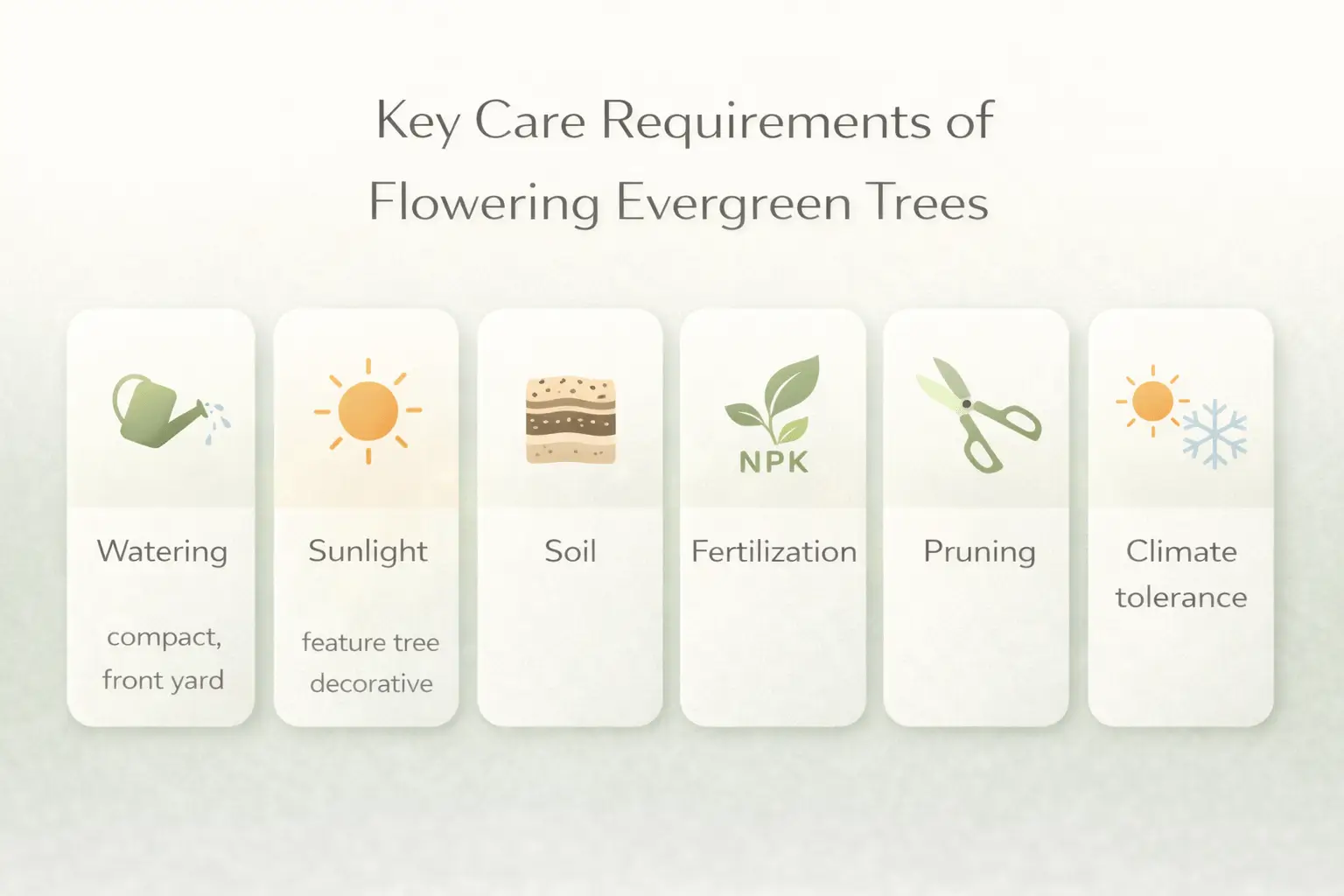
Proper care ensures healthy growth and consistent flowering in evergreen trees.
Key care requirements:
- Watering: Depends on species and climate; avoid overwatering
- Light: Full sun for most flowering species; some tolerate partial shade
- Soil: Well-draining soil is essential; some prefer moisture retention
- Fertilization: Apply during growing season for optimal flowering
- Pruning: Shape control and removal of dead growth; timing affects blooms
- Climate tolerance: Choose frost-hardy or drought-resistant varieties based on location
Growth Rate and Size Expectations
Flowering evergreen trees vary widely in growth rate and mature size, influencing their suitability for different landscapes.
Growth categories:
- Slow-growing: Suitable for controlled spaces and long-term planning
- Moderate growth: Balanced development for most residential gardens
- Fast-growing: Ideal for quick privacy or coverage
Environmental factors affecting growth:
- Soil quality
- Water availability
- Sunlight exposure
- Climate conditions
Common Problems and Solutions
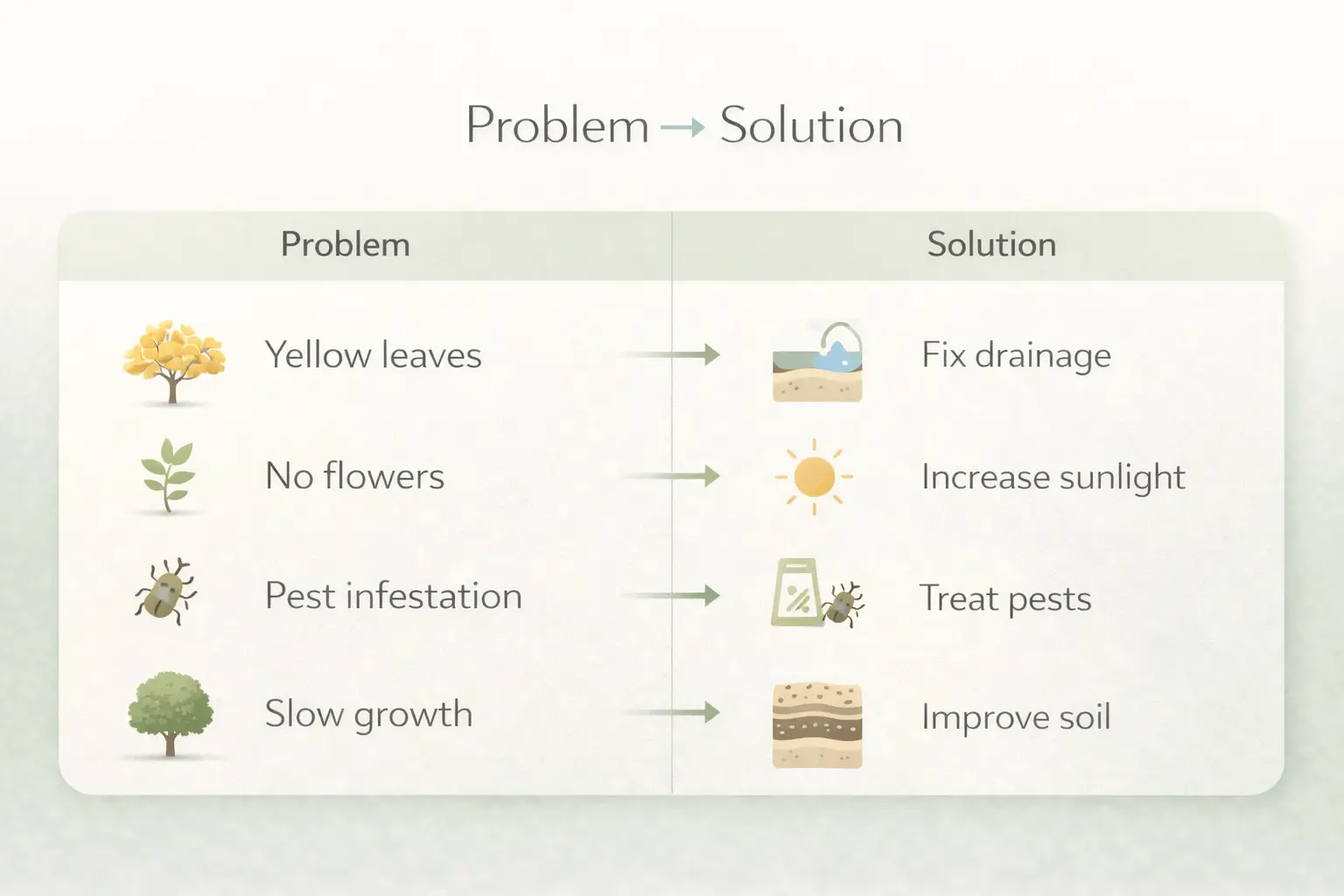
Flowering evergreen trees may encounter common issues, but most are manageable with proper care.
Common problems:
- Yellowing leaves → Often caused by overwatering or poor drainage
- Lack of flowering → Insufficient sunlight or incorrect pruning timing
- Pest infestations → Aphids and scale insects are common
- Slow growth → Soil deficiencies or restricted root space
Beginner Mistakes to Avoid
Avoiding common mistakes can significantly improve the success of planting flowering evergreen trees.
Key mistakes:
- Choosing the wrong size for the available space
- Ignoring root spread and planting too close to structures
- Overwatering evergreen species
- Planting without considering climate compatibility
How to Choose the Right Flowering Evergreen Tree
Choosing the right flowering evergreen tree depends on several practical factors.
Key decision factors:
- Space availability
- Desired height and spread
- Flower color preferences (e.g., white flowering evergreen trees)
- Maintenance level
- Climate suitability
This approach ensures long-term success and proper integration into the landscape. If you’re also exploring greenery for interiors, our guide to house plants explains how evergreen plants can enhance indoor spaces with year-round foliage.
Table: Quick Selection Guide for Flowering Evergreen Trees
| Tree Type | Size | Growth Rate | Best Use | Climate |
| Small/Dwarf | Compact | Slow–Moderate | Front yard | Mild–Warm |
| Medium | متوسط | Moderate | Feature tree | Various |
| Tall | Large | Fast | Privacy | Warm–Temperate |
Role of Flowering Evergreen Trees in Modern Landscaping
Flowering evergreen trees play a central role in contemporary landscape design by combining functionality with visual appeal.
Key benefits:
- Year-round structure
- Seasonal visual interest
- Support for pollinators
- Integration with shrubs and hedges
They are often used alongside evergreen shrubs and ornamental plants to create layered, balanced landscapes.
Conclusion
Flowering evergreen trees offer a rare combination of continuous greenery and seasonal blooms, making them one of the most versatile choices in landscaping. Whether used for privacy, decoration, or compact front yard planting, they provide long-term visual and functional benefits. Choosing the right type depends on space, climate, and maintenance preferences, but their adaptability makes them suitable for a wide range of environments.
FAQs
Are there any flowering evergreen trees?
Yes, many evergreen trees produce seasonal flowers while keeping their foliage year-round, combining ornamental beauty with structural greenery in landscapes.
What are the best flowering evergreen trees for small gardens?
Dwarf and small varieties are best for small gardens, as they provide attractive blooms while maintaining a compact size suitable for limited spaces.
Do flowering evergreen trees need a lot of maintenance?
Most flowering evergreen trees are low maintenance, requiring basic care such as watering, occasional pruning, and seasonal fertilization.
Can flowering evergreen trees be used for privacy?
Yes, tall and fast-growing flowering evergreen trees are excellent for privacy, offering dense foliage and added visual interest from seasonal blooms.
Which flowering evergreen trees grow best in Australia?
Many native and drought-tolerant species thrive in Australia, as they are adapted to heat, dry conditions, and varying soil types.