Introduction
Evergreen trees are trees that retain their foliage year-round, providing consistent structure, shade, or privacy in landscapes. They are widely used in landscaping due to their ability to maintain greenery across all seasons while requiring relatively low seasonal maintenance. Key factors when selecting evergreen trees include their size, growth rate, adaptability to climate, and root behavior, all of which influence placement, care, and long-term performance in gardens and urban settings.
Quick Summary
- Evergreen trees provide year-round foliage, privacy, and structure in landscapes.
- The best evergreen tree depends on space, climate, and purpose (shade, privacy, decoration).
- Options range from small ornamental trees to large fast-growing screening trees.
- Choosing the right type avoids issues like invasive roots or poor growth conditions.
What Are Evergreen Trees and Why Are They Popular?
Evergreen trees are species that retain leaves throughout the year, unlike deciduous trees that shed foliage seasonally. These trees maintain green foliage year-round, making them ideal for continuous coverage, shade, and visual structure in landscaping. Evergreen plant types include both trees and shrubs, offering versatility across garden sizes and designs. Popular evergreen trees, such as the grass palm and Japanese sweet flag, provide year-round greenery and low seasonal maintenance.
Benefits include:
- Continuous foliage throughout the year
- Provide consistent shade and privacy
- Lower seasonal leaf drop compared to deciduous trees
- Suitable for landscaping structure
Evergreen trees, defined as plants retaining foliage year-round, are a key category in botany [Evergreen (botany)] for landscaping and ecological studies.
Types of Evergreen Trees Based on Size and Function
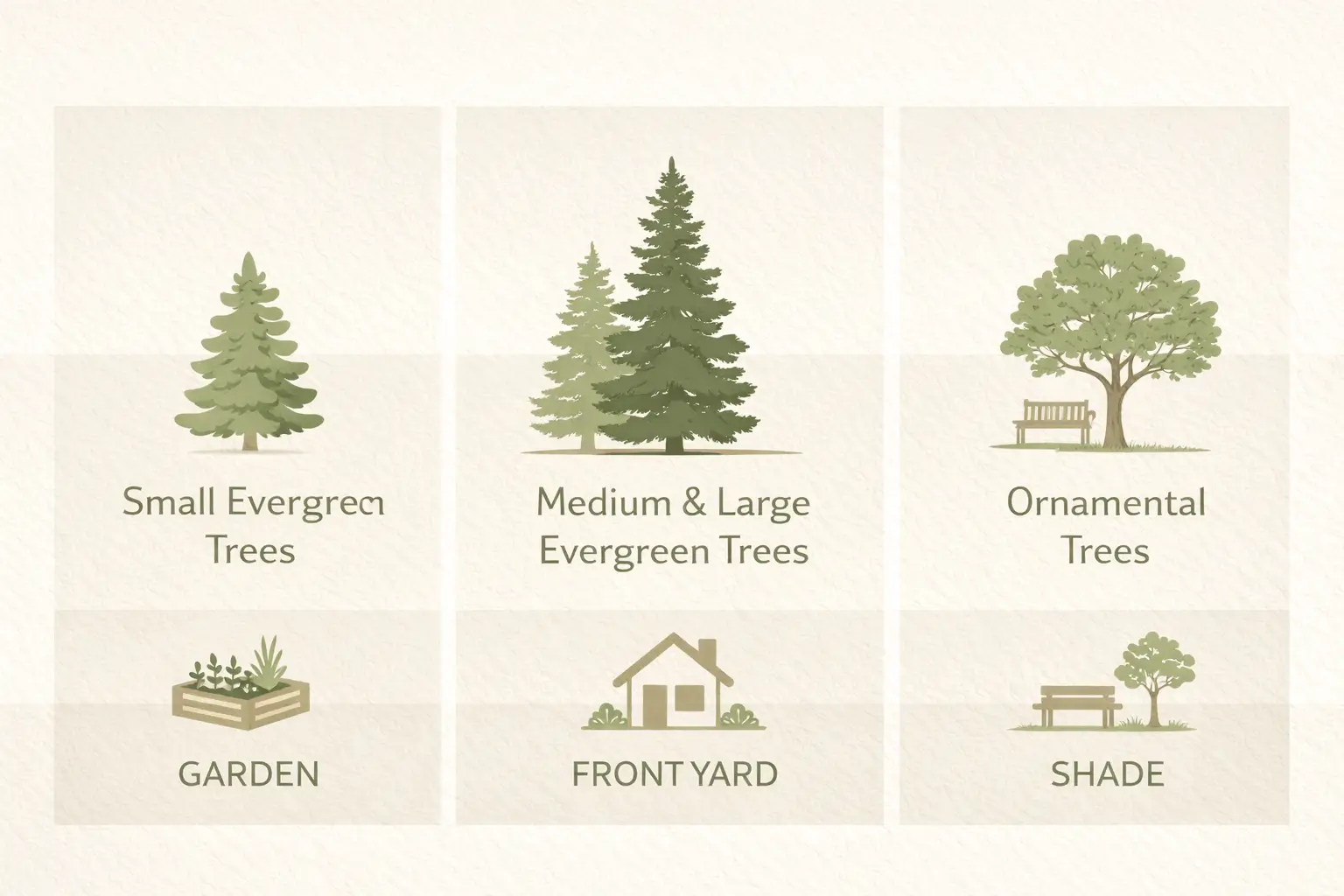
Evergreen trees can be categorized by size and intended use, ranging from small ornamental trees to large shade or screening species. This classification helps gardeners and landscapers select trees that meet specific functional and aesthetic needs.
Small Evergreen Trees
Small evergreen trees are suitable for limited spaces such as front yards, patios, and small gardens. They include dwarf varieties and compact forms that require minimal maintenance while providing year-round greenery.
Medium and Large Evergreen Trees
Medium and large evergreen trees are often used for shade, creating landscaping depth, and forming canopies. These trees include shade trees and large species that contribute to outdoor cooling and overall landscape structure.
Evergreen Ornamental and Feature Trees
Ornamental evergreen trees are selected for their decorative appeal and structural form. Feature trees enhance landscape aesthetics and often serve as focal points, combining beauty with practical benefits such as privacy and wind protection.
Best Evergreen Trees for Different Landscaping Needs
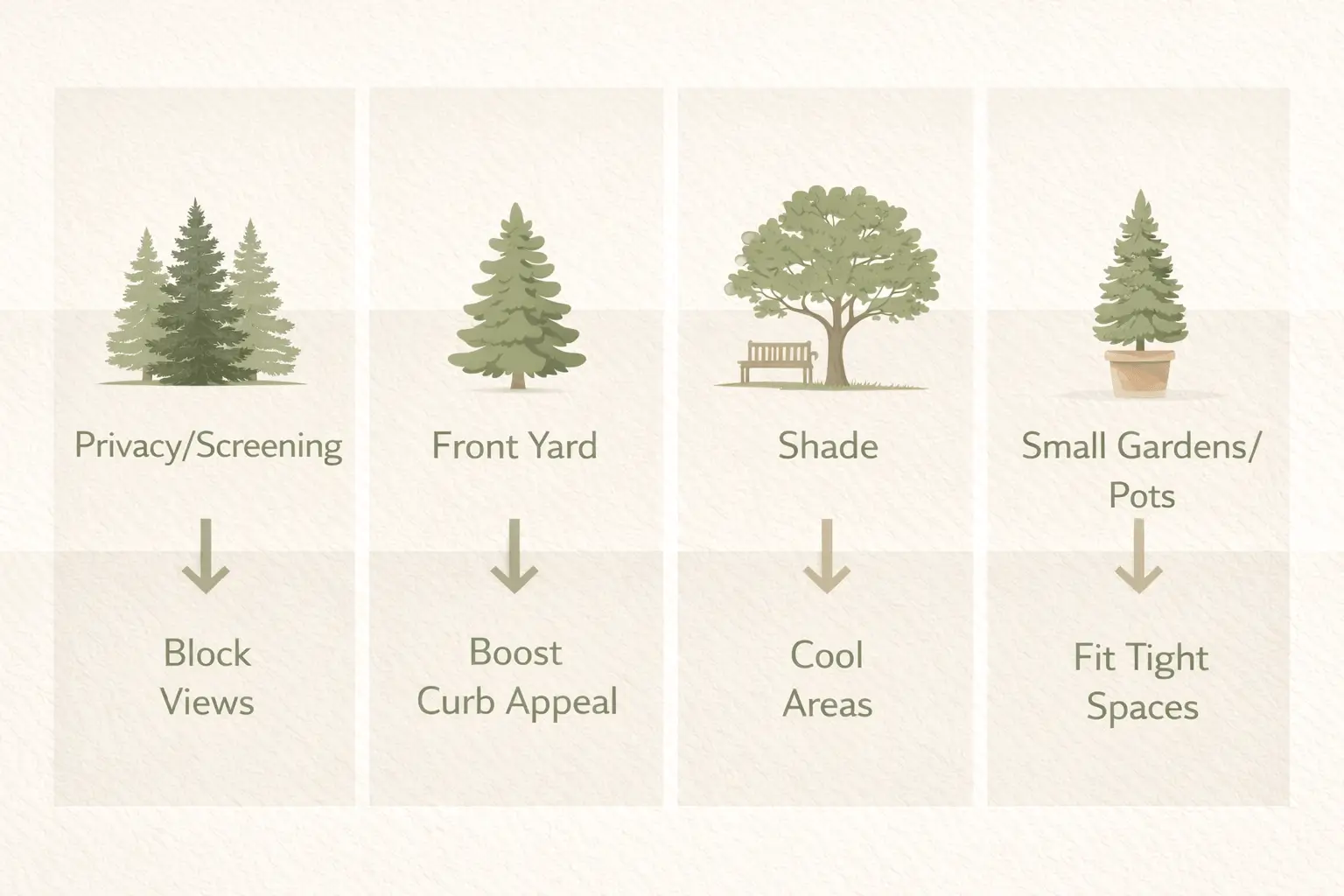
Selecting the right evergreen tree depends on the intended purpose, space, and landscape style.
Best Evergreen Trees for Privacy and Screening
Dense foliage trees are ideal for natural barriers and hedges. Proper spacing and growth habits ensure effective screening while maintaining healthy growth.
Best Evergreen Trees for Front Yards
Evergreen trees for front yards balance aesthetic appeal with manageable size. They provide visual interest without overwhelming small residential spaces, keeping maintenance moderate.
Best Evergreen Trees for Shade
Trees with wide canopies are optimal for creating shade. They reduce heat in outdoor spaces, increase comfort, and improve energy efficiency in surrounding buildings.
Best Evergreen Trees for Small Gardens and Pots
Compact root systems and dwarf varieties make small evergreen trees suitable for containers and limited soil spaces. These trees thrive in patios, balconies, and tight garden layouts. For compact spaces, small evergreen trees like dwarf bottlebrush or curated small evergreen picks are ideal for gardens and container planting.
Fast-Growing Evergreen Trees: Benefits and Considerations
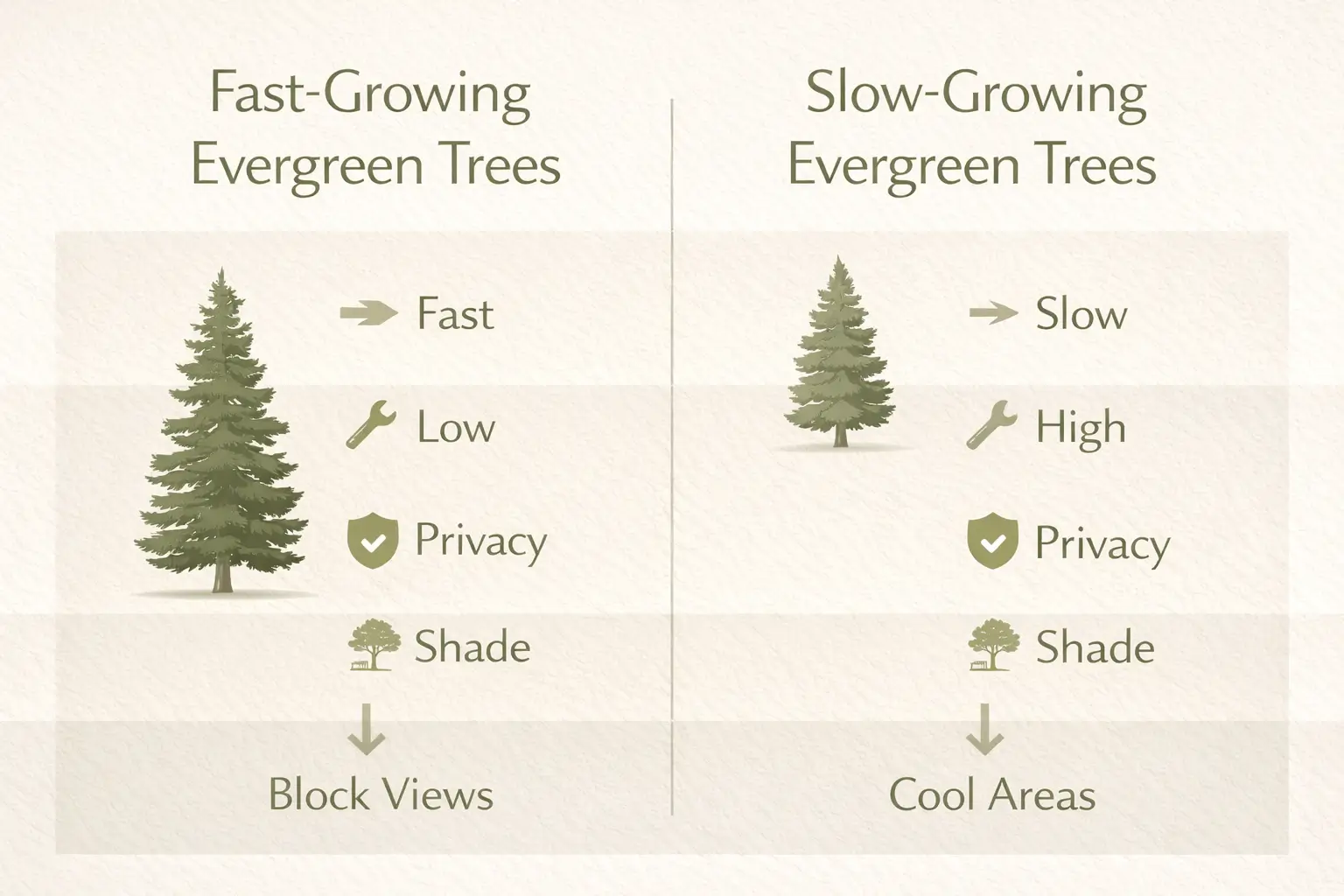
Fast-growing evergreen trees reach maturity quickly, offering rapid coverage and immediate benefits for landscaping projects.
Key benefits include:
- Faster privacy and screening
- Ideal for new landscapes needing quick visual impact
- Requires more pruning and maintenance
When Fast Growth Is an Advantage
- Providing immediate privacy
- Creating windbreaks or shelter belts
- Rapid landscape enhancement in new developments
Potential Drawbacks of Fast Growth
- Weaker wood structure prone to breakage
- Higher water and nutrient requirements
- Increased pruning and maintenance to maintain shape
Fast-growing evergreens, including ficus and certain olive trees, provide quick privacy and canopy coverage but may require more pruning.
Choosing Evergreen Trees Based on Climate and Conditions
Selecting evergreen trees suitable for local environmental conditions ensures long-term survival and minimal care.
Considerations include:
- Drought-tolerant evergreen trees for arid regions
- Frost-resistant species for cold climates
- Full sun vs shade tolerance depending on planting location
Evergreen Trees With Non-Invasive Roots
Trees with non-invasive roots prevent damage to nearby buildings, pavements, and infrastructure. They are ideal for urban and residential landscapes.
Benefits:
- Safe planting near houses and driveways
- Reduced risk of structural damage
- Suitable for urban and residential environments
Comparison of Evergreen Tree Types
| Type | Size | Growth Rate | Best Use | Maintenance |
| Small Evergreen Trees | Compact | Slow–Moderate | Small gardens | Low |
| Fast-Growing Evergreen Trees | Medium–Large | Fast | Privacy/screening | Medium–High |
| Ornamental Evergreen Trees | Small–Medium | Moderate | Decoration | Medium |
| Shade Evergreen Trees | Large | Moderate | Cooling/shade | Medium |
Best Time to Plant and Maintain Evergreen Trees
Optimal timing and practices:
- Best time to plant evergreen trees: cooler seasons to reduce transplant stress
- When to transplant evergreen trees: during dormancy or mild weather
- When to trim/prune evergreen trees: late winter or early spring before new growth
Care Guide for Evergreen Trees
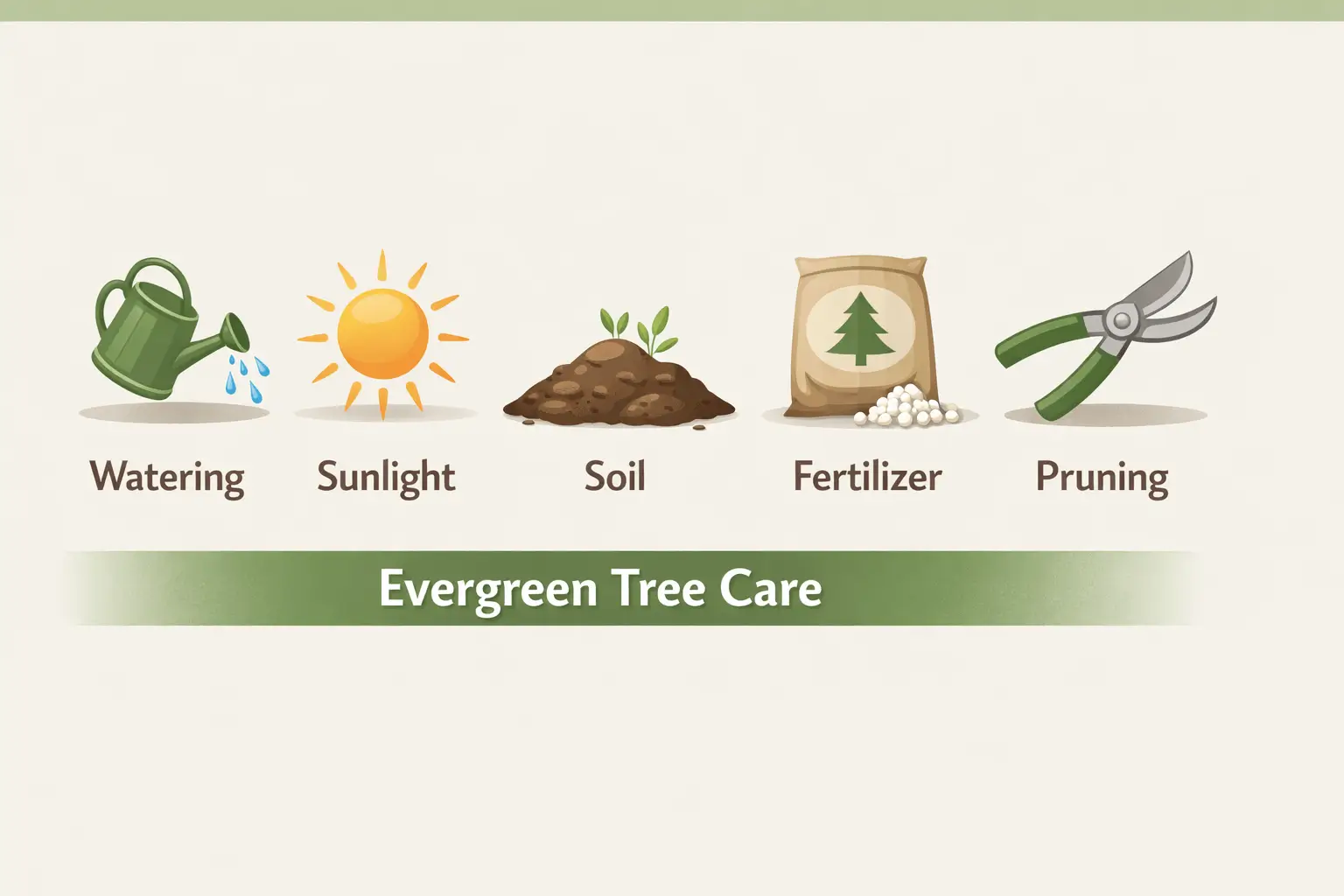
Essential care tips:
- Watering: consistent but ensure well-drained soil
- Light: varies from full sun to partial shade depending on species
- Soil: nutrient-rich, well-draining soil
- Fertilization: balanced fertilizers to support steady growth
- Pruning: maintain shape and remove dead or damaged branches
Proper care for evergreens follows principles similar to indoor plants like tulsi or panda plants, focusing on watering, soil, and pruning routines.
For more detailed indoor-friendly plant options and care guidance, see our comprehensive Guide to House Plants.
Common Problems and How to Fix Them
Yellowing Leaves
- Causes: overwatering, nutrient deficiency
- Fix: adjust watering schedule, use appropriate fertilization
Slow Growth
- Causes: poor soil, insufficient sunlight
- Fix: improve soil quality, ensure adequate light exposure
Root Damage Issues
- Causes: planting near structures or aggressive root species
- Fix: select trees with non-invasive roots, plant at safe distances
Common Mistakes When Choosing Evergreen Trees
- Choosing trees too large for the available space
- Ignoring root spread and potential damage
- Selecting species unsuitable for local climate
- Overlooking long-term maintenance requirements
How Evergreen Trees Fit Into Broader Landscaping
- Small evergreen varieties complement indoor plant arrangements
- Provide structure and depth in landscaping design
- Offer shade and energy efficiency benefits
- Combine effectively with shrubs, perennials, and other landscape plants
Conclusion
Evergreen trees are versatile, year-round landscape elements that provide consistent foliage, privacy, and structure. Choosing the right evergreen tree depends on space, purpose, and environmental conditions. Proper selection and care ensure healthy growth, aesthetic appeal, and minimal long-term issues, making them essential for sustainable landscaping.
FAQs
What are the best evergreen trees for year-round privacy?
Trees with dense foliage and fast growth are ideal for screening and privacy.
Which evergreen trees grow the fastest?
Fast-growing evergreen trees provide quick coverage but require more maintenance.
Can evergreen trees be planted near a house?
Yes, but choose trees with non-invasive roots to prevent structural damage.
What is the best time to plant evergreen trees?
Typically during cooler seasons when stress on the plant is minimal.
Are evergreen trees suitable for small gardens?
Yes, small and dwarf evergreen trees are ideal for compact spaces.