Introduction
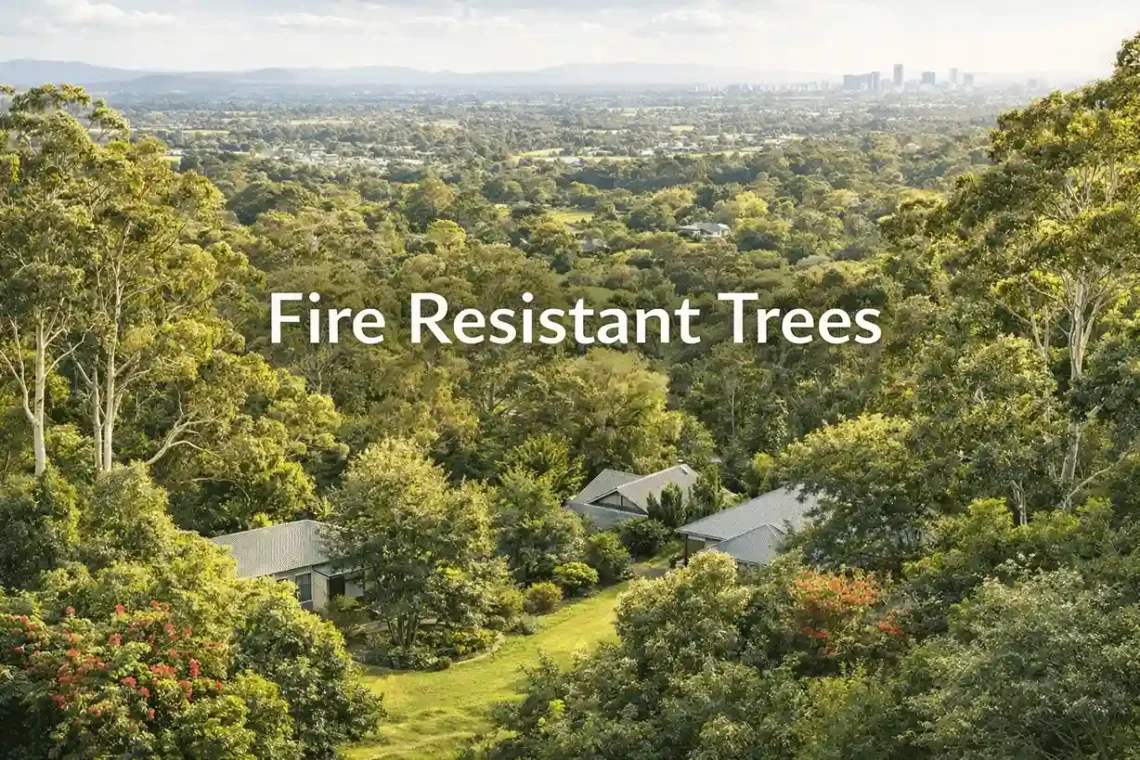
Fire resistant trees are species that naturally withstand ignition and slow the spread of fire, making them essential in high-risk bushfire zones. In Australian landscapes, these trees play a critical role in protecting homes, infrastructure, and ecosystems. By selecting species with fire-retardant properties, urban planners, landscapers, and homeowners can create safer environments while maintaining biodiversity and ecological balance in both rural and suburban areas. In regions prone to bushfires, fire resistant trees play a critical role in reducing ignition risk and protecting communities.
Quick Summary
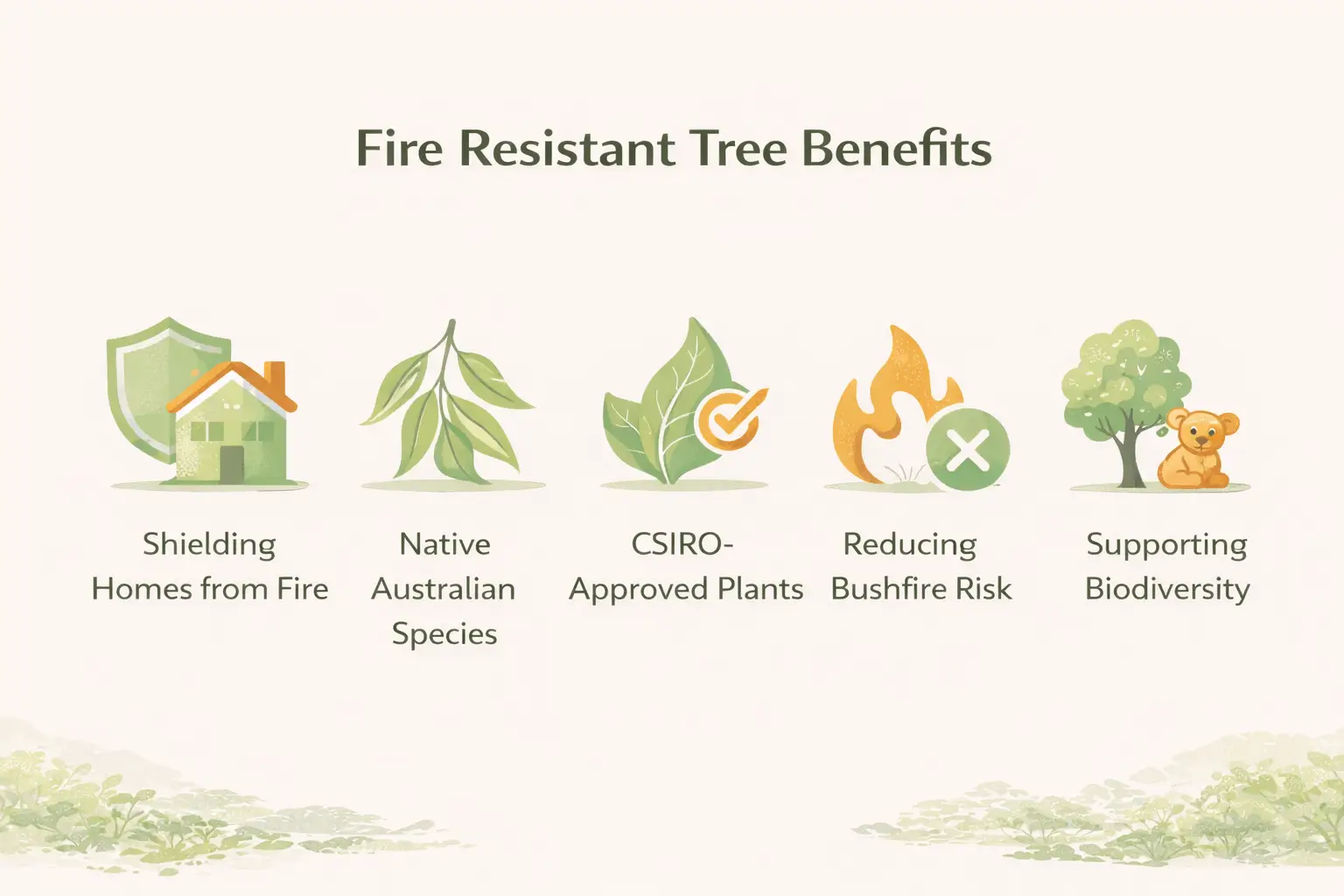
- Fire resistant trees are species that are less likely to ignite and spread fire.
- Many Australian native trees have natural fire-retardant properties.
- CSIRO identifies plants with fire-retardant characteristics suitable for landscaping.
- Choosing the right fire resistant tree can protect homes, reduce bushfire risk, and support biodiversity.
What Are Fire Resistant Trees?
Fire resistant trees are plants specifically adapted to survive in fire-prone areas. Their fire resistance is determined by traits such as high leaf and bark moisture, low resin content, and minimal flammable debris. These trees differ from fire-retardant and low-flammability plants, which are classified based on their ability to slow fire spread rather than resist ignition entirely.
Characteristics of Fire Resistant Trees
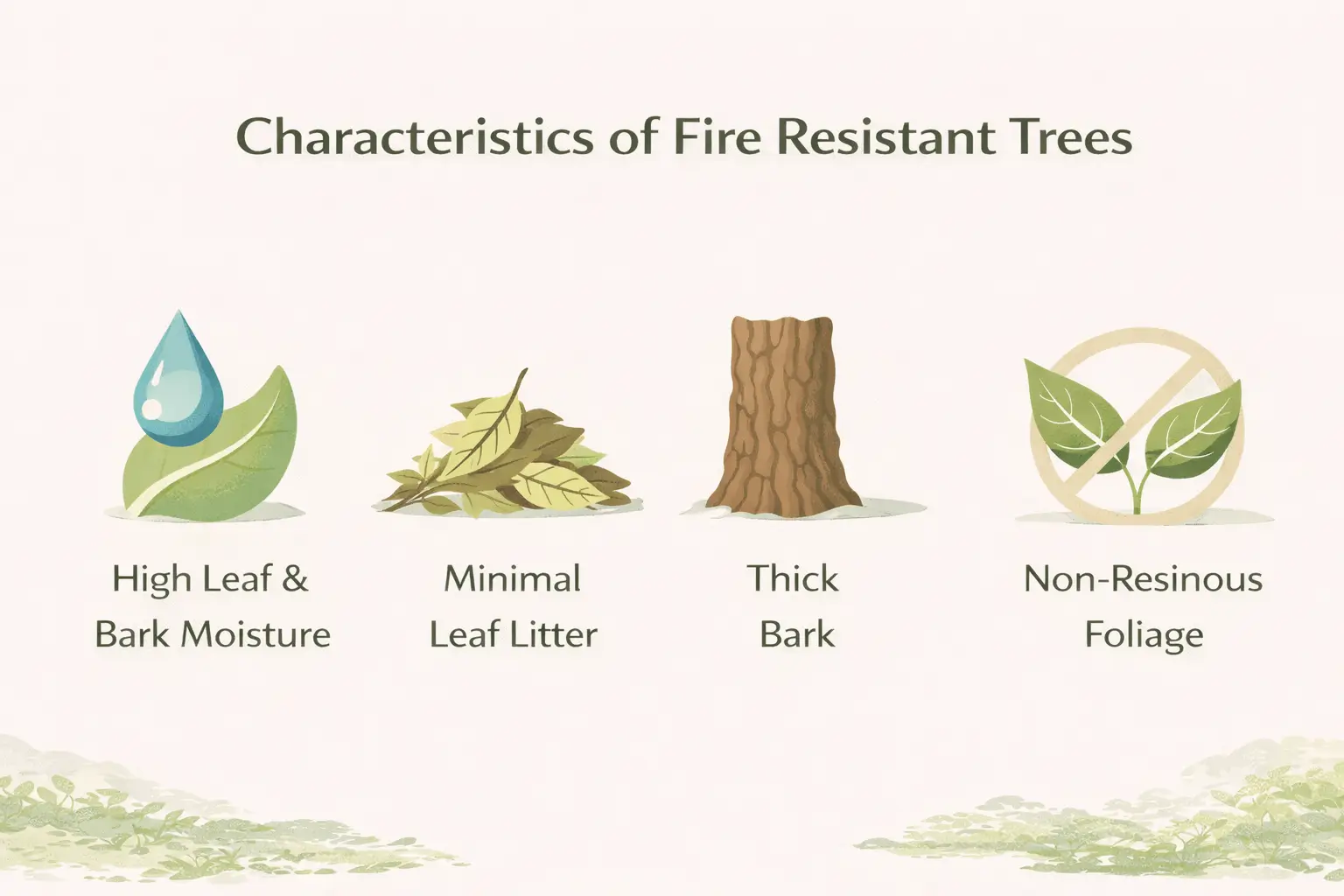
- High moisture content in leaves and bark, reducing ignition risk
- Minimal leaf litter accumulation, limiting fuel for fires
- Thick bark to protect the cambium layer from heat
- Non-resinous foliage, lowering flammability
Fire Resistant Trees in Australia
Australia hosts a wide variety of fire-resistant trees, particularly among native species. Research from the CSIRO identifies plants with fire-retardant characteristics suitable for landscaping in urban, peri-urban, and rural settings. These trees contribute to reducing bushfire hazards while maintaining native biodiversity. Native species such as the Australian Brush Cherry are excellent examples of fire resistant Australian native trees, providing both beauty and safety in bushfire-prone areas.
Regional Recommendations
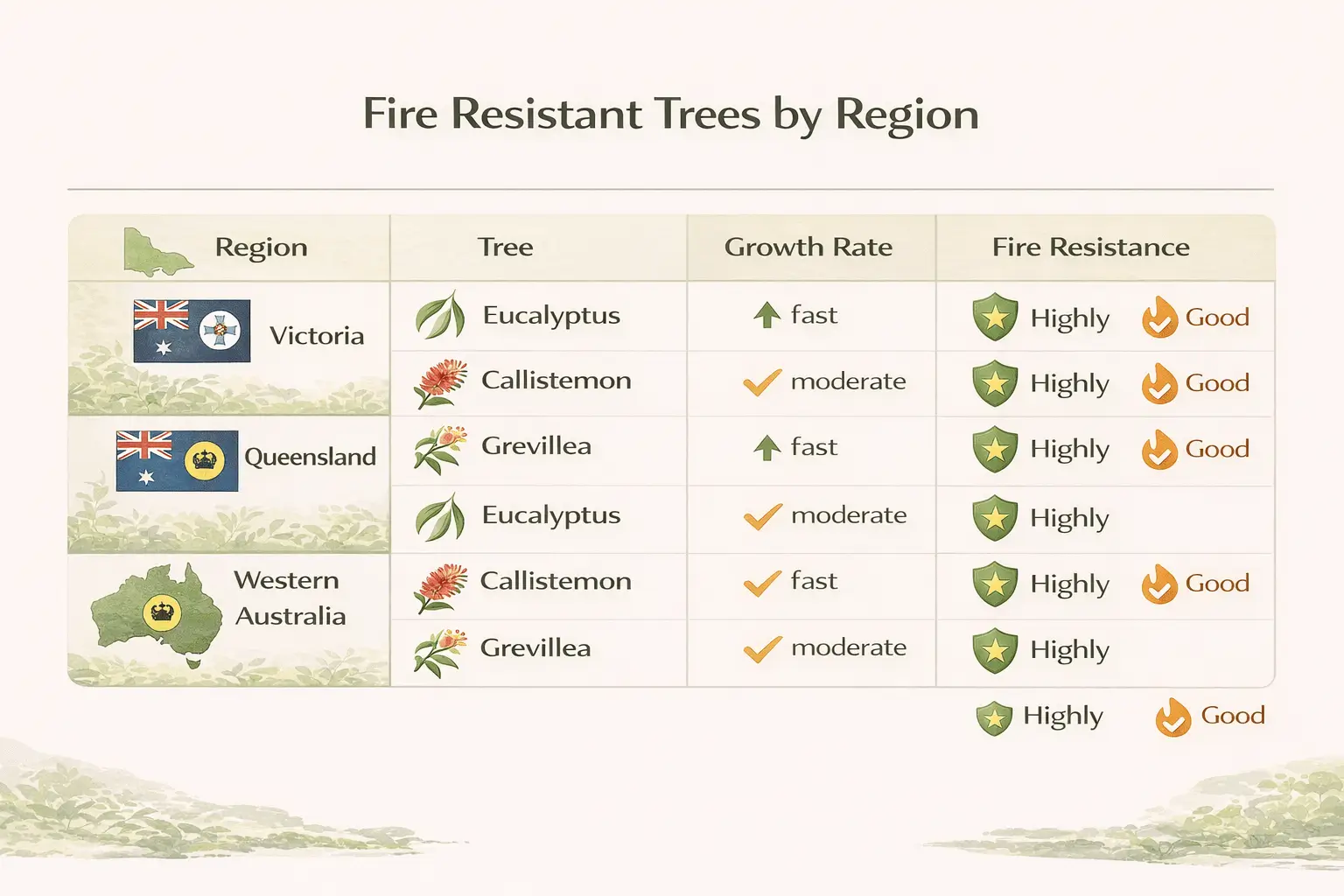
- Victoria: Fire retardant trees Victoria
- Queensland: Fire resistant trees QLD
- Western Australia: Fire retardant trees Western Australia
Fast Growing and Evergreen Options
Fast growing and evergreen species provide year-round protection and can quickly establish fire barriers in high-risk areas. Evergreen options such as the Brisbane Box Tree offer fast growth and high fire resistance, making them ideal for urban and suburban fire-safe landscapes.
| Tree Species | Region | Growth Rate | Fire Resistance Level | Notes |
| Eucalyptus spp. | QLD | Fast | High | Native, evergreen |
| Callistemon spp. | VIC | Moderate | Medium | Attractive flowering |
Choosing the Best Fire Resistant Trees
Selecting the right fire resistant tree requires considering size, maintenance, and fire retardant rating. Homeowners and landscapers should balance aesthetic value with fire safety by choosing small or large varieties that are low-maintenance yet effective in reducing bushfire risk.
Landscaping and Safety Considerations
- Plant spacing to reduce fire spread between trees
- Placement around homes and urban areas to create safe zones
- Combining trees with fire-resistant shrubs for layered protection
Hedges like Dodonaea Viscosa complement fire-resistant trees by providing low-flammability layers around homes, enhancing safety while maintaining attractive landscaping.
Problem-Solution: Common Fire Risk Mistakes
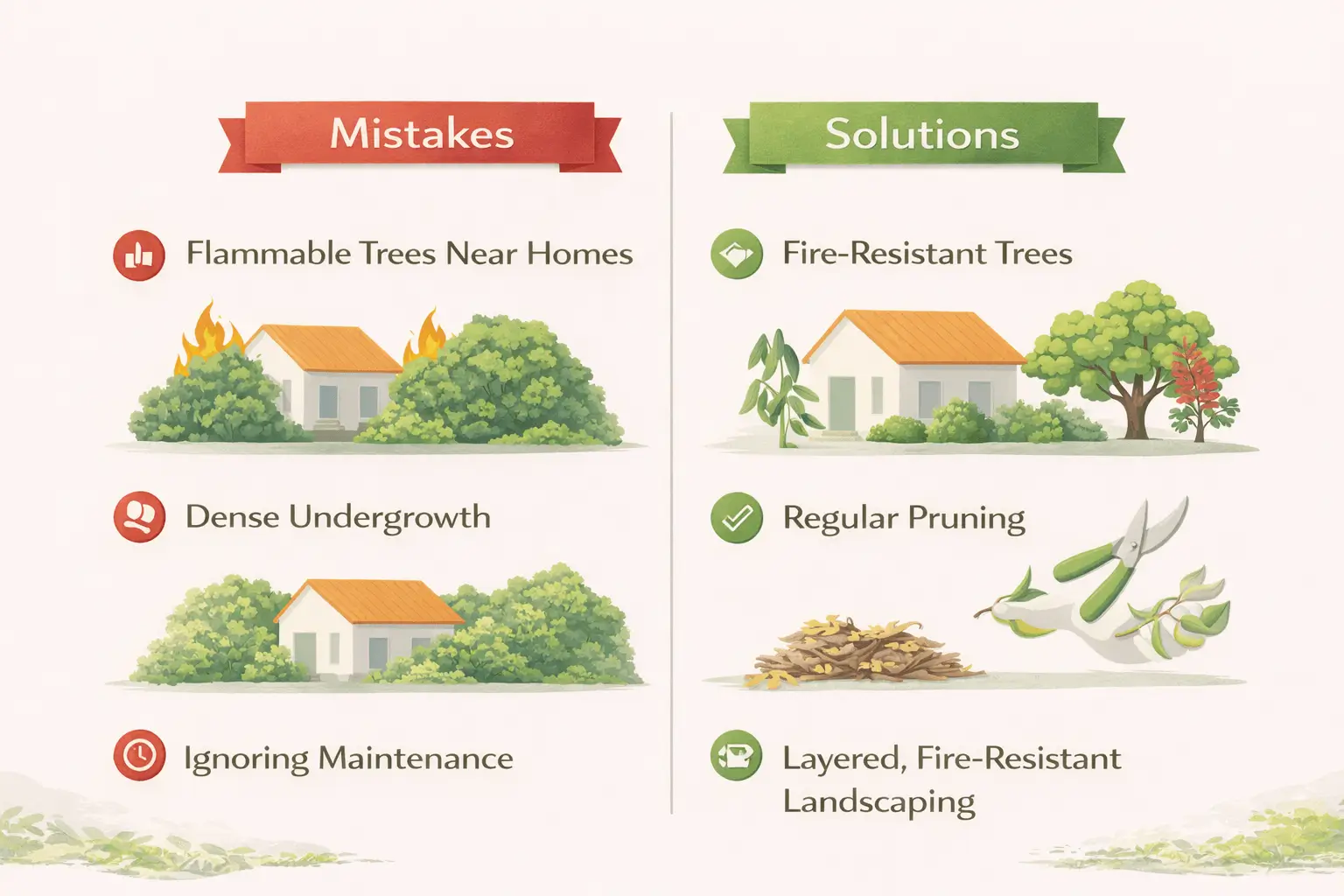
Improper planting or species selection can increase fire hazards. Understanding common mistakes and their solutions can help homeowners and landscapers reduce risk effectively.
Common Problems:
- Planting highly flammable species near homes
- Dense undergrowth accumulation
- Ignoring seasonal maintenance
Solutions:
- Use fire retardant trees and shrubs
- Prune regularly and remove leaf litter
- Opt for low-flammability landscaping designs
Differentiation and Advanced Insights
Fire resistant trees offer distinct advantages over standard landscaping trees. Lesser-known native species may provide enhanced fire protection, while CSIRO research informs best practices for planting and maintenance.
Comparison Table:
| Feature | Fire Resistant Trees | Standard Trees |
| Flammability | Low | High |
| Maintenance | Moderate | Variable |
| Fire Safety | Protects property | No protection |
Conclusion
Fire resistant trees are essential for reducing bushfire risk in Australian fire-prone zones. Selecting appropriate species based on size, maintenance, and regional suitability ensures property protection, ecological benefits, and safer urban and rural landscapes. Implementing fire-safe planting strategies enhances biodiversity and provides long-term environmental resilience.
FAQs About Fire Resistant Trees
What trees are fire resistant in Australia?
Top fire-resistant species include Eucalyptus, Callistemon, Grevillea, and Melaleuca. Regional suitability varies across Victoria, Queensland, and Western Australia.
How do fire resistant trees help reduce bushfire risk?
They reduce fire spread through high leaf moisture, low resin content, and proper spacing, creating natural firebreaks.
Can small gardens include fire resistant trees?
Yes, compact species and low-maintenance varieties are available, allowing small gardens to incorporate fire-safe landscaping.
Are native trees more fire resistant than exotic species?
Many Australian native trees are naturally fire-resistant due to adaptation to local climates, while imported species may be more flammable.
Where can I find CSIRO fire retardant plant lists?
Official CSIRO resources and databases provide comprehensive fire-retardant plant lists suitable for landscaping and urban planning.