Introduction
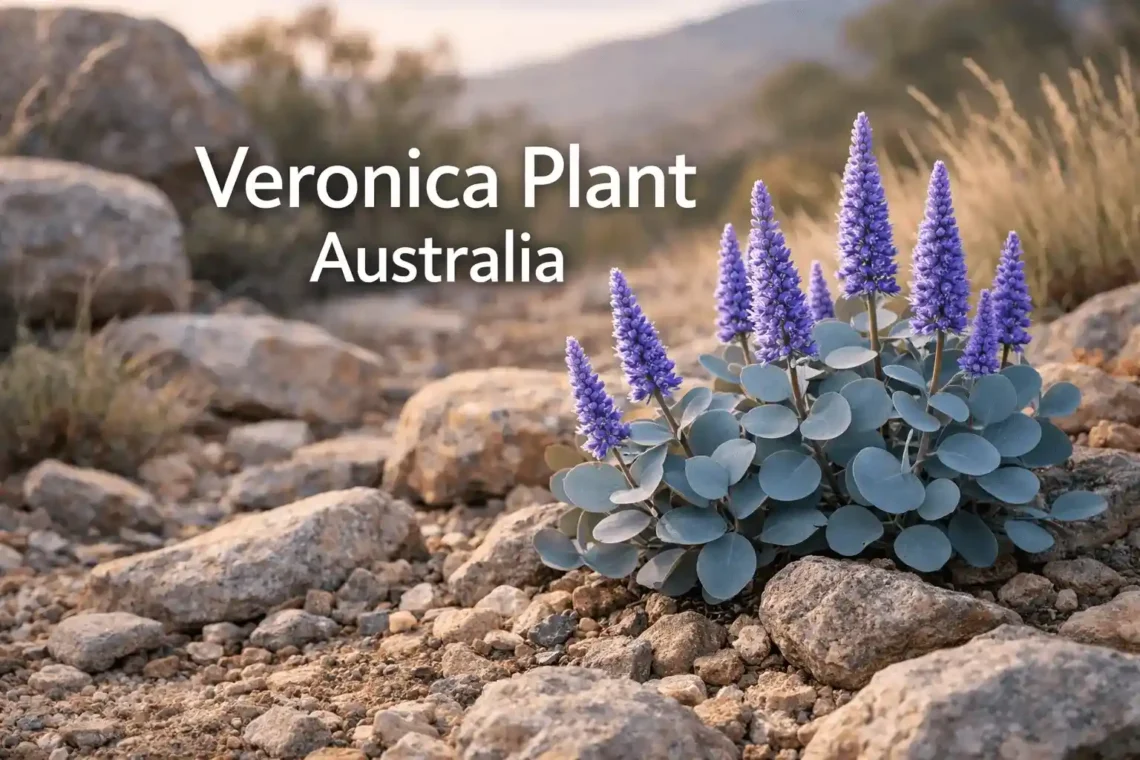
Veronica plant Australia refers to native and adapted species in the Veronica genus, commonly known as speedwell, valued for their blue-green foliage and violet-blue flowers in Australian gardens. These low-growing perennials, especially Veronica perfoliata, thrive in the highland regions of southeastern Australia. Gardeners favor them for their drought tolerance, resilience in rocky soils, and suitability for borders and rockeries. Their unique foliage and seasonal blooms make them a practical yet ornamental choice for native landscaping.
Quick Summary
- Veronica perfoliata, or digger’s speedwell, is a native Australian perennial with eucalyptus-like blue-grey leaves and sprays of violet-blue flowers.
- Grows 0.3–1.2 m tall in well-drained soils, preferring part shade to full sun in cooler, elevated areas.
- Drought and frost tolerant once established, ideal for rock gardens and borders.
- Named “digger’s speedwell” from folklore linking it to gold deposits.
What Is Veronica Plant in Australia?
Veronica plant in Australia refers to a genus of flowering plants, commonly called speedwell, with approximately 20 native species. Among these, Veronica perfoliata is the most recognized in southeastern regions such as New South Wales, the Australian Capital Territory, and Victoria tablelands. The genus Veronica belongs to the plantain family (Plantaginaceae), a group of flowering plants widely documented in global botanical taxonomy systems such as Wikipedia.
This species was previously classified under the genus Derwentia, now merged into Veronica, reflecting modern botanical taxonomy. A key identifying feature is its perfoliate leaf structure, where stems appear to pass directly through the leaves.
In natural habitats, these plants grow at elevations between 530–1780 meters, thriving in cool, well-drained, rocky environments.
Leaf characteristics include:
- Ovate shape
- 3–5 cm in size
- Leathery texture
- Distinct blue-green coloration
The terms “veronica plant,” “speedwell,” and “veronica (plant)” are often used interchangeably, referring broadly to this genus.
Key Varieties in Australia
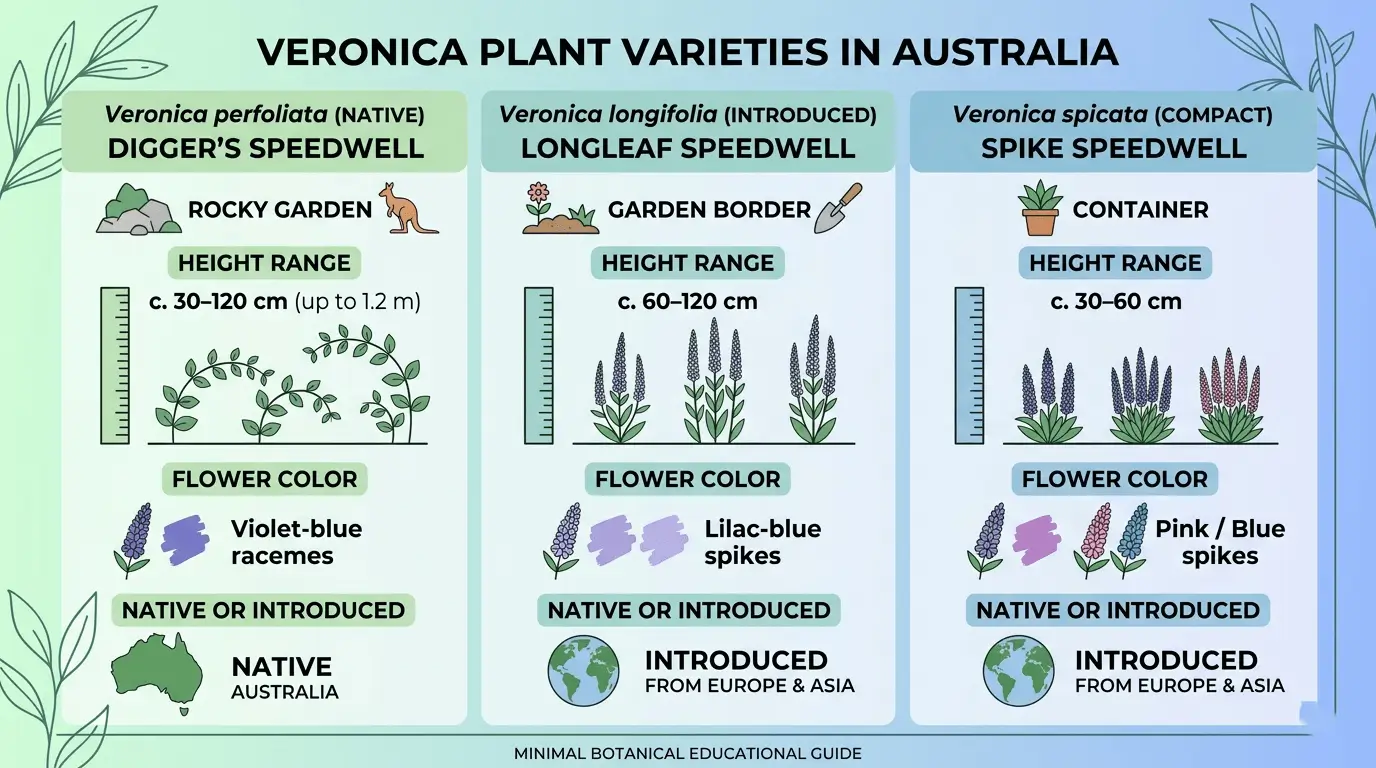
Veronica plants in Australia include both native species and introduced ornamental varieties. Native types are adapted to local climates, while introduced species offer variation in height and flower color.
Native Species
- Veronica perfoliata (Digger’s Speedwell):
A low clumping shrub producing violet-blue flowers from late spring to summer. - Veronica derwentiana:
A related species that grows taller, often found in shaded or forested environments.
Veronica plants are often used in wider Australian landscaping designs alongside other low-maintenance ornamental species such as 7+ Powerful Coastal Rosemary for Stunning Gardens, 7+ Essential Australian Brush Cherry, and 7+ Stunning Dwarf Myrtle Shrub Benefits Every Garden Needs for rockeries, borders, and drought-tolerant garden beds.
Introduced Varieties
- Veronica longifolia:
Upright plant with tall blue flower spikes, originally from the Northern Hemisphere. - Veronica spicata (e.g., Skyler Pink):
Compact variety with pink or blue spikes, commonly used for edging and containers.
Variety Comparison Table
| Variety | Height/Spread | Flowers | Native to Australia? | Best Use |
| V. perfoliata (Digger’s Speedwell) | 0.3–1.2 m / 1 m+ | Violet-blue spikes | Yes | Rockeries, borders |
| V. longifolia | 0.6–1.2 m / 0.3–0.6 m | Blue spikes | No | Borders, cutting |
| V. spicata | 0.3–0.6 m / 0.3 m | Pink/blue spikes | No | Edging, containers |
Plant Size
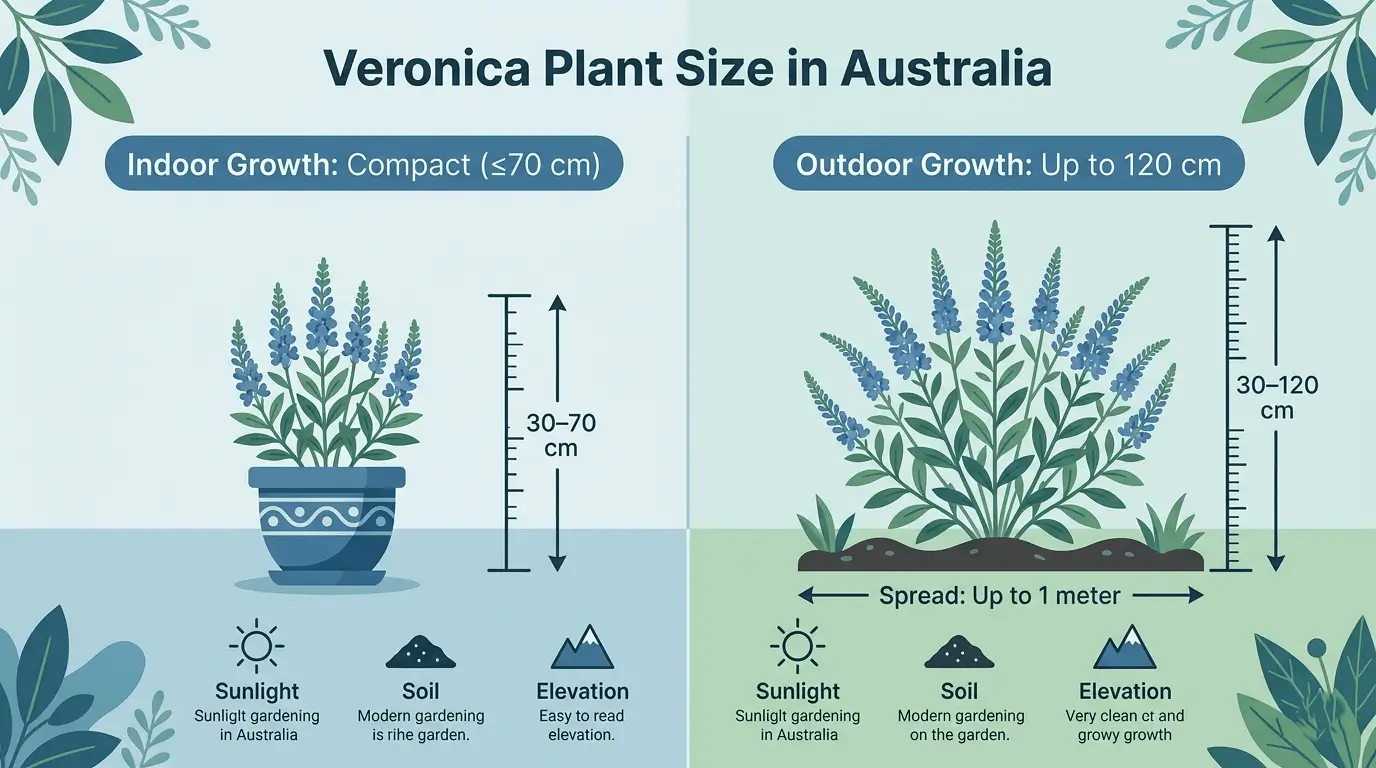
Veronica plants in Australia typically reach a mature height of 30–120 cm, with a spread of 60–100 cm or more for wider-growing forms.
Indoor-grown plants usually remain smaller, often under 70 cm, due to limited light and root space, while outdoor plants in rocky slopes or open landscapes achieve full size.
Factors affecting plant size include:
- Soil depth and drainage
- Elevation and temperature
- Sunlight exposure
Indoor vs Outdoor differences:
- Indoor: Compact growth, slower spread
- Outdoor: Fuller growth, wider spread, stronger flowering
Growth Rate
Veronica plants exhibit a moderate growth rate, with faster development in moist, cool environments typical of Australian highlands.
Growth is most active during spring and summer, when temperatures and moisture levels support foliage and flower production. During drought or extreme heat, growth slows significantly.
Key influences on growth:
- Well-drained rocky soil improves root health
- Consistent moisture boosts early establishment
- Cooler climates enhance steady growth
Compared to northern hemisphere varieties, native Australian veronicas often grow slightly slower but are more resilient to dry conditions.
Care Guide
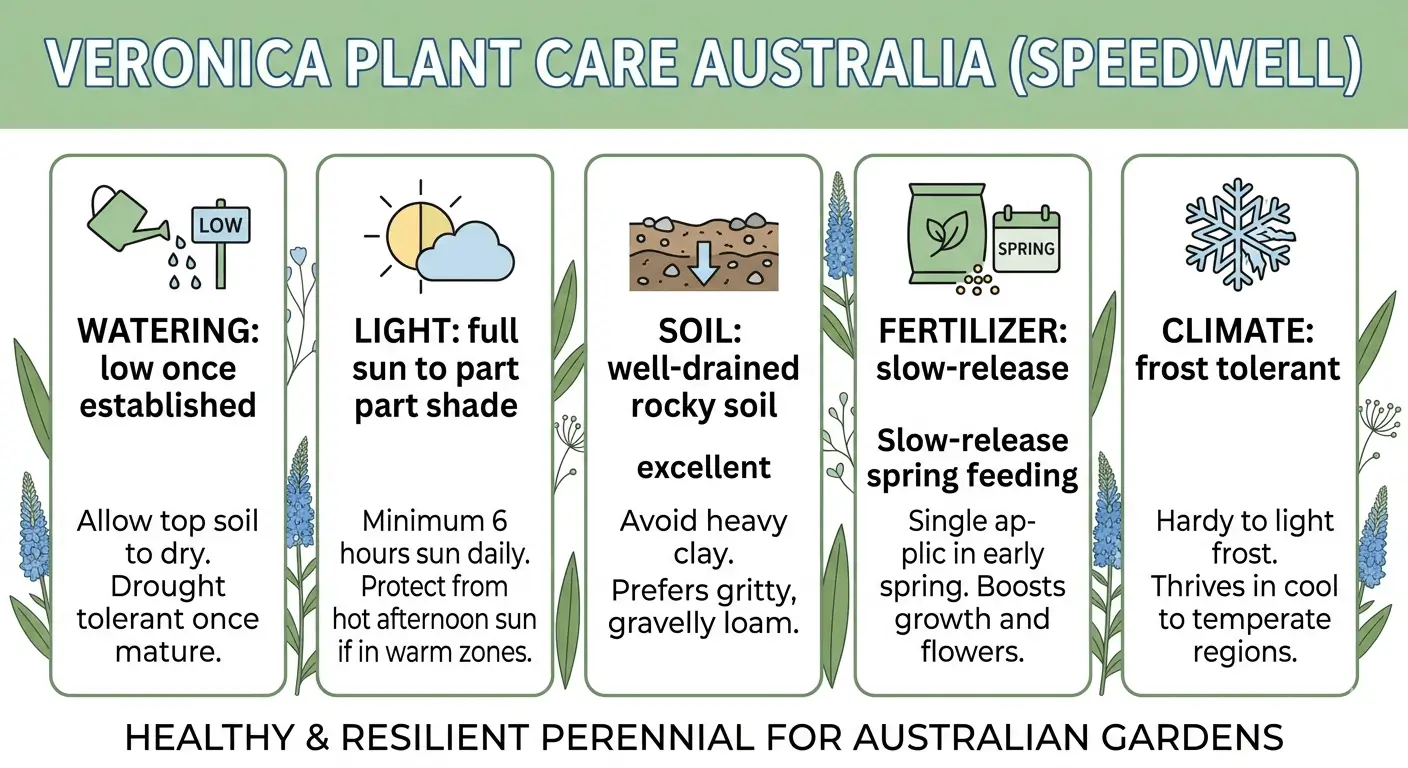
Proper care ensures healthy growth and long-lasting blooms in Veronica plants.
Core Care Requirements
Watering
- Water regularly during the first 12 weeks
- Once established, water sparingly
- Avoid waterlogged soil
Light
- Full sun to partial shade
- Best performance in cooler, elevated areas
Soil
- Well-drained, rocky or sandy soil
- Rich in organic matter (humus)
- Neutral to slightly alkaline pH
Fertilizer
- Apply slow-release fertilizer in spring
- Avoid excessive feeding
Pruning
- Cut back leggy growth to ground level
- Encourages fresh, compact growth
Climate
- Frost tolerant
- Suitable for USDA zones 9–11 equivalents in Australian regions
Similar drought-tolerant care principles apply to plants like 7+ Powerful Rosemary Prostrate Transforms Any Garden and 7+ Stunning Dymondia Ground Cover You’ll Love, which also prefer well-drained soil and minimal watering once established.
Care Conditions Table
| Factor | Requirement |
| Water | Low once established |
| Light | Full sun to part shade |
| Soil | Well-drained, humus-rich |
| Fertilizer | Spring application |
| Climate | Cool, frost-tolerant |
Common Problems and Solutions
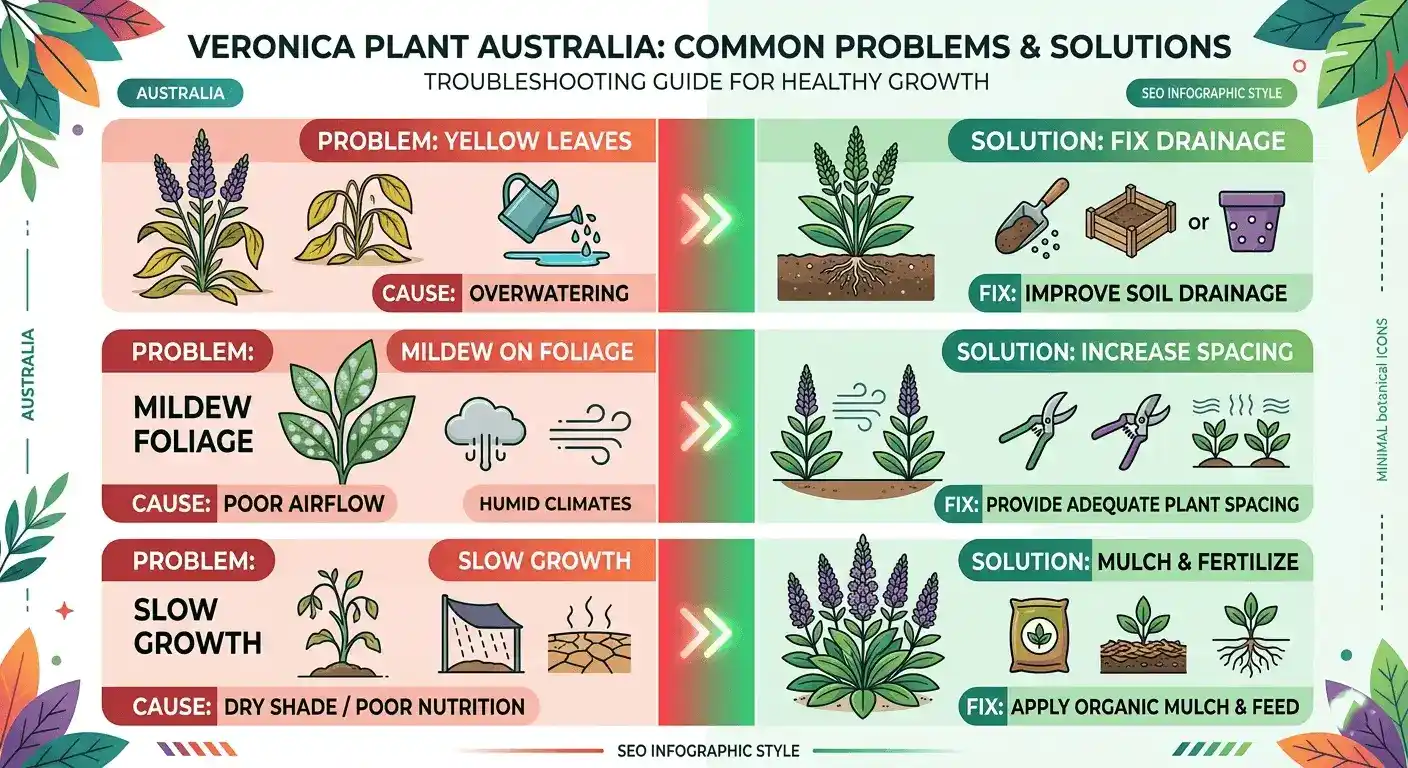
Common issues with Veronica plants in Australia are usually related to environmental conditions or care mistakes.
Problems and Fixes
Yellow Leaves
Cause: Overwatering or poor drainage
Solution: Reduce watering and improve soil drainage
Prevention: Use well-drained planting sites
Mildew
Cause: Poor air circulation
Solution: Improve spacing and apply mild treatments like diluted yogurt spray
Prevention: Choose open planting areas
Slow Growth
Cause: Dry shade or nutrient deficiency
Solution: Add mulch and apply fertilizer
Prevention: Avoid overly wet winters and compact soils
Beginner gardeners often overwater, which is the most common mistake affecting plant health.
Comparisons with Similar Plants
Veronica plants are often compared with similar species used in Australian gardens.
Comparison Table
| Feature | V. perfoliata | V. plebeia (Creeping Speedwell) | V. spicata |
| Growth Habit | Upright shrub | Groundcover | Compact upright |
| Origin | Native Australia | Native Australia | Introduced |
| Height | Up to 1.2 m | Low spreading | 0.3–0.6 m |
| Use | Rockeries, borders | Groundcover | Edging, containers |
Compared to eucalypt juveniles, V. perfoliata shares similar blue-grey foliage but differs in flower structure and growth habit. For more landscaping alternatives and design inspiration, gardeners often compare Veronica species with groundcovers and ornamental species featured in 8+ Stunning Mediterranean Plants for Timeless Gardens.
Conclusion
Veronica plants Australia, particularly Veronica perfoliata (digger’s speedwell), offer a balance of ornamental beauty and environmental resilience. Their blue-grey foliage and violet flowers make them ideal for rockeries, borders, and native gardens. With minimal care requirements and strong tolerance to drought and frost, they perform best in well-drained soils and cooler climates. These plants remain a reliable choice for gardeners seeking low-maintenance, visually striking species.
FAQs
Is there a plant called Veronica in Australia?
Yes, there are about 20 native Veronica species in Australia, including Veronica perfoliata, primarily found in southeastern highland regions.
How big do Veronica plants get in Australia?
Veronica plants typically grow between 30 and 120 cm tall and can spread over 1 meter, depending on environmental conditions and variety.
How to care for Veronica perfoliata?
Use well-drained soil, provide part shade to full sun, water regularly during establishment, and apply fertilizer in spring for optimal growth.
What is digger’s speedwell?
Digger’s speedwell refers to Veronica perfoliata, a native Australian plant known for its blue-grey leaves, violet-blue flowers, and folklore links to gold deposits.
Can Veronica longifolia grow in Australia?
Yes, Veronica longifolia is an introduced species that adapts well to Australian gardens, producing tall flower spikes and adding vertical interest.