Introduction
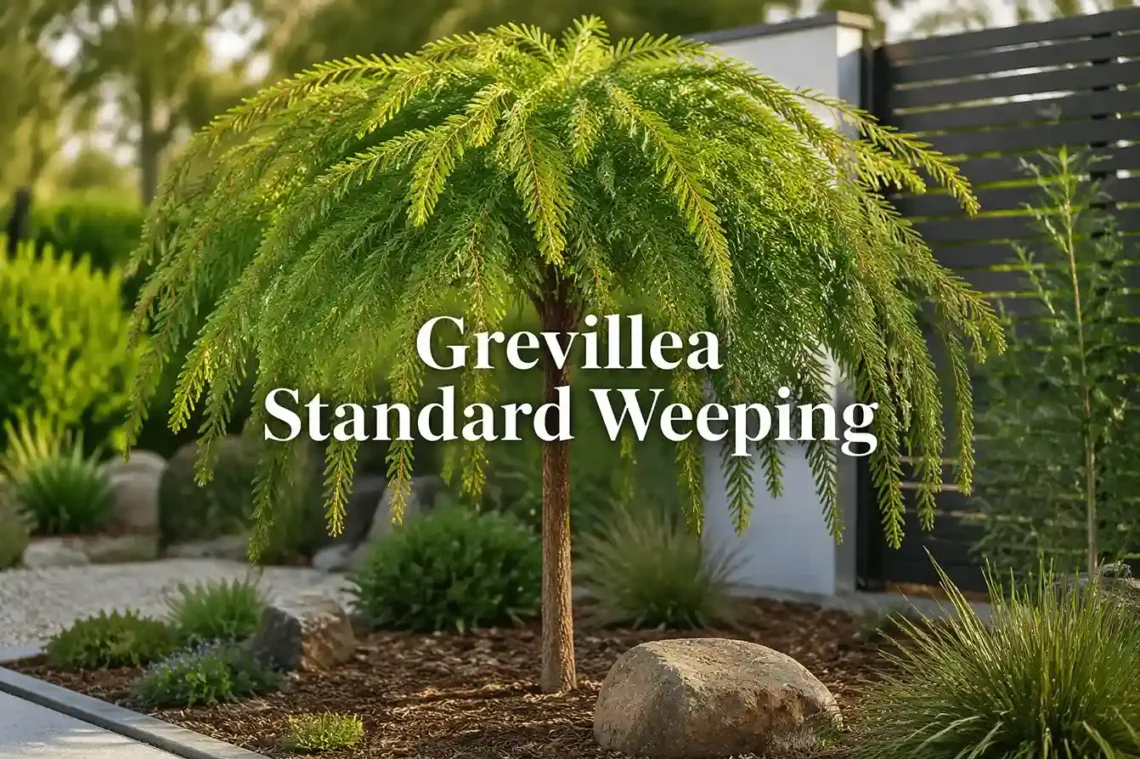
A grevillea standard weeping is a grafted ornamental plant trained into a small tree form with cascading foliage. Unlike typical shrub-type grevilleas, this form features a straight trunk topped with a trailing canopy, creating a distinctive umbrella-like appearance. It is commonly produced by grafting a weeping grevillea cultivar onto an upright rootstock. This structured form makes it highly popular in landscaping, especially as a focal plant in small gardens or decorative spaces. Its combination of architectural shape and low-maintenance requirements has made it a preferred choice among native plant enthusiasts. Its structured form makes it especially useful as a feature plant, similar to options discussed in Feature Trees Brisbane: 7+ Smart Picks & Expert Tips, where small ornamental trees enhance garden design.
Quick Summary
- A grevillea standard weeping is a grafted tree form of a trailing grevillea variety.
- It provides cascading foliage ideal for decorative gardens and feature planting.
- Requires well-drained soil, full sun, and low-phosphorus conditions.
- Popular varieties include forms like Royal Mantle and Aussie Crawl.
What Is a Grevillea Standard Weeping?
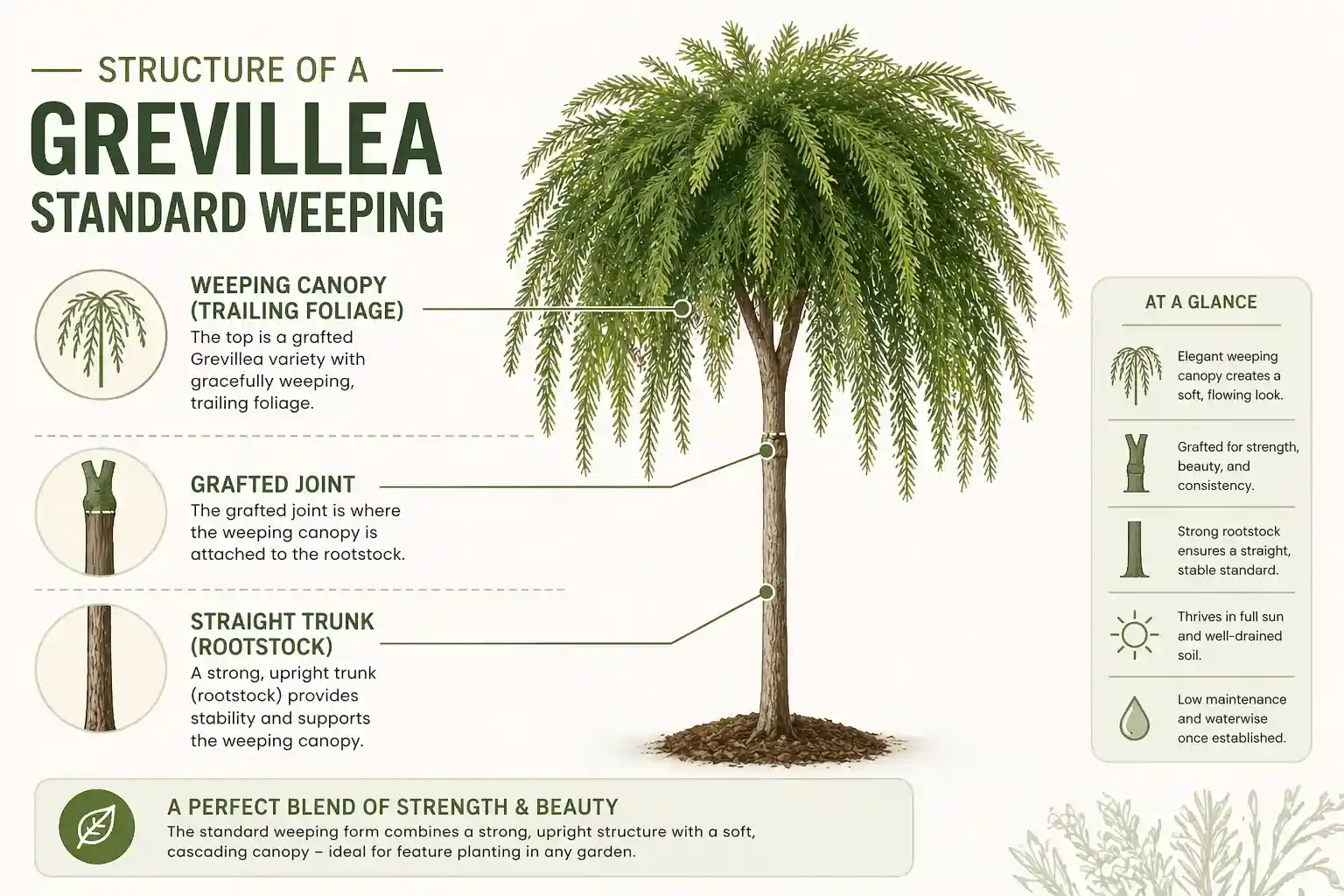
A grevillea standard weeping is a grafted plant where a trailing grevillea variety is grown on top of a straight trunk to create a tree-like structure with cascading foliage. This differs from natural shrub grevilleas, which spread horizontally rather than forming a raised canopy. It belongs to the Grevillea genus, a group of Australian native plants known for their diverse forms and flowers, as detailed in this Wikipedia.
Understanding Standard and Grafted Grevillea
A grevillea standard refers to any grevillea trained into a tree form, while a standard weeping grevillea specifically uses a trailing variety for the top growth. The process involves grafting a weeping cultivar onto a strong upright rootstock.
Key Characteristics
- A straight trunk (rootstock) supports a weeping canopy
- Top growth comes from trailing varieties
- Used as a feature or focal plant
Multiple grevillea standards are used in landscaping to introduce height and structure without large tree growth.
Weeping Grevillea Varieties Used for Standard Forms
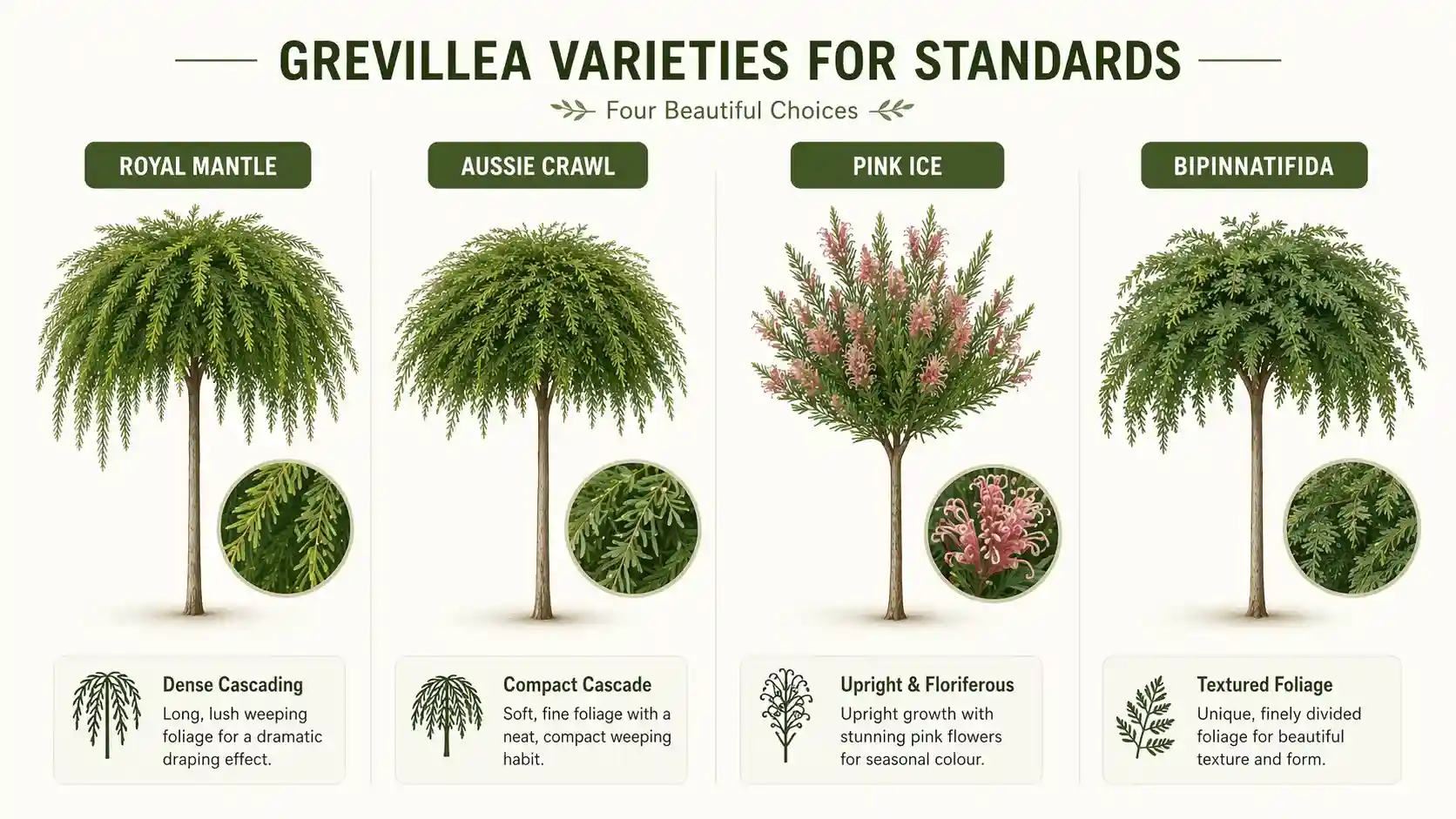
Several grevillea varieties are suitable for creating a weeping standard form, each offering different growth habits and visual effects.
Common Varieties
- Grevillea ‘Royal Mantle’
Fast-growing with dense, groundcover-style foliage. Often used in grevillea weeping standard Royal Mantle forms for dramatic cascading effects. - Grevillea ‘Aussie Crawl’
A compact and softer cascading variety. Grevillea Aussie Crawl is ideal for smaller spaces and controlled canopy spread. - Grevillea ‘Pink Ice’
More upright compared to others, with attractive pink flowers. Suitable for decorative and semi-structured forms. - Grevillea bipinnatifida standard
Known for deeply divided foliage and vibrant flowers, offering a more textured canopy.
Key Differences
- Growth habit: Dense vs compact vs semi-upright
- Flower type: Varies in color and size
- Spread: Some varieties create wider canopies than others
Size, Height, and Spacing of Grevillea Standard Weeping
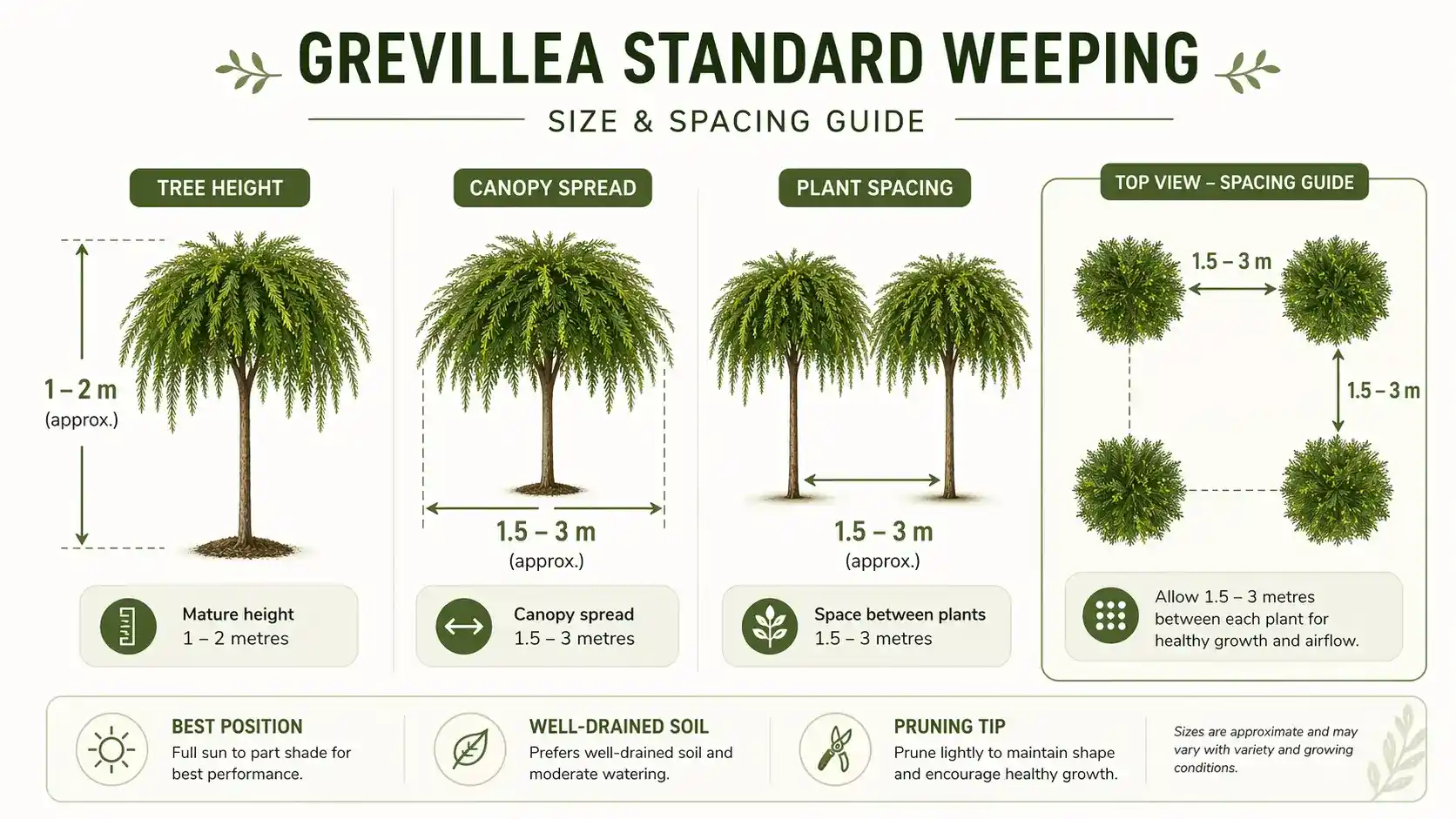
A grevillea standard weeping size depends on both trunk height and canopy spread, which are controlled during propagation and maintenance.
Understanding Size and Height
The grevillea standard weeping height typically refers to the trunk height, while the canopy determines the overall width. This distinction is important when planning spacing.
Typical Size and Spacing Guide
| Feature | Typical Range |
| Height (standard trunk) | 1–2 m |
| Canopy spread | 1.5–3 m |
| Spacing between plants | 1.5–3 m |
Proper grevillea standard weeping spacing prevents overcrowding and ensures airflow around the canopy.
Growing Conditions for Standard Weeping Grevillea
Standard weeping grevilleas require specific environmental conditions to thrive, particularly those suited to Australian native plants.
Key Growing Requirements
- Full sun for optimal flowering and growth
- Free-draining soil is essential to prevent root issues
- Avoid heavy clay and waterlogged conditions
- Drought tolerant once established
These plants perform best in climates with warm temperatures and good air circulation, making them suitable for a wide range of native landscaping designs.
Grevillea Standard Weeping Care Guide
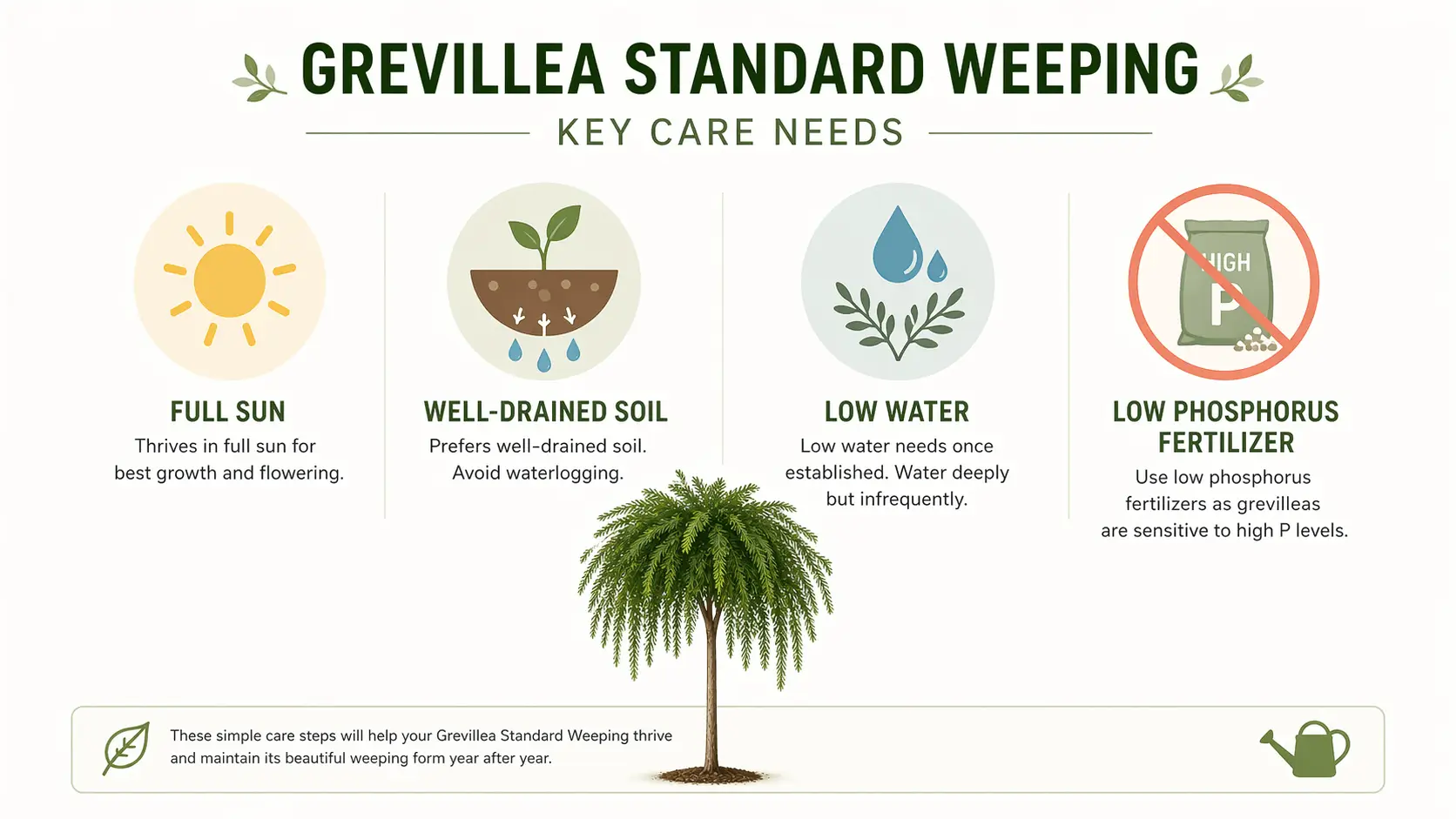
Proper grevillea standard weeping care ensures healthy growth, vibrant foliage, and long-term structure.
Key Care Requirements
Watering
- Moderate watering when young
- Low watering once established
- If wondering how often do you water grevillea: water deeply but infrequently
Soil
- Use low-phosphorus native soil mix
- Ensure excellent drainage
Fertilizer
- Apply native plant fertilizer only
- Avoid high-phosphorus products
Pruning
- Light shaping to maintain canopy structure
- Remove dead or crossing branches
A common mistake is overwatering young plants, which can lead to root rot.
Growth Rate and Development Stages
The growth rate of a grevillea standard weeping varies depending on the variety and environment.
Growth Characteristics
- Faster growth in warm climates
- Initial years focus on canopy spread
- Grafted plants stabilize quicker than cuttings
Typically, the first 1–2 years are focused on establishing the canopy, while later growth enhances density and shape.
How to Make a Standard Grevillea (Grafting Basics)
A grafted grevillea standard weeping is created by combining two plant parts: a rootstock and a weeping scion.
Key Concepts
- Selection of a strong upright rootstock
- Grafting a weeping variety onto the stem
- Training and staking to maintain vertical structure
This process ensures a stable trunk while allowing the top growth to cascade naturally.
Common Problems and Troubleshooting
Why Is My Grevillea Turning Yellow?
Yellowing leaves are usually caused by poor drainage, overwatering, or phosphorus toxicity in the soil.
Common Issues & Fixes
- Yellow leaves
Cause: poor drainage or phosphorus toxicity
Fix: improve soil and use native fertilizer - Slow growth
Cause: insufficient sunlight
Fix: relocate or increase exposure - Root rot
Cause: overwatering
Fix: improve drainage and reduce watering
Comparison: Standard Weeping Grevillea vs Shrub Grevillea
Comparison Table
| Feature | Standard Weeping Grevillea | Shrub Grevillea |
| Shape | Tree form with cascading canopy | Bushy or spreading |
| Use | Feature plant | Groundcover or hedge |
| Maintenance | Moderate | Low |
| Visual impact | High | Moderate |
Shrub grevilleas are often used for hedging, as explained in the Ultimate Grevillea Olivacea Hedge Guide: 7+ Easy Care Tips, making them suitable for screening rather than focal planting.
Landscaping Uses and Design Ideas
Grevillea standards are widely used in landscaping for their strong visual impact. While commonly grown outdoors, container-grown forms can appeal to beginners exploring broader plant care concepts covered in our Guide to House Plants.
Design Applications
- Feature tree in small gardens
- Accent plant near pathways
- Container planting for patios
- Integration into native gardens
Their elevated canopy allows underplanting, adding depth to garden design. This plant integrates well into native landscaping themes, including layouts featured in the Modern Australian Native Garden: 10+ Smart Design Ideas Guide.
Beginner Mistakes to Avoid
- Planting in heavy clay soil
- Overwatering young plants
- Using regular fertilizer with high phosphorus
- Incorrect spacing leading to overcrowding
Avoiding these mistakes improves plant longevity and appearance.
Environmental Limitations and Suitability
Grevillea standard weeping plants perform best in suitable climates.
Key Factors
- Prefer warm, temperate to subtropical climates
- Sensitive to heavy frost
- Wind exposure can damage canopy shape
Proper placement helps protect the plant from environmental stress.
Conclusion
A grevillea standard weeping is a grafted ornamental tree form that combines structural elegance with low-maintenance care. Its cascading canopy, drought tolerance, and adaptability make it a valuable addition to modern landscaping. By providing full sun, well-drained soil, and proper spacing, gardeners can maintain healthy and visually striking plants. Understanding its growth habits, care needs, and environmental limitations ensures long-term success and optimal garden impact.
FAQs
1. What is a grevillea standard weeping?
A grevillea standard weeping is a grafted tree form of a weeping grevillea variety, featuring cascading foliage on top of a straight trunk.
2. How big does a standard weeping grevillea grow?
It typically grows 1–2 meters tall with a canopy spread of up to 3 meters, depending on the variety.
3. How often should you water a grevillea?
Water regularly during early growth, then reduce frequency as the plant becomes drought tolerant.
4. Why are my grevillea leaves turning yellow?
Yellow leaves are usually caused by poor drainage, overwatering, or excess phosphorus in the soil.
5. What is the best soil for grevillea standard weeping?
Well-drained, low-phosphorus soil designed for native plants is ideal.
6. Can you grow a weeping grevillea in pots?
Yes, provided the container has excellent drainage and is large enough to support root development.