Introduction
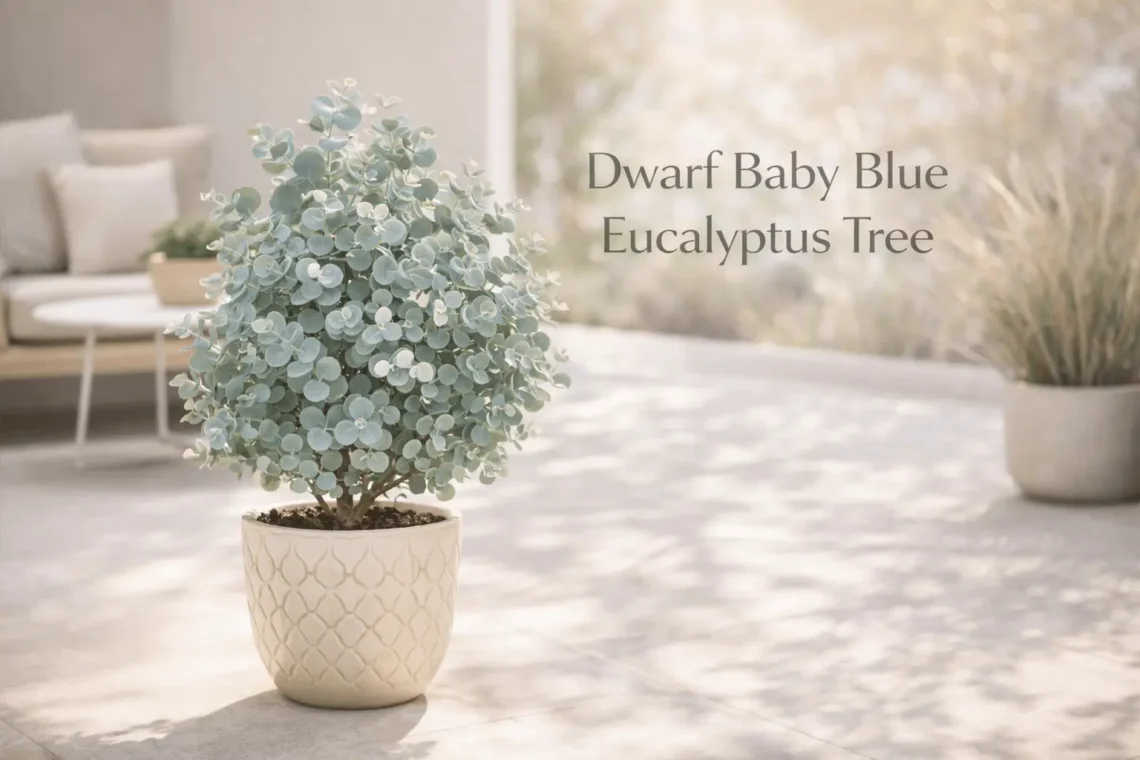
The dwarf baby blue eucalyptus tree is a compact cultivar of Eucalyptus pulverulenta ‘Baby Blue’, valued for its distinctive silver-blue foliage and ornamental versatility. Unlike standard eucalyptus trees that grow tall and expansive, this dwarf variety remains small and manageable, making it ideal for containers, patios, and small garden spaces. Native to Australia, it adapts well to mild climates and offers both visual and aromatic appeal. Its rounded leaves and soft coloration create a unique texture in landscapes while maintaining a low-maintenance growth habit suitable for beginners and experienced gardeners alike.
Quick Summary
- Dwarf baby blue eucalyptus tree (Eucalyptus pulverulenta ‘Baby Blue’) is a compact evergreen with rounded, silvery-blue leaves ideal for decor and arrangements.
- Typically grows 3–6 feet tall, making it suitable for pots, borders, and small gardens.
- Requires full sun, well-drained soil, and moderate watering; tolerates frost down to 20°F (-6°C).
- Known for its aromatic foliage and low-maintenance care requirements.
What Is a Dwarf Baby Blue Eucalyptus Tree?
The dwarf baby blue eucalyptus tree is a compact evergreen shrub derived from Eucalyptus pulverulenta, a species native to Australia. The name “baby blue” refers to its powdery, silver-blue juvenile leaves, which remain rounded and decorative rather than transitioning to elongated adult foliage. For a broader understanding of compact eucalyptus varieties, explore this Dwarf Eucalyptus Trees Guide: 7+ Smart Growing Tips.
This cultivar differs from full-sized eucalyptus trees by maintaining a shrubby, dense growth habit. It is often referred to as baby blue eucalyptus or eucalyptus baby blue tree in horticultural contexts.
It belongs to the genus Eucalyptus, a diverse group of flowering trees and shrubs native to Australia (see Eucalyptus – Wikipedia for botanical classification).
Key characteristics include:
- Dense, rounded canopy with persistent juvenile foliage
- Silvery-blue leaves that do not shed easily
- Aromatic oils released when leaves are touched
- Long-lasting foliage used in fresh and dried floral arrangements
Botanically, it belongs to the Myrtaceae family and is recognized for its ornamental foliage rather than timber use. Its dwarf nature makes it highly suitable for small-space gardening.
Plant Size
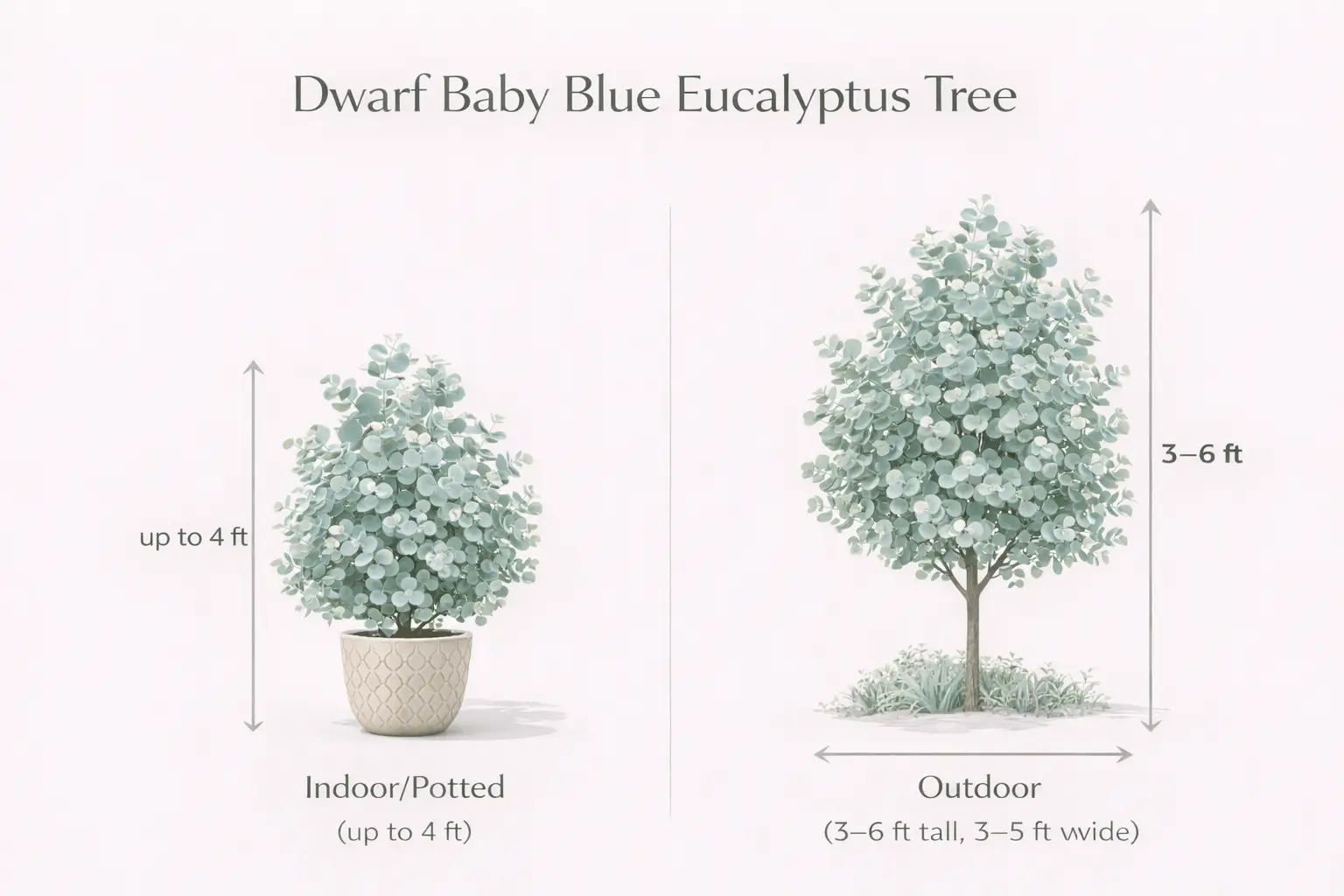
The dwarf baby blue eucalyptus tree maintains a compact size, making it ideal for controlled environments.
Typical Dimensions
- Mature height: 3–6 feet (1–2 meters)
- Width: 3–5 feet
Indoor vs Outdoor Growth
| Growth Condition | Height Range | Notes |
| Indoor / Potted | Up to 4 ft | Controlled by pruning and container size |
| Outdoor Garden | 3–6 ft | Reaches full size in 3–5 years |
Influencing Factors
- Pot size: Smaller containers restrict height
- Climate: Warmer regions promote fuller growth
- Soil fertility: Nutrient-rich soil increases density
- Wind exposure: Strong winds may limit width and compactness
Growth Rate
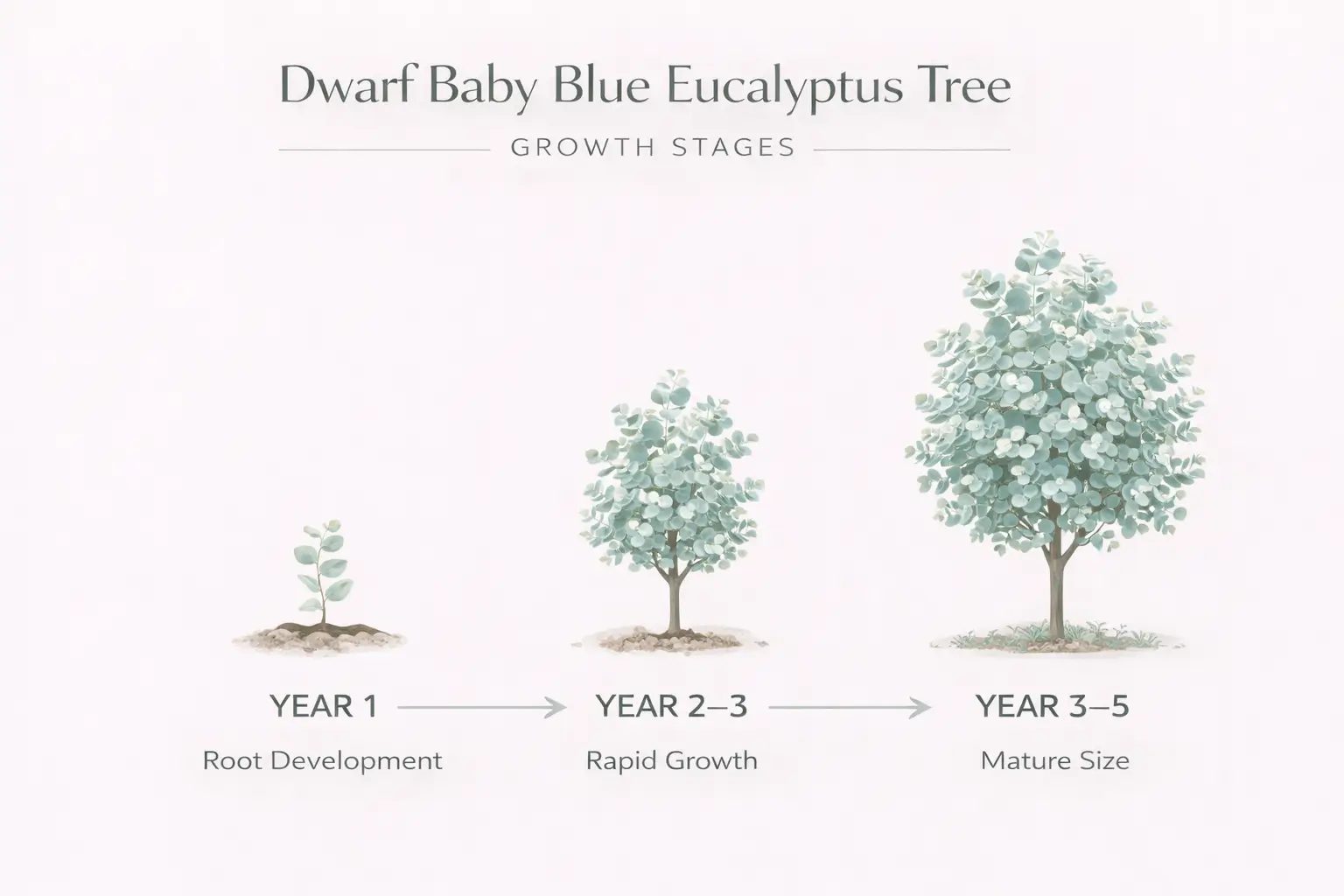
The dwarf baby blue eucalyptus tree grows at a moderate pace, typically adding 1–2 feet per year under optimal conditions.
Growth Pattern
- Spring–Summer: Active growth phase with noticeable height increase
- Autumn–Winter: Slowed or dormant growth
Growth Timeline
- Year 1: Establishment and root development
- Year 2–3: Rapid foliage and branch expansion
- Year 3–5: Reaches mature size
Unlike standard eucalyptus trees, this dwarf variety maintains a compact structure and avoids excessive vertical stretching.
Comparison: Dwarf Baby Blue Eucalyptus vs. Other Eucalyptus Varieties
| Feature | Dwarf Baby Blue (E. pulverulenta ‘Baby Blue’) | Standard Baby Blue | Silver Dollar Eucalyptus |
| Mature Height | 3–6 ft | 20–30 ft | 40–50 ft |
| Foliage Type | Juvenile, round, silver-blue | Mixed foliage | Round, silver-green |
| Growth Habit | Shrubby, compact | Tree-like | Upright tree |
| Best Use | Pots, small gardens | Screens, windbreaks | Large landscapes |
| Cold Hardiness | 20°F (-6°C) | 25°F (-4°C) | 15°F (-9°C) |
Key Differences
- Dwarf baby blue is ideal for small spaces and containers
- Standard varieties are better suited for landscaping and windbreaks
- Silver dollar eucalyptus grows significantly larger and requires more space
Care Guide
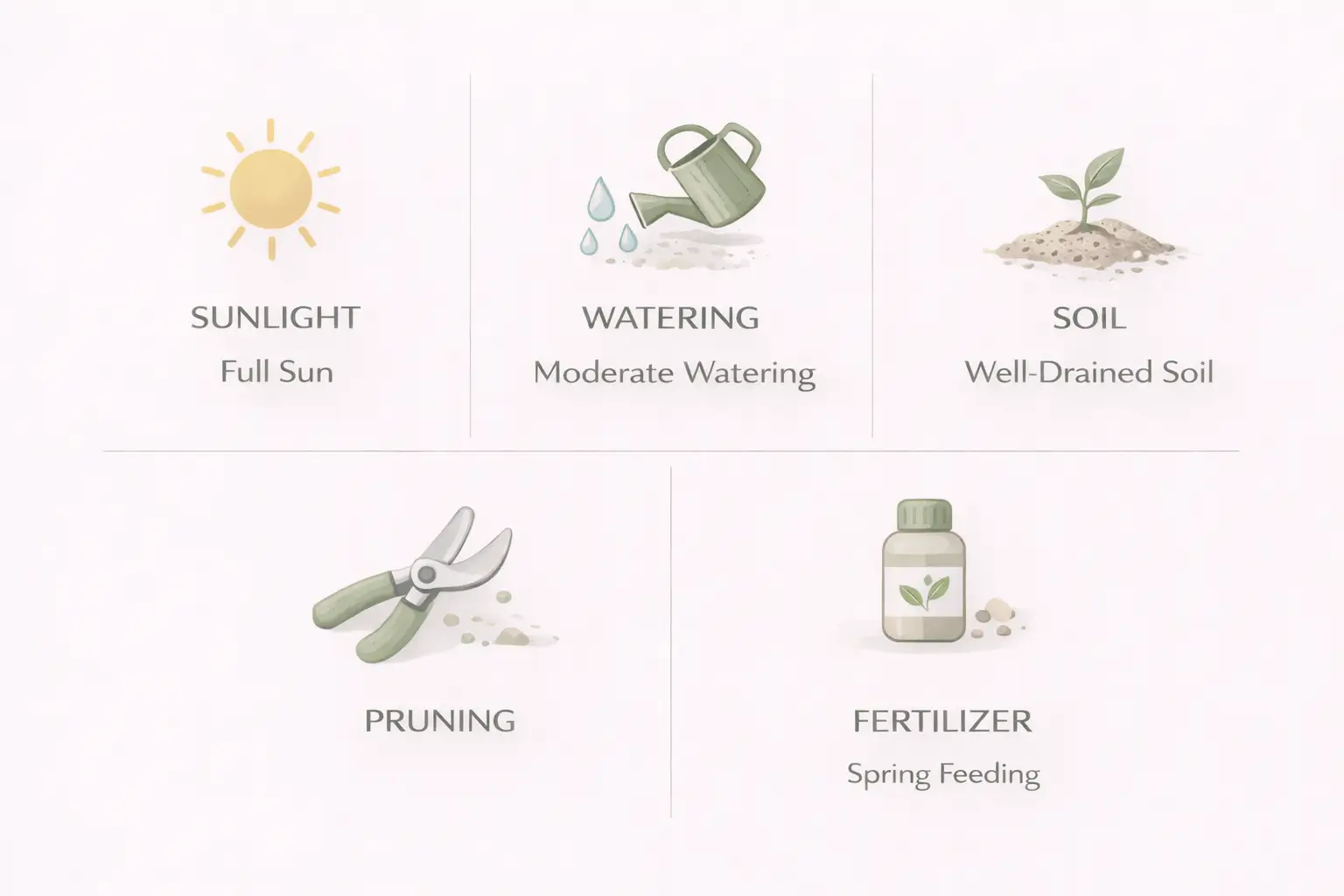
How to Grow Dwarf Baby Blue Eucalyptus
- Choose a sunny location with at least 6 hours of direct sunlight
- Plant in well-draining soil or a sandy mix
- Water moderately after planting
- Allow soil to dry slightly between watering sessions
- Prune regularly to maintain compact growth
If you’re growing eucalyptus in containers, this Proven Guide to Growing Trees in Pots: Best Tips & Trees provides deeper insights for long-term success.
Care Requirements
| Care Factor | Requirement |
| Watering | Moderate; avoid waterlogging |
| Light | Full sun (6+ hours daily) |
| Soil | Well-drained, sandy or loamy |
| Fertilizer | Balanced slow-release in spring |
| Pruning | Regular tip pruning |
| Climate | USDA zones 8–11 |
Practical Insights
- Overwatering is the most common beginner mistake
- Indoor plants need brighter placement near windows
- Avoid heavy clay soil to prevent root rot
If you’re building a complete indoor plant collection, this Guide to House Plants covers essential care basics for beginners and enthusiasts alike.
Common Problems and Solutions
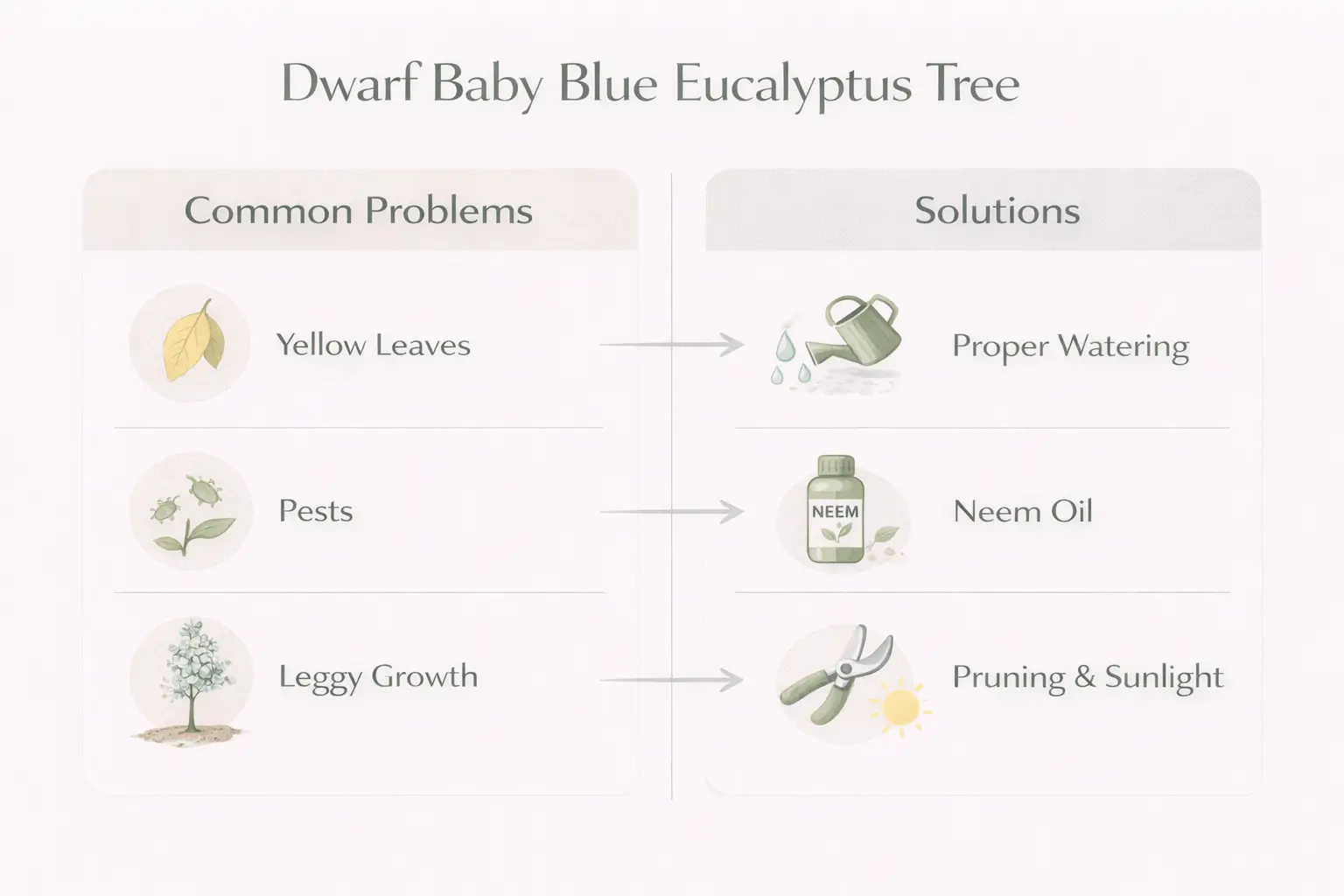
Yellowing Leaves
Caused by overwatering or poor drainage.
Solution: Repot in well-draining soil and reduce watering frequency.
Prevention: Use the fingertip test before watering.
Pest Issues (Aphids)
Small insects feeding on sap.
Solution: Apply neem oil spray.
Prevention: Encourage beneficial insects like ladybugs.
For more detailed solutions, see Aphids on Plants: 7 Proven Fixes to Save Your Plants Fast.
Slow Growth
Often due to insufficient sunlight or nutrients.
Solution: Move plant to a sunnier spot and fertilize lightly.
Leggy Growth
Occurs in low-light conditions.
Solution: Prune back stems and increase light exposure.
Seasonal Care and Environmental Limitations
Seasonal Care
- Spring: Best time for planting and fertilizing
- Summer: Maintain watering schedule
- Winter: Protect roots with mulch or move indoors
Environmental Limitations
- Does not perform well in high humidity climates
- Struggles in heavy clay soils
- Wind-resistant but avoid coastal exposure with strong salt winds
Regional Tips
- Australia: Thrives in native conditions
- UK: Requires sheltered placement and winter protection
Propagation and Landscaping Uses
Propagation by Cuttings
- Take semi-hardwood cuttings
- Place in sandy, well-draining mix
- Maintain moisture and indirect light
- Roots typically form within a few weeks
Landscaping Uses
- Accent plant in modern gardens
- Container plant for patios
- Low hedges or borders
- Decorative foliage for floral arrangements
Conclusion
The dwarf baby blue eucalyptus tree offers a practical solution for gardeners seeking the beauty of eucalyptus without its typical size. With its silvery-blue foliage, aromatic leaves, and compact growth, Eucalyptus pulverulenta ‘Baby Blue’ is well-suited for containers, borders, and small landscapes. By providing full sun, proper drainage, and moderate care, this plant can thrive for years while maintaining its ornamental appeal. Its versatility and low-maintenance nature make it an excellent choice for both beginners and experienced growers.
FAQs
What is the mature height of a dwarf baby blue eucalyptus tree?
It typically grows between 3 and 6 feet tall and wide, maintaining a compact shape with regular pruning.
How do you care for a dwarf baby blue eucalyptus tree in pots?
Use well-draining soil, water moderately, provide full sun, and prune regularly to maintain shape and size.
Can dwarf baby blue eucalyptus grow in the UK?
Yes, it can grow in sheltered areas in milder regions. Winter protection is necessary in colder conditions.
Why are the leaves on my baby blue eucalyptus turning yellow?
This is usually caused by overwatering or poor drainage. Adjust watering and improve soil conditions.
How fast does a dwarf baby blue eucalyptus tree grow?
It grows moderately, adding about 1–2 feet per year under ideal conditions.
Is Eucalyptus pulverulenta ‘Baby Blue’ the same as dwarf eucalyptus baby blue?
Yes, it is the dwarf cultivar known for its compact growth and distinctive blue foliage.