Introduction
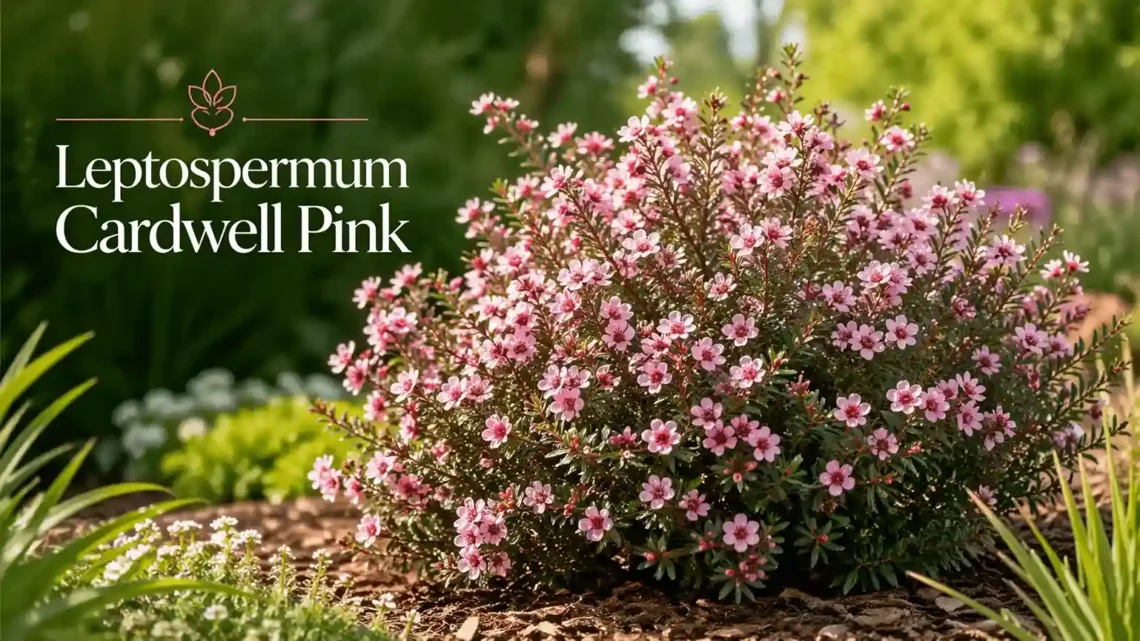
Leptospermum Cardwell Pink is a compact flowering shrub valued for its soft pink blooms and adaptability in garden landscapes. This ornamental plant belongs to the tea tree family (Myrtaceae) and is closely associated with Leptospermum flavescens cardwell. It is widely used in hedging, borders, and small garden designs due to its manageable size and low maintenance needs. Gardeners prefer this variety for its resilience, attractive foliage, and consistent flowering. This guide explains what Leptospermum Cardwell Pink is, how it grows, how to care for it, and how it compares to other pink tea tree varieties.
Quick Summary
- Leptospermum Cardwell Pink is a compact tea tree shrub with soft pink flowers
- It belongs to the Leptospermum flavescens cardwell group
- Suitable for hedging, borders, and small gardens
- Requires well-drained soil, sunlight, and moderate watering
What Is Leptospermum Cardwell Pink?
Leptospermum Cardwell Pink is a cultivated variety within the genus Leptospermum, commonly known as tea trees. It is often linked to Leptospermum flavescens cardwell, a species native to Australia known for its adaptability and ornamental value.
The genus Leptospermum includes a wide range of flowering shrubs and trees native to Australia (see Leptospermum genus overview).
The term “Leptospermum” refers to a genus of flowering shrubs and small trees in the Myrtaceae family. These plants are characterized by fine foliage and profuse flowering. Common names for this plant include:
- Cardwell plant
- Tea tree Cardwell
- Cardwell leptospermum
Leptospermum Cardwell Pink is closely related to other species such as Leptospermum scoparium, which is widely known for producing manuka honey. However, Cardwell Pink is primarily valued for landscaping rather than commercial uses.
Plant Size and Growth Characteristics
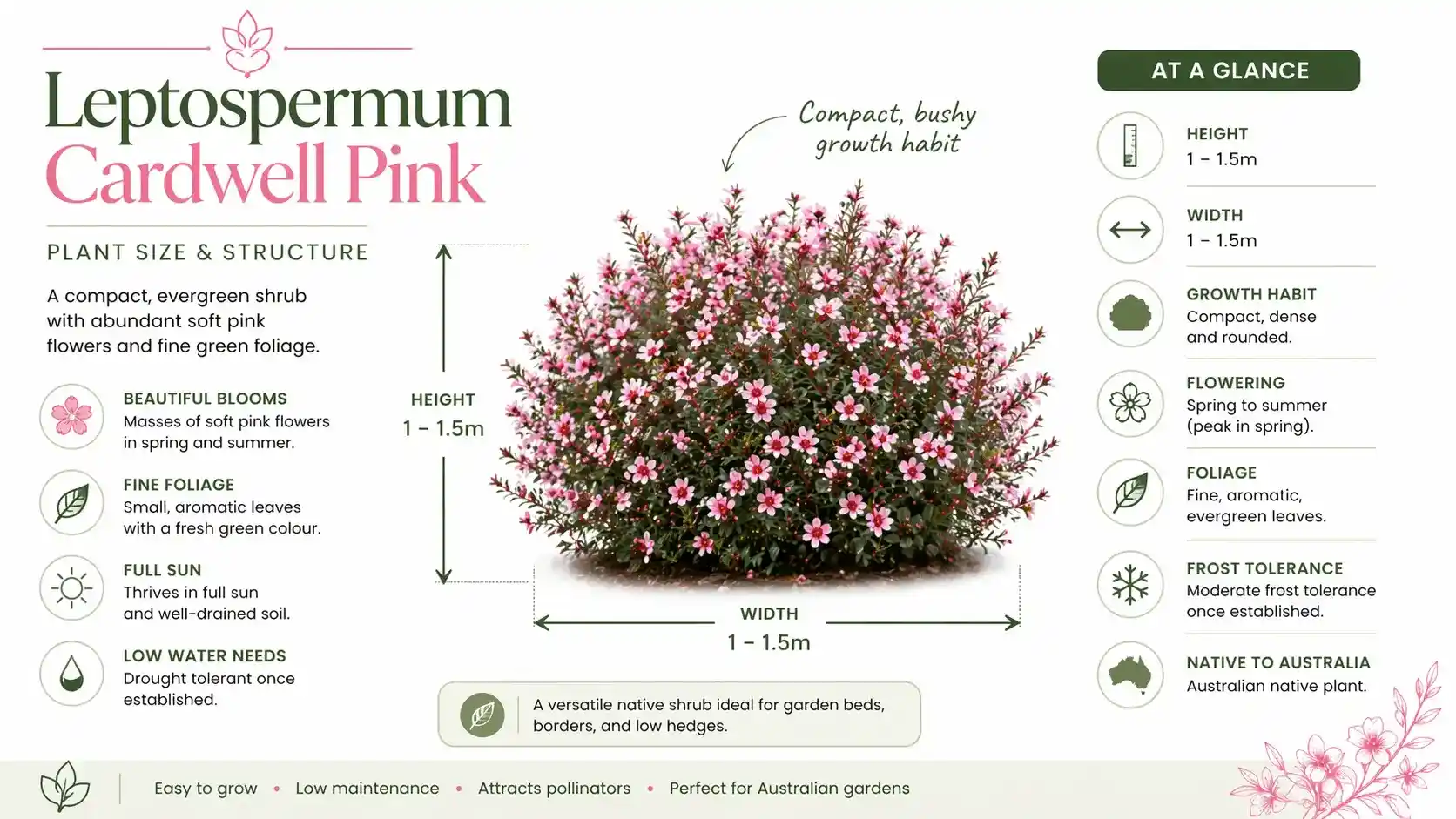
Leptospermum Cardwell Pink is a compact, rounded shrub that fits well in small to medium-sized landscapes. Its dense growth habit makes it ideal for decorative planting and structured garden designs.
Typical characteristics include:
- Compact and bushy structure
- Rounded growth pattern
- Dense foliage with seasonal flowering
Environmental factors significantly influence plant size:
- Soil quality: Nutrient-rich soil supports fuller growth
- Sunlight exposure: Full sun promotes denser foliage
- Pruning practices: Regular pruning maintains shape and size
Expected Mature Dimensions
| Feature | Typical Range |
| Height | ~1–1.5 meters |
| Width | ~1–1.5 meters |
| Growth Habit | Compact, bushy |
Growth Rate and Lifespan
Leptospermum Cardwell Pink has a moderate growth rate, meaning it establishes steadily without becoming invasive. Under optimal conditions, it can reach maturity within a few growing seasons.
Leptospermum plants are generally long-lived shrubs. With proper care, they can live for over a decade, especially in well-maintained garden environments.
Factors influencing growth and lifespan include:
- Climate suitability (warm temperate regions are ideal)
- Soil drainage and aeration
- Consistent maintenance and pruning
Leptospermum Cardwell Pink Care Guide
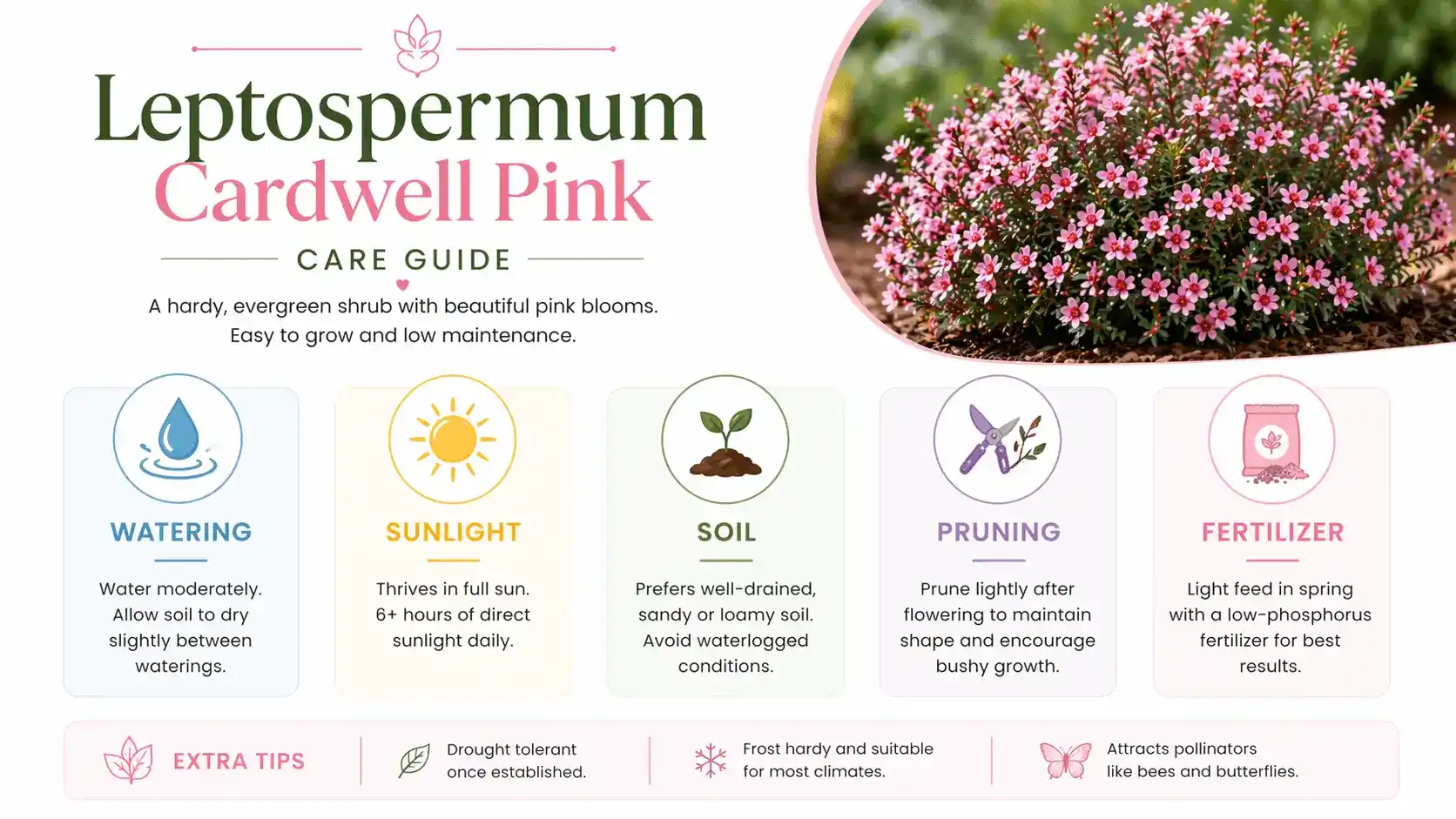
Watering Requirements
Leptospermum Cardwell Pink requires moderate watering. The soil should be kept slightly moist but never waterlogged. Overwatering is a common mistake and can lead to root issues.
Light Conditions
This plant thrives in full sun to partial shade. Maximum flowering occurs when the plant receives direct sunlight for several hours daily.
Soil Preferences
Well-drained, slightly acidic soil is ideal. The plant tolerates sandy soils but struggles in heavy clay unless improved with organic matter.
Fertilization
Light feeding during the growing season supports healthy growth. Use a balanced fertilizer designed for flowering shrubs.
Pruning and Maintenance
Prune after flowering to maintain shape and encourage dense growth. Regular trimming helps prevent legginess and improves overall appearance.
Climate Tolerance
Leptospermum Cardwell Pink prefers warm temperate climates. Once established, it shows moderate drought tolerance but may require protection from severe frost.
If you are growing compact ornamental shrubs, you may also find similar care principles in plants like dwarf myrtle shrubs, which thrive under comparable conditions.
Due to its compact size, Leptospermum Cardwell Pink can also be grown in containers, making it a suitable option for gardeners exploring small-space or houseplant-style growing setups—see our complete guide to house plants for beginner-friendly tips.
Comparison: Cardwell Pink vs Other Leptospermum Varieties
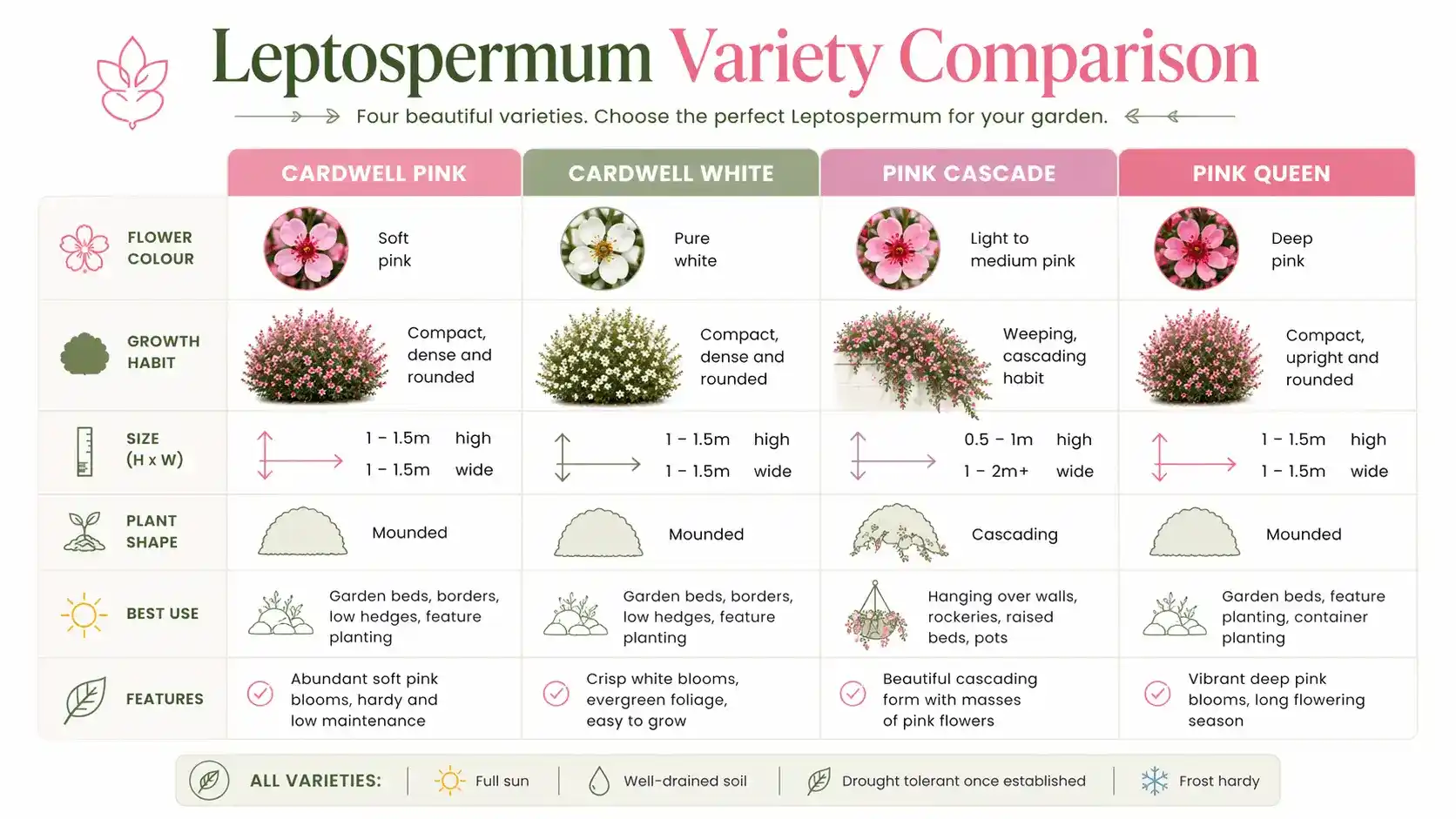
Leptospermum varieties differ in flower color, size, and growth habit. Cardwell Pink stands out for its compact form and soft pink blooms.
Key differences include:
- Flower color variations (white, bright pink, deep pink)
- Growth habits (upright vs cascading)
- Size differences (small vs medium shrubs)
Variety Comparison Table
| Variety | Flower Color | Growth Habit | Size |
| Cardwell Pink | Soft pink | Compact shrub | Small |
| Cardwell White | White | Similar compact form | Small |
| Pink Cascade | Bright pink | Cascading | Medium |
| Pink Queen | Deep pink | Upright shrub | Medium |
Landscaping Uses and Design Applications
Leptospermum Cardwell Pink is widely used in ornamental landscaping due to its compact size and attractive flowers.
Common uses include:
- Hedging: Creates low, structured borders
- Borders: Adds color along pathways and garden edges
- Container planting: Suitable for patios and small spaces
It pairs well with other Australian native plants and complements broader landscaping themes involving ornamental shrubs. It also pairs well with other Australian natives like coastal rosemary, which complements its structure and enhances overall landscape design.
Common Problems and Troubleshooting
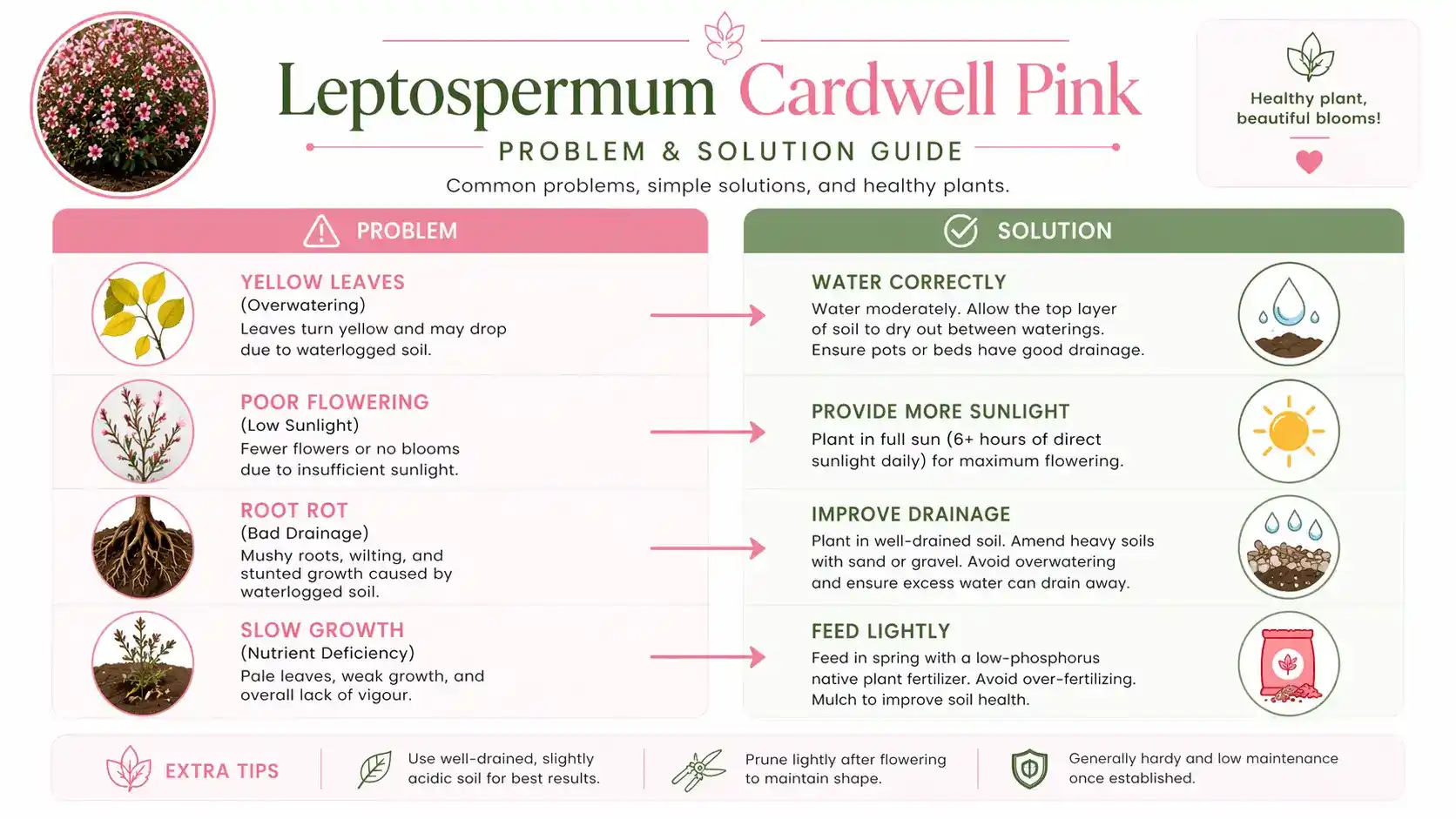
Yellowing Leaves
Yellowing leaves are usually caused by overwatering or poor drainage. Improving soil structure and reducing watering frequency can resolve this issue.
Poor Flowering
Poor flowering typically results from insufficient sunlight. Relocating the plant to a sunnier area improves bloom production.
Root Rot
Root rot occurs in waterlogged soil conditions. Prevent it by ensuring proper drainage and avoiding excessive watering.
Slow Growth
Slow growth may indicate nutrient deficiency or unsuitable growing conditions. Applying balanced fertilizer and improving light exposure can help.
Beginner Mistakes to Avoid
Common mistakes when growing Leptospermum Cardwell Pink include:
- Overwatering the plant
- Planting in heavy clay soil without drainage improvement
- Neglecting pruning after flowering
- Placing the plant in excessive shade
Avoiding these issues helps maintain plant health and appearance.
Environmental and Seasonal Considerations
Leptospermum Cardwell Pink shows seasonal growth patterns, with active growth and flowering during warmer months.
Key considerations:
- Flowering typically occurs in spring and early summer
- Growth slows during cooler seasons
- Frost can damage young plants
- Excessive heat may require supplemental watering
Understanding seasonal changes allows better care and planning.
Related Leptospermum Types and Broader Context
The genus Leptospermum includes a wide range of species and cultivars, such as:
- Leptospermum pink varieties
- Pink tea tree types
- Leptospermum cascade forms
- Leptospermum polygalifolium cardwell
These plants are valued for both ornamental and ecological roles, supporting pollinators and enhancing biodiversity in garden environments.
Another closely related variety is Leptospermum brachyandrum, which shares similar care needs and ornamental value—see our detailed guide on Leptospermum brachyandrum Silver for comparison.
Conclusion
Leptospermum Cardwell Pink is a versatile, compact flowering shrub ideal for small gardens and decorative landscapes. With proper care, well-drained soil, and adequate sunlight, this tea tree variety offers long-lasting blooms and reliable growth. Understanding its size, care needs, and differences from other leptospermum varieties helps gardeners make informed planting decisions.
FAQs
What is Leptospermum Cardwell Pink?
Leptospermum Cardwell Pink is a compact flowering shrub from the tea tree family, known for its soft pink blooms and suitability for ornamental gardening.
How big does Leptospermum Cardwell Pink grow?
It typically grows to around 1 to 1.5 meters in both height and width, forming a compact and rounded shrub.
How do you care for Leptospermum Cardwell Pink?
Provide full sun, well-drained soil, moderate watering, and prune after flowering to maintain shape and encourage dense growth.
How long do leptospermum plants live?
Leptospermum plants can live for many years, often exceeding a decade when grown in suitable conditions with proper care.
What is the difference between Cardwell Pink and Pink Cascade?
Cardwell Pink has a compact, upright growth habit, while Pink Cascade features a trailing, cascading form and is generally larger.
Can Leptospermum Cardwell Pink grow in pots?
Yes, its compact size makes it suitable for container gardening, provided the pot has proper drainage and the plant receives adequate sunlight.