Introduction
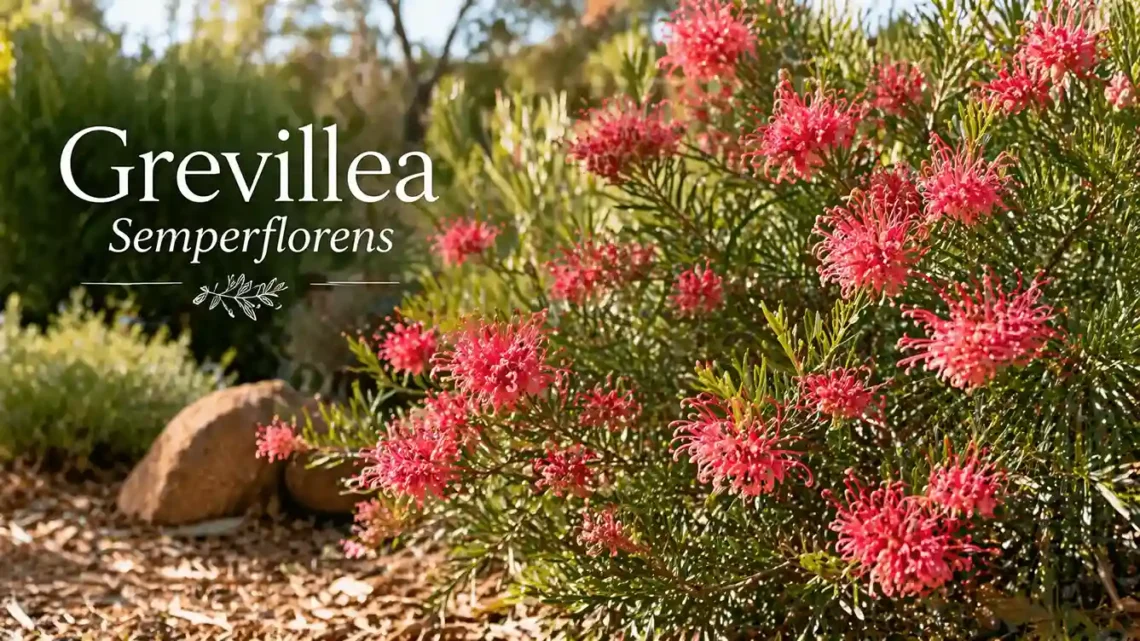
Grevillea semperflorens, also known as Grevillea x semperflorens, is a hybrid evergreen shrub valued for its continuous flowering and strong drought tolerance. This plant is widely used in landscaping due to its adaptability and ability to thrive in warm climates, especially in Australia where grevilleas are native. It is commonly planted in gardens for its attractive foliage and unique flowers. Naming variations may occur, including misspellings like “revillea semperflorens,” but they all refer to the same plant. It is grown for ornamental purposes, low maintenance needs, and its suitability in modern garden designs.
Quick Summary
- Grevillea semperflorens is a flowering evergreen hybrid shrub known for continuous blooms.
- It thrives in warm climates and requires low water once established.
- Ideal for hedges, wildlife gardens, and low-maintenance landscaping.
- Proper pruning and well-drained soil are essential for healthy growth.
What Is Grevillea Semperflorens?
Grevillea semperflorens is a hybrid evergreen shrub derived from Australian grevillea species, known botanically as Grevillea x semperflorens. It is characterized by its long flowering period and distinctive spider-like blooms.
Grevillea semperflorens belongs to the Proteaceae family, a group of flowering plants widely studied in botany (learn more on Wikipedia).
Expansion Notes:
This plant belongs to the Proteaceae family and combines traits from different grevillea species. It produces narrow, evergreen leaves and flowers that bloom almost year-round in suitable climates. Its flowers are rich in nectar, making it highly attractive to birds and pollinators.
Key Points:
- Hybrid grevillea cultivar
- Attracts birds and pollinators
- Adaptable to different garden styles
Plant Size, Height, and Growth Habit
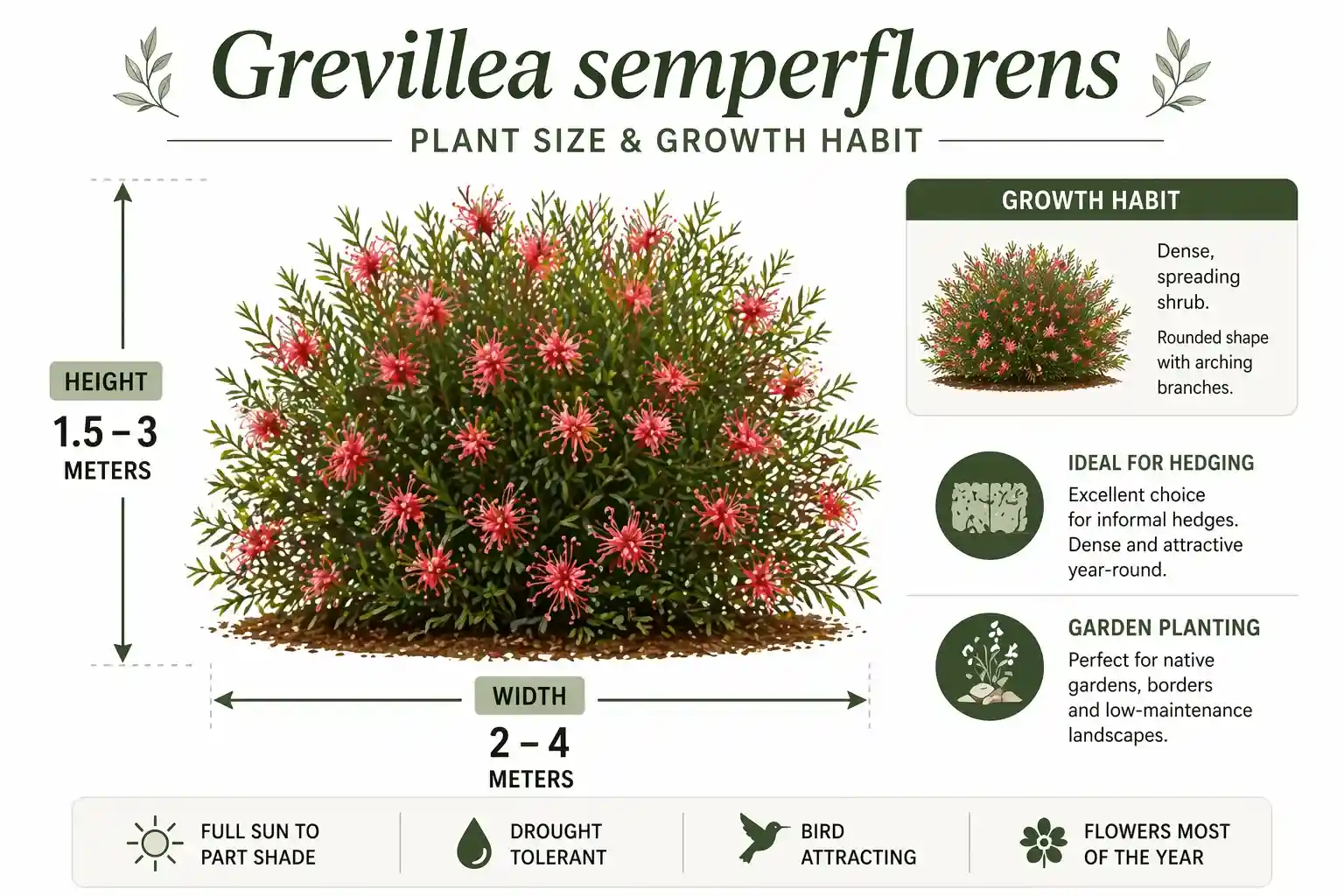
Grevillea semperflorens typically grows as a medium-sized shrub with a spreading growth habit, making it suitable for hedging and ornamental planting.
Table: Growth Characteristics of Grevillea Semperflorens
| Feature | Description |
| Height range | 1.5 to 3 meters |
| Width spread | 2 to 4 meters |
| Growth habit | Dense, spreading shrub |
| Suitable uses | Hedge, specimen plant, border shrub |
Environmental conditions such as sunlight, soil quality, and pruning practices influence its final size and shape.
Growth Rate and Seasonal Development
Grevillea semperflorens grows at a moderate to fast rate depending on climate and care conditions. In ideal environments, it can establish quickly and produce consistent blooms.
Expansion Notes:
Flowering occurs throughout the year in warm climates, with peak blooming during spring and autumn. Growth slows in cooler regions but remains steady under favorable conditions.
Bullet Points:
- Faster growth in warm climates
- Slower in cooler regions
- Continuous flowering in ideal conditions
Grevillea Semperflorens Care Guide
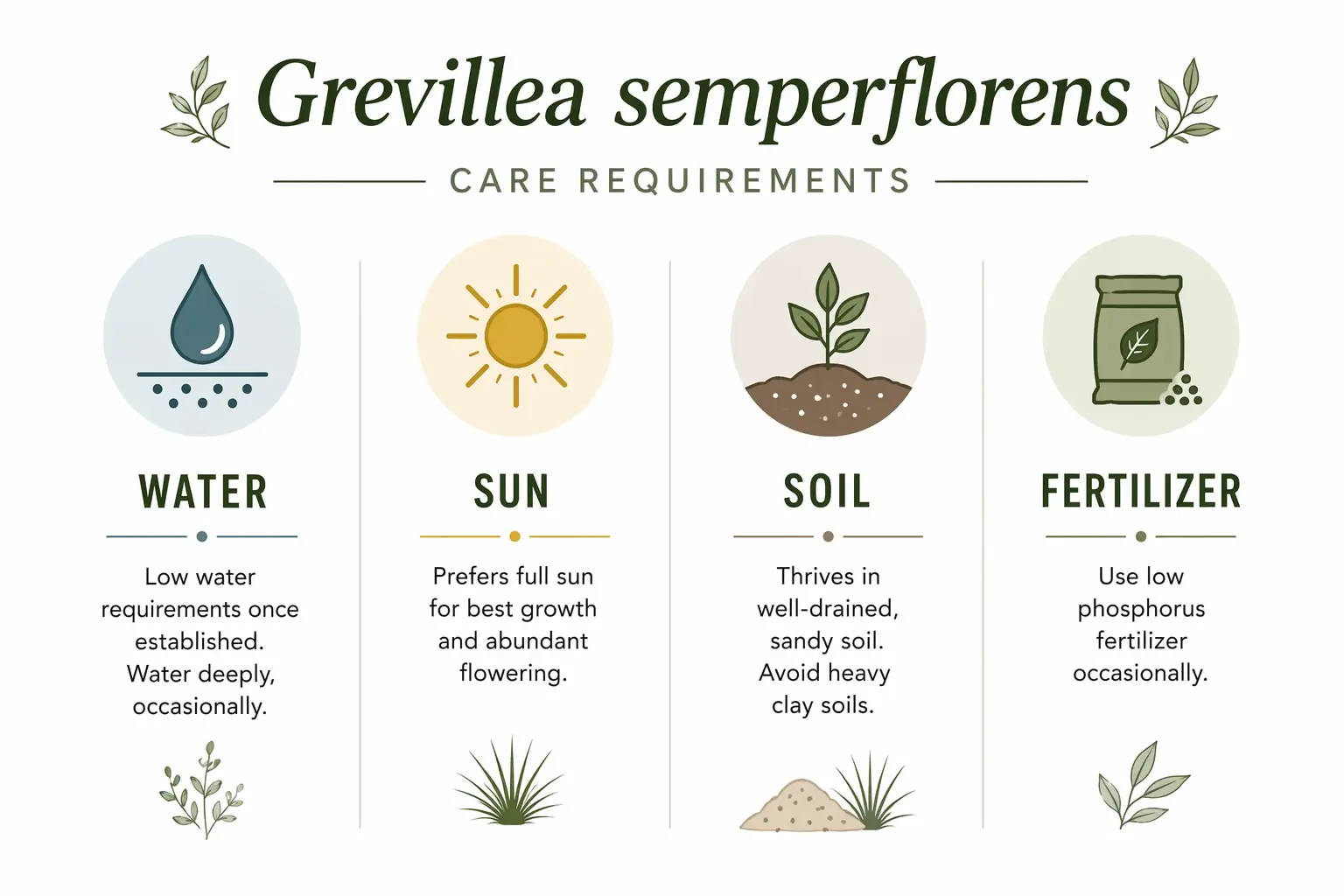
Proper care ensures healthy growth and long-lasting blooms in grevillea semperflorens. It requires specific environmental conditions suited to its native adaptations.
Watering Requirements
Grevillea plants should be watered regularly during establishment, then sparingly once mature. Young plants benefit from consistent moisture, while established plants are drought-tolerant and prefer infrequent watering.
Light and Climate Needs
Grevillea semperflorens thrives in full sun and performs best in warm, dry climates. It tolerates heat well but may be sensitive to frost, especially in colder regions.
Soil Preferences
Well-draining soil is essential for grevillea growth. Sandy or loamy soils are ideal, while heavy clay should be avoided to prevent root rot.
Fertilization Guidelines
Use low-phosphorus fertilizers specifically formulated for native plants. High phosphorus levels can damage grevilleas. Understanding native plant care is important, and guides like Ultimate Grevillea Olivacea Hedge Guide: 7+ Easy Care Tips provide additional insights into watering and soil requirements for grevilleas.
Pruning and Maintenance Practices
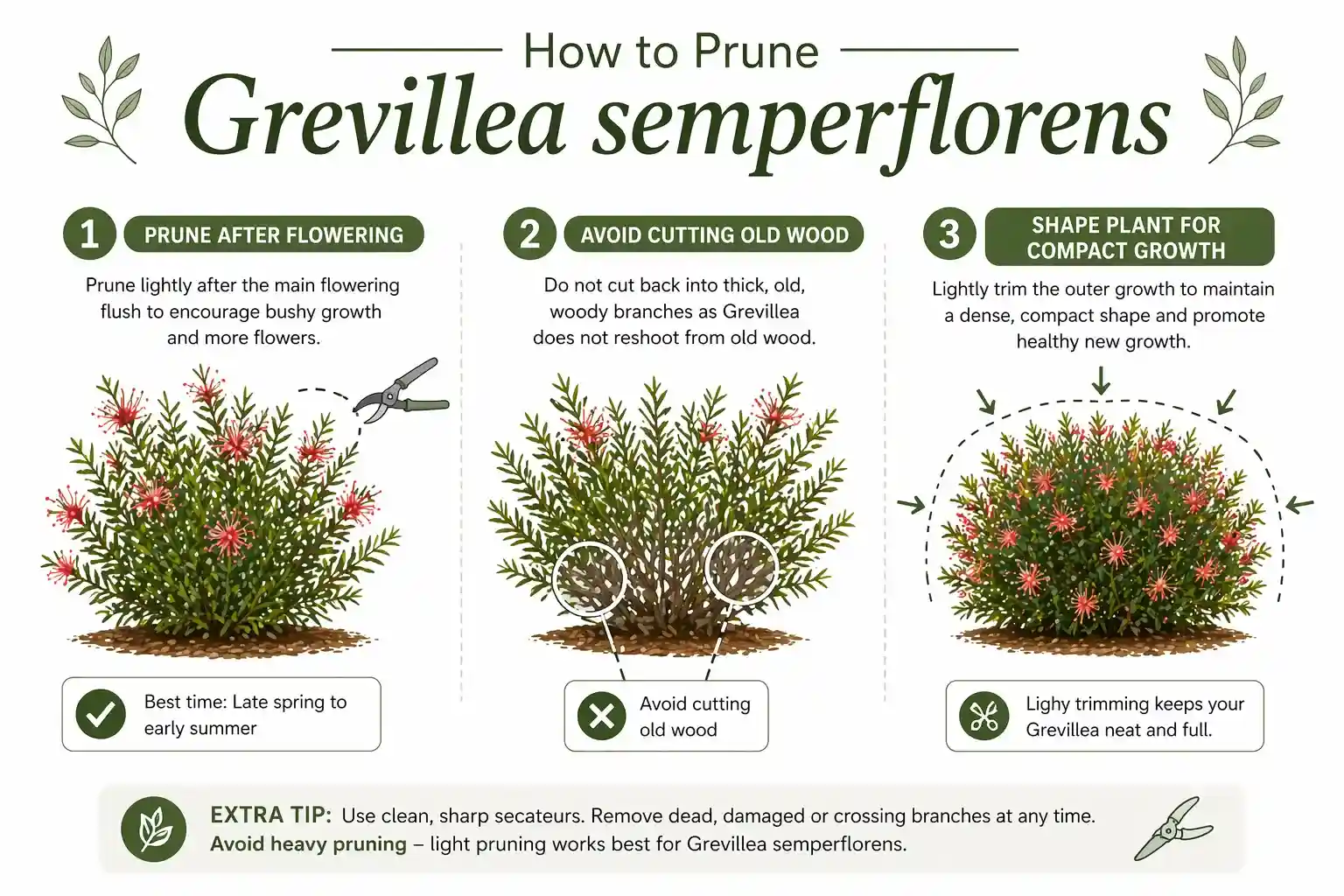
Pruning grevillea semperflorens is essential for maintaining shape and encouraging new growth.
Expansion Notes:
Regular pruning helps keep the plant compact and promotes better flowering. Proper technique ensures plant health and prevents woody growth.
Bullet Points:
- Prune after flowering
- Avoid hard pruning into old wood
- Shape for hedge or compact growth
Using Grevillea Semperflorens in Landscaping
Grevillea semperflorens is widely used in landscaping for its versatility and low maintenance requirements.
Grevillea semperflorens works especially well as a hedge, similar to plants discussed in Carolina Cherry Laurel Hedge: 7 Powerful Reasons to Choose a Carolina Cherry Laurel Hedge, which highlights structured screening plants for privacy.
Expansion Notes:
It functions well as a hedge plant and integrates easily into wildlife-friendly gardens. Its nectar-rich flowers attract birds, enhancing biodiversity.
Bullet Points:
- Ideal for hedges and borders
- Attracts birds like honeyeaters
- Works in drought-tolerant landscapes
Comparison: Grevillea Semperflorens vs Other Grevillea Varieties
Grevillea semperflorens differs from other grevillea varieties in size, flowering pattern, and growth habit.
For a deeper understanding of similar cultivars, see Grevillea Elegance: 7+ Essential Care & Growth Tips, which shares comparable growth habits and flowering characteristics.
Comparison Table
| Variety | Size | Flower Color | Growth Habit | Best Use Case |
| Grevillea semperflorens | Medium | Pink-red | Dense shrub | Hedge, general landscape |
| Grevillea thelemanniana | Small | Red | Compact shrub | Small gardens |
| Grevillea Sid’s Pink | Medium | Pink | Upright shrub | Ornamental planting |
| Grevillea Poorinda Elegance | Medium | Orange-red | Spreading shrub | Feature plant |
| Grevillea superb | Large | Orange-yellow | Tall shrub | Large gardens |
Popular Grevillea Cultivars and Types
Grevillea includes many cultivars with varying sizes and flower colors.
Expansion Notes:
Popular types include Grevillea victoriae, Grevillea johnsonii, Grevillea ivory whip, and Grevillea honeybird yellow. These plants offer a range of colors and growth habits suitable for different garden designs.
Bullet Points:
- Flower color variations (yellow, white, red, pink)
- Compact vs large varieties
- Landscaping uses
Common Problems and Solutions (Troubleshooting Guide)
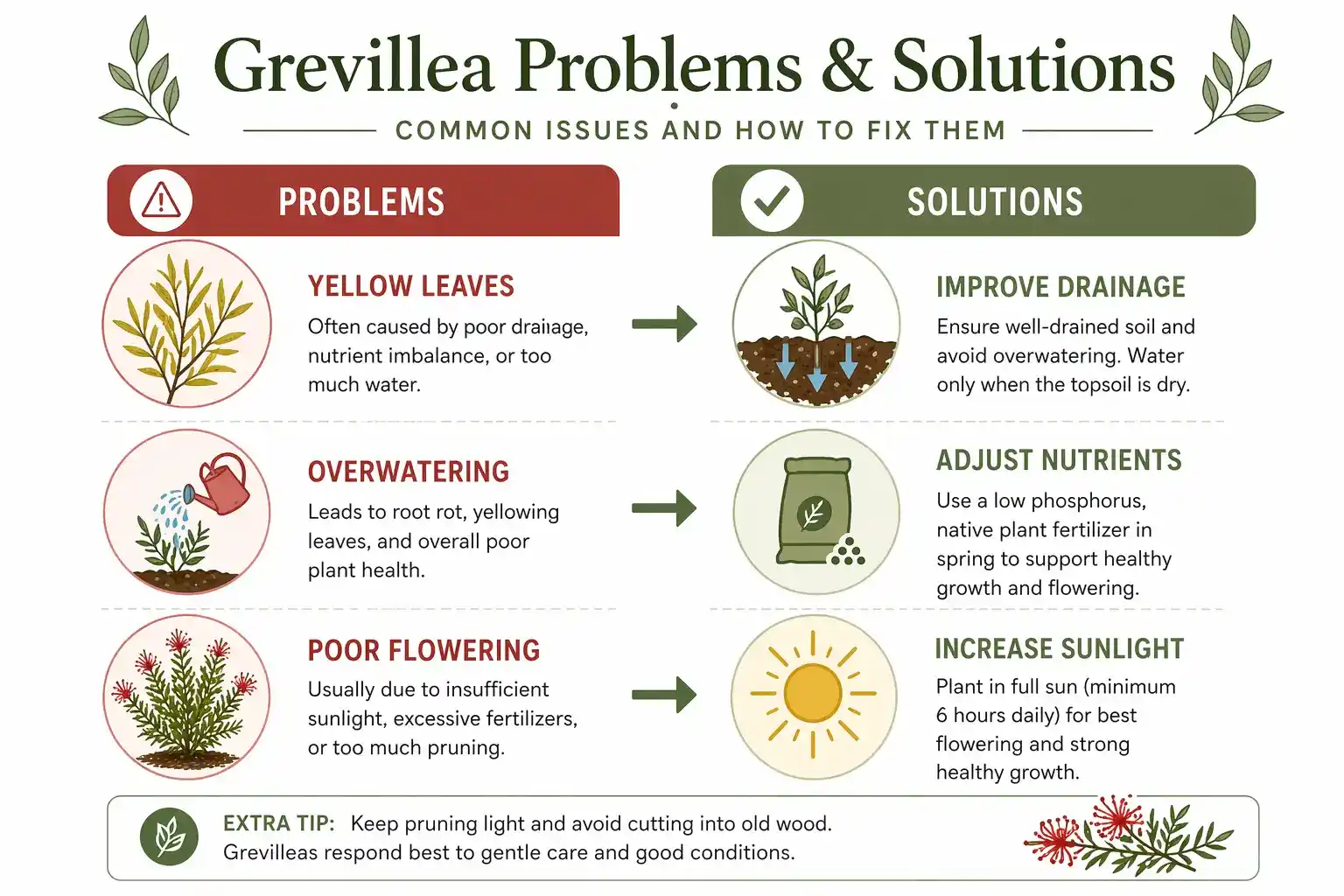
Why Is My Grevillea Dying?
Grevillea plants usually die due to poor drainage, root rot, or unsuitable soil conditions. Overwatering and heavy soils restrict oxygen to roots, leading to plant decline.
Why Is My Grevillea Turning Yellow?
Yellow leaves are typically caused by nutrient imbalance, overwatering, or poor soil drainage. Phosphorus toxicity can also contribute to leaf discoloration.
Common Issues and Fixes
- Overwatering → improve drainage
- Yellow leaves → adjust nutrients
- Poor flowering → increase sunlight
Beginner Mistakes to Avoid When Growing Grevilleas
Avoiding common mistakes helps ensure successful growth and long-term plant health.
Bullet Points:
- Using high-phosphorus fertilizers
- Overwatering established plants
- Planting in heavy soil
- Improper pruning timing
Environmental Limitations and Growing Conditions
Grevillea semperflorens grows best in warm climates and may struggle in cold or overly wet environments. It is suitable for regions outside Australia if conditions mimic its native habitat.
Expansion Notes:
It tolerates heat well but may require protection from frost. Soil drainage is a critical factor in all environments.
Grevillea Semperflorens in Broader Gardening Context
Grevillea semperflorens plays a key role in drought-tolerant gardening and wildlife-friendly landscapes. It is often included in shrub and hedge plant selections for sustainable garden design.
While grevillea semperflorens is mainly grown outdoors, understanding plant care principles from broader resources like a Guide to House Plants can help improve watering, soil, and light management skills across all plant types.
Expansion Notes:
Its adaptability and low water needs make it suitable for modern landscaping approaches focused on resource efficiency.
Conclusion
Grevillea semperflorens is a versatile, low-maintenance flowering shrub ideal for warm climates. Its continuous blooms, adaptability, and ability to attract wildlife make it valuable in both decorative and functional garden settings. With proper care, well-drained soil, and appropriate pruning, it performs reliably in a range of landscaping applications.
FAQs
1. What is grevillea semperflorens used for?
Grevillea semperflorens is used for hedges, ornamental planting, and attracting birds to gardens due to its nectar-rich flowers.
2. How big does grevillea semperflorens grow?
It typically grows to a medium shrub size, reaching around 1.5 to 3 meters in height depending on environmental conditions.
3. How often should I water grevillea plants?
Water frequently during early growth stages, then reduce watering significantly once the plant is established.
4. Why are my grevillea leaves turning yellow?
Yellow leaves are usually caused by poor drainage, overwatering, or nutrient imbalance in the soil.
5. Can grevillea semperflorens grow outside Australia?
Yes, it can grow in other regions with warm climates, full sun, and well-drained soil conditions.
6. When should grevillea be pruned?
Grevillea should be pruned after flowering to maintain shape and encourage new growth.