Introduction
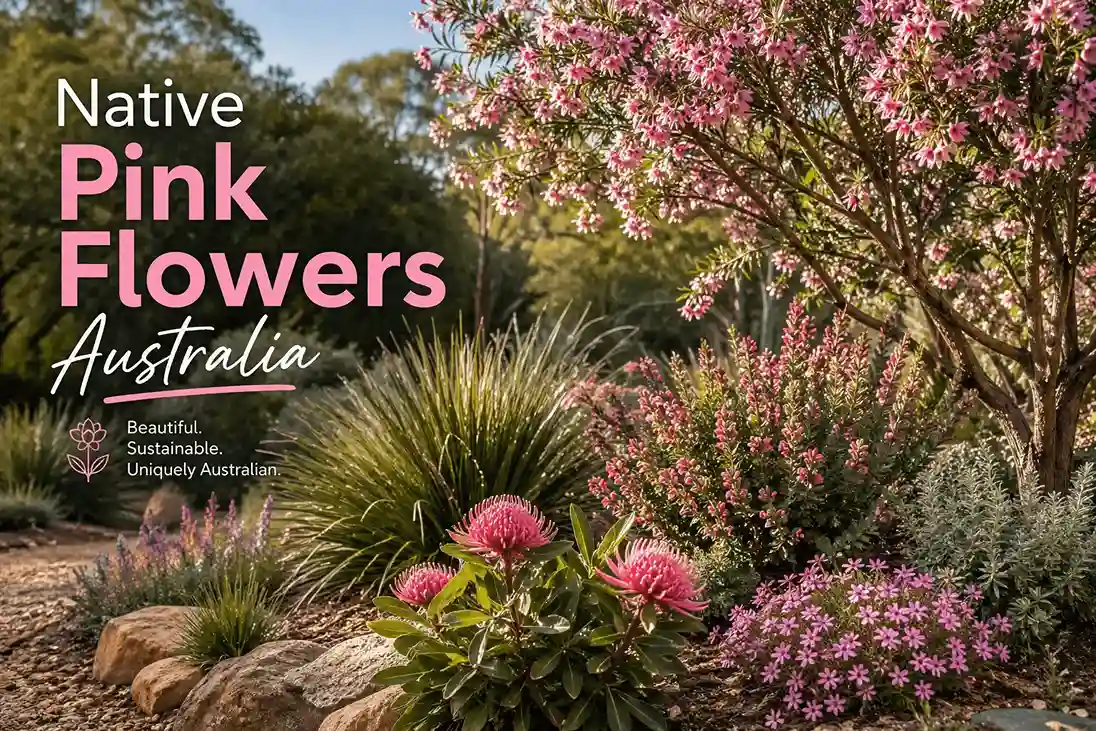
Native pink flowers in Australia refer to a wide range of flowering plants, shrubs, and trees that naturally occur across Australian ecosystems and produce pink blooms. These plants are uniquely adapted to Australian climates, soils, and wildlife, making them highly resilient and practical for gardening and landscaping. Native pink flowers Australia include both small ground covers and large flowering trees, offering versatility in garden design. Their ecological benefits—such as supporting pollinators and requiring less water—make them ideal for sustainable gardening in both urban and rural environments.
Quick Summary
- Native pink flowers Australia include shrubs, trees, grasses, and ground covers adapted to local climates
- Common types include pink flowering shrubs, small plants, and flowering trees
- Many species are drought-tolerant and require minimal maintenance
- Identification depends on flower shape, plant size, and growth habit
- Suitable for landscaping, biodiversity support, and low-water gardens
What Are Australian Native Flowers?
Australian native flowers are plants that naturally evolved and occur in Australia without human introduction. These plants are adapted to local conditions such as low-nutrient soils, variable rainfall, and extreme temperatures. Australian native plants are part of a unique ecosystem shaped by climate and geography (see Australian flora on Wikipedia).
Native plants typically:
- Thrive in Australian soil types, often low in phosphorus
- Support native wildlife, including birds, bees, and insects
- Require less water compared to non-native ornamental species
The key difference between native and non-native plants is origin. Native species belong to Australia’s ecosystems, while non-native ornamentals are introduced from other regions and may require more maintenance.
Types of Native Pink Flowers in Australia
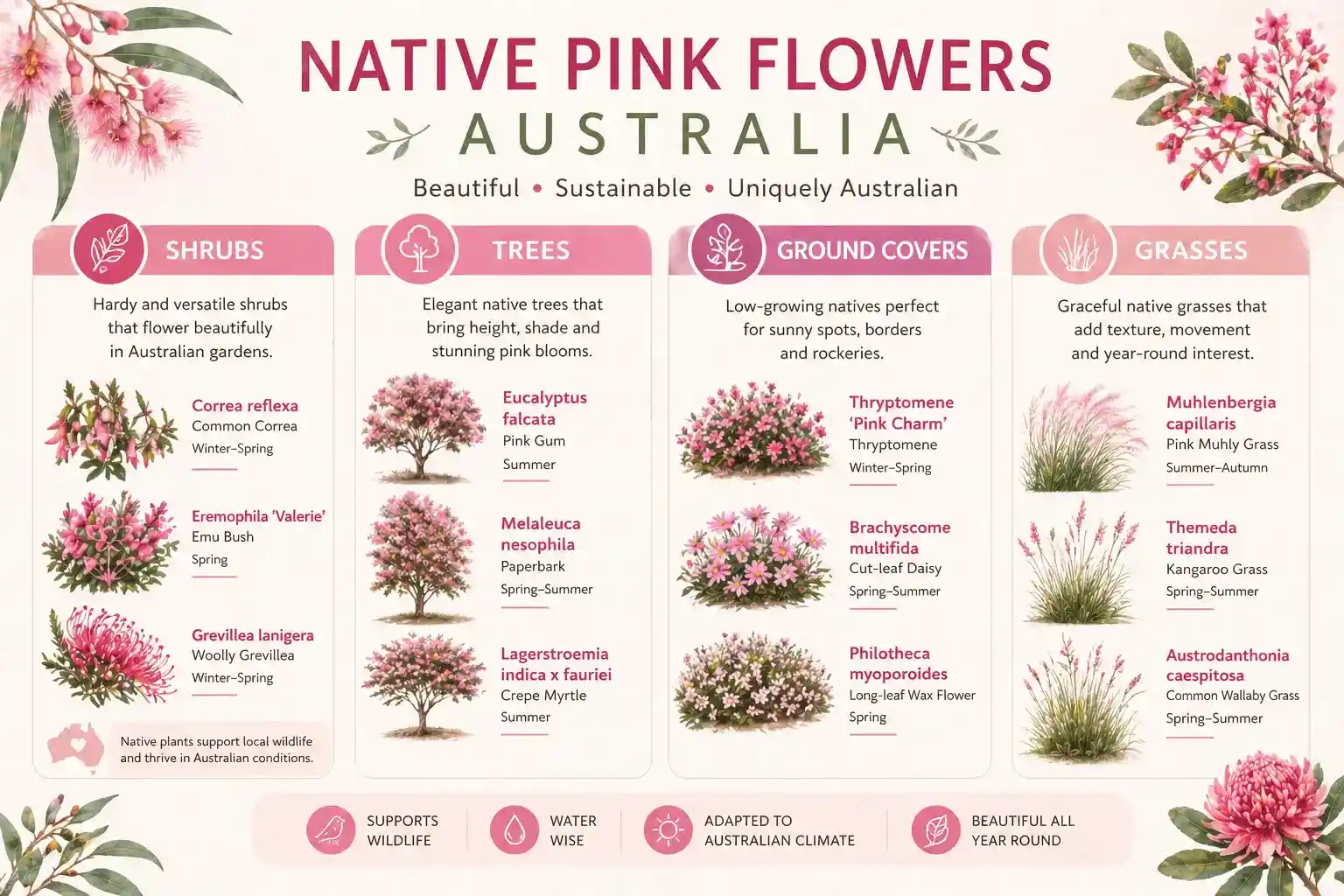
Native pink flowers in Australia can be categorized based on their structure and growth habit.
Common categories include:
- Shrubs (dense, bushy growth)
- Trees (taller with a central trunk)
- Ground covers (low, spreading plants)
- Grasses (fine-textured and ornamental forms)
Each type serves a different purpose in landscaping and ecological support.
Pink Flowering Shrubs (Most Common in Gardens)
Pink flowering shrubs are the most widely used native plants in Australian gardens due to their manageable size and dense growth.
Key characteristics:
- Evergreen foliage in many species
- Bushy form suitable for hedging
- Moderate height, typically 1–3 meters
Common uses:
- Garden hedges
- Privacy screens
- Wildlife-friendly planting
These shrubs often produce clusters of small pink flowers and are valued for year-round structure.
Grevillea species are among the most popular pink flowering shrubs, especially for hedging—see detailed care in this Grevillea hedge guide.
Pink Flowering Trees
Pink flowering trees in Australia range from small ornamental trees to larger shade trees.
Types:
- Small trees (3–6 meters): suitable for residential gardens
- Large trees (6+ meters): used for shade and landscape features
Characteristics:
- Single trunk with branching canopy
- Seasonal pink blooms
- Attractive for birds and pollinators
They are commonly used as focal points in garden design.
Small Pink Flowering Plants and Ground Covers
Small pink flowering plants are compact and ideal for filling gaps in garden beds.
Features:
- Low-growing and spreading habit
- Small, delicate pink flowers
- Height typically under 50 cm
Best uses:
- Borders
- Rock gardens
- Ground cover to prevent weeds
These plants are especially useful in low-maintenance landscaping.
Some trailing native species, such as climbing varieties, can also be trained vertically—similar to techniques used in Hibbertia scandens trellis growing guides.
Native Grasses and Unique Forms
Some Australian native grasses produce pink-toned flowers or seed heads, adding texture to landscapes.
Characteristics:
- Fine foliage
- Soft, feathery pink blooms
- Movement with wind
These plants are often used in modern landscaping for contrast and visual interest.
Popular Native Pink Flowers Australia (Examples and Identification)
Several native species are well known for their pink blooms.
Examples:
- Kunzea baxteri (Crimson Kunzea)
- Grevillea species (pink varieties)
- Eremophila species
Identification cues:
- Flower structure (clustered, tubular, or brush-like)
- Leaf shape (needle-like, oval, or narrow)
- Growth habit (spreading, upright, or bushy)
Correct identification helps in selecting suitable plants for specific conditions.
One notable example is the Emu Bush (Eremophila), known for its vibrant pink blooms and adaptability—explore more in Emu Bush secrets for stunning gardens.
Table: Common Native Pink Flowers and Their Characteristics
| Plant Type | Flower Size | Growth Habit | Best Use |
| Shrubs | Small–medium | Bushy | Hedging |
| Trees | Medium–large | Upright | Shade |
| Ground covers | Small | Spreading | Borders |
How to Identify Pink Flowering Plants in Australia
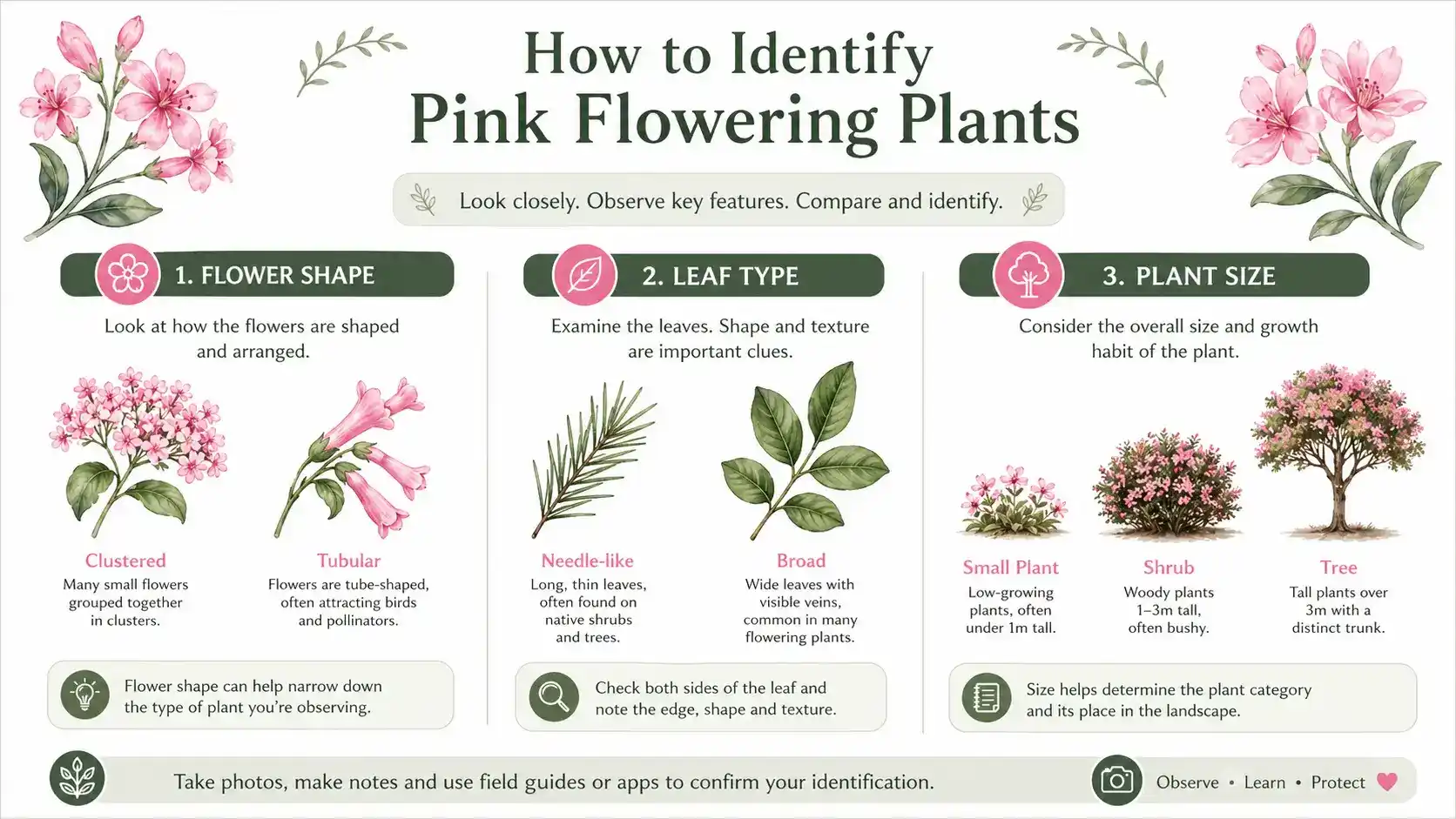
Pink flowering plants in Australia can be identified by observing key physical traits. The most reliable method is examining flower structure, leaf type, and overall plant size.
Identification factors:
- Flower shape: tubular, clustered, or open blooms
- Leaf structure: needle-like, broad, or waxy
- Plant size: determines whether it is a shrub, tree, or small plant
Accurate identification improves plant selection and care outcomes.
Best Native Pink Flowers for Landscaping
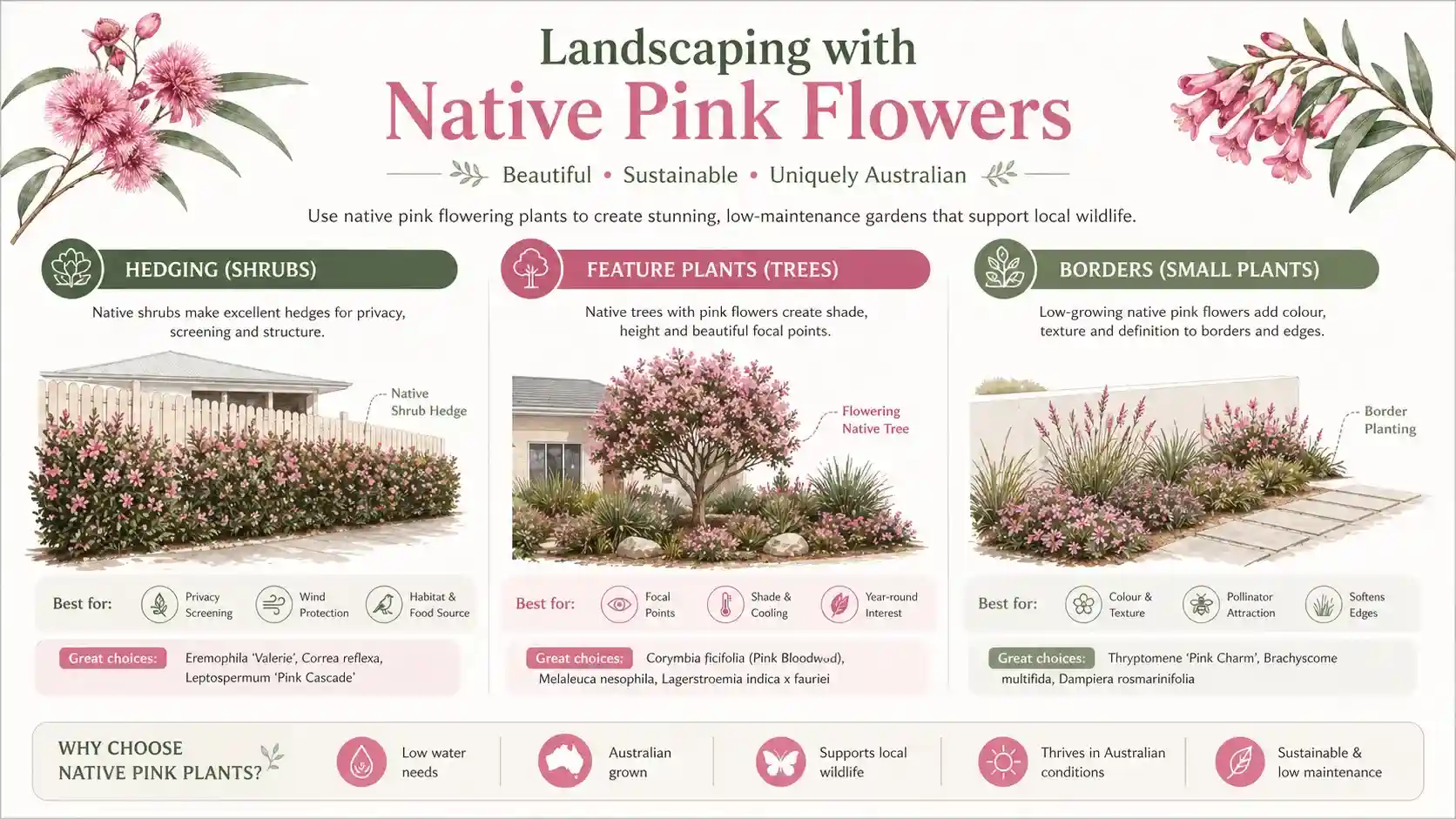
Native pink flowers are ideal for landscaping because they are adapted to Australian conditions and require minimal care.
Key benefits:
- Drought tolerance
- Low maintenance
- Support for pollinators
Landscaping uses:
- Hedging: pink flowering shrubs
- Feature plants: pink flowering trees
- Borders: small pink flowering plants
These plants contribute to both visual appeal and ecological sustainability.
Growth Habits, Size, and Environmental Conditions
Native pink flowering plants vary significantly in size and growth patterns.
Size variations:
- Small plants: under 50 cm
- Shrubs: 1–3 meters
- Trees: 3–10+ meters
Environmental factors:
- Soil: well-draining, often sandy or loamy
- Rainfall: adaptable to low to moderate levels
- Sunlight: most prefer full sun
Understanding these factors ensures proper placement and growth.
Care Guide for Native Pink Flowering Plants
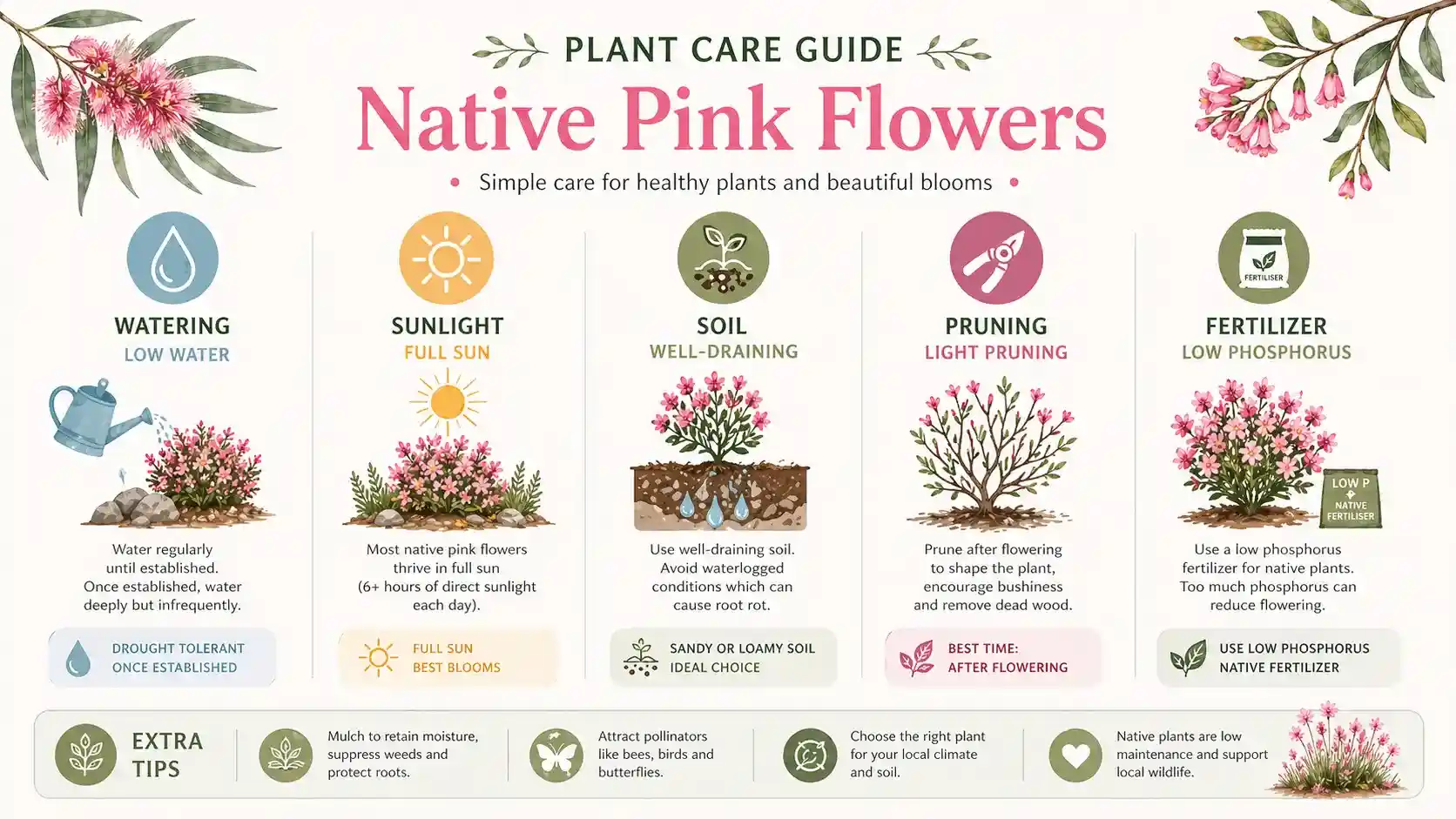
Native pink flowering plants generally require simple care due to their adaptability.
Care requirements:
- Watering: low once established; avoid overwatering
- Light: full sun preferred, some tolerate partial shade
- Soil: well-draining, low phosphorus
- Fertilizer: use native-specific fertilizers
- Pruning: light pruning to maintain shape
Proper care supports healthy growth and consistent flowering.
While these plants are primarily suited for outdoor environments, many basic care principles—such as light, watering, and soil—are similar to those covered in a broader guide to house plants.
Common Problems and Solutions (Plant Troubleshooting)
Common issues with native pink flowering plants are often related to incorrect care.
Problems and solutions:
- Yellowing leaves: caused by poor drainage or overwatering → improve soil drainage
- Poor flowering: due to lack of sunlight → increase sun exposure
- Pests: occasional insect damage → use appropriate treatments
Preventive care is more effective than reactive solutions.
Comparison: Shrubs vs Trees vs Small Pink Flowering Plants
Comparison Table
| Feature | Shrubs | Trees | Small Plants |
| Size | Medium | Large | Small |
| Maintenance | Moderate | Low–moderate | Low |
| Best Use | Hedges | Shade | Borders |
This comparison helps in selecting the right plant type for specific garden needs.
Beginner Mistakes When Growing Native Pink Flowers
Many gardening issues arise from common mistakes.
Common mistakes:
- Overwatering native plants
- Using high-phosphorus fertilizers
- Planting in unsuitable climates
- Ignoring mature plant size
Avoiding these errors improves plant health and longevity.
Seasonal and Environmental Considerations
Native pink flowers respond to seasonal changes and environmental conditions.
Key points:
- Flowering seasons vary by species
- Climate zones affect growth success
- Drought and rainfall cycles influence blooming
Planning according to seasons ensures better results.
Native Pink Flowers in Broader Gardening Context
Native pink flowers play an important role in sustainable gardening.
Applications:
- Indoor vs outdoor use (most suited for outdoor environments)
- Landscape design integration
- Supporting biodiversity and pollinators
They contribute to ecological balance and long-term garden health.
Conclusion
Native pink flowers Australia provide a diverse selection of shrubs, trees, and small plants suitable for various landscapes and climates. Their natural adaptability, low maintenance requirements, and ecological benefits make them an excellent choice for sustainable gardening. By understanding plant types, identification methods, and proper care techniques, gardeners can successfully grow and maintain these plants for long-term performance and visual appeal.
FAQs
What are some common native pink flowers in Australia?
Common native pink flowers include shrubs, trees, and ground covers such as Kunzea and Grevillea species that are adapted to Australian climates.
How do I identify a pink flowering shrub in Australia?
Identification is based on flower shape, leaf structure, plant size, and overall growth pattern.
Are native pink flowers suitable for landscaping?
Yes, they are drought-tolerant, low-maintenance, and suitable for hedging, borders, and feature planting.
What is the difference between pink flowering trees and shrubs?
Trees are taller with a single trunk, while shrubs are shorter and bushier with multiple stems.
Do native pink flowers require special care?
They require well-draining soil, low-phosphorus fertilizers, adequate sunlight, and minimal watering once established.