Introduction
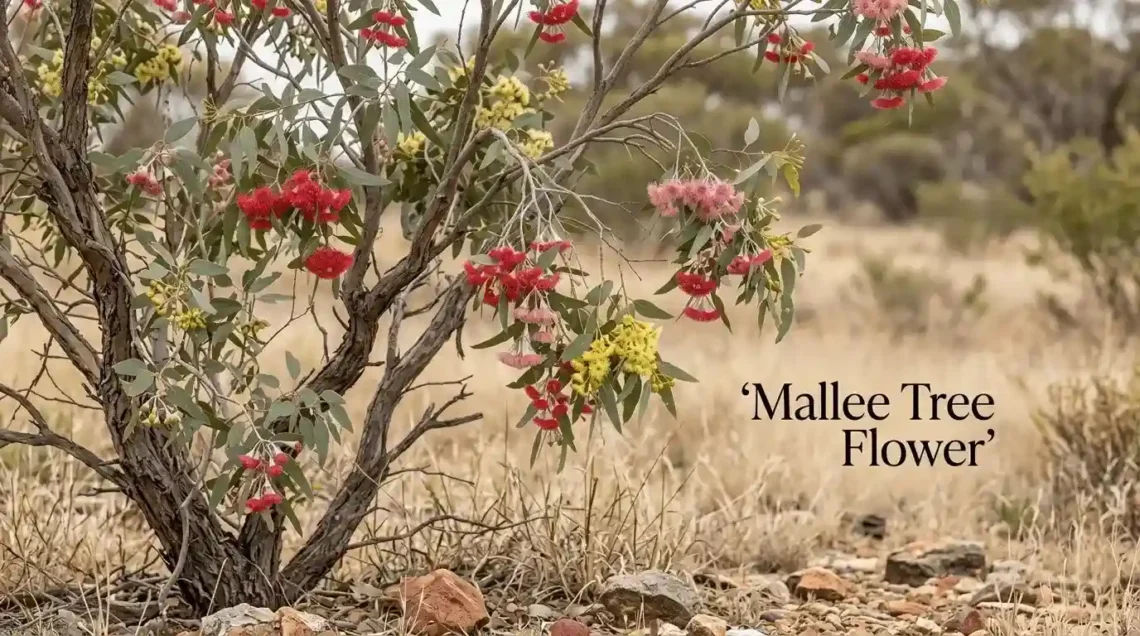
The mallee tree flower refers to the distinctive blossoms produced by multi-stemmed eucalyptus species known as mallees. These flowers are notable for their vibrant colors, unique structures, and ecological importance within dry ecosystems. Common species like Eucalyptus erythronema (red flowered mallee) and Eucalyptus rhodantha (rose mallee) are widely recognized for their ornamental blooms. Unlike traditional flowers, mallee eucalyptus flowers feature prominent stamens that create a striking visual effect. This guide explains what mallee tree flowers are, how they grow, and what makes them unique within the eucalyptus family.
Quick Summary
- Mallee tree flowers come from multi-stem eucalyptus species adapted to dry climates.
- Their blooms feature showy stamens rather than traditional petals.
- Flower colors range from red and pink to yellow and cream depending on species.
- Flowering occurs seasonally and depends on environmental conditions.
What Is a Mallee Tree Flower?
A mallee tree flower is the bloom produced by a mallee-form eucalyptus, a group of species characterized by multi-stem growth emerging from a woody underground structure called a lignotuber. These flowers are structurally unique within the plant family Myrtaceae. Mallee trees belong to the genus Eucalyptus, a diverse group of flowering plants native to Australia (learn more on Wikipedia).
Mallee eucalyptus differs from standard eucalyptus trees primarily in growth form. While typical eucalyptus species develop a single trunk, mallee gums grow multiple stems from the base, allowing them to regenerate after fire or drought.
Key Characteristics of Mallee Trees
- Multi-stem growth habit
- Underground lignotuber for regeneration
- Adaptation to arid and semi-arid environments
Botanically, eucalyptus flowers lack true petals. Instead, they consist of dense clusters of stamens that form the visible, colorful portion of the bloom.
Do Eucalyptus Trees Flower? Understanding Blooming Behavior
Yes, eucalyptus trees do flower, and all species—including mallee eucalyptus—produce blooms under suitable conditions. However, flowering frequency and intensity vary depending on species, maturity, and environment.
Flowering in eucalyptus is influenced by seasonal and climatic factors rather than a fixed annual schedule.
Factors Affecting Flowering
- Seasonal blooming patterns
- Climate and rainfall influence
- Age and maturity requirements
Young trees may take several years to flower, especially in less favorable conditions.
Types of Mallee Tree Flowers (Species Overview)
Several mallee eucalyptus species are known for their distinctive flowers, particularly in regions like Western Australia.
Notable Flowering Mallee Species
- Eucalyptus erythronema (red flowered mallee)
- Eucalyptus rhodantha (rose mallee / red flowering mallee)
- Eucalyptus kruseana (bookleaf mallee)
- Eucalyptus oleosa
- Eucalyptus socialis
Key Differences Among Species
- Flower color variations (red, pink, yellow, cream)
- Differences in leaf shape and growth form
- Regional adaptation to arid climates
These species are often used in landscaping due to their drought tolerance and ornamental value. Mallee species are often grouped within smaller eucalyptus varieties, and understanding their growth habits can be further explored in this guide on Dwarf Eucalyptus Trees Guide: 7+ Smart Growing Tips.
Flower Structure and Appearance
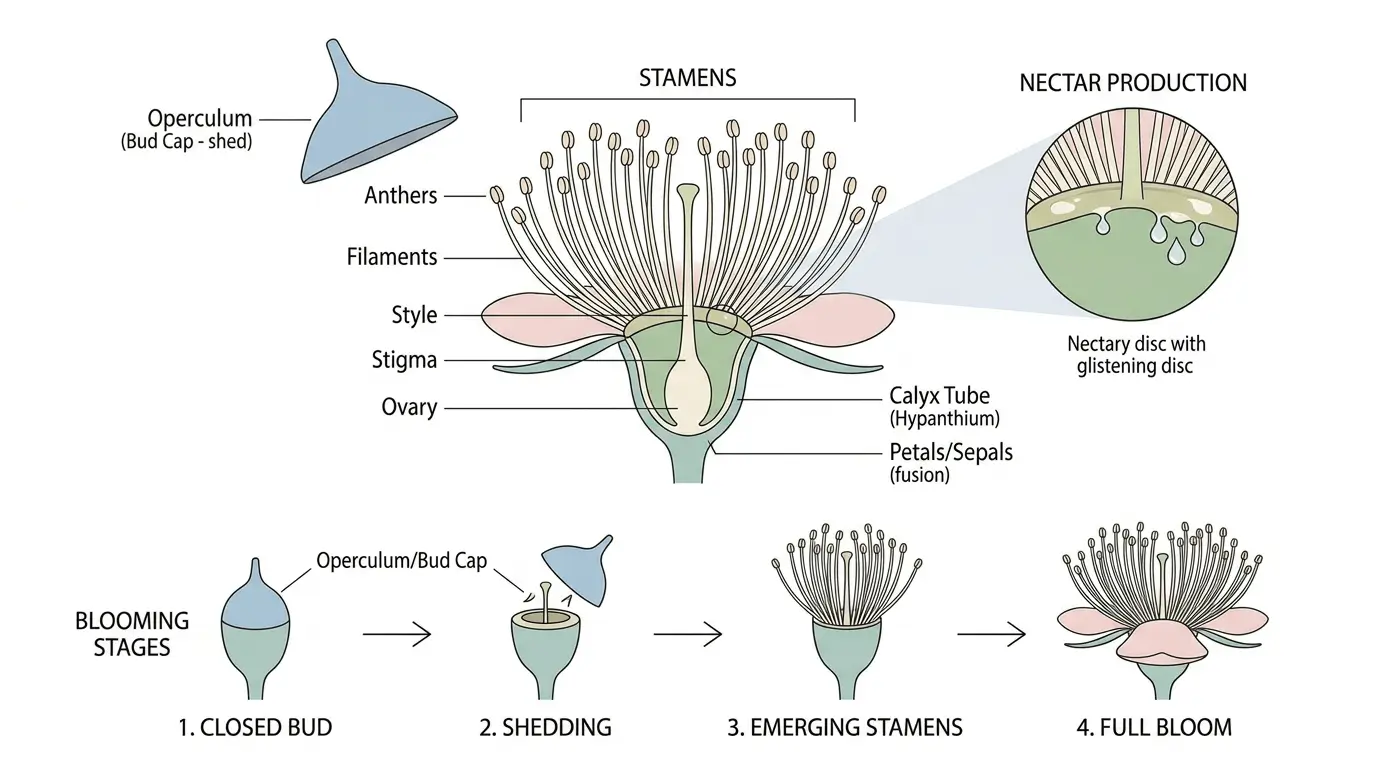
Mallee tree flowers look different from typical flowers because they lack petals and instead display dense clusters of stamens. This gives them a fluffy, brush-like appearance.
Structural Features
- Absence of petals; stamens dominate
- Bud caps (operculum) that fall off before blooming
- Nectar production attracting pollinators
This structure is an adaptation that enhances pollination by insects and birds.
Mallee Tree Flower Colors and Variations
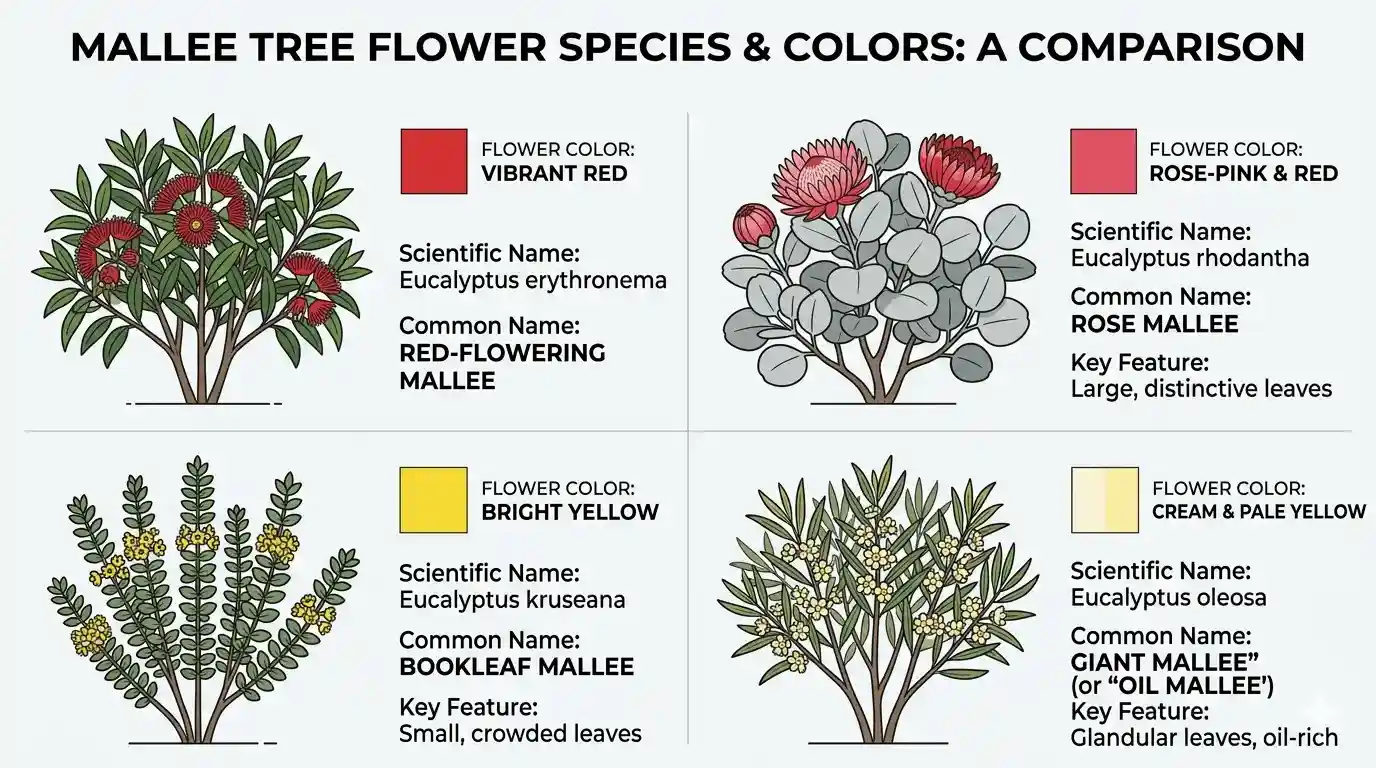
Mallee tree flowers exhibit a wide range of colors depending on the species, making them visually diverse and attractive in native landscapes.
Table: Mallee Flower Color by Species
| Species | Common Name | Flower Color |
| Eucalyptus erythronema | Red flowered mallee | Red |
| Eucalyptus rhodantha | Rose mallee | Pink / Red |
| Eucalyptus kruseana | Bookleaf mallee | Yellow |
| Eucalyptus oleosa | Red mallee | Cream / Yellow |
These color variations are often used to identify species and select plants for ornamental use.
Mallee Tree Flower Height and Growth Characteristics
Mallee trees are generally smaller than standard eucalyptus trees, making them suitable for gardens and managed landscapes.
Growth Characteristics
- Typical height range: 2–10 meters
- Multi-stem canopy spread
- Size influenced by soil, water, and climate
Their compact growth habit is a direct adaptation to dry environments.
Environmental Conditions That Influence Flowering
Mallee eucalyptus trees require specific environmental conditions to flower effectively, especially in arid ecosystems.
Key Environmental Factors
- Full sunlight exposure
- Well-drained, sandy soils
- High drought tolerance
- Seasonal rainfall patterns
Insufficient sunlight or poor drainage can significantly reduce flowering.
Care Guide for Encouraging Mallee Tree Flowering
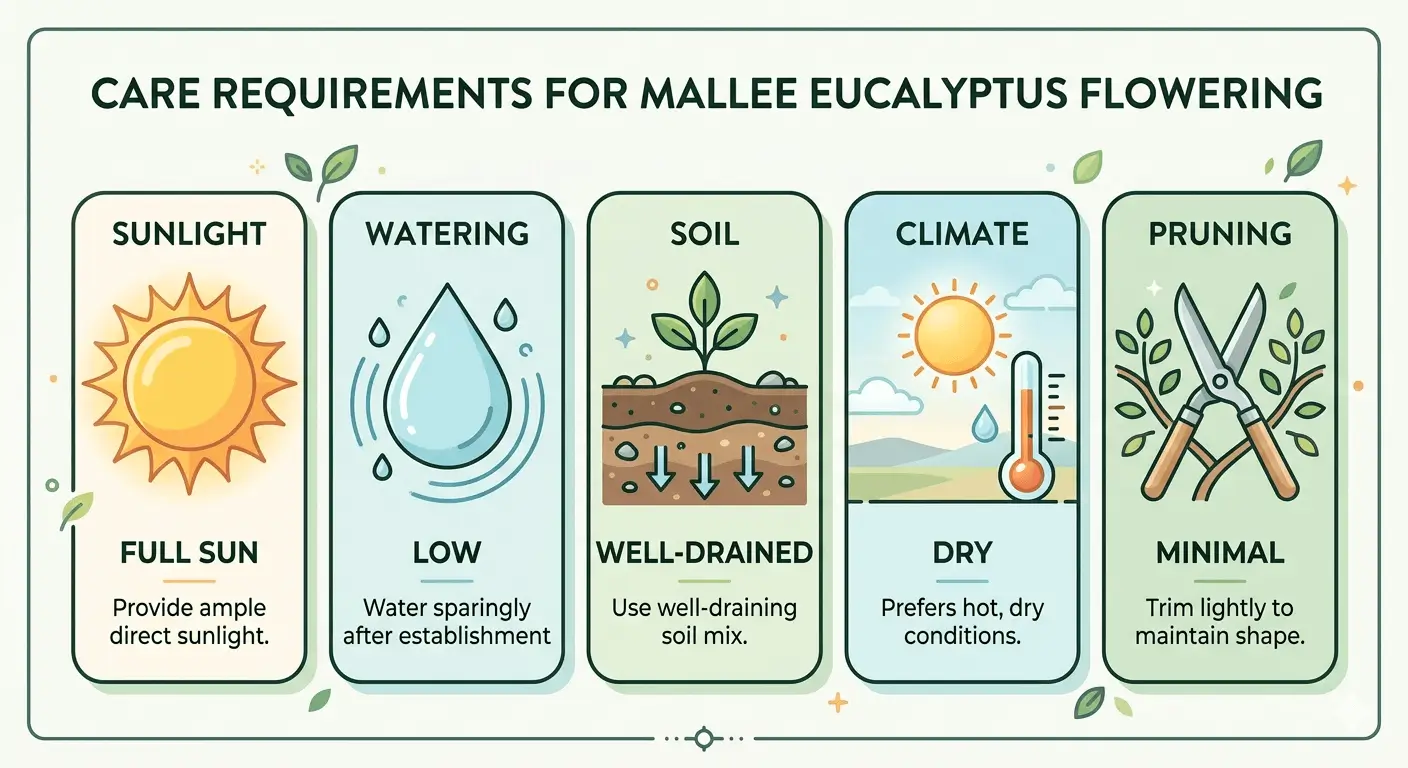
Proper care is essential for encouraging healthy growth and consistent flowering in mallee plants.
Basic Care Requirements
- Watering: Low to moderate once established
- Light: Full sun is essential
- Soil: Well-drained, nutrient-poor soils preferred
- Pruning: Minimal, mainly for shape
- Climate: Best suited to warm, dry regions
A common mistake is overwatering, which can stress the plant and reduce flowering. For practical care techniques across similar eucalyptus types, see Dwarf Baby Blue Eucalyptus Tree: 5+ Easy Care Tips, which shares comparable watering and light requirements.
Common Problems and Why Mallee Trees May Not Flower
Mallee trees may fail to flower due to environmental or care-related issues.
Common Causes
- Lack of sunlight → reduced flowering
- Overwatering → root stress
- Poor soil drainage → inhibited growth
- Immature plants → delayed blooming
Solutions
- Improve soil drainage
- Ensure full sun exposure
- Reduce watering frequency
- Allow sufficient time for plant maturity
Comparison: Mallee Eucalyptus vs Other Flowering Trees
Mallee eucalyptus trees are often confused with unrelated plants such as tree mallows, but they differ significantly in structure and ecology.
Comparison Block
| Feature | Mallee Eucalyptus | Mallow Tree / Tree Mallow |
| Plant type | Tree (woody) | Shrub/perennial |
| Flower structure | Stamen-dominant | Petal-based |
| Climate | Arid | Mild/temperate |
| Growth form | Multi-stem | Single or bushy |
Unique Characteristics That Differentiate Mallee Trees
Mallee eucalyptus species possess several distinctive traits that set them apart from other trees.
Key Features
- Lignotuber-based regeneration after fire
- Adaptation to harsh Australian landscapes
- Distinctive bark and foliage
- Important ecological role in native habitats
These adaptations allow survival in extreme environments.
Regional Distribution of Flowering Mallee Trees
Mallee trees are native to Australia and are especially common in semi-arid regions.
Distribution Highlights
- Found primarily in southern Australia
- Common in Western Australia mallee regions
- Thrive in mallee woodlands and dry ecosystems
Their distribution reflects their adaptation to low-rainfall environments. Mallee eucalyptus forms an important part of Australia’s native flora, which is covered in detail in the Ultimate Guide to Native Trees of Australia: Identification & Care.
Beginner Mistakes When Growing Mallee Plants
Growing mallee plants successfully requires understanding their natural habitat.
Common Mistakes
- Overwatering drought-adapted plants
- Planting in heavy clay soil
- Providing insufficient sunlight
- Expecting rapid growth or early flowering
Avoiding these mistakes improves plant health and flowering success.
Broader Gardening Connections
Mallee eucalyptus trees play an important role in sustainable gardening practices.
Related Applications
- Ideal for drought-tolerant landscaping
- Suitable for native plant gardens
- Relevant in xeriscaping and water-efficient design
- Useful for studying plant propagation in dry climates
While mallee eucalyptus thrives outdoors, understanding plant care fundamentals can be expanded through a broader Guide to House Plants, especially for indoor plant environments and growth management.
Conclusion
The mallee tree flower is a distinctive feature of multi-stem eucalyptus species adapted to dry environments. With unique structures, vibrant colors, and ecological resilience, mallee eucalyptus trees stand out among flowering plants. Understanding their growth habits, flowering conditions, and care requirements enables gardeners to cultivate them effectively while appreciating their role in arid ecosystems.
FAQs
1. What is a mallee tree flower?
A mallee tree flower is the bloom of a multi-stem eucalyptus species, characterized by prominent stamens and vibrant colors rather than traditional petals.
2. Do all eucalyptus trees produce flowers?
Yes, all eucalyptus trees flower, but timing and frequency depend on species, maturity, and environmental conditions.
3. What color are mallee eucalyptus flowers?
They range from red and pink to yellow and cream, depending on species such as Eucalyptus erythronema and Eucalyptus kruseana.
4. How tall do mallee trees grow?
Mallee trees typically grow between 2 to 10 meters tall with multiple stems arising from a lignotuber.
5. Why is my mallee tree not flowering?
Common reasons include insufficient sunlight, overwatering, poor drainage, or lack of plant maturity.
6. Where do mallee trees naturally grow?
Mallee trees are native to Australia, especially in semi-arid regions like Western Australia.