Introduction
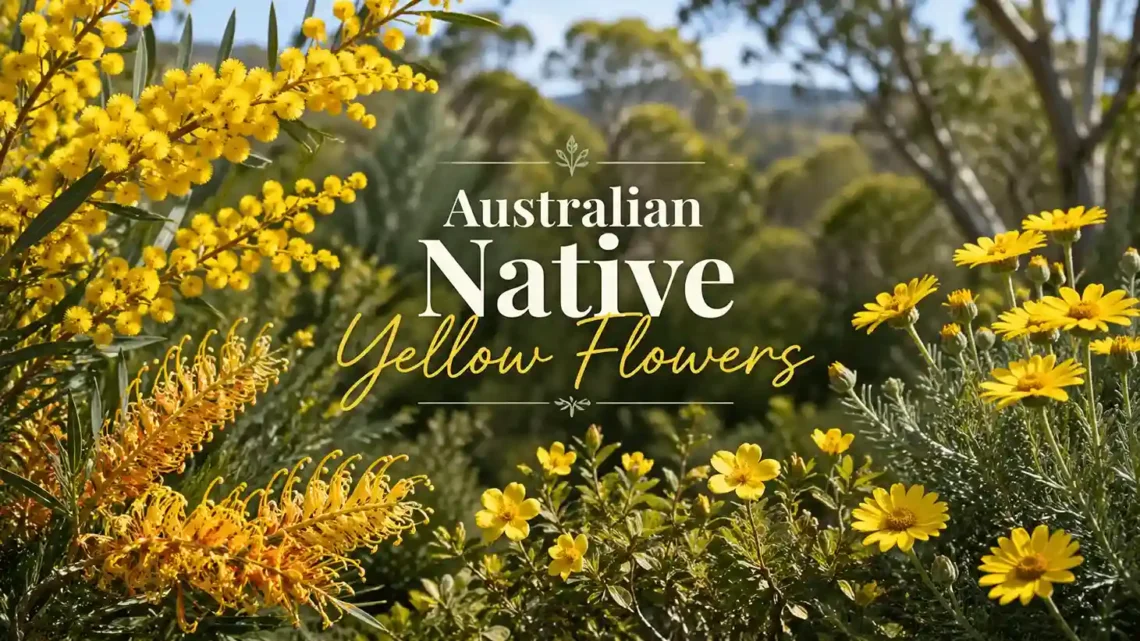
Australian native yellow flowers refer to a diverse group of flowering plants, trees, shrubs, and ground covers found across Australia that produce yellow blooms. These plants are widely valued for their adaptability to harsh climates, ecological importance, and strong visual impact in gardens and landscapes. Many species are drought-tolerant and support pollinators such as bees and birds. This article covers identification methods, plant types, growth habits, and care practices for yellow native flowers in Australia, helping gardeners and plant enthusiasts understand how to select and maintain these resilient and attractive species.
Quick Summary
- Australian native yellow flowers include trees, shrubs, ground covers, and vines adapted to various climates
- Many species are drought-tolerant and support pollinators and native wildlife
- Identification depends on flower shape, plant size, and leaf structure
- Common examples include wattles, grevilleas, hibbertia, and cassia
What Are Australian Native Yellow Flowers?
Australian native yellow flowers are plants indigenous to Australia that produce yellow blooms as part of their reproductive cycle. These plants play a key ecological role by supporting pollinators, improving soil health, and stabilizing ecosystems.
Yellow blooms are common because:
- Bright yellow attracts insects such as bees
- High visibility improves pollination success
- Many species evolved in open, sunny environments
These plants fall into several categories:
- Trees (e.g., wattles)
- Shrubs (e.g., grevilleas)
- Ground covers (e.g., daisies)
- Vines (climbing species)
Types of Australian Native Yellow Flowers (By Plant Category)
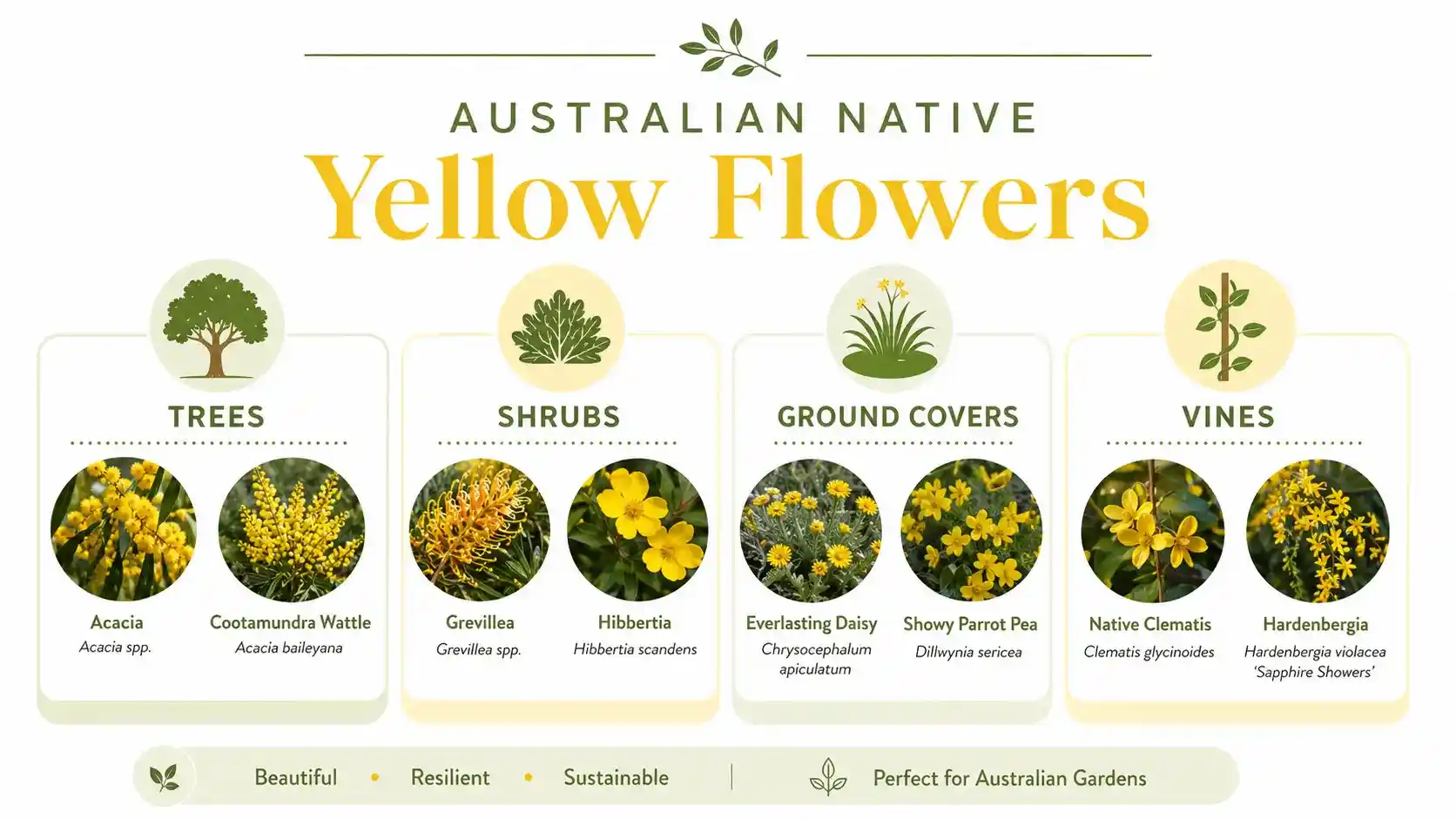
Yellow Flowering Trees in Australia
Yellow flowering trees in Australia are typically medium to tall plants used for shade and landscaping. The most well-known example is the genus Acacia, commonly called wattle.
Key examples:
- Acacia (Wattle) – Features spherical yellow flower clusters; Australia’s national floral emblem
- Cassia / Senna – Produces large, bright yellow flowers; often used as ornamental trees
Identification traits:
- Height: medium to tall
- Flower shape: ball-like or open clusters
- Leaves: fine or compound
For a broader understanding of native species, refer to this guide to native trees of Australia for identification and care insights.
Shrubs with Yellow Flowers in Australia
Shrubs with yellow flowers are widely used in borders and hedges due to their manageable size and dense growth.
Common examples:
- Grevillea species – Some varieties produce yellow tubular flowers
- Hibbertia (Guinea flower) – Small shrub with bright yellow, open-petal flowers
Characteristics:
- Height: low to medium
- Growth: bushy and compact
- Flowering: often seasonal but abundant
Ground Covers and Low-Growing Plants
Ground covers are ideal for soil protection and low-maintenance landscaping.
Examples:
- Chrysocephalum (Everlasting daisies) – Long-lasting yellow blooms
- Native peas – Small plants with delicate yellow flowers
Uses:
- Prevent soil erosion
- Fill garden gaps
- Create dense, flowering carpets
Vines and Climbing Yellow Flowering Plants
Some Australian native vines produce yellow flowers and are suitable for vertical gardening.
Features:
- Climbing or trailing growth habit
- Moderate flower size
- Suitable for fences and trellises
These plants add vertical interest and can be used in compact garden spaces.
Common and Famous Australian Yellow Flowers
Australia is home to several iconic yellow flowering plants.
Notable examples:
- Golden Wattle (Acacia pycnantha) – National floral symbol
- Billy Buttons (Craspedia globosa) – Round yellow flowers used in floral design
The Golden Wattle (Acacia pycnantha), part of the Acacia genus, is Australia’s national floral emblem and widely recognized for its bright yellow blooms.
Compared to red native Australian flowers or white-yellow flowering species, yellow blooms are often more dominant in native landscapes due to their ecological advantages. While yellow blooms dominate many landscapes, you can also explore contrast with other native colors like pink in this native pink flowers Australia guide.
How to Identify Yellow Native Flowers in Australia?
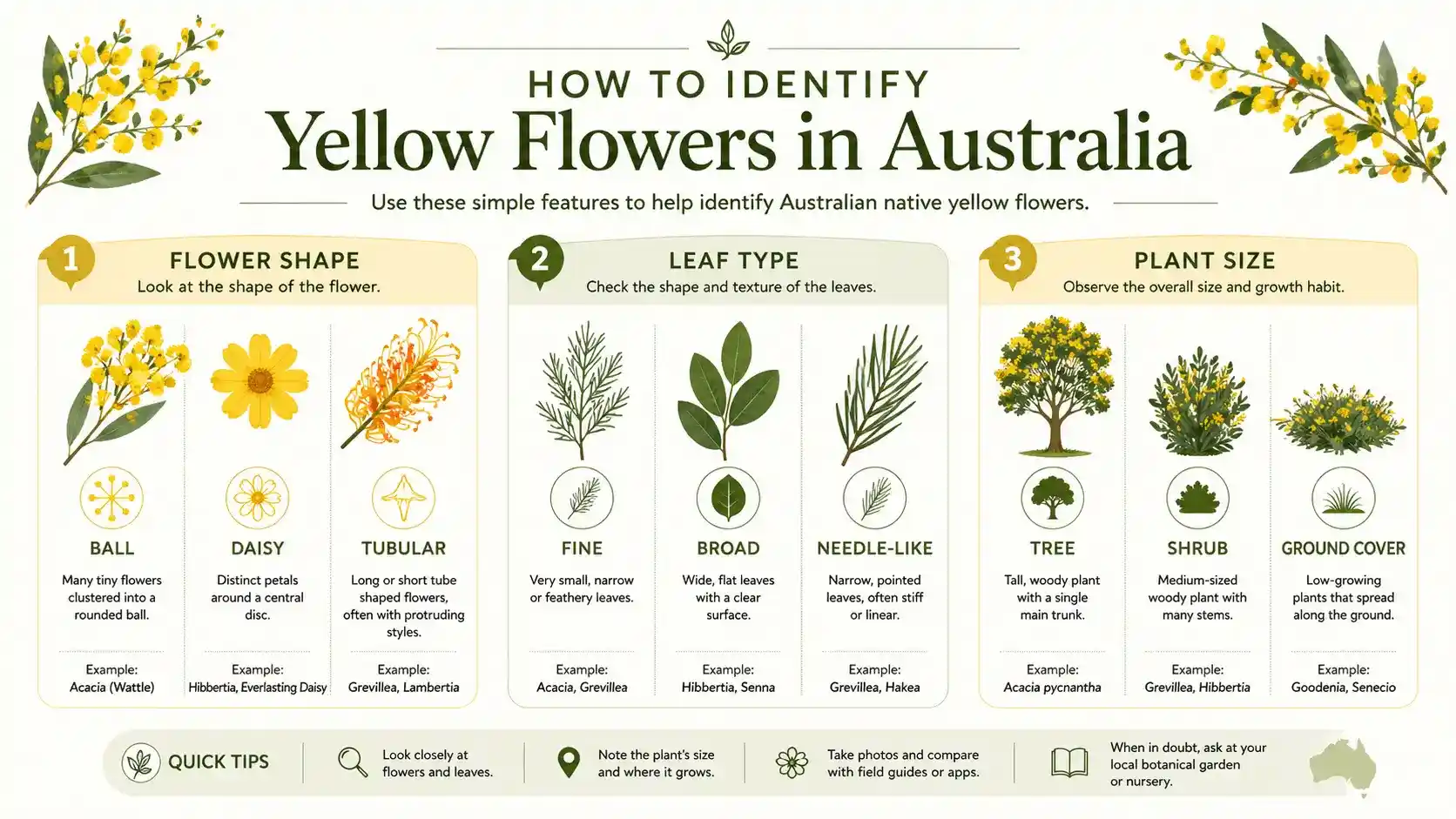
To identify a plant with yellow flowers in Australia, observe the flower shape, plant size, and leaf structure. These characteristics provide reliable classification across species.
Key identification factors:
- Flower shape: ball (wattle), daisy (chrysocephalum), tubular (grevillea)
- Plant type: tree, shrub, or ground cover
- Leaf structure: fine, broad, or needle-like
Additional clues:
- Flower clustering (common in wattles)
- Size differences: large vs small yellow flowers
- Growth habit: spreading, upright, or climbing
Comparison of Yellow Flowering Plant Types in Australia
| Plant Type | Examples | Height Range | Common Use | Flower Size |
| Trees | Acacia, Cassia | Medium to tall | Shade, landscaping | Small to large |
| Shrubs | Grevillea, Hibbertia | Low to medium | Borders, hedges | Small |
| Ground Covers | Everlasting daisies | Low | Soil cover | Small |
| Vines | Native climbers | Variable | Vertical gardens | Medium |
This comparison helps differentiate plant categories for landscaping and identification purposes.
Perennial Yellow Flowers and Long-Lasting Bloomers
Perennial yellow flowers are plants that live for multiple years and bloom seasonally. Many Australian natives fall into this category.
Benefits:
- Reduced need for replanting
- Consistent flowering cycles
- Lower maintenance over time
Blooming patterns depend on climate, with many species flowering in spring and early summer.
Growing Conditions for Australian Yellow Flowering Plants
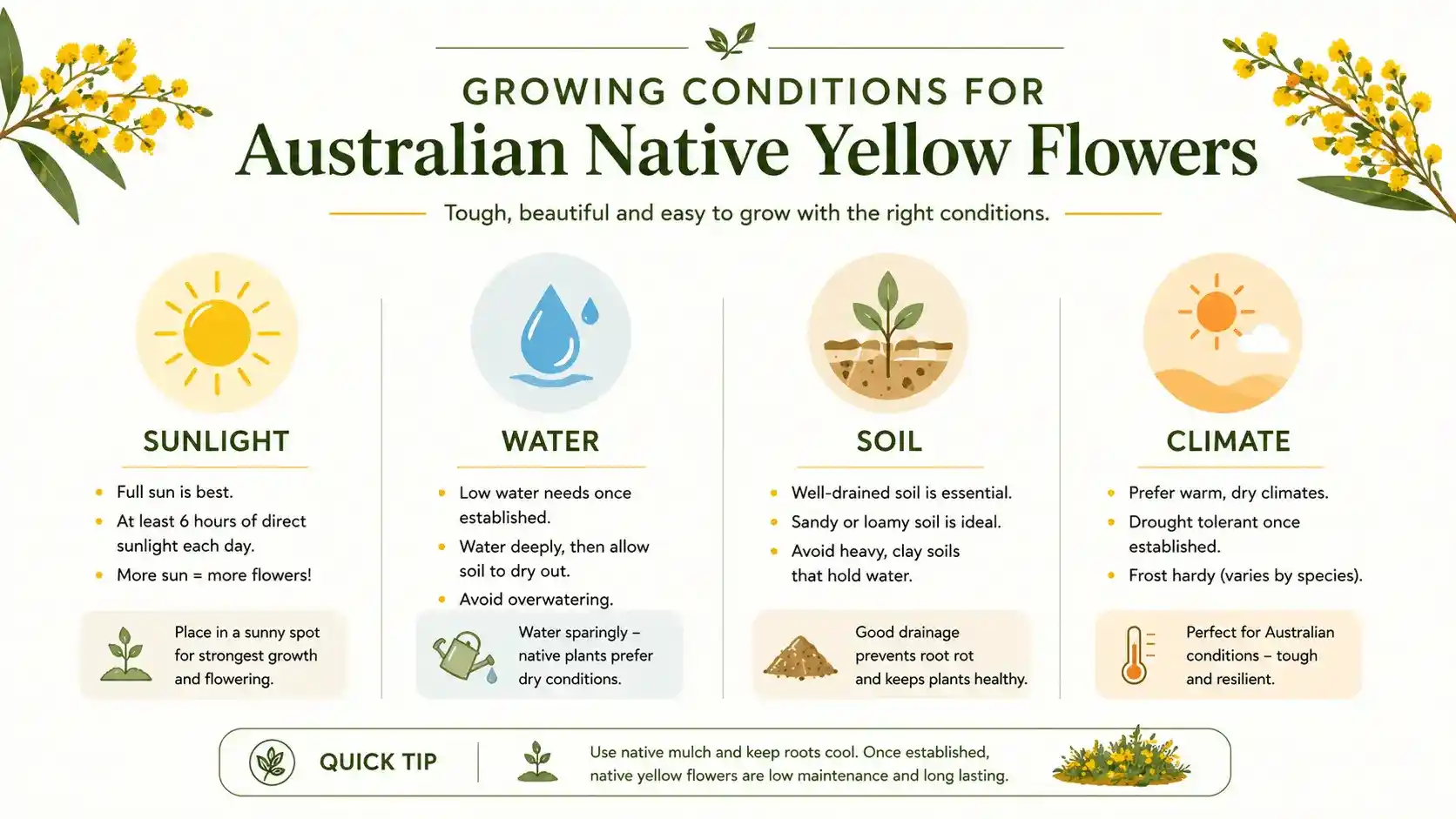
Climate and Soil Requirements
Most Australian yellow flowering plants are adapted to a wide range of climates, from arid to coastal regions.
Preferred soil conditions:
- Well-drained soil
- Sandy or loamy textures
- Low nutrient levels
Poor drainage is a common cause of plant stress.
Sunlight and Water Needs
Most species require full sun for optimal flowering. Insufficient sunlight often leads to reduced blooms.
Water requirements:
- Low to moderate
- High drought tolerance once established
Overwatering is a common mistake, especially in native plants.
Care Guide for Australian Native Yellow Flowers
Proper care ensures healthy growth and long-lasting blooms.
Key care practices:
- Watering: Low to moderate depending on species
- Soil: Well-drained, low phosphorus
- Pruning: Encourages new growth and maintains shape
- Fertilizing: Use native-specific fertilizers
Best practices:
- Avoid overwatering
- Use fertilizers designed for native plants
- Monitor seasonal growth changes
If you’re also growing plants indoors, this guide to house plants explains core care principles that apply to many species.
Common Problems and Solutions (Troubleshooting Guide)
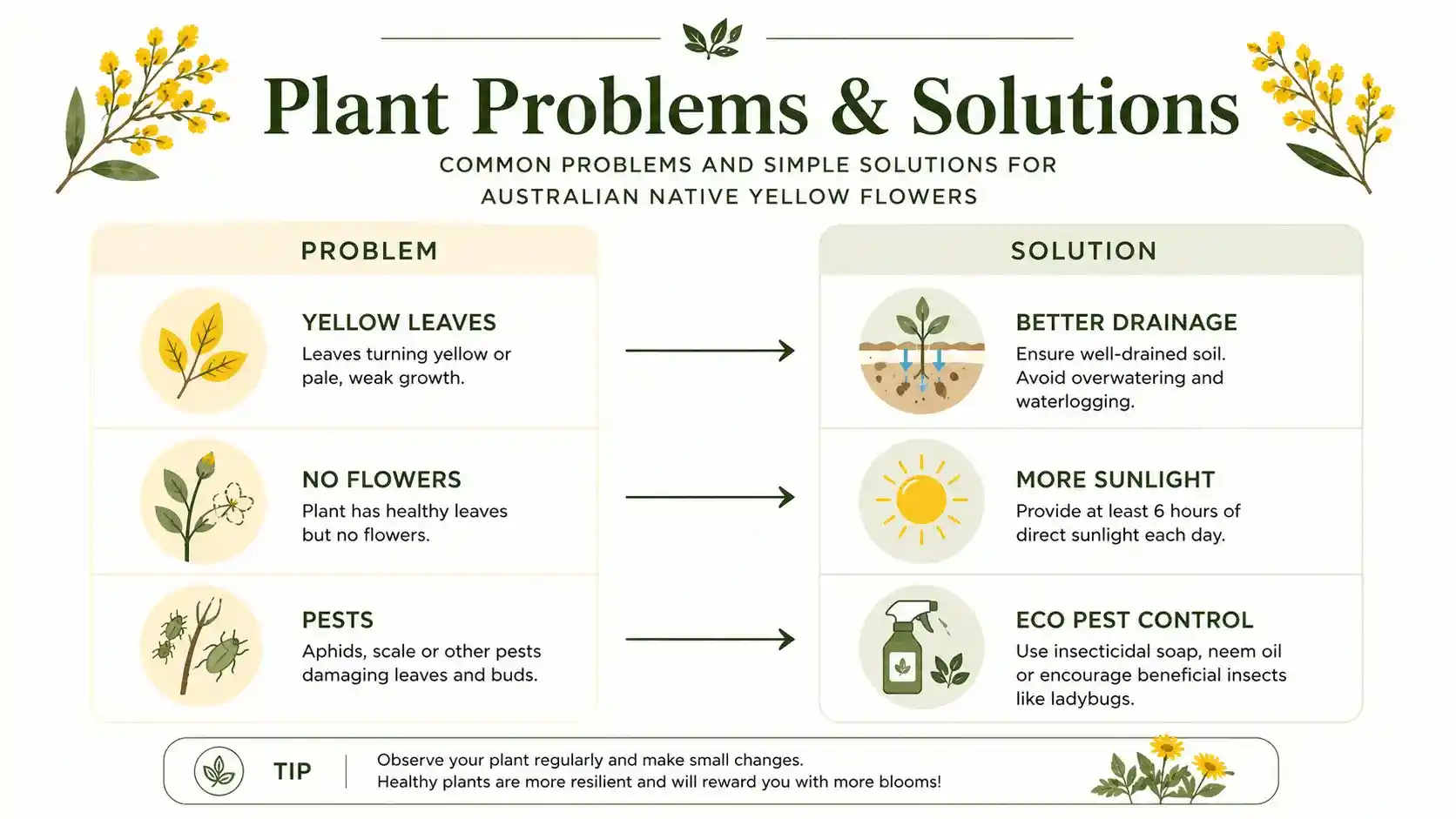
Common issues with yellow native flowers usually relate to water, light, or pests.
Problems and solutions:
- Yellowing leaves → Improve drainage and reduce watering
- Lack of flowering → Increase sunlight exposure
- Pest infestations → Use eco-friendly pest control methods
Early detection helps prevent long-term damage.
Beginner Mistakes When Growing Yellow Native Flowers
Common beginner errors can affect plant health and growth.
Frequent mistakes:
- Overwatering native plants
- Using heavy or poorly drained soil
- Planting large trees in small spaces
Understanding plant size and environmental needs is essential.
Landscaping Uses of Yellow Native Flowers
Yellow native flowers are widely used in landscaping due to their color and resilience.
Applications:
- Garden borders
- Wildlife-friendly gardens
- Ground cover planting
They integrate well into both natural and designed landscapes. These plants fit perfectly into sustainable designs—see ideas in this modern Australian native garden guide for layout inspiration.
Seasonal Considerations for Yellow Flowering Plants
Blooming seasons vary depending on species and climate zone.
General patterns:
- Spring: peak flowering for many species
- Summer: continued blooms in drought-tolerant plants
- Winter: reduced activity
Maintenance timing should align with growth cycles.
Conclusion
Australian native yellow flowers include a wide variety of trees, shrubs, ground covers, and vines that are both visually striking and environmentally beneficial. Their adaptability to diverse climates, low maintenance requirements, and ecological importance make them ideal for gardens and landscapes. Proper identification, suitable growing conditions, and basic care practices ensure healthy growth and consistent flowering. These plants provide long-term value for both biodiversity and aesthetic appeal.
FAQs
What are the most common Australian native yellow flowers?
The most common include wattles (Acacia species), grevilleas, and hibbertia. These plants are widely distributed and commonly used in landscaping.
How do I identify a plant with yellow flowers in Australia?
Look at the flower shape, leaf type, and plant size. These features help determine whether the plant is a tree, shrub, or ground cover.
Are yellow native flowers drought-tolerant?
Yes, most Australian native yellow flowers are adapted to dry conditions and require minimal watering once established.
What trees in Australia have yellow flowers?
The most common are Acacia (wattle) and Cassia/Senna species, both known for their bright yellow blooms.
Can I grow Australian yellow flowers in home gardens?
Yes, many species are suitable for home gardens. They are low-maintenance, drought-tolerant, and beneficial for local wildlife.