Introduction
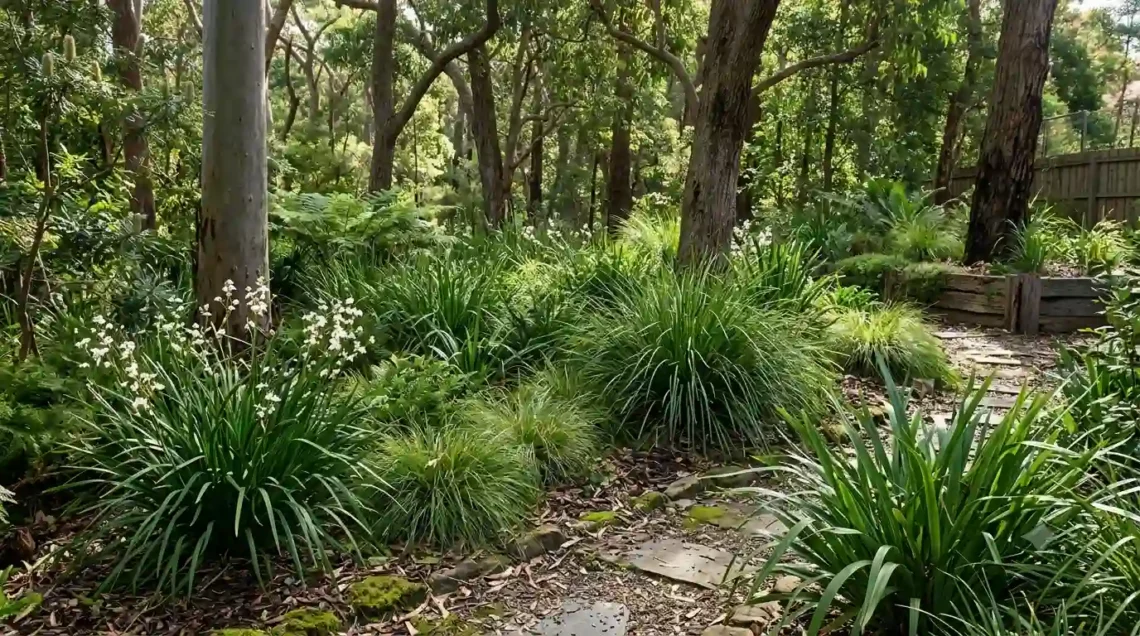
Shade loving grasses are an excellent solution for gardeners seeking attractive foliage in low-light spaces. Whether you are designing a woodland garden, planting beneath trees, or improving a shaded courtyard, ornamental grasses for shade Australia can provide texture, movement, and year-round visual interest. Many species thrive in filtered light or partial shade, while some tolerate deeper shade conditions better than traditional lawn grasses. Understanding which varieties perform well in Australian climates helps gardeners create healthier landscapes with less maintenance. This guide explains what shade-loving grasses are, how to choose the right species, and how to care for them successfully.
Quick Summary
- Shade loving grasses are grasses and grass-like plants that tolerate reduced sunlight and perform well in shaded garden areas.
- Both ornamental and native Australian species can provide texture, screening, and year-round foliage interest.
- Many varieties are low maintenance, drought tolerant once established, and useful for erosion control.
- Popular choices include Libertia paniculata, native sedges, and other ornamental native grasses suited to Australian conditions.
What Are Shade Loving Grasses?
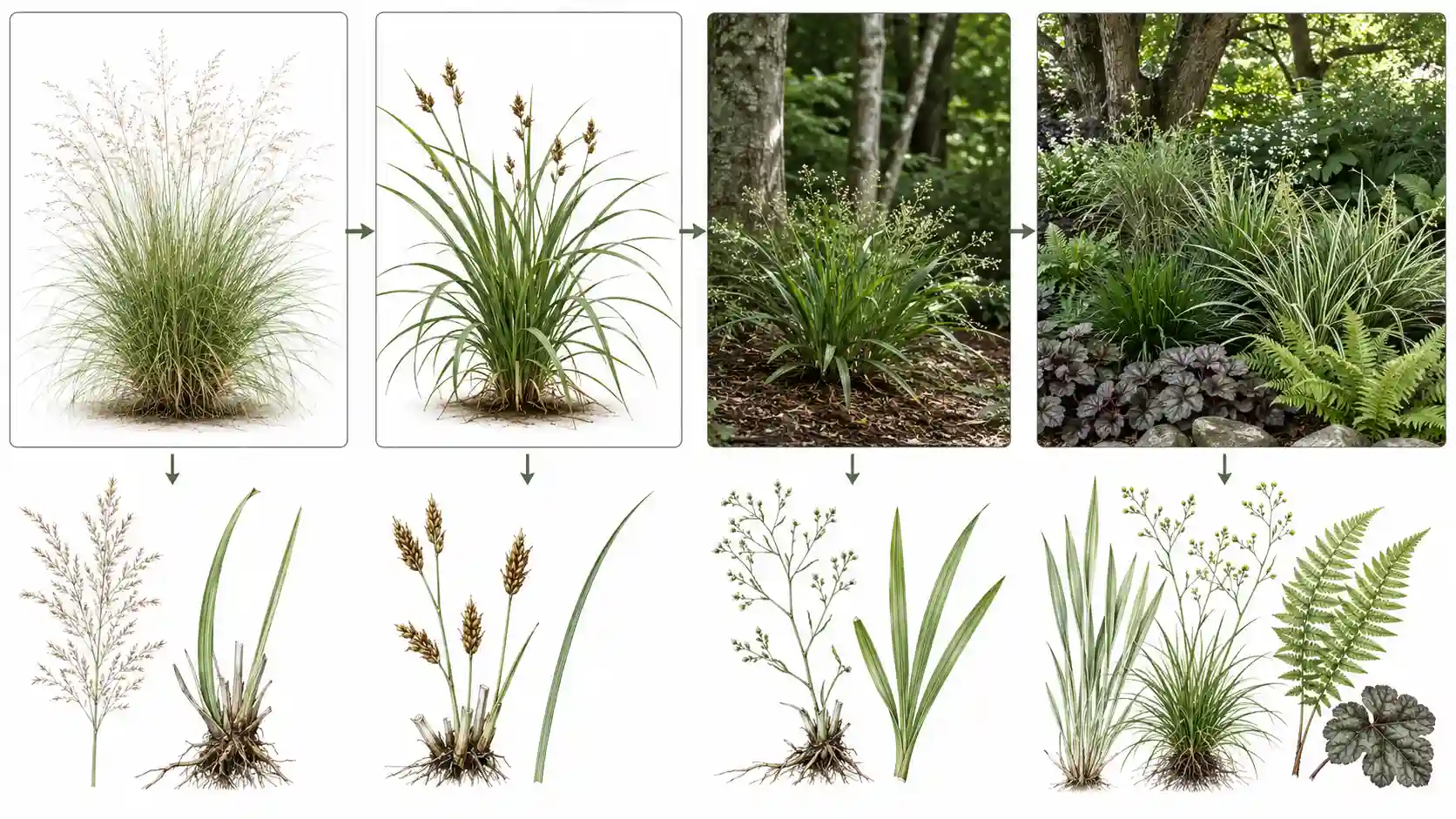
Shade loving grasses are grasses and grass-like plants that can grow successfully in areas receiving limited direct sunlight. They are commonly used in shaded borders, beneath trees, and in low-light landscape designs. Many shade-loving grass-like plants belong to the sedge family (Cyperaceae), which includes species adapted to moist and shaded environments.
True Grasses vs. Grass-Like Plants
Many plants grouped as ornamental grasses are not true grasses. Some belong to sedge or rush families and are often called grassy plants because of their similar appearance.
Common examples include:
- True ornamental grasses
- Native sedges (Carex species)
- Lomandra varieties
- Libertia species
- Rushes and strappy-leaf plants
Characteristics of Shade-Tolerant Species
- Broad or arching foliage
- Clumping growth habit
- Adaptability to filtered light
- Reduced water needs once established
- Slower growth in deep shade
These shade grasses are often better suited to shaded landscapes than conventional turf grass. Many Australian native landscaping systems also use similar strappy plants, as seen in our guide to Australian Native Garden Trees, which explains how native foliage structures support low-maintenance garden design.
Why Choose Shade Loving Grasses for Your Garden
Shade loving grasses offer practical and aesthetic benefits for Australian gardens.
Key Benefits
- Low maintenance requirements
- Attractive texture and movement
- Improved erosion control
- Year-round structure
- Suitable for difficult planting areas
How Shade Affects Growth
Plants growing in partial shade generally maintain stronger foliage colour and healthier growth than species forced to grow outside their preferred light conditions. Deep shade may reduce growth rates, while dappled shade often produces the best results.
Best Shade Loving Grasses for Australian Gardens
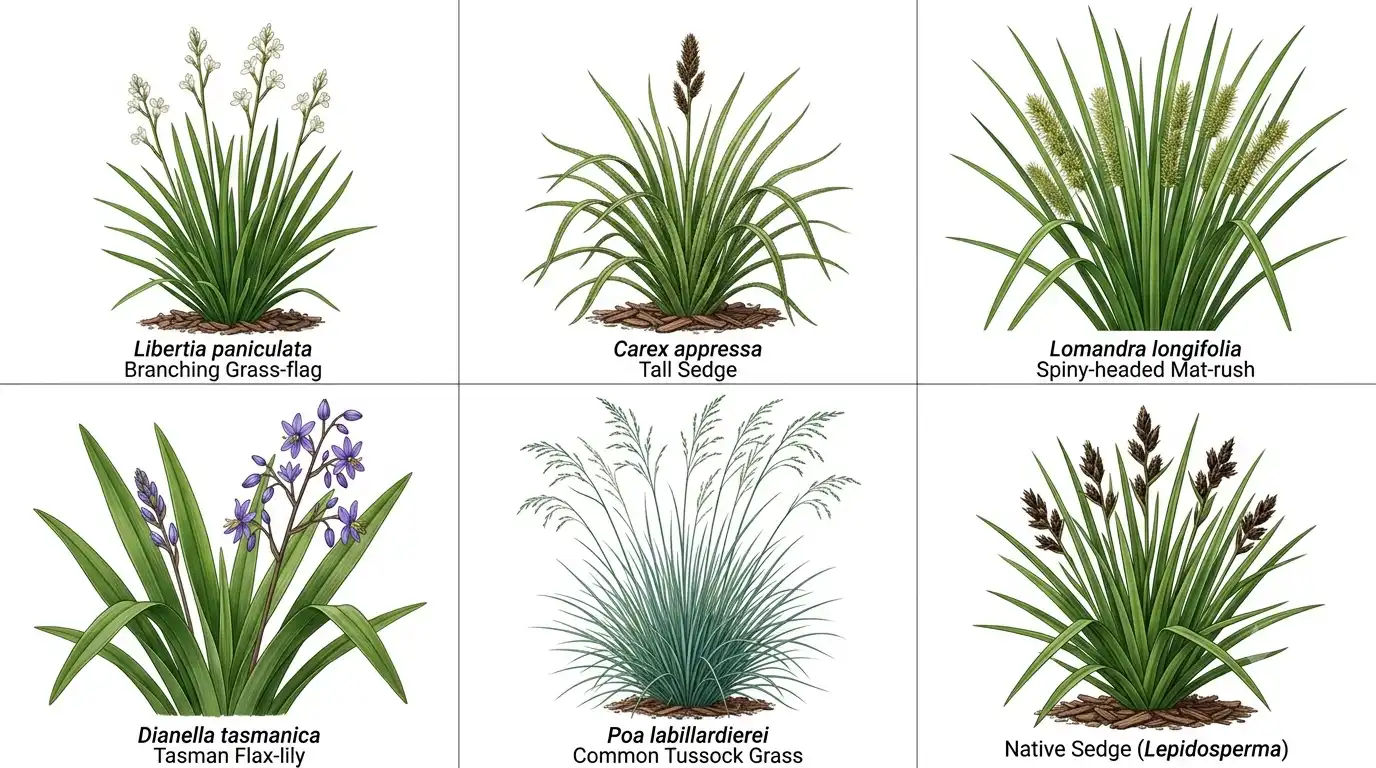
Several species perform particularly well in Australian gardens.
Recommended Varieties
- Libertia paniculata – Clumping evergreen foliage with attractive flowers.
- Carex appressa – Native sedge suited to moist shaded areas.
- Lomandra longifolia – Tough Australian native with broad adaptability.
- Carex oshimensis – Ornamental foliage ideal for borders.
- Dianella tasmanica – Strappy leaves and decorative berries.
- Poa labillardierei – Native tussock grass for naturalistic plantings.
- Lepidosperma species – Hardy native sedges for shaded landscapes.
Several of these species are also featured in native landscaping systems, similar to those covered in Acacia fimbriata Care, Growth & Varieties Guide, which highlights adaptable Australian natives for mixed garden environments.
Shade Loving Grass Comparison Table
| Species | Mature Size | Light Requirement | Maintenance Level |
| Libertia paniculata | 60–100 cm | Part shade | Low |
| Carex appressa | 80–120 cm | Shade to part shade | Low |
| Lomandra longifolia | 50–100 cm | Shade to sun | Low |
| Dianella tasmanica | 60–100 cm | Part shade | Low |
| Poa labillardierei | 80–120 cm | Part shade | Moderate |
| Carex oshimensis | 30–50 cm | Shade | Low |
Shade Loving Grasses for Pots and Containers
Many compact grasses thrive in containers.
Best Container Varieties
- Carex oshimensis
- Dianella varieties
- Libertia paniculata
- Compact Lomandra cultivars
Container Growing Tips
- Use free-draining potting mix.
- Select pots with drainage holes.
- Water consistently during hot weather.
- Refresh potting mix every few years.
Compact native grasses and strappy plants are also commonly used in architectural planting styles described in Plants Similar to Gymea Lily: Best Architectural Alternatives, which focus on structural foliage design.
Tall and Ornamental Shade Loving Grasses
Tall ornamental grasses create structure and screening in garden designs.
Popular Tall Varieties
- Carex appressa
- Poa labillardierei
- Larger Dianella cultivars
- Tall Lomandra selections
Placement Considerations
- Position at the rear of garden beds.
- Allow sufficient spacing for mature width.
- Use as soft screening around boundaries.
- Combine with shrubs and shade perennials.
Shade Tolerant Lawn Grass Options
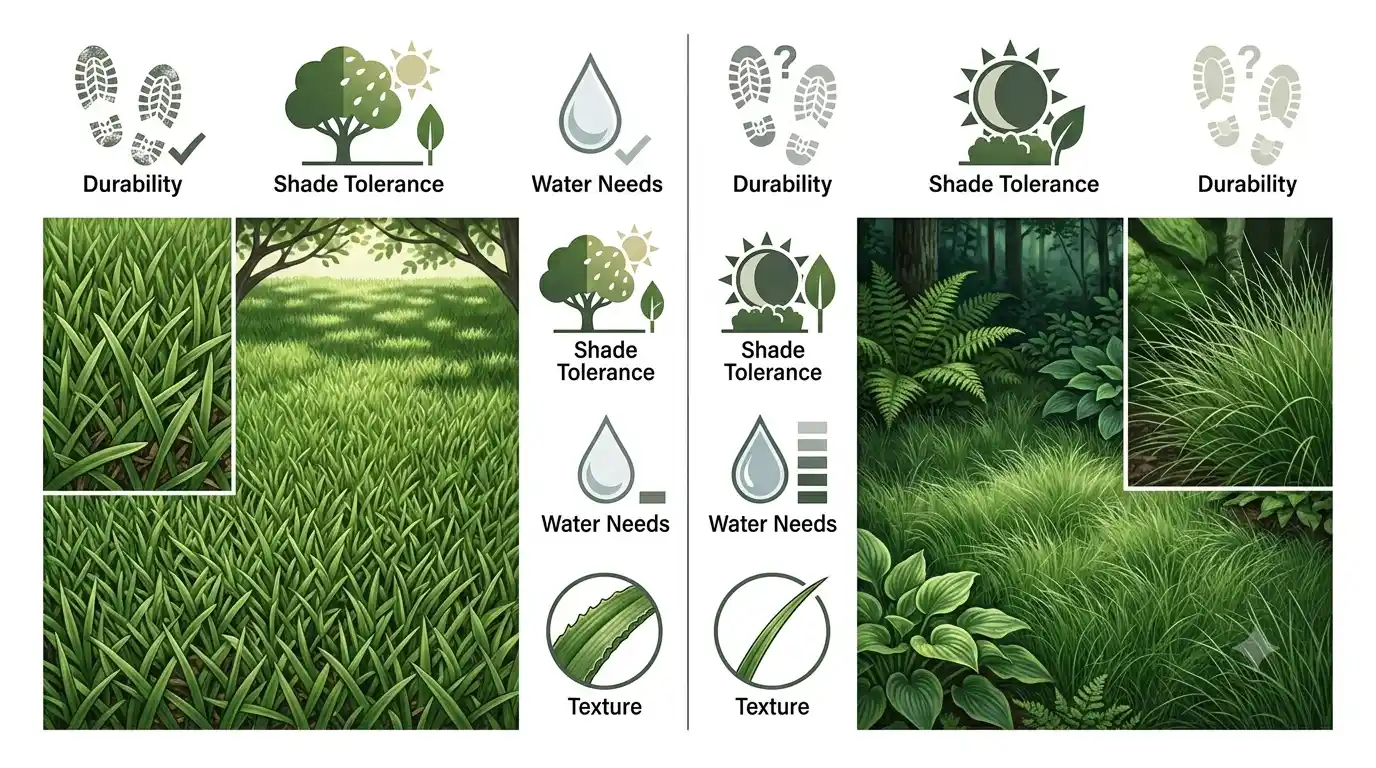
Some lawn grasses perform better in shade than others.
Turf alternatives such as Zoysia and fescue are often integrated into sustainable landscaping approaches similar to those in How to Improve Clay Soil for Lawns for Better Grass Growth, which improves shaded lawn performance.
Most Shade-Tolerant Lawn Types
- Zoysia grass
- Fine fescue
- Tall fescue
- Blue fescue (ornamental use)
Zoysia vs. Fescue Comparison
| Feature | Zoysia | Fescue |
| Shade Tolerance | Moderate | High |
| Texture | Dense | Fine |
| Wear Resistance | High | Moderate |
| Water Needs | Low | Moderate |
| Climate Suitability | Warm climates | Cool climates |
Where to Buy Shade Loving Grasses in Australia
Shade-loving grasses are widely available through nurseries and garden centres.
What to Check Before Buying
- Healthy root systems
- Pest-free foliage
- Accurate plant labels
- Appropriate pot size
- Species suited to local climate
Regional Considerations — Growing Shade Loving Grasses Across Australia
Climate differences influence plant performance.
Queensland and Brisbane
- Higher humidity
- Consistent moisture requirements
- Heat-tolerant species preferred
Perth
- Dry summers
- Focus on drought-tolerant natives
- Improve soil moisture retention
Regional Tips
- Match species to rainfall patterns.
- Consider frost risk in cooler regions.
- Select native species for greater adaptability.
Caring for Shade Loving Grasses (Care Guide)
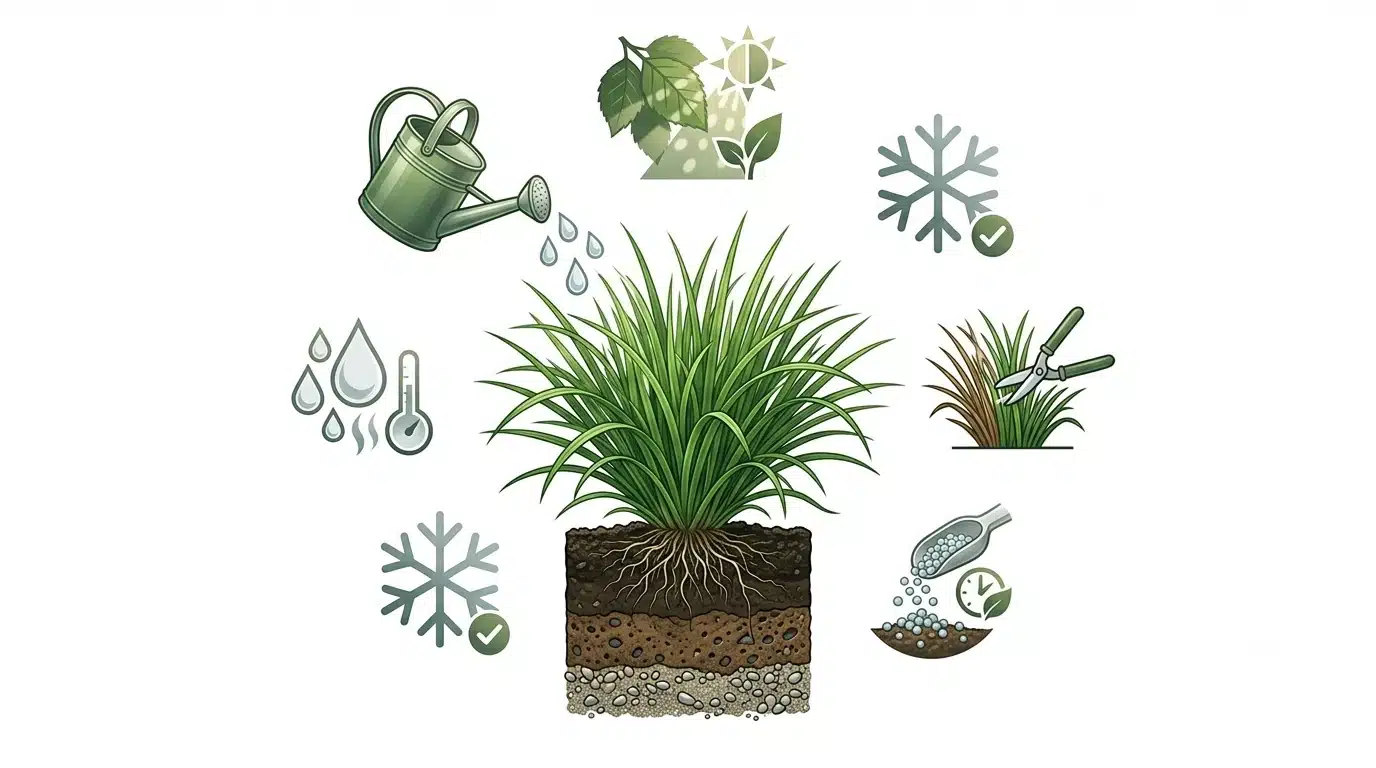
Proper care improves appearance and longevity.
Watering
- Water deeply during establishment.
- Reduce frequency once plants mature.
- Avoid constantly wet soil.
Light Requirements
- Deep shade slows growth.
- Dappled shade often produces the best results.
- Monitor foliage colour for stress signs.
Soil Preferences
- Well-drained soil
- Added organic matter
- Moderate fertility
Fertilisation
- Feed lightly in spring.
- Avoid excessive nitrogen.
- Use balanced slow-release fertiliser.
Pruning
- Remove damaged foliage annually.
- Divide overcrowded clumps when needed.
- Trim spent flower stalks.
Climate Tolerance
Many species tolerate:
- Frost
- Humidity
- Periodic drought
- Coastal conditions
Proper soil drainage and structure are also key themes in Ultimate Guide to the Best Trees for Clay Soil in Australia, especially in shaded or compacted garden areas.
Common Problems with Shade Loving Grasses (Troubleshooting)
Yellowing Leaves
Cause: Poor light, nutrient deficiency, or excess water.
Solution: Improve drainage and fertilise appropriately.
Prevention: Match species to site conditions.
Overwatering
Cause: Excess moisture in shaded locations.
Solution: Reduce watering frequency.
Prevention: Use free-draining soil.
Slow Growth
Cause: Deep shade and cool conditions.
Solution: Improve light exposure where possible.
Prevention: Choose highly shade-tolerant varieties.
Pest Problems
Cause: Humid environments encouraging pests.
Solution: Monitor regularly and remove affected foliage.
Prevention: Maintain airflow between plants.
Beginner Mistakes When Growing Grasses in Shade
Common mistakes include:
- Choosing sun-loving species for heavily shaded sites
- Overcrowding plants
- Overwatering shaded beds
- Ignoring soil drainage
- Failing to divide mature clumps
- Planting without considering mature size
Avoiding these errors helps maintain healthier and longer-lasting plantings.
Shade Loving Grasses That Flower
Some shade-tolerant grasses and grass-like plants produce attractive flowers.
Flowering Examples
- Libertia paniculata
- Dianella species
- Poa labillardierei
- Certain Carex varieties
Bloom Characteristics
- Seasonal flower spikes
- Delicate ornamental displays
- Added wildlife value
- Extended seasonal interest
Shade Loving Grasses vs. Sun-Loving Grasses (Comparison)
| Feature | Shade Loving Grasses | Sun-Loving Grasses |
| Light Requirement | Shade to part shade | Full sun |
| Growth Rate | Moderate | Often faster |
| Water Use | Moderate | Varies |
| Common Species | Carex, Libertia, Dianella | Kangaroo Grass, Miscanthus |
| Best Use | Woodland gardens | Open landscapes |
Shade Loving Grasses in International Climates
Shade-loving grasses are also popular outside Australia.
United Kingdom
Cooler temperatures favour many sedges and evergreen grasses.
New Zealand
Moist conditions support a wide range of ornamental grasses and native sedges.
USDA Zones 5, 6, and 8
- Zone 5: Cold-hardy sedges and fescues
- Zone 6: Wider ornamental grass selection
- Zone 8: Evergreen shade-loving grasses perform well
Australian gardeners should still prioritise species adapted to local climate conditions.
Connecting Shade Loving Grasses to Broader Garden Planning
Shade-loving grasses fit naturally into wider gardening projects.
Related Gardening Topics
- Indoor plant care for potted grasses
- Plant propagation through division
- Landscaping design with texture contrasts
- Plant troubleshooting and maintenance
Integrating grasses with shrubs, groundcovers, and shade perennials creates more balanced and visually appealing garden designs. Shade planting also connects closely with native ecosystem design principles explored in Modern Australian Native Garden: 10+ Smart Design Ideas Guide, especially for layered planting and biodiversity.
Conclusion
Shade loving grasses provide an effective solution for difficult low-light areas in Australian gardens. From Libertia paniculata and native sedges to compact container varieties and shade-tolerant lawn options, there are suitable choices for almost every landscape. Understanding light levels, selecting the right species, and following proper care practices are essential for success. By matching plant selection to site conditions, gardeners can enjoy attractive, low-maintenance plantings that bring year-round texture and interest to shaded spaces.
FAQs
What is the best grass for a shady area in Australia?
Libertia paniculata, Carex species, and Lomandra cultivars are among the best choices for shaded Australian gardens because they tolerate reduced sunlight and require relatively little maintenance.
Can ornamental grasses really grow in full shade?
Some ornamental grasses and sedges tolerate full shade, but most perform best in dappled shade or partial shade where they receive some filtered light.
Are there native Australian grasses suitable for shade?
Yes. Native options such as Lomandra longifolia, Poa labillardierei, and several Carex and Lepidosperma species can grow successfully in shaded conditions.
Why are my shade-loving grasses turning yellow?
Yellowing leaves are commonly caused by overwatering, poor drainage, nutrient deficiencies, or insufficient light. Identifying the underlying cause helps restore healthy growth.
What is the most shade-tolerant lawn grass?
Fine fescue and tall fescue are generally considered among the most shade-tolerant lawn grasses, while some zoysia varieties also tolerate moderate shade.
Can shade loving grasses be grown in pots?
Yes. Many compact species grow well in containers when provided with quality potting mix, proper drainage, and regular watering.
Do shade loving grasses flower?
Many shade-loving grasses and grass-like plants produce flowers or flowering spikes. Libertia paniculata and Dianella species are popular examples that add seasonal interest.