Introduction
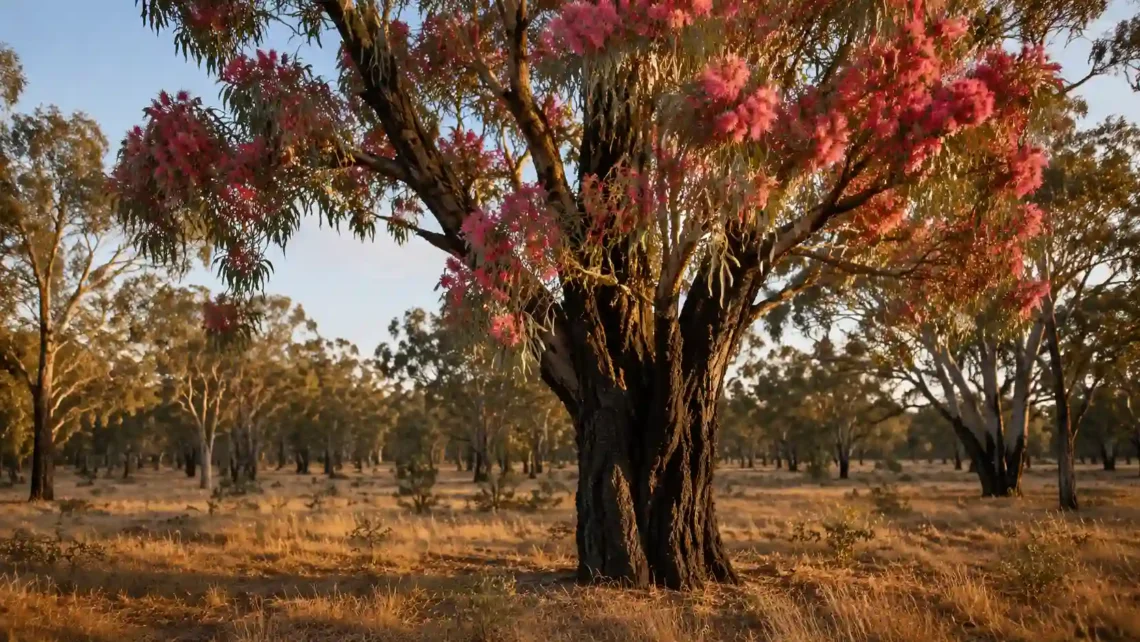
Eucalyptus sideroxylon rosea, also known as eucalyptus sideroxylon and red flowering ironbark, is a cultivated form of the ironbark eucalyptus group grown for its ornamental pink to red flowers. Eucalyptus sideroxylon ‘Rosea’ is a cultivar of the red ironbark species native to eastern Australia, distinguished by its consistently pink-red blooms and rugged bark. It is a hardy evergreen tree in the Myrtaceae family, valued in landscaping for drought tolerance, structure, and seasonal flowering display.
By Greenery Inside | Plant Care & Gardening Expert
Last Updated: June, 2026
Quick Summary
- What it is: a pink/red-flowering cultivar of red ironbark (Eucalyptus sideroxylon)
- Key features: dark ironbark trunk, grey-green leaves, pink to red clustered flowers
- Size & growth: large tree species, moderate to fast growth depending on conditions
- Care takeaway: full sun, well-drained soil, and low water once established
What Is Eucalyptus Sideroxylon ‘Rosea’?
Eucalyptus sideroxylon ‘Rosea’ is a cultivated ornamental form of the species Eucalyptus sideroxylon, commonly known as red flowering ironbark, pink ironbark, or red iron bark. The term “Rosea” refers to a horticultural selection chosen for its reliable pink-to-red flower color, which is more consistent than the variable flower colors found in the wild species.
This cultivar belongs to the Myrtaceae family and is widely planted for ornamental and ecological landscaping. Unlike the standard species, which may produce white, cream, pink, or yellow flowers, eucalyptus sideroxylon rosea is selected specifically for predictable ornamental bloom color.
The species Eucalyptus sideroxylon is well documented in botanical references, including its taxonomy and natural distribution (see Wikipedia overview of Eucalyptus sideroxylon for scientific classification and species details).
Origin and Natural Distribution
Eucalyptus sideroxylon is native to eastern Australia, primarily found in Queensland, New South Wales, and parts of Victoria. It naturally grows in dry woodlands, open forests, and inland slopes.
The wild species shows significant variation in flower color and form, while the ‘Rosea’ cultivar was selected to stabilize the ornamental pink-red flowering trait. This makes eucalyptus sideroxylon rosea especially popular in designed landscapes where consistent visual characteristics are preferred.
Identifying Features
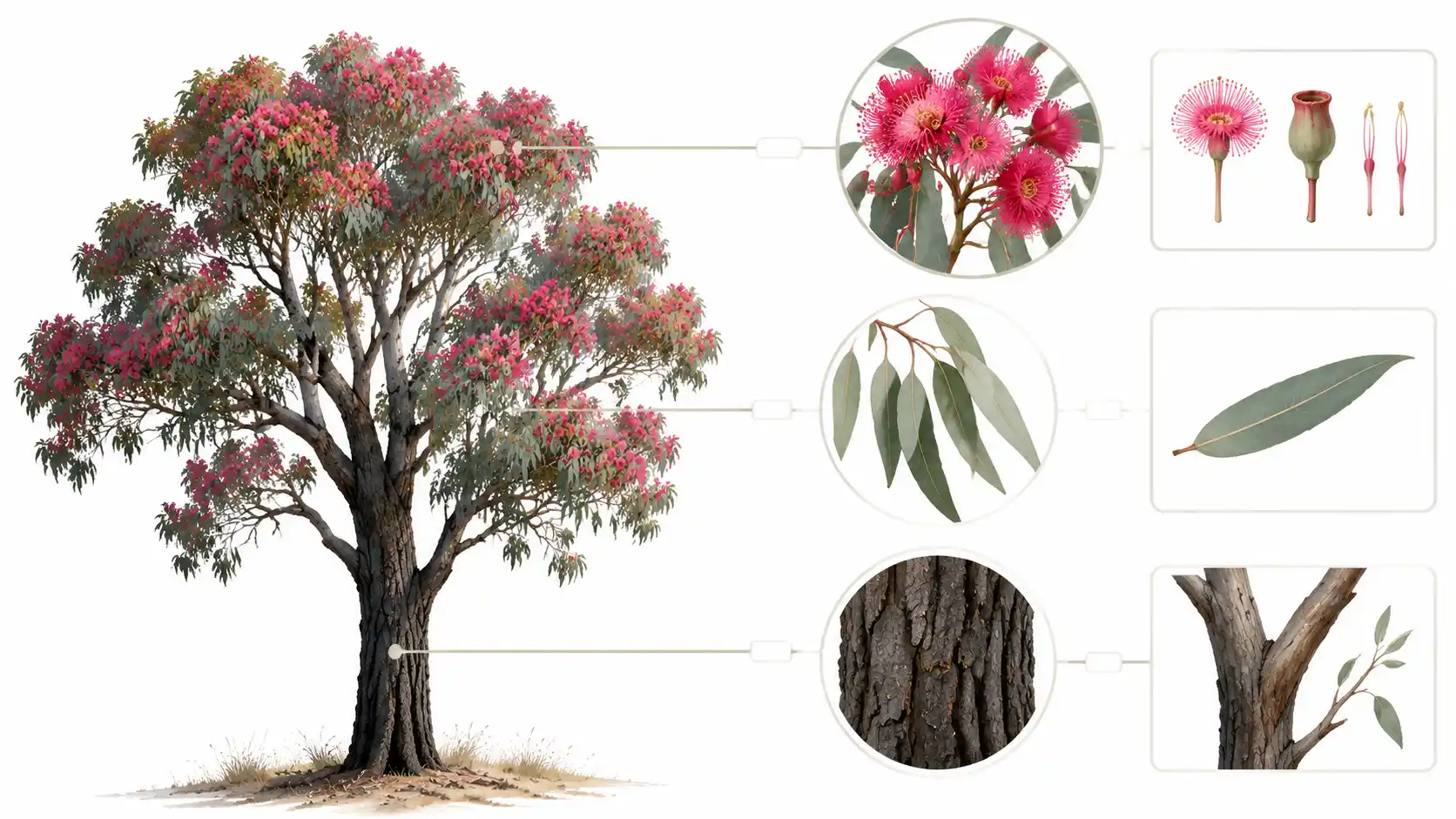
Eucalyptus sideroxylon rosea is easily recognized by its combination of rugged bark, narrow leaves, and vibrant flowers.
- Bark: dark grey to black, deeply furrowed, rough ironbark texture
- Leaves: narrow, lance-shaped, grey-green to dull green
- Flowers: pink to red, clustered, highly ornamental blooms
- Fruit: small, woody, cup-shaped capsules
The persistent ironbark is one of its most defining traits, setting it apart from smooth-barked eucalyptus species. Like other Australian natives such as Banksia varieties, eucalyptus sideroxylon rosea plays an important role in pollinator-friendly landscapes, similar to plants featured in Banksia integrifolia ‘Roller Coaster’ Guide.
Ironbark Flowers
Ironbark flowers are one of the most valuable ornamental features of eucalyptus sideroxylon rosea. The blossoms appear in clusters and range from deep pink to rich red depending on environmental conditions and plant genetics.
Flowering typically occurs in seasonal cycles, often attracting bees and nectar-feeding birds. These flowers are highly nectar-rich, making the tree ecologically important in native landscapes.
Pollinators commonly include:
- Native bees
- Honeybees
- Nectar-feeding birds such as lorikeets
Eucalyptus Sideroxylon Rosea Size
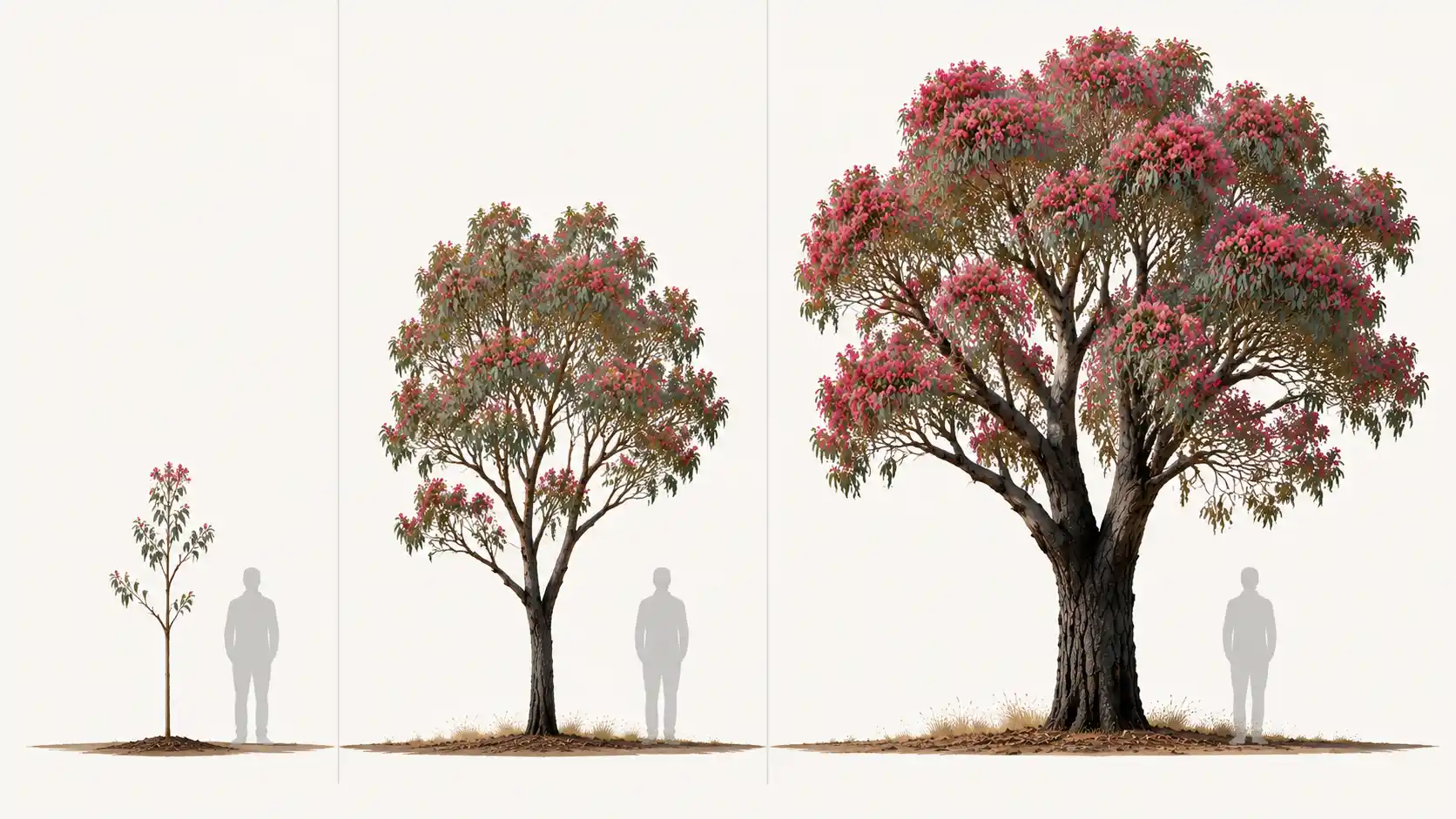
Eucalyptus sideroxylon rosea is a large evergreen tree under ideal conditions.
- Height: typically 10–25 meters (can exceed this in optimal conditions)
- Width: 6–15 meters depending on spacing and pruning
- Growth habit: upright with a strong central trunk
Size variation depends heavily on soil depth, water availability, and pruning practices. In landscaped gardens, growth is often managed to maintain structure, while in open ground it can reach full mature height. Because of its mature canopy size and evergreen structure, it is often compared with other shade-producing species in Evergreen Shade Trees Australia Guide: 7+ Proven Picks.
Container-grown speciens remain significantly smaller due to root restriction and limited nutrient access.
Eucalyptus Sideroxylon Rosea Dwarf Forms
There is no true genetically dwarf cultivar of eucalyptus sideroxylon rosea widely recognized in horticulture. Smaller specimens usually result from environmental limitations rather than genetic dwarfing.
Factors that create smaller growth include:
- Regular pruning
- Shallow or poor soils
- Restricted root space (containers)
- Limited water availability
In some cases, confusion arises with smaller ironbark species, but eucalyptus sideroxylon rosea itself is inherently a medium-to-large tree. Many gardeners confuse large eucalyptus species with compact varieties; however, understanding size expectations is easier when comparing with broader dwarf eucalyptus classifications such as in Dwarf Eucalyptus Trees Guide: 7+ Smart Growing Tips.
Eucalyptus Sideroxylon Rosea Growth Rate
The growth rate of eucalyptus sideroxylon rosea is generally moderate to fast under favorable conditions.
Growth patterns:
- Rapid juvenile growth in early years
- Slower, structural development as it matures
- Strong seasonal growth during warm months
Growth is strongly influenced by:
- Full sun exposure
- Well-drained soil
- Adequate but not excessive water
- Warm, temperate climate conditions
In poor soils or shaded environments, growth becomes noticeably slower.
Eucalyptus sideroxylon rosea is also widely discussed among broader Australian landscape species, especially in large-scale planting designs and biodiversity-focused landscapes. For a wider understanding of native tree systems and planting strategies, see Australian Native Garden Trees: The Complete Planting Guide.
Care Guide
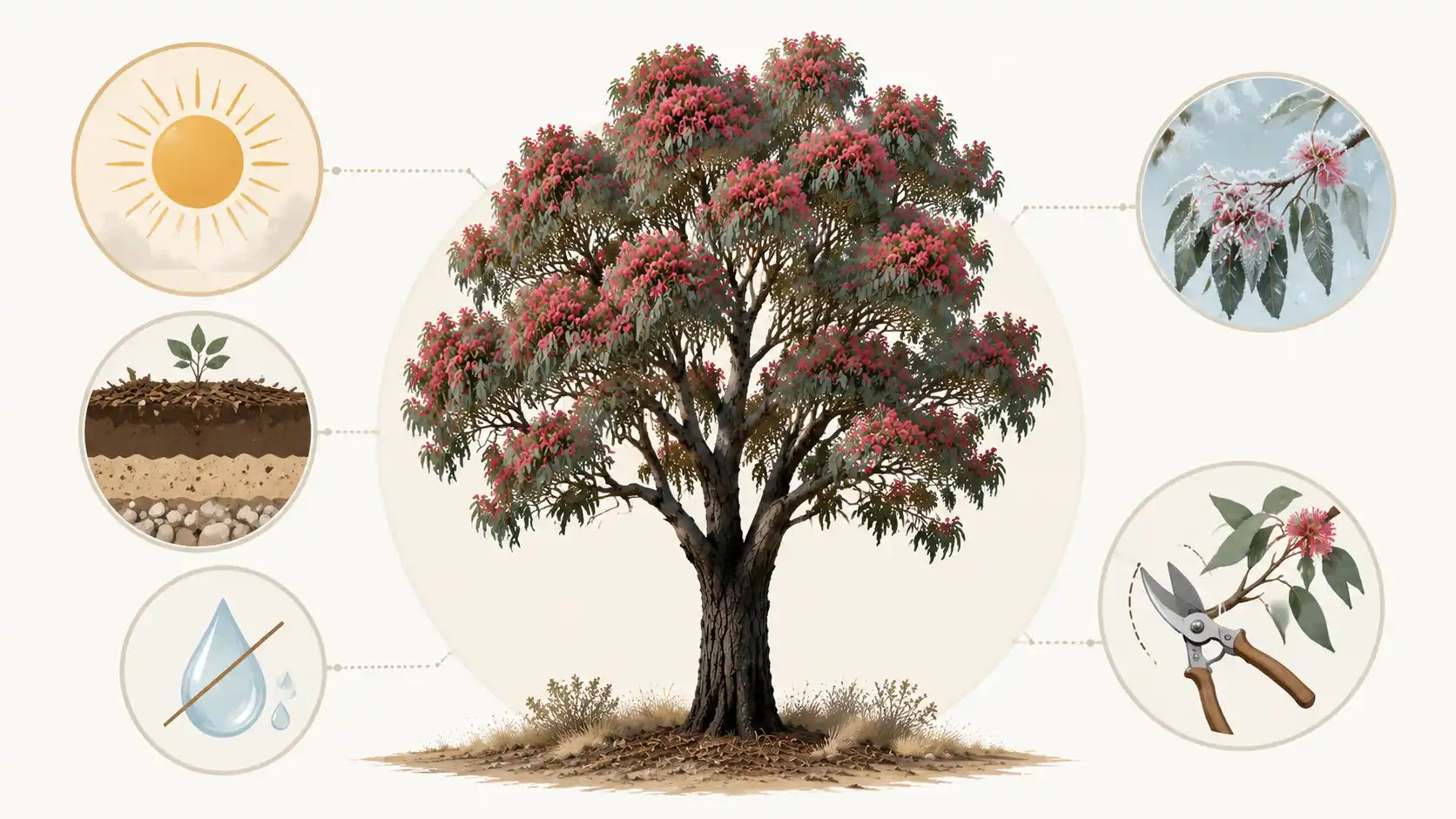
Eucalyptus sideroxylon rosea is considered a low-maintenance, drought-tolerant tree once established.
| Care Factor | Requirement |
| Light | Full sun |
| Soil | Well-drained; tolerates clay and loam |
| Water | Drought-tolerant once established |
| Climate | Frost-tolerant; avoids high humidity extremes |
| Pruning | Tolerates pruning; shape when young |
In our experience at Greenery Inside, young trees benefit from occasional deep watering during dry spells, but mature trees perform best when left relatively dry.
Common Problems and Troubleshooting
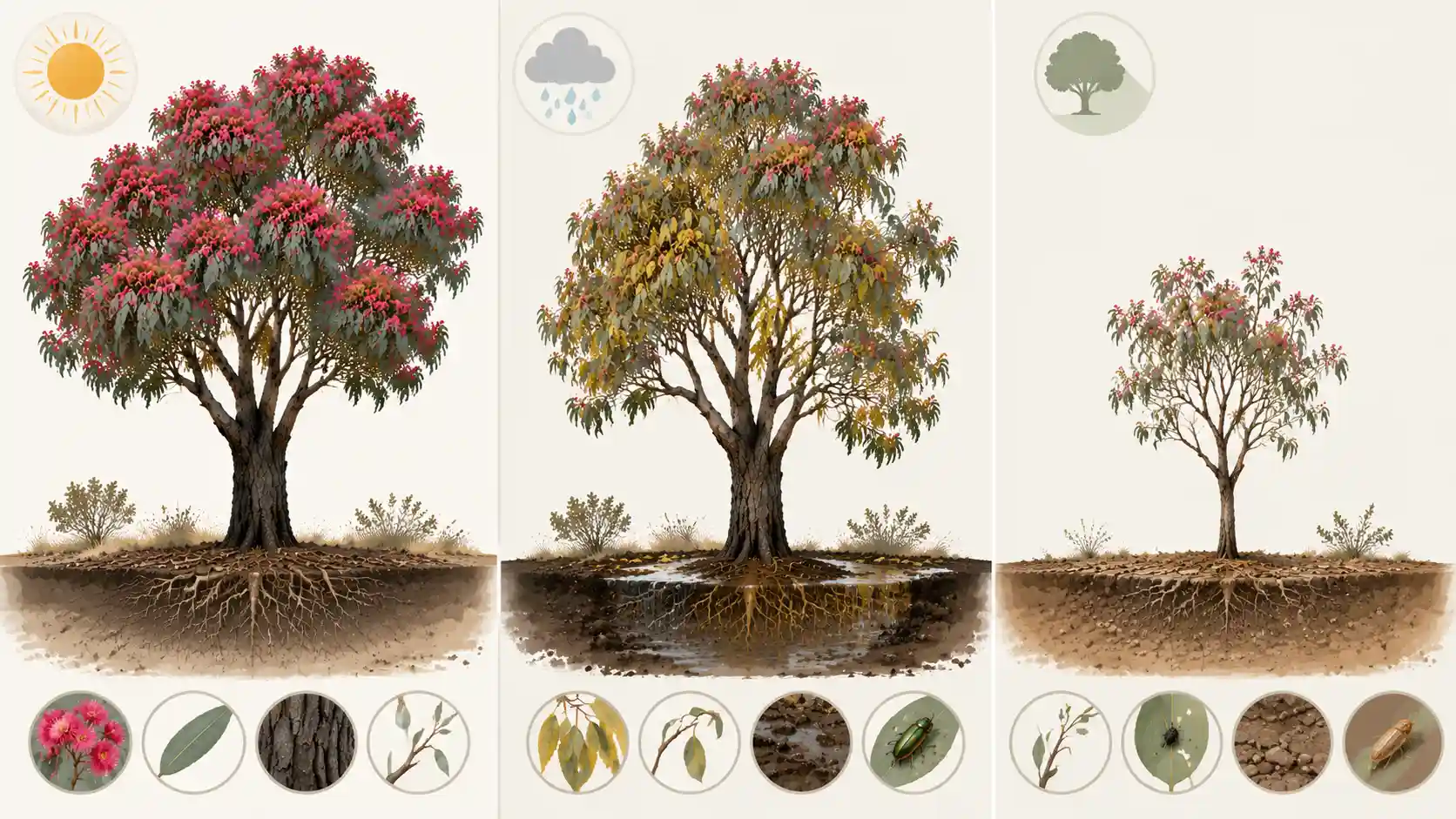
Yellowing Leaves
Yellowing leaves are usually caused by overwatering or poor drainage. Improving soil structure and reducing watering frequency typically resolves the issue.
Slow or Stunted Growth
This often results from insufficient sunlight, compacted soil, or root competition. Moving the plant to a sunnier location or aerating soil can improve growth.
Pest Infestations
Common pests include lerps, psyllids, and borers. Regular monitoring and targeted horticultural treatments help prevent long-term damage.
Flower Color Reverting Toward White
This occurs when plants are grown from seed rather than true-to-type propagation. Seed-grown eucalyptus sideroxylon rosea may not reliably maintain pink-red flower color. Soil sensitivity issues such as poor drainage and stunted growth are also common in other natives like Lomatia species, as explained in Lomatia silaifolia Care: 8+ Essential Growing Tips.
Beginner Mistakes and Practical Tips
Eucalyptus sideroxylon rosea is commonly used as a feature tree in landscape design, similar to selections discussed in Feature Trees Brisbane: 7+ Smart Picks & Expert Tips.
Common mistakes include:
- Planting too close to buildings or infrastructure
- Underestimating mature size in residential gardens
- Overwatering established trees
- Planting in humid tropical climates where growth declines
A key practical tip: always plan for full mature size, not nursery size, as ironbarks expand significantly over time. Similar planting mistakes also occur with other fast-growing Australian natives like Acacia species, especially when selecting large feature trees such as explained in Acacia Waterfall Tree: 6+ Essential Care & Growth Tips.
Eucalyptus Sideroxylon Rosea vs. Similar Ironbarks
| Feature | E. sideroxylon (species) | E. sideroxylon ‘Rosea’ |
| Flower color | Variable (white, pink, cream, yellow) | Consistently pink to red |
| Bark | Ironbark | Ironbark |
| Use | Timber, natural woodland | Ornamental landscaping |
The main distinction is flower color reliability, which makes ‘Rosea’ preferred in ornamental horticulture.
Where to Find and Buy Considerations
When sourcing eucalyptus sideroxylon rosea, focus on plant quality rather than commercial labeling. Seed-grown plants may show variable flower colors, while cultivated selections are more consistent.
Key considerations include:
- Healthy root system (no circling roots)
- Strong central leader for structural growth
- Clear labeling of cultivar origin
- Adaptation to local climate conditions
Avoid assuming uniform flower color in seed-propagated stock, as genetic variability is common in eucalyptus species.
Conclusion
Eucalyptus sideroxylon rosea is a hardy ornamental ironbark tree known for its distinctive dark bark, grey-green foliage, and reliable pink-red flowers. As a cultivar of Eucalyptus sideroxylon, it combines resilience with strong visual appeal, making it suitable for large landscapes and dry climates. With full sun, well-drained soil, and minimal water once established, eucalyptus sideroxylon rosea performs as a long-lived, low-maintenance feature tree in suitable environments.
FAQs
How tall does Eucalyptus sideroxylon ‘Rosea’ grow?
It typically grows between 10–25 meters tall, depending on soil, climate, and pruning conditions.
Is Eucalyptus sideroxylon ‘Rosea’ the same as red flowering ironbark?
Yes, it is a cultivated form of red flowering ironbark selected for consistent pink-red flowers.
Why are the leaves on my ironbark turning yellow?
Yellowing is usually caused by overwatering or poor drainage conditions.
Is there a dwarf variety of Eucalyptus sideroxylon ‘Rosea’?
No true dwarf cultivar exists; smaller size usually results from pruning or environmental conditions.
How fast does red flowering ironbark grow?
It has a moderate to fast growth rate, especially in warm, sunny conditions.
What climate does Eucalyptus sideroxylon ‘Rosea’ need?
It prefers temperate to dry climates with full sun and well-drained soil, and tolerates light frost.