Introduction
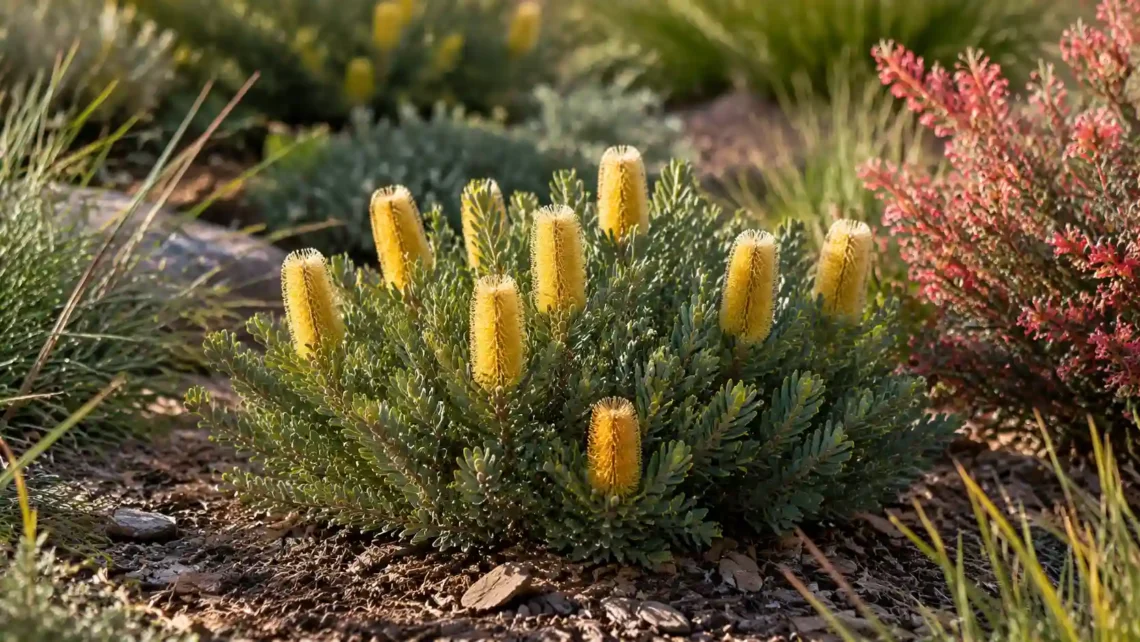
Banksia Little Pal is a compact cultivar of Banksia paludosa, commonly known as swamp banksia, bred for small-garden landscaping and container use. It is a dwarf native shrub in the Banksia (genus) group, producing honey-yellow cylindrical flower spikes that attract birds and pollinators. Gardeners search for this cultivar because it offers a low-maintenance, space-saving alternative to larger banksias while retaining strong ecological value. This article explains its identity, size, growth behavior, care requirements, and how it compares to similar native cultivars.
Quick Summary
- Banksia ‘Little Pal’ is a dwarf form of Banksia paludosa (swamp banksia).
- Grows around 0.4–0.5 m tall and up to 1.2 m wide.
- Produces honey-yellow flower spikes in autumn and winter.
- Highly attractive to nectar-feeding birds and bees.
- Requires low-phosphorus fertiliser and well-drained soil for healthy growth.
What Is Banksia ‘Little Pal’?
Banksia ‘Little Pal’ is a dwarf horticultural cultivar of Banksia paludosa, belonging to the Proteaceae family. It is not a separate species but a selectively bred compact form designed for ornamental gardening. The plant retains the characteristic cylindrical flower spikes and tough foliage typical of swamp banksias but remains significantly smaller and more manageable in domestic landscapes.
The plant belongs to the wider Banksia (genus), a group of iconic Australian plants widely documented in botanical literature, including Wikipedia: Banksia.
In horticultural classification, it is written as Banksia paludosa ‘Little Pal’. This distinguishes it from other dwarf banksias such as ‘Little Eric’, which belong to different species within the same genus.
Origin and Parent Species (Banksia paludosa)
The parent species, Banksia paludosa (swamp banksia), is native to coastal and tableland regions of New South Wales, Australia. It naturally grows in sandy or sandstone-based soils and adapts well to nutrient-poor environments.
In its natural habitat, swamp banksia forms part of heathland ecosystems, supporting nectar-feeding birds, insects, and small mammals. The ‘Little Pal’ cultivar inherits this resilience, making it suitable for a wide range of temperate garden conditions.
Banksia Little Pal Size and Height
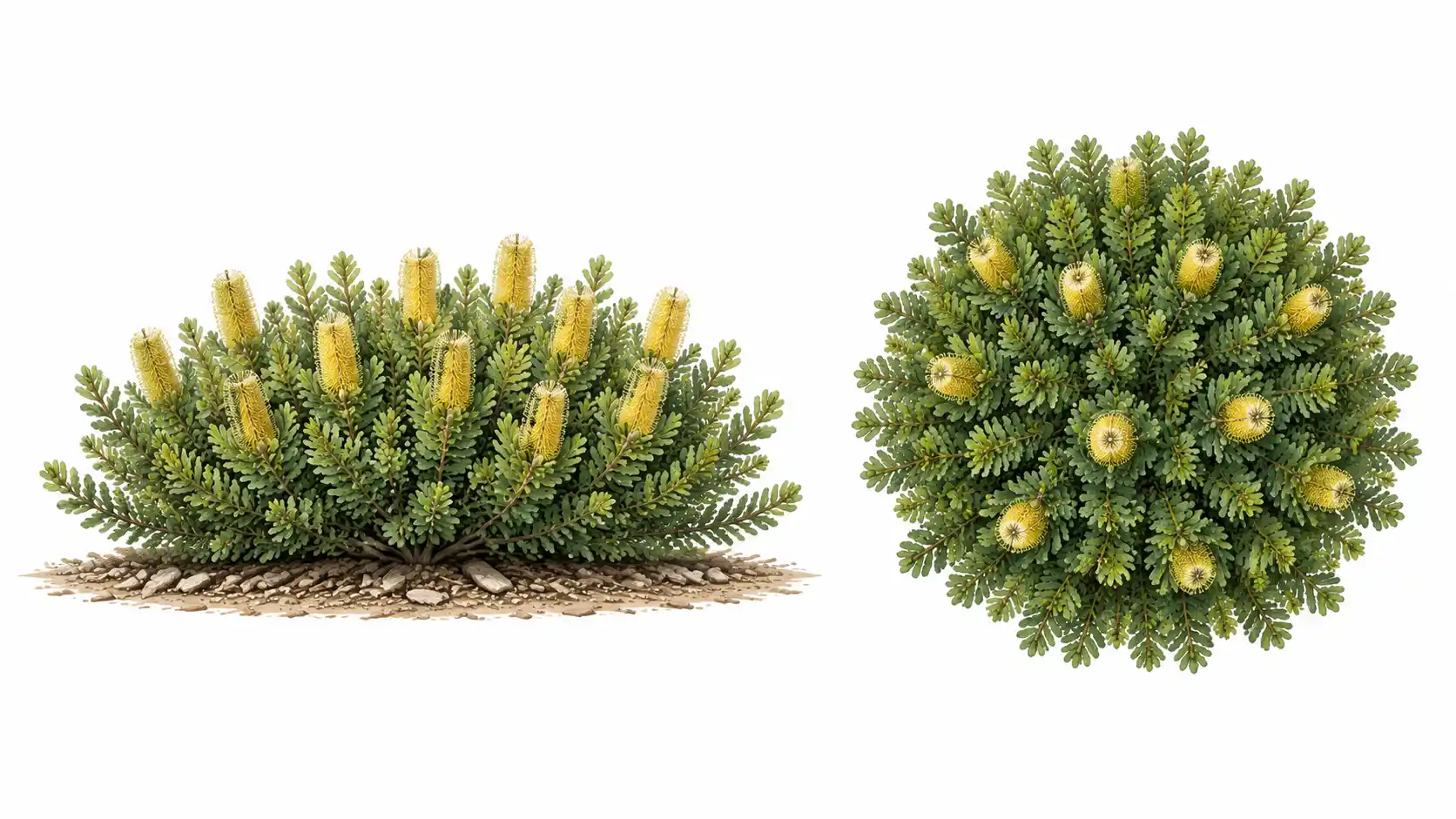
Banksia Little Pal is a true dwarf shrub, making it ideal for compact gardens and pots.
It typically reaches 0.4–0.5 m in height and spreads up to 1.0–1.2 m in width under ideal conditions. In containers, growth may remain slightly smaller due to restricted root space.
| Dimension | Typical Range |
| Height | 0.4–0.5 m |
| Width | 0.8–1.2 m |
| Container growth | Slightly more compact |
| Garden growth | Full spread potential |
Environmental conditions such as sunlight exposure, soil drainage, and pruning frequency significantly influence final size. In our experience at Greenery Inside, plants grown in full sun with light tip-pruning maintain the densest and most attractive mounded shape.
Plant Size
Banksia Little Pal maintains a naturally compact, dome-shaped growth habit.
Typical mature dimensions:
- Height: ~0.4–0.5 m
- Width: up to ~1.2 m
In pots, growth is often slightly restricted, which can be beneficial for patios or balcony gardening. Outdoor plants in open ground may spread more freely.
Environmental factors influencing size include:
- Sunlight intensity
- Soil drainage quality
- Pruning frequency
- Nutrient availability (especially phosphorus levels)
In well-managed gardens, Greenery Inside has observed that consistent tip-pruning after flowering helps maintain symmetry and prevents leggy growth.
Growth Rate
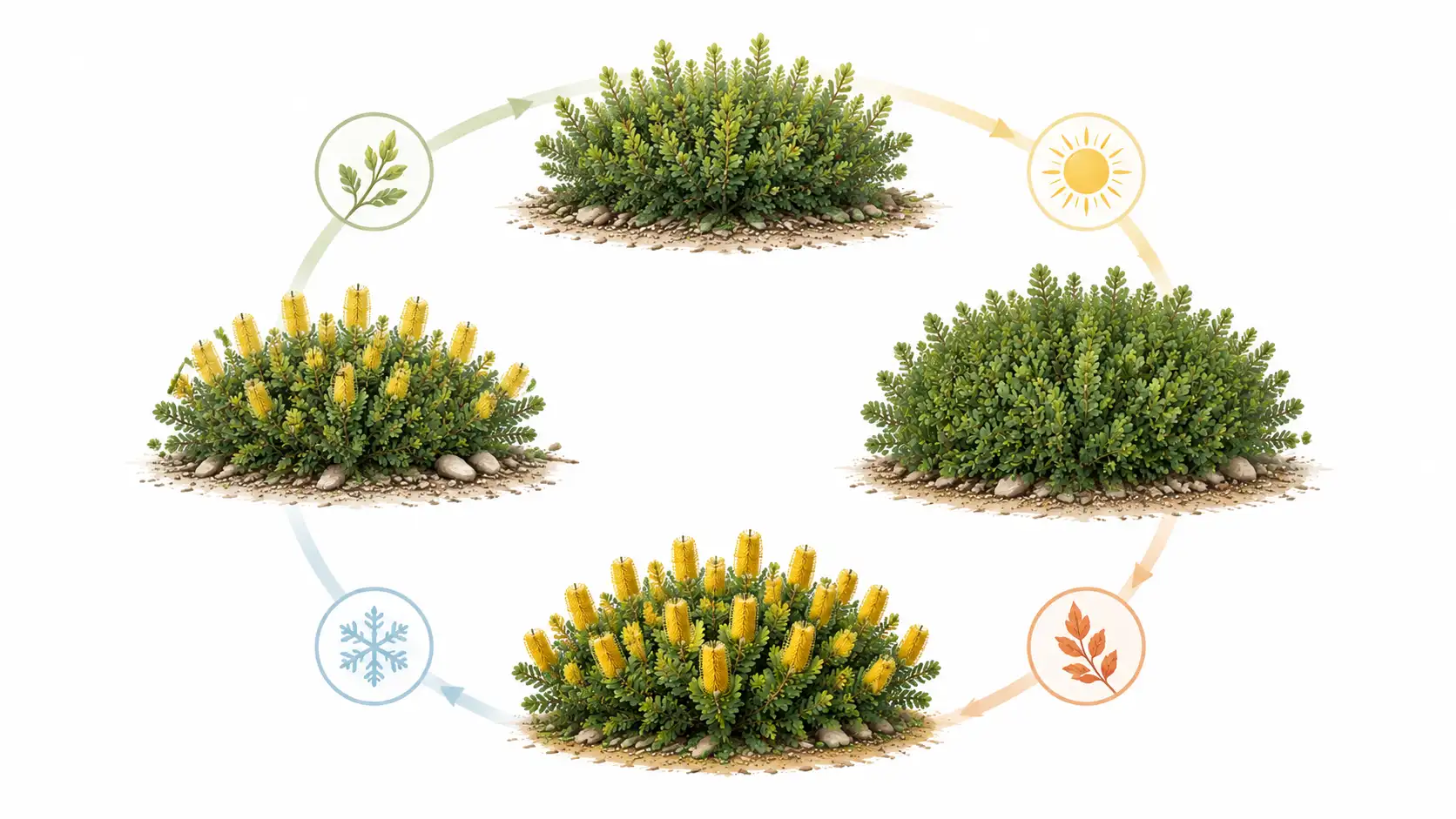
Banksia Little Pal has a moderate growth rate, slightly slower than its parent species due to its dwarf breeding traits.
- Establishes steadily in the first 1–2 seasons
- Reaches near-mature size relatively quickly for a native shrub
- Growth is most active during warm months (spring and summer)
- Flowering occurs in autumn and winter
Growth is strongly influenced by environmental conditions:
- Full sun accelerates compact, healthy growth
- Poor drainage or heavy clay soils slow establishment
- Low-phosphorus soil conditions are essential for long-term vigor
As of recent horticultural recommendations (2026), growers emphasize avoiding over-fertilisation, as dwarf banksias are particularly sensitive to nutrient imbalances.
Banksia Little Pal Care Guide
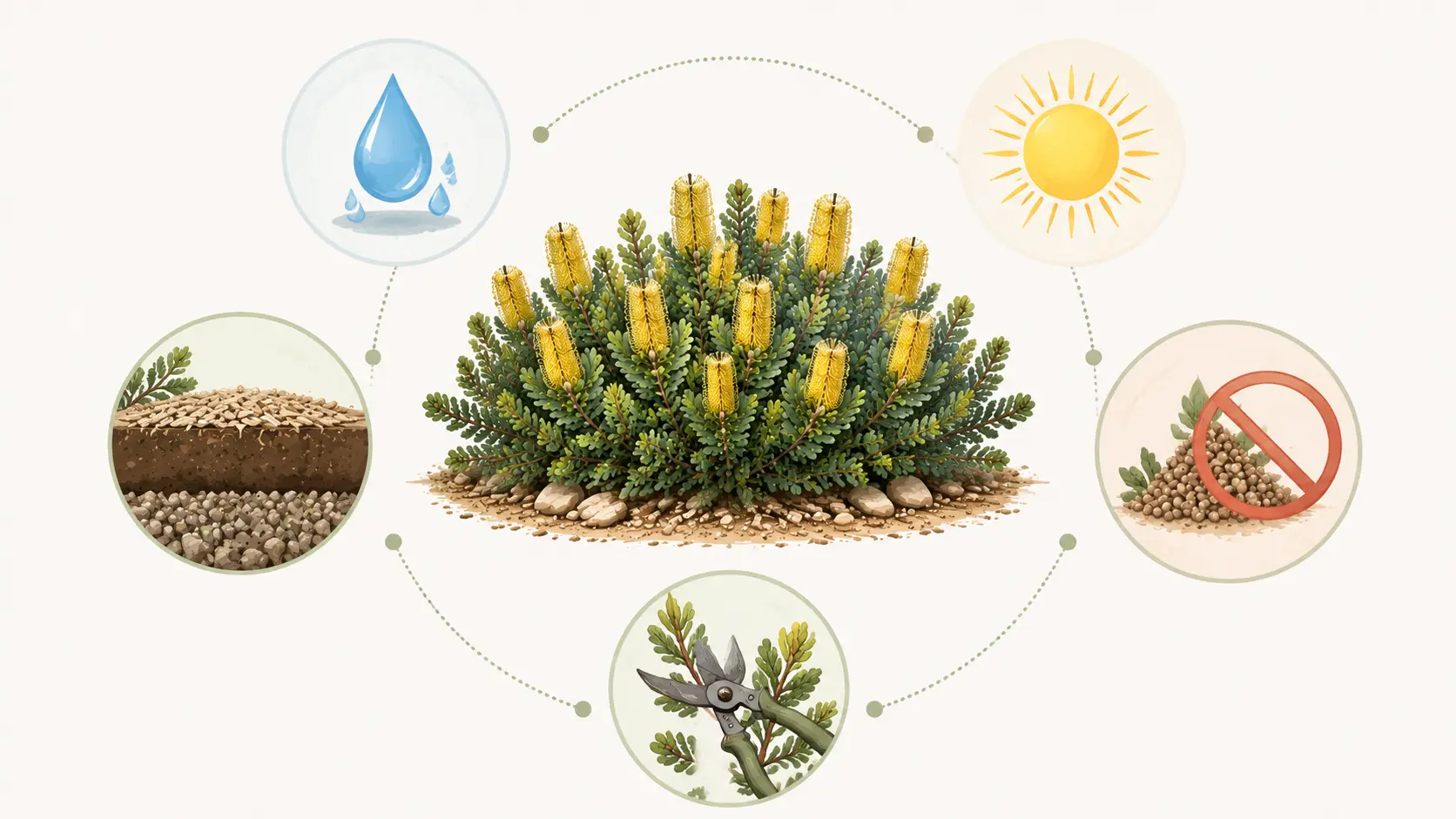
Banksia Little Pal is considered low-maintenance when its basic needs are met.
- Watering: Water regularly during establishment; once mature, it is drought-tolerant but dislikes waterlogged soil (“wet feet”).
- Light: Requires full sun to light shade for best flowering performance.
- Soil: Prefers well-drained, slightly acidic to neutral soils; tolerates sandy, loamy, and clay-loam soils if drainage is adequate.
- Fertilising: Use only low-phosphorus native plant fertiliser in spring. Banksias are highly phosphorus-sensitive.
- Pruning: Light tip-pruning after flowering encourages bushiness and improves flower density.
- Climate tolerance: Frost-tolerant and coastal-spray resistant, making it suitable for a wide range of Australian-style climates.
In our experience growing dwarf banksias, drainage is the single most important factor—plants in poorly drained soil decline quickly regardless of care. It also pairs well visually with climbing natives such as Hardenbergia Violacea Care, Growth, and Varieties, which adds seasonal purple flowering contrast.
Common Problems With Banksia Little Pal (and How to Fix Them)
Yellowing or Browning Leaves
This is most commonly caused by root stress due to overwatering or poor drainage.
- Fix: Improve drainage using raised beds or gritty soil mixes
- Prevent: Avoid watering if soil remains moist
Slow or Stunted Growth
Often linked to excess phosphorus from standard fertilisers.
- Fix: Switch immediately to native-specific fertiliser
- Prevent: Avoid general-purpose garden feeds
Leggy or Sparse Growth
Caused by insufficient sunlight or lack of pruning.
- Fix: Move plant to a sunnier position and prune after flowering
- Prevent: Maintain annual tip-pruning
Pest Issues
Occasional scale insects or sap-suckers may appear.
- Fix: Use low-impact horticultural oil or targeted treatment
- Prevent: Maintain plant health and airflow
Banksia Little Pal vs. Other Dwarf Banksia Cultivars
Banksia ‘Little Pal’ vs. Banksia ‘Honeyeater Delight’
Both are compact shrubs of similar size, but ‘Honeyeater Delight’ comes from Banksia spinulosa and has finer, serrated foliage with golden flower cones. ‘Little Pal’ remains more rounded and dense in habit.
Banksia ‘Little Pal’ vs. Banksia ericifolia ‘Little Eric’
‘Little Eric’ is significantly larger, reaching 1.5–2 m in height. It is better suited for screening, while ‘Little Pal’ is a true dwarf border or pot plant.
Banksia ‘Little Pal’ vs. Banksia ericifolia ‘Red Rover’
‘Red Rover’ typically grows between 1–2 m depending on source descriptions and produces red flower spikes. It is much larger and less compact than ‘Little Pal’, making it more suitable for feature planting.
| Cultivar | Parent Species | Size (H × W) | Flower Colour | Best Use |
| Little Pal | B. paludosa | 0.5 × 1.2 m | Honey-yellow | Borders, pots |
| Honeyeater Delight | B. spinulosa | ~0.5 × 0.5 m | Golden | Small gardens |
| Little Eric | B. ericifolia | 1.5–2 × 1–1.5 m | Yellow | Screening |
| Red Rover | B. ericifolia | 1–2 m | Red | Feature shrub |
Other Notable Banksia Species
Banksia spinulosa (Hairpin Banksia)
A variable species growing up to 2 m as a shrub, sometimes taller in ideal conditions. It produces cylindrical flower spikes in red, orange, and gold tones and is widely used in ornamental native gardens.
Another interesting coastal species is covered in Banksia integrifolia ‘Roller Coaster’ Guide, which explores its ground-hugging form and coastal adaptability.
Banksia robur (Swamp Banksia)
A larger swamp species with distinctive blue-green flower buds that turn creamy-yellow-green. It is often confused with Banksia paludosa but is more robust and larger in overall structure.
Banksia oblongifolia
A low-growing, suckering banksia found in eastern Australia. It is commonly used in restoration planting due to its spreading habit and adaptability. For gardeners comparing low-growing native banksias, Banksia oblongifolia: Care, Size, Growth & Identification Guide provides a deeper look at another compact eastern Australian species often confused with swamp-type banksias.
Where to Grow Banksia Little Pal in the Garden
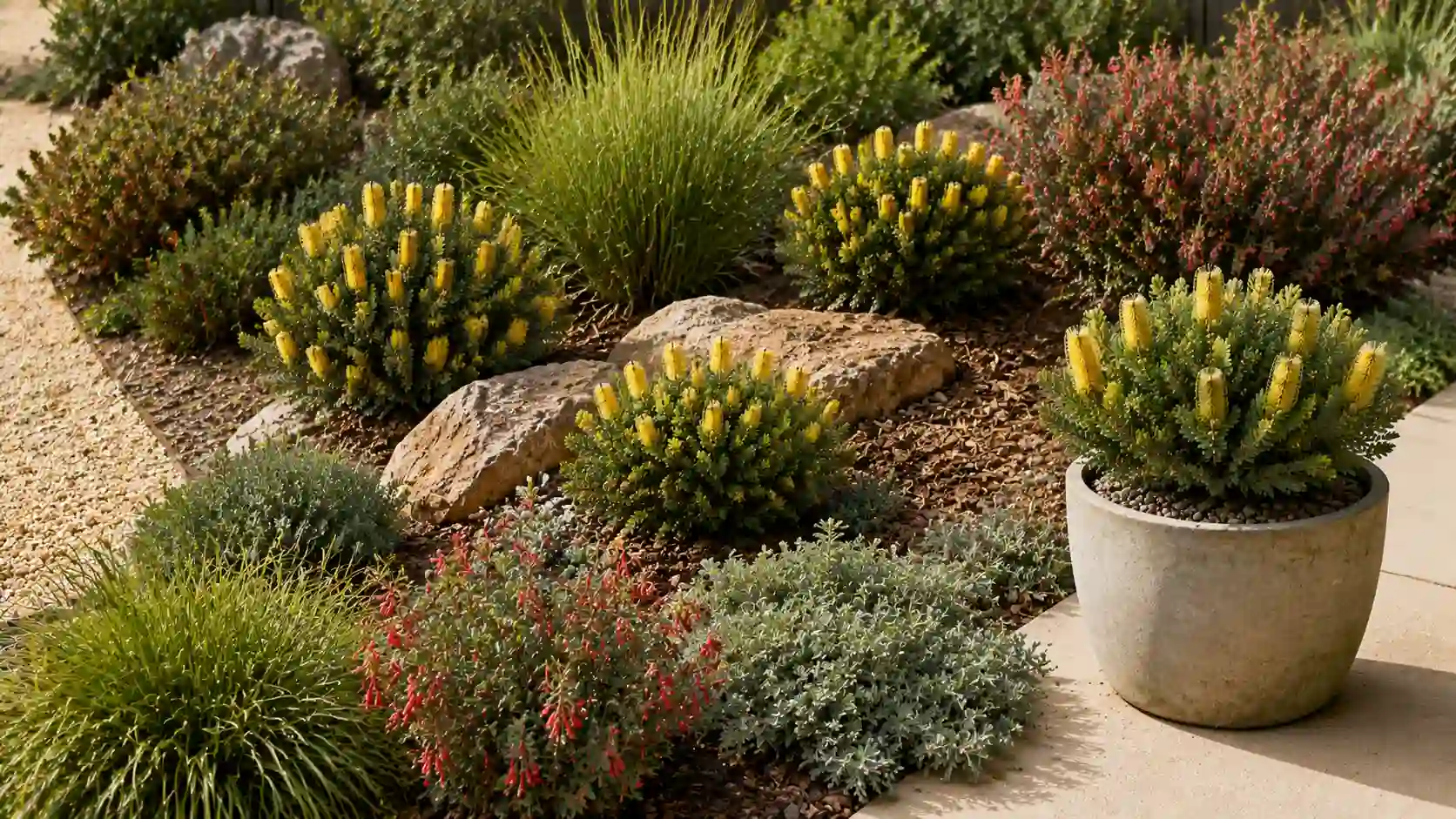
Banksia Little Pal is best used in compact and low-maintenance landscape designs.
Best uses:
- Rock gardens
- Border edging
- Small native garden beds
- Container planting
- Groundcover-style planting
Common beginner mistakes include:
- Planting in poorly drained soil
- Overusing phosphorus-rich fertilisers
- Growing in deep shade
Companion plants include:
- Correa species
- Lomandra
- Grevillea
- Other dwarf Australian natives
Seasonally, flowering peaks in autumn and winter, making it valuable for year-round garden interest. Gardeners aiming to increase pollinator activity can combine Banksia Little Pal with plants featured in Native Plants That Attract Butterflies Guide for a more biodiverse garden ecosystem.
Coastal-friendly companions such as Grevillea Preissii Seaspray: Care, Size and Growing Guide work well alongside Banksia Little Pal in low-maintenance native gardens.
Conclusion
Banksia Little Pal is a compact, resilient cultivar of Banksia paludosa designed for small gardens, pots, and low-maintenance native landscapes. Its dwarf size, honey-yellow flower spikes, and strong bird-attracting qualities make it a practical and ornamental choice. With proper drainage, full sun, and low-phosphorus feeding, it remains a reliable and beginner-friendly native plant that stands apart from larger banksia cultivars.
For broader landscape planning with native species, Australian Native Garden Trees: The Complete Planting Guide provides a full framework for designing resilient Australian-style gardens.
FAQs
How big does Banksia ‘Little Pal’ grow?
It typically grows to around 0.4–0.5 m in height and up to 1.2 m in width.
Is Banksia ‘Little Pal’ the same as Banksia paludosa?
It is a cultivar of Banksia paludosa, meaning it is a selectively bred compact form of the species.
What’s the difference between Banksia ‘Little Pal’ and Banksia ‘Little Eric’?
‘Little Pal’ is smaller and more compact, while ‘Little Eric’ grows much taller and is used more for screening.
Can Banksia ‘Little Pal’ be grown in a pot?
Yes, it performs very well in containers due to its naturally compact growth habit.
Why are my Banksia ‘Little Pal’ leaves turning yellow?
This is usually caused by poor drainage or excess phosphorus in fertiliser.
Does Banksia ‘Little Pal’ attract birds?
Yes, its nectar-rich flowers attract birds, especially honeyeaters, during flowering season.