Introduction
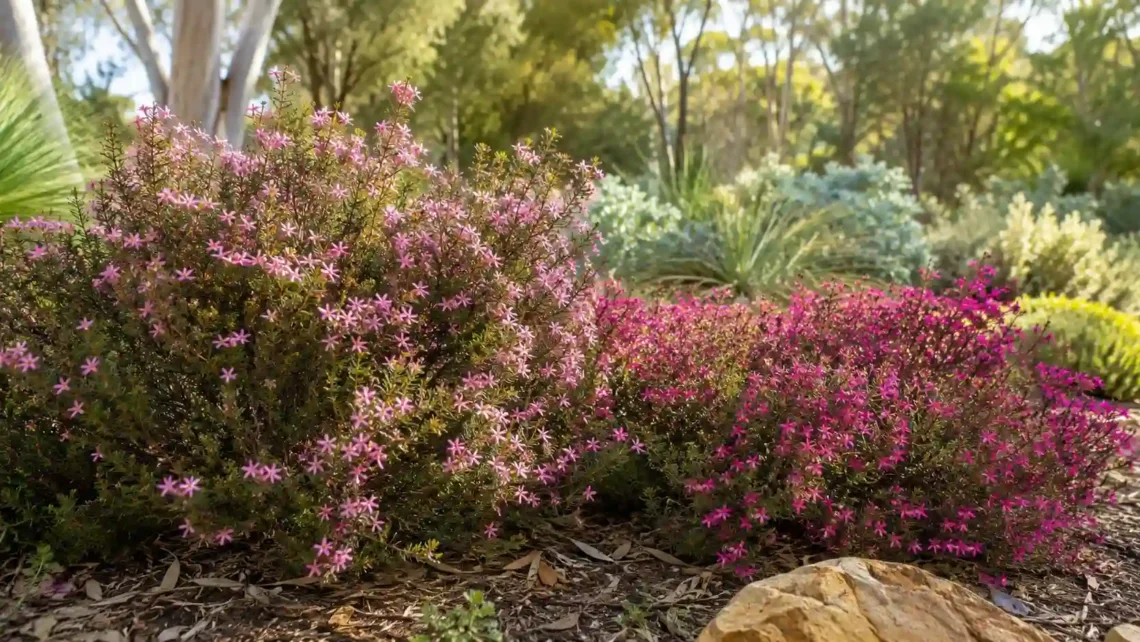
Crowea varieties are a group of highly valued Australian native shrubs known for their star-shaped flowers, compact growth, and extended blooming season. Commonly referred to as the crowea plant, crowea flower, or simply australian crowea, these shrubs are widely used in native gardens for their resilience and ornamental appeal.
Croweas are especially popular because they combine aesthetic beauty with low-maintenance care requirements. Their pink to deep magenta blooms appear across late summer through winter, making them a reliable seasonal colour plant when many other shrubs are not flowering. Gardeners across Australia use them in borders, pots, and shaded woodland landscapes due to their adaptability and evergreen foliage structure.
Croweas are part of a broader group of shade-tolerant natives, similar to other species found in our guide on Native Plants That Grow in Shade Guide (Australia).
What Are Crowea Varieties?
Crowea varieties refer to different species and cultivated forms within the Crowea genus, a group of small flowering shrubs native to Australia. The genus includes three primary species—Crowea exalata, Crowea saligna, and Crowea angustifolia—along with natural and horticultural hybrids such as Crowea exalata × saligna.
Crowea belongs to the Rutaceae family, which includes many aromatic and ornamental plants commonly found in Australian native landscapes.
These plants are part of the Rutaceae family and are recognized for their five-petalled, star-shaped flowers, typically in shades of pink, magenta, or white. The crowea plant is especially valued in landscaping due to its extended flowering period, compact habit, and tolerance to a range of garden conditions.
In Australian horticulture, crowea varieties are used both as ornamental feature plants and as low-maintenance native shrubs suitable for ecological gardens. Their adaptability makes them an essential part of modern Australian native planting schemes.
Quick Summary
- Crowea is an Australian native genus with three species and several named cultivars.
- All croweas produce five-petalled, star-shaped flowers in pink to deep magenta, typically from late summer through winter.
- Key varieties include cultivars of C. exalata, C. saligna, and the hybrid C. exalata × saligna.
- Croweas suit borders, containers, and shaded woodland gardens across most of Australia.
The Three Species of Crowea Explained
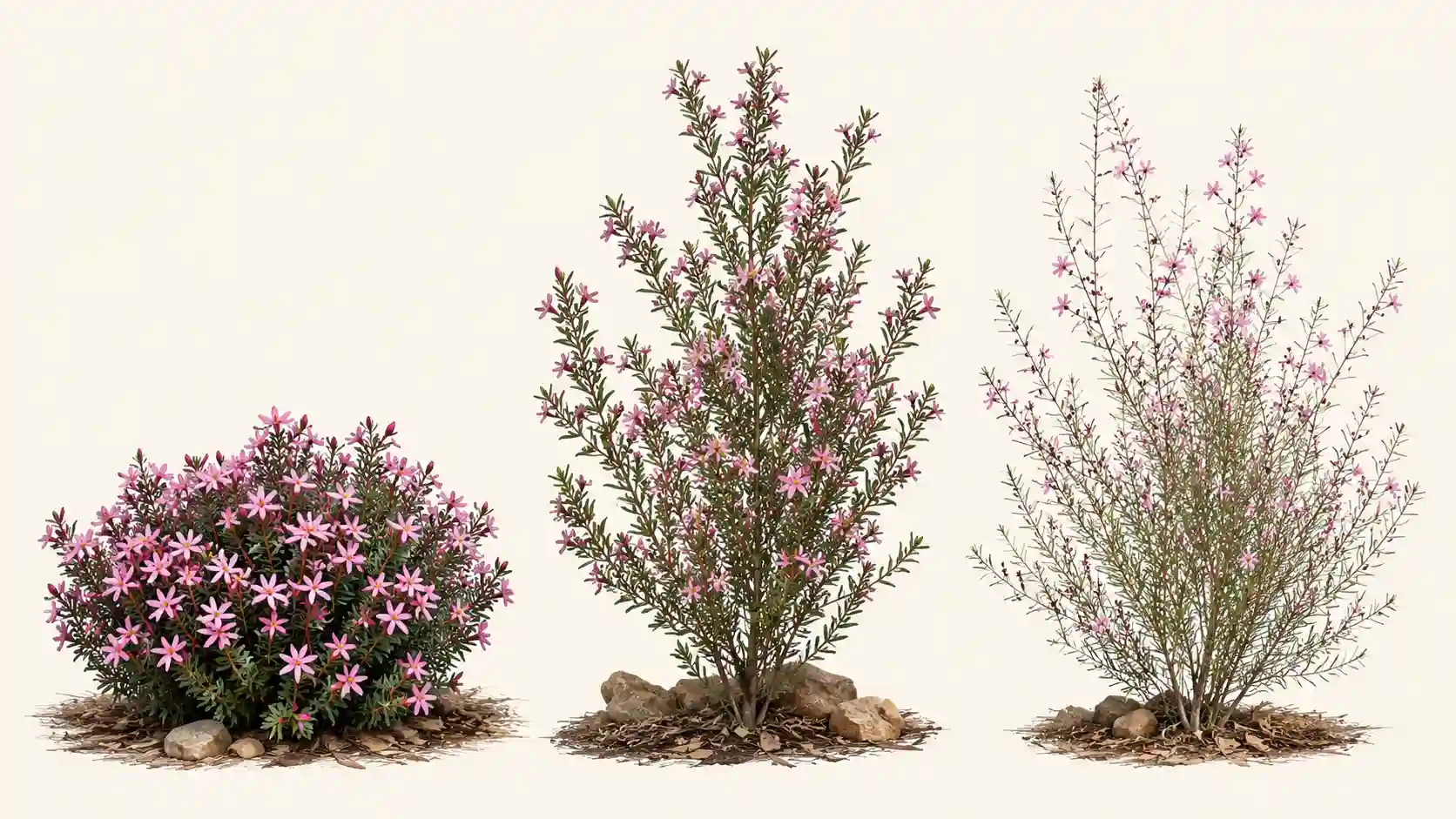
Crowea species form the botanical foundation of all cultivated crowea varieties. Understanding the differences helps gardeners select the right plant for their landscape.
Comparison Table: Crowea Species Overview
| Species | Typical Height | Leaf Shape | Flower Size | Best Use |
| C. exalata | 30–90 cm | Narrow | Small–Medium | Rockeries, pots |
| C. saligna | 1–1.5 m | Willow-like | Large | Borders, understorey |
| C. angustifolia | 30–60 cm | Very narrow | Small | Specialist gardens |
| C. exalata × saligna | 60 cm–1.2 m | Variable | Medium–Large | General garden use |
Crowea exalata — the small crowea
Crowea exalata is a compact species commonly called the small crowea. It typically grows between 30–90 cm, making it ideal for pots, rockeries, and small garden beds. It produces delicate pink star-shaped flowers and fine narrow foliage, creating a soft textured appearance in garden design.
Crowea saligna — the willow-leafed crowea
Crowea saligna plant is a larger, more robust shrub reaching up to 1.5 meters. It is known for its willow-like foliage and larger flowers, sometimes referred to as crowea saligna large flower forms. It is well-suited to understorey planting in native gardens where height and structure are needed.
Crowea angustifolia — the narrow-leafed crowea
Crowea angustifolia is less commonly cultivated but naturally occurs in south-western Australia. It has very narrow leaves and a smaller overall habit. This species is often used in specialist native plant collections due to its restricted availability and unique foliage texture.
Crowea exalata × saligna — the hybrid crowea
The crowea exalata x saligna hybrid combines traits of both parent species. These hybrids are widely sold because they are more vigorous, longer flowering, and more adaptable than many pure species. They often display improved growth density and extended blooming periods, making them ideal for general garden use.
Popular Crowea Varieties and Named Cultivars in Australia
Modern crowea varieties Australia include several horticulturally selected cultivars bred for flower colour, compact growth, and extended flowering performance. These are widely used in landscaping and native garden design.
Crowea ‘Festival’
Crowea festival is a compact, free-flowering cultivar with deep pink star-shaped flowers. It blooms from late summer through mid-winter and is ideal for borders and containers due to its dense growth habit.
Crowea ‘White Star’
Crowea white star produces rare white or pale blush flowers, making it highly desirable for minimalist and wedding-themed garden designs. It is often used in soft-colour landscape palettes.
Crowea exalata ‘Southern Stars’
Crowea exalata southern stars is one of the most reliable cultivars of C. exalata. It forms a dense mound and performs well in southern Australian climates with consistent flowering and strong adaptability.
Crowea ‘Cooper’s Classic’
Crowea coopers classic is a dependable hybrid cultivar known for its deep pink flowers and balanced growth. It is commonly used as a general-purpose ornamental shrub.
Crowea ‘Dark Side’
Crowea dark side is recognized for its rich magenta-purple tones. It is often used in contrast planting schemes where darker foliage and flowers enhance visual depth.
Cultivar Comparison Table
| Cultivar | Origin | Flower Colour | Height | Best Use |
| Festival | Hybrid | Deep pink | Compact | Containers, borders |
| White Star | Hybrid | White | Small | Decorative gardens |
| Southern Stars | C. exalata | Pink | Medium | Mass planting |
| Cooper’s Classic | Hybrid | Pink | Medium | General landscaping |
| Dark Side | Hybrid | Magenta-purple | Medium | Contrast planting |
Crowea vs. Correa — Understanding the Difference
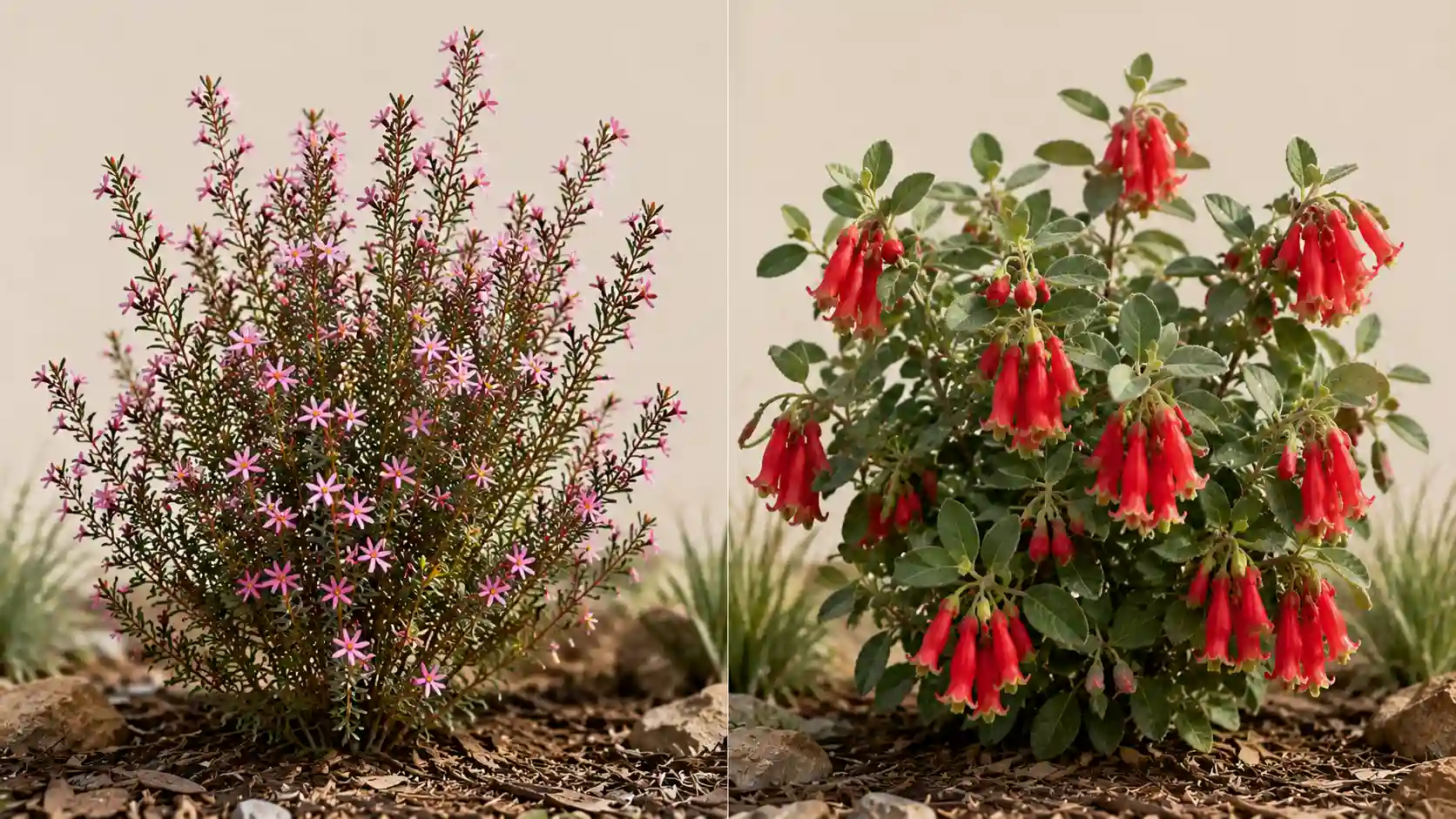
Crowea and correa species are both Australian native shrubs within the Rutaceae family, but they differ significantly in structure and floral morphology. While both are often called “correas” or confused in garden centers, they are distinct genera.
Crowea produces star-shaped, five-petalled flowers, while Correa typically has tubular, bell-shaped flowers. Crowea leaves are narrow and aromatic, whereas correa shrubs often have broader, softer foliage.
Comparison Table: Crowea vs Correa
| Feature | Crowea | Correa |
| Flower shape | Star-shaped | Tubular/bell-shaped |
| Petal count | 5 petals | 4 fused petals |
| Leaf shape | Narrow, firm | Broad, soft |
| Common use | Borders, pots | Hedging, wildlife gardens |
| Flower colours | Pink, white | Red, green, pink |
This type of botanical comparison is similar to other native plant distinctions explored in Plants Similar to Gymea Lily: Best Architectural Alternatives.
How Big Do Crowea Plants Grow?
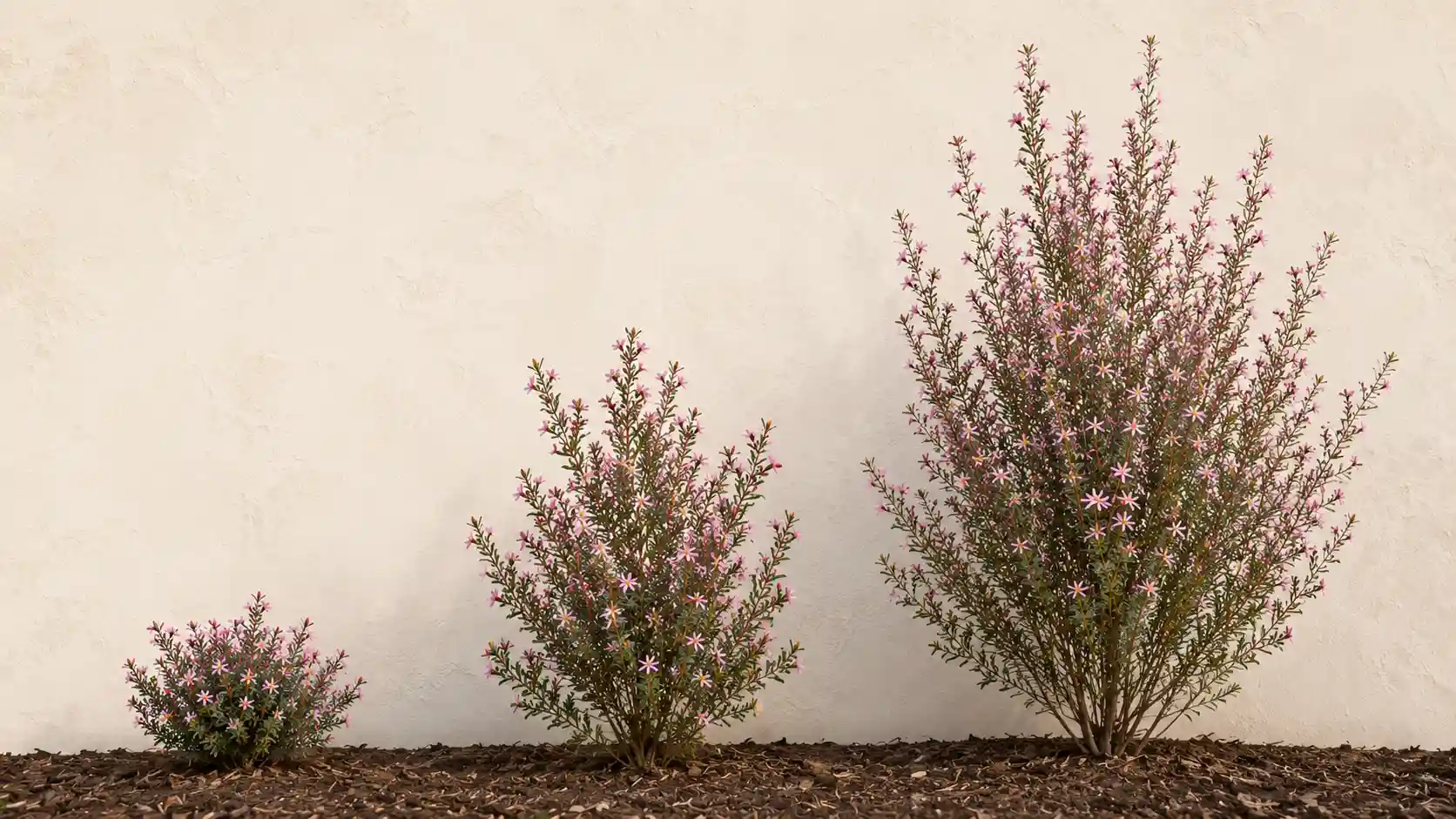
Crowea plant size varies depending on species and cultivar. Most croweas remain compact shrubs, typically ranging from 30 cm to 1.5 meters in height.
In our experience at Greenery Inside, container-grown croweas tend to stay significantly smaller due to root restriction and controlled watering. Soil quality and sunlight exposure also strongly influence final plant size.
- Typical height: 30 cm–1.5 m
- Spread: 60 cm–1.2 m
- Pots: remain more compact
- Rich soil: encourages larger growth
Crowea Growth Rate and Seasonal Flowering Patterns
Croweas are moderate-growing shrubs, typically reaching maturity within 2–3 years. Hybrid forms such as crowea exalata × saligna often establish faster due to hybrid vigor.
Flowering usually occurs from late summer through winter, with peak bloom in May–August in many Australian regions. In our field observations, consistent pruning after flowering significantly improves bloom density the following season.
Can Crowea Grow in Shade?
Croweas tolerate partial shade well, making them suitable for understorey planting in australian crowea landscape systems. They perform best in dappled light or morning sun with afternoon shade.
Many gardeners combine croweas with other shade-adapted species such as those featured in Shade Loving Grasses for Australian Gardens to create layered understorey planting designs.
Full shade conditions reduce flowering intensity, although the plant remains healthy. In shaded eucalyptus gardens, croweas perform particularly well when light is filtered.
Crowea Care Guide — How to Grow and Maintain Croweas
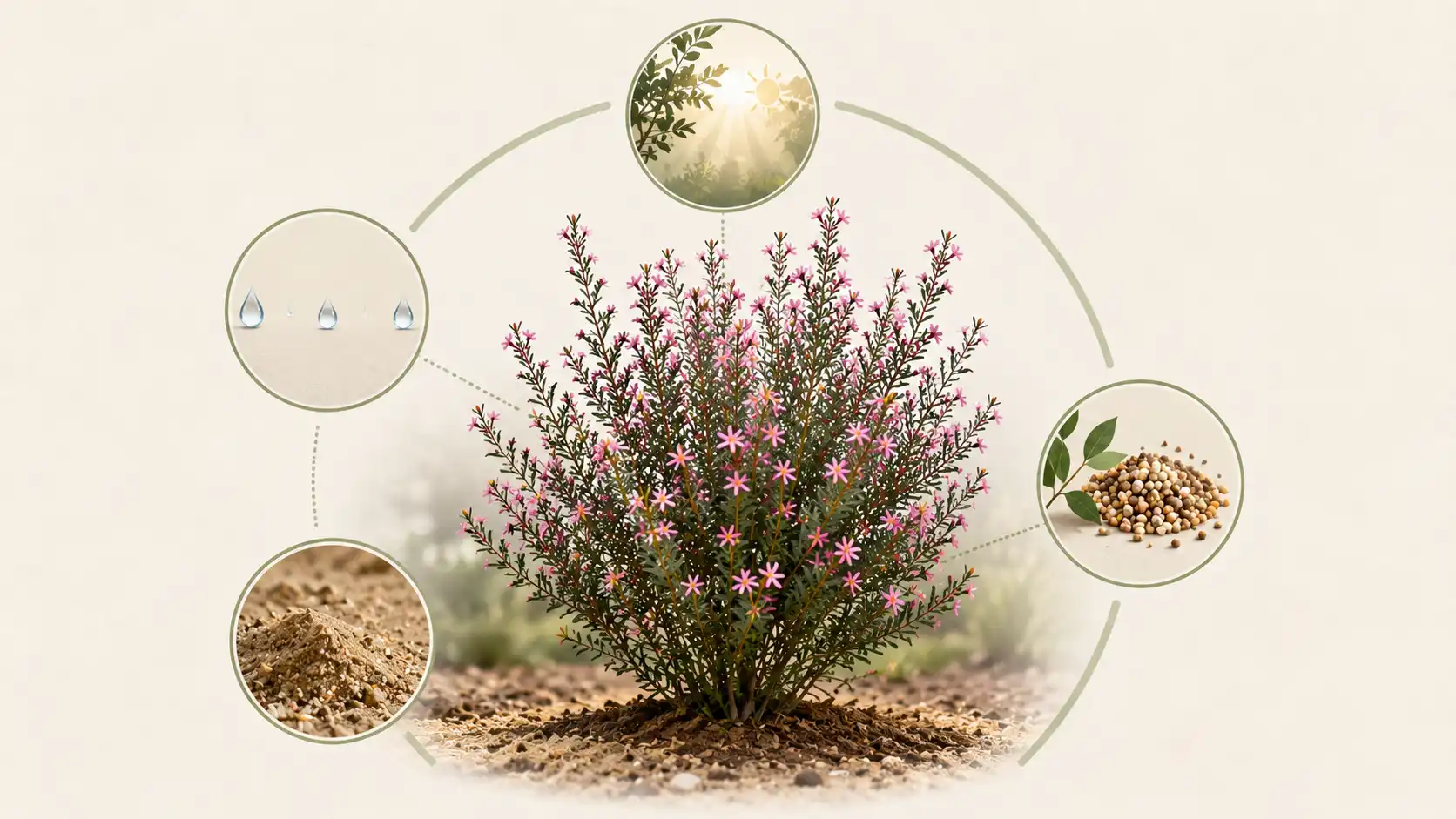
Watering needs
Croweas prefer deep, infrequent watering once established. Overwatering should be avoided as it can quickly lead to root stress.
Soil requirements
They grow best in well-drained sandy or loamy soils. Heavy clay must be improved with organic matter or sand to prevent waterlogging. In heavier soils, improvement techniques similar to those used in How to Improve Clay Soil for Lawns for Better Grass Growth can significantly enhance drainage and plant performance.
Fertilising croweas
Use low-phosphorus native fertilisers. In our experience, excessive fertilisation—especially nitrogen-heavy products—reduces flowering performance.
Pruning for shape and longevity
Light pruning after flowering encourages dense growth and more blooms. Avoid cutting into old woody stems.
Climate tolerance
Croweas are frost-tolerant in mild conditions and thrive in temperate climates but struggle in humid tropical environments.
Common Crowea Problems and How to Fix Them
Yellowing leaves
Caused by overwatering or phosphorus toxicity. Improve drainage and switch to native fertiliser.
Poor or no flowering
Often due to excessive shade or nitrogen fertiliser. Relocate or adjust feeding practices.
Root rot and waterlogging
Occurs in heavy clay soils. Replant in raised, well-drained beds.
Scale insects and leaf-eating pests
Treat with horticultural oil or organic insect control methods. Pest issues such as scale and aphids can also be managed using methods similar to those outlined in Aphids on Plants: 7 Proven Fixes to Save Your Plants Fast.
Beginner Mistakes When Growing Crowea
Common errors include:
- Using standard high-phosphorus fertiliser
- Planting in poorly drained clay soil
- Neglecting pruning after flowering
- Confusing crowea with correa and misapplying care
- Overwatering during cooler months
These mistakes significantly reduce plant health and flowering performance.
Landscaping with Crowea — Where and How to Plant
Croweas are highly versatile in landscape design. They are commonly used in:
- Border plantings for seasonal colour
- Understorey planting beneath eucalypts
- Containers on patios and balconies
- Wildlife gardens supporting pollinators
Companion plants include grevillea, correa, and lomandra, which share similar soil and water requirements. Croweas are often included in larger native planting schemes alongside species discussed in Australian Native Garden Trees, especially in mixed-height landscape designs.
Conclusion — Choosing the Right Crowea Variety for Your Garden
Crowea varieties offer an excellent range of compact, flowering Australian native shrubs suitable for diverse garden settings. From crowea exalata for small spaces to crowea saligna for taller structure and hybrid forms for extended flowering, each variety serves a specific landscape purpose.
Selecting the right crowea varieties depends on understanding size, flowering behavior, and environmental conditions. When matched correctly to site conditions, croweas provide long-lasting seasonal colour with minimal maintenance requirements.
FAQ — Frequently Asked Questions About Crowea
What are the main crowea varieties available in Australia?
Main crowea varieties include C. exalata, C. saligna, C. angustifolia, and hybrids such as C. exalata × saligna, along with cultivars like ‘Festival’ and ‘Southern Stars’.
How is crowea different from correa?
Crowea has star-shaped flowers with five petals, while correa produces tubular flowers with four fused petals. They are different genera within the Rutaceae family.
Does crowea grow in shade?
Yes, crowea grows in partial shade but flowers best in dappled light or morning sun. Full shade reduces blooming intensity.
When does crowea exalata flower?
Crowea exalata typically flowers from late summer through winter, with peak blooming in cooler months depending on regional climate.
What is the best fertiliser for crowea?
A low-phosphorus native plant fertiliser is best. High-phosphorus or general-purpose fertilisers should be avoided to prevent root damage and poor flowering.