Introduction
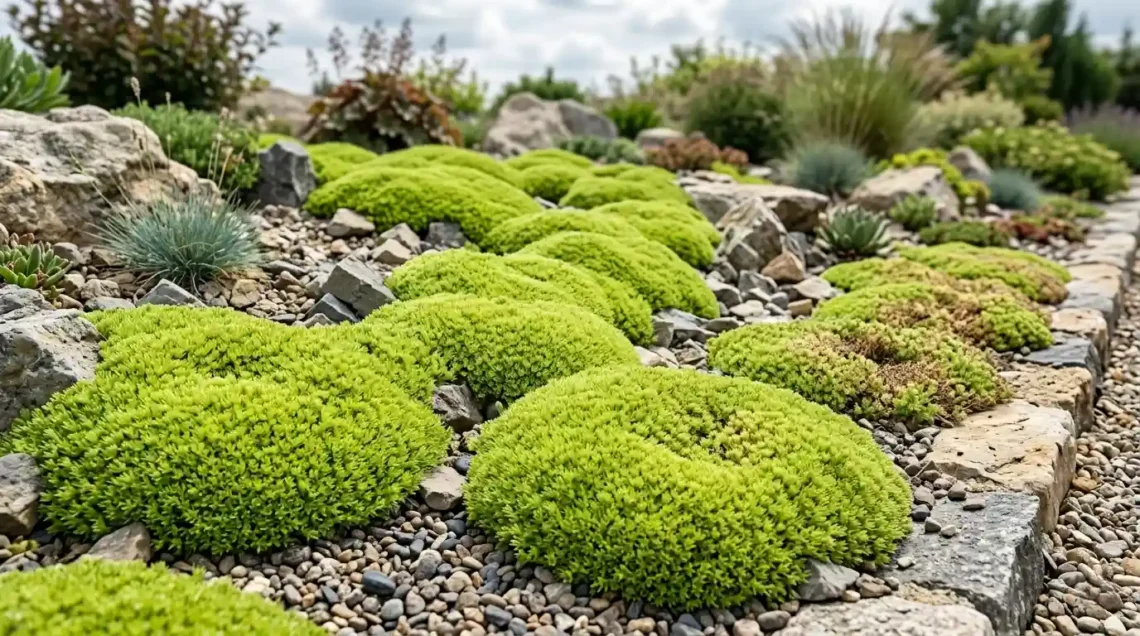
Scleranthus biflorus, commonly known as Lime Lava, is a low-growing Australian cushion plant widely used as a moss lawn alternative and decorative ground cover. It forms dense, bright green to lime-yellow mounds that resemble soft turf or “Australian astroturf,” making it popular in modern low-maintenance landscaping. Native to Australia and New Zealand, this plant naturally grows in alpine and rocky environments where drainage is excellent and conditions are cool to moderate.
Despite its resilience, growers often report Scleranthus biflorus problems when environmental needs are not met. Issues like browning, root rot, and poor spread are usually linked to water imbalance or unsuitable soil. This guide explains every major issue and provides practical solutions to maintain a healthy, vibrant Lime Lava ground cover.
Quick Summary
- Scleranthus biflorus (Lime Lava) is a cushion-forming ground cover native to Australia and New Zealand
- Common problems include browning, root rot, drainage failure, and climate stress
- Most issues are preventable with well-drained soil and careful watering
- Performs best in USDA zones 7–10 with full sun to partial shade
- Ideal for low-traffic, ornamental lawn alternatives rather than heavy-use turf
What Is Scleranthus Biflorus?
Scleranthus biflorus belongs to the Caryophyllaceae family and is commonly called Lime Lava plant, cushion grass, or mossy ground cover. It naturally forms tight, dome-shaped mats composed of fine, needle-like foliage. In its native habitat, it spreads across alpine meadows and rocky slopes where drainage is sharp and competition from taller plants is minimal. It is often combined in native landscaping designs with other Australian ground covers such as Chorizema cordatum Care Guide & Growing Tips for color contrast and texture layering.
The plant is often confused with similar cushion species, but Scleranthus biflorus stands out due to its brighter lime-green coloration and softer, more uniform texture. It is widely used in landscaping as a living carpet alternative because it requires no mowing and creates a visually smooth surface.
Scleranthus Biflorus vs Scleranthus Uniflorus — Key Differences
Comparison Table
| Feature | S. biflorus | S. uniflorus |
| Texture | Soft, dense cushion | Coarser, irregular |
| Color | Bright lime-green | Darker green |
| Height | Low (5–10 cm) | Slightly taller |
| Spread | Uniform mat formation | Patchy spread |
| Climate preference | Mild to cool climates | More rugged conditions |
Scleranthus uniflorus is often chosen for more rugged landscapes, while S. biflorus is preferred for decorative moss lawns due to its smoother appearance and consistent growth habit.
Scleranthus Biflorus Problems — Overview
Most Scleranthus biflorus problems are not caused by disease but by environmental mismatch. Gardeners often report recurring issues in online discussions and forums, especially related to watering mistakes and poor drainage conditions.
The most common problems include:
- Browning patches
- Root decay from excess moisture
- Weak growth in shaded areas
- Heat stress in exposed climates
In our experience at Greenery Inside, nearly 80% of plant failures are linked to improper soil conditions rather than pests or disease.
Scleranthus Biflorus Turning Brown — Causes and Fixes
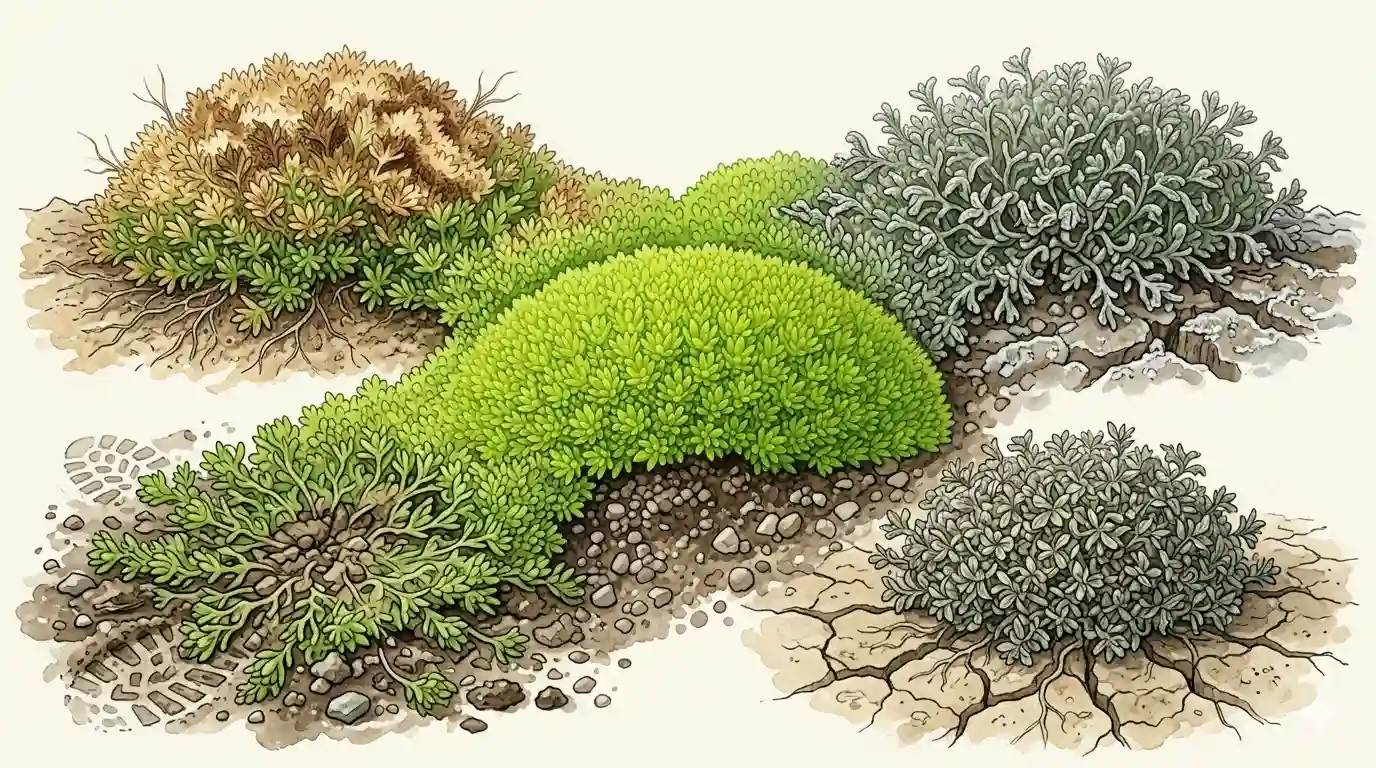
Browning is the most frequently reported issue with Scleranthus biflorus and can indicate several underlying problems.
Causes
- Overwatering: Soil stays wet too long, leading to oxygen deprivation
- Underwatering: Prolonged dryness causes cushion collapse
- Heat stress: Intense afternoon sun scorches foliage
- Physical compaction: Foot traffic damages structure
- Frost damage: Cold snaps can brown exposed cushions
- Natural dormancy: Seasonal color change in cooler months
Fixes
- Improve drainage immediately if soil is wet
- Adjust watering to deep but infrequent cycles
- Provide partial shade in hot climates
- Avoid walking on the plant
- Trim affected areas only after identifying live growth
Greenery Inside recommends always checking soil moisture 2–3 cm below the surface before watering.
Root Rot and Drainage Problems
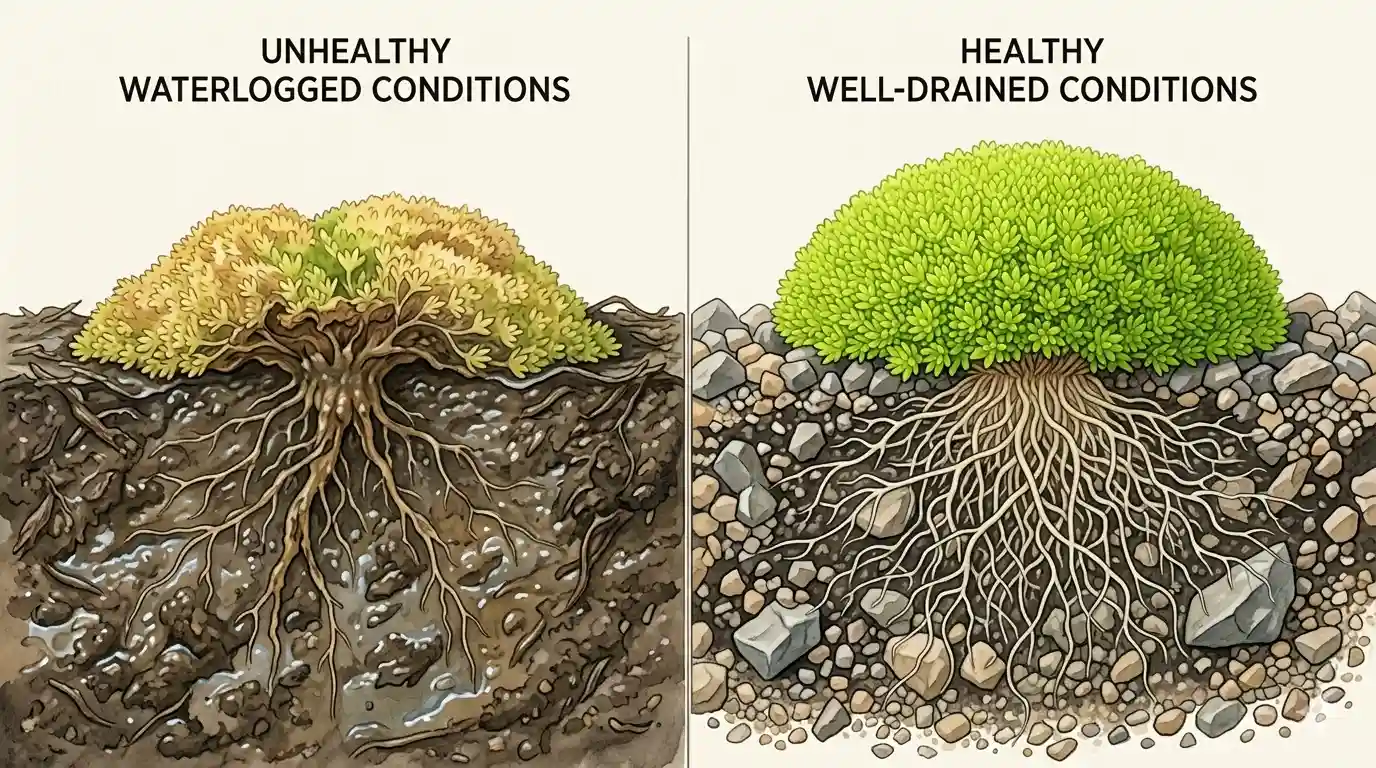
Scleranthus biflorus is extremely sensitive to waterlogged soil. Root rot usually begins invisibly, making it one of the most dangerous issues.
Symptoms
- Yellowing before browning
- Soft or mushy base
- Patch death from the center outward
Diagnosis
Root rot differs from drought stress because affected tissue feels soft rather than crisp.
Fix
- Replant in gritty, free-draining soil
- Add sand or gravel to heavy soil
- Raise planting beds if necessary
Proper drainage is the single most important factor for survival.
Sun, Shade, and Climate Stress
Optimal growth for Scleranthus biflorus occurs in full sun to partial shade.
Environmental Effects
- Full sun: Best color and density
- Partial shade: Slower but stable growth
- Deep shade: Thin, weak cushions
- Excess heat: Leaf scorch and dehydration
In warmer regions like Western Australia and parts of the USA, afternoon shade is often necessary to prevent stress.
Pest and Disease Problems
Although relatively resistant, Scleranthus biflorus can still experience:
- Fungal infections in humid conditions
- Fungus gnat activity in containers
- Algae or moss competition in wet soil
Treatment
- Improve airflow around plant clusters
- Reduce watering frequency
- Apply mild fungicide if fungal spread occurs
Most issues resolve once moisture levels are corrected.
Scleranthus Biflorus Care Guide — Preventing Problems Before They Start
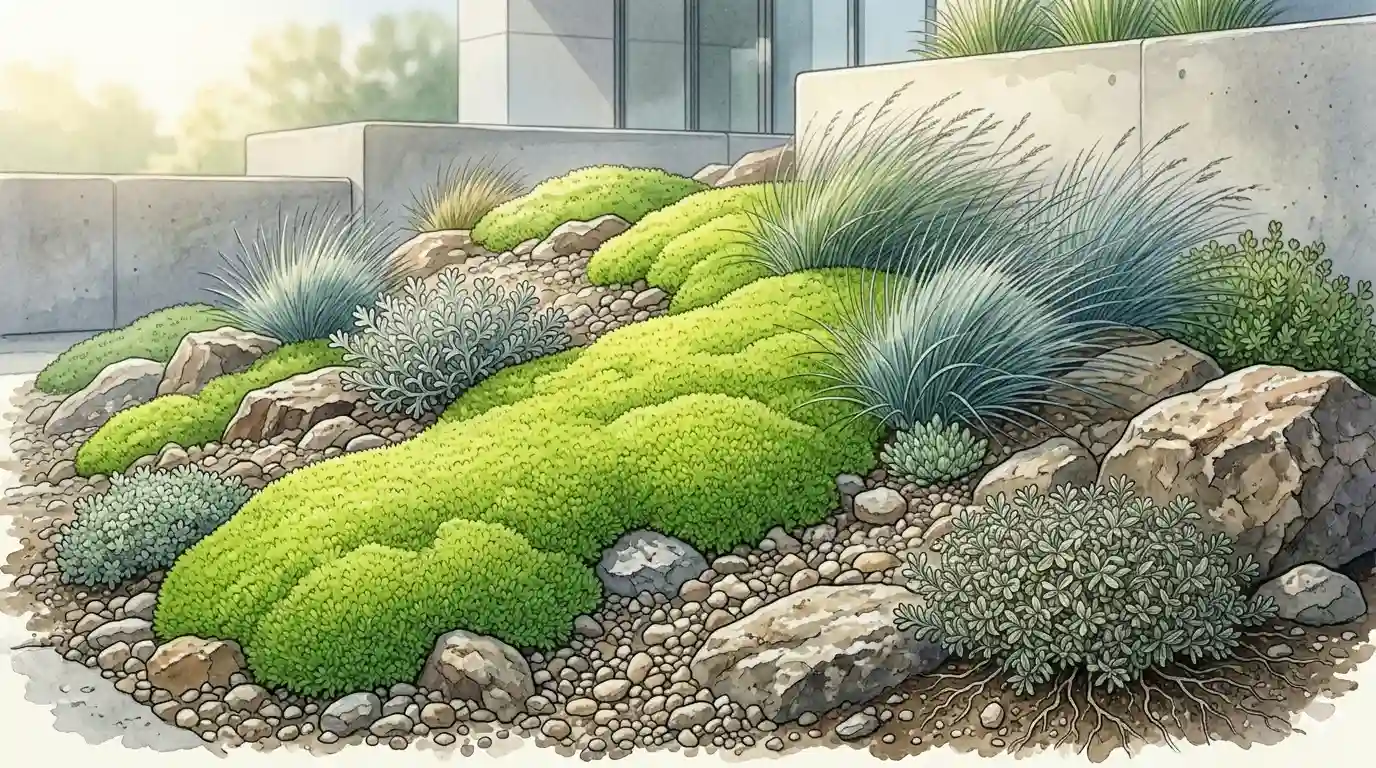
Preventing issues is easier than treating them in Scleranthus biflorus. Proper setup ensures long-term stability. For mixed native ground layers, it can be complemented with fine-textured grasses such as Dwarf Mat Rush Varieties for improved garden depth.
Watering Requirements
- Water deeply but infrequently
- Allow soil to dry slightly between watering
- Reduce watering in winter
- Containers require more frequent checks
Overwatering is the most common cause of failure.
Soil and Drainage Requirements
- Well-drained, gritty soil mix
- Slightly acidic to neutral pH
- Avoid heavy clay unless amended
- Never allow standing water
Light and Temperature Requirements
- Full sun to partial shade
- Cold-tolerant in suitable zones
- Sensitive to extreme heat
- Light mulch can regulate temperature
Fertilization and Feeding
- Light feeder
- Use slow-release fertilizer in spring
- Avoid high nitrogen inputs
- Excess feeding leads to weak growth
Pruning and Maintenance
- Minimal pruning required
- Remove browned patches selectively
- Avoid heavy trimming into cushion base
Scleranthus Biflorus Size and Growth Rate
Scleranthus biflorus typically grows:
- Height: 5–10 cm (2–4 inches)
- Spread: 30–60 cm per plant
- Growth rate: slow to moderate
Growth is influenced by soil quality, moisture balance, and climate stability.
Scleranthus Biflorus Propagation
Propagation is mainly done by division.
Steps
- Lift healthy clumps carefully
- Separate into smaller sections
- Replant in prepared soil
- Water lightly until established
Common Mistakes
- Letting divisions dry out
- Planting too deep
- Overwatering during establishment
Using Scleranthus Biflorus as a Lawn Alternative
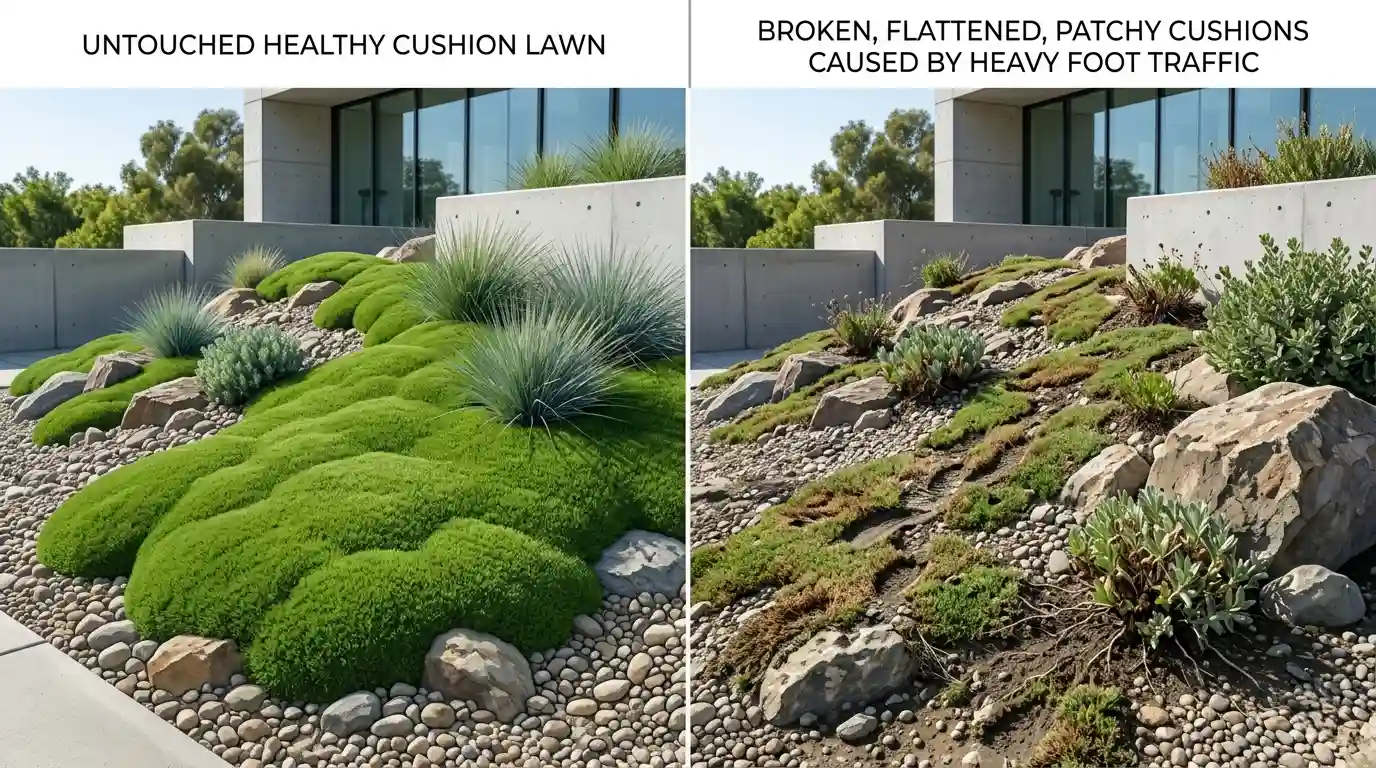
Scleranthus biflorus is often called “Australian astroturf” due to its uniform cushion appearance. In coastal-style gardens, it pairs well with structural natives like Coastal Cushion Banksia to create low-maintenance natural landscapes.
Benefits
- No mowing required
- Drought tolerant once established
- Visually uniform ground cover
Limitations
- Not suitable for heavy foot traffic
- Slow establishment period
- Requires well-prepared soil
It is best suited for ornamental or low-use garden areas. Scleranthus biflorus is commonly used as a type of ground cover in landscaping, similar to other low-growing species used for soil protection and ornamental design.
Scleranthus Biflorus Varieties and Related Plants
The most common cultivar is Lime Lava, known for its bright lime coloration.
- Lime Lava forms: dense, chartreuse cushions
- More ornamental than wild species
- Preferred for landscaping projects
Related species include Scleranthus uniflorus, used in harsher environments.
Common Beginner Mistakes With Scleranthus Biflorus
- Planting in heavy clay soil without amendments
- Overwatering due to surface dryness misinterpretation
- Expecting turf-like durability under foot traffic
- Growing in deep shade
- Ignoring climate compatibility
- Overcrowding planting areas
Correcting these early ensures long-term success.
Scleranthus Biflorus Growing Zones and Climate Suitability
Climate Zone Table
| Zone | Region | Suitability | Notes |
| 7–10 | USA | High | Best performance in mild climates |
| Australia | Native | Excellent | Especially temperate zones |
| UK | Moderate | Good | Needs drainage protection |
| NZ | Native | Excellent | Natural habitat conditions |
Scleranthus biflorus struggles in extreme heat or prolonged frost conditions.
Conclusion
Scleranthus biflorus is a highly attractive and low-maintenance ground cover when its environmental needs are properly met. Most scleranthus biflorus problems arise from drainage issues, incorrect watering, or unsuitable climate placement rather than plant weakness.
Understanding scleranthus biflorus problems before they occur is the key to maintaining a healthy, vibrant Lime Lava planting. For best results, prioritize excellent drainage, match the plant to the right climate zone, and water sparingly.
Frequently Asked Questions (FAQs)
1. Why is my Scleranthus biflorus turning brown?
Browning is usually caused by overwatering, poor drainage, heat stress, or frost damage. It may also be seasonal dormancy rather than permanent decline.
2. How do I treat Scleranthus biflorus problems caused by overwatering?
Improve drainage, reduce watering frequency, and replant in a better soil mix if necessary. Severely damaged plants may not fully recover.
3. What growing zones is Scleranthus biflorus suitable for?
It grows best in USDA zones 7–10 and performs well in temperate regions of Australia and New Zealand.
4. Can Scleranthus biflorus be used as a full lawn replacement?
Yes, but only for low-traffic ornamental areas. It is not suitable for heavy foot traffic like traditional grass lawns.
5. How do I propagate Scleranthus biflorus successfully?
Division is the best method. Separate healthy clumps in spring or autumn and replant in well-prepared soil.
6. What is the difference between Scleranthus biflorus and Scleranthus uniflorus?
biflorus is softer, brighter, and more uniform, while S. uniflorus is coarser and better suited to rugged environments.