Introduction
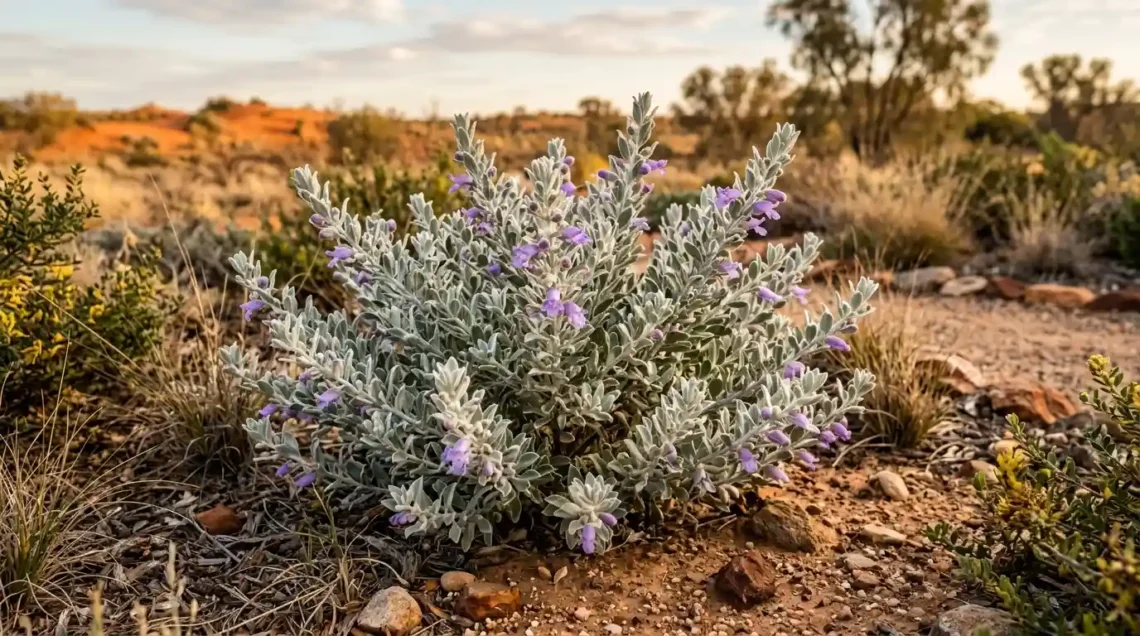
Silky emu bush (Eremophila nivea) is a native Australian flowering shrub known for its distinctive silvery-grey foliage and tubular lavender to purple blooms. It belongs to the Eremophila genus, a large group of drought-tolerant Australian native plants widely used in sustainable landscaping. Botanically classified within the Scrophulariaceae family, this shrub is instantly recognizable due to its dense silvery hairs (tomentum) covering leaves and stems, giving it a soft, silky appearance.
Originating from the arid regions of Western Australia, silky emu bush has become increasingly popular in low-water, low-maintenance gardens across Australia and similar climates worldwide. Its resilience, ornamental foliage, and pollinator-friendly flowers make it a preferred choice for modern drought-tolerant garden designs. Silky emu bush is part of a wider group of resilient Australian natives often featured in guides such as Australian Native Garden Trees and other drought-tolerant landscaping resources.
By Greenery Inside | Plant Care & Gardening Expert
Last Updated: June 2026
Quick Summary
- Silky emu bush (Eremophila nivea) is an Australian native shrub prized for its silver foliage and purple tubular flowers that attract honeyeaters.
- It is highly drought tolerant and performs best in well-drained soils with full sun exposure.
- Several named varieties exist, including compact and dwarf forms suited to smaller gardens.
- Common problems include root rot from poor drainage and dieback in humid conditions — both preventable with correct site selection.
What Is Silky Emu Bush?
Botanical Overview and Classification
Silky emu bush (Eremophila nivea), also called emu bush or eremophila emu bush, is a flowering shrub belonging to the genus Eremophila. It is part of the Scrophulariaceae family (previously classified under Myoporaceae in older systems). The term “emu bush” is commonly used for species in this genus because emus are known to feed on the fruit of related plants in arid Australia.
The name “silky” refers to the fine, dense layer of silvery hairs (tomentum) that coats the leaves and stems, giving the plant its soft, reflective appearance. This adaptation helps reduce water loss and protects the plant from harsh sunlight in its native habitat.
Silky emu bush belongs to the genus Eremophila, which is part of the Scrophulariaceae family. More about this plant family can be found in botanical references such as Wikipedia.
Eremophila nivea is one of the most ornamental species in the genus and is widely cultivated as an eremophila plant for landscaping and ecological gardens.
Silky Emu Bush Size and Growth Habit
General Size and Form
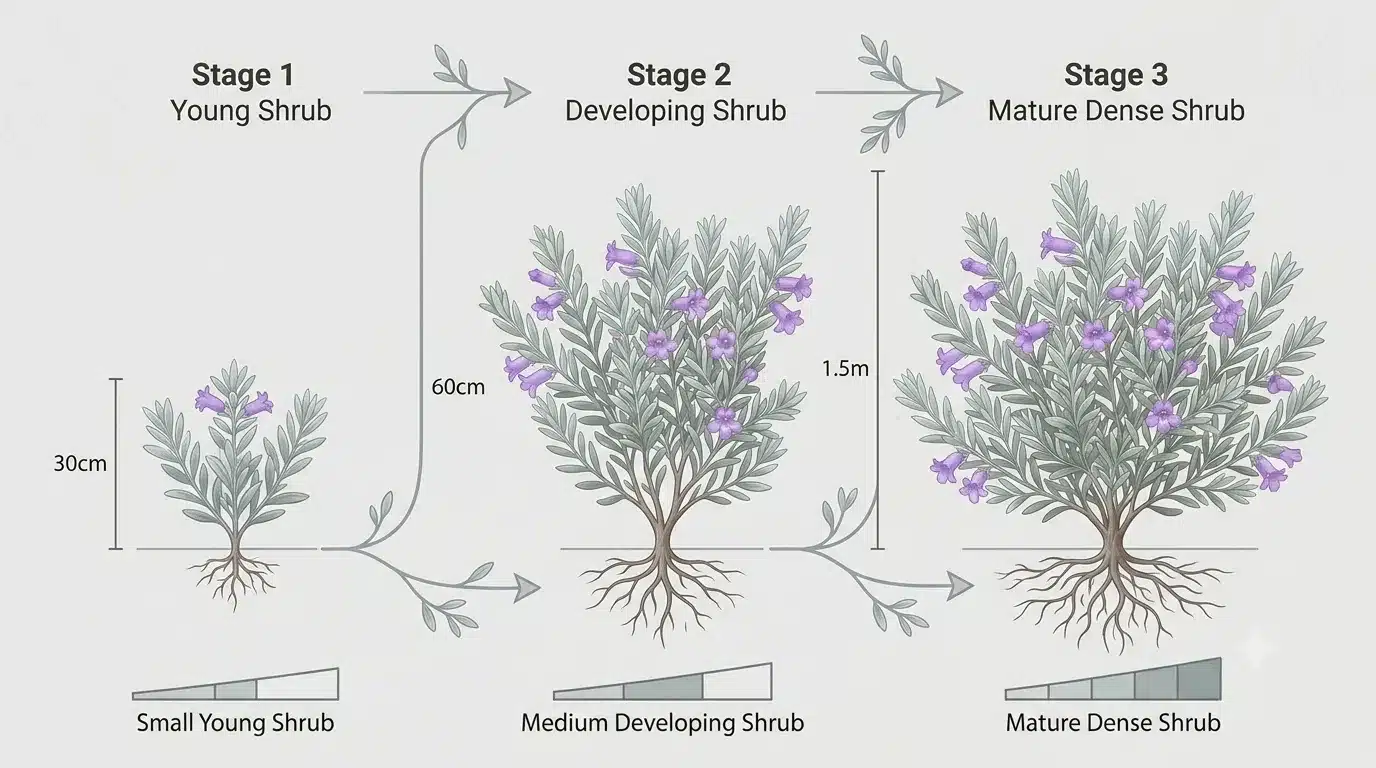
Silky emu bush size typically ranges between 1–2 metres in height and width, depending on environmental conditions and pruning practices. It grows as a rounded, dense shrub rather than a tree, even though some gardeners mistakenly refer to it as an “eremophila tree.” For gardeners comparing compact native shrubs, similar growth patterns can also be seen in Eremophila Ground Cover species used in low-maintenance landscapes.
Growth is generally moderate, with most expansion occurring during warm seasons. In ideal conditions, it develops into a well-branched, compact shrub with strong ornamental structure.
Growth Rate and Environmental Influence
- Moderate growth rate under ideal conditions
- Faster growth in full sun and well-drained soils
- Slower growth in shaded or heavy clay environments
- Pruning encourages denser foliage and controlled size
In our experience at Greenery Inside, plants grown in sandy or gravelly soils consistently outperform those in compacted garden beds, both in size and flowering density.
How Big Does Silky Emu Bush Get?
Silky emu bush can reach up to 2 metres tall and wide in mature landscapes, though many cultivated varieties remain smaller.
- Standard species: 1.5–2 m tall and wide
- Compact cultivars: 1–1.5 m
- Dwarf forms: under 1 m in ideal conditions
Grafted specimens often grow more vigorously than those on their own roots, particularly in well-managed garden soils. This makes grafted plants useful in larger landscape designs where faster establishment is desired.
Silky Emu Bush Varieties and Cultivars
Key Silky Emu Bush Varieties
- Eremophila nivea (species form): Classic silver foliage with lavender-purple flowers.
- ‘Spring Mist’ (Eremophila spring mist): Compact growth with pale lavender blooms and high flowering density.
- ‘Blue Velvet’ (Eremophila nivea blue velvet): Rich blue-purple flowers and slightly deeper foliage tone.
- ‘Gubburra Bells’: Distinct bell-shaped flowers and ornamental appeal.
- ‘Silky Lavender’: Compact form with fine silver foliage and lavender blooms.
- Purple emu bush: A related but distinct species often confused in garden centers.
- Eremophila waitii: A related species used for comparison in native plant collections.
Comparison Table: Silky Emu Bush Varieties at a Glance
| Variety | Flower Colour | Mature Size | Key Feature |
| E. nivea (species) | Lavender-purple | 1.5–2m × 1.5m | Classic silver foliage |
| ‘Spring Mist’ | Pale lavender | 1–1.5m × 1m | Compact, prolific flowering |
| ‘Blue Velvet’ | Deep blue-purple | 1–1.5m × 1m | Rich flower colour |
| ‘Gubburra Bells’ | Lilac-purple | 1–1.5m | Bell-shaped blooms |
| ‘Silky Lavender’ | Lavender | Compact | Fine silver-lavender foliage |
Silky Emu Bush Care Guide
Watering Requirements
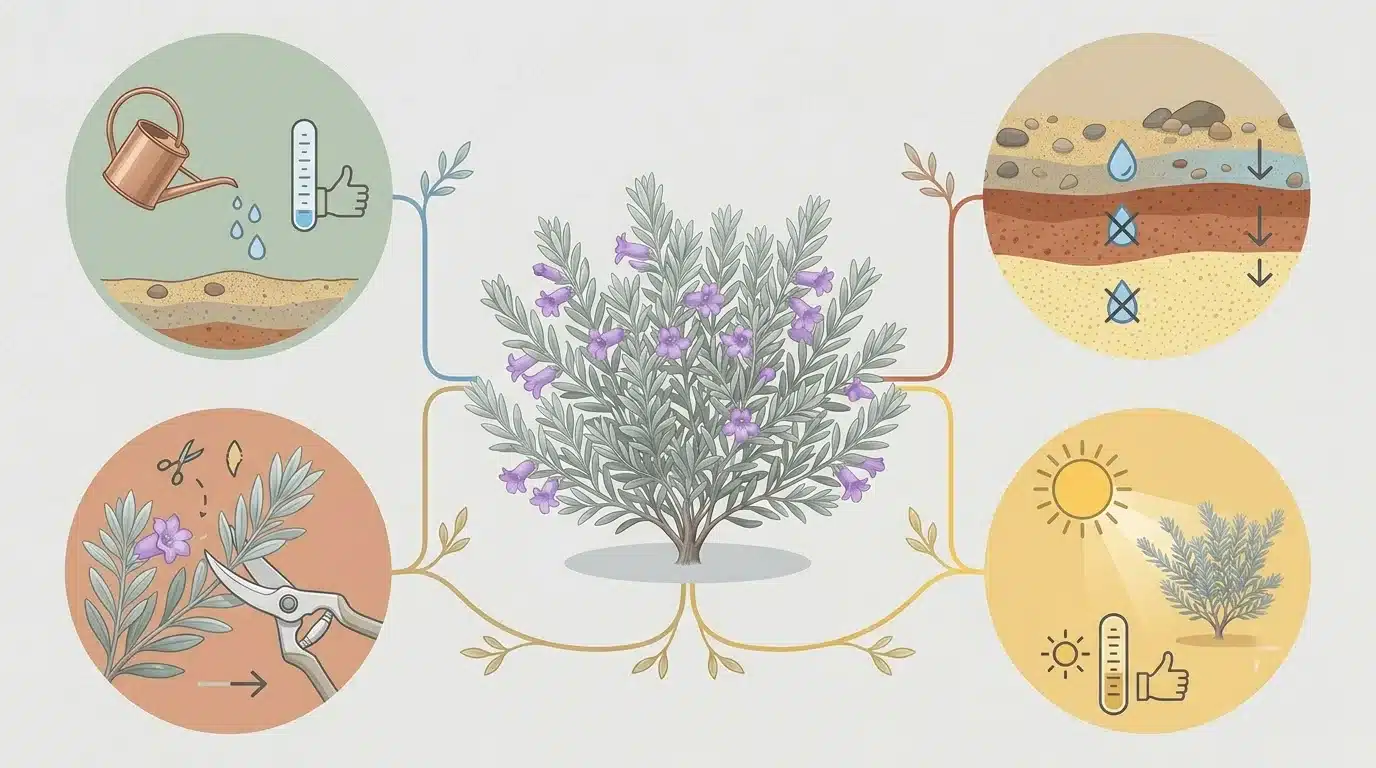
Silky emu bush is highly drought tolerant once established. Overwatering is one of the most common causes of failure. During establishment, regular deep watering is needed for the first 6–8 weeks. After that, watering should be minimal. Water-sensitive native plants like silky emu bush share similar care principles with other drought-adapted species found in guides such as Dwarf Cushion Bush Care and Growing Guide.
Greenery Inside recommends allowing soil to dry completely between watering cycles to avoid root stress.
Light and Sun Requirements
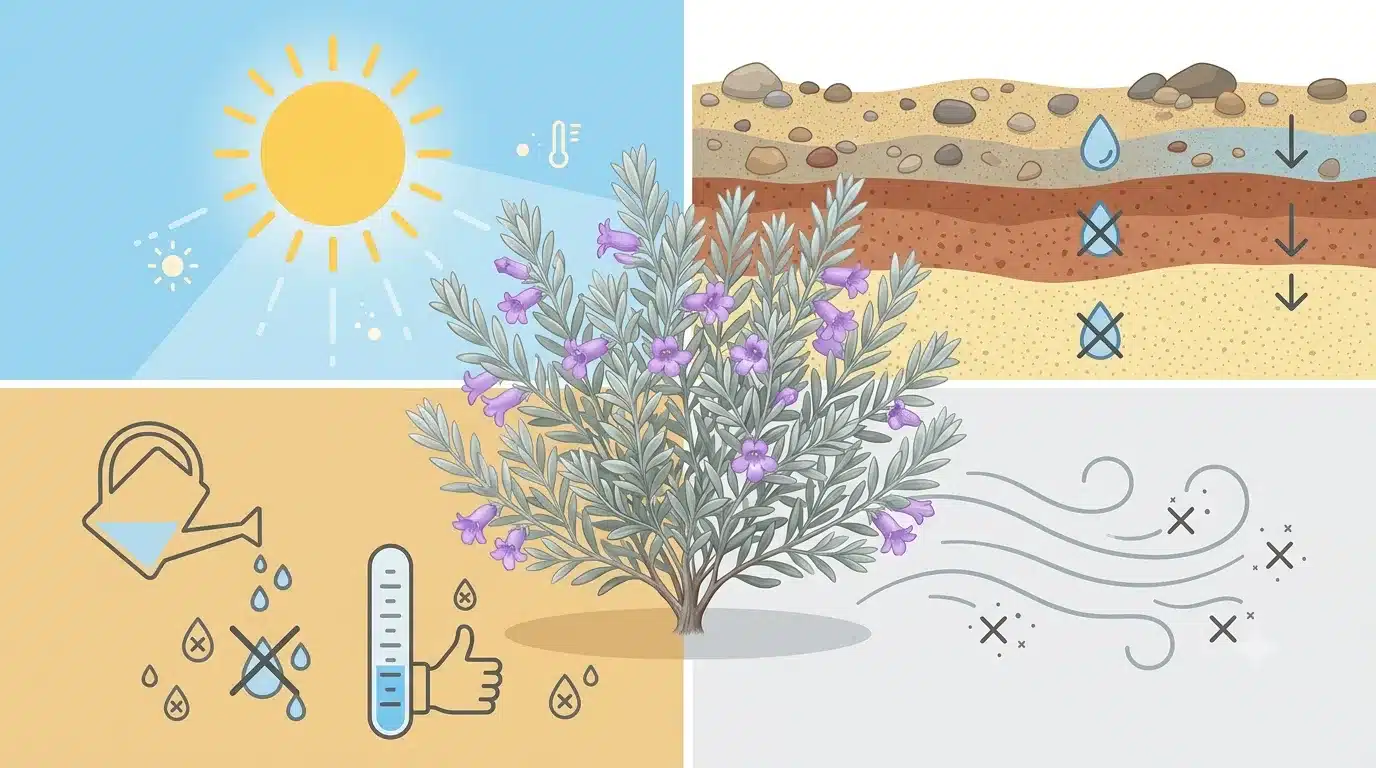
Full sun is essential for optimal growth and flowering. In partial shade, the plant may survive but will produce fewer flowers and lose some of its silver foliage intensity.
Soil Preferences and Drainage
Well-drained soil is critical. Ideal conditions include sandy or gravelly loams. Heavy clay soils should be avoided unless significantly improved.
- Poor drainage = root rot risk
- Raised beds improve survival in clay soils
- Mounding planting helps prevent water accumulation
Poor drainage is a common issue not only for eremophilas but also for other Australian natives covered in Acacia Little Nugget Care Guide & Growth Tips, where soil structure plays a key role in plant survival.
Fertilisation
Use low-phosphorus native plant fertilisers only. Excess phosphorus can cause toxicity in Australian natives.
- Apply once in early spring
- Avoid standard high-P fertilisers
- Light feeding is sufficient
Pruning Silky Emu Bush
Light pruning after flowering encourages dense growth and repeat blooms. Avoid cutting into old woody stems as regeneration may be limited.
- Tip pruning = encourages bushiness
- Hard pruning = only for rejuvenation if plant becomes leggy
Climate Tolerance: Frost, Heat, and Humidity
Silky emu bush tolerates heat and moderate frost well. However, it performs poorly in high humidity climates.
In humid regions, dense foliage retains moisture, increasing fungal susceptibility. This is why it is best suited to dry inland and Mediterranean-style climates rather than tropical zones.
Where to Buy Silky Emu Bush
Silky emu bush is commonly available in Australian native plant nurseries and garden centres. Availability may vary seasonally depending on propagation cycles.
It can also be found in larger retail garden outlets such as Bunnings under seasonal native plant ranges, though stock is not always consistent.
Plants labeled as eremophila nivea for sale, emu bush bunnings, or silver bush bunnings may refer to the same or closely related varieties depending on region.
Silky Emu Bush Problems: Troubleshooting
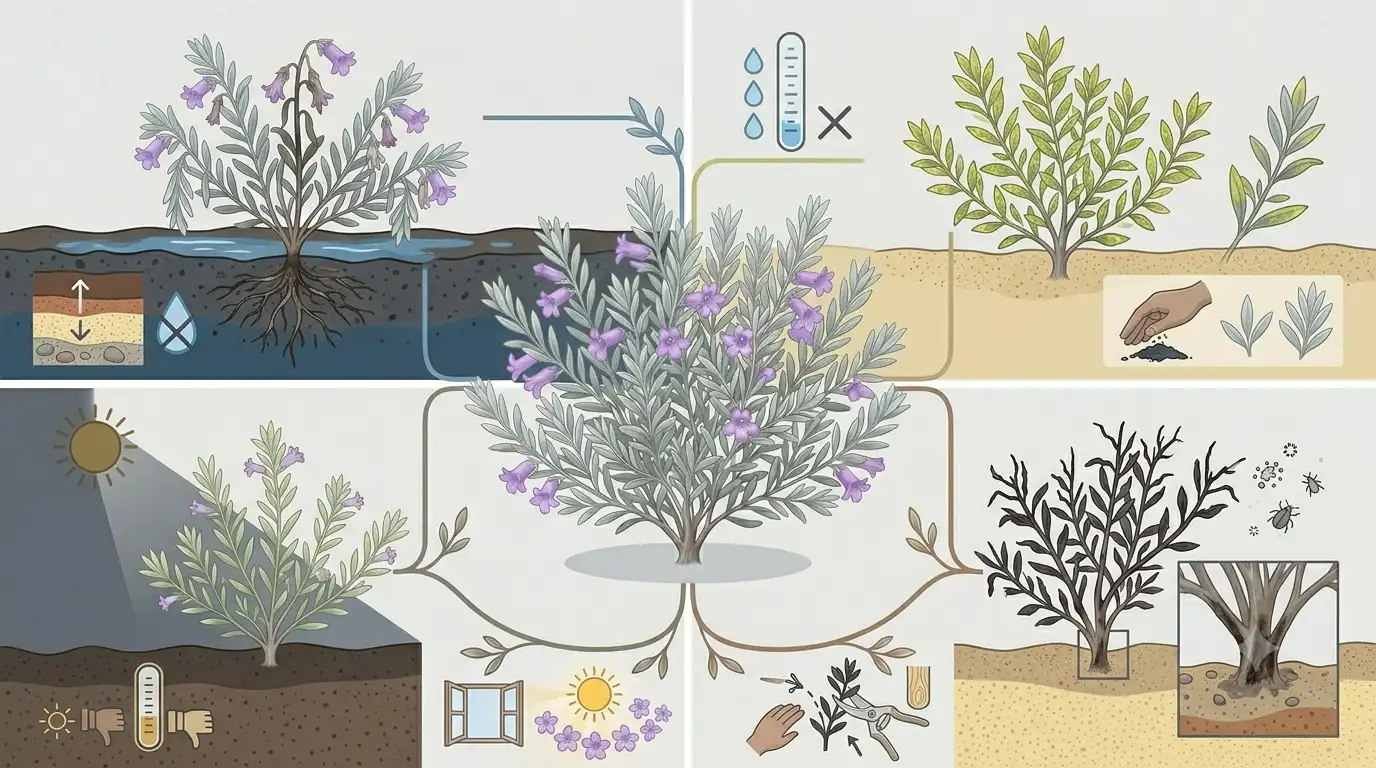
Root Rot and Waterlogging
Root rot is the most serious issue affecting silky emu bush. It occurs when roots are exposed to oxygen-poor, waterlogged soil.
- Symptoms: wilting, blackened roots, sudden decline
- Fix: improve drainage or replant in raised soil
- Prevention: avoid overwatering
Dieback and Collar Rot
Dieback is more common in humid climates and poorly drained soils. Fungal pathogens attack the stem base, weakening the plant.
Improving airflow and soil drainage significantly reduces risk.
Yellowing Leaves
Yellowing may indicate:
- Overwatering
- Phosphorus toxicity
- Alkaline soil imbalance
Diagnosis should start with soil moisture evaluation.
Lack of Flowering
Common causes include insufficient sunlight, excess nitrogen, or incorrect pruning timing.
Pest Considerations
Generally pest-resistant, though stressed plants may attract scale insects. Treatment includes horticultural oil sprays and improving plant health.
Silky Emu Bush vs Similar Plants
Key Comparisons
Silky emu bush is often compared with other drought-tolerant shrubs such as grevilleas and westringias.
- Grevilleas: more colorful flowers but less silver foliage
- Westringias: stronger hedging plants for coastal gardens
- Snow in Summer: groundcover alternative with white flowers
Comparison Table: Drought-Tolerant Shrubs
| Plant | Foliage | Flower | Drought Tolerance | Frost Tolerance | Best Use |
| Silky emu bush | Silver-grey | Purple | Very high | Moderate | Feature shrub |
| Grevillea (dwarf) | Green | Red/orange | High | Low–moderate | Bird gardens |
| Westringia | Grey-green | White | High | High | Hedging |
| Snow in Summer | Silver-white | White | High | High | Groundcover |
Growing Silky Emu Bush in Australian Gardens
Silky emu bush is native to Western Australia, particularly arid inland regions such as the Murchison area. It naturally grows in sandy, well-drained soils with low organic matter.
In Australian gardens, it thrives in Mediterranean, semi-arid, and temperate climates. It is especially valued for attracting honeyeaters due to its tubular flowers rich in nectar.
Greenery Inside has observed that plants placed in full sun with minimal irrigation consistently outperform those in rich, heavily amended soils.
Common Beginner Mistakes
- Planting in heavy clay without drainage correction
- Overwatering established shrubs
- Using high-phosphorus fertilisers
- Hard pruning into old wood
- Growing in humid climates without adaptation
- Choosing incorrect variety for available space
These mistakes account for most failures in home gardens and are easily avoidable with proper planning.
Conclusion
Silky emu bush (Eremophila nivea) is one of Australia’s most distinctive drought-tolerant shrubs, combining ornamental silver foliage with elegant purple blooms. Its adaptability to low-water environments makes it ideal for sustainable landscaping, provided it is grown in well-drained soil and full sun. Choosing the right cultivar and avoiding common watering and soil mistakes ensures long-term success and healthy flowering performance in a wide range of garden settings.
FAQs
How fast does silky emu bush grow?
Silky emu bush grows at a moderate rate, typically taking 2–3 years to reach mature size under ideal conditions with full sun and well-drained soil.
Is Eremophila nivea frost tolerant?
Yes, it is moderately frost tolerant once established. Young plants are more sensitive and should be protected from heavy frost.
Why is my silky emu bush dying?
The most common cause is root rot due to poor drainage or overwatering. Checking soil moisture and root condition helps identify the issue.
Can silky emu bush be grown in a pot?
Yes, it can grow in pots using a well-draining native potting mix. Container plants require more frequent but careful watering.
What is the difference between silky emu bush and silver emu bush?
They are often used interchangeably, but “silver emu bush” may refer broadly to similar Eremophila species with grey foliage, while E. nivea specifically refers to silky emu bush.
When does silky emu bush flower?
It typically flowers from late winter through spring, with variations depending on climate and pruning timing.
Is silky emu bush suitable for humid climates?
Generally no. High humidity increases fungal risk and reduces plant performance due to moisture retention in dense foliage.