Introduction
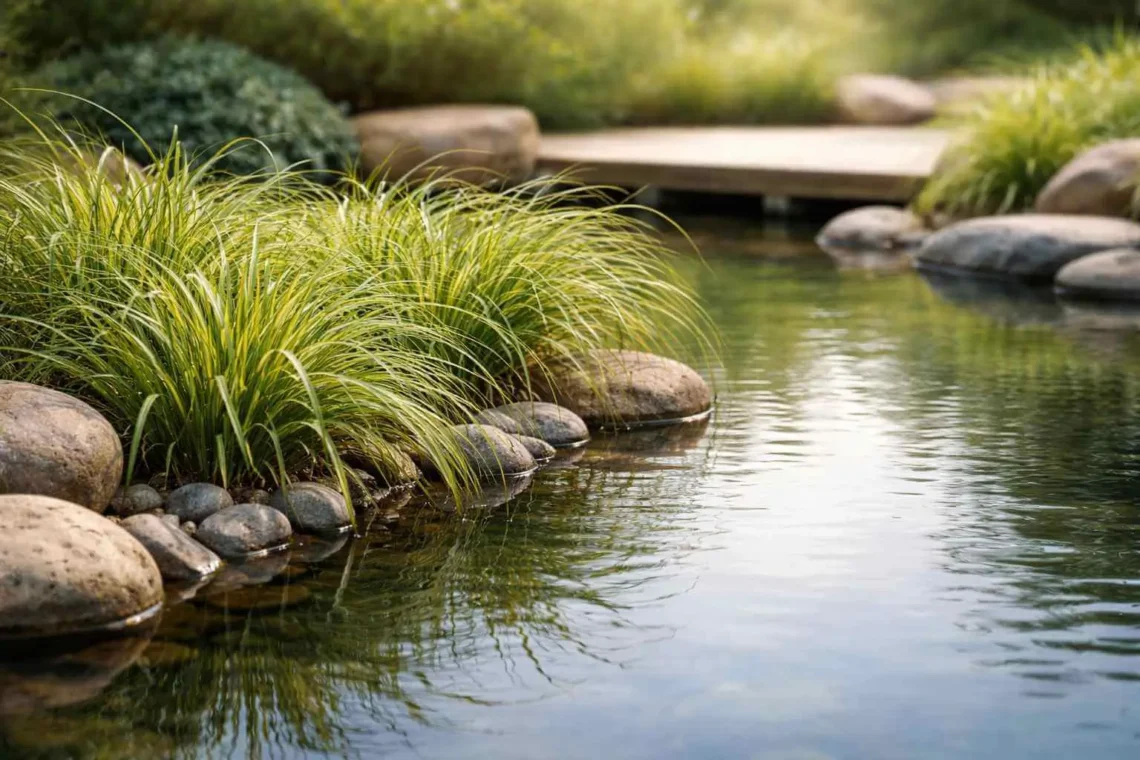
Japanese sweet flag grass is a moisture-loving ornamental plant valued for its graceful foliage and calm visual presence. Commonly found along pond edges, streams, and water gardens, japanese sweet flag grass has become a favorite in ornamental landscapes that emphasize texture and natural flow. Its slender, arching leaves add softness to garden designs while adapting easily to wet or consistently moist soils. Beyond its aesthetic appeal, this plant has long-standing traditional uses in Asian garden culture, particularly in Japanese-style landscapes. Its adaptability, low-maintenance nature, and ability to thrive where many plants struggle make it a reliable choice for both functional and decorative planting schemes.
What Is Japanese Sweet Flag Grass?
Botanical Overview
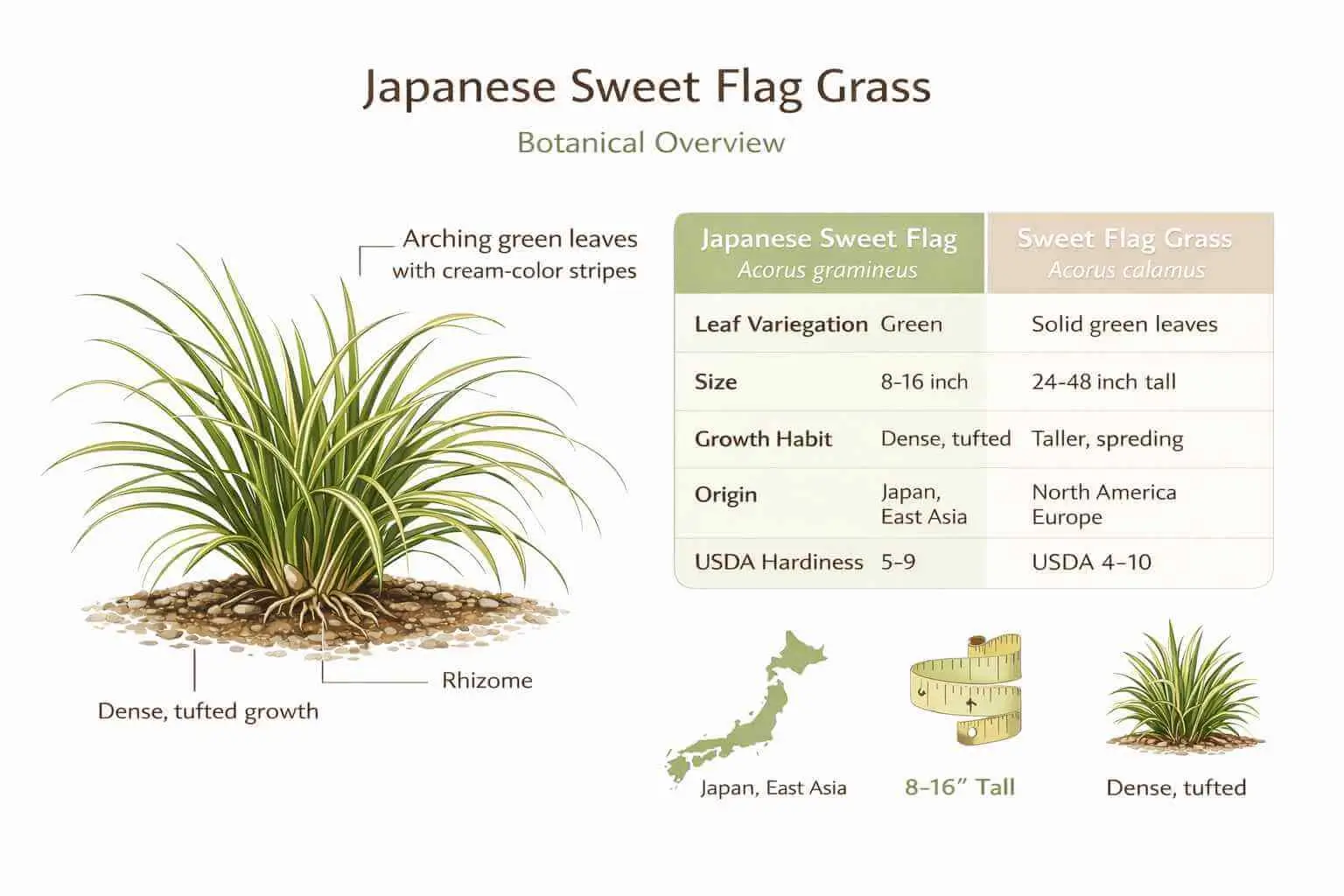
Japanese sweet flag grass is botanically classified under the genus Acorus, most commonly Acorus gramineus. It is native to East Asia, including Japan, Korea, and parts of China, where it naturally grows along wetlands and stream banks. Unlike common sweet flag grass (Acorus calamus), japanese sweet flag grass is more compact and refined in appearance. It forms dense clumps of narrow, grass-like leaves with a smooth texture and a fresh green to variegated coloration. The growth habit is neat and controlled, making it suitable for ornamental use in small and structured garden spaces.
Read Also: Grass Palm Explained: 5+ Facts Every Plant Lover Should Know
Japanese Sweet Flag vs Sweet Flag Grass
Japanese sweet flag is often confused with sweetflag grass and japanese sweet grass due to similar names and visual traits. Sweet flag grass typically refers to Acorus calamus, which grows taller and is often used in larger wetland restoration projects. Japanese sweet grass is an informal term sometimes applied to ornamental Acorus varieties. In landscaping, japanese sweet flag grass stands out for its compact size, finer foliage, and decorative value, making it better suited for ornamental borders, containers, and water features rather than large-scale naturalized plantings.
Japanese Sweet Flag Grass Size and Growth Characteristics
Mature Height and Spread
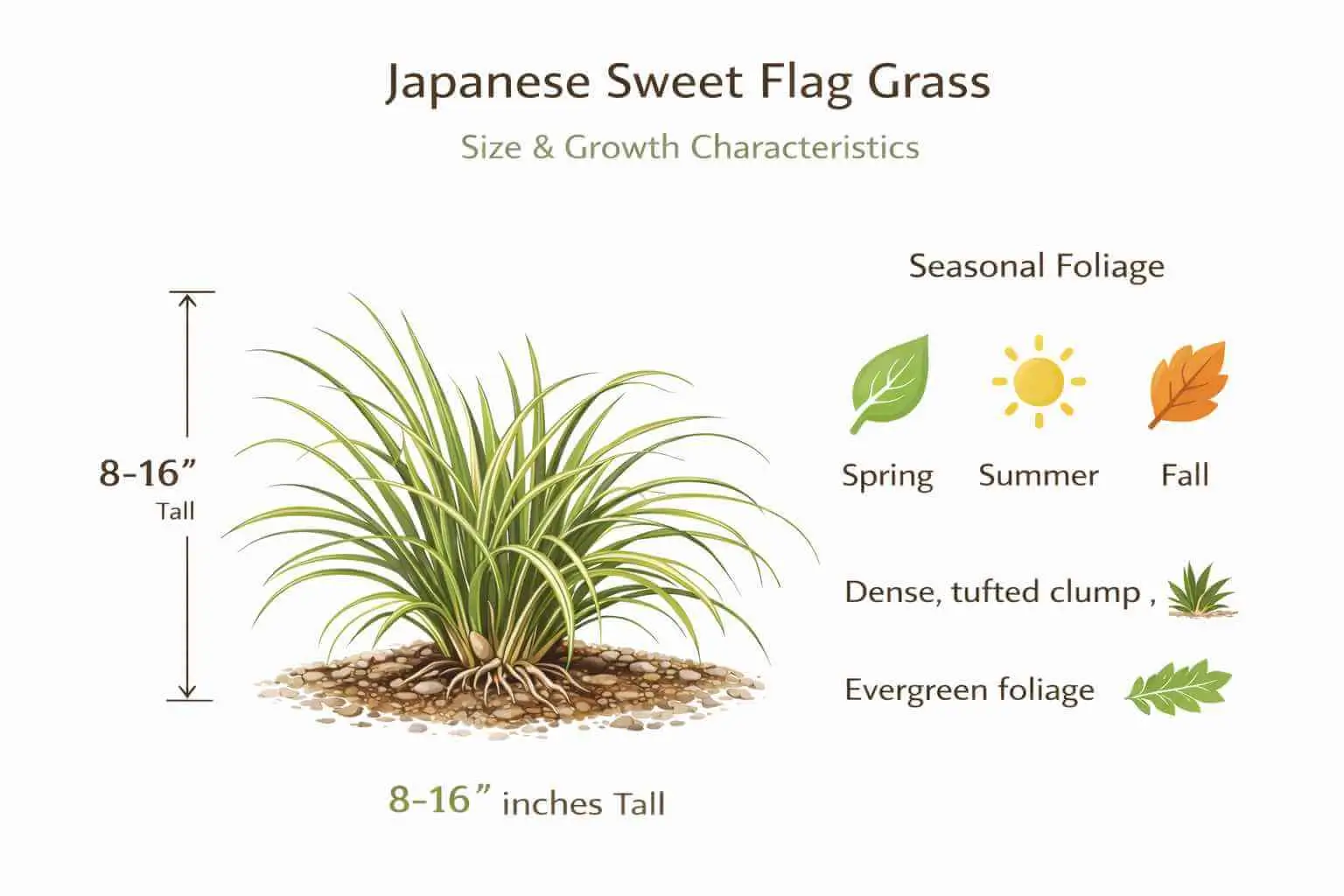
The typical sweet flag grass size for japanese varieties ranges from 8 to 14 inches in height, with a similar spread at maturity. The plant grows in tidy clumps rather than spreading aggressively through runners. This clumping behavior allows it to maintain defined planting areas without overtaking nearby plants, making it ideal for controlled landscape designs.
Growth Rate and Seasonal Changes
Japanese sweet flag grass has a moderate growth rate, establishing steadily when planted in suitable moisture conditions. During spring and summer, foliage appears vibrant and upright. In cooler months, growth slows, and leaves may soften or slightly fade in color, especially in colder regions. In mild climates, the plant often remains evergreen or semi-evergreen.
Ideal Growing Conditions for Japanese Sweet Flag Grass
Soil, Water, and Light Requirements
Japanese sweet flag grass thrives in consistently moist soil and performs exceptionally well in water-edge environments such as pond margins and rain gardens. It tolerates shallow standing water and poorly drained soils. Full sun encourages denser growth, while partial shade is well tolerated, particularly in warmer climates where shade helps prevent leaf stress.
Climate and Hardiness Zones
This plant is best suited for temperate climates and grows reliably in USDA hardiness zones 6 through 9. Japanese sweet flag grass tolerates cool temperatures but prefers moderate conditions for long-term growth. Extreme heat or prolonged drought can cause stress if moisture levels are not maintained.
Japanese Sweet Flag Grass Uses in Landscaping
Ornamental and Garden Uses
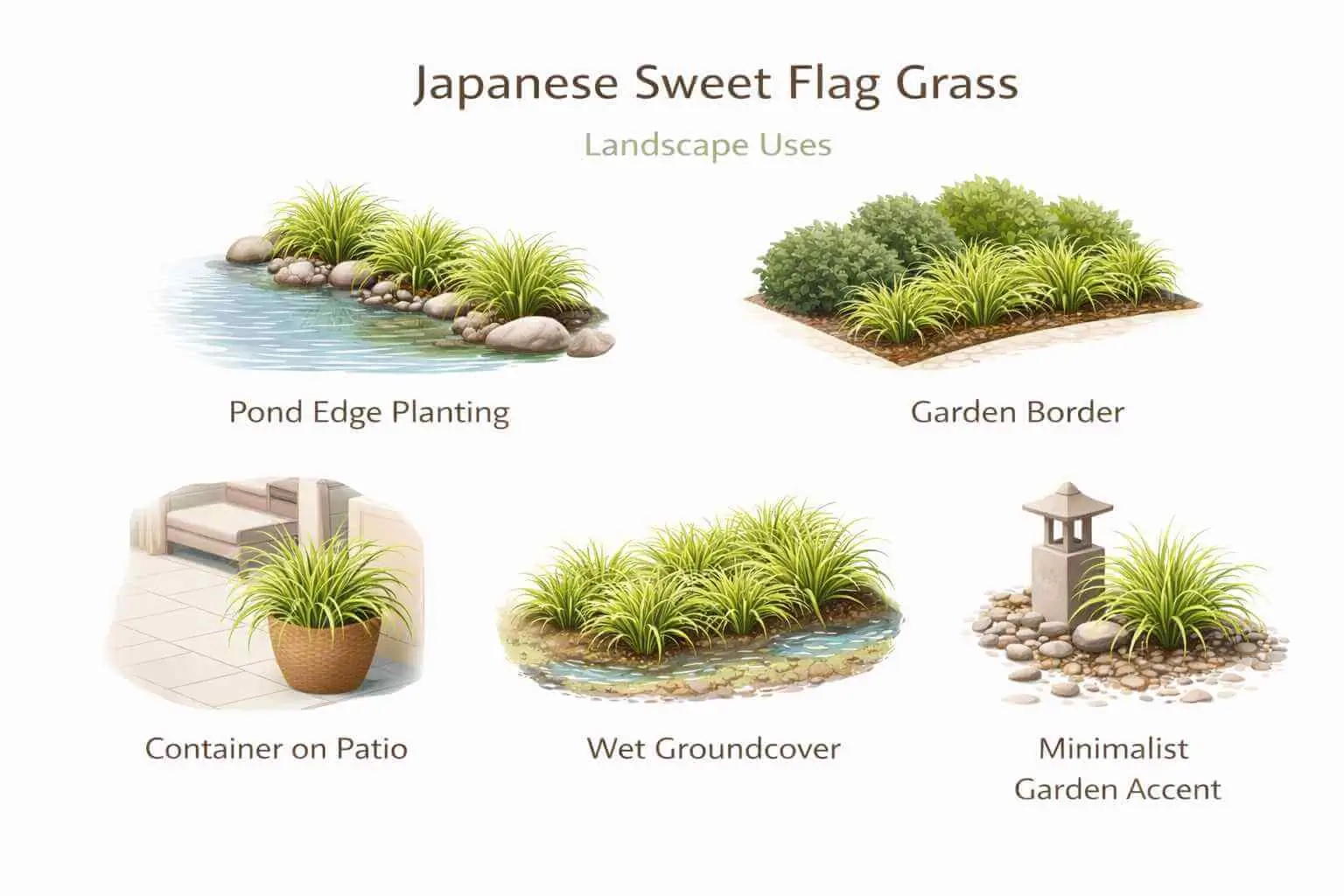
Japanese sweet flag grass uses in ornamental landscapes are diverse and visually impactful:
- Pond edges and water features for soft transitions
- Borders along walkways or garden beds
- Accent planting in shaded courtyards
- Container planting for patios and balconies
Functional Landscape Applications
Japanese sweet flag grass uses extend beyond decoration:
- Erosion control along wet slopes and stream banks
- Groundcover in persistently damp areas
- Accent plant in minimalist and Zen-style gardens
Japanese Sweet Flag Benefits
Aesthetic Benefits
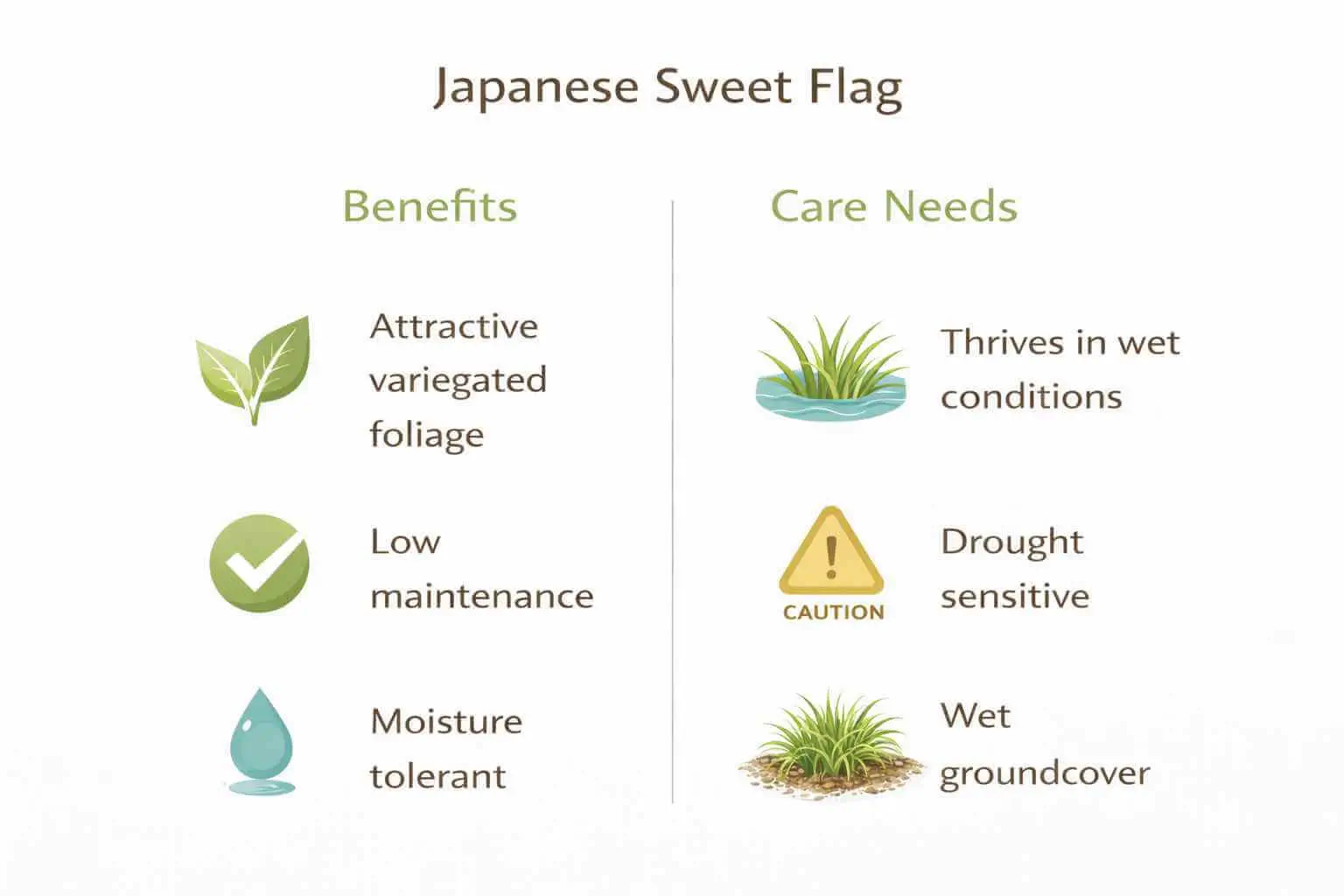
Japanese sweet flag benefits include fine-textured foliage that adds movement and contrast to garden designs. Its clean lines and gentle arching form create visual softness, enhancing tranquil garden spaces. The plant is especially valued in Zen and Japanese-style gardens for its understated elegance.
Environmental and Practical Benefits
Japanese sweet flag benefits also include low maintenance requirements and reliable performance in moisture-heavy areas. It is an effective solution for sites with drainage challenges where other plants may fail.
Japanese Sweet Flag Grass Pros and Cons
Advantages
Japanese sweet flag grass pros and cons should be considered before planting. Advantages include:
- Easy care and minimal pruning needs
- Strong adaptability to wet soil
- Consistent visual elegance throughout the season
Disadvantages
Japanese sweet flag grass pros and cons also include limitations:
- Limited drought tolerance
- Requires consistent moisture to maintain healthy growth
Is Japanese Sweet Flag Grass Invasive?
Growth Behavior and Spread Control
Concerns about japanese sweet flag grass invasive behavior are generally minimal. The plant grows in clumps rather than spreading aggressively, allowing for natural containment in most landscapes. It does not typically escape cultivated areas when properly managed.
Regional Considerations
In regions with ideal moisture and mild temperatures, japanese sweet flag grass invasive concerns may arise if planting areas are not defined. Safe planting practices include using physical borders and avoiding placement near natural wetlands unless intended for controlled use.
How to Grow Japanese Sweet Flag Grass from Seeds
Seed Selection and Preparation
Japanese sweet flag grass seeds should be sourced from reputable suppliers to ensure viability. Fresh seeds offer the best germination rates and should be kept moist prior to planting.
Planting and Germination Tips
Successful germination requires consistently moist conditions. Seeds should be sown on the soil surface and lightly pressed in without covering. Common mistakes include allowing soil to dry out during early growth or planting in areas without adequate moisture.
Care and Maintenance Tips
Watering, Feeding, and Pruning
Japanese sweet flag grass requires regular watering, especially during dry periods. Feeding is minimal, with light fertilization in early spring if needed. Pruning involves removing damaged or yellowing leaves to maintain appearance. Seasonal maintenance includes cleaning clumps before new growth begins.
Common Problems and Solutions
Yellowing leaves often indicate insufficient moisture or excessive heat exposure. Poor growth conditions are usually linked to dry soil or unsuitable placement. Correcting water levels and adjusting light exposure typically restores healthy growth.
Conclusion – Is Japanese Sweet Flag Grass Right for You?
Japanese sweet flag grass is a versatile ornamental plant valued for its refined appearance, moisture tolerance, and low-maintenance care. Its uses range from pond edges and borders to containers and minimalist garden accents, while its benefits include visual softness, adaptability to wet soil, and reliable performance in problem areas. Care needs are simple, focusing mainly on consistent moisture and suitable placement. This plant is ideal for gardeners designing water gardens, Zen-inspired landscapes, or damp areas where traditional ornamentals struggle. If your garden plan includes moisture-rich zones or a calm, structured aesthetic, japanese sweet flag grass is a practical and visually rewarding choice worth considering.
Read Also: How to Plant Garlic: 7+ Proven Steps for Bigger, Better Bulbs
FAQs – Japanese Sweet Flag Grass
What is japanese sweet flag grass commonly used for?
Japanese sweet flag grass is commonly used along pond edges, water features, borders, and in containers. It is also used as groundcover in wet areas and as an accent plant in minimalist and Japanese-style gardens.
How big does japanese sweet flag grass grow?
Japanese sweet flag grass typically grows 8 to 14 inches tall with a similar spread. It maintains a compact, clumping form rather than spreading aggressively.
Is japanese sweet flag grass invasive in home gardens?
Japanese sweet flag grass is not considered invasive in most home gardens. It grows in controlled clumps and is easy to contain with proper placement and basic maintenance.
Can japanese sweet flag grass grow in containers?
Yes, japanese sweet flag grass grows well in containers as long as the soil is kept consistently moist. Containers make it suitable for patios, balconies, and small garden spaces.
How long does it take japanese sweet flag grass to grow from seeds?
Japanese sweet flag grass grown from seeds typically takes several weeks to germinate and one full growing season to establish visible clumps under proper moisture conditions.
Does japanese sweet flag grass require full sun or shade?
Japanese sweet flag grass grows best in full sun to partial shade. In warmer climates, partial shade helps protect the foliage, while full sun encourages denser growth in cooler regions.