Introduction
Groundcover banksia refers to low-growing or prostrate forms of the genus Banksia that spread horizontally instead of growing as upright shrubs or trees. These plants are highly valued in Australian native landscaping because they form dense living mats, produce striking flower spikes, and thrive in harsh, nutrient-poor soils. The groundcover banksia habit makes them ideal for erosion control, coastal gardens, and low-maintenance ecological planting systems. Groundcover banksias are an important part of broader Australian native garden trees and landscape systems, especially in low-maintenance and drought-tolerant garden designs.
By Greenery Inside | Plant Care & Gardening Expert
In our experience at Greenery Inside, gardeners often underestimate how adaptable these plants are once established. Species like Banksia petiolaris and Banksia blechnifolia demonstrate strong resilience in sandy soils and perform exceptionally well in dry, sun-exposed environments where many ornamental plants fail.
Quick Summary
- Groundcover banksias are prostrate Australian natives that spread horizontally instead of growing tall.
- Key species include Banksia petiolaris and Banksia blechnifolia, each with distinct foliage and structure.
- They are drought-tolerant, low-maintenance, and ideal for erosion control and native landscaping.
- Full sun and well-drained, sandy soils are essential for healthy growth.
- Once established, they form long-lived, dense ground mats that support biodiversity.
What Is Groundcover Banksia?
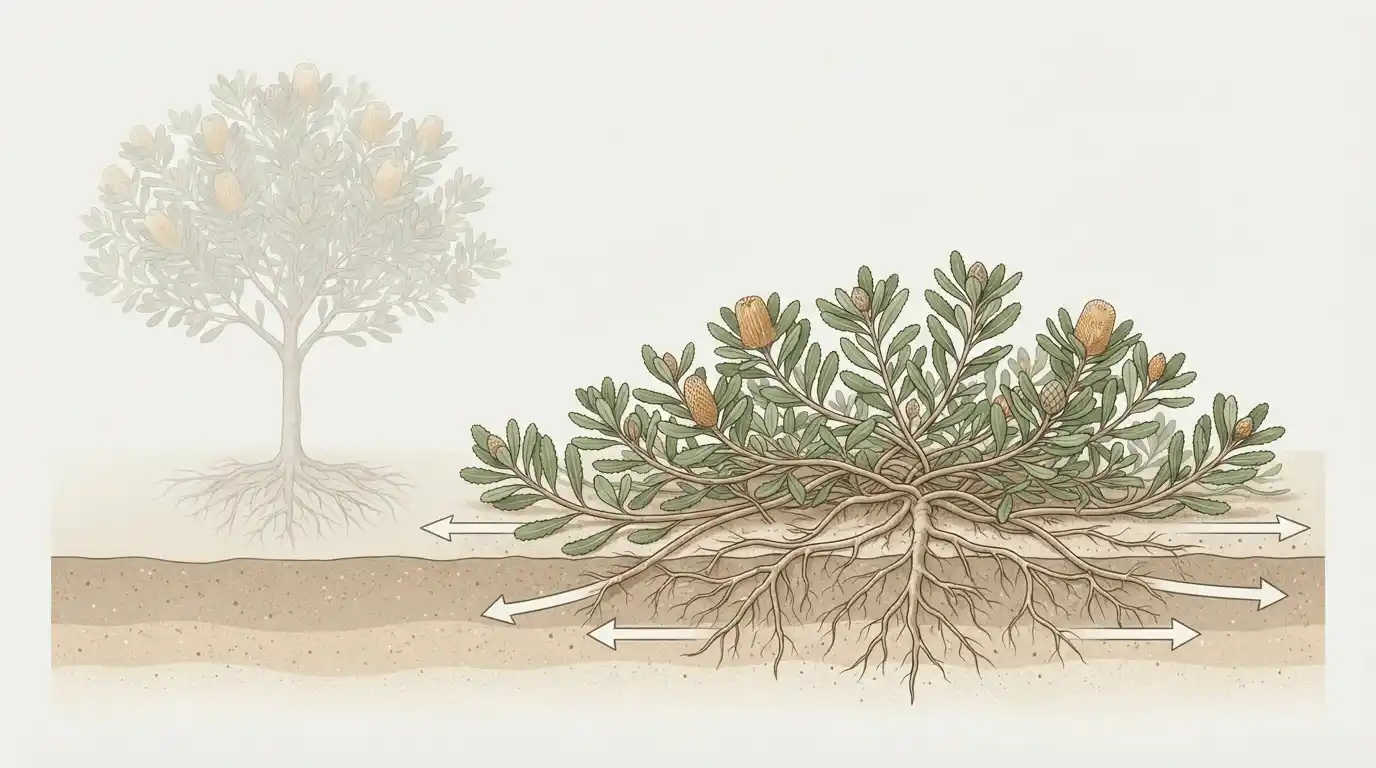
Groundcover banksia is a term used to describe Banksia species that grow in a spreading, creeping, or prostrate habit rather than forming upright shrubs or trees. Botanically, they retain the same genus characteristics—woody stems, leathery leaves, and iconic cylindrical flower spikes—but differ in architecture and growth direction. Groundcover banksia is a term used to describe species within the genus Banksia (Wikipedia) that grow in a spreading, creeping, or prostrate habit rather than forming upright shrubs or trees.
These plants typically:
- Spread horizontally across the soil surface
- Develop woody stems that can root at nodes in some species
- Produce flower spikes that rise above the foliage layer
- Thrive in sandy, low-nutrient soils typical of Australian ecosystems
Unlike tall Banksia integrifolia or Banksia serrata, groundcover types function ecologically as living mulch layers, stabilizing soil and reducing erosion naturally.
Key Groundcover Banksia Species
Banksia petiolaris
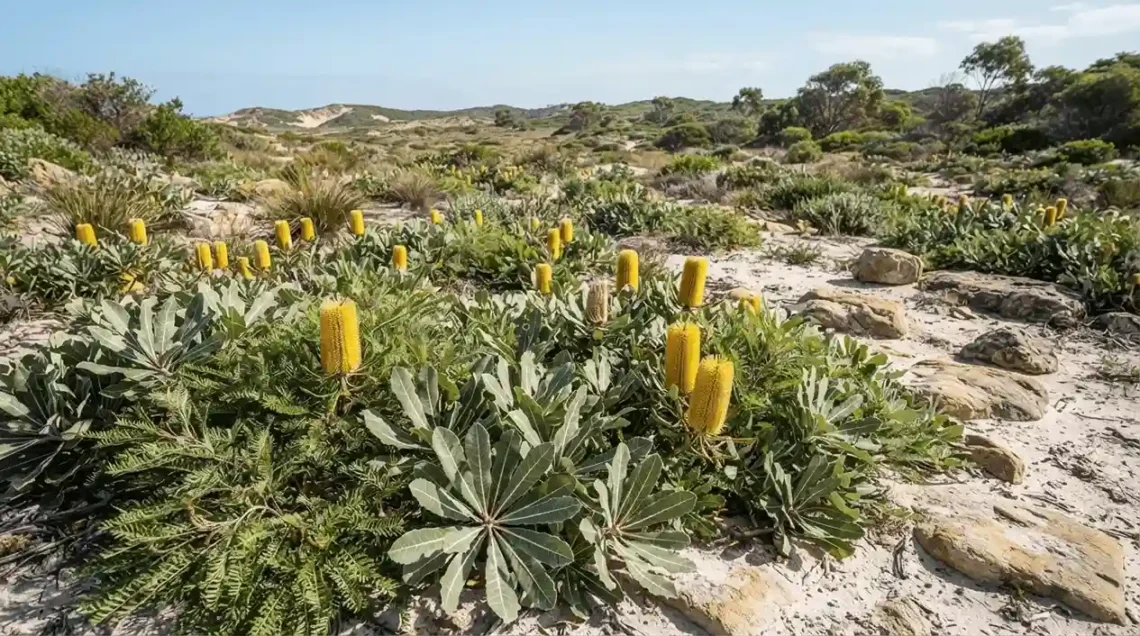
Banksia petiolaris is one of the most widely used prostrate banksias in landscaping.
- Forms extremely flat, dense mats
- Leaves are broad, stiff, and radiate from central stems
- Produces tall yellow flower spikes above foliage
- Excellent for dune stabilization and erosion control
Greenery Inside experience shows that this species performs best in open, sun-drenched coastal gardens where soil drainage is high.
Banksia blechnifolia
This species is known for its highly ornamental foliage.
- Fern-like, deeply divided leaves resembling Blechnum ferns
- Slightly more elevated growth than B. petiolaris
- Strong visual texture for decorative native gardens
- Produces vibrant flower spikes in warm seasons
It is often chosen for aesthetic landscaping where foliage contrast is important.
Prostrate Forms of Banksia integrifolia
Some cultivated forms of Banksia integrifolia exhibit semi-prostrate habits.
- Broader ecological tolerance than many groundcovers
- Suitable for hybrid landscape designs
- More adaptable to varied soil types
These forms are less strictly prostrate but still function effectively as spreading ground layers.
Growth Habit and Plant Structure
Groundcover banksias exhibit a unique structural adaptation among Australian natives.
Their key growth traits include:
- Horizontal stem expansion across soil surfaces
- Dense mat formation over time
- Strong woody framework that anchors into sandy soils
- High resistance to wind and salt exposure
In practical gardening conditions, these plants expand slowly at first, focusing energy on root establishment. Once mature, lateral spread becomes more noticeable, especially in warm climates.
Groundcover Banksia Growth Rate
Growth rate varies depending on environmental conditions and species selection.
Key influencing factors:
- Soil drainage quality
- Sunlight exposure
- Temperature and climate zone
General growth pattern:
- Year 1–2: Slow establishment phase
- Year 3+: Moderate horizontal spread begins
- Mature stage: Faster ground coverage in ideal conditions
In our observations, sandy soils significantly improve both root development and long-term spread.
Ideal Growing Conditions for Groundcover Banksia
Light Requirements
Groundcover banksias require full sun for optimal performance.
Partial shade may reduce flowering intensity and slow growth.
Soil Preferences
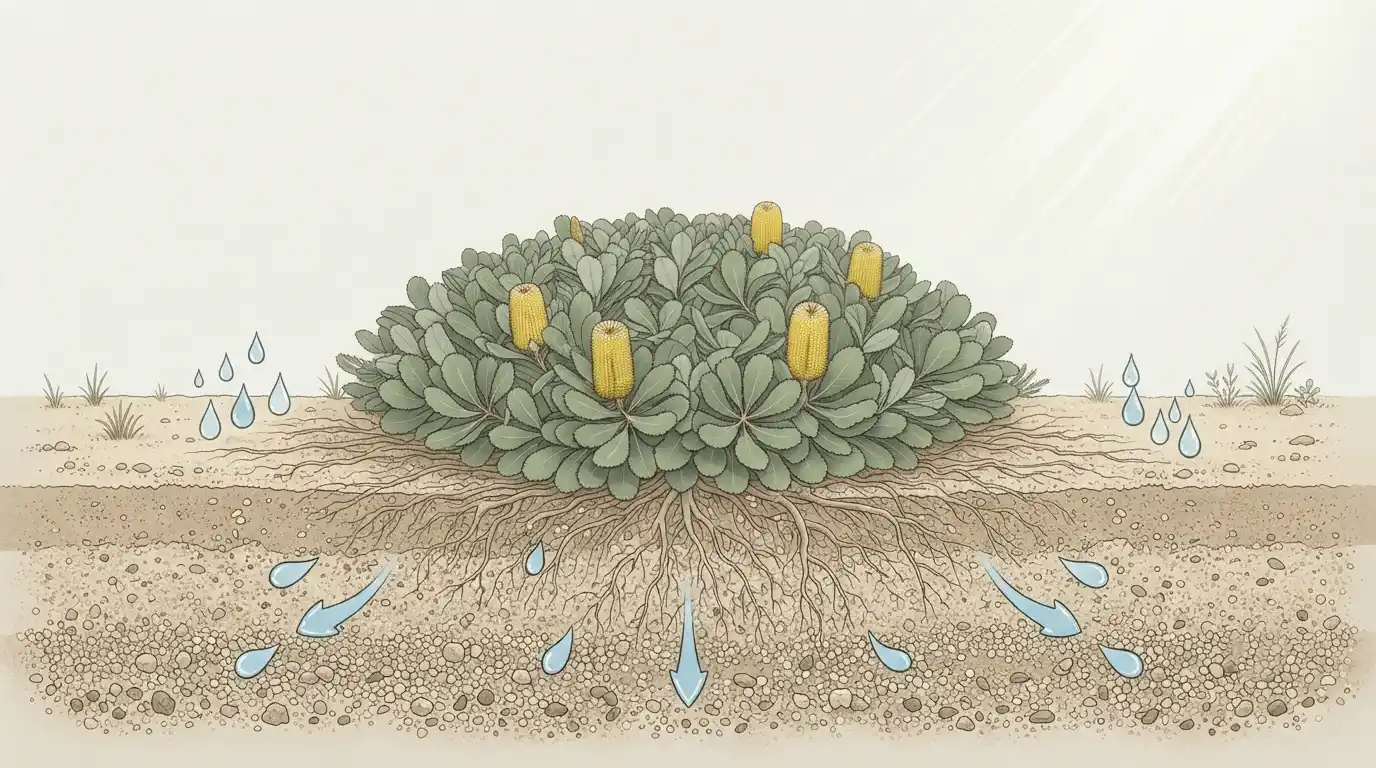
- Sandy or sharply drained soils
- Low phosphorus content (critical for native plants)
- Avoid heavy clay or compacted soil
Water Requirements
- Low water needs once established
- Regular watering only during early establishment
- Highly drought-tolerant in mature stages
Climate Tolerance
- Best suited to coastal and Mediterranean climates
- Sensitive to waterlogging and prolonged humidity
Comparison of Popular Groundcover Banksias
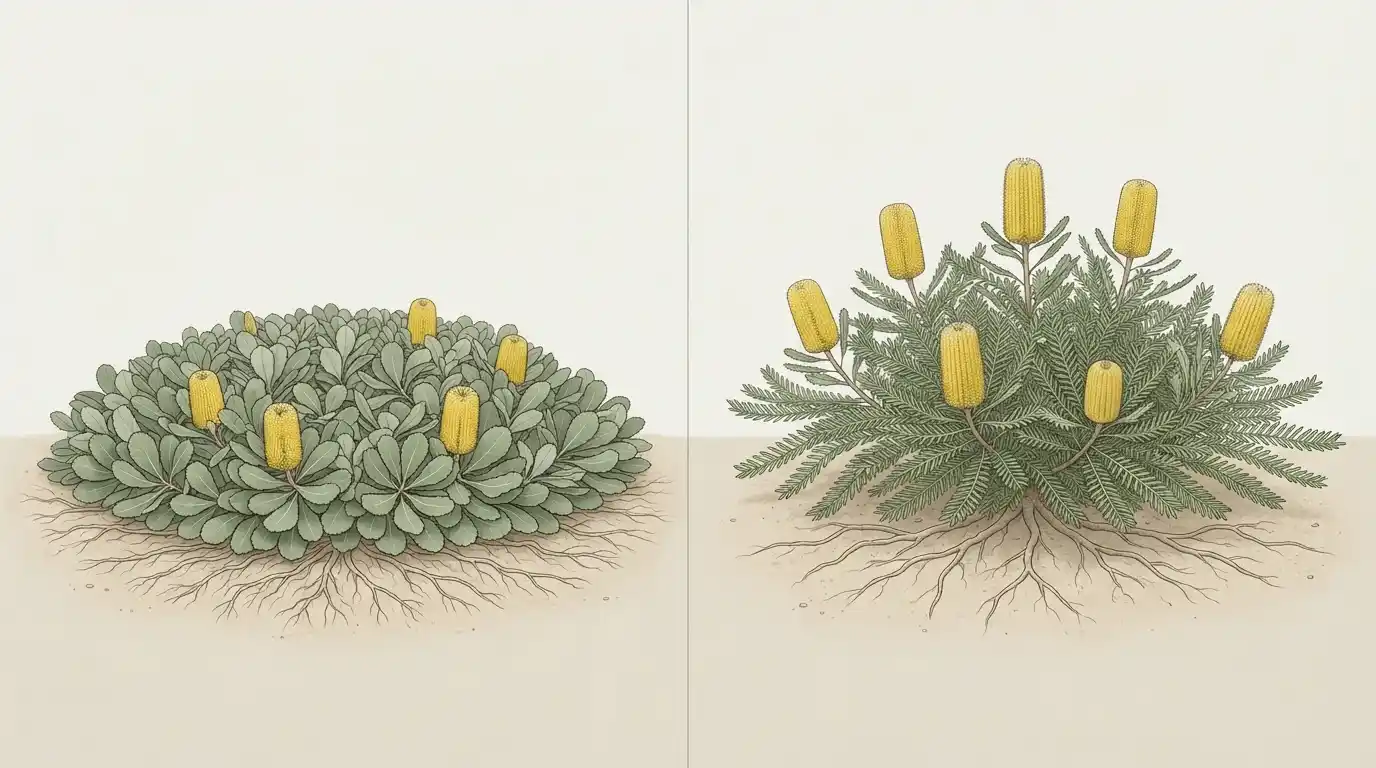
| Feature | Banksia petiolaris | Banksia blechnifolia |
| Leaf style | Broad, radiating | Fern-like, divided |
| Growth habit | Extremely flat mat | Slightly raised spread |
| Visual impact | Dense ground coverage | Decorative foliage focus |
| Landscaping use | Erosion control | Ornamental planting |
This comparison helps gardeners choose species based on function versus aesthetics.
Landscaping Uses of Groundcover Banksia
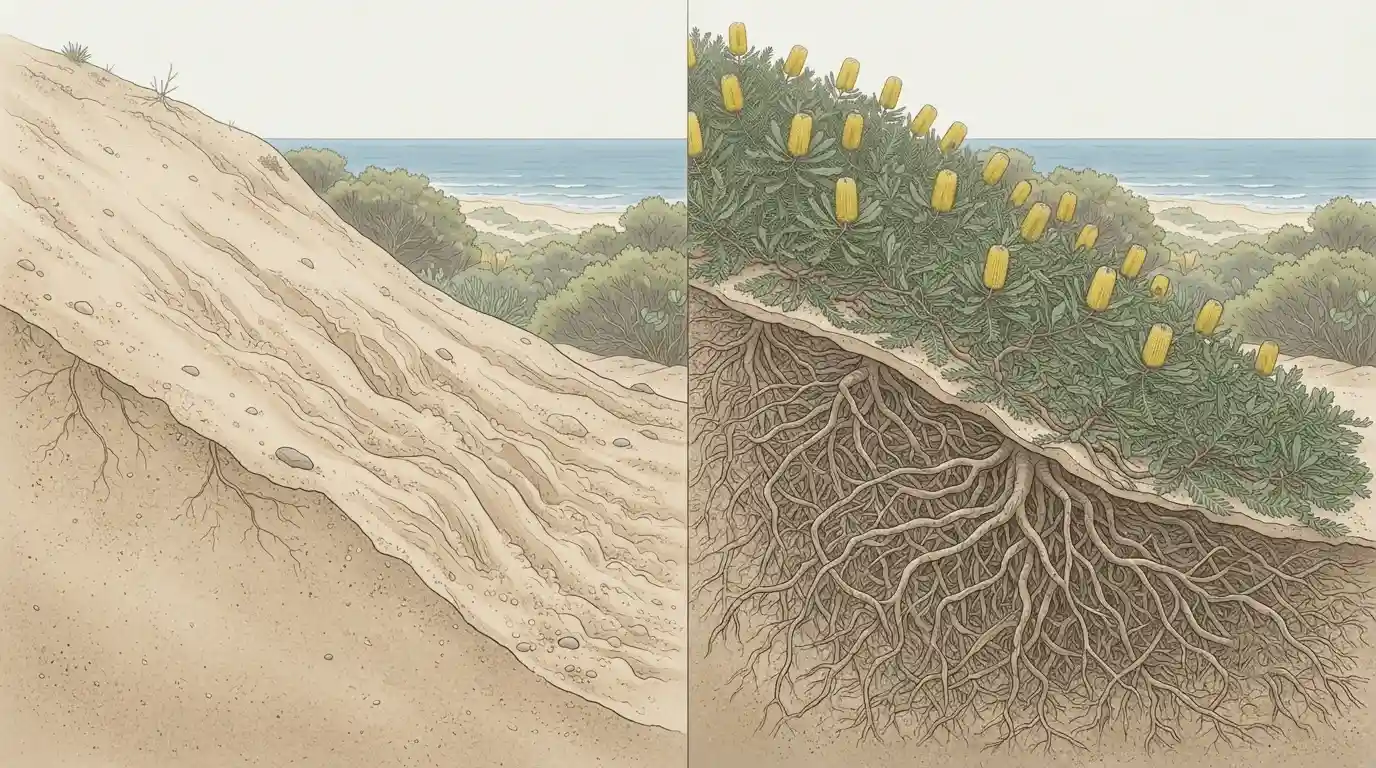
Groundcover banksias are widely used in ecological and ornamental landscaping. Groundcover banksias are often paired with fine-textured groundcovers such as Dymondia ground cover to create visually balanced, low-water garden designs.
Common applications:
- Coastal dune stabilization
- Slope and embankment erosion control
- Native groundcover replacement for turf
- Low-maintenance dry gardens
- Pollinator-friendly habitat design
Key benefits:
- Supports native biodiversity
- Reduces irrigation needs
- Improves soil stability
- Long-lived structural ground layer
Common Problems and Solutions
Yellowing Leaves
- Cause: Poor drainage or nutrient imbalance
- Solution: Improve soil aeration and reduce watering frequency
Poor Growth or Dieback
- Cause: Heavy clay soil or overwatering
- Solution: Replant in sandy, well-drained soil
Lack of Flowering
- Cause: Insufficient sunlight
- Solution: Move to full sun exposure
Root Rot
- Cause: Waterlogged conditions
- Solution: Improve drainage and remove affected roots
Comparison With Other Groundcovers
Unlike typical lawn grasses or exotic creeping plants, groundcover banksias are:
- Woody and long-lived rather than herbaceous
- Highly drought-resistant once established
- Better suited to nutrient-poor soils
- Ecologically supportive of native insects and birds
This makes them a strong alternative for sustainable landscaping systems.
Seasonal Growth and Maintenance Differences
Spring
Active flowering and vigorous growth phase.
Summer
Peak drought resistance period; minimal watering required.
Autumn
Slow horizontal expansion of stems.
Winter
Dormant or low-growth phase focused on structural stability.
Maintenance Practices
- Light pruning after flowering
- Mulching with low-phosphorus organic material
- Avoid high-phosphorus fertilizers entirely
Differentiation: Why Groundcover Banksia Is Unique
Groundcover banksias stand out because they combine structural resilience with ecological function.
They:
- Behave like shrubs but function as groundcover
- Thrive in extreme, nutrient-poor environments
- Provide long-term soil stabilization
- Offer highly ornamental native flowers
This combination makes them rare among landscaping plants, especially in dry and coastal ecosystems.
Conclusion
Groundcover banksia represents a valuable group of Australian native plants designed for resilience, sustainability, and low-maintenance landscaping. Species such as Banksia petiolaris and Banksia blechnifolia provide both ecological benefits and strong ornamental value. When grown in full sun with well-drained soils, these plants form long-lasting, spreading ground layers that support biodiversity and reduce soil erosion naturally. For gardeners seeking durable, native groundcover solutions, groundcover banksia remains one of the most reliable choices.
FAQs
What is groundcover banksia?
Groundcover banksia refers to low-growing Banksia species that spread horizontally to form dense mats instead of upright shrubs.
Which is the best prostrate banksia ground cover?
Banksia petiolaris is widely regarded as the most effective for dense coverage and erosion control.
How fast do groundcover banksias grow?
They grow slowly at first, then spread moderately once established in suitable conditions.
Do groundcover banksias need a lot of water?
No, they are drought-tolerant once established and require minimal watering.
Can banksia grow in poor soil?
Yes, they are adapted to nutrient-poor soils but require excellent drainage.