Introduction
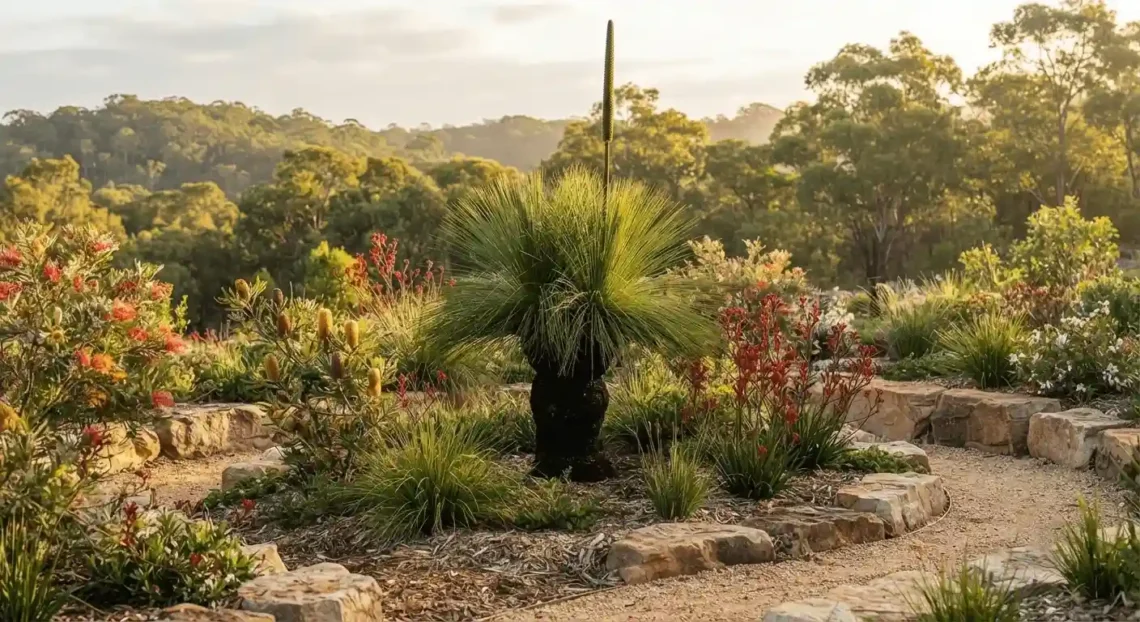
Grass tree garden ideas combine the timeless beauty of Australian native plants with practical, low-maintenance landscaping. A grass tree garden typically features the iconic Xanthorrhoea grass tree as a striking focal point surrounded by complementary native plants, rocks, and natural materials. Whether you’re planning grass tree landscaping, refreshing an existing garden, or creating a new grass tree garden design, these remarkable plants offer year-round architectural interest while supporting local biodiversity. Their drought tolerance, distinctive form, and long lifespan make grass trees an excellent choice for sustainable Australian gardens that blend natural beauty with functional landscape design.
By Greenery Inside | Plant Care & Gardening Expert
Quick Summary
- Grass trees create distinctive architectural focal points in Australian native landscapes.
- They pair well with native grasses, flowering shrubs, gravel, rocks, and drought-tolerant ground covers.
- Full sun, excellent drainage, and careful planting are essential for long-term success.
- Grass tree gardens suit small front yards, modern landscapes, bush gardens, and larger native properties.
What Is a Grass Tree and Why Is It Popular in Australian Gardens?
A grass tree (Xanthorrhoea) is a slow-growing Australian native plant known for its blackened trunk, dense tuft of narrow leaves, and spectacular flowering spikes. Although commonly called a tree, the Xanthorrhoea tree belongs to a unique group of perennial plants found naturally across much of Australia.
The genus Xanthorrhoea is widely documented in botanical records as a unique group of long-lived Australian plants.
The native grass tree has become one of the most recognizable symbols of Australian landscapes because it combines dramatic visual appeal with exceptional resilience. Grass trees Australia are naturally adapted to harsh climates, nutrient-poor soils, drought, and periodic bushfires.
One of the plant’s most impressive features is its tall grass tree flower spike, also called the Xanthorrhoea flower, which can emerge after favourable growing conditions or fire events. These nectar-rich blooms attract birds, native bees, butterflies, and other beneficial wildlife.
In grass tree Australia landscapes, these plants provide:
- Strong architectural structure
- Year-round visual interest
- Excellent wildlife habitat
- Outstanding drought tolerance
- Long-lived landscape value
In our experience growing Australian native plants, grass trees perform best when treated as long-term feature specimens rather than heavily managed ornamental plants.
Benefits of Designing a Grass Tree Garden
A thoughtfully designed grass tree garden offers both ecological and aesthetic advantages. Homeowners increasingly choose grass trees because they require relatively little maintenance while providing year-round structure.
Key benefits include:
- Creates an eye-catching focal point.
- Requires less irrigation once established.
- Supports native birds, insects, and pollinators.
- Works well with native grass plants and other drought-tolerant species.
- Offers excellent longevity, with many specimens living for decades.
- Fits modern water-wise landscaping principles.
- Provides natural bushfire resilience when properly maintained.
Pairing grass trees with grasses for gardens and flowering native shrubs creates a balanced native grass garden that reflects Australia’s natural ecosystems while reducing ongoing maintenance.
Greenery Inside recommends selecting locally adapted native species whenever possible, as they typically establish faster and support regional biodiversity more effectively.
Grass Tree Garden Design Principles
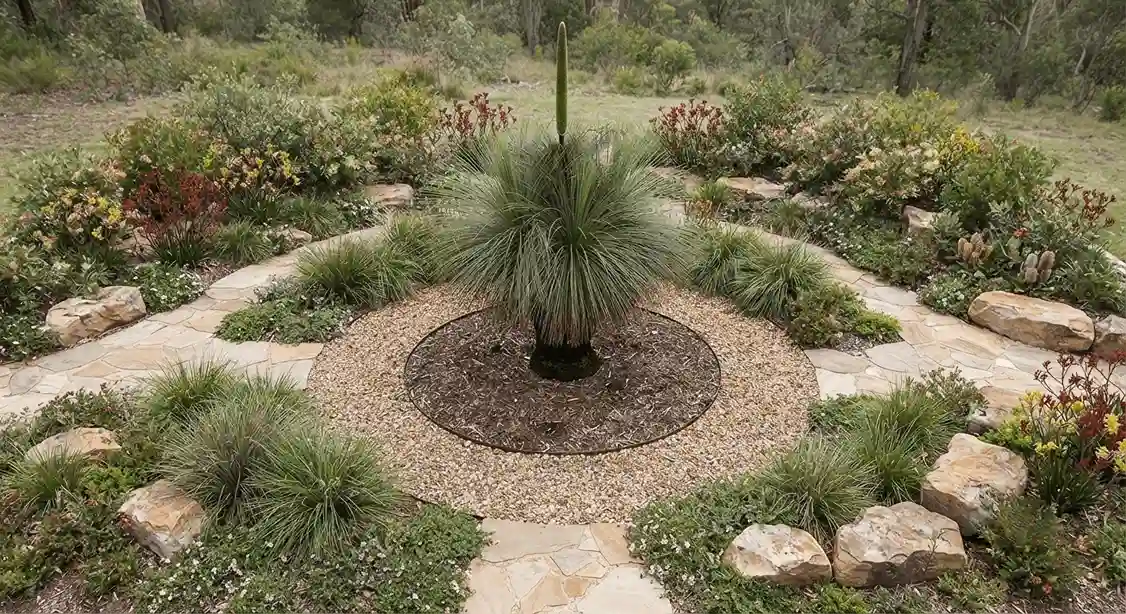
Successful grass tree landscaping ideas focus on showcasing the plant’s unique form while creating a balanced and natural-looking landscape.
Choosing the Right Location
Choosing the correct location is one of the most important decisions when designing around grass trees.
Do grass trees like sun or shade? Grass trees grow best in full sun, where they develop strong foliage and healthy flowering spikes. Light shade may be tolerated by some species but generally reduces growth and flowering.
Are grass trees easy to grow? Yes, provided they receive excellent drainage and minimal root disturbance during planting.
Consider:
- Full sunlight for most of the day
- Free-draining soil
- Adequate spacing from buildings and large trees
- High visibility as a landscape feature
- Protection from prolonged waterlogging
Creating Layers Around the Grass Tree
Layered planting creates depth and visual balance while highlighting the grass tree as the primary focal point.
An effective planting scheme typically includes:
- Low native ground covers around the base
- Medium-height flowering shrubs
- Native grasses for texture
- Occasional feature plants for seasonal colour
Avoid overcrowding the trunk, as good airflow helps maintain plant health and reduces moisture-related problems.
Using Hard Landscaping
Natural hardscape materials enhance the rugged beauty of grass trees and improve drainage.
Popular choices include:
- Weathered sandstone
- Decorative gravel
- Natural boulders
- Organic mulch
- Meandering pathways
- Low retaining walls
These elements create contrast while reinforcing the appearance of Australian bush landscapes.
Table: Elements of an Attractive Grass Tree Garden Design
| Landscape Element | Purpose | Best Materials | Maintenance Level |
| Gravel | Improves drainage | Crushed granite, pebbles | Low |
| Boulders | Creates natural focal points | Sandstone, granite | Very Low |
| Mulch | Conserves moisture | Hardwood mulch | Low |
| Pathways | Improves access | Stone, gravel | Low |
| Retaining walls | Defines planting zones | Natural stone | Moderate |
Grass Tree Landscaping Ideas for Different Garden Styles
Grass trees complement many Australian landscape styles because of their sculptural form and adaptability. Grass trees are a key feature in many Australian native garden tree designs, especially in low-maintenance bush-style landscapes.
Native Australian Bush Garden
A traditional bush garden celebrates Australia’s unique flora through naturalistic planting.
Combine grass trees with:
- Banksias
- Grevilleas
- Wattles
- Native grasses
- Large natural rocks
These native gardens ideas closely resemble natural bushland while supporting local wildlife. Many native Australian gardens designs also incorporate winding gravel paths and informal planting arrangements. Among the most sustainable Australian native gardens ideas, this style requires relatively little irrigation after establishment.
Modern Australian Native Front Gardens
Modern landscapes use simple layouts, bold plant forms, and clean lines.
Grass trees work beautifully with:
- Minimalist gravel beds
- Linear pathways
- Westringia hedges
- Lomandra borders
- Feature lighting
These modern Australian native front garden ideas provide year-round structure with relatively low maintenance. Many homeowners designing front yard modern Australian native gardens choose grass trees as a centerpiece for low maintenance front yard Australian native garden design.
Small Front Yard Landscaping Ideas
Even compact gardens can successfully showcase grass trees when carefully planned.
Effective design strategies include:
- Plant one feature grass tree.
- Use compact native shrubs.
- Limit plant varieties.
- Add decorative gravel.
- Create curved planting beds.
These approaches suit small front yard landscaping ideas Australia, simple front garden ideas Australia, and very small front garden ideas by maximizing visual impact without overcrowding the space. Raised planting beds also work well for small garden bed ideas Australia, adding depth and improving drainage.
Coastal Native Gardens
Coastal gardens benefit from plants that tolerate sandy soils, wind, and occasional salt spray. While some xanthorrhoea grass tree species naturally occur near coastal environments, always choose a species suited to your local conditions.
Design tips include:
- Use free-draining sandy or gravelly soils.
- Combine grass trees with salt-tolerant native shrubs.
- Plant in informal groups that mimic coastal bushland.
- Add weathered timber, natural stone, and coastal gravel for texture.
A coastal grass tree garden provides year-round structure while requiring relatively little irrigation once established.
Rock Gardens and Dry Landscapes
Grass trees naturally complement rock gardens and xeriscapes because they thrive in well-drained environments.
Effective dry landscape elements include:
- Decorative gravel gardens
- Large sandstone boulders
- Dry creek beds
- Native succulents
- Drought-tolerant Australian shrubs
These naturalistic designs reduce water use while highlighting the sculptural form of grass trees.
Native Plants That Pair Well with Grass Trees
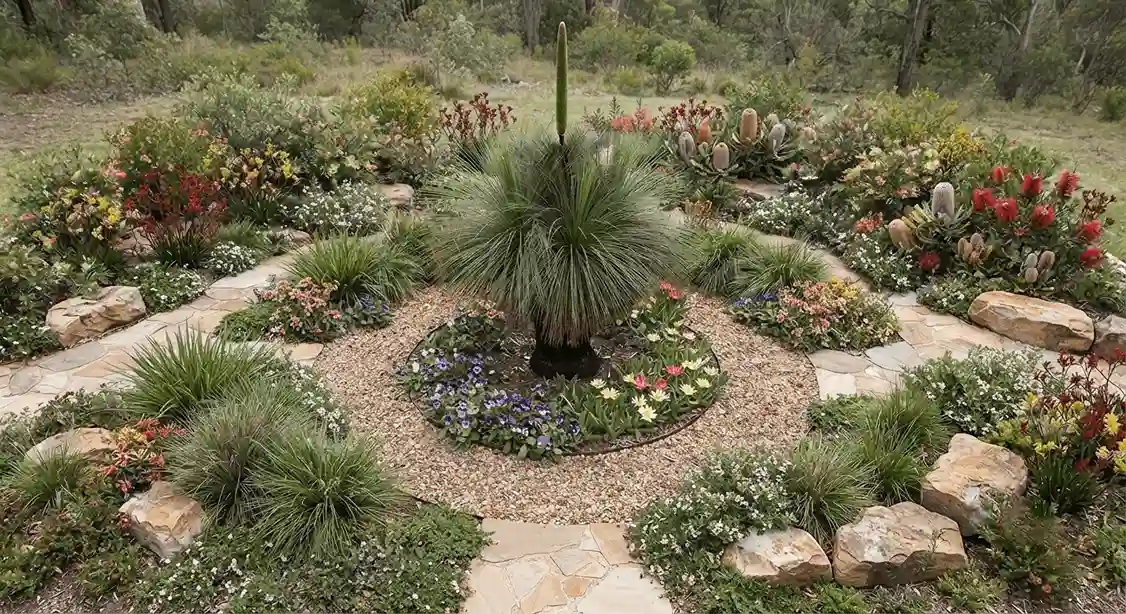
What plants go well with grass trees? Native grasses, flowering shrubs, ground covers, and other architectural Australian plants pair exceptionally well because they share similar growing requirements and create a balanced, natural landscape.
Grouping companion plants by height, texture, and flowering season produces year-round interest while supporting birds and pollinators.
Native Grasses
Native grasses soften the bold form of grass trees and add movement to the landscape.
Popular choices include:
- Kangaroo Grass (Themeda triandra)
- Wallaby Grass (Rytidosperma species)
- Weeping Grass (Microlaena stipoides)
- Tussock grasses
- Native grasses Victoria selections suited to local climates
These native grass plants are excellent grasses for gardens, helping stabilise soil and create a natural bushland appearance.
Flowering Native Shrubs
Flowering shrubs provide seasonal colour while attracting beneficial wildlife.
Recommended companions include:
- Grevillea
- Banksia
- Westringia
- Correa
- Callistemon
These shrubs complement the vertical form of grass trees while extending flowering throughout the year.
Ground Covers
Low-growing native species suppress weeds and protect soil moisture.
Suitable options include:
- Native Violet
- Myoporum
- Carpobrotus (Pigface)
These ground covers create attractive transitions between pathways, rocks, and larger feature plants.
Feature Plants
Additional architectural plants create contrast without competing with the grass tree.
Excellent feature plants include:
- Kangaroo Paw
- Cycads
- Lomandra
These species contribute texture, seasonal flowers, and strong visual balance.
Table: Best Companion Plants for Grass Tree Gardens
| Plant | Height | Flower Season | Wildlife Value | Water Needs |
| Grevillea | 1–3 m | Most of the year | High | Low |
| Banksia | 1–6 m | Autumn–Spring | High | Low |
| Lomandra | 0.5–1 m | Spring | Moderate | Low |
| Kangaroo Paw | 0.5–1.5 m | Spring–Summer | High | Low |
| Native Violet | 5–10 cm | Spring–Summer | Moderate | Moderate |
| Westringia | 1–2 m | Nearly year-round | Moderate | Low |
Grass Tree Garden Ideas by Australian Region
Climate influences plant selection and long-term success. Choosing species adapted to local rainfall, soil, and temperature improves establishment and reduces maintenance.
Grass Tree Garden Ideas Australia
Across Australia, successful grass tree gardens generally share several principles:
- Prioritise excellent drainage.
- Use locally native companion plants.
- Minimise root disturbance.
- Incorporate rocks and gravel.
- Select species suited to regional climates.
As of 2026, many landscape designers continue to favour locally sourced native plants to improve biodiversity and increase resilience to changing weather patterns.
Grass Tree Garden Ideas NSW
In New South Wales, grass trees perform well in many coastal, woodland, and inland landscapes.
Consider:
- Matching species to local soil conditions.
- Avoiding poorly drained clay sites.
- Combining with Banksia, Grevillea, and Lomandra for a natural regional appearance.
Native Grass Gardens in Victoria
Victoria’s climate varies considerably, making plant selection especially important.
A successful design often combines grass trees with native grasses Victoria species adapted to local rainfall and seasonal temperatures. Layering grasses with flowering shrubs creates habitat while maintaining a low-maintenance landscape.
Growing and Planting Grass Trees Successfully
Proper planting significantly improves long-term survival because grass trees dislike root disturbance and prolonged wet conditions.
How to Plant a Grass Tree
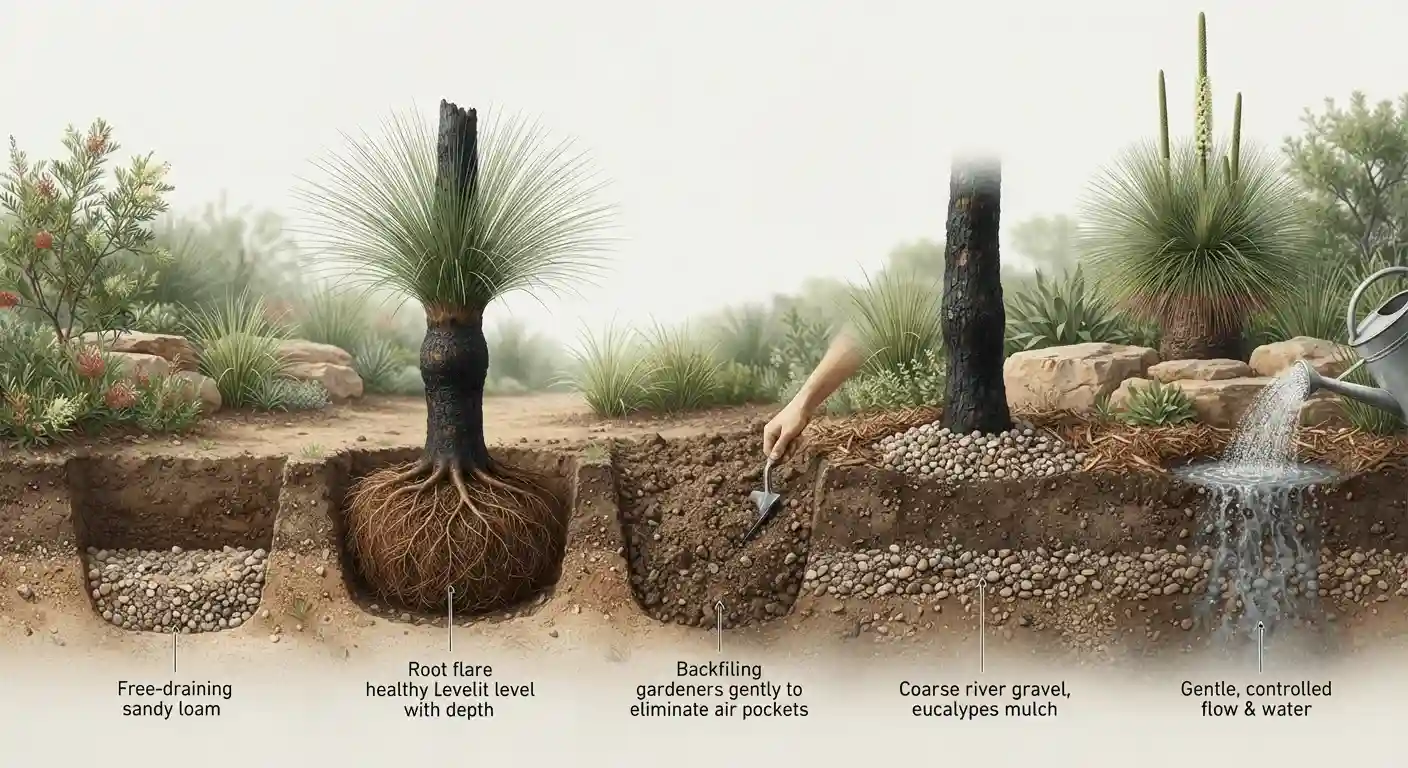
How to plant a grass tree successfully begins with selecting an appropriate site. For a complete step-by-step guide, see our detailed article on how to plant a grass tree successfully for long-term establishment and health.
Steps include:
- Choose a sunny location with free-draining soil.
- Dig only as deep as the existing root ball.
- Position the trunk at its original soil level.
- Backfill carefully without compacting heavily.
- Water thoroughly after planting.
- Apply mulch while keeping it away from the trunk.
Whether planting grass trees in gardens or larger landscapes, patience is essential because establishment is gradual.
In our experience, avoiding excessive watering during the establishment period produces healthier long-term root development than keeping the soil constantly wet.
Growing Grass Trees in Pots
Growing grass trees in pots is possible when suitable containers and well-draining growing media are used.
Recommendations include:
- Large, deep containers
- Premium native plant potting mix
- Added coarse sand or gravel for drainage
- Containers with multiple drainage holes
The best potting mix for grass trees should remain well aerated while preventing prolonged waterlogging.
Container-grown grass trees in pots benefit from regular monitoring because potting media dry faster than garden soil.
Grass Tree Growth Rate
Grass tree growth rate is exceptionally slow.
How fast do grass trees grow? Many species produce only a few centimetres of trunk growth each year.
How long do grass trees take to grow? Mature specimens often require several decades to develop their distinctive trunks.
Growth speed depends on:
- Species
- Climate
- Rainfall
- Soil drainage
- Overall plant health
Greenery Inside recommends viewing grass trees as long-term investment plants whose value increases with age rather than expecting rapid landscape transformation.
Grass Tree Care and Long-Term Maintenance
Healthy grass trees require relatively little maintenance once established, but consistent care helps preserve their appearance and longevity.
Watering and Feeding
Proper grass tree care focuses on avoiding overwatering while supporting healthy root development.
General recommendations include:
- Water newly planted specimens deeply but infrequently.
- Reduce watering after establishment.
- Use low-phosphorus native plant fertilizers only when needed.
- Avoid excessive fertilization, which can damage sensitive roots.
Whether discussing grass trees care or Xanthorrhoea care, maintaining excellent drainage is more important than frequent watering.
Pruning and Flower Spike Removal
A grass tree flower spike provides valuable nectar for birds and pollinators and should generally be left intact until flowering has finished.
If removal is necessary:
- Wait until the spike has completely dried.
- Cut the grass tree flower spike close to its base using clean, sharp tools.
- Remove damaged or dead foliage only when necessary.
Routine grass tree flower spike removal is not required unless for aesthetic or safety reasons.
Root System and Transplanting
The grass tree root system is highly sensitive to disturbance, making relocation challenging.
If a grass tree transplant is unavoidable:
- Retain as much of the root ball as possible.
- Replant immediately.
- Maintain moderate soil moisture during establishment.
- Avoid disturbing the roots after planting.
In our experience, mature grass trees recover far better when left in their original location whenever practical.
Common Grass Tree Problems and How to Fix Them
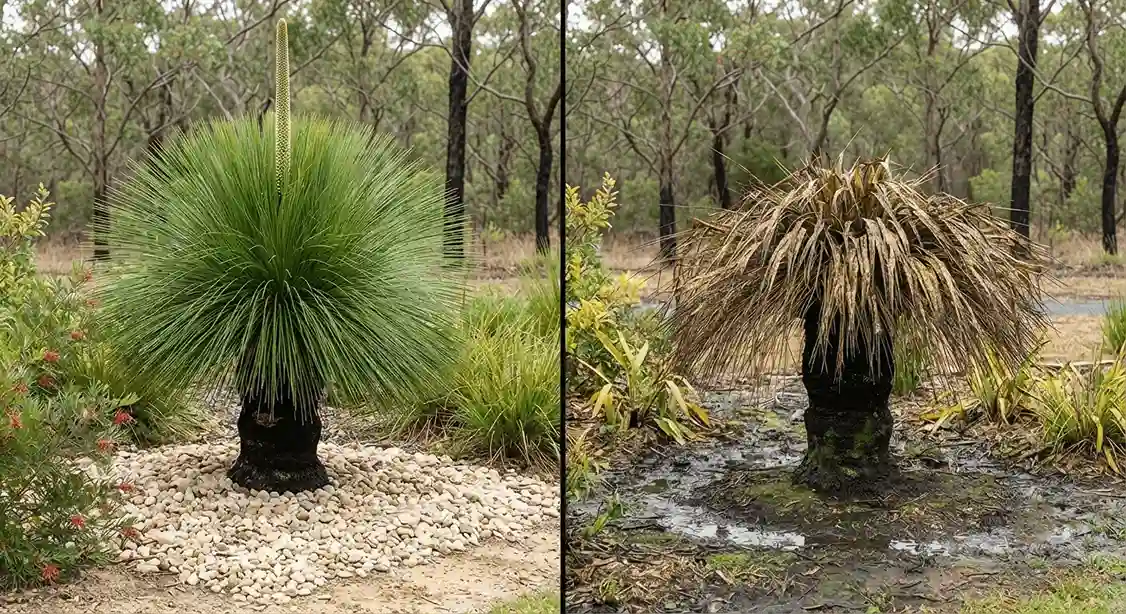
Early identification of problems greatly improves the chances of recovery. If your plant is struggling, you can explore more causes and solutions in our guide to common grass tree problems and recovery methods.
How to Save a Dying Grass Tree
How to save a dying grass tree depends on identifying the underlying cause first.
Signs that indicate trouble include:
- Yellowing or browning leaves
- Soft or decaying crown
- Poor new growth
- Persistent wilting
If you’re wondering how to tell if a grass tree is dying, inspect the crown, roots, and surrounding soil for excess moisture, physical damage, or signs of disease. Correcting drainage issues and reducing overwatering are often the first steps toward recovery.
Common Diseases
The most common grass tree diseases are associated with excessive moisture and poor drainage.
One serious issue is grass tree crown rot, which may cause:
- Soft, collapsing crown tissue
- Foul odour
- Progressive leaf dieback
Prevent common grass tree problems by:
- Planting in well-drained soil.
- Avoiding waterlogged conditions.
- Keeping mulch away from the trunk.
- Preventing unnecessary root injury.
Common Growing Mistakes
Common mistakes include:
- Overwatering
- Poor drainage
- Disturbing the root system
- Planting too deeply
- Applying excessive fertilizer
Avoiding these errors significantly improves long-term health and survival.
Frequently Asked Questions About Grass Trees
What are grass trees good for?
Grass trees provide architectural beauty, wildlife habitat, erosion control, and long-lasting visual interest in Australian native gardens.
Do grass trees like sun or shade?
Most species perform best in full sun with excellent drainage.
Are grass trees easy to grow?
Yes, provided they are planted correctly and their roots are not disturbed.
Why are grass trees so expensive?
Their slow growth, careful propagation, legal protections, and transplanting requirements contribute to their higher cost.
How often do grass trees flower?
Flowering varies by species and environmental conditions, with many flowering after favourable seasonal conditions or natural fire events.
Grass Tree Garden Inspiration Gallery
Consider incorporating images that showcase:
- Australian native grasses in natural landscapes
- Small grass tree garden ideas for compact spaces
- Native grass tree garden designs with layered planting
- Modern Australian front gardens featuring grass trees
- Rock gardens with gravel, boulders, and Xanthorrhoea as focal points
Table: Grass Tree Garden Design Ideas by Garden Size
| Garden Size | Recommended Layout | Companion Plants | Maintenance Level |
| Small | Single feature grass tree with gravel bed | Lomandra, Native Violet | Low |
| Medium | Layered native garden | Grevillea, Westringia, Kangaroo Grass | Low |
| Large | Natural bush-style landscape | Banksia, Callistemon, Cycads | Low to Moderate |
Conclusion
Thoughtfully planned grass tree garden ideas can transform Australian landscapes into attractive, low-maintenance spaces that celebrate native biodiversity. By selecting suitable companion plants, providing full sun and excellent drainage, and following proven long-term care practices, grass trees can thrive for decades as striking landscape features. Whether designing a compact front garden, a modern native landscape, or a natural bush-inspired setting, adapting your design to local climate and site conditions will help preserve the unique beauty and ecological value of Australian native gardens.
FAQs
What plants grow best with grass trees?
Native grasses, Grevillea, Banksia, Westringia, Lomandra, Kangaroo Paw, Native Violet, and Carpobrotus are among the best companion plants because they share similar growing requirements.
Can grass trees grow in pots?
Yes. Large containers with excellent drainage and a free-draining native plant potting mix allow grass trees to grow successfully in pots, although growth remains slow.
How much sunlight do grass trees need?
Most grass trees require full sun for healthy foliage, flowering, and overall growth. Light shade may be tolerated by some species but is generally less ideal.
How long does a grass tree take to mature?
Grass trees are extremely slow-growing and may take several decades to develop a noticeable trunk, depending on the species and growing conditions.
Why is my grass tree turning brown?
Browning is commonly caused by overwatering, poor drainage, transplant stress, drought stress, or disease. Inspect the crown and roots to identify the underlying cause before taking corrective action.
Can grass trees be transplanted successfully?
Yes, but success depends on minimizing root disturbance, preserving the root ball, and replanting into a well-drained site. Mature specimens are generally more difficult to transplant.
Do grass trees require regular maintenance?
No. Once established, grass trees require only occasional watering during extended dry periods, limited pruning, and periodic inspection for drainage or disease issues.
Are grass trees suitable for small front gardens?
Yes. Their upright form and slow growth make them excellent focal plants for small front gardens, especially when combined with compact native shrubs, ground covers, and decorative gravel.