Introduction
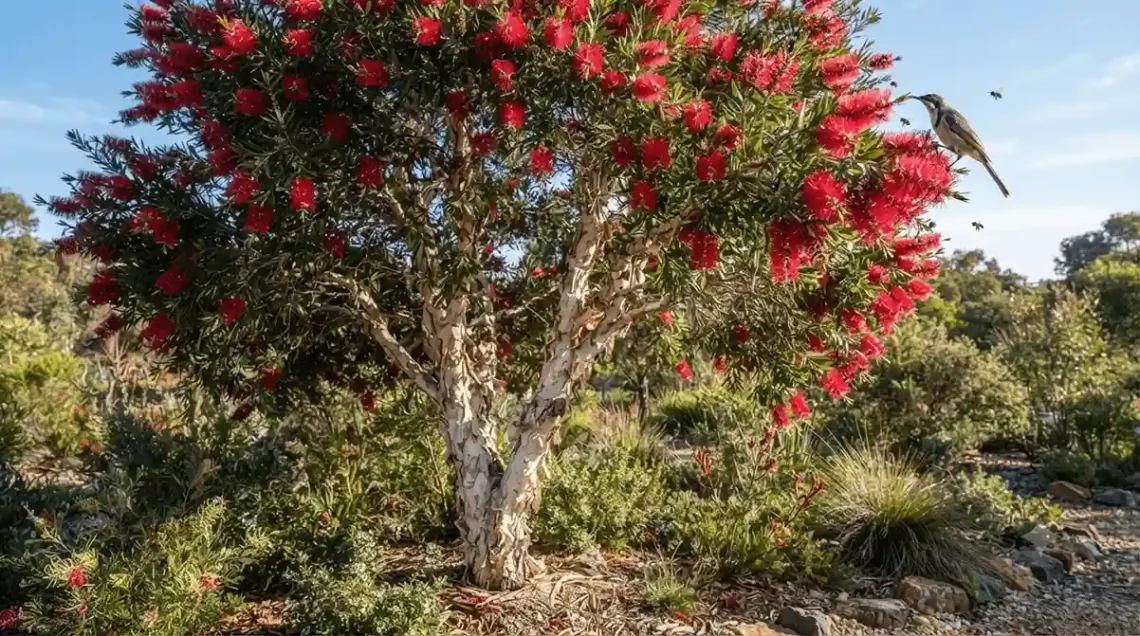
Melaleuca viridiflora is a distinctive Australian native paperbark tree admired for its colourful flowers, attractive papery bark, and ability to thrive in a wide range of growing conditions. Often called the red flowering paperbark, this evergreen species is valued in home gardens, parks, and habitat plantings because it combines ornamental appeal with excellent resilience. Modern cultivars such as Melaleuca Little Red, Melaleuca viridiflora Red, Melaleuca Candy Sparkles, and Melaleuca viridiflora Burgundy offer gardeners compact growth habits and vibrant flowering displays suited to smaller landscapes. Whether grown as a feature tree, screening plant, or wildlife-friendly native, Melaleuca viridiflora provides year-round interest while supporting birds and beneficial pollinators. Whether grown as a feature tree, screening plant, or wildlife-friendly native, Melaleuca viridiflora provides year-round interest while supporting birds and beneficial pollinators. If you’re planning a landscape with native species, our guide to Australian Native Garden Trees explores many other excellent trees suited to Australian gardens.
By Greenery Inside | Plant Care & Gardening Expert
Quick Summary
- Melaleuca viridiflora is an Australian native paperbark tree recognised for its colourful bottlebrush-like flowers, evergreen foliage, and distinctive papery bark.
- It naturally grows across northern Australia and adapts well to coastal, tropical, subtropical, and many temperate gardens with suitable drainage.
- Popular cultivars including Melaleuca Little Red, Melaleuca Candy Sparkles, and Melaleuca viridiflora Red provide compact forms ideal for residential landscapes.
- The species is widely used as a feature tree, privacy screen, wildlife habitat plant, and waterwise landscape specimen.
- Choosing the right cultivar and providing full sun, well-drained soil, and appropriate watering encourages healthy growth and reliable flowering.
What Is Melaleuca viridiflora?
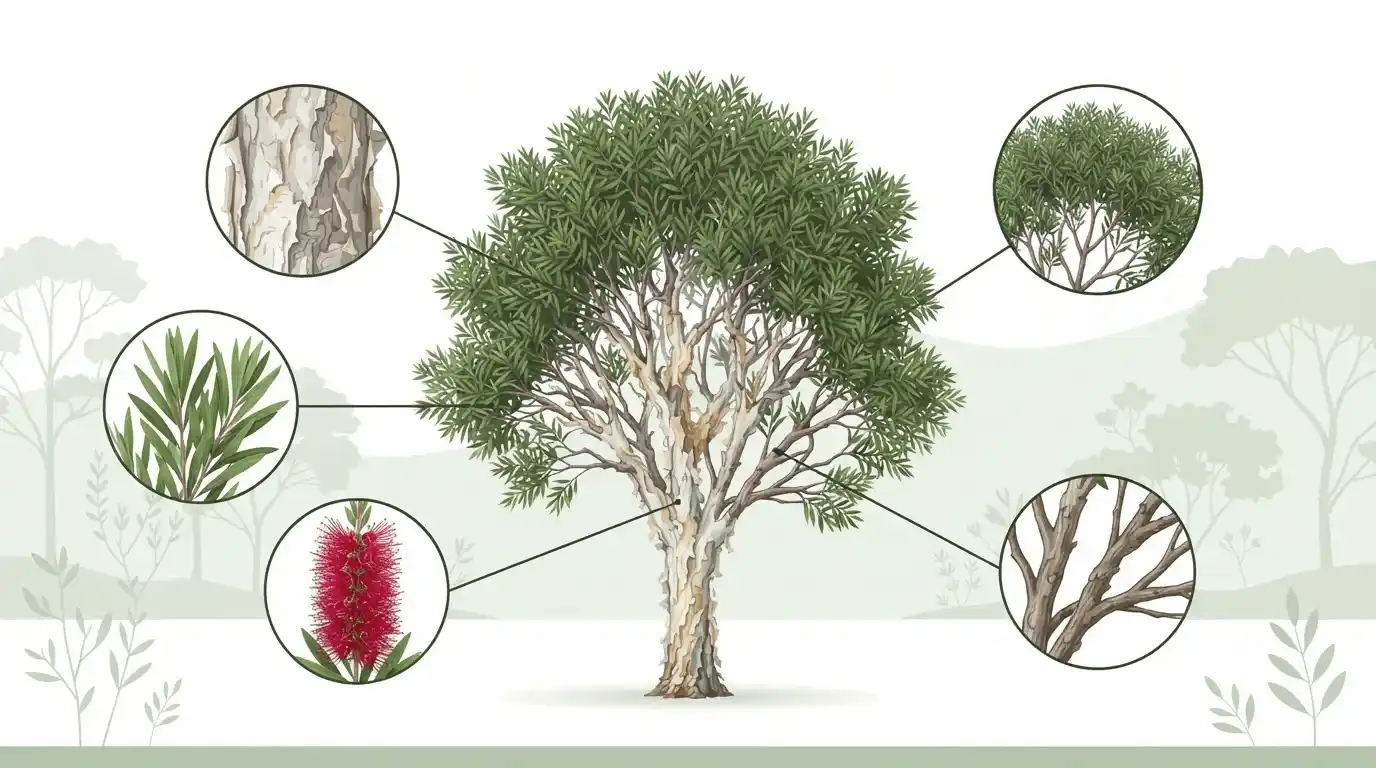
Melaleuca viridiflora is an evergreen tree in the myrtle family (Myrtaceae) that is native to northern Australia. It is best known for its attractive paperbark flowers, peeling bark, and dense canopy of aromatic foliage. The species is widely planted in Australian landscapes because it tolerates heat, seasonal flooding, dry periods once established, and coastal conditions.
Gardeners often select this species for its versatility. Depending on the cultivar, it can serve as a specimen tree, flowering screen, windbreak, or habitat plant that attracts nectar-feeding birds and native insects.
In our experience at Greenery Inside, compact cultivated forms perform especially well in suburban gardens where a traditional paperbark tree may eventually become too large. Selecting a cultivar suited to the available space usually results in healthier growth and less maintenance over time.
Botanical classification and native habitat
Melaleuca viridiflora belongs to the Myrtaceae family, which includes many well-known Australian native plants such as bottlebrushes (Callistemon), lilly pillies (Syzygium), and tea trees (Melaleuca). Learn more about the family on Wikipedia.
Scientific classification
| Classification | Description |
| Kingdom | Plantae |
| Clade | Angiosperms |
| Order | Myrtales |
| Family | Myrtaceae |
| Genus | Melaleuca |
| Species | Melaleuca viridiflora |
The species occurs naturally across northern Queensland, the Northern Territory, and parts of Western Australia, extending into nearby regions of New Guinea. It commonly grows in:
- Open woodlands
- Seasonal wetlands
- Creek margins
- Floodplains
- Coastal lowlands
- Savanna landscapes
These habitats demonstrate the plant’s remarkable adaptability. It tolerates periods of seasonal inundation while also coping with extended dry weather once its root system becomes established.
The botanical name viridiflora comes from Latin, where viridis means “green” and flora refers to flowers. The name reflects the greenish flower colour found in naturally occurring populations, although cultivated selections now produce striking red, pink, cream, and burgundy flower displays.
As of the 2026 growing season, Australian native plant growers increasingly recommend selecting locally adapted cultivars to improve long-term performance while supporting regional biodiversity.
Key identifying characteristics
Several features make Melaleuca viridiflora easy to distinguish from many other Australian native trees.
Evergreen habit
The tree retains its foliage throughout the year, providing continuous structure and screening even outside the flowering season.
Paper-like bark
One of its defining characteristics is the thick, soft bark that peels away in multiple papery layers. This distinctive bark gives rise to the common name paperbark and provides year-round ornamental interest.
Leaves
The leaves are:
- Narrow to broadly lance-shaped
- Medium to dark green
- Aromatic when crushed
- Arranged alternately along the stems
- Rich in naturally occurring essential oils typical of many members of the Myrtaceae family
Flowers
The colourful paperbark flower consists of dense cylindrical clusters formed by numerous long stamens, creating the familiar brush-like appearance often associated with Australian native flowering trees. Individual flower spikes may range from cream and greenish tones in wild populations to brilliant red or burgundy in cultivated selections.
Because several flower spikes bloom across the canopy simultaneously, mature trees produce spectacular displays that attract:
- Honeyeaters
- Native bees
- Butterflies
- Other beneficial pollinating insects
Greenery Inside recommends observing flowering plants early in the morning when nectar-feeding birds are usually most active, making it easier to appreciate the species’ ecological value as well as its ornamental appeal.
Key Features at a Glance
| Feature | Description |
| Botanical name | Melaleuca viridiflora |
| Common names | Red flowering paperbark, paperbark tree, green-flowered paperbark |
| Native range | Northern Australia and New Guinea |
| Flower colour | Greenish, cream, red, pink, or burgundy depending on cultivar |
| Bark type | Thick, soft, papery bark with peeling layers |
| Growth habit | Evergreen tree or large shrub with an upright, spreading canopy |
Popular Varieties and Cultivars of Melaleuca viridiflora
Plant breeders have developed several ornamental cultivars of Melaleuca viridiflora to suit modern Australian gardens. While the species can grow into a medium-sized tree in its natural habitat, cultivated selections often feature more compact growth, richer flower colours, or distinctive foliage. Choosing the right cultivar depends on your available space, desired landscape style, and maintenance preferences. Gardeners interested in this colourful compact selection can also read our detailed Melaleuca Candy Sparkles growing guide for more information on planting, care, and landscape uses.
Melaleuca Little Red
Melaleuca Little Red is one of the most popular compact forms of Melaleuca viridiflora. It has a dense, rounded growth habit that makes it suitable for smaller residential gardens where space is limited.
Key characteristics include:
- Compact, bushy growth
- Dense evergreen foliage
- Bright red bottlebrush-like flowers
- Lower maintenance than larger paperbark trees
- Excellent response to light pruning
This cultivar works well as:
- A feature shrub or small tree
- Informal native hedging
- Screening between garden spaces
- Wildlife-friendly planting near patios or outdoor living areas
In our experience growing Australian native plants, Melaleuca Little Red flowers most reliably when planted in full sun and given enough room for good air circulation.
Melaleuca viridiflora Red
Melaleuca viridiflora Red is selected primarily for its vibrant flowering display. Compared with naturally occurring forms, it produces more intense red flower spikes that create a striking focal point during the blooming season.
Its ornamental qualities include:
- Brilliant red flowers
- Upright branching structure
- Attractive evergreen foliage
- Decorative papery bark that develops with age
Landscape designers commonly use this cultivar for:
- Feature planting
- Native streetscapes
- Public gardens
- Large residential landscapes
- Pollinator-friendly gardens
The colourful flowers attract nectar-feeding birds such as honeyeaters while adding strong seasonal interest.
Melaleuca Candy Sparkles
Melaleuca Candy Sparkles is valued for its compact form and prolific flowering. It combines ornamental appeal with manageable size, making it suitable for contemporary gardens.
Notable features include:
- Rounded, tidy growth habit
- Abundant colourful flower spikes
- Dense foliage throughout the year
- Suitable for low-maintenance landscapes
This cultivar complements several garden styles, including:
- Australian native gardens
- Cottage-style landscapes
- Coastal gardens
- Waterwise planting schemes
- Wildlife gardens
Greenery Inside recommends using Candy Sparkles where year-round structure and seasonal flower colour are equally important.
Melaleuca viridiflora Burgundy
Melaleuca viridiflora Burgundy stands out because of its rich burgundy to bronze-toned new foliage, which provides ornamental value even when the plant is not flowering.
Its distinguishing characteristics include:
- Burgundy-coloured new growth
- Attractive evergreen canopy
- Colourful flowers during the blooming season
- Decorative peeling bark as the tree matures
Compared with other cultivars, Burgundy offers stronger foliage colour contrast, making it an excellent companion for silver-leaved Australian natives and ornamental grasses.
Comparison of Popular Cultivars
| Variety | Mature Size* | Flower Colour | Best Use |
| Little Red | 2–4 m tall × 2–3 m wide | Bright red | Small gardens, hedging, screening |
| Candy Sparkles | 2–4 m tall × 2–3 m wide | Red to pink-red | Feature planting, wildlife gardens |
| Burgundy | 3–5 m tall × 3–4 m wide | Red | Foliage contrast, specimen planting |
| Melaleuca viridiflora Red | 4–8 m tall × 3–6 m wide | Deep red | Feature trees, larger landscapes |
*Actual mature size varies with climate, soil conditions, pruning, and cultivar selection.
Melaleuca viridiflora Height and Mature Size
The mature size of Melaleuca viridiflora varies considerably depending on whether it is the natural species or a cultivated variety. Environmental conditions, rainfall, soil quality, and maintenance also influence final dimensions.
Selecting an appropriately sized cultivar before planting helps reduce future pruning and ensures the tree has enough room to develop naturally.
How big does Melaleuca viridiflora get?
In favourable conditions, the natural species typically reaches 8–15 metres (26–50 feet) in height with a spread of 5–10 metres (16–33 feet). Mature specimens growing in northern Australia’s natural woodlands may occasionally become even larger.
Most cultivated garden varieties remain much smaller, often reaching only 2–5 metres in height. Their compact growth makes them easier to incorporate into suburban landscapes without overwhelming nearby plants or structures.
Several factors influence mature size, including:
- Available sunlight
- Soil fertility
- Water availability
- Climate
- Root space
- Pruning practices
Greenery Inside recommends allowing sufficient space around young trees rather than relying on frequent pruning to control their size. This approach encourages healthier branching and more natural growth.
Melaleuca viridiflora size in gardens vs natural habitat
Trees growing in managed gardens rarely achieve the same dimensions as wild specimens. Competition, pruning, irrigation practices, and limited root zones generally restrict growth.
In natural ecosystems, trees have unrestricted root systems and access to seasonal environmental conditions that support their full development.
| Growing Condition | Typical Height | Typical Width |
| Home garden | 4–8 m | 3–6 m |
| Natural habitat | 8–15 m | 5–10 m |
| Compact cultivars | 2–5 m | 2–4 m |
When planting near buildings, fences, or pathways, always consider the tree’s mature width as well as its height. Providing adequate spacing improves airflow, reduces maintenance, and allows the distinctive paperbark trunk to become an attractive landscape feature.
Growth Rate and Growing Habit
Melaleuca viridiflora is generally considered a moderately fast-growing Australian native tree. Under favourable conditions, young plants establish quickly and produce steady annual growth before gradually slowing as they mature.
Healthy growth depends on receiving full sun, suitable moisture during establishment, and well-drained soil.
Are Melaleuca trees fast growing?
Yes. Most Melaleuca species, including Melaleuca viridiflora, grow at a moderate to fast rate when planted in suitable conditions.
Young trees often produce their strongest growth during the warmer months of spring and summer when temperatures, sunlight, and soil moisture are favourable.
Growth speed is influenced by:
- Climate
- Rainfall
- Soil quality
- Irrigation
- Nutrient availability
- Available root space
During the establishment phase, regular watering encourages strong root development. Once established, Melaleuca viridiflora becomes considerably more drought tolerant than many ornamental trees.
Upright vs weeping growth forms
Most Melaleuca viridiflora trees naturally develop an upright canopy with gently spreading branches. Some cultivated selections display a softer, more arching habit that creates a graceful appearance.
The term Melaleuca viridiflora weeping generally refers to plants with pendulous branch growth rather than representing a separate botanical species.
This growth habit differs from true weeping melaleuca species, which often exhibit longer, more pronounced drooping branches.
Upright forms are ideal for:
- Feature trees
- Street planting
- Windbreaks
- Screening
Weeping forms are well suited to:
- Informal native gardens
- Water features
- Large landscape focal points
- Naturalistic planting designs
In our experience, lightly shaping young trees during their first few years helps develop a balanced canopy without sacrificing the species’ naturally attractive form.
Care Guide for Melaleuca viridiflora
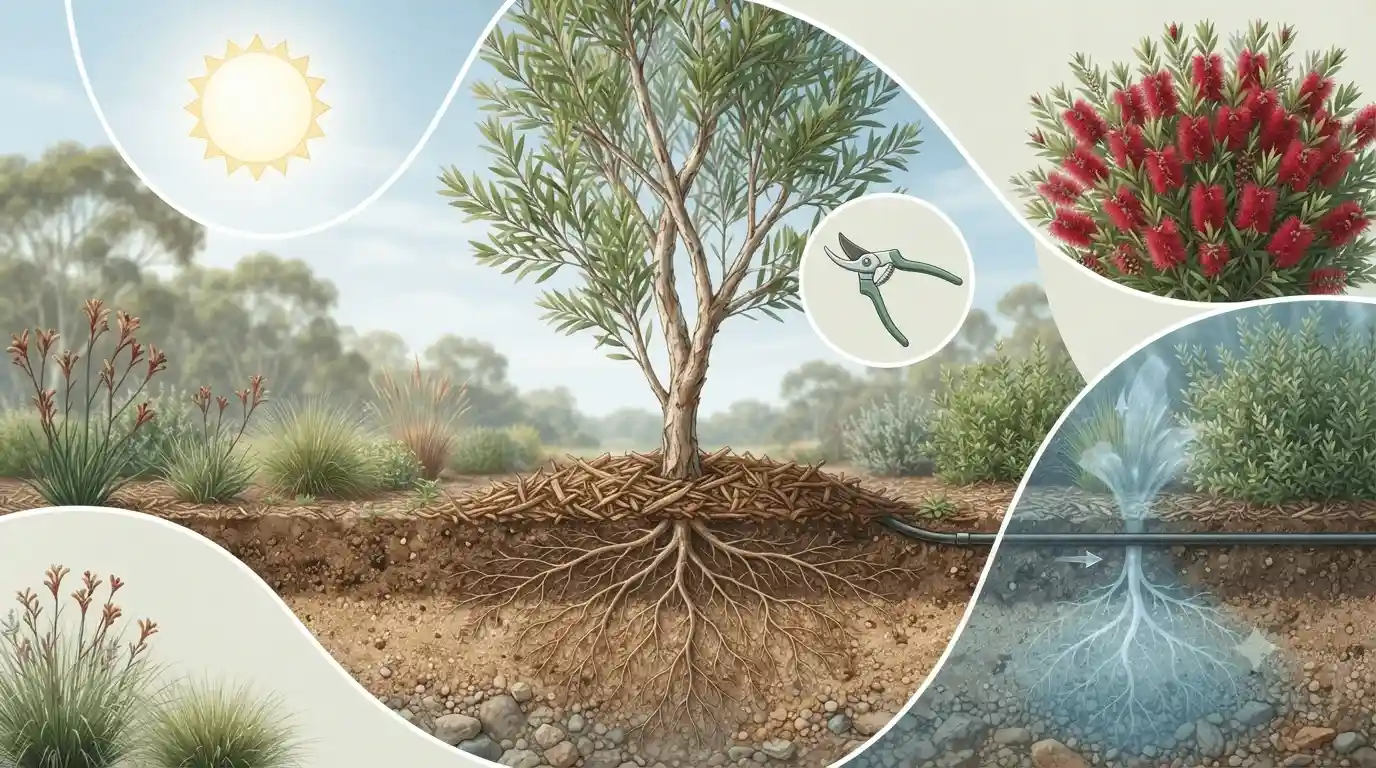
Although Melaleuca viridiflora is known for its adaptability, providing the right growing conditions encourages stronger growth, healthier foliage, and more abundant flowering. Once established, this Australian native requires relatively little maintenance compared with many ornamental trees.
Light requirements
Melaleuca viridiflora performs best in full sun, receiving at least six hours of direct sunlight each day. Bright conditions promote dense foliage, vigorous growth, and prolific flowering.
While young plants tolerate light partial shade, excessive shade may result in:
- Fewer flowers
- Sparse branching
- Slower growth
- Reduced canopy density
For the best ornamental display, plant the tree where it has plenty of open sky and good air circulation.
Soil preferences
This species adapts to many soil types, including:
- Sandy soils
- Loamy soils
- Clay-loam blends
- Coastal soils with good drainage
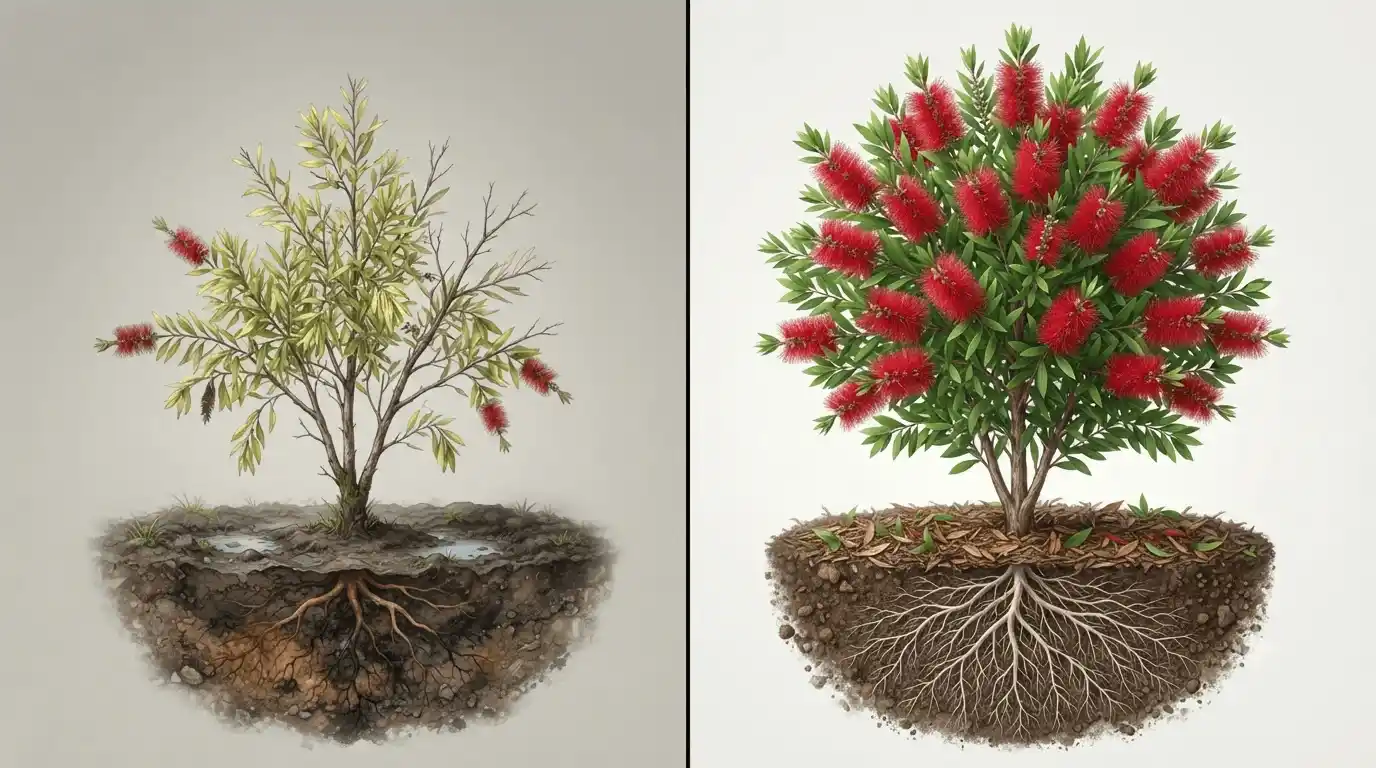
The most important requirement is well-drained soil. Although mature trees tolerate occasional waterlogging better than many native species, continuously saturated soil can reduce root health.
A slightly acidic to neutral soil pH generally supports the strongest growth.
Watering needs
Young plants require regular watering during their first growing season while establishing a deep root system.
A practical watering schedule is:
- Water deeply once or twice a week during dry weather.
- Allow the upper soil layer to dry slightly between waterings.
- Reduce watering as the tree becomes established.
Once mature, Melaleuca viridiflora is relatively drought tolerant, although prolonged dry periods may reduce flowering.
In our experience, deep, infrequent watering produces healthier roots than frequent shallow irrigation.
Fertilising
Most established plants grow well without heavy feeding.
If required, apply a low-phosphorus fertiliser formulated for Australian native plants during spring. Excessive fertiliser can encourage leafy growth at the expense of flowers.
Avoid overfeeding, particularly on naturally fertile soils.
Mulching
Mulching helps conserve soil moisture while suppressing weeds and moderating soil temperature.
Apply a 5–8 cm layer of organic mulch such as:
- Shredded bark
- Wood chips
- Leaf mulch
Keep mulch several centimetres away from the trunk to reduce the risk of rot.
Pruning
Routine pruning requirements are minimal.
Prune to:
- Remove dead or damaged branches
- Improve airflow
- Maintain shape
- Encourage bushier growth in compact cultivars
The best time to prune is shortly after flowering finishes. Heavy pruning immediately before flowering may reduce the following season’s blooms.
Climate and frost tolerance
Melaleuca viridiflora grows naturally in warm regions but adapts well to many Australian climates.
It performs best in:
- Tropical climates
- Subtropical regions
- Warm temperate areas
- Coastal environments
Established plants tolerate dry periods and moderate coastal winds. Young trees may require protection from severe frost until fully established.
As of the 2026 growing season, many native plant growers continue to recommend selecting locally adapted cultivars for improved climate resilience and long-term performance.
Flowers, Bark, and Ornamental Features
The colourful flowers and distinctive bark make Melaleuca viridiflora one of Australia’s most recognisable native paperbarks. These ornamental features provide visual interest throughout the year while supporting local wildlife.
Red flowering paperbark blooms
The red flowering paperbark produces dense cylindrical flower spikes composed mainly of colourful stamens rather than large petals.
Depending on the cultivar, flower colours include:
- Bright red
- Deep crimson
- Pink-red
- Cream
- Greenish-white in naturally occurring forms
Flowering generally occurs from spring into summer, although timing varies slightly with climate and local growing conditions.
The nectar-rich flowers attract numerous pollinators, including:
- Honeyeaters
- Native bees
- Butterflies
- Beneficial insects
Greenery Inside recommends avoiding insecticide use during flowering to help protect pollinating species visiting the blooms.
Melaleuca viridiflora bark
One of the tree’s defining characteristics is its thick, layered paper-like bark.
As the trunk matures, the bark peels naturally in soft papery sheets, creating:
- Attractive texture
- Year-round visual interest
- Habitat for beneficial insects
- Additional wildlife shelter
The bark contributes significantly to the species’ landscape value, particularly during seasons when flowering has finished.
Wildlife benefits
Melaleuca viridiflora supports biodiversity in both urban and rural landscapes.
Its ecological benefits include:
- Nectar for birds
- Food for native bees
- Shelter for insects
- Nesting habitat for small birds
- Increased garden biodiversity
In habitat gardens, combining paperbarks with other flowering Australian natives extends nectar availability throughout the year.
Traditional and Modern Uses of Melaleuca viridiflora
Melaleuca viridiflora has long been valued for both its practical uses and ornamental qualities. Today it remains an important landscape tree while also holding cultural significance for Aboriginal peoples. If you’re comparing different paperbark species, our guide to Honey Myrtle (Melaleuca) explains another attractive Australian native with similar ornamental and wildlife benefits.
Melaleuca viridiflora uses
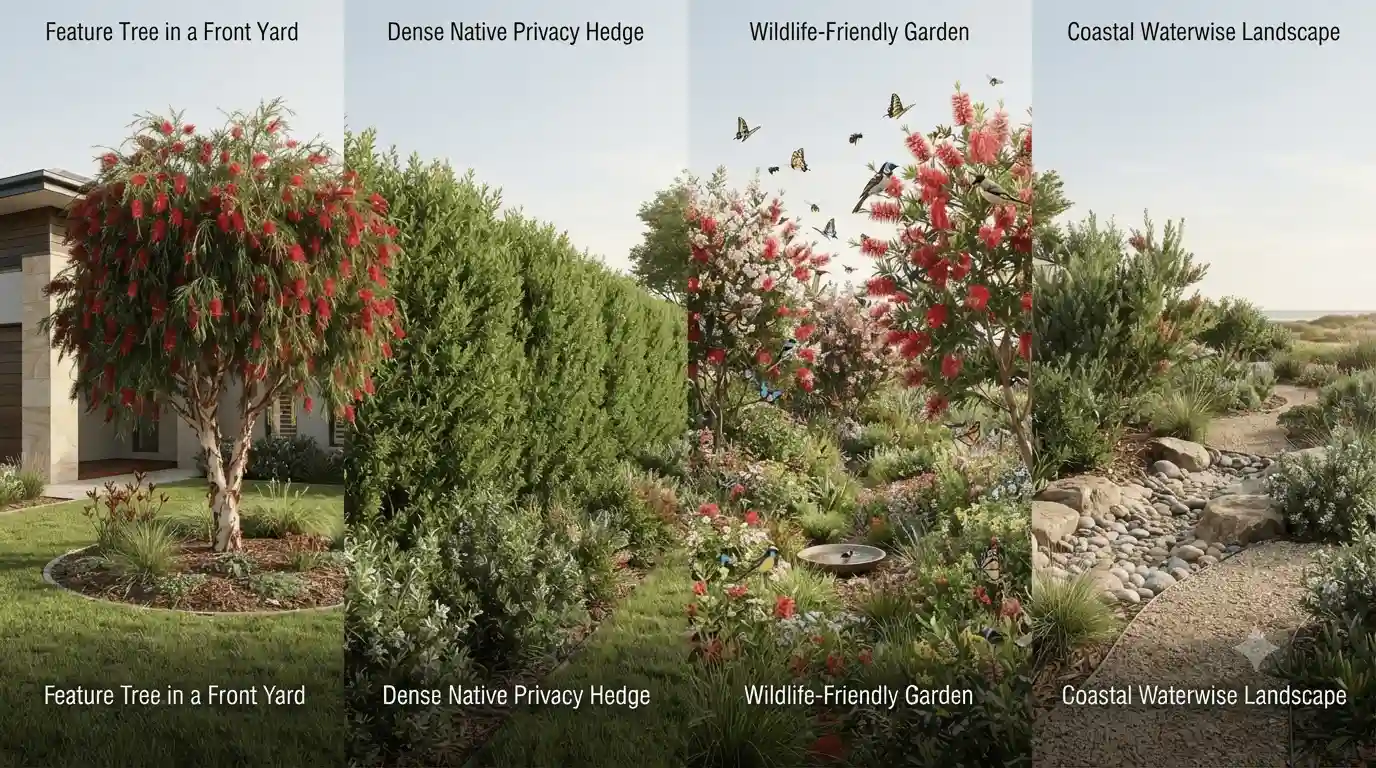
Modern landscape applications include:
- Feature tree
- Privacy screen
- Native hedging
- Windbreak
- Wildlife garden
- Street planting
- Public parks
- Waterwise landscapes
- Revegetation projects
Its tolerance of varying soil conditions and attractive appearance make it suitable for residential gardens as well as larger public spaces.
What did Aboriginal peoples use paperbark for?
For thousands of years, Aboriginal peoples used the papery bark from various Melaleuca species as a versatile natural material.
Traditional uses included:
- Temporary shelters
- Wrapping and cooking food
- Carrying containers
- Bedding
- Protective coverings
- Canoes in some regions
- Ceremonial and cultural purposes
These practices varied between language groups and regions, reflecting the diverse cultural traditions of Aboriginal Australia.
The continued recognition of these traditional uses highlights the cultural importance of paperbark trees beyond their ornamental value.
Melaleuca viridiflora essential oil
Like many members of the Myrtaceae family, Melaleuca viridiflora contains naturally occurring aromatic compounds within its leaves.
However, it should not be confused with Melaleuca alternifolia, the species commercially cultivated to produce traditional tea tree oil.
Although researchers have investigated the chemistry of Melaleuca viridiflora, it is not widely grown for commercial essential oil production.
Current interest focuses mainly on:
- Botanical research
- Natural aromatic compounds
- Conservation
- Horticultural value
Claims regarding medicinal properties should be interpreted cautiously unless supported by reliable scientific evidence.
Is Melaleuca viridiflora Invasive?
Because it is native to Australia, Melaleuca viridiflora generally behaves as a natural component of local ecosystems within its indigenous range.
Natural behaviour
In its native habitat, the species reproduces through seed and naturally regenerates after favourable seasonal conditions.
Its growth is generally balanced by:
- Native environmental conditions
- Competition from surrounding vegetation
- Local wildlife interactions
- Natural ecological processes
This makes it an important contributor to native biodiversity rather than an invasive species within Australia.
Can it become invasive outside its native range?
In some regions outside Australia, environmental conditions may differ considerably.
Whether a species becomes invasive depends on factors such as:
- Local climate
- Soil conditions
- Seed dispersal
- Existing vegetation
- Land management practices
Although Melaleuca viridiflora is not widely recognised as a major invasive species internationally, responsible planting is always recommended.
Before introducing any non-native plant into a new region, gardeners should:
- Check local environmental regulations.
- Purchase plants from reputable nurseries.
- Avoid planting near sensitive natural ecosystems if advised by local authorities.
- Monitor natural seedling spread where necessary.
Selecting appropriate cultivars and planting responsibly helps preserve both garden health and surrounding ecosystems.
Frequently Asked Questions
What is Melaleuca viridiflora?
Melaleuca viridiflora is an evergreen Australian native paperbark tree in the Myrtaceae family. It is known for its distinctive papery bark, aromatic green foliage, and colourful bottlebrush-like flower spikes. The species is commonly grown as an ornamental tree, wildlife-friendly planting, windbreak, and feature specimen in Australian landscapes.
How big does Melaleuca viridiflora get?
The natural species typically grows 8–15 metres (26–50 feet) tall with a spread of 5–10 metres (16–33 feet) under favourable conditions. Compact cultivars such as Melaleuca Little Red and Melaleuca Candy Sparkles usually mature at 2–5 metres (6.5–16 feet), making them better suited to residential gardens.
Are Melaleuca trees fast growing?
Yes. Most Melaleuca species, including Melaleuca viridiflora, are considered moderate to fast-growing when planted in full sun and well-drained soil. Young trees establish quickly with regular watering, while mature plants become relatively drought tolerant and require less maintenance.
Is Melaleuca viridiflora invasive?
Within its native Australian range, Melaleuca viridiflora is not considered invasive and plays an important ecological role in natural ecosystems. Outside Australia, its behaviour depends on local environmental conditions and regulations. Gardeners should always check regional planting guidelines before introducing any non-native species.
What did Aboriginal peoples use paperbark for?
Aboriginal peoples traditionally used paperbark from various Melaleuca species for many practical purposes, including building temporary shelters, wrapping food for cooking, making containers, creating bedding, and producing protective coverings. These uses varied among different Aboriginal nations and reflect the long-standing cultural importance of paperbark trees.
What is the difference between Melaleuca Little Red and Melaleuca Candy Sparkles?
Both are compact ornamental cultivars of Melaleuca viridiflora, but they differ slightly in growth habit and landscape use. Melaleuca Little Red has a dense, rounded form that is ideal for hedging and screening, while Melaleuca Candy Sparkles is prized for its prolific flowering and neat, compact shape, making it an excellent feature plant in smaller gardens.
Does Melaleuca viridiflora produce essential oil?
Yes. The leaves contain naturally occurring aromatic compounds and essential oils typical of many members of the Myrtaceae family. However, Melaleuca viridiflora is not the primary commercial source of tea tree oil. That product is mainly derived from Melaleuca alternifolia. While M. viridiflora has attracted research interest, it is primarily grown for its ornamental and ecological value rather than for essential oil production.
Can Melaleuca viridiflora grow in coastal gardens?
Yes. Melaleuca viridiflora performs well in many coastal gardens because it tolerates wind, salt-laden air, and sandy soils once established. Planting it in a sunny location with well-drained soil and providing regular watering during establishment helps ensure healthy growth and reliable flowering.