Introduction
Baby Blue Eucalyptus flowers are often overlooked because most gardeners grow baby blue eucalyptus for its striking silver-blue foliage rather than its blooms. Also known as Eucalyptus pulverulenta ‘Baby Blue’, this compact selection of the silver leaved mountain gum produces attractive round juvenile leaves that are widely used in floral arrangements. Many people know it as baby blue gum, baby blue eucalyptus tree, baby blue plant, or simply baby eucalyptus. While mature plants can develop delicate eucalyptus flowers, flowering depends on age, growing conditions, and pruning practices. This guide explains when Baby Blue Eucalyptus flowers appear, what they look like, how to grow healthy plants, and how to maximise their ornamental value.
Quick Summary
- Baby Blue Eucalyptus flowers are small, creamy-white blossoms that usually develop only on mature, less frequently pruned trees.
- Eucalyptus pulverulenta ‘Baby Blue’ is primarily grown for its attractive blue-grey juvenile foliage rather than its flowers.
- The plant performs best in full sun with excellent drainage and can be grown successfully in gardens or large containers.
- Frequent pruning encourages fresh juvenile foliage but often delays or reduces flowering.
- Proper care, including correct watering, sunlight, and soil conditions, helps maintain vigorous growth and occasional flowering.
What Is Baby Blue Eucalyptus?
Botanical identity and classification
Baby Blue Eucalyptus is a cultivated form of Eucalyptus pulverulenta, an evergreen tree native to southeastern Australia. For more botanical information about the species, see the Eucalyptus pulverulenta page on Wikipedia.
The cultivar Eucalyptus pulverulenta ‘Baby Blue’ was selected because it retains its attractive juvenile foliage longer than many standard eucalyptus trees. These rounded leaves have a distinctive silvery-blue colour that makes the plant popular in modern landscapes and floral design.
Because of its appearance and origin, the plant is commonly known by several names, including:
- Baby Blue Eucalyptus
- Baby Blue Gum
- Silver Leaved Mountain Gum
- Baby Blue Tree
- Baby Blue Eucalypt
- Eucalyptus Blue
- Baby Eucalyptus
Although these names vary among nurseries and gardeners, they generally refer to the same ornamental cultivar prized for its foliage rather than its timber.
Unlike many larger eucalyptus species, Baby Blue develops into a more compact tree and responds exceptionally well to pruning, making it suitable for residential gardens and decorative plantings.
Why gardeners grow Baby Blue Eucalyptus
Most gardeners choose Baby Blue Eucalyptus because it provides year-round ornamental interest with relatively little maintenance.
Its most distinctive feature is the rounded blue-grey juvenile foliage, which contrasts beautifully with green shrubs, flowering perennials, and Australian native gardens.
Common reasons gardeners grow Baby Blue Eucalyptus include:
- Attractive silver-blue evergreen foliage throughout the year.
- Decorative rounded juvenile leaves with excellent texture.
- Popular cut foliage for bouquets, wreaths, and floral arrangements.
- Low-maintenance once established.
- Excellent feature tree for modern landscapes.
- Suitable for drought-tolerant and water-wise gardens.
- Valuable habitat and nectar source for native wildlife when mature.
- Responds well to pruning for compact growth.
In our experience at Greenery Inside, Baby Blue Eucalyptus is one of the easiest ornamental eucalyptus varieties to maintain because regular light pruning produces dense, colourful foliage without requiring complicated care routines.
Do Baby Blue Eucalyptus Have Flowers?
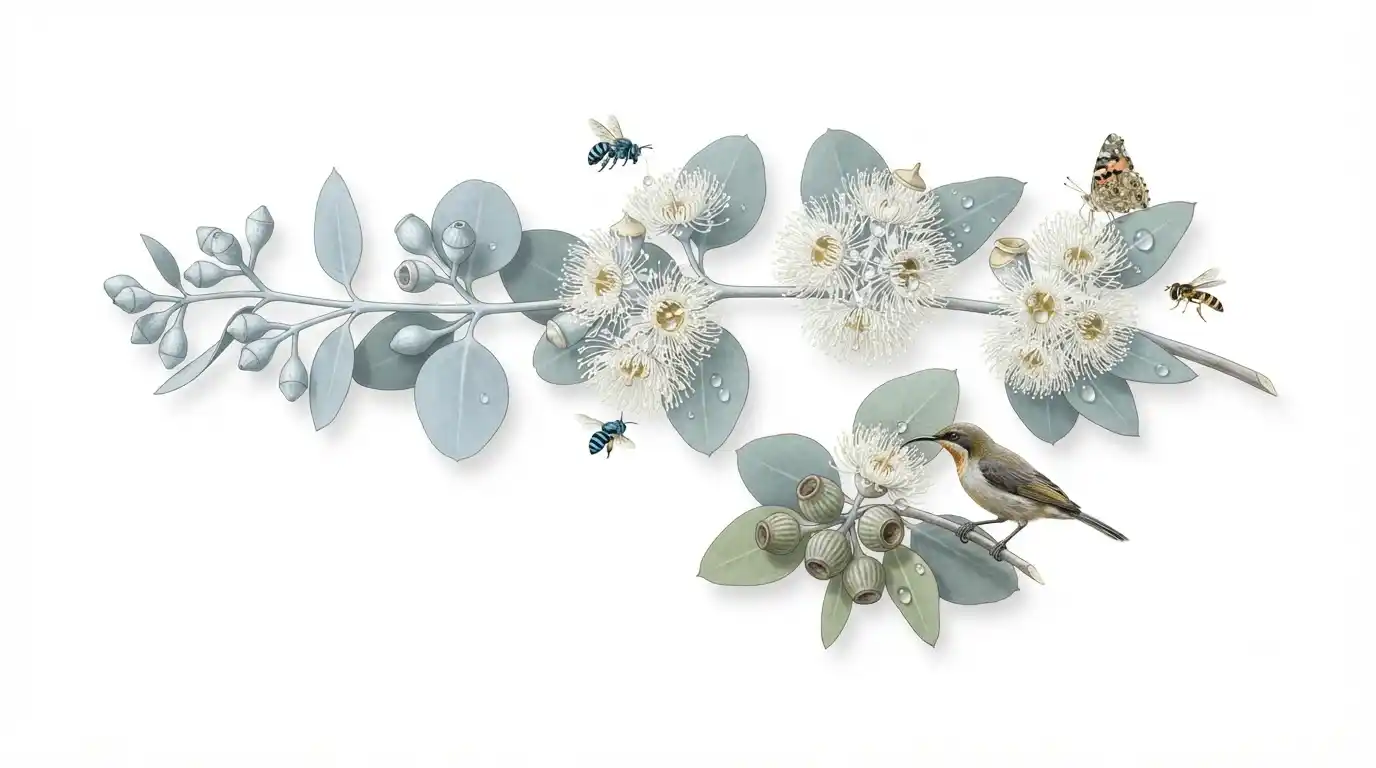
Does Baby Blue Eucalyptus have flowers?
Yes, Baby Blue Eucalyptus does produce flowers, but flowering usually occurs only after the tree reaches maturity. Many young plants never bloom because they are regularly pruned to maintain their attractive juvenile foliage.
This is one of the most common questions among gardeners purchasing a Baby Blue Eucalyptus tree. While the plant is fully capable of flowering, its flowering habit differs significantly depending on how it is grown.
Trees grown naturally with minimal pruning eventually develop mature branches capable of producing flower buds. In contrast, heavily pruned plants continually replace mature growth with juvenile shoots, reducing or delaying flowering.
Gardeners growing Baby Blue primarily for cut foliage often prune several times each year. Although this keeps the leaves compact and vibrant, it usually sacrifices flower production.
Greenery Inside recommends deciding whether your priority is decorative foliage or seasonal flowers, as pruning practices strongly influence which characteristic the tree displays most prominently.
What do Baby Blue Eucalyptus flowers look like?
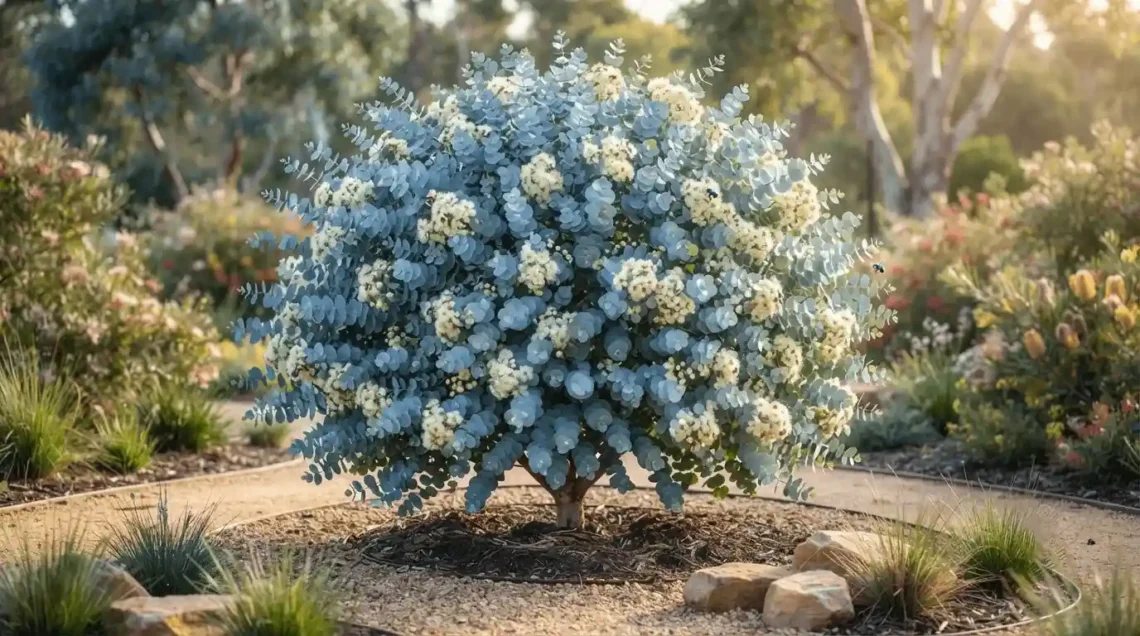
Baby Blue Eucalyptus flowers are small, creamy-white blossoms with the classic fluffy appearance associated with many eucalyptus species.
Unlike flowers with colourful petals, eucalyptus flowers consist mainly of numerous soft stamens that create their distinctive pom-pom or brush-like appearance.
Typical characteristics include:
- Creamy white to white flowers.
- Rounded fluffy clusters.
- Numerous long stamens.
- Small woody buds before opening.
- Nectar-rich blossoms.
These flowers are highly attractive to many beneficial pollinators, including:
- Native bees
- Honey bees
- Hoverflies
- Butterflies
- Nectar-feeding birds in suitable regions
After flowering, woody seed capsules, commonly called gum nuts, gradually develop if pollination is successful.
Although the flowers are attractive, they are usually considered a secondary ornamental feature. The striking silver foliage remains the primary reason most gardeners select this cultivar.
When do Baby Blue Eucalyptus flowers bloom?
Flowering time varies according to climate, local weather conditions, and the maturity of the tree. In many temperate regions, flowering commonly occurs from late spring into summer, although the exact season can differ across Australia and other growing regions.
Several factors influence blooming:
- Mature trees flower more reliably than young plants.
- Warm sunny conditions encourage flower development.
- Healthy, vigorous growth supports bud formation.
- Moderate pruning allows mature flowering branches to develop.
- Stable growing conditions reduce stress during bud production.
As of the 2026 growing season, many Australian growers continue recommending minimal pruning on mature specimen trees if flowering is desired, while maintaining regular pruning only on plants grown specifically for ornamental foliage production.
In our experience, Baby Blue Eucalyptus that receives uninterrupted growth for several years is noticeably more likely to bloom than plants clipped heavily every season.
Baby Blue Eucalyptus Flowers Meaning
Although eucalyptus is best known for its aromatic foliage, its flowers also carry symbolic meaning in floral design and horticultural traditions.
Baby Blue Eucalyptus flowers are commonly associated with:
- Renewal
- Healing
- Protection
- Inner strength
- Fresh beginnings
- Peace and resilience
These meanings have made eucalyptus stems popular additions to wedding bouquets, dried floral displays, and ceremonial arrangements. Even when flowers are absent, the silvery foliage symbolises calmness and longevity, making Baby Blue Eucalyptus a favourite among florists and event designers.
The combination of elegant foliage and occasional white blossoms creates a timeless appearance that complements both rustic and contemporary floral arrangements.
Plant Size and Growth Habit
How large does a full grown Baby Blue Eucalyptus tree become?
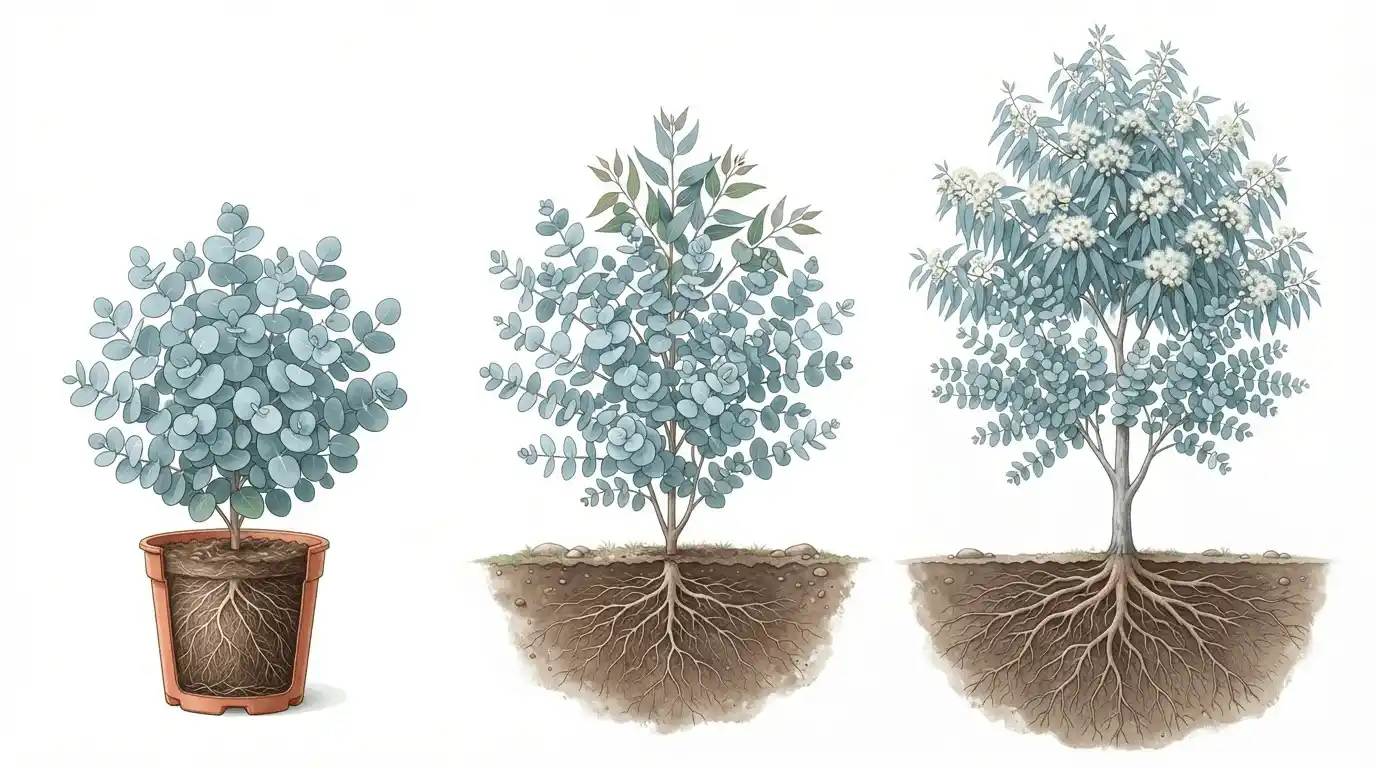
A full grown Baby Blue Eucalyptus tree is generally considered compact compared with many other eucalyptus species. However, its final size depends greatly on climate, soil conditions, pruning practices, and available root space. Gardeners with smaller landscapes may also like our guide to the Dwarf Baby Blue Eucalyptus Tree, which explains compact forms, mature size, and the best planting locations for limited spaces.
Under favourable garden conditions, mature trees commonly reach:
| Characteristic | Typical Size |
| Mature height | 4–10 metres |
| Mature width | 2–5 metres |
| Growth habit | Upright, rounded, moderately open |
| Evergreen | Yes |
Trees planted directly in the ground usually grow taller and broader than those cultivated in containers.
Container-grown specimens remain considerably smaller because restricted root development naturally limits overall growth. Regular pruning can also maintain a compact ornamental form suitable for smaller gardens.
While the tree naturally develops a graceful upright canopy over time, many gardeners maintain juvenile growth through annual pruning to preserve the attractive rounded leaves.
Growth rate
Baby Blue Eucalyptus is generally considered a fast-growing tree, particularly during its early years when planted in suitable conditions.
Most vigorous growth occurs during spring and summer when temperatures are warm and sunlight is abundant.
Growth speed depends on several environmental factors:
- Full sunlight promotes rapid development.
- Well-drained fertile soil encourages healthy root growth.
- Moderate watering during establishment supports faster growth.
- Mild climates produce longer growing seasons.
- Restricted roots slow overall development.
Expected Growth Under Different Conditions
| Growing Condition | Expected Growth |
| Garden soil | Faster growth |
| Large pots | Moderate growth |
| Frequent pruning | Compact foliage |
| Limited root space | Slower growth |
In our experience growing Baby Blue Eucalyptus, young trees often establish surprisingly quickly during their first few years, but maintaining balanced watering and avoiding excessive fertiliser produces stronger, more stable growth than encouraging rapid, soft shoots.
Care Guide for Baby Blue Eucalyptus
Light requirements
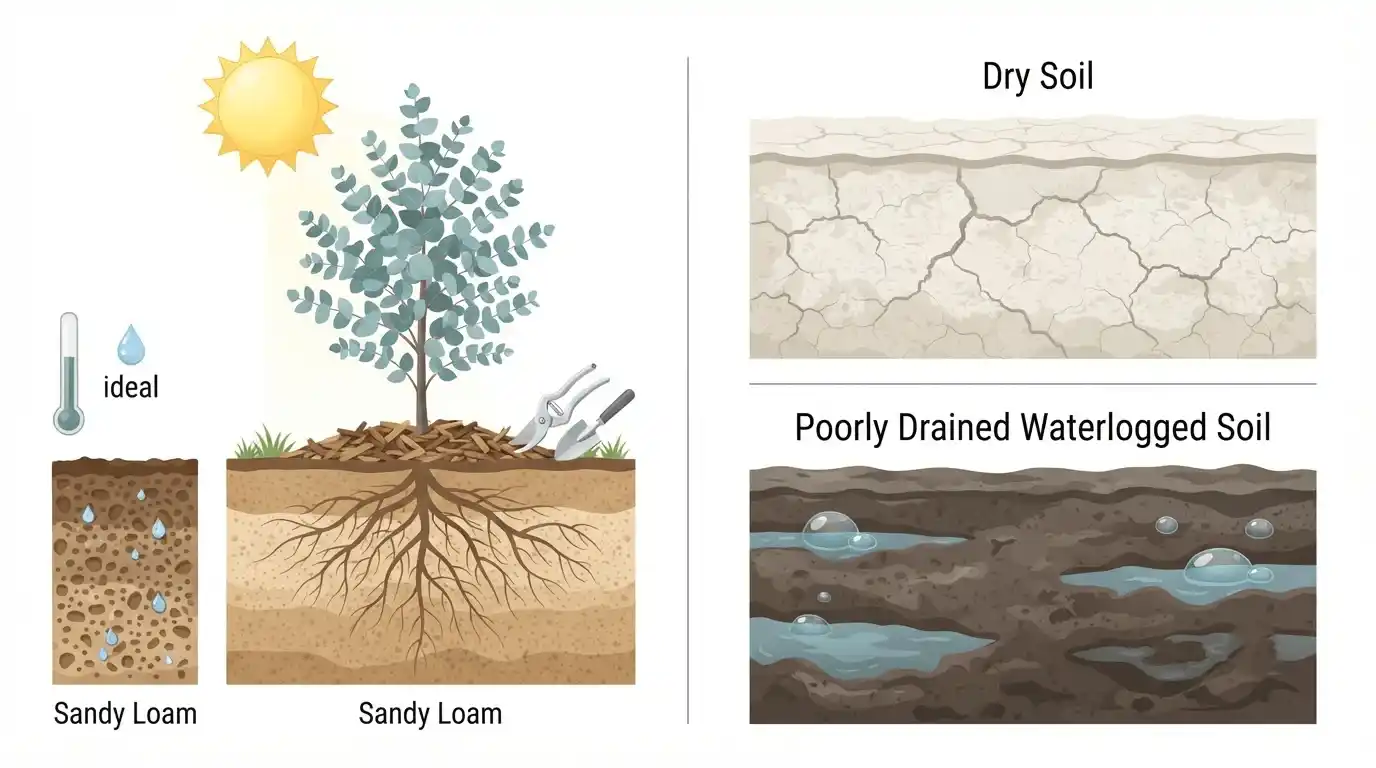
Baby Blue Eucalyptus performs best in full sun and requires abundant direct light to develop its dense silvery-blue foliage.
For optimal growth, provide:
- At least six hours of direct sunlight daily.
- Eight or more hours for maximum foliage colour and vigorous growth.
- An open position with good air circulation.
Plants grown in excessive shade often become leggy, produce duller foliage, and develop slower overall growth. Limited sunlight may also reduce flowering as the tree matures.
Well-lit positions encourage compact branching and healthier long-term development, particularly in cooler climates where sunlight intensity is lower.
Soil requirements
Healthy Baby Blue Eucalyptus depends on well-drained soil more than exceptionally fertile soil.
Suitable soil types include:
- Sandy loam
- Gravelly soil
- Well-drained clay improved with organic matter
- Free-draining native garden soils
Drainage is essential because eucalyptus roots are highly sensitive to prolonged waterlogging. Heavy, poorly drained soils increase the risk of root diseases and reduced plant vigour.
Greenery Inside recommends improving dense clay soils with coarse materials and organic matter before planting to enhance drainage while maintaining adequate moisture retention.
Watering needs
Young Baby Blue Eucalyptus plants require regular watering while their root systems become established.
A practical watering schedule includes:
- Water deeply once or twice weekly during establishment.
- Reduce watering after the first growing season.
- Water more frequently during prolonged drought or extreme heat.
- Allow the soil surface to dry slightly between waterings.
Once established, Baby Blue Eucalyptus becomes relatively drought tolerant and usually requires supplemental irrigation only during extended dry periods.
Avoid constantly wet soil, as excessive moisture is one of the most common causes of root problems.
Fertilising
Baby Blue Eucalyptus generally requires only modest fertilisation.
Apply a balanced, slow-release fertiliser in spring if soil fertility is low or growth appears weak.
Avoid:
- Excessive nitrogen.
- Frequent feeding.
- Heavy applications of rich manure.
Too much fertiliser often produces rapid, soft growth that is more susceptible to wind damage and may reduce flowering by encouraging excessive leafy growth.
Pruning
Pruning plays a major role in shaping Baby Blue Eucalyptus and maintaining its ornamental appeal.
Regular pruning helps:
- Encourage attractive juvenile foliage.
- Maintain compact size.
- Improve branching.
- Produce high-quality stems for floral arrangements.
- Remove damaged or crossing branches.
However, there is an important trade-off.
Trees pruned heavily each year are much less likely to produce flowers because flowering typically develops on mature growth.
If your goal is to enjoy Baby Blue Eucalyptus flowers, reduce pruning frequency and allow portions of the tree to mature naturally. Conversely, if your priority is decorative silver foliage, regular pruning remains the preferred management technique.
Can Baby Blue Eucalyptus Be Grown in Pots?
Growing Baby Blue Eucalyptus in pots
Yes, Baby Blue Eucalyptus can be grown successfully in pots, provided the container is large enough and the plant receives proper care. Container growing is a practical option for gardeners with limited space, patios, balconies, or rental properties where planting directly into the ground is not possible. For more advice on selecting containers, potting mixes, and long-term maintenance, read our complete guide to Growing Trees in Pots.
Because eucalyptus baby blue naturally develops an extensive root system, choosing an appropriately sized container is essential for long-term health.
For best results:
- Start with a container at least 40–50 cm wide for young plants.
- Move to a larger pot as the tree grows.
- Choose heavy containers such as terracotta or concrete to improve stability.
- Ensure multiple drainage holes are present.
- Raise the pot slightly on feet to allow excess water to drain freely.
Use a premium, free-draining potting mix designed for trees or native plants. Mixing coarse sand or fine gravel into the potting medium can further improve drainage, which is particularly beneficial in regions with frequent rainfall.
Container-grown Baby Blue Eucalyptus requires more frequent watering than garden-grown trees because potting mix dries out faster, especially during hot summer weather. However, the soil should never remain constantly wet.
A practical care routine includes:
- Water deeply when the top few centimetres of soil become dry.
- Apply a light layer of mulch without covering the trunk.
- Feed sparingly with a slow-release fertiliser in spring if needed.
- Rotate containers occasionally so all sides receive even sunlight.
Root management is another important consideration. Over time, roots can become crowded, reducing growth and water uptake. Every few years, either move the tree into a larger container or carefully prune the outer roots during repotting to maintain healthy development.
In our experience growing Baby Blue Eucalyptus in containers, plants remain healthier when they are repotted before becoming severely root-bound. Waiting too long often results in slower growth and increased water stress during summer.
Is Baby Blue Eucalyptus an indoor plant?
No, Baby Blue Eucalyptus is not considered a true indoor plant. Although young plants or freshly cut stems can be displayed indoors temporarily, the tree performs best when grown outside.
Baby Blue Eucalyptus requires:
- Full sunlight.
- Excellent air circulation.
- Seasonal temperature changes.
- Room for root development.
Most homes cannot consistently provide these growing conditions. Indoor environments often have insufficient light, dry air from heating or cooling systems, and limited space for healthy root growth.
If grown indoors permanently, plants commonly develop:
- Weak, elongated stems.
- Smaller leaves.
- Slower growth.
- Increased susceptibility to pests.
- Premature leaf drop.
However, container-grown plants can be moved indoors temporarily for decorative purposes or protected during unusually severe weather before returning outdoors.
Greenery Inside recommends treating Baby Blue Eucalyptus as an outdoor ornamental tree rather than a houseplant. It develops its best foliage colour, stronger branching, and healthier growth when exposed to natural sunlight throughout the year.
Growing Baby Blue Eucalyptus in Australia
Suitable Australian climates
Eucalyptus baby blue Australia is well suited to many parts of the country because it originates from the Australian species Eucalyptus pulverulenta.
The tree performs especially well in regions with:
- Warm summers.
- Cool to mild winters.
- Plenty of sunshine.
- Well-drained soils.
- Good air movement.
Once established, Baby Blue Eucalyptus tolerates both periods of drought and moderate frost. Young plants, however, are less resilient and benefit from additional protection during their first one or two winters.
Climate suitability includes:
| Climate Condition | Suitability |
| Temperate climates | Excellent |
| Mediterranean climates | Excellent |
| Dry inland regions | Good with irrigation during establishment |
| Coastal regions | Good if drainage is adequate |
| Severe tropical humidity | Moderate, with careful site selection |
Heat tolerance is generally excellent provided adequate moisture is available while plants establish. Mature trees cope well with extended warm periods, making them suitable for many drought-conscious Australian landscapes.
As of the 2026 growing season, horticulturists continue recommending deep, infrequent watering during prolonged heatwaves rather than frequent shallow irrigation, as this encourages stronger root development.
Regional growing considerations
Growing success varies slightly between Australian regions because rainfall, humidity, and seasonal temperatures differ.
Eucalyptus Baby Blue Perth
The warm Mediterranean climate around Perth suits Baby Blue Eucalyptus particularly well.
Benefits include:
- Long sunny summers.
- Low humidity.
- Excellent flowering potential on mature trees.
- Reduced fungal disease pressure.
Gardeners should provide supplemental watering while plants establish and during prolonged drought, especially in sandy soils that dry rapidly.
Eucalyptus Baby Blue Adelaide
Adelaide also offers favourable growing conditions thanks to its dry summers and mild winters.
Plants generally perform well when:
- Planted in full sun.
- Protected from prolonged winter waterlogging.
- Given occasional deep watering during extremely hot weather.
In cooler inland districts surrounding Adelaide, young trees may require frost protection during their first few winters until fully established.
Across Australia, selecting an open, sunny planting site with excellent drainage remains the single most important factor influencing long-term success.
Common Problems and How to Fix Them
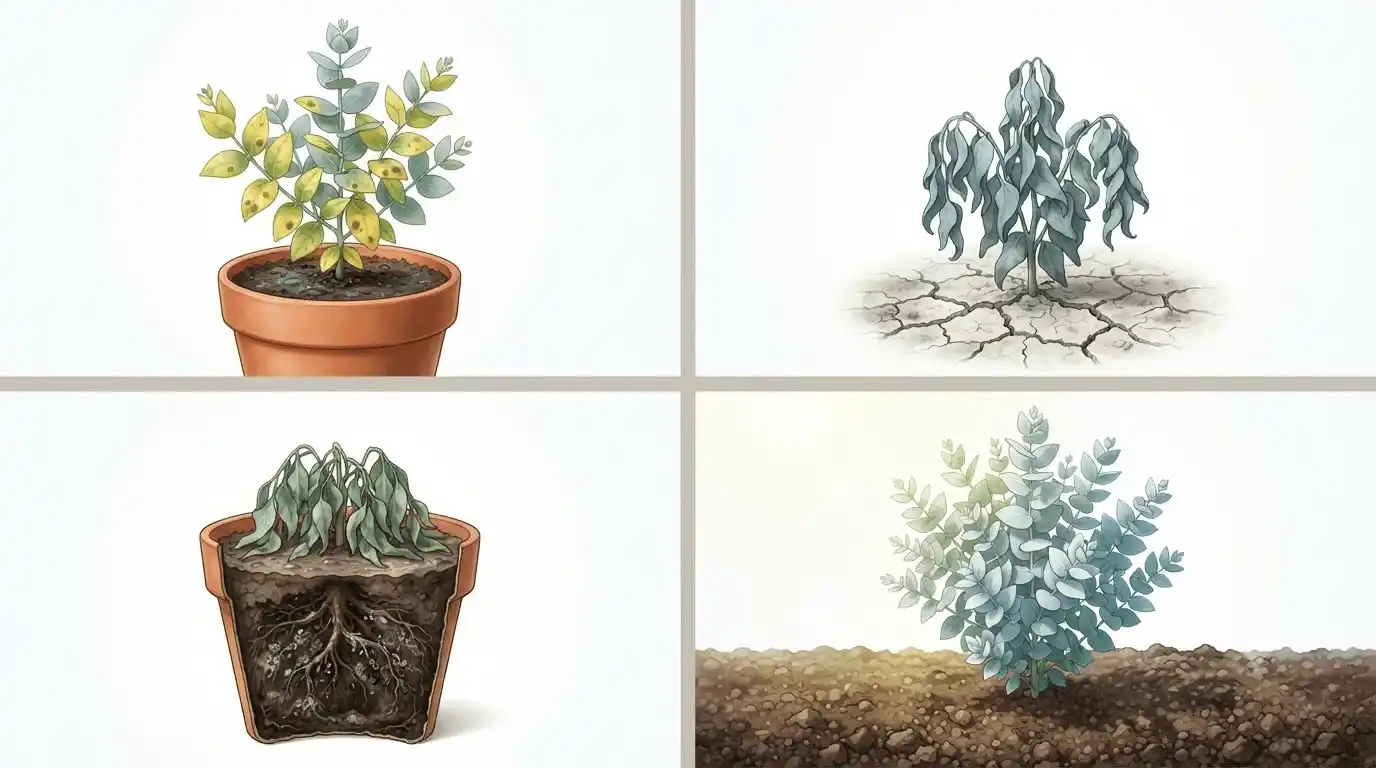
Why isn’t my Baby Blue Eucalyptus flowering?
Baby Blue Eucalyptus often fails to flower because the tree has not yet reached maturity or is pruned too frequently. While many gardeners expect blossoms every year, this cultivar is primarily maintained for its juvenile foliage, which naturally delays flowering.
The most common causes include:
Young plant
Juvenile trees focus their energy on establishing roots and vegetative growth rather than producing flowers.
Solution:
- Allow several years for natural maturity.
- Maintain consistent care.
- Avoid unnecessary stress.
Heavy pruning
Regular pruning removes mature branches where flower buds would normally develop.
Solution:
- Reduce pruning frequency.
- Leave some branches to mature naturally.
- Prune only to remove damaged or overcrowded growth if flowering is the goal.
Too much nitrogen
Excess nitrogen encourages vigorous leafy growth at the expense of flowers.
Solution:
- Avoid over-fertilising.
- Use balanced slow-release fertilisers only when needed.
- Do not apply large amounts of high-nitrogen lawn fertiliser nearby.
Insufficient sunlight
Flower production depends on adequate sunlight.
Solution:
- Plant in full sun.
- Remove competing vegetation if necessary.
- Avoid heavily shaded locations.
In our experience, mature Baby Blue Eucalyptus growing in uninterrupted full sun with only light pruning produces flowers much more consistently than trees clipped heavily each season.
Common growing issues
Although Baby Blue Eucalyptus is generally hardy, a few problems may occur if growing conditions are unsuitable.
| Problem | Likely Cause | Solution | Prevention |
| Yellow leaves | Overwatering, nutrient imbalance, poor drainage | Improve drainage and adjust watering | Water only when needed |
| Root rot | Waterlogged soil | Remove affected roots if possible and improve drainage | Plant in free-draining soil |
| Drought stress | Extended dry periods | Deeply water during prolonged drought | Mulch and monitor soil moisture |
| Poor growth | Shade, compacted soil, root restriction | Increase sunlight and improve soil | Choose a suitable planting site |
| Wind damage | Strong exposed sites | Stake young trees temporarily and prune damaged branches | Plant in sheltered positions during establishment |
Regular inspection helps identify problems before they become serious. Healthy trees with good air circulation and proper watering are naturally more resistant to pests and diseases than stressed plants.
Baby Blue Eucalyptus Compared with Other Popular Eucalyptus Varieties
Many eucalyptus species are grown in Australian gardens, but they differ considerably in size, foliage, flowering, and landscape use. Baby Blue Eucalyptus is particularly valued for its ornamental juvenile leaves and compact growth. If you’re comparing different compact gum trees, our Dwarf Eucalyptus Tree guide covers several small-growing eucalyptus varieties suitable for modern gardens.
| Feature | Baby Blue Eucalyptus | Other Common Eucalyptus |
| Foliage | Round blue-grey juvenile leaves | Variable shapes and colours |
| Flowers | Small white fluffy blossoms | Colour and size vary by species |
| Size | Compact to medium | Often much larger |
| Pruning response | Excellent | Species dependent |
| Container suitability | Good | Variable |
Compared with larger gum trees, Baby Blue Eucalyptus is easier to maintain in suburban gardens. It tolerates regular pruning, adapts well to container culture, and provides year-round ornamental foliage even when flowers are absent.
Other eucalyptus species may produce more spectacular floral displays, but many eventually outgrow small residential landscapes. Baby Blue offers a balance between manageable size and decorative appeal, making it one of the most versatile ornamental eucalyptus cultivars available.
What Is Baby Blue Eucalyptus Good For?
Baby Blue Eucalyptus is valued for its ornamental foliage, landscape versatility, and usefulness as cut greenery. Although its flowers attract pollinators, most gardeners grow it primarily for its distinctive silver-blue leaves.
Common uses include:
- Feature tree in modern gardens.
- Ornamental landscaping.
- Cut foliage for fresh and dried floral arrangements.
- Wedding bouquets and wreaths.
- Informal screening and privacy planting.
- Wildlife-friendly gardens.
- Pollinator support when mature trees flower.
- Drought-tolerant landscapes.
- Native-inspired garden designs.
Its evergreen foliage provides colour throughout the year and pairs well with flowering shrubs, grasses, and other Australian native plants.
Beginner Tips for Growing Healthy Baby Blue Eucalyptus
Growing Baby Blue Eucalyptus successfully is straightforward when its basic requirements are met. Establishing healthy habits early helps prevent many common problems later.
Follow these practical tips:
- Choose a location that receives at least six to eight hours of direct sunlight each day.
- Plant only in well-drained soil to reduce the risk of root rot.
- Water deeply while young, then reduce watering as the tree becomes established.
- Avoid overwatering, especially during cooler months.
- Prune thoughtfully depending on whether you prefer dense juvenile foliage or seasonal flowers.
- Leave enough space for future growth, even if the tree is pruned regularly.
- Avoid excessive fertiliser, particularly products high in nitrogen.
- Protect newly planted trees from severe frost during their first winters.
- Inspect foliage regularly for signs of stress or drainage issues.
- Mulch around the base while keeping mulch away from the trunk to minimise moisture-related diseases.
Greenery Inside recommends observing your tree throughout the seasons rather than following a rigid schedule. Weather, soil type, and local climate all influence watering frequency, growth rate, and flowering potential.
Conclusion
Baby Blue Eucalyptus flowers add an extra layer of beauty to an already striking ornamental tree, but they are not the plant’s main attraction. Eucalyptus pulverulenta ‘Baby Blue’ is primarily valued for its distinctive round silver-blue juvenile foliage, compact growth habit, and versatility in gardens, containers, and floral arrangements. Mature trees that receive plenty of sunlight and only light pruning can reward gardeners with small, creamy-white, nectar-rich flowers that attract beneficial pollinators.
Whether you grow Baby Blue Eucalyptus as a feature tree, for cut foliage, or as part of a drought-tolerant landscape, providing full sun, well-drained soil, moderate watering during establishment, and sensible pruning will encourage healthy long-term growth. By understanding how maturity and pruning influence flowering, gardeners can decide whether to prioritise lush juvenile foliage or allow the tree to develop its attractive seasonal blossoms.
Frequently Asked Questions
Does Baby Blue Eucalyptus have flowers?
Yes. Baby Blue Eucalyptus produces small, creamy-white fluffy flowers once it reaches maturity. However, many plants grown for ornamental foliage are pruned regularly, which delays or prevents flowering because flower buds develop on mature branches.
What is Baby Blue Eucalyptus good for?
Baby Blue Eucalyptus is widely used for:
- Ornamental landscaping
- Feature planting
- Fresh and dried floral arrangements
- Wedding bouquets and wreaths
- Informal screening
- Wildlife-friendly gardens
- Pollinator support when flowering
- Drought-tolerant landscapes
Its attractive silver-blue foliage makes it one of the most popular eucalyptus cultivars for decorative use.
Is Baby Blue Eucalyptus full grown?
A full grown Baby Blue Eucalyptus tree typically reaches 4–10 metres (13–33 feet) in height and 2–5 metres (6.5–16 feet) in width when planted in the ground. Plants grown in containers generally remain much smaller because restricted root space naturally limits their size.
Is Baby Blue Eucalyptus an indoor plant?
No. Baby Blue Eucalyptus is an outdoor tree that requires full sun, excellent air circulation, and room for root development. While potted plants or cut stems can be displayed indoors temporarily, they are not suitable for permanent indoor growing.
How long does it take for Baby Blue Eucalyptus to flower?
Most Baby Blue Eucalyptus trees require several years to reach flowering maturity. The exact timing depends on climate, growing conditions, and pruning practices. Trees that are allowed to grow naturally with minimal pruning generally flower earlier than those pruned regularly for juvenile foliage.
Can Baby Blue Eucalyptus stay small with pruning?
Yes. Regular pruning helps maintain a compact, bushy shape and encourages the production of the attractive juvenile leaves for which the cultivar is known. Keep in mind that heavy or frequent pruning often reduces flowering because it removes mature flowering wood.
Is Baby Blue Eucalyptus drought tolerant?
Yes. Once established, Baby Blue Eucalyptus is considered drought tolerant and performs well in water-wise gardens. Young plants should be watered regularly while developing their root systems, but mature trees usually require supplemental watering only during extended dry periods.
Can Baby Blue Eucalyptus grow in containers permanently?
Yes, provided it is grown in a large, well-drained container and receives ongoing care. Permanent container-grown plants need:
- A spacious pot with excellent drainage
- High-quality free-draining potting mix
- More frequent watering than garden-grown trees
- Occasional repotting or root pruning
- Full sun for healthy growth
Although container specimens remain smaller than those planted in the ground, they can thrive for many years with proper maintenance.