Introduction
Pratia purpurascens, now widely classified as Lobelia purpurascens, is a low-growing Australian native ground cover valued for its creeping habit and delicate blue to mauve flowers. It is commonly planted in shaded gardens, damp landscapes, and naturalistic settings where it forms an attractive living carpet. Older gardening references may also list historical botanical names, which can confuse buyers. It is sometimes associated with white root (whiteroot) and trailing pratia, making correct identification important for gardeners choosing native ground covers.
Quick Summary
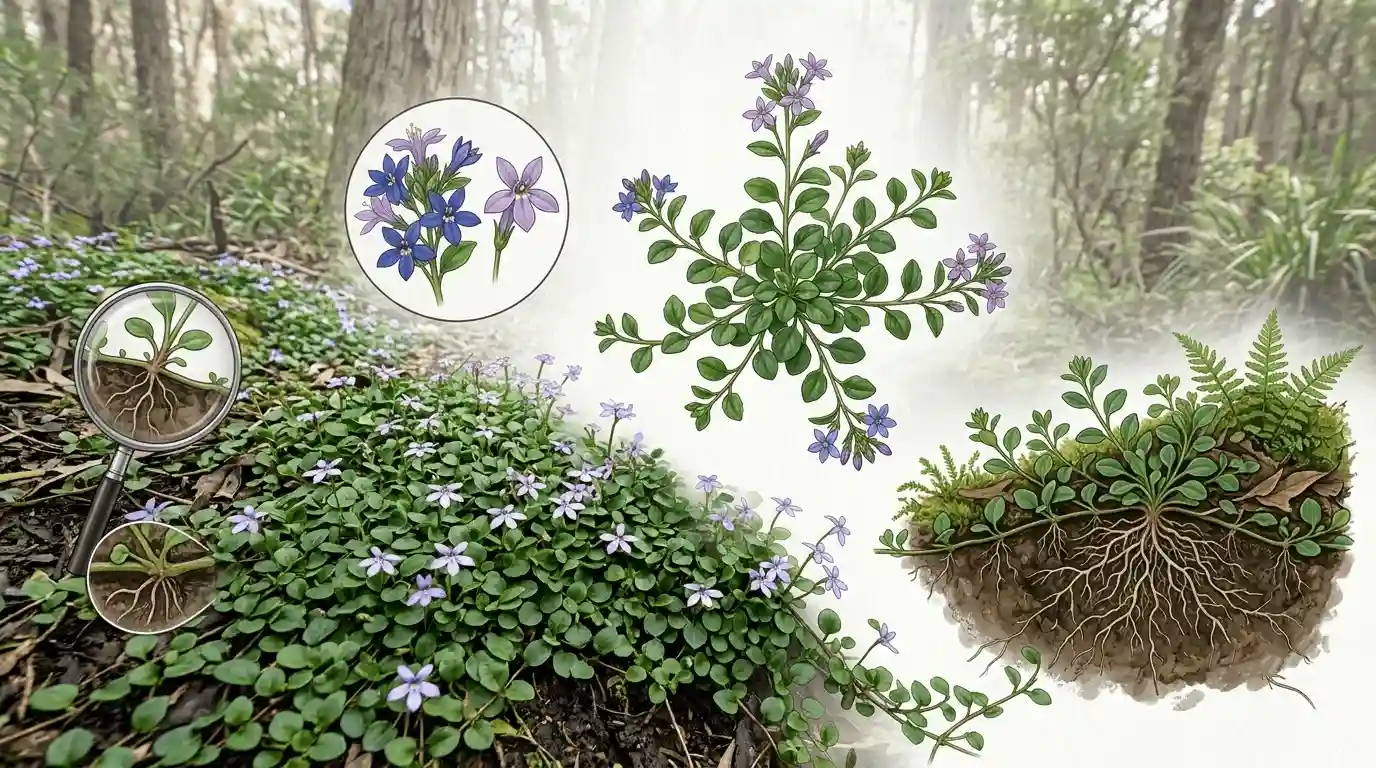
- Pratia purpurascens is now commonly classified as Lobelia purpurascens.
- It spreads by creeping stems that root as they grow.
- It thrives in moist, partly shaded, well-drained soil.
- It is often confused with related native lobelias and pratia species.
What Is Pratia purpurascens?
Pratia purpurascens (Lobelia purpurascens) belongs to the Campanulaceae family and is an Australian native creeping perennial. It naturally grows across moist woodland habitats, where it stabilises soil and provides ground-level vegetation. Although many gardeners still use the name pratia, botanical authorities now recognise it as Lobelia purpurascens. The common names white root and whiteroot may also appear in older references.
Botanical Classification and Name Changes
Why Is Pratia purpurascens Also Called Lobelia purpurascens?
Modern botanical research transferred many former Pratia species into the Lobelia genus after genetic studies showed close relationships. As a result, nurseries may sell the same plant under either scientific name.
Related Species and Close Relatives
Related Australian species include Pratia pedunculata, which is often confused with Pratia purpurascens because of its similar creeping habit and delicate flowers. For a detailed comparison, see our guide to Pratia pedunculata.
These plants share similar flowers or growth habits but differ in leaf shape, flower size, and preferred habitats.
How to Identify Pratia purpurascens
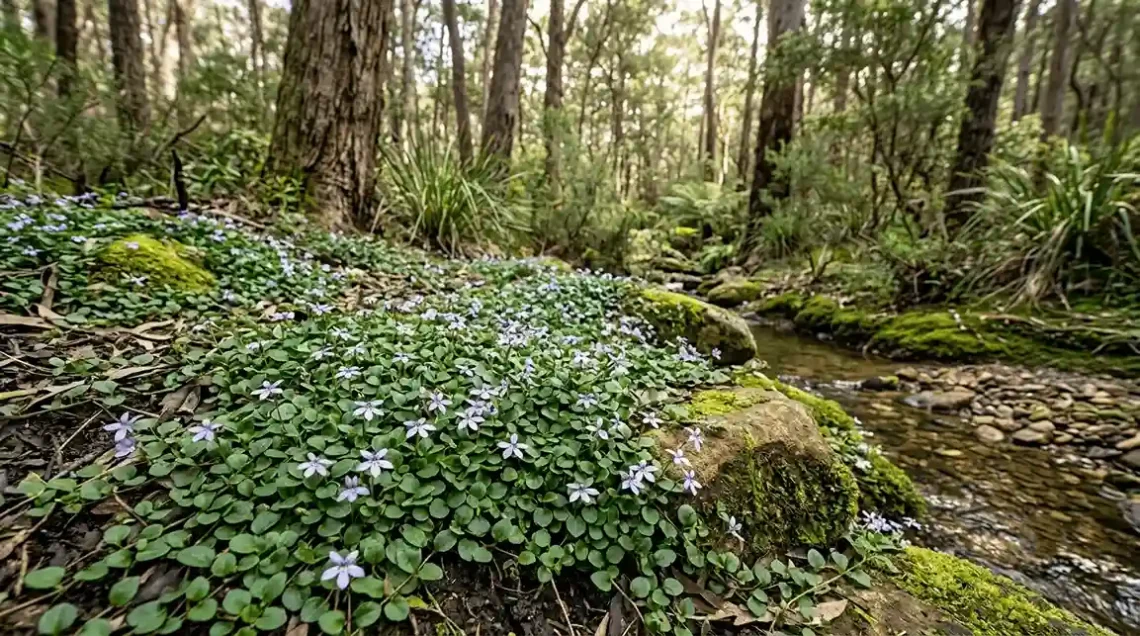
Pratia purpurascens is recognised by creeping stems that root at the nodes, rounded green leaves, and small blue to violet flowers.
Flowers
The star-like flowers bloom mainly from spring through summer. They attract native bees and other beneficial pollinators.
Leaves and Growth Habit
Small rounded leaves form a dense mat while creeping runners gradually spread across moist soil.
| Feature | Pratia purpurascens |
| Mature height | 5–10 cm |
| Spread | 50 cm to 1 m+ |
| Flower colour | Blue to mauve |
| Leaf type | Small rounded leaves |
| Growth habit | Creeping ground cover |
| Native habitat | Moist woodland |
Natural Habitat and Where It Grows
This species naturally occurs in moist woodlands, creek banks, forest edges, damp grasslands, and coastal regions of Australia. It is well adapted to filtered light, reliable moisture, and organically rich soils.
Plant Size and Growth Habit
Plants usually reach 5–10 cm tall while spreading over one metre under ideal conditions. Growth is denser in moist, shaded locations and slows during dry periods.
Growth Rate
Growth is moderate once established. Greenery Inside recommends keeping young plants consistently moist during their first growing season, as this greatly improves establishment. Growth accelerates in spring and slows during hot, dry weather.
Care Guide

Light Requirements
It grows well in part shade and light shade. Full sun is suitable only in cooler climates with adequate moisture. If you’re designing a shaded native landscape, explore our guide to Native Plants That Grow in Shade for more Australian species that thrive in similar growing conditions.
Soil Requirements
Provide moist, well-drained soil enriched with compost or organic matter. Avoid compacted clay that remains waterlogged.
Watering
Maintain consistent soil moisture, especially during establishment. Although moisture-loving, prolonged waterlogging can damage roots.
Fertilising
Minimal feeding is required. A yearly application of compost is usually sufficient, while excessive fertiliser encourages leafy growth at the expense of flowers.
Pruning and Maintenance
Trim damaged growth after flowering and divide spreading mats when they become crowded. In our experience growing Australian ground covers, occasional trimming keeps the plant dense and healthy.
Best Landscape Uses
Pratia purpurascens is ideal for:
- Native gardens
- Woodland gardens
- Cottage gardens
- Moist borders
- Rock gardens
- Around ponds
- Between stepping stones
- Under trees
Its creeping habit makes it an attractive pratia ground cover and trailing pratia for naturalistic landscapes.
Comparison with Similar Ground Covers
Gardeners looking for alternative Australian ground covers may also compare Dichondra repens Shade, another low-growing species commonly used beneath trees and in shaded gardens.
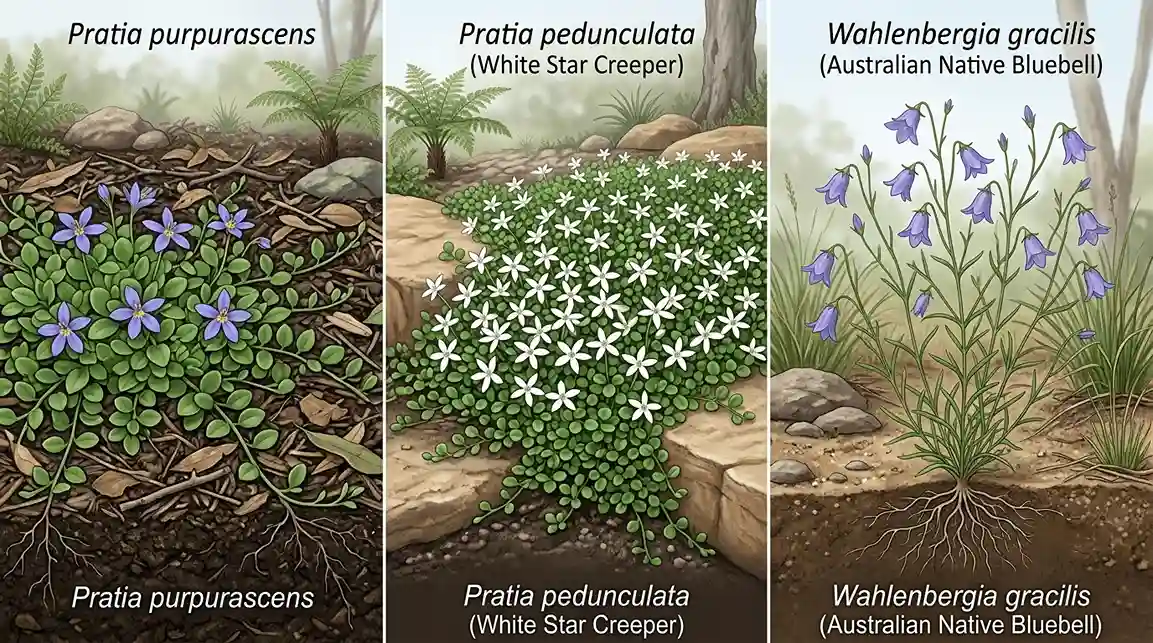
Pratia purpurascens vs Pratia pedunculata
- pedunculata generally has slightly different flowers and prefers consistently moist conditions, while P. purpurascens often forms denser mats.
Pratia purpurascens vs White Star Creeper
Pratia white star creeper and white star creeper usually produce white flowers, whereas P. purpurascens bears blue to mauve blooms.
Pratia purpurascens vs Australian Native Bluebells
Australian native bluebells (Wahlenbergia gracilis) grow more upright and display bell-shaped flowers rather than creeping mats.
| Plant | Flower | Height | Best Use |
| Pratia purpurascens | Blue | 5–10 cm | Ground cover |
| White Star Creeper | White | 5–10 cm | Lawn substitute |
| Wahlenbergia gracilis | Blue bells | 20–40 cm | Wildflower gardens |
Common Growing Problems and Solutions
Poor Flowering
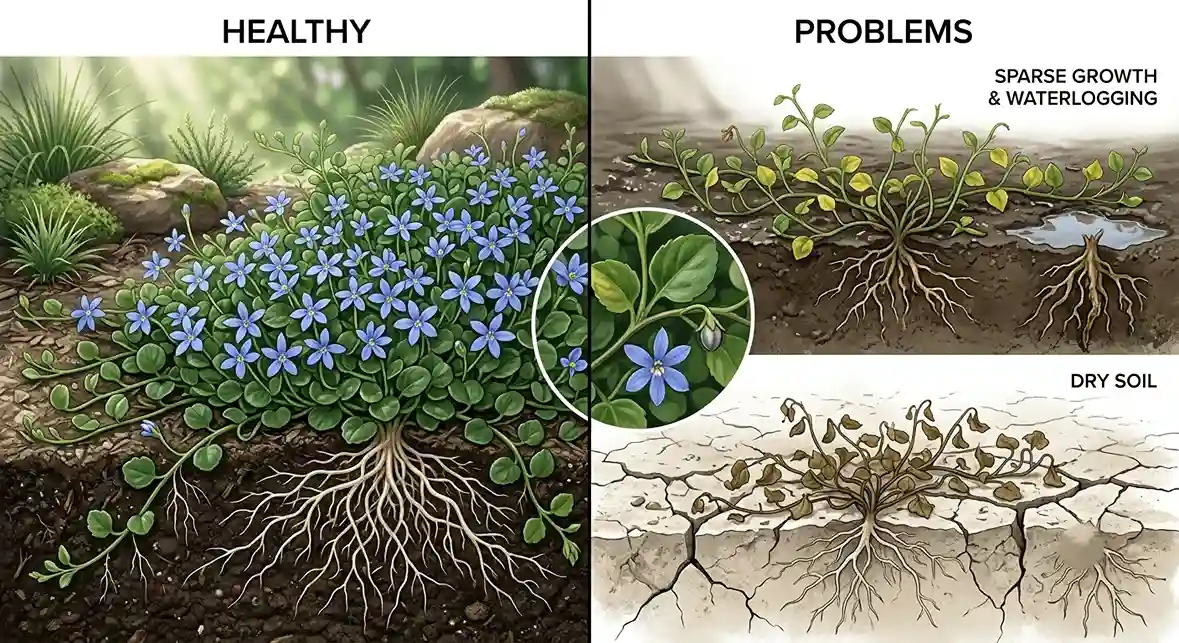
Usually caused by excessive shade, overfeeding, or inconsistent watering.
Sparse Growth
Often results from dry soil, root competition, or insufficient establishment time.
Rot and Moisture Problems
Poor drainage encourages root diseases. Plant in free-draining soil while maintaining even moisture.
Managing Excessive Spread
Contain runners with edging or divide clumps every few years.
Common Beginner Mistakes
Common mistakes include:
- Planting into dry soil
- Using permanently waterlogged sites
- Confusing similar native species
- Expecting instant coverage
- Neglecting watering during establishment
As of 2026, Australian native plant growers continue to recommend steady moisture during the first season for reliable establishment.
Frequently Confused Australian Native Plants
Lobelia purpurascens, Lobelia pedunculata, Lobelia anceps, Lobelia alata, Wahlenbergia gracilis, and Australian bluebells all have blue flowers, but they differ in flower shape, leaf form, and growth habit. Checking both foliage and growth pattern is usually the easiest way to identify them correctly.
Conclusion
Pratia purpurascens is a versatile Australian native ground cover valued for its creeping growth, attractive flowers, and adaptability to moist, partly shaded gardens. Understanding its updated botanical name, Lobelia purpurascens, along with its care requirements and key identification features, helps gardeners confidently choose and grow this attractive native species.
Frequently Asked Questions
Is Pratia purpurascens the same as Lobelia purpurascens?
Yes. Lobelia purpurascens is the currently accepted botanical name.
How fast does Pratia purpurascens spread?
It spreads at a moderate rate through creeping stems that root as they grow.
Does Pratia purpurascens grow in full shade?
It tolerates shade well but flowers best with filtered light or part shade.
Is Pratia purpurascens suitable as a lawn substitute?
It can be used as a low-growing ground cover in lightly trafficked, moist areas but is not a heavy-use lawn replacement.
What is the difference between Pratia purpurascens and Pratia pedunculata?
They differ slightly in flower characteristics, leaf shape, and habitat preferences despite their similar appearance.
Is Pratia purpurascens an Australian native plant?
Yes. It naturally occurs across several Australian habitats.
Does Pratia purpurascens attract pollinators?
Yes. Its flowers attract native bees and other beneficial pollinating insects.