According to Greenery Inside, African mask plants (Alocasia x amazonica) need bright, indirect light, temperatures between 65-80°F, and humidity above 60%. Water only when the top 1-2 inches of soil dry out, using well-draining soil mixed with perlite or orchid bark. Avoid direct sun, which scorches leaves, and never let temperatures drop below 60°F.
The plant’s tissue contains calcium oxalate crystals throughout, making it toxic to pets and humans if chewed. Many owners mistake seasonal dormancy, when the plant sheds several leaves and growth pauses over winter, for a dying plant, though it typically resprouts once warmth and light increase. The common name “African mask plant” is also applied loosely across a few distinct Alocasia species and hybrids sold under nearly identical labels, so care needs can vary slightly by which one you actually own.
If you’re building a thriving indoor garden, our Guide to House Plants is an excellent resource for choosing and caring for popular houseplants alongside Alocasia.
Quick Summary
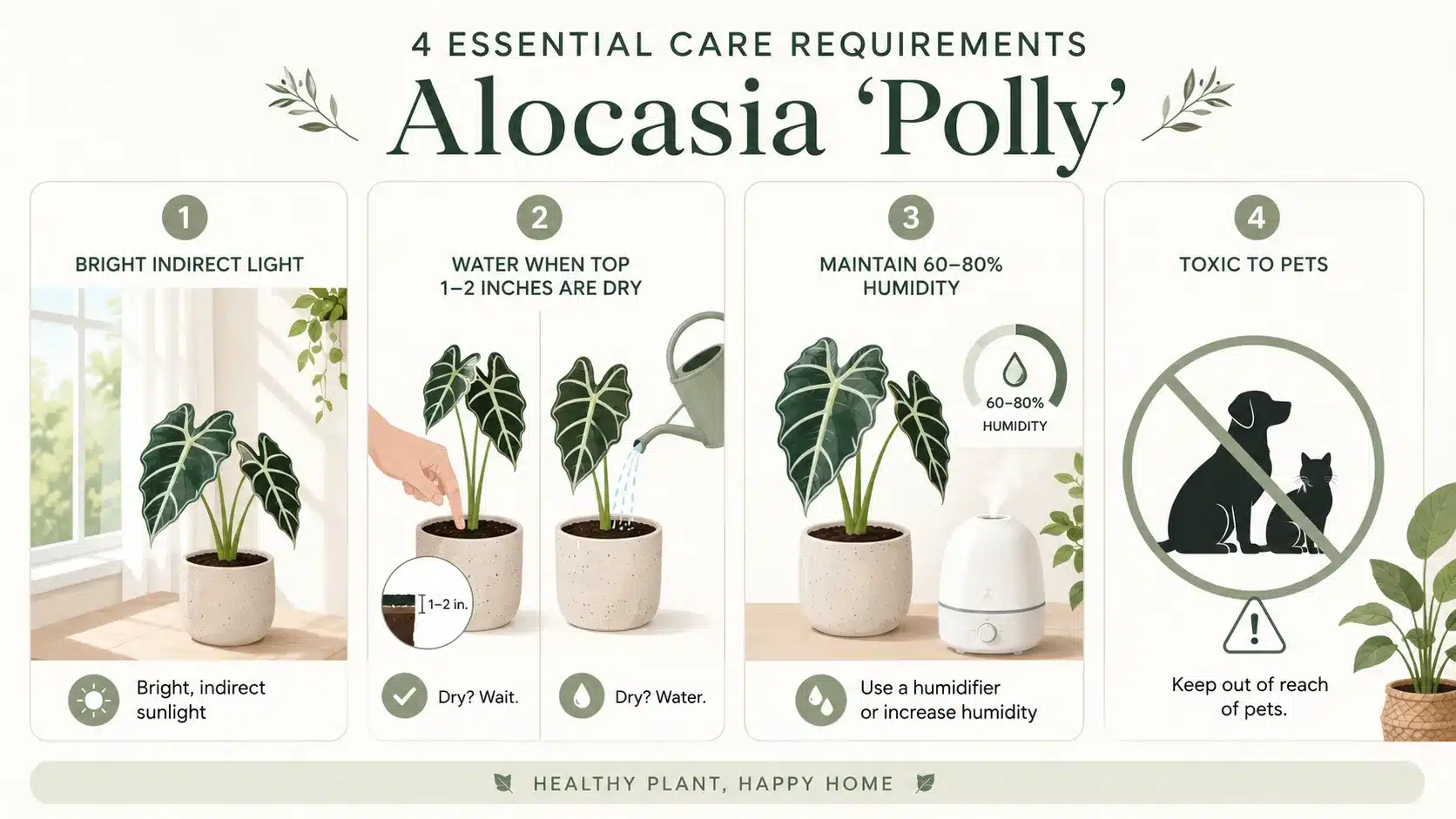
- Light: Bright, indirect light is best; avoid harsh afternoon sun.
- Water: Water when the top 1–2 inches of soil become slightly dry.
- Humidity: Maintain 60–80% humidity for healthy foliage.
- Safety: Toxic to pets and humans if ingested due to calcium oxalate crystals.
What Is an African Mask Plant?
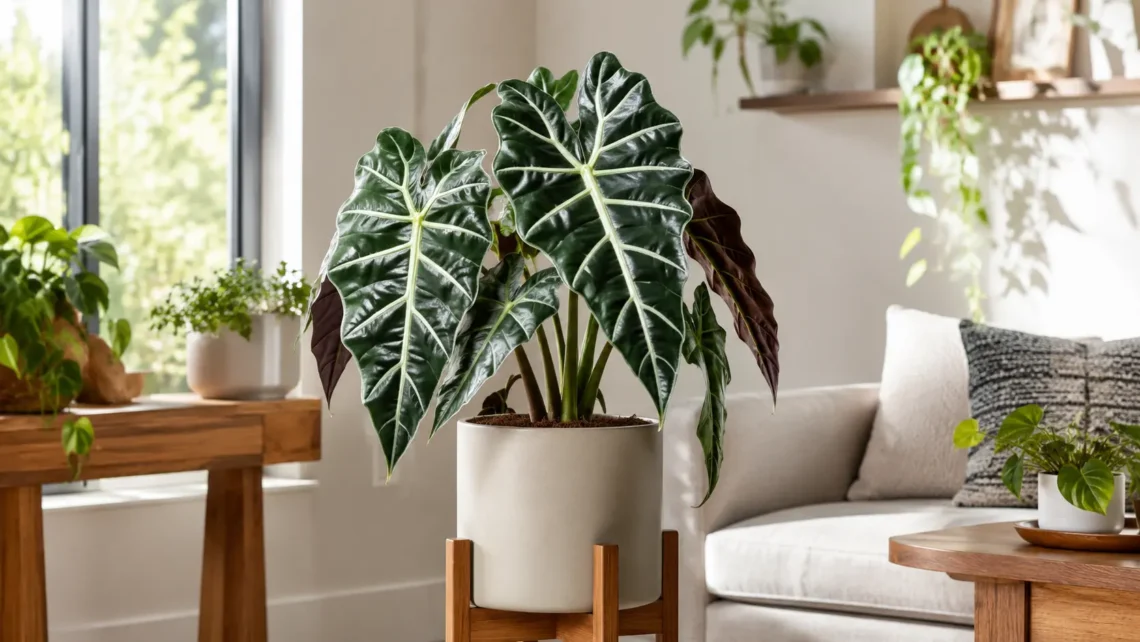
The African mask plant is a tropical ornamental hybrid valued for its glossy, arrow-shaped leaves with contrasting white or silver veins. Although commonly called the African mask plant, it is actually a cultivated hybrid developed from Asian Alocasia species rather than a plant native to Africa. The African mask plant belongs to the Alocasia genus, a group of tropical plants known for their striking ornamental foliage.
If you enjoy bold tropical foliage, you may also like our Dwarf Xanadu Care Guide, another popular aroid grown for its dramatic leaves.
Its compact growth habit and dramatic foliage make it a favorite indoor houseplant. In our experience growing Alocasias, maintaining stable humidity and avoiding sudden environmental changes helps preserve the plant’s vibrant leaf color and overall health.
Alocasia Polly vs. African Mask — Are They the Same?
Yes. The terms are often used interchangeably, but there is a slight botanical distinction.
- African Mask Plant is the common name.
- Alocasia × amazonica refers to the hybrid species.
- Alocasia ‘Polly’ is a compact cultivar of Alocasia × amazonica that is widely sold as an African mask plant.
For most indoor gardeners, Alocasia Polly and African mask plant refer to the same popular houseplant.
Alocasia Amazonica vs. Polly vs. Ebony
These cultivars share similar care requirements but differ in appearance.
| Cultivar | Leaf Shape | Mature Size | Distinguishing Trait |
| Alocasia × amazonica | Large arrow-shaped | Medium | Bold white veins |
| Alocasia ‘Polly’ | Compact arrow-shaped | Small to medium | Compact growth for indoor spaces |
| Alocasia ‘Ebony’ | Darker elongated leaves | Medium | Nearly black stems and darker foliage |
African Mask Plant Light Requirements
African mask plants grow best in bright, indirect light. A location near an east-facing window or several feet away from a south-facing window usually provides ideal conditions.
Too much direct sunlight can scorch the delicate leaves, causing brown patches and fading. Too little light slows growth, reduces leaf size, and may produce stretched or weak stems.
Greenery Inside recommends rotating the pot every few weeks so all sides receive even light, helping maintain balanced growth.
How to Water an African Mask Plant
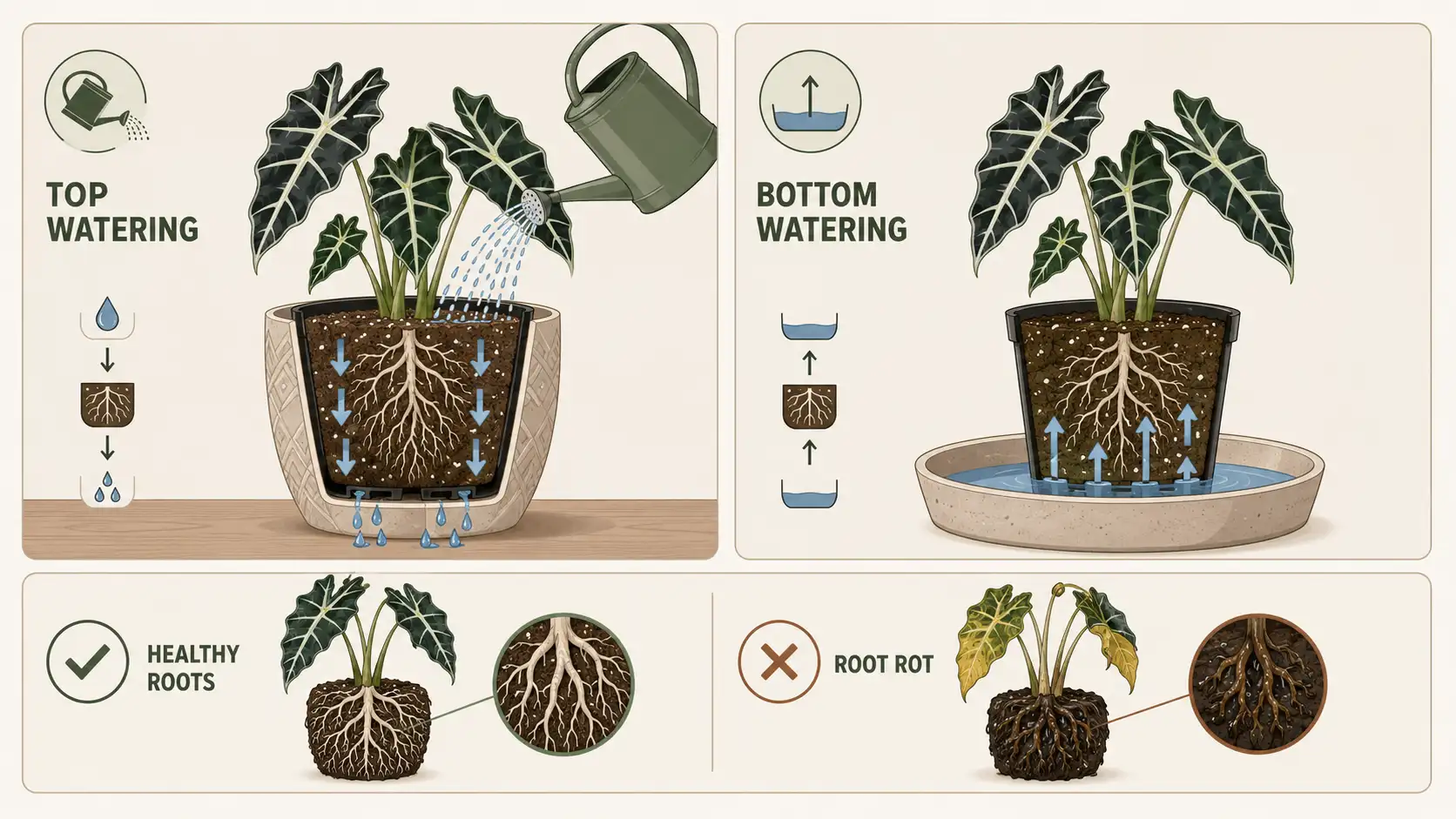
African mask plants prefer evenly moist soil but dislike sitting in water. Water thoroughly whenever the top 1–2 inches (2.5–5 cm) of soil feel dry.
During spring and summer, watering is usually needed every 7–10 days, while winter watering should be reduced as growth slows.
Top Watering vs. Bottom Watering
Both methods work when used correctly.
Top Watering
- Flushes accumulated salts from the soil.
- Ensures the entire root ball becomes moist.
- Best for routine watering.
Bottom Watering
- Encourages deeper root growth.
- Useful for very dry potting mixes.
- Allow the pot to absorb water for about 20 minutes before draining excess moisture.
Signs of Overwatering
An overwatered Alocasia typically shows signs of root stress.
Common symptoms include:
- Yellowing leaves
- Soft or mushy stems
- Drooping foliage despite wet soil
- Black or rotten roots
- Sour or rotten smell from the potting mix
If these symptoms appear, reduce watering, inspect the roots, and repot into fresh, well-draining soil if root rot has developed.
Greenery Inside has found that allowing the surface soil to dry slightly between waterings greatly reduces the risk of root problems while keeping foliage healthy.
Humidity, Temperature & Soil Preferences
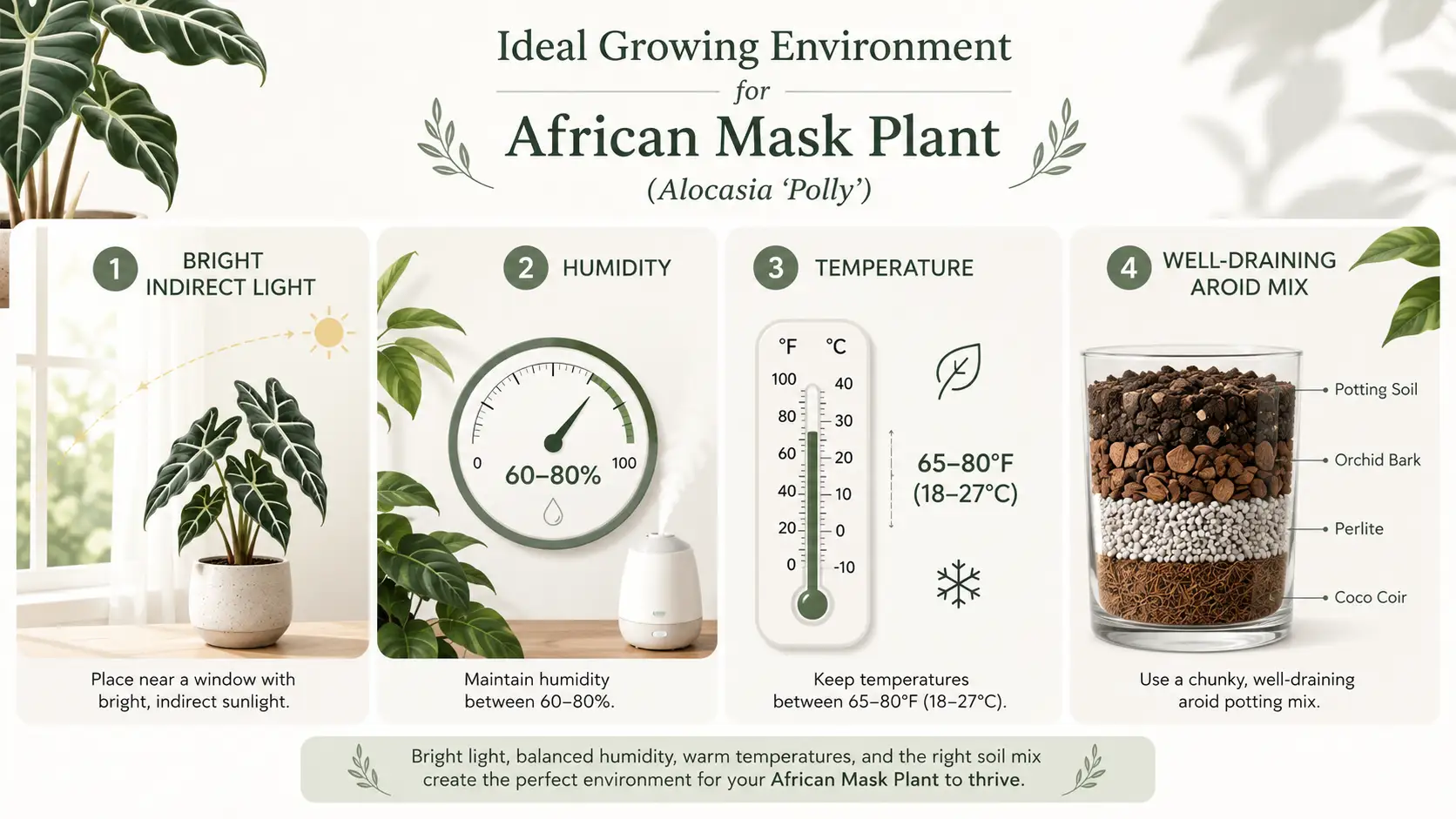
African mask plants thrive in conditions that mimic tropical forests. Aim for 60–80% humidity and temperatures between 65–80°F (18–27°C). Avoid cold drafts, air conditioners, and temperatures below 60°F (16°C), as they can trigger dormancy or leaf loss.
If your home has dry indoor air, learn how to increase humidity for plants naturally and with humidifiers to create the tropical environment African mask plants need.
Use a loose, well-draining aroid mix that retains moisture without becoming waterlogged.
A good mix includes:
- High-quality potting soil
- Orchid bark
- Perlite or pumice
- Coco coir or peat moss
Are Coffee Grounds Good for Alocasia?
Not usually. While coffee grounds contain nitrogen, fresh grounds can compact the soil and increase acidity. Composting them first or using them sparingly is a better option. A balanced houseplant fertilizer provides nutrients more consistently.
Fertilizing and Feeding Schedule
Feed your African mask plant every 2–4 weeks during spring and summer using a balanced, water-soluble fertilizer diluted to half strength. Stop or reduce feeding during fall and winter when growth naturally slows.
Not sure which nutrients to use? Our guide explaining Plant Food vs Fertilizer: What’s the Real Difference? can help you choose the right feeding approach for your Alocasia.
As of 2026, many indoor growers recommend lighter, more frequent feeding rather than heavy fertilizer applications to avoid root burn.
Does an African Mask Plant Like to Be Root Bound?
Yes, African mask plants generally prefer being slightly root bound. A snug pot helps maintain the moisture balance they prefer.
Repot only when:
- Roots grow through drainage holes.
- Water drains too quickly.
- Growth slows despite proper care.
- The pot becomes overcrowded.
Choose a container only 1–2 inches larger than the current pot.
How Tall Does an African Mask Plant Grow?
Indoors, most African mask plants grow 1–2 feet (30–60 cm) tall and wide. Outdoors in tropical climates, they may reach 2–3 feet (60–90 cm).
Plant size depends on:
- Available light
- Pot size
- Humidity
- Nutrient availability
- Overall growing conditions
Healthy plants typically produce larger, more dramatic leaves each growing season.
African Mask Plant Growth Rate
African mask plants are moderate growers. They produce most new leaves during spring and summer and often slow significantly during winter dormancy.
Growth is fastest when the plant receives:
- Bright indirect light
- Warm temperatures
- High humidity
- Consistent watering
- Regular fertilization
Dormancy is normal and should not be mistaken for plant decline.
Does an African Mask Plant Flower?
Yes, African mask plants can flower, although indoor blooming is uncommon. Their flowers consist of a pale spathe surrounding a central spadix, which is typical of members of the Araceae family.
The blooms are small and generally less attractive than the foliage. Many growers remove flowers so the plant can focus its energy on producing healthy leaves.
Common African Mask Plant Problems
Why Are Leaves Turning Yellow?
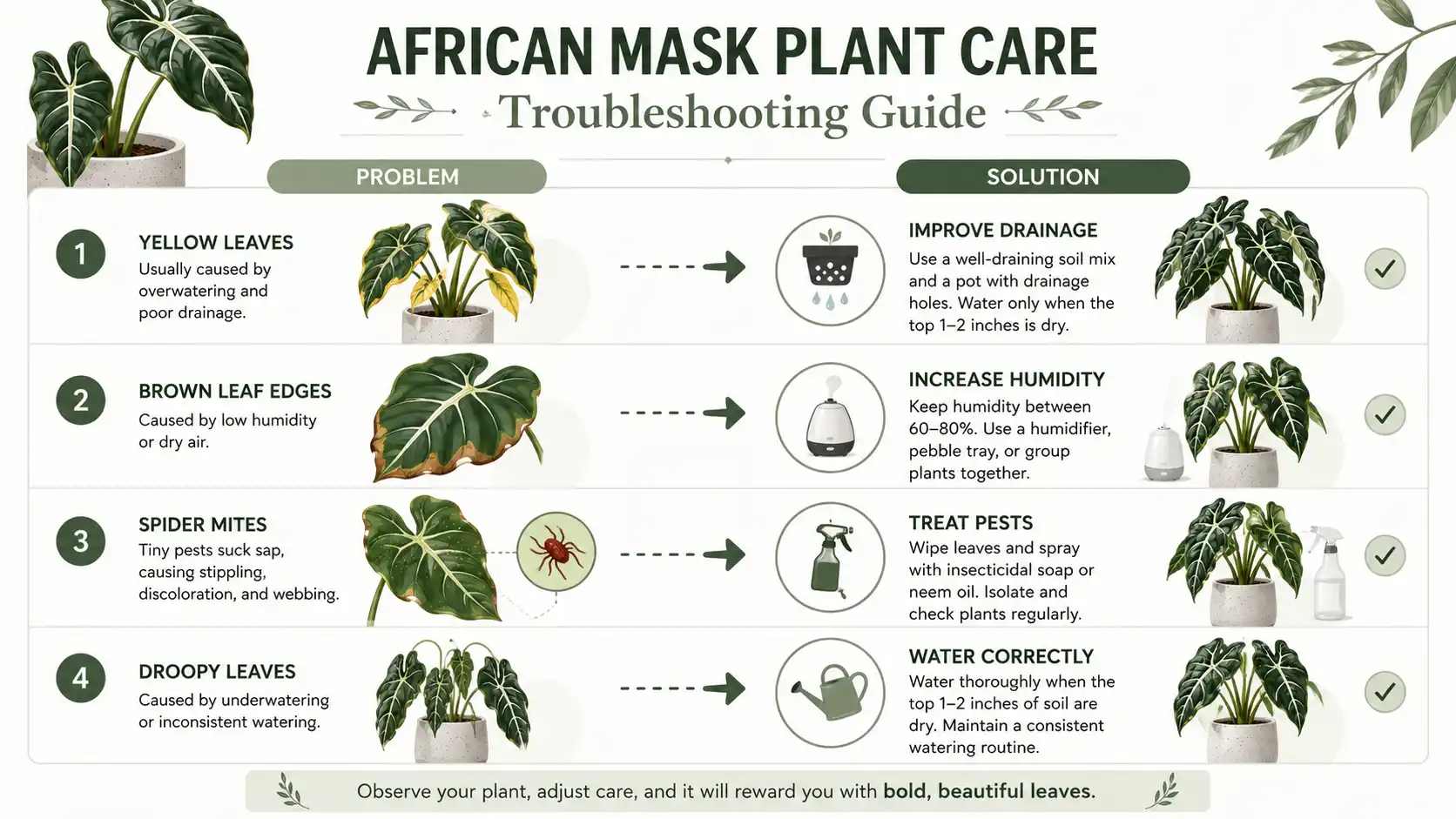
Yellow leaves are usually caused by overwatering, poor drainage, or sudden environmental changes.
How to fix it:
- Allow the soil surface to dry slightly.
- Improve drainage.
- Avoid frequent watering.
- Maintain consistent temperatures.
Why Are Leaves Turning Brown?
Brown leaves or crispy edges usually result from low humidity, underwatering, excessive sunlight, or fertilizer buildup.
How to fix it:
- Increase humidity.
- Water consistently.
- Move the plant out of direct sunlight.
- Flush excess fertilizer salts from the soil.
Should You Cut Off Leaves With Brown Spots?
Yes. Remove leaves only if they are heavily damaged or mostly brown. Use clean, sterilized scissors and trim at the base of the leaf stalk without damaging healthy growth.
Overwatering, Pests & Slow Growth
Common problems include:
- Root rot: Caused by consistently wet soil.
- Spider mites: Thrive in dry indoor air.
- Aphids: Feed on young leaves and stems.
- Slow growth: Often caused by insufficient light or winter dormancy.
- Low humidity stress: Leads to curled or crispy leaf edges.
Regular inspections help catch problems before they become severe.
Is Alocasia Toxic? (African Mask Plant Toxicity)
Yes. African mask plants are toxic to both people and pets because they contain calcium oxalate crystals.
If chewed or swallowed, symptoms may include:
- Mouth irritation
- Swelling
- Drooling
- Difficulty swallowing
Keep the plant out of reach of children, cats, and dogs, and wear gloves if you have sensitive skin while pruning.
How to Propagate an African Mask Plant
Yes, African mask plants can be propagated through rhizome division.
Steps:
- Remove the plant from its pot.
- Locate healthy rhizomes or offsets.
- Separate them with a clean knife.
- Plant each division in fresh aroid soil.
- Water lightly and provide warm, humid conditions.
The best time to propagate is during spring when active growth begins.
Why Is Alocasia So Hard to Keep Alive?
African mask plants can be challenging because they react quickly to environmental changes.
Common beginner mistakes include:
- Overwatering
- Low humidity
- Cold drafts
- Poor drainage
- Expecting active growth during winter dormancy
In our experience, maintaining stable conditions is the biggest factor in long-term success. Greenery Inside recommends making small care adjustments rather than frequent dramatic changes.
Lifespan of an African Mask Plant
With proper care, an African mask plant can live many years indoors. Seasonal dormancy is a natural part of its life cycle and should not be confused with permanent decline.
Normal dormancy may involve temporary leaf loss, followed by fresh growth when warmer conditions return.
Rare African Mask Plant Varieties
Some of the rarest African mask-related Alocasia cultivars include:
- Alocasia ‘Black Velvet’
- Alocasia ‘Dragon Scale’
- Variegated Alocasia Polly
- Alocasia ‘Maharani’
- Alocasia ‘Jacklyn’
These rare cultivars often command higher prices because of their unique foliage and limited availability.
African Mask Plant Care Indoors — Quick Recap Table
| Care Factor | Requirement |
| Light | Bright, indirect light |
| Water | Water when top 1–2 inches of soil dry |
| Humidity | 60–80% |
| Soil | Well-draining aroid mix |
| Temperature | 65–80°F (18–27°C) |
| Fertilizer | Every 2–4 weeks during spring and summer |
Conclusion
Successful african mask plant care comes down to recreating the warm, humid conditions this tropical Alocasia hybrid prefers. Provide bright indirect light, water only when the soil begins to dry, use a well-draining aroid mix, and maintain consistent humidity. Understanding seasonal dormancy, avoiding overwatering, and monitoring for pests will help your African mask plant remain healthy and produce its signature dramatic foliage for many years.
FAQs
How do you care for African mask plants indoors?
Place the plant in bright, indirect light, water when the top layer of soil dries, maintain 60–80% humidity, and grow it in a well-draining aroid potting mix.
Why are my African mask plant leaves turning brown?
Brown leaves are commonly caused by low humidity, underwatering, direct sunlight, or fertilizer buildup. Adjusting these conditions usually prevents further damage.
Do African mask plants like to be root bound?
Yes. They generally perform best when slightly root bound and only need repotting once the roots outgrow the container.
Do African mask plants flower?
Yes, but flowering indoors is uncommon. When blooms appear, they consist of a spathe and spadix typical of the Araceae family.
Can you propagate an African mask plant?
Yes. The most reliable method is dividing healthy rhizomes or offsets during spring while the plant is actively growing.
Why is Alocasia so hard to keep alive?
Alocasias are sensitive to inconsistent watering, low humidity, cold temperatures, and sudden environmental changes. Providing stable growing conditions greatly improves their long-term health.