Introduction
Rock purslane is a vibrant succulent renowned for its bright, colorful flowers and hardy nature. This low-maintenance plant has become increasingly popular among gardeners and indoor plant enthusiasts alike, making it a favorite for gardens, containers, and hanging baskets. Its adaptability allows it to thrive in a variety of settings, from sunny garden beds to decorative pots on patios. Rock purslane care is relatively straightforward, requiring minimal attention while offering long-lasting blooms. Additionally, propagation is easy through both seeds and cuttings, making it simple to expand your collection or share with friends. This guide will cover everything you need to know about rock purslane.
What is Rock Purslane?
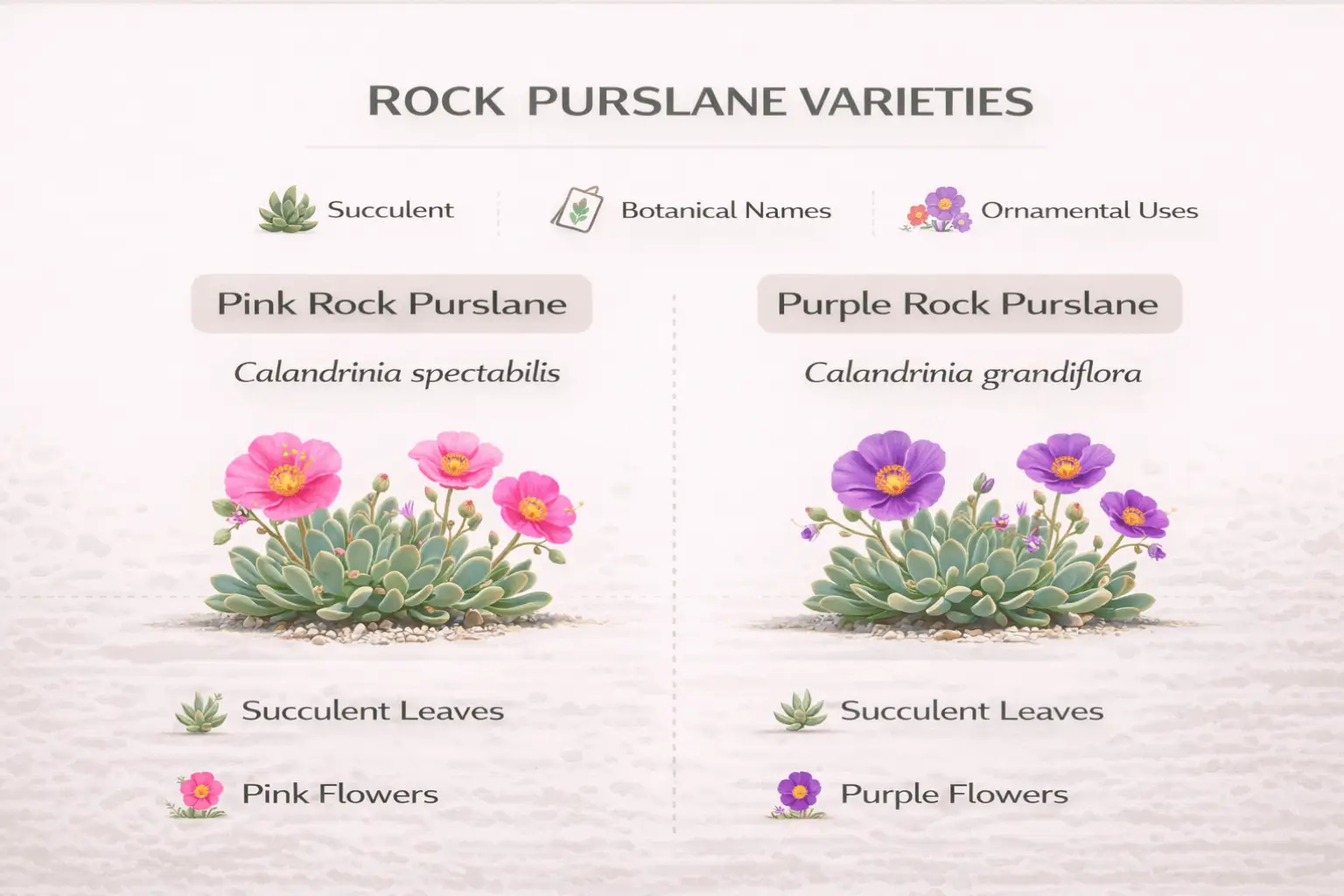
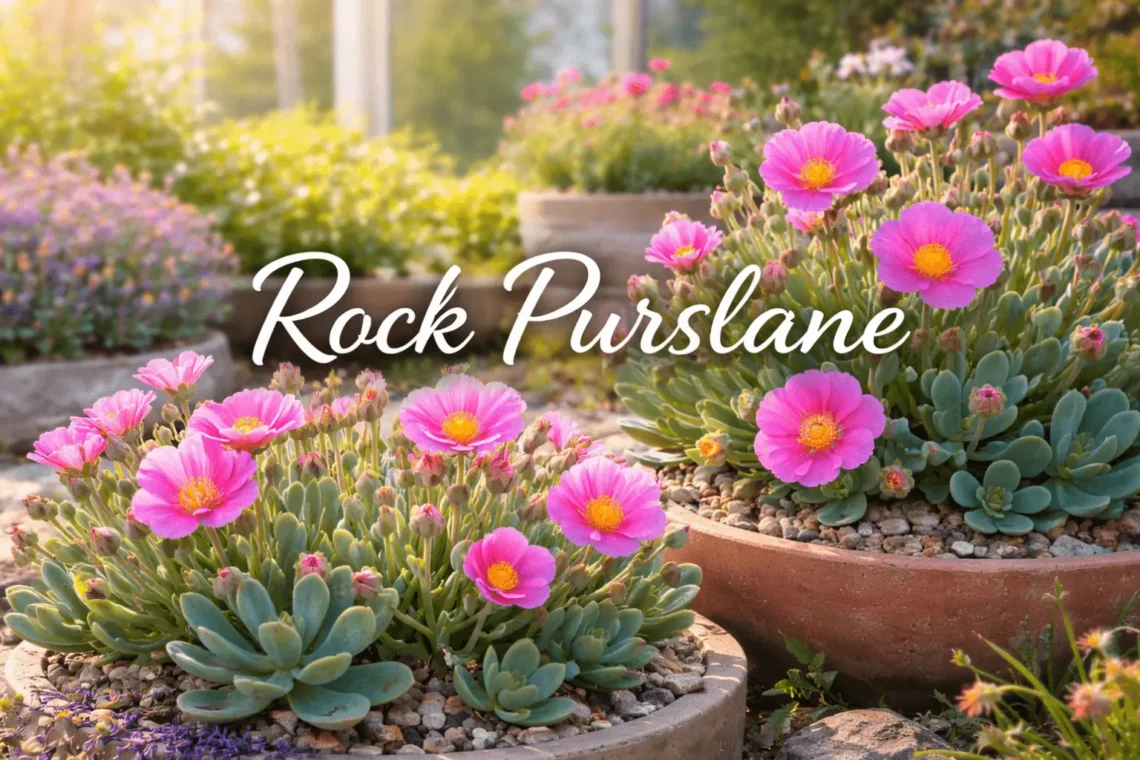
Rock purslane, scientifically known as Calandrinia spectabilis or Calandrinia grandiflora, is a succulent plant valued for its ornamental appeal. These succulents produce bright pink, purple, or red flowers that bloom profusely during the growing season.
There are several varieties of rock purslane, including pink rock purslane and purple rock purslane, each adding unique color accents to gardens or containers. As a succulent, rock purslane stores water in its thick leaves, making it drought-tolerant and easy to maintain. Its low-growing, spreading habit also makes it an excellent choice for rock gardens, borders, or hanging baskets. Overall, the rock purslane succulent is both decorative and resilient, combining beauty with minimal care requirements.
Rock Purslane vs Other Purslane Varieties
When comparing rock purslane vs grandiflora, the main differences lie in flower size, color intensity, and growth habits. Calandrinia spectabilis typically has larger blooms and a more upright form, while grandiflora spreads more extensively with slightly smaller flowers.
Compared to portulaca, rock purslane tends to have larger, more vibrant flowers and thicker succulent leaves. While both are drought-tolerant, portulaca grows closer to the ground and spreads more quickly, whereas rock purslane is often chosen for containers and decorative displays due to its upright flowering stems.
How to Grow Rock Purslane
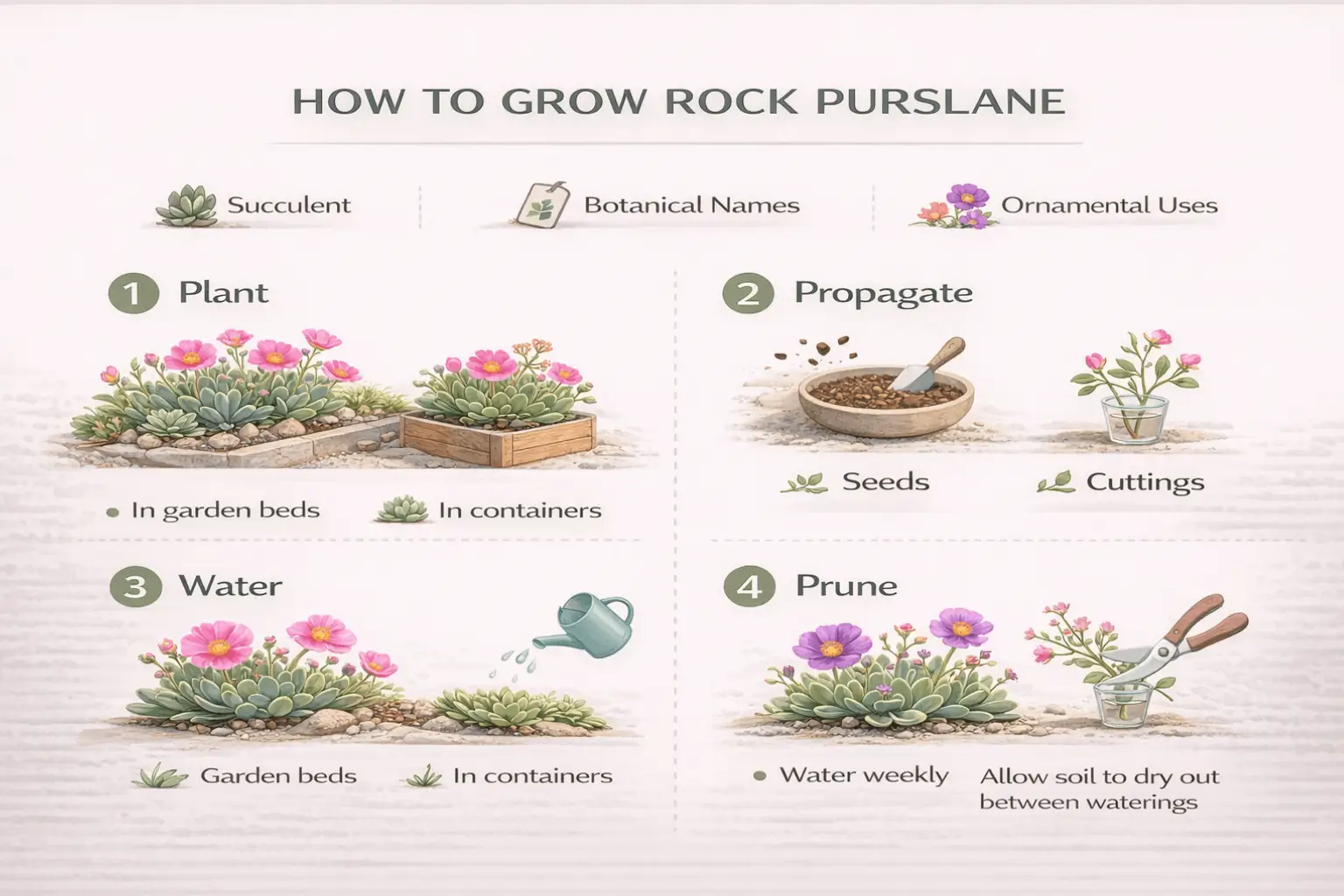
Planting in Garden and Containers
Rock purslane thrives in well-draining soil, such as a sandy or loamy mix. For containers, ensure pots have drainage holes to prevent waterlogging. The plant prefers full sun, requiring at least 6 hours of direct sunlight daily for optimal blooming. Ideal temperatures range from 60–85°F, making it perfect for warm climates or sunny indoor spaces. Regularly rotating containers can help maintain even growth and flowering.
Propagation Methods
Rock purslane propagation is simple and can be done through seeds or cuttings.
- From cuttings: Take a healthy stem, let it dry for a day, then plant in well-draining soil. Keep lightly moist until roots form.
- From seeds: Sow seeds in shallow trays or containers filled with sandy soil. Lightly water and provide full sun. Germination typically occurs within 1–2 weeks.
Both methods are reliable, allowing gardeners to expand their collection efficiently.
Watering and Care Tips
For rock purslane watering, aim for moderate moisture. The succulent nature of the plant allows it to tolerate short dry periods, but avoid overwatering as this can lead to root rot. Ensure soil drains well, and reduce watering during cooler months. These practices help maintain a healthy, drought-tolerant plant that blooms consistently.
Pruning and Maintenance
Proper pruning promotes healthy growth and prolongs flowering. Remove spent blooms by deadheading to encourage new flowers. Trim any leggy or overgrown stems to maintain a compact appearance. If your plant is rock purslane not flowering, regular pruning combined with adequate sunlight and proper watering often restores blooms.
Common Problems and Solutions
-
Pests and Diseases
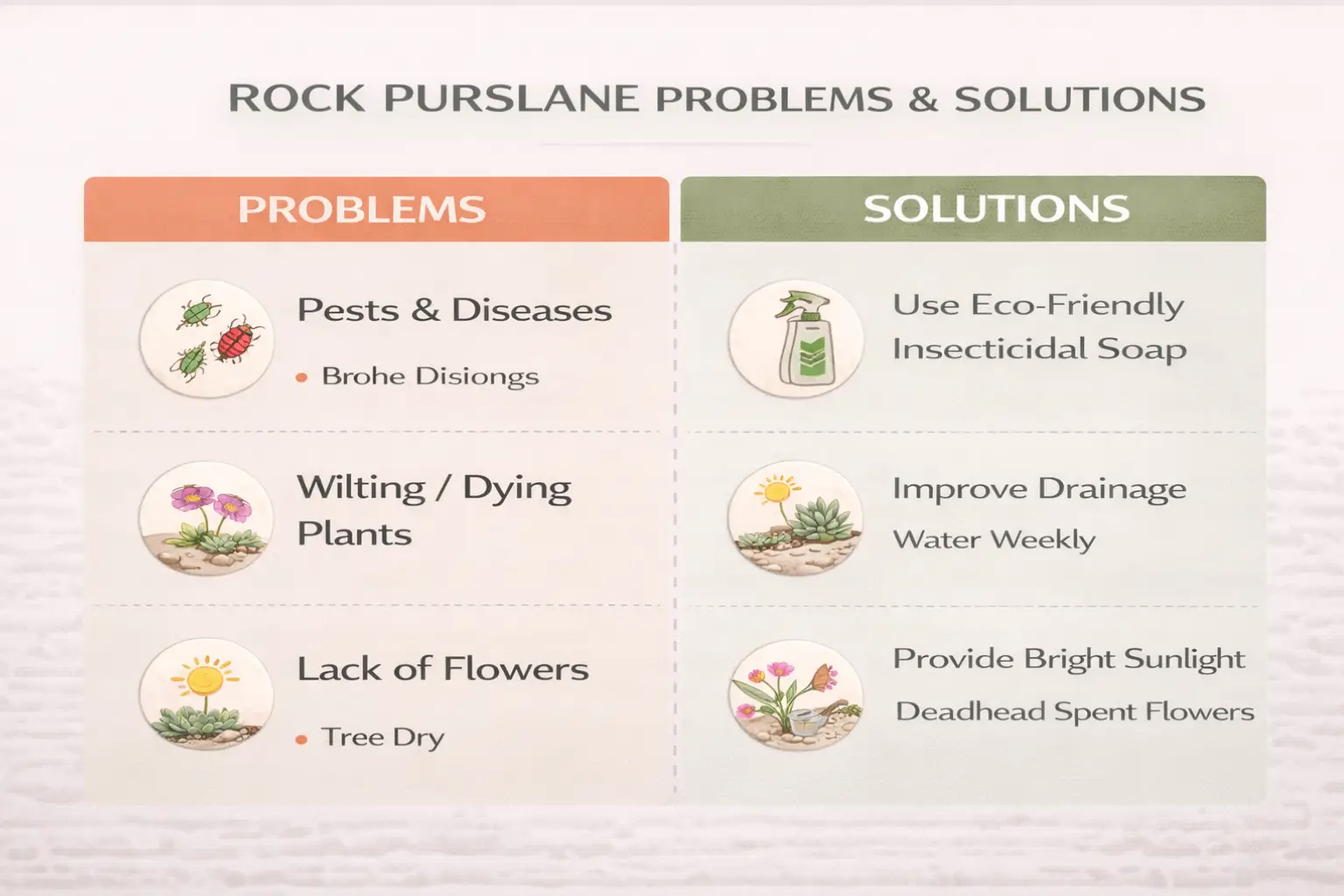
Rock purslane problems are minimal, but pests such as aphids or mealybugs may occasionally appear. Inspect plants regularly and treat infestations with insecticidal soap or neem oil.
-
Wilting or Dying Plants
Wilting often results from overwatering or poor soil drainage. Ensure your plant is in well-draining soil and avoid letting water sit at the roots. Excessive heat or lack of sunlight can also cause stress.
-
Lack of Flowers
If your rock purslane not flowering, check for insufficient sunlight, over-fertilization, or crowded growth. Providing at least 6 hours of sunlight, minimal fertilizer, and proper pruning can restore blooms.
Where to Buy Rock Purslane
Online and Local Sources
Rock purslane plant for sale is available at many nurseries, garden centers, and online retailers. You can also find options at Rock Purslane Home Depot. When selecting plants, choose healthy specimens with vibrant leaves and abundant buds. Containers should have proper drainage and size to accommodate growth. Buying from reputable sources ensures quality plants that establish quickly in gardens or pots.
Rock Purslane Uses and Benefits
-
Ornamental Uses
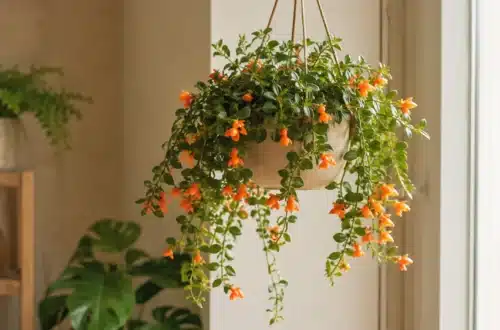
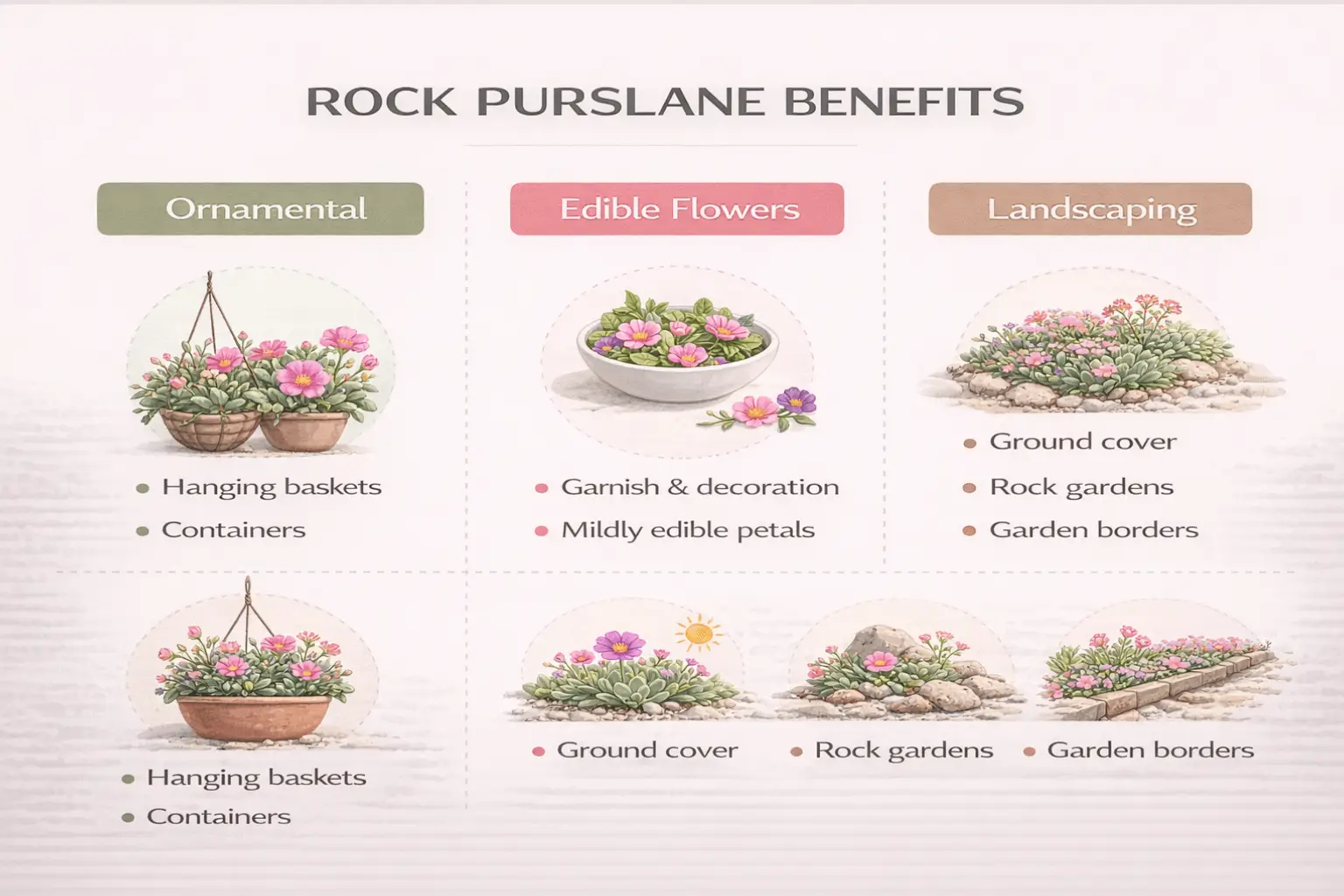
Rock purslane is widely used as an ornamental purslane plant. Its trailing stems and bright flowers make it ideal for hanging basket purslane flowers or purslane hanging baskets. It also works well as a border plant or accent in mixed containers.
-
Edibility
While primarily ornamental, the flowers of rock purslane are edible in small quantities and can be used as colorful garnishes. Always ensure you are consuming the correct species and avoid overconsumption. Many gardeners enjoy adding blooms to salads or desserts for aesthetic appeal.
-
Landscaping Ideas
Rock purslane is versatile for landscaping. Use it as ground cover, in rock gardens, or in hanging baskets for cascading color. Its low maintenance and vibrant blooms make it suitable for both formal and casual garden settings.
Conclusion
Rock purslane is a beautiful, hardy succulent that brings vibrant color to gardens, containers, and hanging baskets. By following proper rock purslane care, including adequate sunlight, pruning, and watering, gardeners can enjoy long-lasting blooms. Propagation is simple, allowing you to expand your collection with ease. Explore different varieties, such as pink rock purslane, and experiment with colors to create lively displays. Start growing rock purslane today to add charm and resilience to your garden spaces.
Learn more: 5+ Stunning Coral Plant Varieties for Vibrant Gardens
FAQs
- How do I propagate rock purslane successfully?
You can propagate rock purslane via seeds or cuttings. Take healthy stems, allow them to dry for a day, and plant in well-draining soil. Seeds germinate in 1–2 weeks under full sun. - Why is my rock purslane not flowering?
Lack of sunlight, over-fertilization, or crowded growth are common causes. Ensure 6+ hours of sun, prune regularly, and avoid excess fertilizer. - Can rock purslane survive in containers or hanging baskets?
Yes, rock purslane thrives in containers and hanging baskets if provided with well-draining soil, sufficient sunlight, and regular pruning. - Is rock purslane edible, and can I eat the flowers?
Yes, the flowers are edible in small quantities and can be used as garnishes. Only consume the correct species and avoid overuse. - What are the common problems with rock purslane and how can I prevent them?
Pests like aphids and mealybugs, overwatering, and poor sunlight are common issues. Inspect plants, use proper soil, and provide enough sunlight to prevent problems. - What is the difference between calandrinia spectabilis and calandrinia grandiflora?
Calandrinia spectabilis has larger, upright blooms, while calandrinia grandiflora spreads more with slightly smaller flowers. Both are hardy succulents with vibrant colors.