Introduction
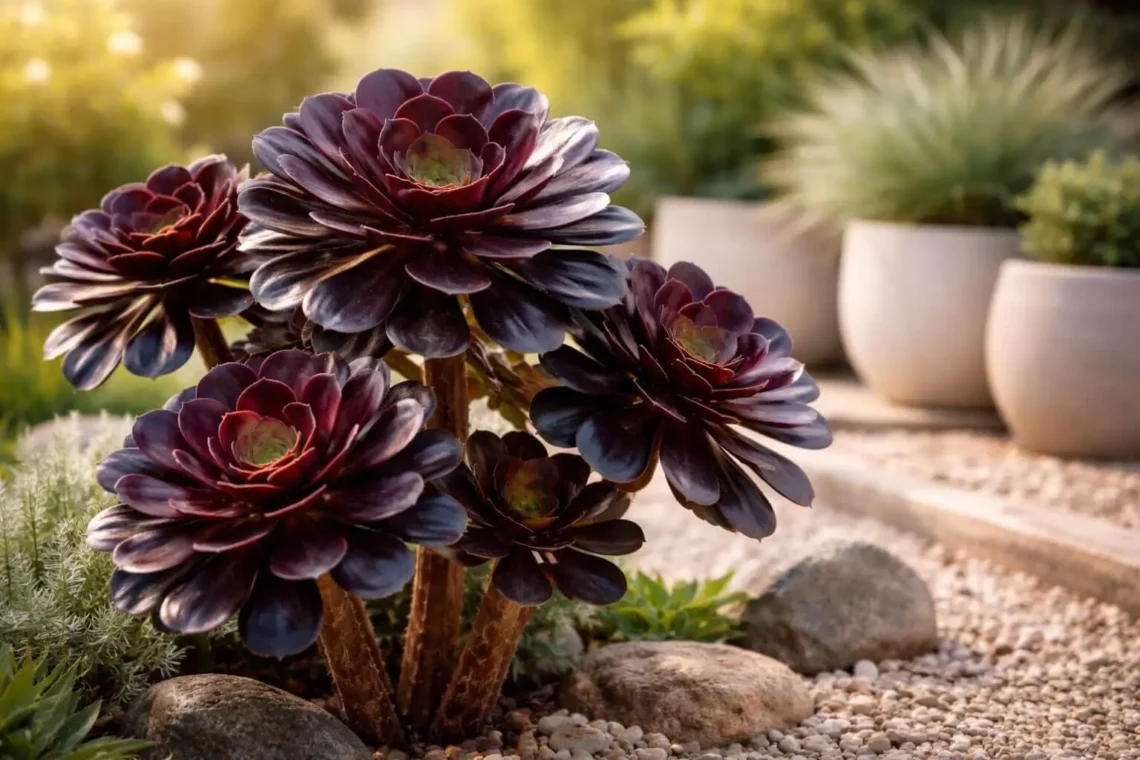
The black rose succulent is a striking, low-maintenance succulent that captures attention with its dramatic, dark foliage. Scientifically known as Aeonium arboreum ‘Black Rose’, this succulent black rose is a favorite among gardeners and succulent enthusiasts for its sculptural form and easy care. Its deep, nearly black rosettes resemble real black roses, adding elegance and intrigue to both indoor and outdoor gardens. The black rose aeonium thrives in sunny spots, and its unusual color palette makes it a standout addition to succulent arrangements, rock gardens, and container plantings. With minimal maintenance, it is perfect for anyone seeking a visually bold yet low-effort succulent.
What is the Black Rose Succulent?
-
Botanical Name and Varieties
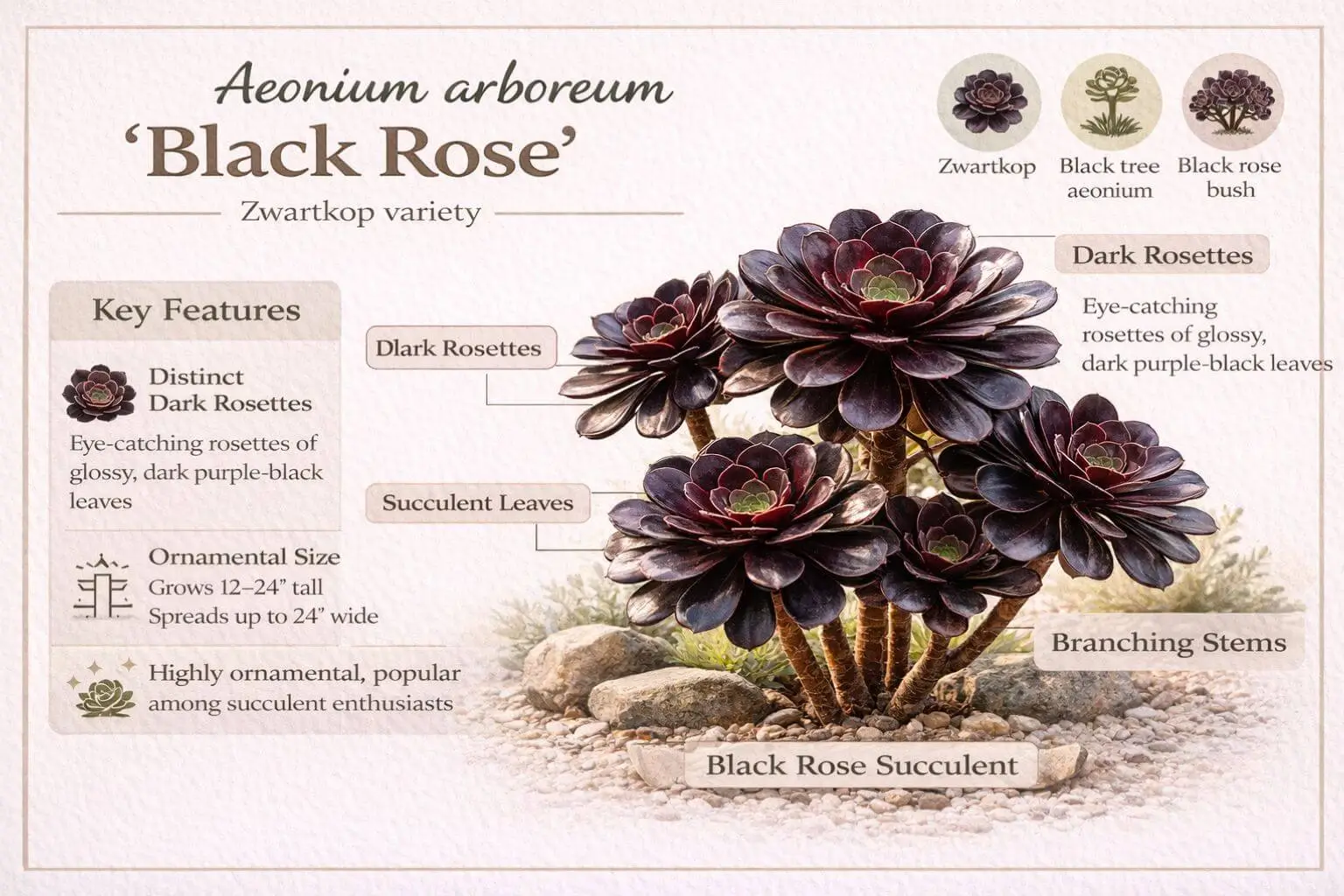
The Aeonium arboreum species includes many succulent varieties, but the most distinctive is the ‘Black Rose’ or Zwartkop variety. Known scientifically as aeonium arboreum black rose, this succulent features dark rosettes atop branching stems, forming what is sometimes called a black tree aeonium. The aeonium zwartkop black rose is highly prized for its unique coloration and architectural growth habit. Other Aeonium varieties may display green or yellow tones, but the Zwartkop stands out with its dramatic, nearly black leaves.
-
Unique Appearance and Characteristics
The black rose succulent boasts deep purple-black rosettes with glossy, thick leaves arranged in a classic rosette pattern. Mature plants can reach heights of 12–18 inches, with rosettes spreading 6–10 inches across. Often referred to as a black beauty succulent, it adds ornamental value to gardens or indoor collections. Its dark foliage contrasts beautifully with lighter succulents, and the plant is sometimes described as a black rose bush or black rose tree aeonium arboreum due to its branching growth habit and striking visual impact.
-
Symbolism and Meaning
Black roses carry rich cultural significance, often associated with mystery, elegance, and rebellion. The real black roses in gardens evoke a sense of sophistication and intrigue, while also symbolizing new beginnings or farewell. The black rose succulent embodies this symbolism, making it a meaningful addition to both decorative plantings and personal collections. Its intense coloration and unusual form make it a living representation of the black rose, admired for both beauty and metaphorical depth.
How to Care for Black Rose Succulent
-
Light and Temperature Requirements
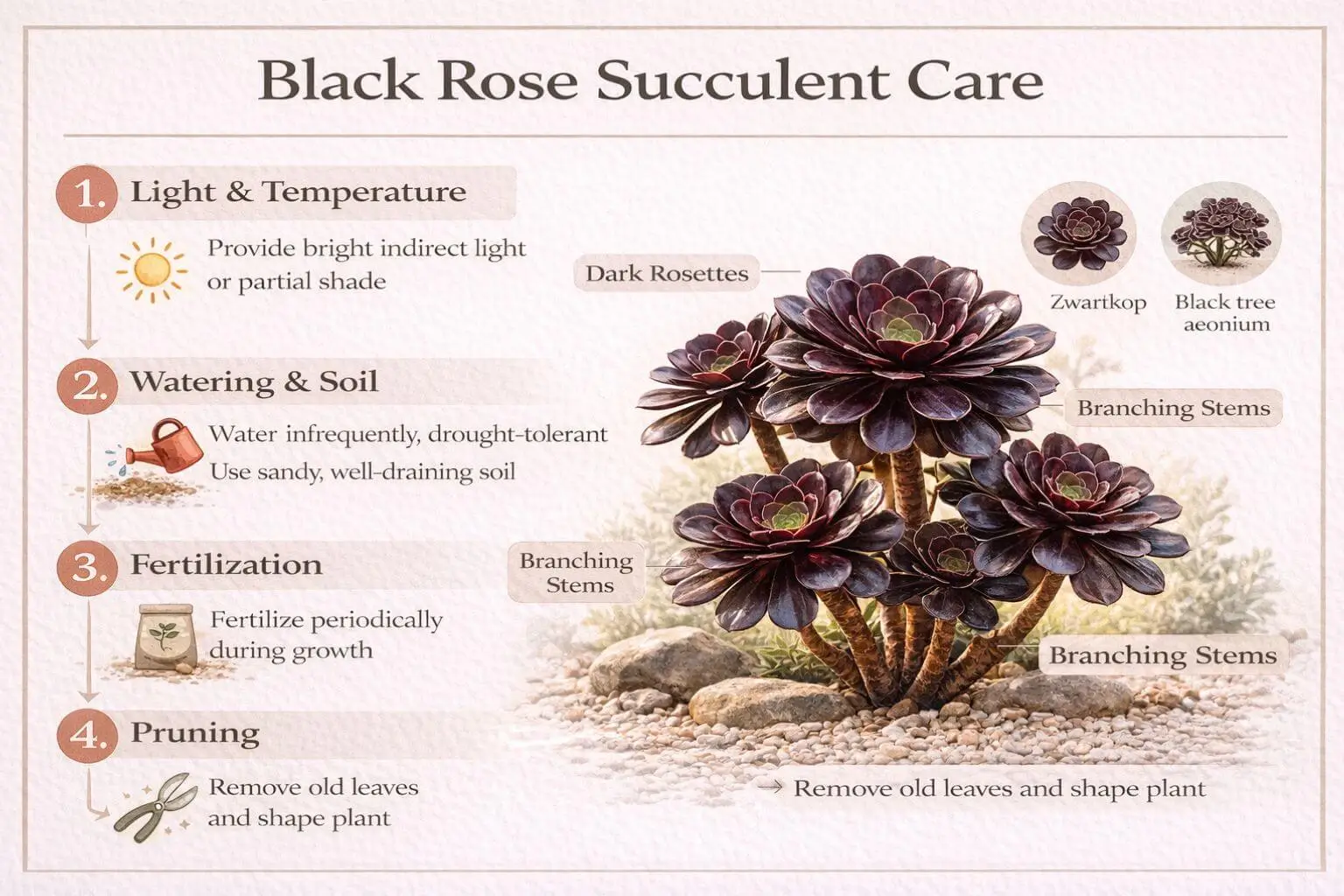
To thrive, the black rose succulent requires bright, indirect sunlight or partial shade. Too much direct sun can scorch leaves, while insufficient light may cause stretching. It tolerates mild frost but prefers warm environments between 65–75°F (18–24°C). Understanding proper black rose succulent care ensures healthy, compact rosettes. Gardeners often wonder how to care for black rose succulent effectively, and balancing light and temperature is the key.
-
Watering and Soil
A succulent black rose thrives in well-draining soil, such as a sandy cactus mix. Overwatering can lead to root rot, so it’s crucial to allow the soil to dry between waterings. These drought-tolerant succulents store water in their thick leaves and require minimal irrigation. One common issue is black rose succulent turning green, which often results from excessive watering or low light conditions.
-
Fertilization and Growth Tips
Fertilize the aeonium black rose succulent lightly during its active growing season, usually spring and summer. Use a balanced, diluted succulent fertilizer every 4–6 weeks. Proper feeding encourages robust growth and vibrant, dark rosettes. Following standard aeonium black rose care guidelines, such as removing old leaves and monitoring light exposure, helps maintain the plant’s compact and ornamental shape.
-
Pruning and Maintenance
Pruning enhances both health and aesthetics. Remove dried or dead leaves at the base of the rosettes to prevent disease and promote airflow. Trim leggy stems to maintain a uniform structure. Knowing how to prune black rose succulent correctly ensures longevity and keeps the plant visually striking.
Propagation of Black Rose Succulent
Propagation from Offsets or Leaves
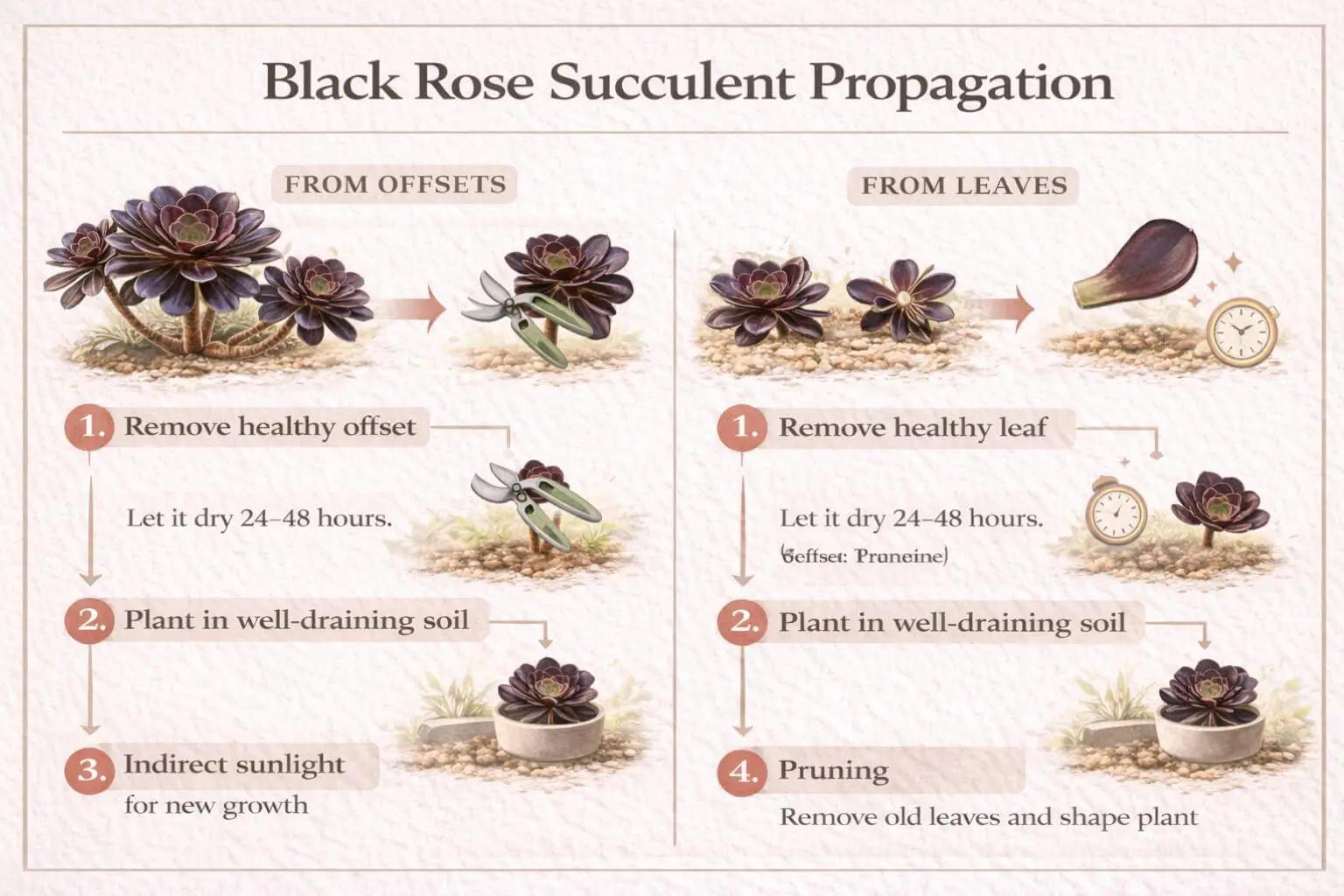
The black rose succulent can be propagated from offsets or leaves. Gently remove a healthy offset or leaf and allow it to dry for 24–48 hours to form a callus. Plant it in well-draining soil, water sparingly, and keep it in bright, indirect light. This method of aeonium black rose propagation is ideal for home gardeners, offering a straightforward way to grow new plants. Propagating black rose succulent from leaves or offsets ensures genetic consistency and maintains the dark rosette coloration.
Tips for Successful Propagation
To increase success rates, ensure the soil is slightly sandy and drains efficiently. Avoid overwatering young plants, and provide bright, indirect sunlight. Monitoring moisture and temperature closely improves survival rates. Mastering black rose succulent propagation allows gardeners to expand their collection without purchasing new plants.
Growing Black Rose Succulent Indoors and Outdoors
-
Indoor Planting Tips
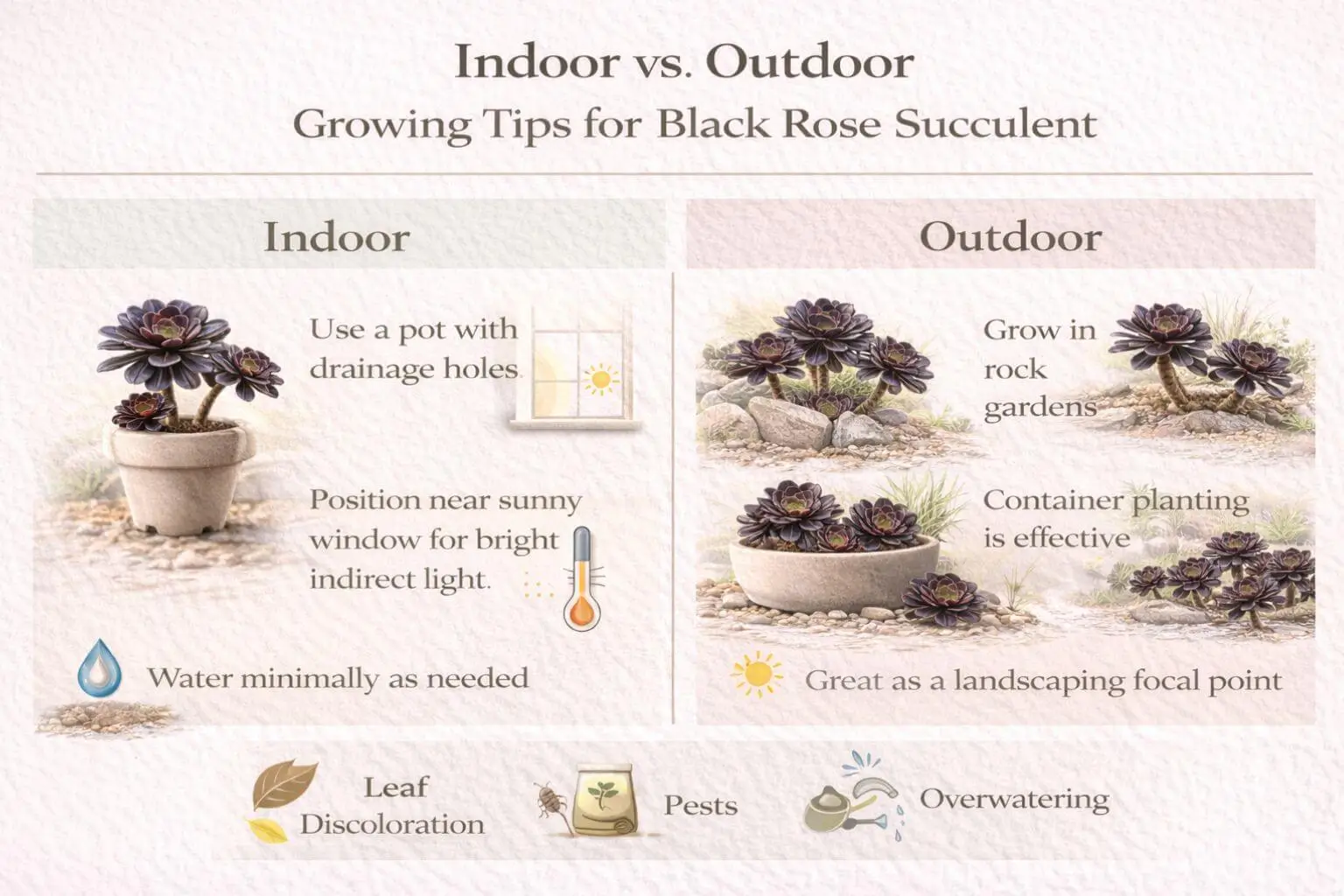
Indoors, select a wide, shallow pot with drainage holes. Position the black rose plant succulent near a sunny window, rotate regularly to prevent leaning, and water sparingly. Indoor environments must mimic the succulent’s natural preference for bright, indirect light to maintain rosette color and compact growth.
-
Outdoor Garden Uses
The black rose succulent excels in landscaping, container gardening, and rock gardens. It functions well as a black rose bush, or in combination with lighter succulents to create contrast. The black rose tree succulent makes an eye-catching focal point in both modern and Mediterranean-style gardens. Outdoor planting allows natural growth and occasional bloom, enhancing garden diversity.
-
Common Issues and Troubleshooting
A common concern is black rose succulent turning green, often due to excessive watering or insufficient light. Other issues include pests like aphids or mealybugs. Regularly inspect plants, adjust watering routines, and ensure bright light exposure to maintain healthy, dark rosettes.
Buying and Collecting Black Rose Succulents
Where to buy: Black rose succulents are available online, at local nurseries, or through specialty succulent stores. Look for black rose succulent for sale or aeonium black rose for sale when searching. Identify healthy plants by checking firm, dark leaves without signs of rot, pests, or discoloration. Healthy specimens are more likely to thrive and retain their striking black rose aeonium appearance.
Conclusion
The black rose succulent is a visually stunning, low-maintenance plant that adds elegance and intrigue to any garden or indoor space. From proper care, propagation, and pruning to indoor and outdoor planting tips, mastering its requirements ensures thriving, glossy rosettes. Whether grown as a black rose bush, black rose tree succulent, or in containers, this succulent makes a bold statement. Start cultivating your own succulent black rose, and share the beauty with fellow plant enthusiasts or visit local nurseries to add this remarkable plant to your collection.
Learn more: 6+ Powerful Emu Bush Secrets for Stunning Gardens
FAQs
- What is a black rose succulent?
A black rose succulent is Aeonium arboreum ‘Black Rose’, known for its dark purple-black rosettes and low-maintenance growth habit. - How do I care for my black rose succulent?
Provide bright, indirect sunlight, well-draining soil, minimal watering, occasional fertilization, and prune dead leaves to maintain shape. - Can black rose succulents be grown indoors?
Yes, they thrive indoors near bright windows in pots with good drainage. Rotate regularly for uniform growth. - How do I propagate a black rose succulent successfully?
Propagate from offsets or leaves, allow callusing for 24–48 hours, plant in well-draining soil, water sparingly, and provide indirect sunlight. - Why is my black rose succulent turning green?
This usually indicates overwatering, low light, or stress. Adjust water routines and increase sunlight to restore dark coloration. - Where can I buy a healthy black rose succulent?
Check online plant stores, local nurseries, and specialty succulent shops. Look for firm, dark leaves and strong rosettes.