Introduction
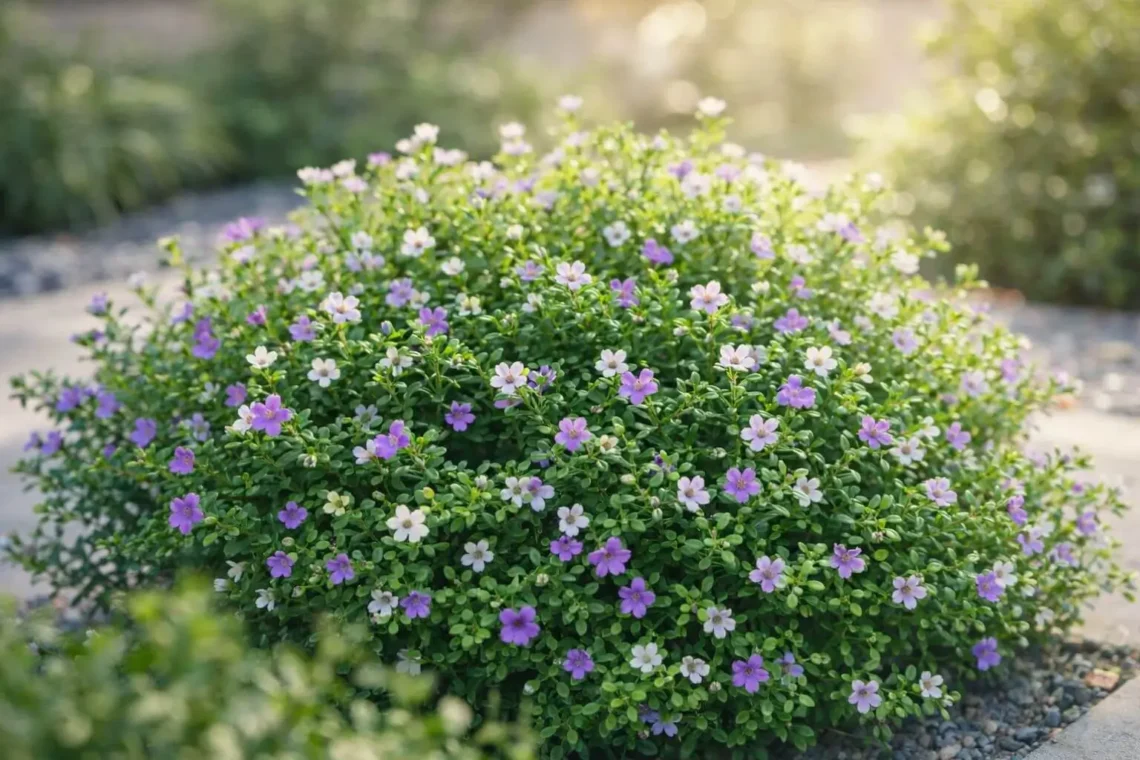
The false heather plant, scientifically known as Cuphea hyssopifolia, is a popular ornamental shrub admired for its delicate foliage and vibrant flowers. Often referred to as Mexican heather or cuphea false heather, this plant is widely cultivated in gardens and indoor spaces due to its low-maintenance nature and aesthetic appeal. Its small, glossy leaves and clusters of tiny lavender, purple, or white flowers make it ideal for borders, ground cover, and container planting. False heather is appreciated for its resilience and versatility, offering gardeners an easy-to-care-for plant that enhances both indoor and outdoor environments.
False Heather Plant Overview
Taxonomy and Botanical Classification
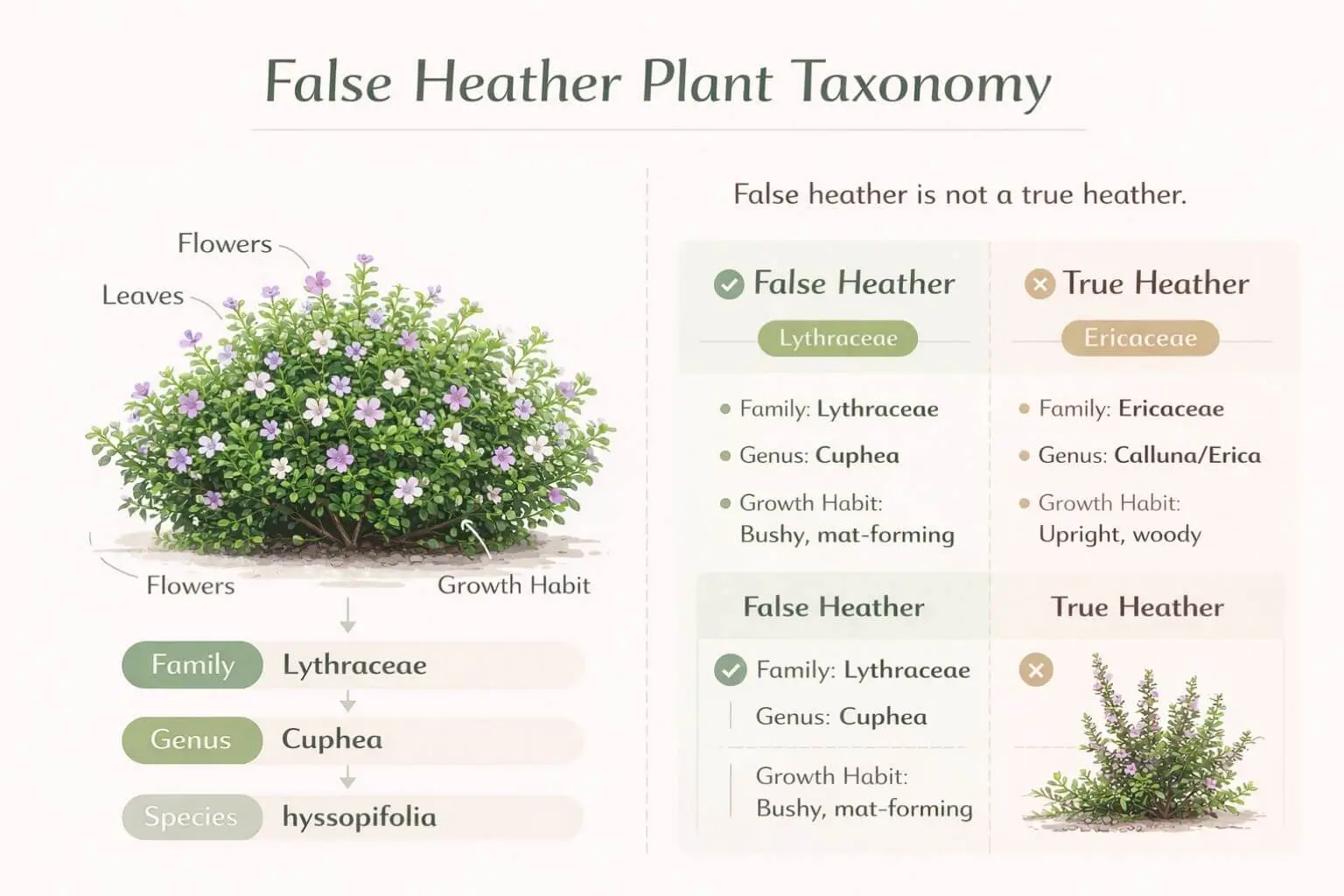
Cuphea hyssopifolia belongs to the Lythraceae family, placing it in the same botanical lineage as other Cuphea species. Unlike true heathers, which belong to the Ericaceae family, false heather differs in leaf structure, flower morphology, and growth habit. This distinction clarifies its identity and helps gardeners avoid confusion when selecting plants for ornamental purposes.
Common Names and Synonyms
False heather is commonly called Mexican heather, cuphea false heather, and sometimes referenced as false heather lavender or white false heather plant depending on flower color. Its naming variations can be confusing, but all refer to the same low-maintenance, ornamental plant valued for colorful blooms and compact growth.
Characteristics of False Heather Plant
-
Appearance and Growth Habit
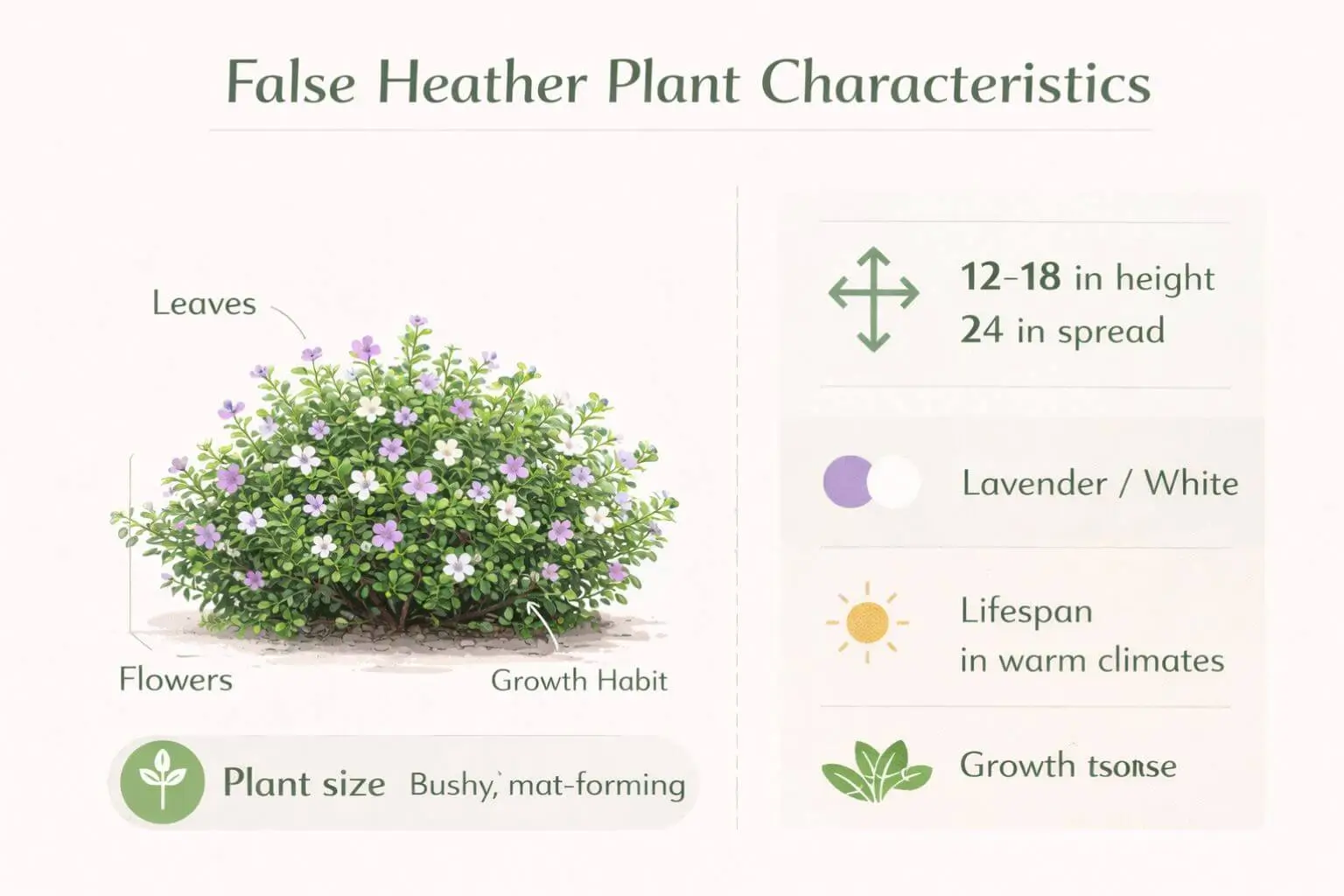
False heather is a compact shrub with a bushy growth habit, typically reaching 12–18 inches in height and spreading up to 24 inches wide. Its narrow, glossy green leaves create a dense foliage backdrop for clusters of lavender, white, or purple flowers. The plant’s size and shape make it ideal for edging, container planting, and as a vibrant accent in garden beds.
-
Lifespan and Perennial Nature
False heather is perennial in warm climates, maintaining growth year-round in zones 9–11. In cooler regions, it is often grown as an annual due to frost sensitivity. Its adaptable lifespan varies with climate, generally thriving for 3–5 years in optimal conditions.
-
Cold Hardiness and Climate Adaptation
This plant is moderately cold-sensitive, tolerating temperatures down to 25°F (-4°C) but performing best in warmer climates. False heather adapts to seasonal changes by slowing growth during cooler months. Compared to Mexican heather, it shares similar growth zones and climate tolerance, making it suitable for tropical, subtropical, and temperate gardens.
Cultivation and Care of False Heather
-
Soil, Sunlight, and Watering Requirements
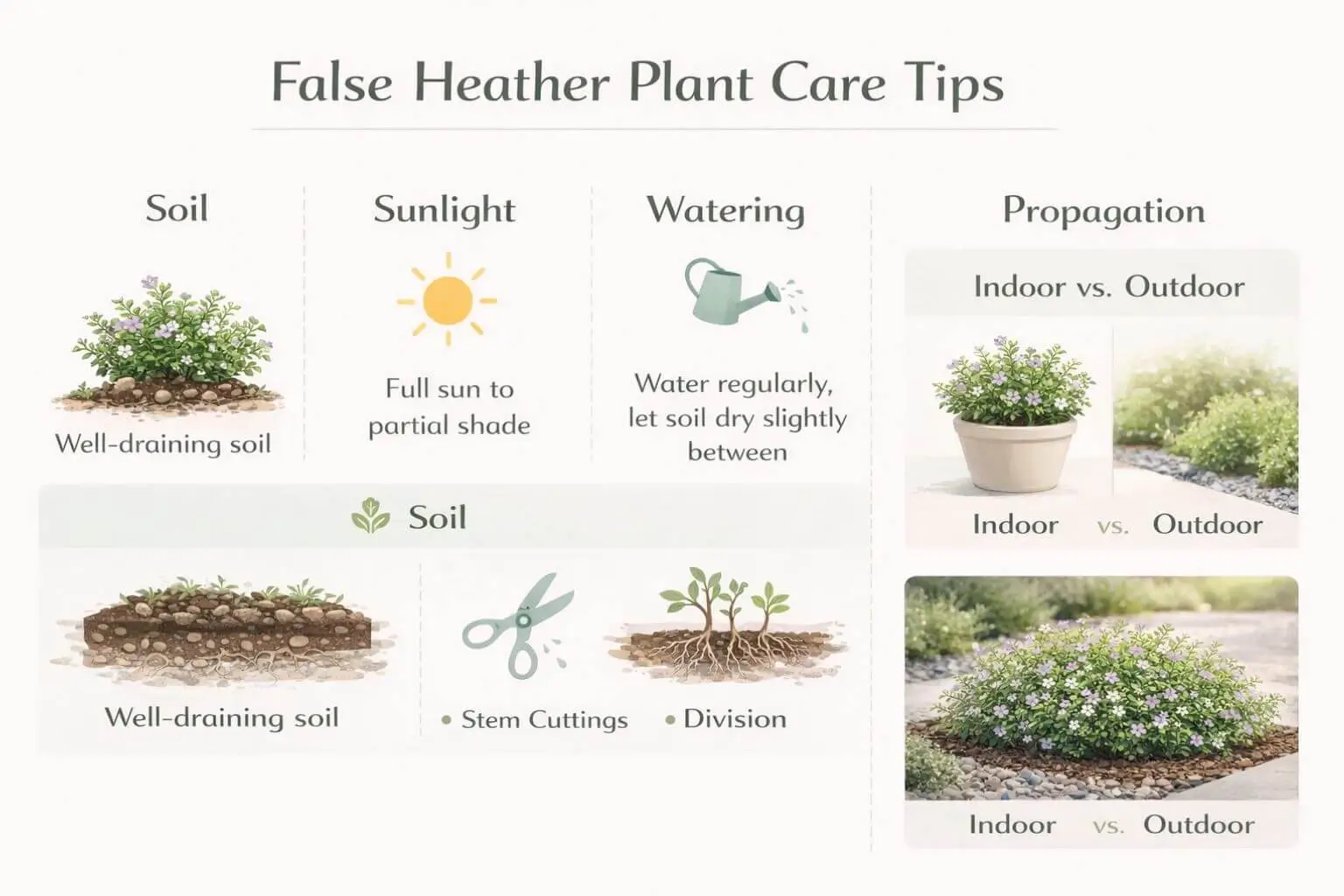
False heather thrives in well-drained, loamy soil with moderate fertility. It prefers full sun to partial shade and requires regular watering, especially during dry periods. Overwatering can cause root rot, so consistent moisture without waterlogging is ideal.
-
Propagation Methods
Propagation is primarily through stem cuttings or division. Cuttings root easily in moist, sandy soil and are best taken in spring or early summer. Division allows gardeners to expand plantings or rejuvenate older shrubs efficiently. Seasonal care ensures strong establishment and robust flowering.
-
Indoor vs Outdoor Growing
False heather performs well both indoors and outdoors. Indoors, it thrives in pots with adequate sunlight and moderate watering, making it a popular choice for bright window sills. Outdoors, it enhances garden beds, borders, and containers with minimal pest problems, benefiting from natural resistance and low-maintenance traits.
Uses and Applications
-
Ornamental Landscaping
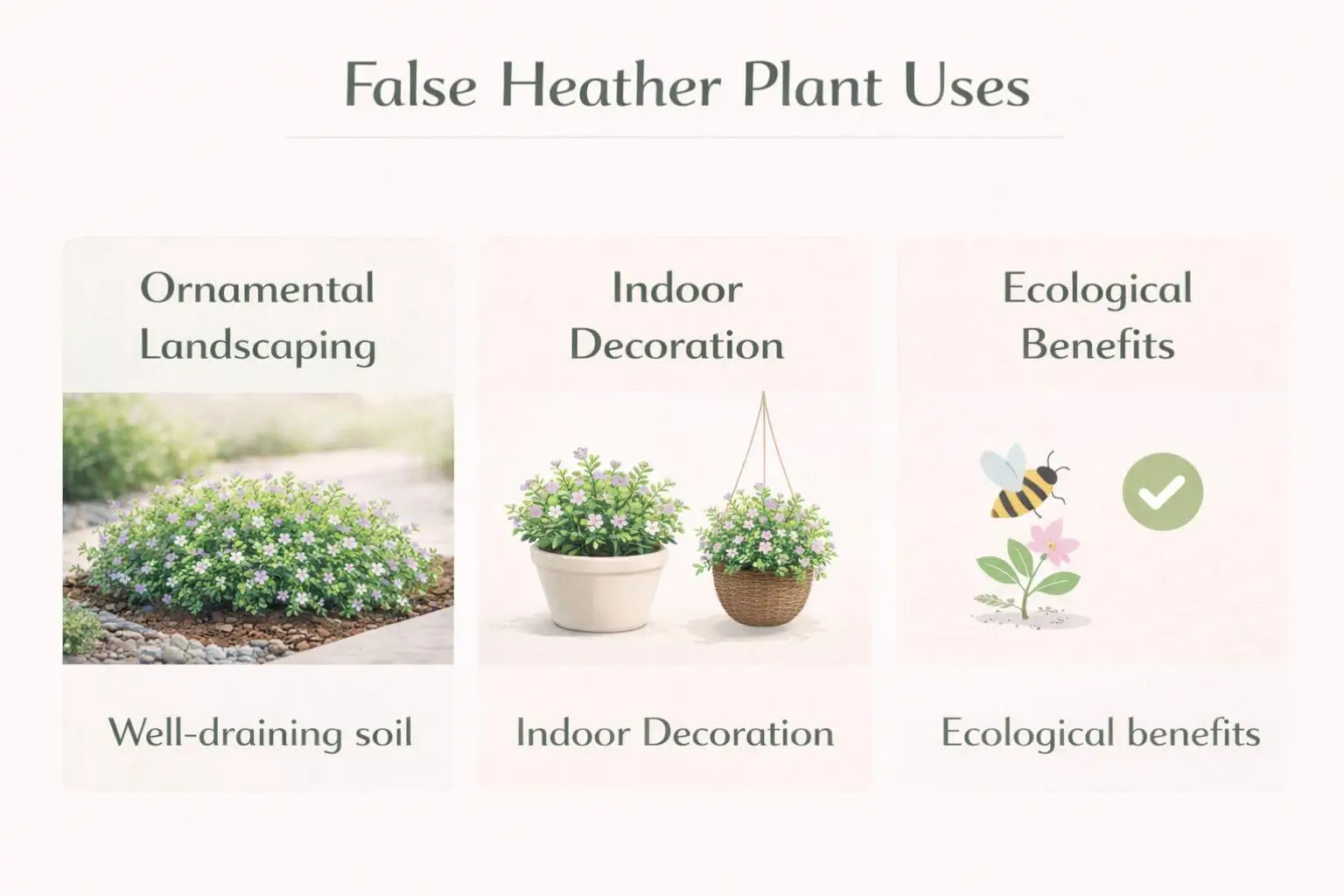
False heather is widely used for ground cover, garden borders, and flower beds. Its dense foliage and vibrant flowers provide continuous seasonal interest, while its compact size allows for versatile landscaping designs.
-
Indoor Decoration
The plant is excellent for planters and hanging baskets, bringing greenery and color to indoor spaces. Its tolerance for container life and minimal care requirements make it an attractive choice for offices, patios, and sunlit rooms.
-
Ecological Benefits
False heather attracts pollinators such as bees and butterflies while requiring little maintenance. Its adaptability and resilience contribute to sustainable gardening practices, supporting biodiversity in ornamental landscapes.
Related Varieties and Confusions
Cuphea Varieties
Within the Cuphea genus, Cuphea hyssopifolia is distinguished by small leaves and compact growth. Other species may vary in height, flower size, and flowering season, but all share ornamental potential.
Mexican Heather vs False Heather
False heather and Mexican heather are often confused due to similar appearance and flowering habits. While both can be perennial in warm climates, Mexican heather may behave as an annual in cooler zones. Key differences include leaf texture, flower cluster density, and growth habit, helping gardeners differentiate between the two.
Conclusion / Informational CTA
False heather (Cuphea hyssopifolia) is a versatile, low-maintenance plant suitable for both indoor and outdoor gardening. Its compact size, colorful blooms, and adaptability make it an ideal choice for borders, containers, and ground cover. By understanding its care, propagation, and climate requirements, gardeners can enjoy a resilient ornamental shrub that enhances the beauty of any space. Explore garden-friendly plants like false heather to create vibrant, sustainable, and aesthetically pleasing landscapes.
Learn more: 7+ Stunning Reasons Carpet of Stars Is a Lawn-Free Dream
FAQs About False Heather Plant
- What is the scientific name of false heather?
The scientific name of false heather is Cuphea hyssopifolia. - Is false heather a perennial or annual plant?
False heather is perennial in warm climates but is often grown as an annual in cooler regions. - How do I propagate a false heather plant?
It can be propagated using stem cuttings or division, preferably during spring or early summer. - Can false heather be grown indoors?
Yes, it grows well in pots or containers with sufficient sunlight and regular watering. - What are the ideal care conditions for false heather?
It thrives in well-drained soil, full sun to partial shade, and requires moderate watering without waterlogging. - How does Mexican heather differ from false heather?
Mexican heather may vary in leaf texture, flower density, and can be annual or perennial depending on climate, while false heather is more compact and consistently perennial in warm zones. - What are common colors of false heather flowers?
False heather produces lavender, purple, or white flowers, depending on the cultivar.