Introduction
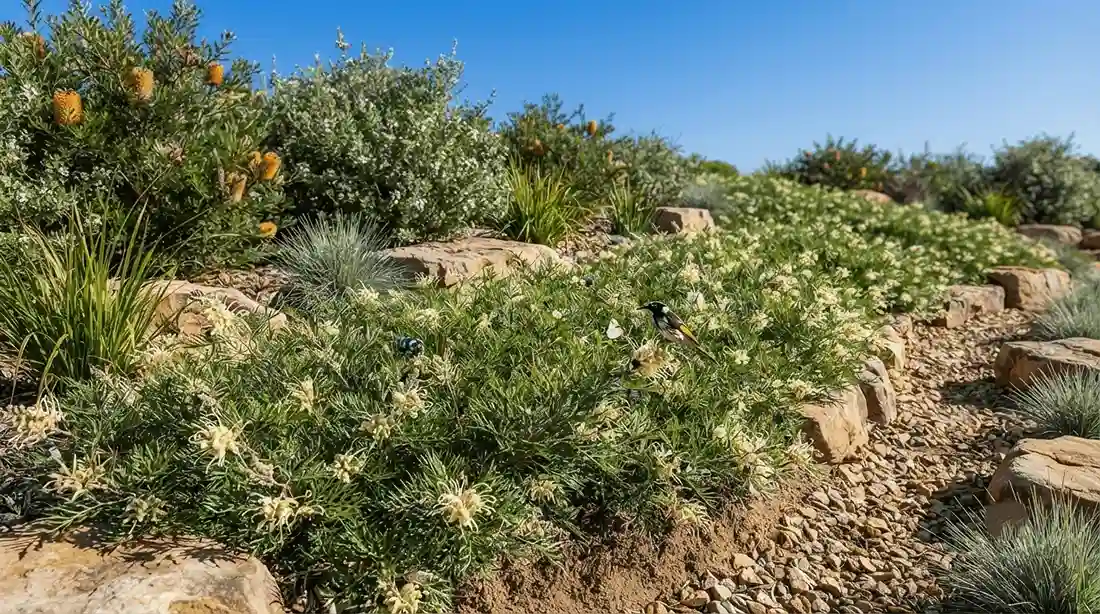
Grevillea curviloba ‘Flat Jack’ is a compact Australian native shrub prized for its dense, spreading growth and exceptional performance as a grevillea ground cover. This low-growing cultivar forms an attractive evergreen carpet, making it an excellent choice for garden borders, rockeries, slopes, erosion control, and water-wise landscapes. Gardeners value Grevillea ‘Flat Jack’ for its nectar-rich flowers, which attract birds and beneficial pollinators while requiring relatively little maintenance once established. Its adaptability to Australia’s varied climates, combined with excellent drought tolerance and attractive foliage, has made Grevillea curviloba one of the most dependable prostrate grevilleas for both residential and commercial landscapes.
By Greenery Inside | Plant Care & Gardening Expert
Quick Summary
- Grevillea curviloba ‘Flat Jack’ is a compact, prostrate Australian native ideal for ground cover, slopes, and erosion control.
- It performs best in full sun with free-draining soil and needs minimal care after establishment.
- Nectar-rich flowers attract native birds, bees, and other beneficial pollinators throughout much of the year.
- Proper spacing, excellent drainage, and occasional pruning help maintain dense, healthy growth.
- Its drought tolerance and evergreen foliage make it well suited to water-wise Australian gardens.
What Is Grevillea Curviloba ‘Flat Jack’?
Plant Overview
Grevillea curviloba ‘Flat Jack’ is a selected cultivar of Grevillea curviloba, an Australian native species belonging to the Proteaceae family. It is widely appreciated for its naturally prostrate growth habit, creating a dense mat of evergreen foliage that spreads horizontally rather than growing upright.
Unlike taller grevilleas that function as screening shrubs, Grevillea Flat Jack was developed specifically for low-growing landscape applications where weed suppression, soil stabilization, and year-round greenery are priorities.
Botanical Classification
| Classification | Details |
| Scientific Name | Grevillea curviloba ‘Flat Jack’ |
| Family | Proteaceae |
| Plant Type | Evergreen native shrub |
| Growth Habit | Prostrate, spreading |
| Origin | Australia |
| Primary Use | Ground cover, erosion control, landscaping |
Native grevilleas are among Australia’s most diverse flowering shrubs, with hundreds of naturally occurring species adapted to different environments. Grevillea curviloba ‘Flat Jack’ stands out because it combines ornamental appeal with practical landscape performance.
Its dense branching structure allows it to cover exposed soil effectively, helping reduce erosion and suppress weeds without requiring frequent maintenance.
In our experience growing Australian native landscapes, ‘Flat Jack’ establishes particularly well when planted in open, sunny positions with excellent drainage. Once rooted, it develops a thick, attractive canopy that requires far less upkeep than many traditional ground covers.
Grevillea Curviloba Common Name and Botanical Background
The scientific name Grevillea curviloba refers to the naturally curved lobes found on its foliage, while ‘Flat Jack’ identifies a cultivated selection bred for its exceptionally low, spreading growth habit.
Unlike some Australian native plants, there is no universally accepted Grevillea curviloba common name. Gardeners and nurseries usually refer to the plant by its cultivar name, Grevillea ‘Flat Jack’, because it distinguishes this form from other selections and naturally occurring populations.
Several cultivars within the Grevillea curviloba group differ in mature size, flowering characteristics, and overall growth habit. ‘Flat Jack’ remains one of the most popular because of its compact profile, making it suitable for both residential gardens and large-scale landscape projects.
Using the botanical name alongside the cultivar name also helps gardeners avoid confusion when selecting plants from nurseries, as similar-looking grevilleas may have very different mature sizes and maintenance requirements.
Key Features of Grevillea Curviloba ‘Flat Jack’
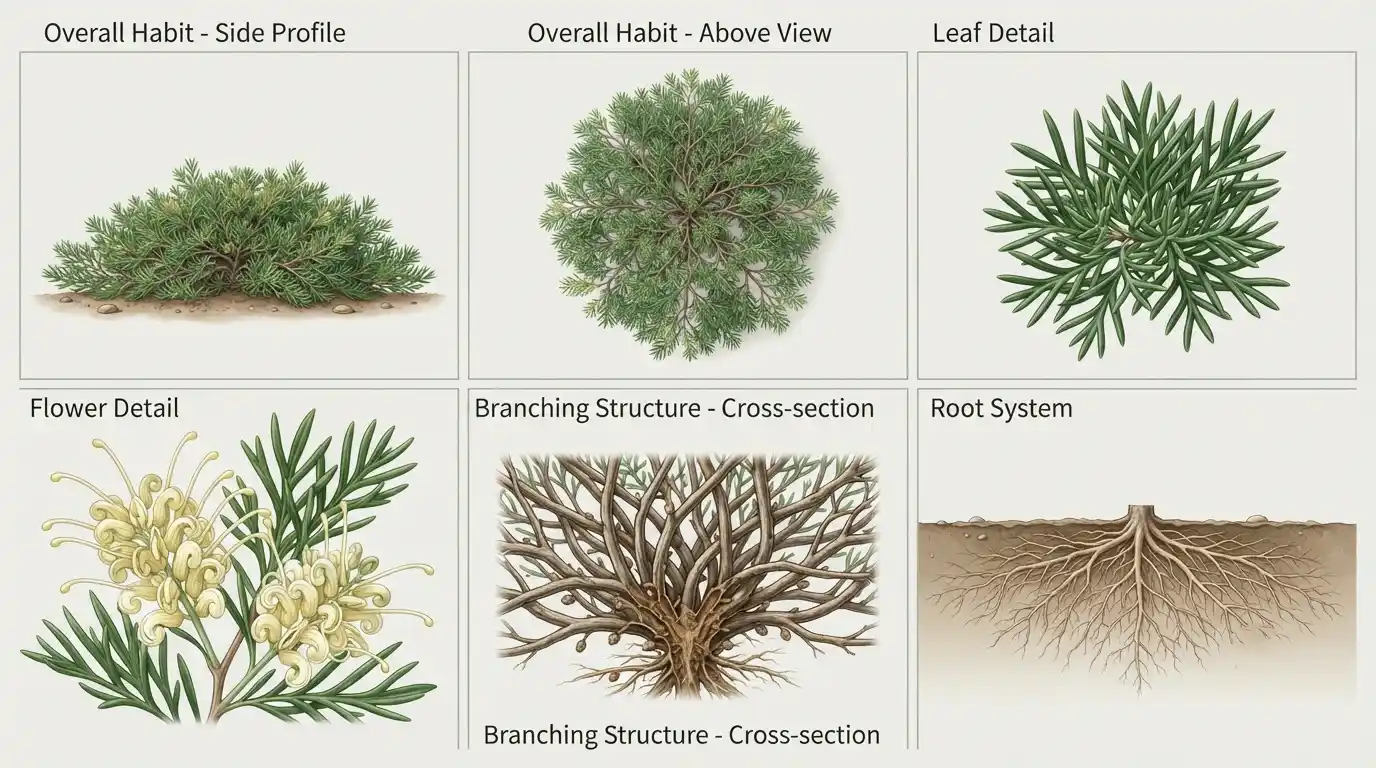
Foliage, Flowers, and Growth Habit
One of the defining characteristics of Grevillea curviloba ‘Flat Jack’ is its dense, finely textured foliage that remains attractive throughout the year. The evergreen leaves create a lush carpet that maintains visual interest even when flowering slows.
Its distinctive spider-like flowers emerge above the foliage and provide an extended source of nectar for wildlife. Flowering commonly occurs from late winter through spring, with intermittent blooms appearing during other seasons in favorable climates.
The combination of ornamental flowers and compact growth makes the plant equally valuable for aesthetics and ecological landscaping.
Key Characteristics
- Flower color: Cream to pale yellow with soft greenish tones
- Leaf texture: Fine, divided, evergreen foliage
- Mature appearance: Dense, low-growing carpet with spreading branches
- Pollinator benefits: Highly attractive to honeyeaters, native bees, butterflies, and other beneficial insects
Because flowering periods vary slightly with climate, gardeners in warmer Australian regions often enjoy blooms across much of the year.
Greenery Inside recommends avoiding excessive fertilization during flowering seasons, as overly vigorous leafy growth may reduce flower production.
Why It Makes an Excellent Grevillea Ground Cover
Grevillea curviloba ‘Flat Jack’ is widely regarded as one of the best grevillea ground cover plants because of its naturally prostrate growth and dense branching.
As a Grevillea curviloba ground cover, it spreads horizontally to cover bare soil while remaining relatively low in height. This growth habit minimizes maintenance and creates an attractive living mulch beneath trees, alongside pathways, or across slopes.
Compared with upright shrubs, prostrate grevillea varieties require less frequent pruning while providing many practical landscaping benefits.
Major advantages include:
- Excellent weed suppression through dense foliage coverage
- Improved soil stabilization on embankments and sloping sites
- Reduced soil moisture evaporation
- Low maintenance after establishment
- Attractive year-round evergreen coverage
- Excellent habitat for beneficial insects and small wildlife
Among the many prostrate grevilleas available, ‘Flat Jack’ offers one of the best combinations of ornamental flowers, dense growth, and adaptability to water-wise gardens.
Its low profile also makes it suitable beneath taller native shrubs, where it functions as a living ground layer without competing aggressively for space.
Plant Size, Height, Spread, and Spacing
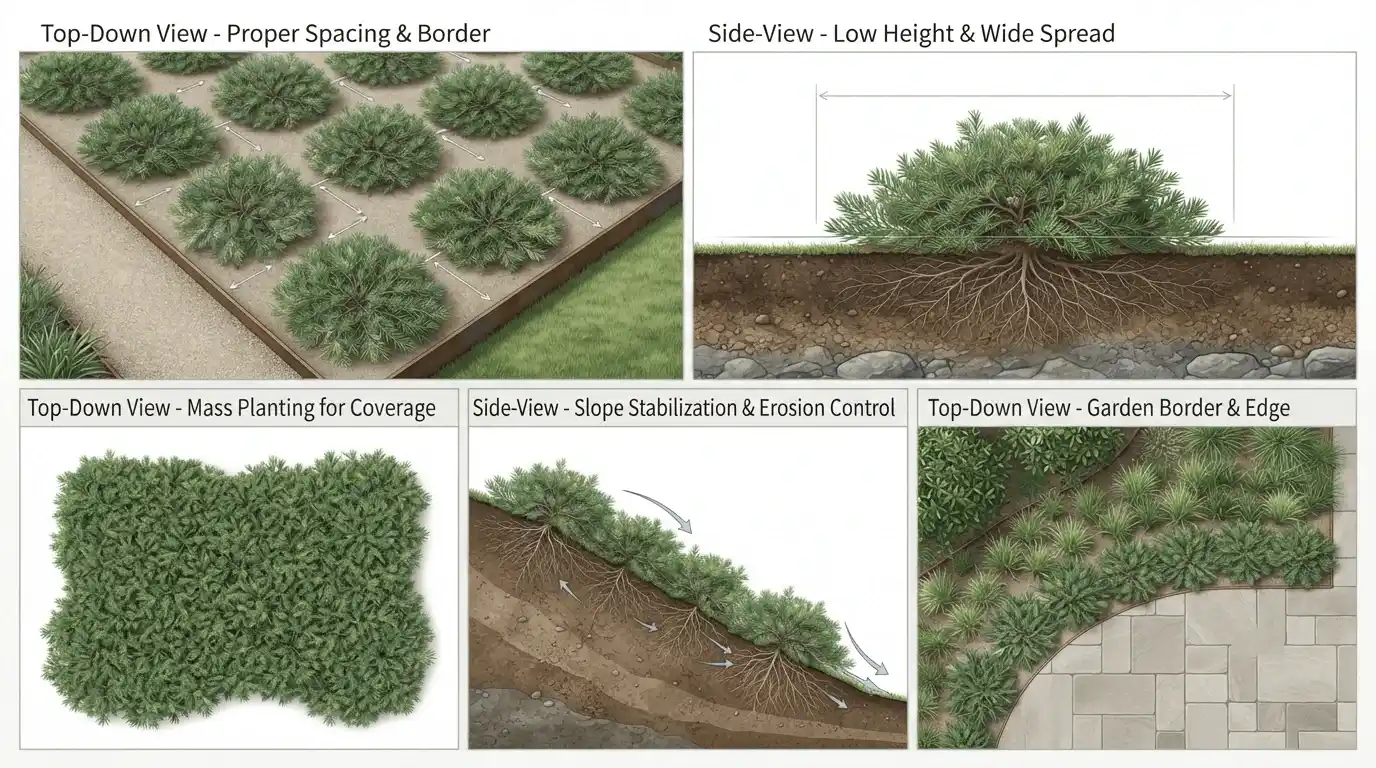
Mature Size
One of the biggest advantages of Grevillea curviloba ‘Flat Jack’ is its predictable mature size, making landscape planning much easier.
Although environmental conditions influence growth, most established plants remain compact while spreading steadily across the ground.
Typical Mature Dimensions
| Feature | Typical Size |
| Height | 20–40 cm (8–16 in) |
| Width | 1.5–3 m (5–10 ft) |
| Spread Rate | Moderate |
| Growth Habit | Dense, prostrate, spreading |
The exact Grevillea curviloba size depends on several factors, including:
- Sun exposure
- Soil drainage
- Available moisture
- Climate
- Pruning practices
The typical Grevillea curviloba Flat Jack size remains relatively low, with a mature Grevillea curviloba Flat Jack height rarely exceeding 40 cm under normal garden conditions.
Plants grown in ideal full-sun locations generally produce denser branching than those grown in partial shade.
Recommended Plant Spacing
Correct spacing allows individual plants to develop healthy branching while eventually forming a continuous ground cover.
General spacing recommendations include:
| Landscape Use | Recommended Spacing |
| Garden borders | 1–1.5 m |
| Mass planting | 1–1.2 m |
| Erosion control | 0.8–1.2 m |
| Feature planting | 1.5–2 m |
Proper Grevillea curviloba Flat Jack spacing improves airflow between plants during establishment while allowing mature specimens to merge naturally into a dense carpet.
Planting too closely may initially create faster coverage but can reduce air circulation, increasing humidity around stems and potentially encouraging fungal problems.
Growing Conditions and Care Guide
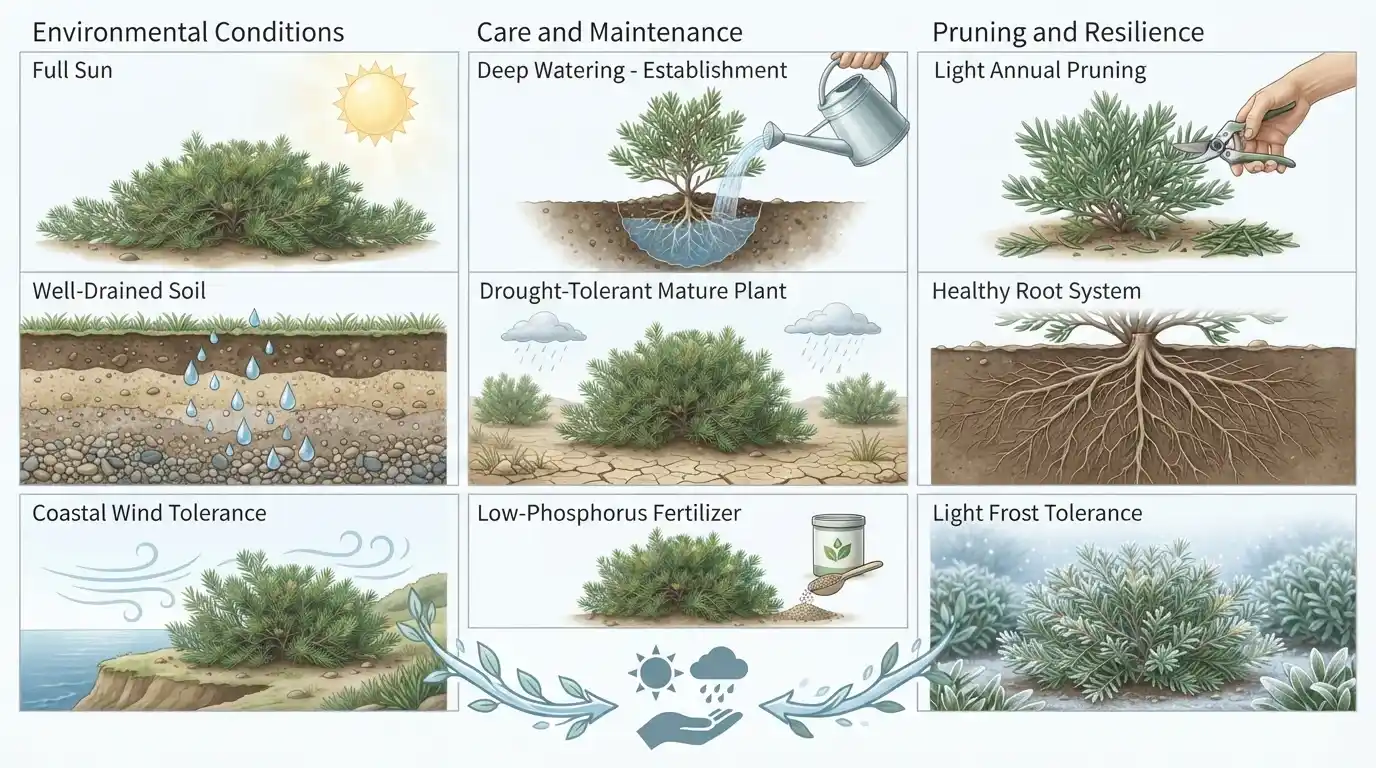
Light Requirements
Grevillea curviloba ‘Flat Jack’ performs best in full sun, where it develops compact growth, abundant flowering, and healthy foliage.
While it tolerates partial shade, reduced sunlight often leads to:
- Less flowering
- More open branching
- Slower growth
- Reduced foliage density
For maximum ornamental performance, provide at least six hours of direct sunlight each day.
Soil Requirements
Excellent drainage is the single most important requirement for growing healthy grevilleas.
Ideal soil types include:
- Sandy soils
- Sandy loams
- Gravelly soils
- Well-drained native garden soils
Heavy clay soils that retain water significantly increase the risk of root diseases.
Where drainage is poor, consider:
- Raised garden beds
- Mounded planting
- Incorporating coarse gravel
- Improving drainage before planting
Native grevilleas generally perform best in soils with low phosphorus levels and moderate fertility.
Watering Needs
Although mature Grevillea Flat Jack plants are highly drought tolerant, newly planted specimens require regular watering while roots establish.
During establishment
- Water deeply once or twice weekly.
- Allow soil to partially dry between waterings.
- Avoid constantly wet soil.
After establishment
Once established, watering requirements decrease substantially.
Most mature plants only require supplemental irrigation during extended dry periods.
In our experience, deep but infrequent watering encourages stronger root systems than frequent shallow irrigation.
As of the current growing season, many native plant specialists continue recommending reduced irrigation for established grevilleas to improve drought resilience and minimize root disease risks.
Fertilizer Requirements
Grevilleas have relatively modest nutritional needs.
The safest options include:
- Low-phosphorus native plant fertilizers
- Slow-release formulations designed for Australian natives
Avoid:
- High-phosphorus fertilizers
- Fresh manure
- Excessive compost around the crown
Too much phosphorus can damage sensitive Proteaceae roots and reduce long-term plant health.
If fertilizing, apply only during active growth according to product recommendations.
Pruning and Maintenance
Routine pruning helps maintain a dense, attractive ground cover while encouraging fresh flowering growth.
Best practices include:
- Lightly prune after major flowering flushes.
- Remove dead, damaged, or crossing branches.
- Avoid cutting into old woody stems where little new growth occurs.
- Trim lightly to encourage lateral branching.
- Remove weeds during establishment.
- Monitor drainage after heavy rainfall.
Greenery Inside recommends annual light maintenance rather than severe pruning, as regular shaping preserves the plant’s naturally compact appearance.
Climate and Hardiness
Grevillea curviloba ‘Flat Jack’ performs well across many Australian climates and is especially suited to regions with warm summers and well-drained soils.
It demonstrates:
- Good drought tolerance
- Strong heat tolerance
- Moderate frost tolerance once established
- Excellent coastal performance in many regions
- Good resistance to wind and salt-laden air
While established plants withstand occasional light frosts, prolonged freezing conditions may damage new growth.
Providing full sun, excellent drainage, and good air circulation gives this Australian native the best opportunity to thrive for many years.
Growth Rate and Long-Term Performance
How Fast Does Flat Jack Grow?
Grevillea curviloba ‘Flat Jack’ has a moderate growth rate under suitable conditions. While it is not among the fastest-growing grevilleas, it establishes steadily and eventually develops into a dense, low-maintenance ground cover.
Growth speed depends largely on:
- Sunlight exposure
- Soil drainage
- Water availability during establishment
- Climate
- Soil fertility
- Competition from surrounding plants
A newly planted specimen typically spends its first growing season developing a healthy root system. During this period, above-ground growth may appear modest. Once established, branching accelerates, allowing the plant to spread outward and gradually fill surrounding space.
Typical establishment timeline:
| Plant Age | Expected Growth |
| First 3–6 months | Root establishment with moderate top growth |
| 6–12 months | Noticeable lateral spreading begins |
| 1–2 years | Dense ground cover develops under good conditions |
| 2–4 years | Mature size is generally reached |
Plants grown in full sun with well-drained sandy or gravelly soil usually establish more quickly than those planted in heavy or poorly drained soils.
In our experience growing Australian native ground covers, gardeners sometimes assume slow initial growth indicates poor health. In reality, Grevillea ‘Flat Jack’ naturally invests energy into root development before producing vigorous horizontal branching.
Lifespan and Landscape Performance
With proper care, Grevillea curviloba ‘Flat Jack’ is a long-lived landscape shrub that can remain attractive for well over a decade. Many established plants continue performing well for 15–20 years or longer when grown in suitable conditions.
Its long-term value comes from its combination of:
- Evergreen foliage
- Reliable flowering
- Dense weed-suppressing canopy
- Low water requirements
- Minimal pruning needs
Unlike some vigorous ground covers that become invasive or untidy over time, ‘Flat Jack’ generally maintains a neat, spreading form with occasional maintenance.
As plants mature, the branching network becomes denser, creating improved weed suppression and enhanced erosion control.
Greenery Inside recommends inspecting mature plants once or twice annually to remove dead interior branches and improve air circulation without altering their naturally prostrate form.
Best Landscaping Uses
Ideal Garden Applications
One of the greatest strengths of Grevillea curviloba ‘Flat Jack’ is its versatility. Its compact habit makes it suitable for both residential gardens and large public landscapes where attractive, low-maintenance planting is desired.
Ideal applications include:
- Ground cover beneath taller native shrubs and trees
- Rock gardens where cascading foliage softens hard landscaping
- Native gardens featuring drought-tolerant Australian plants
- Slopes and embankments for erosion control
- Garden borders along paths and driveways
- Coastal gardens exposed to wind and salt spray
- Water-wise landscapes requiring reduced irrigation
- Large open beds where broad coverage is needed
- Public landscapes requiring durable, low-maintenance planting
Because it remains relatively low, ‘Flat Jack’ does not obstruct views or overwhelm neighboring plants, making it especially useful in layered landscape designs.
Companion Plants
Pairing Grevillea curviloba ‘Flat Jack’ with compatible Australian native plants creates visually appealing, ecologically beneficial landscapes.
Suitable companion plants include:
| Plant | Why It Works |
| Westringia fruticosa | Contrasting upright form and coastal tolerance |
| Banksia spinulosa | Similar growing requirements and bird-attracting flowers |
| Callistemon varieties | Adds height and vibrant bottlebrush flowers |
| Correa species | Complements flowering seasons and attracts birds |
| Dianella species | Provides architectural foliage contrast |
| Lomandra longifolia | Excellent texture contrast and drought tolerance |
| Myoporum parvifolium | Another useful native ground cover for mixed plantings |
Combining plants with similar water and soil requirements simplifies long-term maintenance while creating year-round habitat for native wildlife.
Comparison With Similar Grevilleas
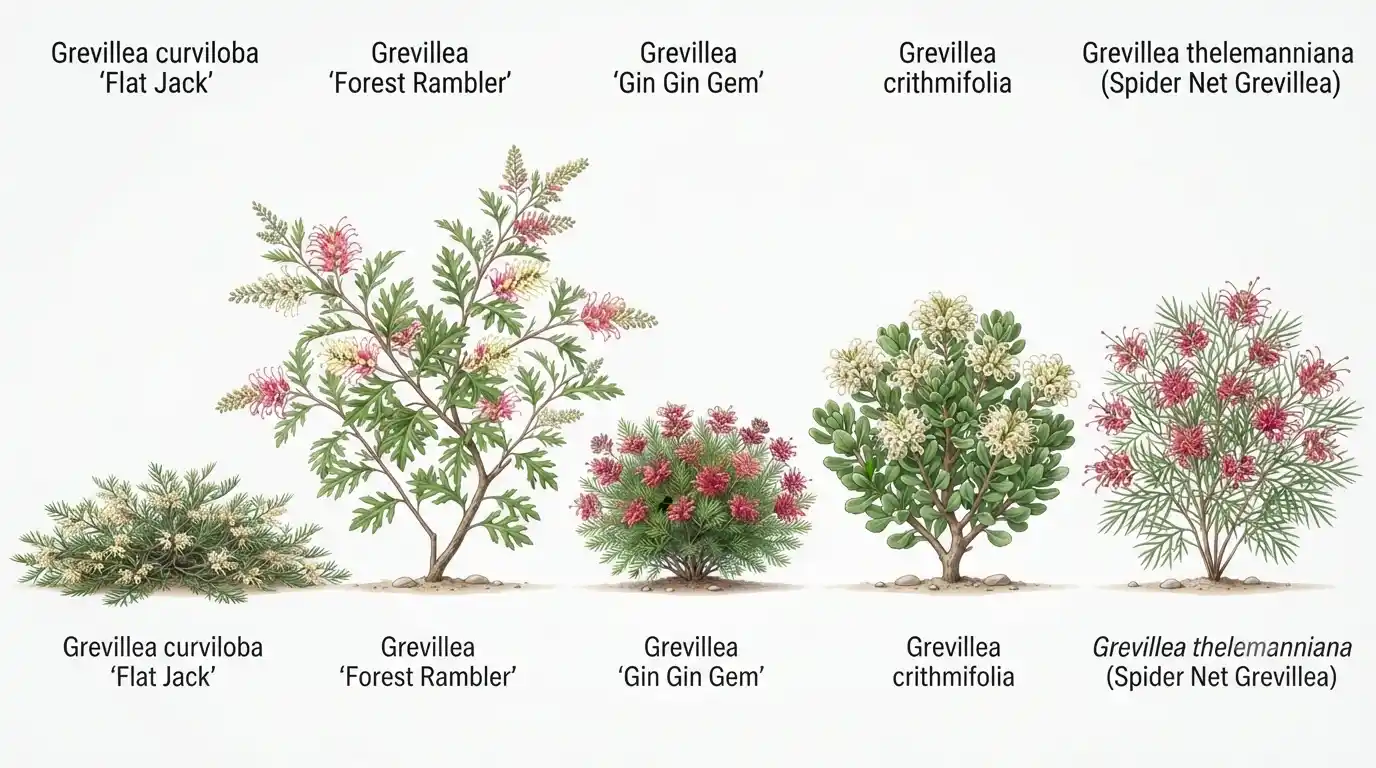
Although Grevillea curviloba ‘Flat Jack’ is an excellent ground cover, several other grevilleas share similar landscape roles. Understanding their differences helps gardeners select the best plant for specific situations.
Flat Jack vs Grevillea Forest Rambler
Grevillea Forest Rambler is another spreading grevillea, but it generally grows larger and develops a more vigorous habit than ‘Flat Jack.’
| Feature | Flat Jack | Forest Rambler |
| Growth Habit | Compact, prostrate | Broad, spreading shrub |
| Height | 20–40 cm | 40–80 cm |
| Width | Up to 3 m | Often over 4 m |
| Maintenance | Low | Moderate |
| Best Use | Ground cover | Large banks, informal planting |
While Grevillea Forest Rambler excels in large landscapes, it may become too vigorous for smaller residential gardens.
Gardeners sometimes also use Grevillea Forest Rambler hedge plantings where a very informal, low screen is desired, whereas ‘Flat Jack’ remains primarily a ground-covering cultivar.
Flat Jack vs Grevillea Thelemanniana
Grevillea thelemanniana differs considerably from ‘Flat Jack’ in both flower appearance and overall growth habit.
Key differences include:
| Characteristic | Flat Jack | Thelemanniana |
| Growth Habit | Prostrate | Upright to arching |
| Flowers | Cream to pale yellow | Bright pink-red |
| Wildlife Value | Excellent | Excellent |
| Best Use | Ground cover | Feature shrub |
The compact cultivar Grevillea thelemanniana ‘Mini Marvel’ offers a smaller alternative to the species but still grows more upright than ‘Flat Jack.’
Gardeners seeking vibrant floral displays often choose Thelemanniana, while those prioritizing soil coverage generally prefer ‘Flat Jack.’
Flat Jack vs Grevillea Crithmifolia
Grevillea crithmifolia is another low-growing species frequently used in native gardens.
Comparison highlights:
| Feature | Flat Jack | Crithmifolia |
| Foliage | Fine, divided | Narrow, deeply divided |
| Height | Lower | Slightly taller |
| Spread | Dense | Broad |
| Maintenance | Minimal | Minimal |
The prostrate form, Grevillea crithmifolia prostrate, performs similarly as a ground cover but often develops a looser branching structure compared with the dense mat formed by ‘Flat Jack.’
Flat Jack vs Grevillea Obtusifolia
Grevillea obtusifolia shares several characteristics with Grevillea curviloba, including low-growing habits and adaptability to well-drained soils.
However, differences include:
- Slightly different leaf shape
- Variable mature size depending on cultivar
- Regional differences in natural distribution
- Different flowering characteristics
Both species are excellent choices for drought-tolerant native gardens, but ‘Flat Jack’ is generally selected when exceptionally dense ground coverage is the priority.
Flat Jack vs Gin Gin Gem
Among Australian gardeners, Gin Gin Gem remains one of the best-known spreading grevilleas.
It is commonly sold under several names, including:
- Grevillea Gin Gin Gem
- Grevillea Gingin Gem
- Gin Gin Gem Grevillea
- Gingin Gem Grevillea
- Grevillea obtusifolia ‘Gin Gin Gem’
- Grevillea obtusifolia ‘Gingin Gem’
- Occasionally Grevillea Gin Gin Jewel
Although naming varies among nurseries, these names generally refer to closely related selections.
Comparison highlights:
| Feature | Flat Jack | Gin Gin Gem |
| Growth | Dense, compact | Faster, broader |
| Height | Lower | Slightly taller |
| Flowering | Cream-yellow | Cream to white, depending on selection |
| Maintenance | Very low | Low to moderate |
| Best Use | Formal ground cover | Large informal plantings |
Gardeners with limited space often appreciate the controlled growth of ‘Flat Jack,’ while Gin Gin Gem suits larger landscapes where quicker coverage is desirable.
Comparison Table
| Feature | Flat Jack | Forest Rambler | Gin Gin Gem | Crithmifolia | Thelemanniana |
| Growth Habit | Dense prostrate | Broad spreading | Vigorous spreading | Low spreading | Upright |
| Height | 20–40 cm | 40–80 cm | 40–60 cm | 30–60 cm | 1–2 m |
| Spread | 1.5–3 m | Up to 4 m+ | 3–4 m | 2–3 m | 1–2 m |
| Best Use | Ground cover | Banks & slopes | Large landscapes | Native gardens | Feature shrub |
| Maintenance | Very low | Moderate | Low | Low | Moderate |
Common Problems and How to Solve Them
Yellow Leaves
Yellowing foliage is most commonly caused by environmental stress rather than disease.
Possible causes include:
- Poor drainage
- Waterlogged roots
- Nutrient imbalance
- Root disturbance during planting
- Temporary transplant shock
Solutions:
- Improve drainage immediately.
- Reduce watering frequency.
- Remove standing water around the root zone.
- Avoid excessive fertilizer applications.
Healthy new growth usually returns once root conditions improve.
Poor Flowering
If Grevillea ‘Flat Jack’ produces few flowers, the underlying cause is usually cultural rather than genetic.
Common reasons include:
- Too much shade
- Excess nitrogen fertilizer
- Heavy pruning before flowering
- Insufficient plant maturity
To encourage flowering:
- Grow in full sun.
- Use low-phosphorus native fertilizers only when necessary.
- Prune after flowering rather than beforehand.
- Allow young plants adequate time to establish.
Root Rot
Root rot is the most serious issue affecting grevilleas and is almost always associated with poor drainage.
Symptoms include:
- Sudden wilting
- Yellow foliage
- Stem dieback
- Root discoloration
- Progressive plant decline
Prevention remains the most effective treatment.
Improve drainage by:
- Planting on raised mounds
- Using sandy or gravelly soils
- Avoiding overwatering
- Preventing prolonged waterlogging
Once severe root rot develops, recovery is often difficult.
Pest and Disease Issues
Fortunately, Grevillea curviloba ‘Flat Jack’ is generally resistant to serious pest problems.
Occasionally encountered pests include:
- Scale insects
- Stem borers
- Aphids on soft new growth
Potential diseases include:
- Root rot fungi
- Minor fungal leaf spotting in humid conditions
Preventive measures include:
- Maintaining good air circulation
- Avoiding overhead irrigation
- Inspecting plants regularly
- Removing damaged branches promptly
- Encouraging beneficial insects
Healthy plants grown in appropriate conditions rarely suffer significant pest or disease damage.
Common Mistakes to Avoid
Many growing problems can be prevented by avoiding a few common gardening mistakes.
- Overwatering established plants
- Planting in heavy clay without improving drainage
- Applying high-phosphorus fertilizers
- Growing in excessive shade
- Cutting heavily into old woody stems
- Planting too closely together
- Allowing weeds to compete during establishment
- Watering lightly every day instead of deeply and less frequently
- Ignoring drainage after prolonged rainfall
Greenery Inside recommends focusing on proper site preparation before planting, as correcting drainage issues later is far more difficult than preventing them from the start.
Environmental Benefits
Grevillea curviloba ‘Flat Jack’ is more than an attractive ornamental shrub—it also contributes to healthier, more sustainable landscapes. As a low-growing Australian native, it supports local ecosystems while reducing the need for intensive maintenance, irrigation, and chemical inputs.
Its dense, evergreen canopy provides year-round ground cover, making it valuable for residential gardens, public landscapes, and habitat restoration projects.
Bird Attraction
The nectar-rich flowers are highly attractive to nectar-feeding birds, particularly:
- Honeyeaters
- Eastern spinebills
- Wattlebirds
- Other small native birds, depending on the region
As birds move between flowers, they assist with pollination, supporting both the plant and surrounding native vegetation.
Pollinator Support
The extended flowering period also benefits beneficial insects.
Common visitors include:
- Native bees
- Honeybees
- Butterflies
- Hoverflies
- Other nectar-feeding insects
By planting Grevillea curviloba ‘Flat Jack’, gardeners can help create a continuous food source for pollinators across multiple seasons.
Habitat Creation
Its dense branching structure provides shelter for:
- Small reptiles
- Ground-dwelling insects
- Beneficial spiders
- Juvenile birds seeking protection
Layering this prostrate grevillea beneath taller native shrubs creates diverse habitat zones that improve overall biodiversity.
Water-Wise Landscaping
One of the strongest environmental advantages of Grevillea curviloba ‘Flat Jack’ is its suitability for water-efficient gardens.
Once established, it typically requires only occasional supplemental watering during prolonged dry periods, helping to:
- Reduce outdoor water consumption
- Lower irrigation costs
- Improve drought resilience
- Support sustainable gardening practices
Erosion Control
Its spreading root system and dense canopy make it particularly effective on:
- Slopes
- Embankments
- Roadside plantings
- Retaining wall edges
The foliage slows rainfall impact while the roots help stabilize soil, reducing erosion caused by wind and water.
Biodiversity Benefits
Native grevilleas play an important ecological role by supporting wildlife adapted to Australian flora.
Using Grevillea curviloba ‘Flat Jack’ in mixed native plantings helps:
- Increase habitat diversity
- Encourage beneficial insects
- Support native bird populations
- Reduce dependence on exotic ornamental species
- Create more resilient garden ecosystems
As of 2026, many Australian landscape designers continue recommending native ground covers like ‘Flat Jack’ for climate-resilient, biodiversity-friendly gardens due to their adaptability and relatively low resource requirements.
Availability and Regional Considerations
Where Grevillea Curviloba ‘Flat Jack’ Is Commonly Grown
Grevillea curviloba ‘Flat Jack’ Australia is widely cultivated across regions with warm, temperate, Mediterranean, and coastal climates.
It performs particularly well in areas offering:
- Full sun
- Free-draining soils
- Low to moderate humidity
- Mild to warm temperatures
It is commonly grown in:
- New South Wales
- Victoria
- South Australia
- Western Australia
- Coastal Queensland (with suitable drainage)
- Tasmania’s milder districts
Because local climate, soil type, and rainfall patterns vary, gardeners should consider regional growing conditions before planting.
In cooler inland regions that experience heavier frosts, selecting a protected planting position can improve winter performance.
Nursery Availability
As one of the more popular prostrate grevillea cultivars, ‘Flat Jack’ is commonly available through:
- Native plant nurseries
- Specialist Australian plant growers
- Landscape supply nurseries
- Community native plant sales
Availability may vary seasonally, with the widest selection often appearing during peak planting periods.
Choosing Healthy Nursery Plants
Selecting healthy young plants significantly improves establishment success.
Look for plants that have:
- Compact, balanced growth
- Healthy green foliage
- Multiple well-branched stems
- No obvious pest damage
- No yellowing or wilting leaves
- Firm root systems without circling roots
Avoid plants showing signs of:
- Waterlogging
- Root-bound containers
- Broken stems
- Extensive leaf discoloration
- Poor vigor
In our experience, slightly smaller, actively growing nursery plants often establish more quickly than oversized specimens that have remained in containers for extended periods.
Before planting, inspect the root ball carefully. Healthy white feeder roots indicate active growth and generally improve transplant success.
Related Grevillea Varieties Worth Exploring
Gardeners interested in Grevillea curviloba ‘Flat Jack’ may also enjoy several other grevilleas that offer different growth habits, foliage textures, or flower colors.
Spider Net Grevillea
Spider Net Grevillea is valued for its intricate foliage and spreading habit.
Compared with ‘Flat Jack’:
- More finely textured appearance
- Similar drought tolerance
- Excellent for rock gardens
- Distinctive ornamental foliage
It suits gardeners seeking additional texture within native landscapes.
Grevillea Red Wings
Grevillea Red Wings is known for its striking reddish flowers and compact shrub form.
Key differences include:
- Brighter floral display
- More upright growth
- Excellent bird attraction
- Suitable as a feature shrub rather than a broad ground cover
It pairs well with low-growing cultivars like ‘Flat Jack’ to create layered planting schemes.
Miniature Grevillea Varieties
Many miniature grevillea cultivars provide compact alternatives for small gardens, courtyards, and containers.
Benefits include:
- Compact growth
- Extended flowering
- Easy maintenance
- Suitable for limited spaces
While not all miniature grevilleas spread as broadly as ‘Flat Jack,’ they complement similar water-wise planting designs.
Grevillea curviloba subsp. incurva
Grevillea curviloba subsp. incurva is a naturally occurring subspecies within the Grevillea curviloba complex.
Compared with ‘Flat Jack’:
- More variable growth habit
- Botanical rather than cultivated form
- Differences in leaf shape and branching
- Greater natural variation among populations
For gardeners seeking consistent landscape performance, cultivated selections like ‘Flat Jack’ generally provide more predictable mature size and form.
Conclusion
Grevillea curviloba ‘Flat Jack’ is one of Australia’s most dependable low-growing native shrubs for modern landscapes. Its dense, prostrate habit, evergreen foliage, and nectar-rich flowers make it an outstanding choice for ground cover, erosion control, native gardens, rockeries, borders, and water-wise landscapes.
Growing this cultivar successfully depends on providing full sun, excellent drainage, low-phosphorus nutrition, and moderate watering during establishment. Once mature, it requires relatively little maintenance beyond occasional pruning to encourage dense branching and continued flowering.
Compared with related grevilleas such as Forest Rambler, Gin Gin Gem, Grevillea thelemanniana, Grevillea crithmifolia, and Grevillea obtusifolia, ‘Flat Jack’ stands out for its compact size, controlled spread, and exceptional ground-covering performance.
For gardeners seeking a resilient, wildlife-friendly, drought-tolerant Australian native, Grevillea curviloba ‘Flat Jack’ remains an excellent long-term investment that combines ornamental beauty with practical landscape benefits.
Frequently Asked Questions
Is Grevillea curviloba ‘Flat Jack’ a true ground cover?
Yes. Grevillea curviloba ‘Flat Jack’ is considered a true prostrate ground cover because it spreads horizontally while remaining relatively low in height. Its dense branching suppresses weeds, stabilizes soil, and creates an attractive evergreen carpet.
How large does Grevillea curviloba ‘Flat Jack’ grow?
Most mature plants reach approximately 20–40 cm (8–16 inches) in height and spread 1.5–3 metres (5–10 feet) wide, depending on climate, soil conditions, and maintenance.
What spacing is recommended for Grevillea curviloba ‘Flat Jack’?
For most landscape applications, space plants 1–1.5 metres apart. Closer spacing (around 0.8–1.2 metres) is suitable for erosion control or rapid ground coverage, while wider spacing works well for feature plantings.
Does Grevillea ‘Flat Jack’ attract birds and pollinators?
Yes. Its nectar-rich flowers attract honeyeaters, spinebills, native bees, butterflies, and other beneficial pollinators, making it an excellent choice for wildlife-friendly gardens.
Can Grevillea curviloba ‘Flat Jack’ tolerate drought?
Once established, it has excellent drought tolerance. Deep, occasional watering during extended dry periods is usually sufficient, provided the soil drains freely.
What type of soil is best for Grevillea ‘Flat Jack’?
The plant performs best in well-drained sandy, gravelly, or sandy loam soils. Heavy clay or poorly drained soils should be improved before planting to reduce the risk of root rot.
How often should Grevillea ‘Flat Jack’ be pruned?
Light pruning after the main flowering period is generally enough. Removing spent flowers and lightly trimming new growth each year encourages a dense, tidy habit and promotes future flowering.
How does Flat Jack compare with Gin Gin Gem and Forest Rambler?
‘Flat Jack’ is typically lower-growing and more compact than both Gin Gin Gem and Forest Rambler. While the latter cultivars spread more vigorously and suit larger landscapes, ‘Flat Jack’ is often preferred for smaller gardens, formal ground-cover plantings, and areas where a controlled, dense growth habit is desired.