Introduction
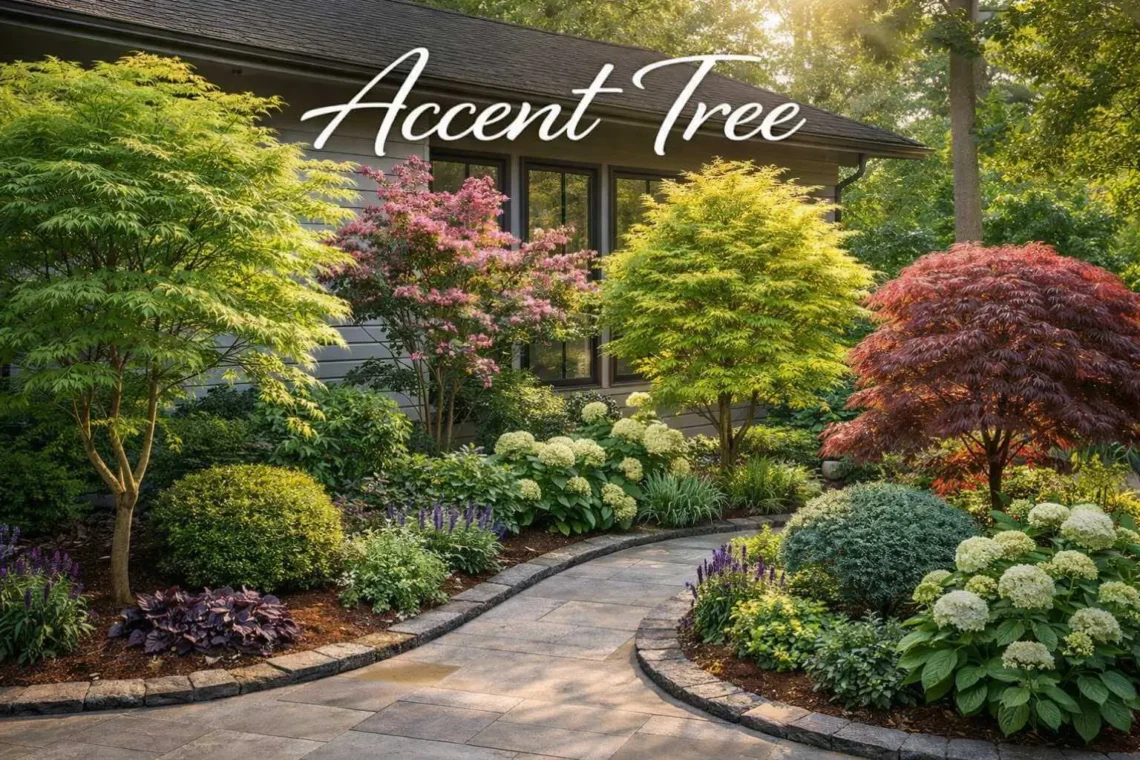
An accent tree is a plant or ornamental tree specifically used to enhance both landscape and interior design. Its primary purpose is to highlight corners, living spaces, gardens, or seasonal decoration, providing visual interest and aesthetic appeal. Accent trees can be indoor or outdoor, ranging from small, dwarf varieties to flowering or evergreen options. An accent tree is a plant or ornamental tree used to enhance both landscape and interior design (see ornamental tree for general types and characteristics). Understanding accent tree meaning, varieties, and their decorative potential allows homeowners and designers to strategically place these trees for maximum impact. Decorative trees outdoor and ornamental trees add depth and focal points to spaces, making them versatile for various design applications.
Understanding Accent Trees
-
Definition and Purpose
An accent tree is an ornamental plant used to draw attention to specific areas in a landscape or indoor setting. Its role is both functional and aesthetic, providing a visual focal point while complementing the surrounding environment. Examples include small accent trees for corners, dwarf accent trees for compact spaces, and flowering accent trees that add seasonal color. By defining what an accent tree is, designers can select the right decorative tree for garden areas or indoor arrangements. Knowledge of ornamental trees names further supports informed selection.
-
Types and Varieties
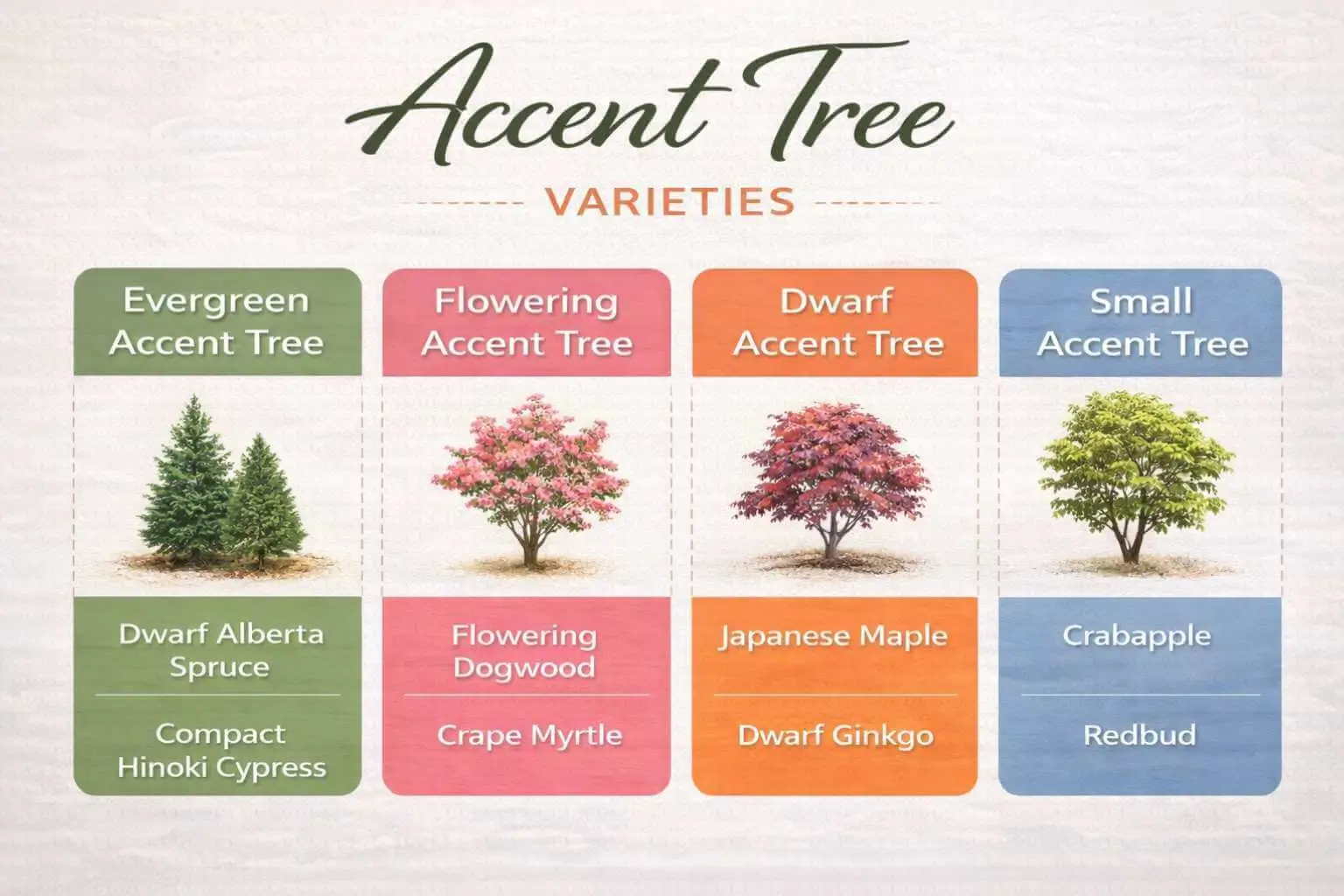
Accent trees come in various types and varieties. Common options include evergreen accent trees for year-round greenery, flowering accent trees for seasonal blooms, and dwarf or small trees suitable for front yards or indoor corners. Evergreen and colorful accent trees, such as Sundowner Phormium, provide year-round interest and can enhance both indoor and outdoor spaces. Seasonal varieties, such as accent Christmas trees, and color variations in green, blue, white, or pink, expand design possibilities. Exploring accent tree varieties allows designers to match trees to style, space, and seasonal decoration goals. For example, blue foliage varieties like the blue fescue plant can complement small accent trees in gardens for a striking visual effect.
Placement and Design Uses
-
Outdoor Placement
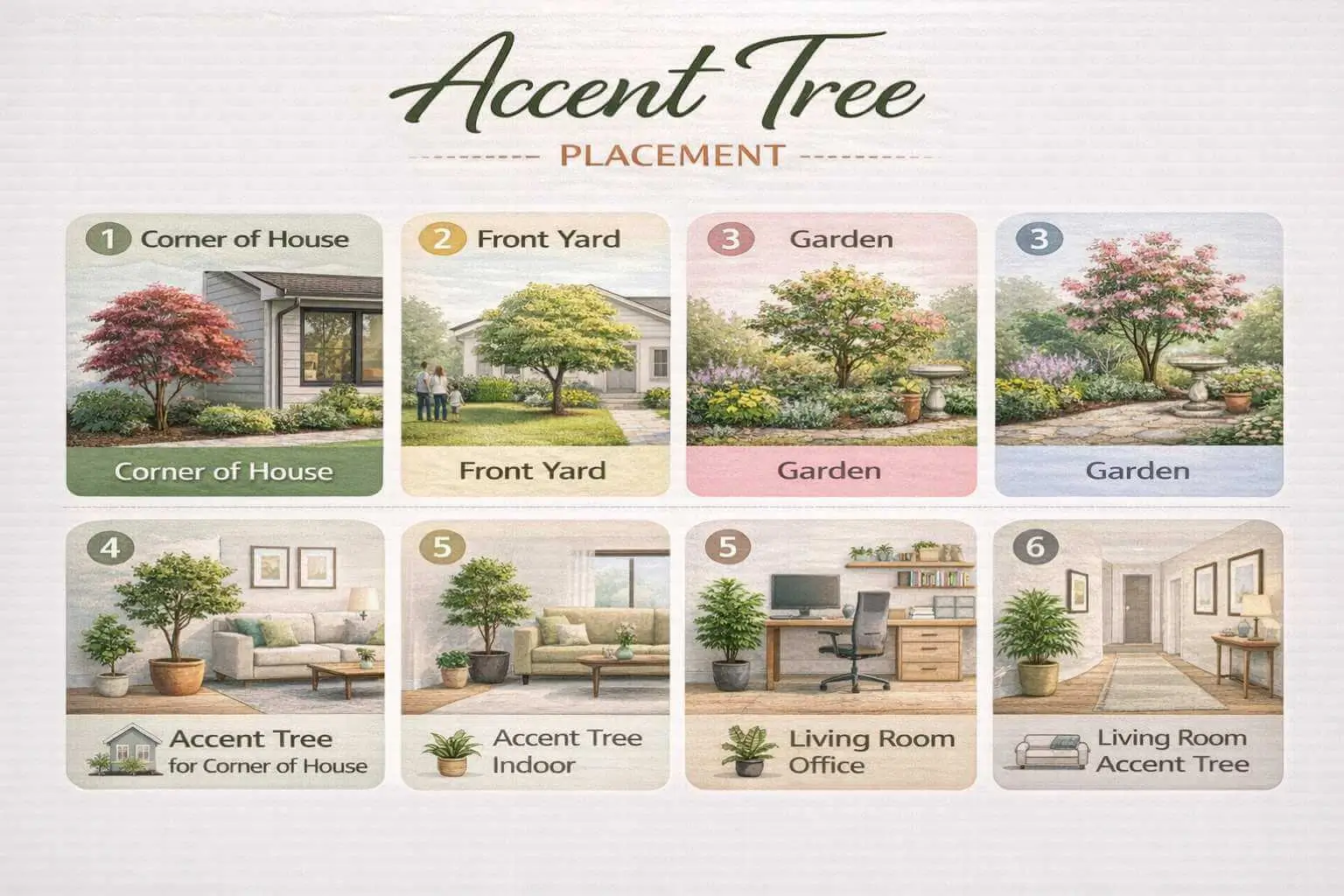
Outdoor placement focuses on enhancing landscapes and creating focal points. Ideal locations include corners of houses, front yards, gardens, or small spaces requiring visual balance. Placement considerations include visual impact, such as using a dramatic accent tree or a corner accent tree to draw attention. Small accent trees for front yard areas complement landscaping while maintaining proportion and harmony.
-
Indoor Placement
Indoor accent trees are used in living rooms, offices, hallways, or other interior spaces. Proper scale is essential to avoid overwhelming furniture or room proportions. Choosing an accent tree for living room settings ensures visual balance while enhancing aesthetic appeal. Indoor placement also considers light exposure, humidity, and ease of maintenance.
-
Seasonal and Decorative Uses
Accent trees serve seasonal decoration purposes, particularly during holidays. Pre-lit accent Christmas trees, decorative accent tree lights, and lighted accent trees provide festive appeal. These trees can be enhanced with ornaments, tinsel, or LED lighting for temporary visual impact. Seasonal options allow flexibility in transforming interior and exterior spaces for special occasions.
Care and Maintenance
-
Growth Conditions
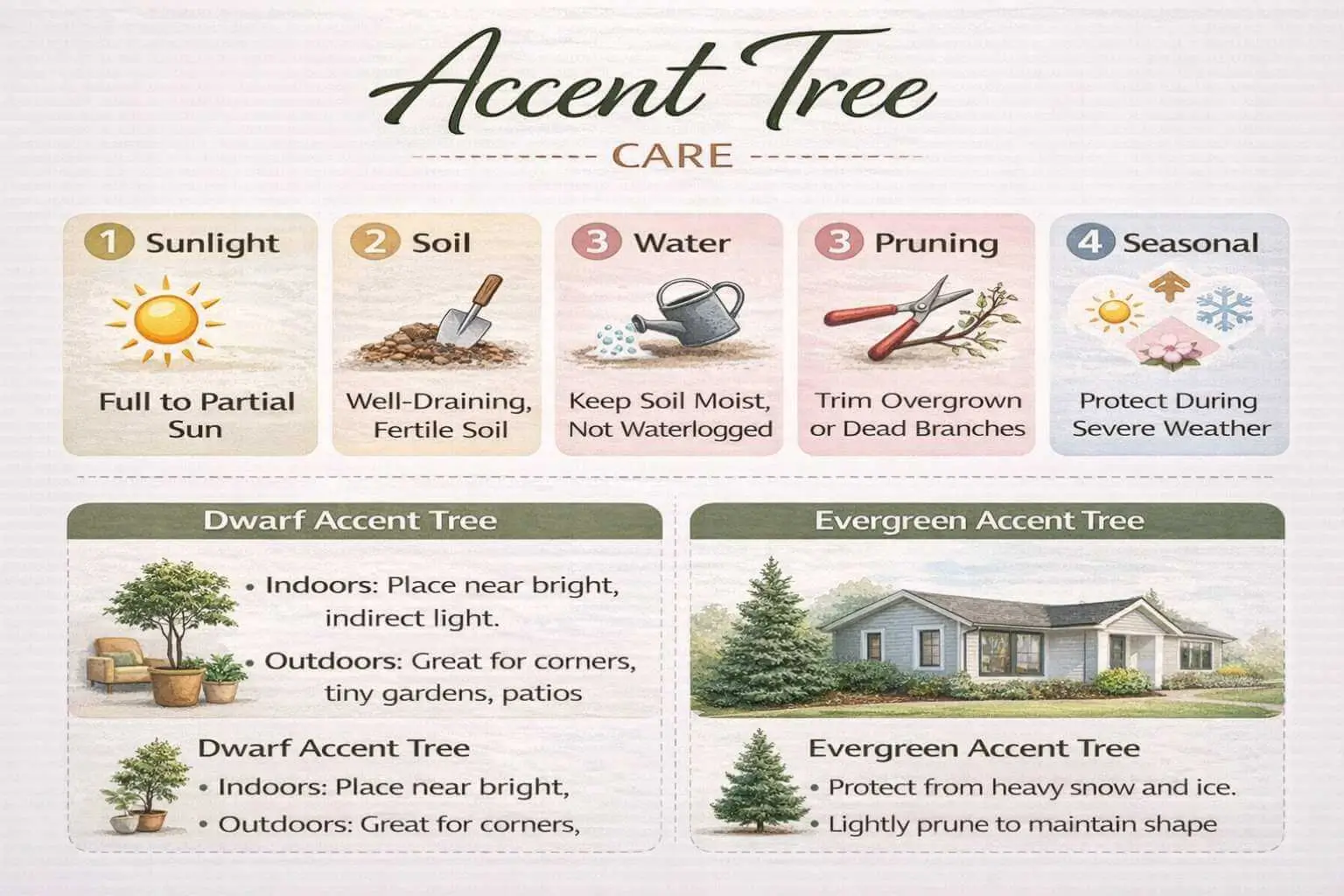
Growth conditions for accent trees vary depending on indoor or outdoor placement. Outdoor trees require adequate sunlight, well-draining soil, and proper watering schedules, while indoor trees need consistent light, humidity control, and soil monitoring. Evergreen accent trees and dwarf accent trees may have specific soil or moisture requirements. Proper understanding of ascent tree care ensures longevity and optimal health.
-
Pruning and Shaping
Pruning and shaping maintain the desired visual impact of accent trees. Flowering or fruit-bearing trees benefit from seasonal pruning to encourage growth and blooms. Small ornamental trees and accent or knotty trees require shaping to preserve form and design intent. Regular maintenance improves health, prevents overgrowth, and enhances aesthetic appeal.
-
Seasonal Considerations
Seasonal factors influence care and longevity. Outdoor accent trees must be prepared for winter or summer conditions, including mulching or temperature protection. Indoor accent trees require monitoring of humidity and light during seasonal shifts. Home accent holiday Christmas trees also need seasonal attention to preserve appearance. Proper management extends the lifespan and vibrancy of both indoor and outdoor accent trees.
Choosing the Right Accent Tree
-
Size and Scale
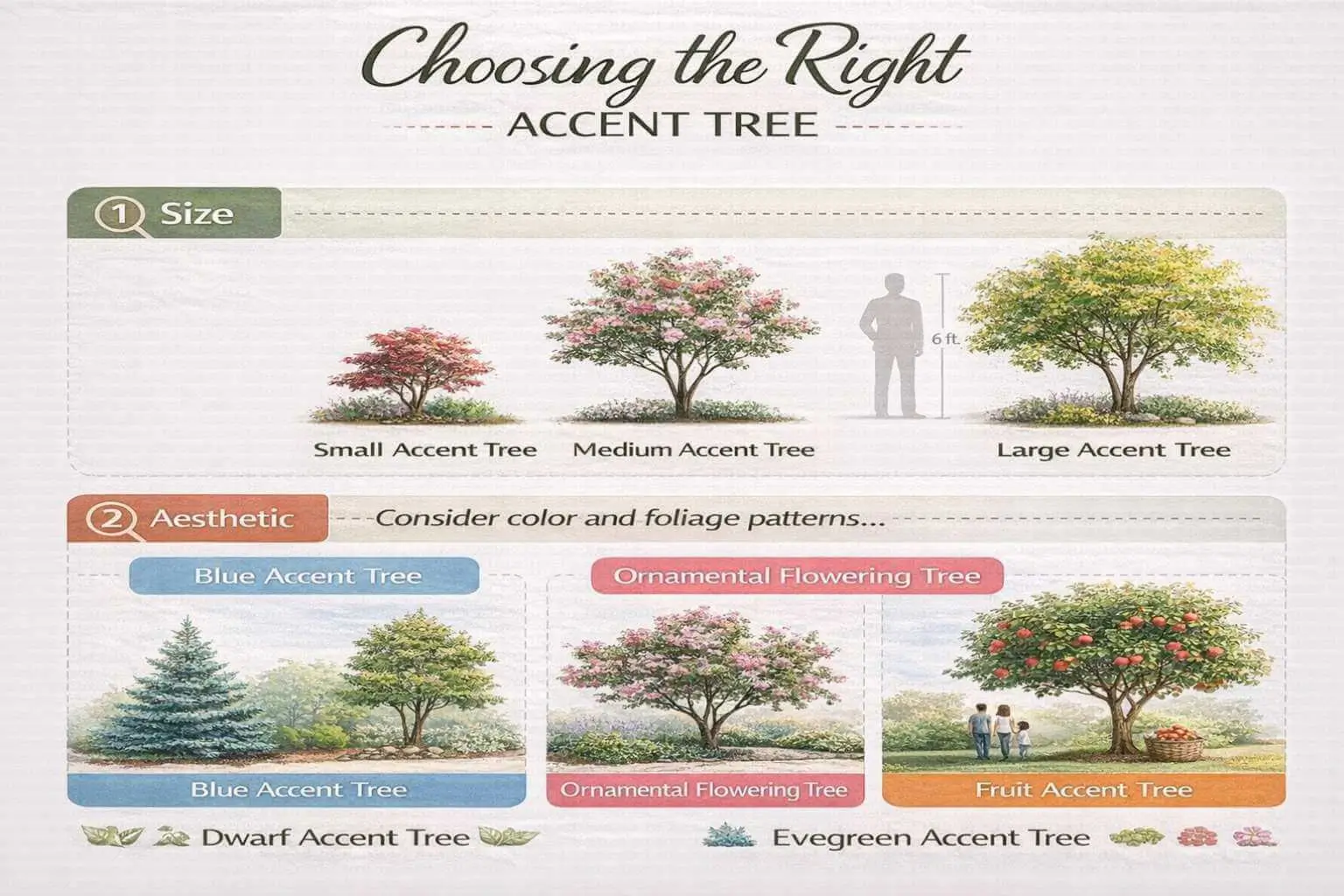
Selecting the appropriate size ensures proportional balance in the chosen space. Small accent trees suit tight areas, medium trees fit moderately sized gardens, and large accent trees provide significant visual impact. Size accent tree considerations prevent overcrowding while achieving the desired focal effect.
-
Aesthetic Considerations
Aesthetic selection involves color, foliage, and flowering patterns. Blue accent trees, white accent trees, or dramatic accent trees provide contrast and visual interest. Designers can combine colors and textures to complement surroundings while maintaining harmony.
-
Functional Considerations
Functional benefits include shade, privacy, or focal emphasis. Flowering or fruit-bearing varieties add sensory appeal and seasonal interest. Ornamental flowering trees and fruit accent trees support multifunctional roles in landscape or indoor design.
Popular Accent Tree Varieties
Evergreen accent trees offer year-round foliage, while flowering accent trees provide seasonal blooms. Dwarf and small ornamental trees are suitable for limited spaces such as patios, balconies, or indoor corners. Popular ornamental trees in regions like southern California include varieties that adapt to climate and design needs. Choosing dwarf accent trees or small garden trees maximizes visual appeal while fitting spatial constraints.
Enhancing with Accessories
Lighting and decorative accessories enhance accent trees. Options include indoor LED, solar-powered, or pre-lit lighted accent trees. Seasonal decorations like ornaments or tinsel highlight design intent. Accent tree lights and solar tree accent lights improve visibility and create festive or ambient effects. Accent Christmas trees often combine lighting and décor for maximum visual impact.
Planning and Buying Considerations
Sourcing accent trees involves local nurseries, garden centers, or specialty vendors. Budget planning accommodates small, medium, or specialty trees. Matching tree selection to climate, design style, and intended placement ensures long-term success. Outdoor accent trees and home accent trees should be chosen based on site conditions and visual goals. Availability and cost influence the selection of the ideal accent tree for a specific space.
Conclusion
Accent trees are versatile elements in landscape and interior design. They serve as focal points, provide aesthetic balance, and support seasonal or decorative applications. By understanding types, placement, care, and accessory options, designers and homeowners can enhance both indoor and outdoor spaces. Exploring different accent tree varieties and functional uses enables purposeful and visually appealing designs. Learn more about accent tree varieties, care, and design ideas to elevate your environment.
FAQ
- What is an accent tree?
An accent tree is an ornamental or decorative tree used to enhance landscapes or indoor spaces by serving as a visual focal point or highlighting specific areas. - What are the most common types of accent trees?
Common types include evergreen accent trees, flowering accent trees, dwarf or small accent trees, and seasonal options like Christmas accent trees. - Where should I place an accent tree outdoors?
Ideal outdoor locations include corners of homes, front yards, small spaces in gardens, or areas that need visual balance and focal interest. - How do I care for an indoor accent tree?
Indoor accent trees require adequate light, regular watering, and pruning to maintain shape. Seasonal considerations, such as humidity and temperature, are also important. - Can accent trees be used for seasonal decoration?
Yes, accent trees are often decorated for holidays, including pre-lit Christmas trees and decorative lighting, enhancing their visual appeal for special occasions. - What size accent tree should I choose for small spaces?
For small spaces, choose dwarf or small accent trees that provide visual impact without overwhelming the area.