Introduction
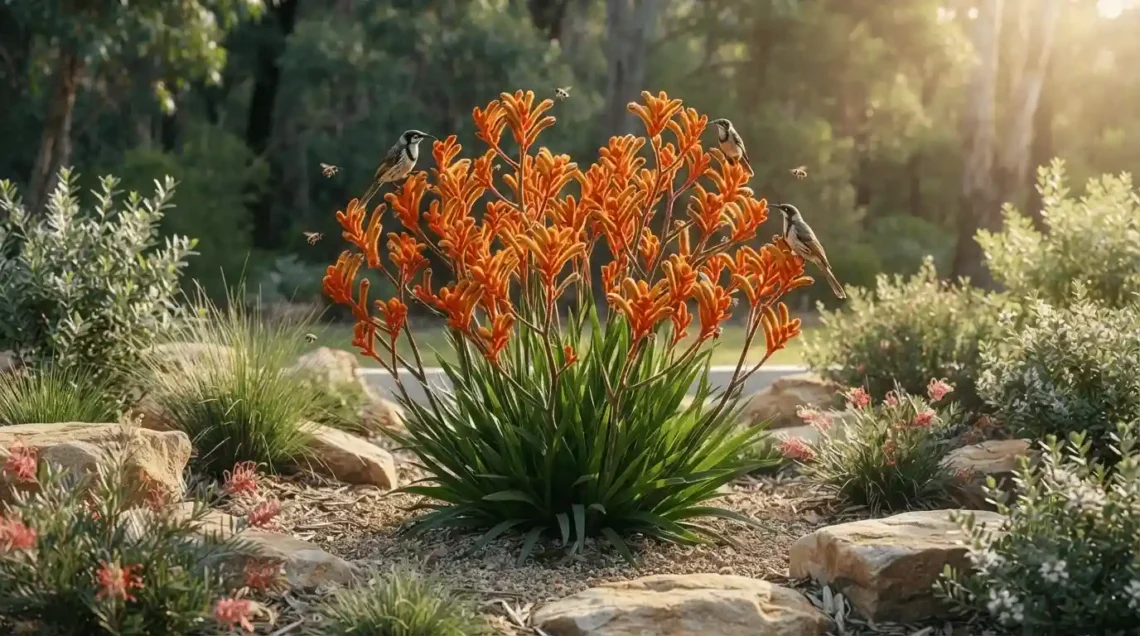
Anigozanthos Orange Cross is a vibrant Australian native kangaroo paw cultivar admired for its brilliant orange flowers, long flowering season, and ability to attract nectar-feeding birds. Often referred to as Kangaroo Paw Orange Cross, Orange Cross Kangaroo Paw, or simply Orange Cross, this compact perennial is a favourite for native gardens, water-wise landscapes, and decorative borders. Its unique velvety flowers provide outstanding colour while requiring relatively little maintenance once established. With excellent drought tolerance, strong ornamental value, and suitability for a wide range of Australian climates, Anigozanthos Orange Cross continues to be one of the most popular orange kangaroo paw varieties for both home gardeners and professional landscapers.
Quick Summary
- Anigozanthos Orange Cross is a compact Australian native kangaroo paw grown for its vivid orange flowers and long flowering season.
- It performs best in full sun, well-drained soil, and areas with good air circulation.
- Deep but infrequent watering, regular pruning, and native-friendly fertilisers encourage healthy growth and repeat flowering.
- Its nectar-rich blooms attract birds, bees, and beneficial pollinating insects while adding vibrant colour to Australian gardens.
What Is Anigozanthos Orange Cross?
Anigozanthos Orange Cross is a cultivated variety of the Australian native genus Anigozanthos, a group of flowering perennials commonly known as kangaroo paws because their uniquely shaped blooms resemble the paw of a kangaroo. The broader plant group and its characteristics are described in more detail on Wikipedia’s Anigozanthos overview.
The Orange Cross Kangaroo Paw was developed for improved garden performance, combining bright floral colour with a compact growth habit suitable for modern landscapes. It belongs to the family Haemodoraceae, which includes several iconic Australian native flowering plants.
Unlike some taller kangaroo paw varieties, Kangaroo Paw Orange Cross fits comfortably into smaller gardens, borders, and containers while still providing months of colourful blooms. Its nectar-rich flowers are highly attractive to honeyeaters, bees, and other pollinators, making it both ornamental and environmentally valuable.
Gardeners also appreciate Orange Cross for its relatively low water requirements once established. When grown in sunny positions with excellent drainage, it delivers reliable flowering through much of the warmer months with minimal maintenance.
In our experience at Greenery Inside, this cultivar performs especially well when planted where morning sun quickly dries dew from the foliage. This simple placement helps reduce moisture-related disease while encouraging stronger flowering.
Key Characteristics
| Characteristic | Details |
| Flower colour | Bright, velvety orange tubular flowers |
| Flowering season | Spring through autumn, with peak flowering during warmer months |
| Foliage | Evergreen, narrow strap-like green leaves |
| Growth habit | Compact, upright clumping perennial |
| Wildlife value | Attracts honeyeaters, native bees, butterflies, and other pollinators |
| Landscape use | Borders, native gardens, containers, mass planting, water-wise landscapes |
The combination of vivid flowers, evergreen foliage, and compact growth makes kangaroo paw orange cultivars like Orange Cross among the most versatile Australian native ornamentals.
Plant Profile at a Glance
| Feature | Details |
| Botanical name | Anigozanthos ‘Orange Cross’ |
| Common name | Orange Cross Kangaroo Paw |
| Plant type | Evergreen flowering perennial |
| Mature height | Approximately 60–100 cm |
| Mature spread | Approximately 40–70 cm |
| Flower colour | Bright orange |
| Native origin | Cultivated Australian native derived from Anigozanthos species |
| Sun requirements | Full sun |
| Soil preference | Well-drained sandy or sandy loam soil |
| Frost tolerance | Mild frost tolerant once established |
| Water needs | Low to moderate after establishment |
Plant Size
Anigozanthos Orange Cross typically reaches a mature height of 60 to 100 centimetres, making it an excellent medium-sized perennial for borders, garden beds, and feature plantings. The flower stems rise above the foliage, creating an attractive vertical display without overwhelming surrounding plants.
Its mature spread usually ranges from 40 to 70 centimetres, forming neat clumps that gradually increase in size over several growing seasons. This compact habit makes it ideal for smaller residential gardens where space is limited.
When planted outdoors under favourable conditions, the plant maintains a tidy appearance throughout most of the year. Regular removal of spent flower stems helps preserve its compact shape while encouraging new growth.
Several environmental factors influence the ultimate size of Orange Cross Kangaroo Paw, including:
- Full sunlight exposure
- Soil drainage quality
- Water availability
- Seasonal temperatures
- Soil fertility
- Plant spacing
- Air circulation
Plants grown in full sun with excellent drainage generally produce stronger flowering stems and denser foliage than those grown in partially shaded or poorly drained sites.
From our observations at Greenery Inside, gardeners often achieve the healthiest plants by avoiding overly rich soils. Moderate fertility encourages balanced growth, while excessive nutrients can produce lush foliage at the expense of flowers.
Growth Rate
Anigozanthos Orange Cross has a moderate growth rate, establishing steadily during its first growing season before producing increasingly abundant flowers in subsequent years.
Most healthy nursery-grown plants begin flowering within their first season after planting if provided with suitable conditions. Full establishment generally occurs within 12 to 18 months, depending on climate and care.
Growth is strongest during:
- Spring
- Late spring
- Summer
- Early autumn
Flower production usually peaks during the warmer months when sunlight is abundant and temperatures remain consistently warm.
Growth naturally slows during winter, especially in cooler southern regions. Although foliage often remains evergreen, flowering is reduced until temperatures rise again.
Factors that affect growth speed include:
- Amount of daily sunlight
- Soil drainage
- Watering practices
- Fertiliser application
- Regional climate
- Disease management
- Plant age
Healthy plants receiving full sun and deep, occasional watering typically establish faster than those subjected to frequent shallow watering or heavy soils.
As of the 2026 growing season, Australian native plant specialists continue to recommend prioritising drainage and air circulation over excessive irrigation. These practices consistently improve flowering performance and reduce the likelihood of fungal diseases in kangaroo paws.
How to Grow Anigozanthos Orange Cross Successfully
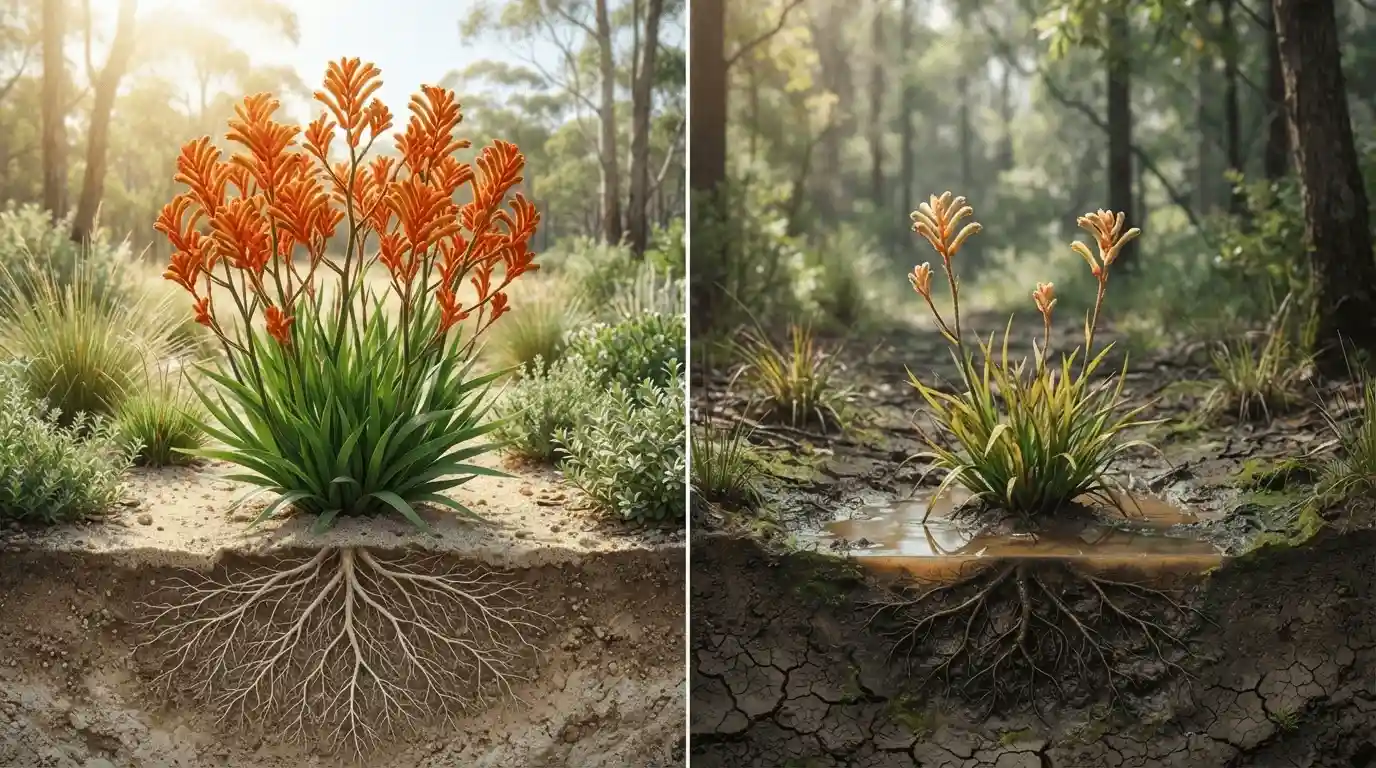
Anigozanthos Orange Cross grows best in full sun, free-draining soil, and climates with low to moderate humidity. Like most kangaroo paw cultivars, it thrives when its roots remain dry between waterings and its foliage has excellent air circulation. Providing suitable growing conditions from the start encourages vigorous growth, abundant flowering, and a longer plant lifespan.
Although this Australian native is considered low maintenance, choosing the right planting location and following proper watering and care practices will produce healthier plants with more reliable blooms.
Sunlight Requirements
Full sun is essential for healthy Anigozanthos Orange Cross plants. Ideally, they should receive at least 6–8 hours of direct sunlight each day. Plenty of sunlight encourages stronger stems, brighter flowers, and continuous blooming throughout the growing season.
Growing in full sun provides several benefits:
- Produces more flower spikes
- Enhances the vibrant orange flower colour
- Keeps growth compact and sturdy
- Reduces fungal disease by drying foliage quickly
- Improves overall plant health
Although kangaroo paw orange can tolerate light afternoon shade in very hot inland regions, too much shade often leads to fewer flowers, weaker stems, and increased susceptibility to disease.
Good airflow is equally important. Planting in open positions where air can circulate freely helps leaves dry after rain and significantly reduces fungal problems.
Greenery Inside recommends avoiding overcrowded garden beds. Leaving enough space between plants is one of the simplest ways to maintain healthy foliage and maximise flowering.
Soil Requirements
The success of Anigozanthos Orange Cross largely depends on excellent soil drainage. In its natural environment, kangaroo paws grow in sandy, well-drained soils where excess water drains away quickly.
The ideal soil should be:
- Sandy or sandy loam
- Free-draining
- Slightly acidic to neutral (pH 6.0–7.0)
- Low in phosphorus
- Moderately fertile
Suitable soil types include:
| Soil Type | Suitability |
| Sandy soil | Excellent |
| Sandy loam | Excellent |
| Well-drained loam | Good |
| Raised garden beds | Excellent |
| Heavy clay | Poor unless improved |
If your garden has heavy clay soil, improve drainage before planting by:
- Mixing coarse sand or fine gravel into the soil
- Incorporating compost to improve soil structure
- Planting on raised mounds
- Using raised garden beds if drainage remains poor
Avoid planting in low-lying areas where water collects after rainfall, as prolonged wet conditions can quickly damage the roots.
Water Requirements
Proper watering is one of the most important aspects of growing healthy Orange Cross Kangaroo Paw plants.
Newly Planted Kangaroo Paws
Young plants require regular watering while establishing their root systems.
During the first few months:
- Water deeply once or twice each week.
- Allow the top layer of soil to dry slightly before watering again.
- Increase watering during extended hot weather if necessary.
Deep watering encourages roots to grow deeper into the soil, resulting in stronger and more drought-tolerant plants.
Established Plants
Once established, Anigozanthos Orange Cross becomes relatively drought tolerant.
General watering guidelines include:
- Water every 10–14 days during prolonged dry periods.
- Reduce watering during cooler months.
- Increase watering only during extreme heat.
- Allow soil to dry between watering sessions.
Avoid:
- Frequent shallow watering
- Constantly wet soil
- Waterlogging
- Overhead watering late in the day
One of the most common beginner mistakes is watering too often. Excess moisture around the roots is far more damaging than allowing the soil to dry slightly between waterings.
In our experience growing Australian native plants, checking the soil moisture before watering is much more effective than following a strict weekly schedule.
Temperature and Climate
Anigozanthos Orange Cross Australia performs exceptionally well across many Australian climate zones. It thrives in warm, sunny environments with low humidity and well-drained soils.
Ideal growing conditions include:
- Warm to mild temperatures
- Full sun
- Moderate rainfall
- Low humidity
- Good air circulation
This cultivar performs particularly well in:
- Mediterranean climates
- Temperate regions
- Coastal gardens with well-drained soils
- Inland gardens receiving occasional deep watering during dry periods
Established plants can tolerate light frosts, although prolonged freezing temperatures may damage leaves and flower stems. New growth typically appears once temperatures rise in spring.
High humidity is generally more problematic than cold weather because it increases the risk of fungal diseases. Gardeners in humid regions should improve airflow by spacing plants adequately, removing old foliage regularly, and avoiding overhead irrigation.
As of the 2026 growing season, many Australian native plant growers continue to recommend prioritising drainage and air circulation over frequent watering, as these practices consistently produce healthier kangaroo paws with longer flowering seasons.
Care Guide
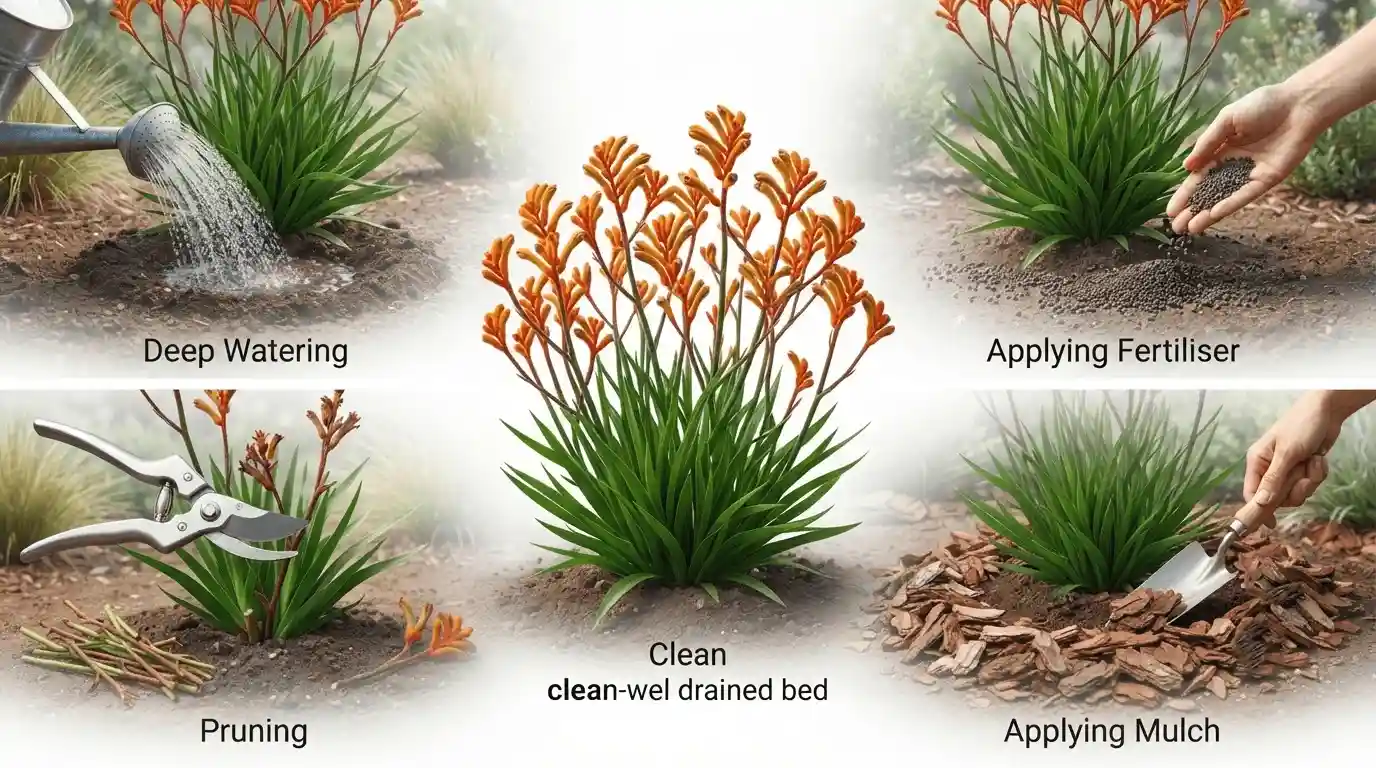
While Anigozanthos Orange Cross is relatively easy to maintain, regular care helps maximise flowering, prolong plant life, and reduce common growing problems. Routine watering, appropriate fertilising, seasonal pruning, and proper mulching all contribute to healthier plants.
Watering
Deep, infrequent watering encourages stronger root development than frequent shallow watering.
Use the following seasonal guide:
| Season | Watering Recommendation |
| Spring | Water when the topsoil becomes dry |
| Summer | Deep watering every 7–14 days during dry weather |
| Autumn | Gradually reduce watering frequency |
| Winter | Water only during extended dry periods |
For best results:
- Water early in the morning.
- Keep foliage as dry as possible.
- Avoid waterlogging around the crown.
- Let the soil partially dry between watering sessions.
Fertilising
Like most Australian native plants, Orange Cross Kangaroo Paw responds best to fertilisers specifically formulated for native species.
Choose:
- Low-phosphorus native fertilisers
- Slow-release fertilisers
- Products designed for Australian native plants
Avoid:
- High-phosphorus fertilisers
- Excessive nitrogen
- Heavy or frequent feeding
Applying fertiliser in early spring and again after the main flowering flush usually provides sufficient nutrients for healthy growth.
Too much fertiliser often encourages leafy growth while reducing flower production.
Pruning
Regular pruning is essential for maintaining a neat appearance and encouraging repeat flowering.
Pruning involves:
- Removing spent flower stems at the base
- Cutting away yellow or damaged leaves
- Cleaning old foliage from the centre of the clump
- Removing diseased material promptly
Benefits include:
- Encourages additional flower spikes
- Improves air circulation
- Reduces fungal disease
- Maintains compact growth
- Stimulates healthy new foliage
At Greenery Inside, we have found that removing finished flower stems immediately after blooming often results in another flush of flowers later in the growing season.
Mulching
Mulching helps conserve moisture, regulate soil temperature, and suppress weeds while maintaining healthy soil conditions.
Suitable mulch materials include:
- Coarse bark
- Hardwood chips
- Eucalyptus mulch
- Decorative gravel
- Crushed stone in native gardens
Apply mulch approximately 5–7 cm deep, but always leave a gap around the base of the plant.
Keeping mulch away from the crown prevents excessive moisture buildup that may lead to crown rot or fungal diseases.
Avoid fine organic mulches that remain constantly damp around the stem base.
Flowering Season and Display
One of the standout features of Anigozanthos Orange Cross is its exceptionally long flowering period. Under favourable growing conditions, it blooms from spring through autumn, with the heaviest flowering usually occurring during late spring and summer.
Flower buds gradually develop before opening into the cultivar’s distinctive velvety orange tubular flowers. Each flowering stem produces multiple blooms that open over an extended period, providing weeks of colour.
Notable flowering characteristics include:
- Brilliant orange flowers
- Upright flowering stems
- Long-lasting floral display
- Excellent cut flowers
- Repeat flowering after pruning
- Strong landscape impact
The nectar-rich flowers attract a wide range of beneficial wildlife, including:
- Honeyeaters
- Native bees
- Butterflies
- Other pollinating insects
Regular removal of spent flower stems encourages continued blooming throughout the warmer months while keeping plants attractive. Adding other nectar-rich species can further increase pollinator activity in your garden. Learn more about selecting wildlife-friendly plants in our guide to native plants that attract butterflies.
Because of their long vase life, the flowers are also highly valued for fresh floral arrangements featuring Australian native plants.
Best Landscaping Uses

The compact size, vibrant flowers, and drought tolerance of Orange Cross Kangaroo Paw make it suitable for many landscape designs. It provides reliable seasonal colour while complementing other Australian native plants and water-wise garden styles.
Popular landscaping applications include:
- Native gardens
- Water-wise and drought-tolerant gardens
- Rock gardens
- Cottage-style gardens
- Mixed perennial borders
- Mass planting for colourful displays
- Feature planting as a focal point
- Wildlife gardens that attract birds and pollinators
- Large containers and decorative pots
For the best visual effect, plant Anigozanthos Orange Cross in groups of three or more or combine it with contrasting native grasses, grevilleas, westringias, and flowering shrubs. This creates a vibrant, low-maintenance landscape that offers year-round structure while supporting local biodiversity. Kangaroo paws are especially effective when used in group plantings, mixed native borders, and wildlife-friendly landscapes. For more design inspiration, explore our guide on landscaping with kangaroo paws to learn how different varieties can be combined for maximum colour and impact.
Comparison: Orange Cross vs Other Popular Kangaroo Paw Varieties
Although Anigozanthos Orange Cross is one of the most popular orange-flowering kangaroo paws, several other cultivars offer different flower colours, plant sizes, and landscape uses. Choosing the right variety depends on your available space, desired colour scheme, and garden style.
| Variety | Flower Colour | Growth Habit | Best Use |
| Orange Cross | Bright orange | Compact | Borders, mass planting |
| Anigozanthos Yellow Gem | Golden yellow | Taller, upright | Feature planting |
| Anigozanthos Orange Glow | Bright orange | Medium-sized | Landscape colour |
| Anigozanthos Bush Fury | Deep red | Compact | Containers and patios |
| Anigozanthos Bush Zest | Yellow-orange | Compact | Small gardens |
| Anigozanthos Pink Beauty | Soft pink | Compact | Decorative flower beds |
| Anigozanthos Aussie Spirit | Mixed red, yellow and orange tones | Upright | Native landscapes |
| Anigozanthos ‘Big Red’ | Deep crimson red | Tall | Statement planting |
| Anigozanthos ‘Bush Tango’ | Orange-red | Compact | Courtyards and small spaces |
Each cultivar shares the distinctive kangaroo paw flower shape, but their mature size, flower colour, and landscape applications vary.
Orange Cross is an excellent choice for gardeners who want:
- Brilliant orange flowers
- Compact growth
- Long flowering seasons
- Low-maintenance care
- Excellent bird attraction
- Versatility in both garden beds and containers
Larger cultivars such as Anigozanthos Yellow Gem and Anigozanthos ‘Big Red’ create dramatic focal points, while compact selections like Anigozanthos Bush Fury, Bush Zest, and Pink Beauty are ideal for smaller gardens and modern landscapes.
Common Growing Problems and Solutions
 fv
fv
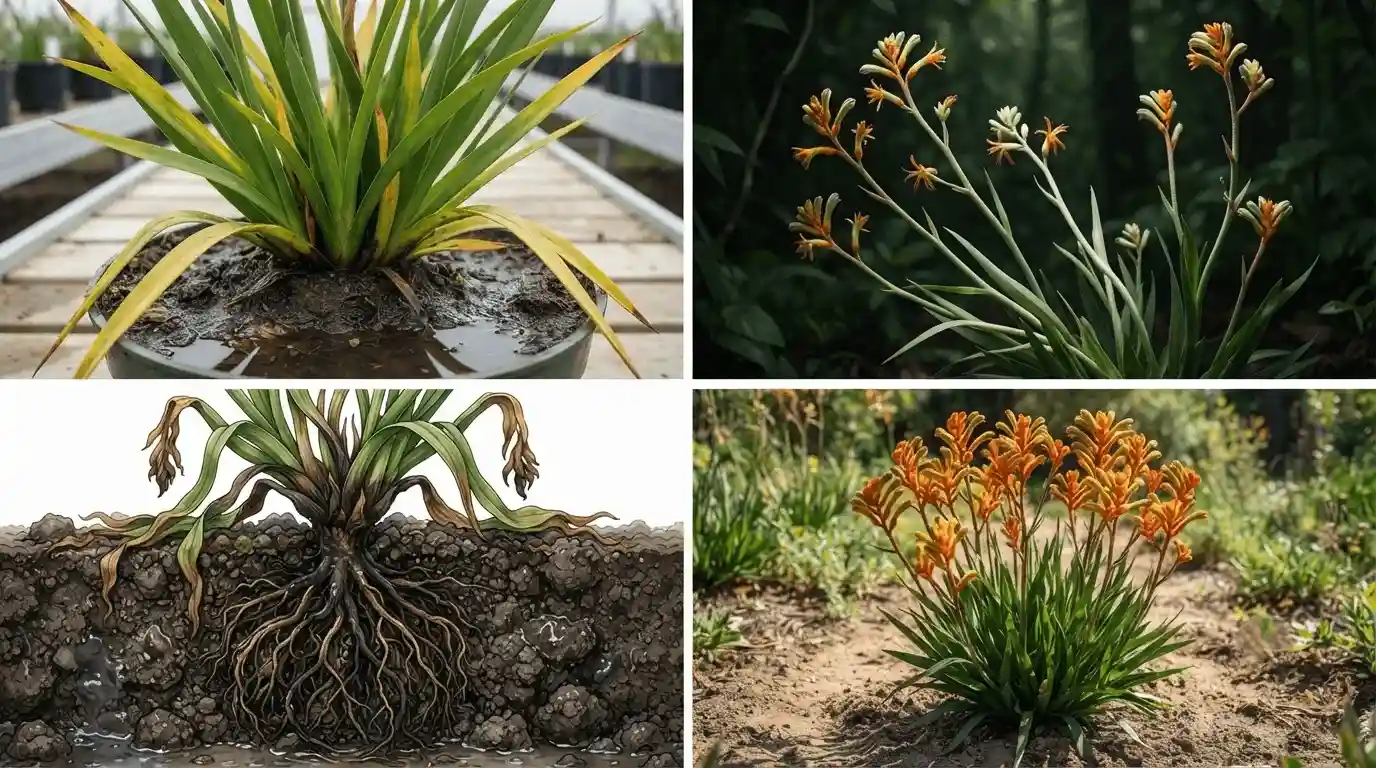
Although Anigozanthos Orange Cross is relatively hardy, improper growing conditions can lead to several common issues. Most problems can be prevented through good drainage, adequate sunlight, and routine maintenance.
Yellow Leaves
Yellow leaves are usually the first sign that something is affecting the plant’s health.
Common causes include:
- Overwatering
- Poor soil drainage
- Nutrient imbalance
- Aging foliage
- Insufficient sunlight
Solutions:
- Reduce watering frequency.
- Improve soil drainage if water remains around the roots.
- Remove older yellow leaves.
- Apply a low-phosphorus fertiliser if nutrient deficiencies are suspected.
- Relocate plants receiving too much shade.
In our experience, overwatering is by far the most common reason kangaroo paw foliage turns yellow. Allowing the soil to partially dry between waterings often resolves the problem.
Root Rot
Root rot is one of the most serious diseases affecting kangaroo paws and is almost always associated with excessively wet soil.
Common causes include:
- Poor drainage
- Waterlogged soil
- Heavy clay
- Frequent watering
- Poor air circulation around the crown
Signs of root rot:
- Wilting despite moist soil
- Yellowing foliage
- Soft or blackened roots
- Stunted growth
- Plant collapse
Prevention:
- Plant in free-draining soil.
- Water only when necessary.
- Avoid heavy clay soils.
- Keep mulch away from the crown.
- Plant on raised beds or mounds if drainage is poor.
Treatment:
Early-stage root rot may be managed by improving drainage and reducing watering. Severely affected plants are often difficult to save and may need replacing.
Poor Flowering
If Orange Cross Kangaroo Paw produces healthy foliage but very few flowers, growing conditions should be reviewed.
Common causes include:
- Too little sunlight
- Excess nitrogen fertiliser
- High-phosphorus fertiliser
- Crowded planting
- Lack of pruning
- Young plants still establishing
How to improve flowering:
- Provide at least six hours of direct sunlight daily.
- Use native-specific fertilisers.
- Remove spent flower stems promptly.
- Improve airflow by spacing plants correctly.
- Avoid excessive feeding.
Healthy plants growing in full sun generally flower far more consistently than those grown in partial shade.
Fungal Diseases
Several fungal diseases can affect kangaroo paws, particularly in humid climates.
Common fungal problems include:
- Black leaf spot
- Ink spot disease
- Leaf blight
These diseases are encouraged by:
- High humidity
- Poor airflow
- Wet foliage
- Overcrowded planting
- Excessive irrigation
Prevention tips:
- Plant in open, sunny locations.
- Water at soil level rather than overhead.
- Remove infected leaves immediately.
- Sterilise pruning tools after use.
- Avoid watering late in the day.
As of 2026, Australian native plant growers continue to recommend improving airflow as one of the most effective long-term strategies for reducing fungal disease in kangaroo paws.
Pests
Anigozanthos Orange Cross is generally resistant to serious pest infestations, but several common garden pests may occasionally appear.
These include:
- Aphids
- Snails
- Slugs
Aphids
These sap-sucking insects gather on new flower stems and young growth.
Control methods include:
- Washing them off with water
- Encouraging ladybirds and lacewings
- Applying insecticidal soap when necessary
Snails and Slugs
These pests feed on young leaves and flower shoots, especially after rain.
To reduce damage:
- Remove hiding places.
- Hand-pick pests during the evening.
- Use pet-safe bait where appropriate.
- Keep garden beds clean and weed-free.
Regular inspection allows problems to be managed before they become severe.
Common Beginner Mistakes
Many issues with Anigozanthos Orange Cross result from simple planting or maintenance mistakes rather than difficult growing conditions. Avoiding these common errors will greatly improve plant health and flowering performance.
The most frequent beginner mistakes include:
Planting in Heavy Clay Soil
Heavy soils retain excessive moisture, increasing the risk of root rot. Always improve drainage or use raised beds before planting.
Overwatering
Too much water is more damaging than too little. Established plants are naturally drought tolerant and prefer deep, infrequent watering.
Using High-Phosphorus Fertilisers
Many general-purpose fertilisers contain phosphorus levels that can damage Australian native plants. Always select products specifically formulated for native species.
Planting in Too Much Shade
Without sufficient sunlight, plants become weak and flower poorly. Full sun remains the best position for healthy growth.
Ignoring Pruning
Leaving old flower stems and dead foliage on the plant reduces airflow and may encourage disease. Regular pruning keeps plants vigorous and promotes repeat flowering.
Poor Plant Spacing
Crowded plants trap humidity around the foliage, increasing fungal problems and reducing air circulation. Allow adequate spacing based on the mature width of each plant.
Environmental Benefits
Beyond its ornamental appeal, Anigozanthos Orange Cross provides valuable environmental benefits that make it an excellent addition to sustainable Australian landscapes.
Supports Native Birds
The nectar-rich flowers attract honeyeaters and other nectar-feeding birds throughout the flowering season. These birds also contribute to natural pollination within the garden.
Attracts Pollinators
The bright orange blooms provide an important food source for:
- Native bees
- Honeybees
- Butterflies
- Beneficial insects
A diverse pollinator population helps support healthier gardens and surrounding ecosystems.
Ideal for Water-Wise Gardens
Once established, Anigozanthos Orange Cross requires relatively little supplemental irrigation compared with many traditional flowering plants.
Its drought tolerance makes it suitable for:
- Low-water landscapes
- Xeriscaping
- Sustainable residential gardens
- Climate-resilient planting schemes
Promotes Biodiversity
Incorporating Australian native plants into home gardens creates habitats for local wildlife while supporting regional biodiversity.
Combining Orange Cross Kangaroo Paw with grevilleas, correas, westringias, native grasses, and flowering shrubs creates layered habitats that benefit birds, insects, and other native fauna.
At Greenery Inside, we’ve found that mixed native plantings consistently attract more wildlife than single-species displays, creating gardens that are not only visually appealing but also ecologically valuable.
Conclusion
Anigozanthos Orange Cross is one of the finest Australian native kangaroo paw cultivars for gardeners seeking vibrant colour, reliable performance, and low-maintenance care. Its striking orange flowers, compact growth habit, and extended flowering season make it suitable for everything from small urban courtyards to expansive native landscapes.
Growing this cultivar successfully is straightforward when its basic needs are met. Plant it in full sun, provide well-drained soil, water deeply but infrequently, use a low-phosphorus native fertiliser, and prune spent flower stems regularly to encourage repeat blooming. These simple practices help maintain healthy plants while reducing the risk of common problems such as root rot and fungal diseases.
Beyond its ornamental value, Orange Cross Kangaroo Paw supports native birds, attracts beneficial pollinators, and contributes to water-wise, biodiversity-friendly gardens. Whether used in borders, rock gardens, containers, or mass plantings, it delivers long-lasting seasonal colour with minimal maintenance.
For Australian gardeners looking to combine beauty, resilience, and environmental benefits, Anigozanthos Orange Cross remains an outstanding choice. With the right growing conditions and routine care, it will reward you with spectacular orange blooms year after year.
Frequently Asked Questions About Anigozanthos Orange Cross
Is Anigozanthos Orange Cross a perennial?
Yes. Anigozanthos Orange Cross is an evergreen perennial that returns each year under suitable growing conditions. With proper care, healthy plants can provide many years of colourful flowering.
How tall does Orange Cross Kangaroo Paw grow?
Most plants reach 60–100 cm tall with a spread of 40–70 cm, making them ideal for borders, containers, and medium-sized garden beds.
Does Orange Cross need full sun?
Yes. Full sun is essential for the best flowering and overall plant health. Aim for at least 6–8 hours of direct sunlight daily to produce strong stems and abundant blooms.
How often should I water Orange Cross Kangaroo Paw?
Water newly planted specimens regularly until established. Mature plants generally need deep watering every 10–14 days during extended dry periods, allowing the soil to dry slightly between waterings.
Why are my kangaroo paw leaves turning yellow?
Yellow leaves are most commonly caused by overwatering, poor drainage, nutrient imbalance, or insufficient sunlight. Improving drainage and adjusting watering practices usually resolves the issue.
Can Anigozanthos Orange Cross grow in pots?
Yes. It performs well in large containers filled with a premium free-draining native potting mix. Ensure the pot has adequate drainage holes and place it in full sun.
Is Orange Cross suitable for Australian gardens?
Absolutely. Anigozanthos Orange Cross Australia is well suited to many Australian climates, particularly temperate, Mediterranean, and coastal regions with well-drained soil and good air circulation.
What plants grow well with Orange Cross Kangaroo Paw?
It pairs beautifully with other drought-tolerant Australian natives such as Grevillea, Westringia, Correa, Banksia, Lomandra, Dianella, and native grasses. These combinations create attractive, low-maintenance gardens that also support local wildlife.