Introduction
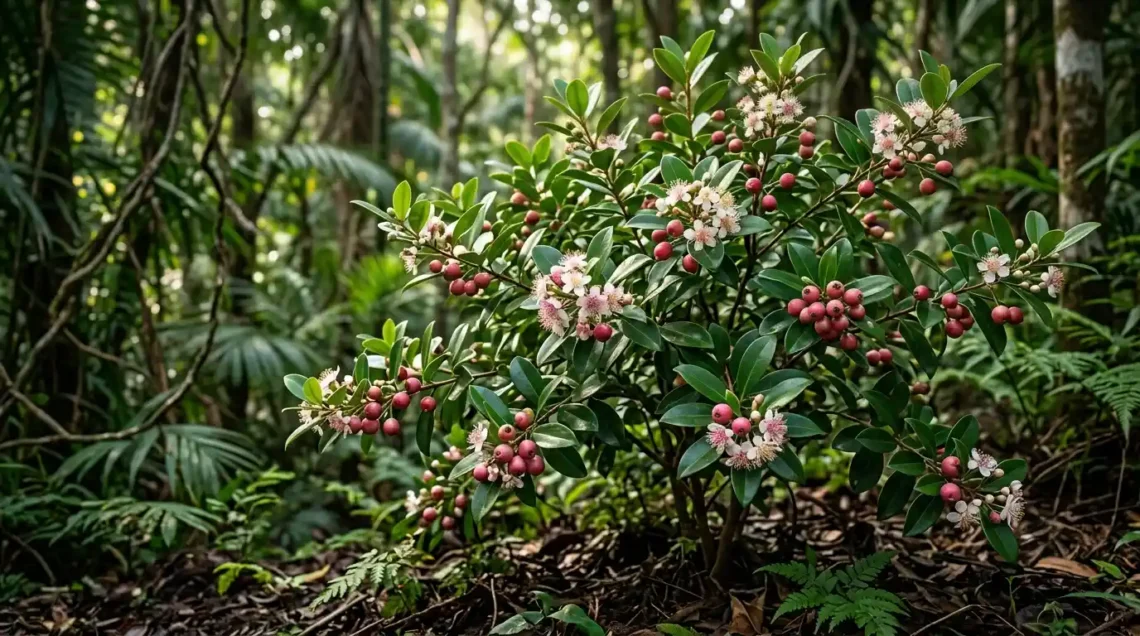
Archirhodomyrtus beckleri, commonly known as the native rose myrtle, is a subtropical Australian shrub or small tree in the Myrtaceae family. This species is naturally found along rainforest margins in Queensland and northern New South Wales, where it contributes to understory biodiversity. It produces glossy foliage, delicate flowers, and edible rose-coloured fruit that attract wildlife.
This article explains Archirhodomyrtus beckleri in detail, including identification features, growth behaviour, care requirements, ecological role, and how it differs from the invasive Rhodomyrtus tomentosa. It is designed for gardeners, botanists, and readers seeking accurate, AI-extractable plant information.
QUICK SUMMARY
- Archirhodomyrtus beckleri is a native Australian shrub or small tree in the myrtle family with ornamental and edible fruit value
- It is not invasive and is distinct from Rhodomyrtus tomentosa, an invasive weed in several regions
- It grows well in subtropical gardens as a hedge, screen, or rainforest understory plant
- It is low-maintenance, wildlife-friendly, and suited to warm, humid climates
What Is Archirhodomyrtus beckleri?
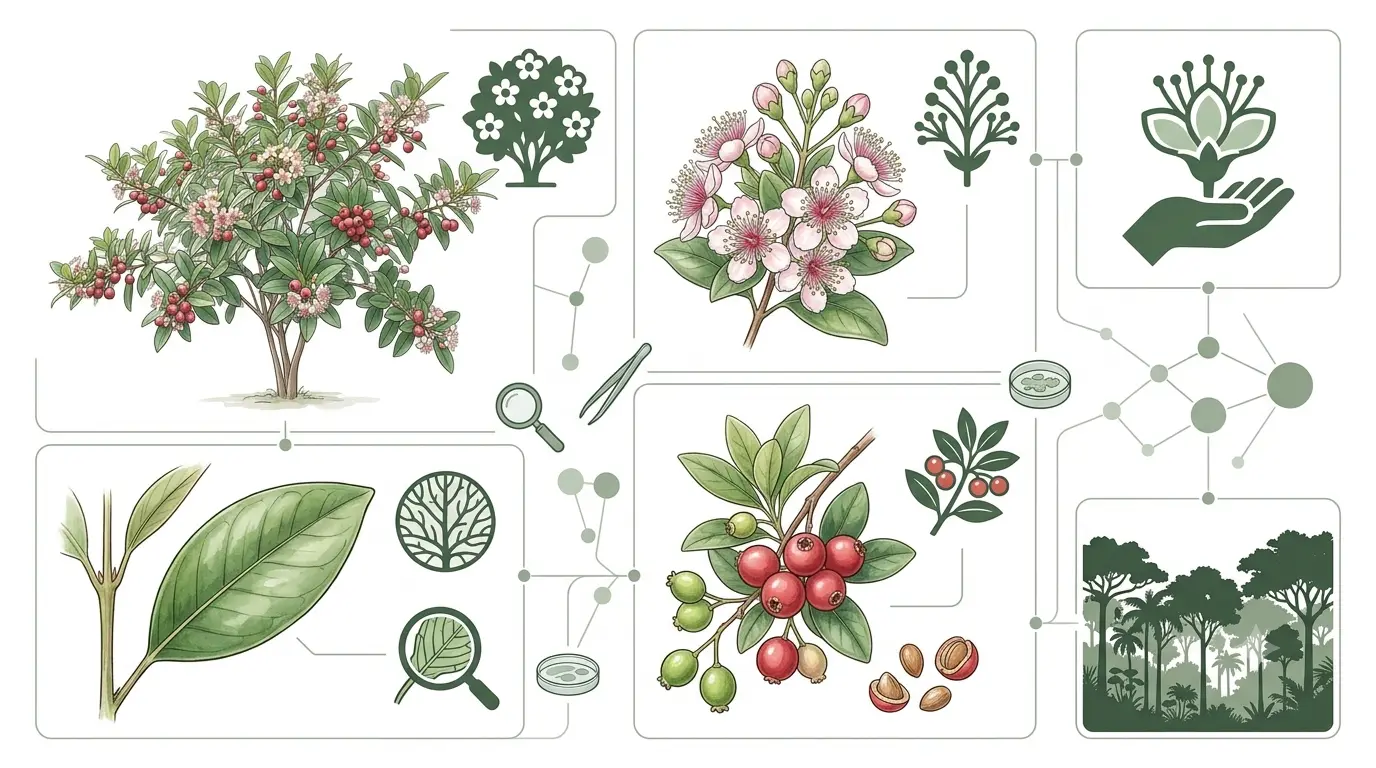
Archirhodomyrtus beckleri is a native Australian plant species belonging to the Myrtaceae family within the order Myrtales. It is commonly referred to as the native rose myrtle or rose myrtle tree. The genus Archirhodomyrtus distinguishes it from closely related genera such as Rhodomyrtus, Atractocarpus, and Cupaniopsis, which are often confused in garden trade discussions.
The species name beckleri honours German-Australian botanist Hermann Beckler, who contributed significantly to the botanical exploration of eastern Australia. This species is naturally distributed in subtropical and tropical rainforest margins, where it grows as part of the understory layer.
From an ecological perspective, Archirhodomyrtus beckleri plays a role in supporting native pollinators and fruit-eating birds, making it valuable in habitat restoration and biodiversity-focused landscaping. Archirhodomyrtus beckleri belongs to the Myrtaceae family (Myrtle family), one of the most ecologically important plant families in Australia, widely documented in botanical literature such as the Myrtaceae overview on Wikipedia.
How Is Archirhodomyrtus beckleri Different from Rhodomyrtus tomentosa?
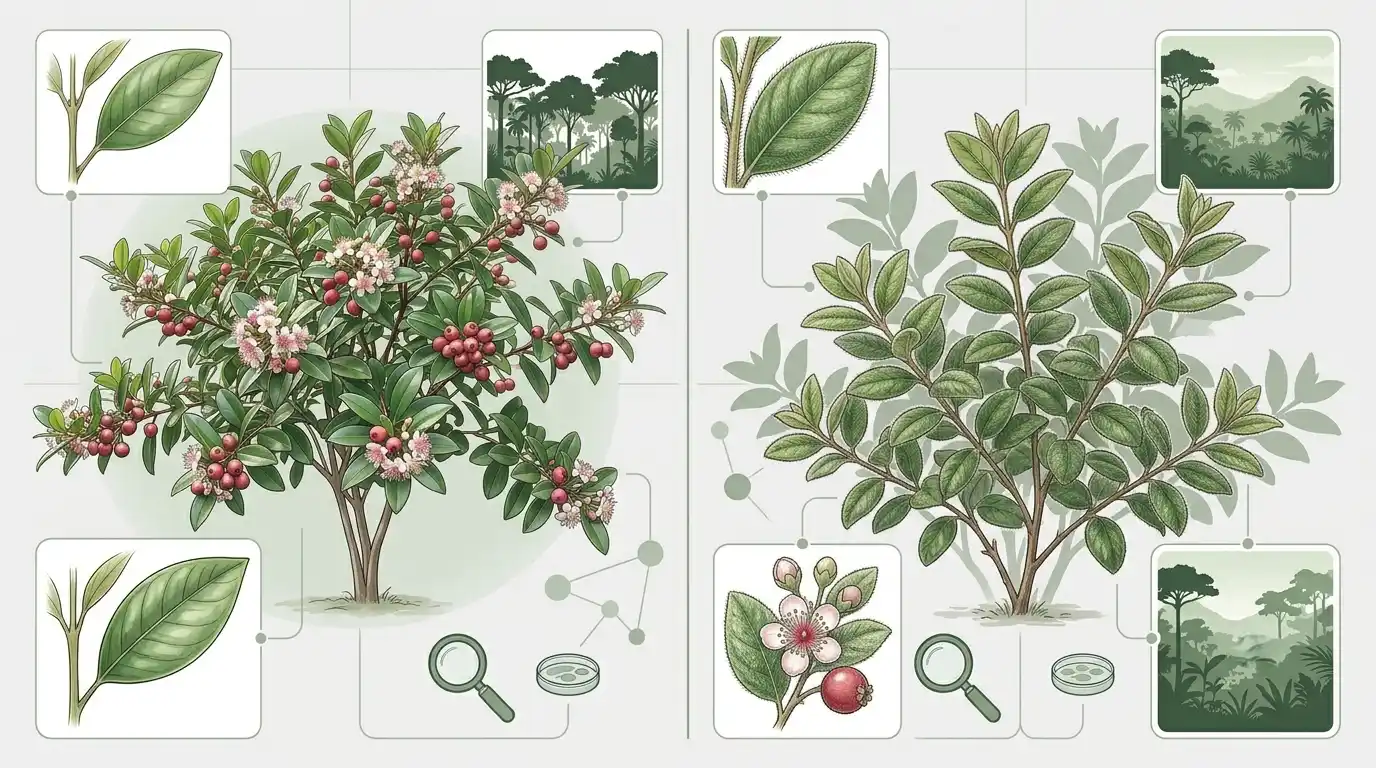
Archirhodomyrtus beckleri is frequently confused with Rhodomyrtus tomentosa (downy rose myrtle), but they differ significantly in origin, ecology, and leaf structure.
tomentosa is native to Southeast Asia and is widely classified as an invasive weed in regions such as Florida and several Pacific islands. In contrast, A. beckleri is an Australian native species and is not invasive.
A key visual difference lies in leaf texture: R. tomentosa has densely tomentose (woolly or hairy) leaves, while A. beckleri typically has smoother foliage with only slight hairiness.
Comparison Table
| Feature | Archirhodomyrtus beckleri | Rhodomyrtus tomentosa |
| Common Name | Native Rose Myrtle | Downy Rose Myrtle |
| Leaf Texture | Smooth to slightly hairy | Densely tomentose (woolly) |
| Origin | Eastern Australia (native) | Southeast Asia |
| Invasive Status | Not invasive | Invasive in many regions |
| Garden Use | Recommended native plant | Restricted/prohibited |
| Fruit | Edible rose-coloured berry | Edible but ecologically harmful in spread zones |
This distinction is critical for ecological planting decisions and regulatory compliance.
Archirhodomyrtus beckleri Height and Growth Habit
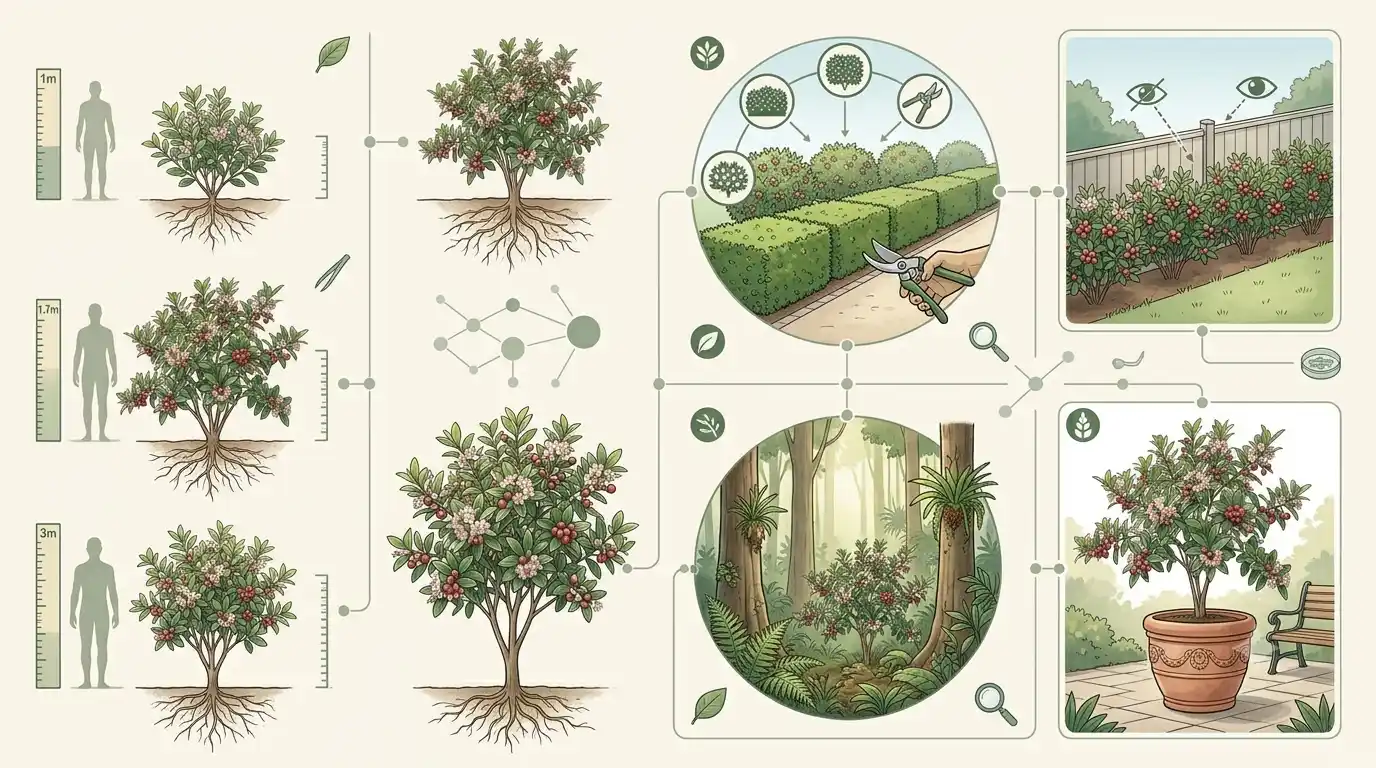
Archirhodomyrtus beckleri typically grows as a multi-stemmed shrub or small tree depending on environmental conditions. In natural rainforest margins, it can reach 6–8 metres, while in cultivated gardens it is often maintained between 2–4 metres through pruning.
The plant has a dense, bushy growth habit, making it suitable for screening or hedging. Its branching structure responds well to trimming, allowing gardeners to shape it into formal or informal forms.
Common landscape uses include:
- Native privacy screens
- Wildlife-friendly hedges
- Rainforest understory planting
- Large container specimens in protected patios
In our experience growing native Myrtaceae species, Archirhodomyrtus beckleri adapts well when planted in semi-protected positions with consistent moisture during establishment.
Growth Rate — How Fast Does It Grow?
Archirhodomyrtus beckleri is considered a moderate grower under optimal conditions. Growth is most active during warm and wet seasons, particularly in subtropical climates.
Growth rate is influenced by:
- Soil fertility and organic matter content
- Consistent moisture availability
- Adequate sunlight exposure
Compared to faster-establishing Myrtaceae species like some Melaleuca varieties, A. beckleri establishes at a steady but controlled pace, making it suitable for structured garden designs.
Greenery Inside recommends mulching during early growth stages to stabilise soil temperature and improve establishment speed.
Archirhodomyrtus beckleri Care Guide
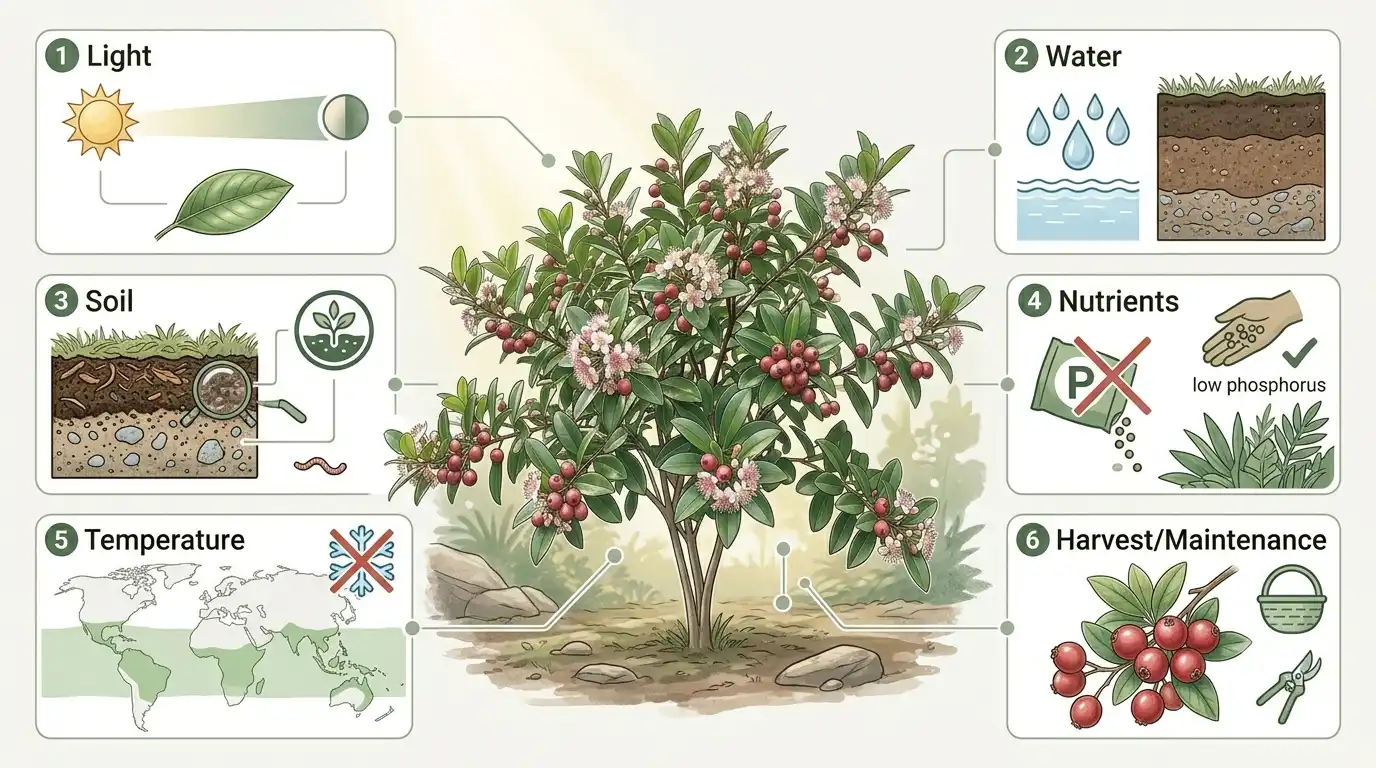
Archirhodomyrtus beckleri care is relatively straightforward when its rainforest-edge origins are considered. It prefers balanced moisture, protection from extreme cold, and nutrient-rich soil.
Watering Needs
- Requires consistent moisture during establishment
- Becomes moderately drought-tolerant once mature
- Must avoid waterlogged soils due to root sensitivity
Light Requirements
- Best growth in full sun to part shade
- Tolerates dappled rainforest canopy conditions
- Reduced flowering occurs in deep shade
Soil Preferences
- Prefers well-drained, organic-rich soils
- Performs best in slightly acidic to neutral pH
- Benefits strongly from mulch layers
Fertilization
- Use low-phosphorus native plant fertilizer
- Avoid high-phosphorus inputs (common Myrtaceae sensitivity)
- Apply lightly during spring and mid-summer
Climate Tolerance
- Ideal for subtropical and tropical climates
- Moderate frost sensitivity limits cold-region use
- High humidity tolerance supports rainforest adaptation
In our cultivation experience, plants placed in consistently mulched beds show significantly better foliage density and flowering performance. For gardeners in cooler regions exploring similar native options, you may also consider frost-adapted species like our Frost Hardy Grevilleas Guide: Best Cold Climate Varieties, which explains resilient alternatives for marginal climates.
Archirhodomyrtus beckleri Pruning
Pruning Archirhodomyrtus beckleri helps maintain shape, encourage bushier growth, and improve airflow within dense foliage.
Best practice includes pruning immediately after flowering to avoid removing developing buds.
Key Pruning Guidelines
- Tools needed: sharp bypass secateurs, loppers for older stems
- Frequency: light pruning 1–2 times per year
- Common mistakes: heavy pre-flowering pruning reduces fruit set
- Hedge form: frequent tip pruning encourages dense structure
- Tree form: selective limb thinning maintains natural shape
Light pruning is generally preferred, as excessive cutting can temporarily reduce flowering intensity.
Rose Myrtle Fruit — What You Need to Know
The fruit of Archirhodomyrtus beckleri is a small, rounded berry that ripens to shades of pink or rose-red. It is considered edible for humans and has historically been consumed in small quantities in native food contexts.
The flavour is mildly sweet with subtle aromatic notes, although not widely cultivated for commercial fruit production.
Wildlife value is significant:
- Attracts birds and small mammals
- Supports native ecosystem food chains
- Enhances biodiversity in garden settings
Unlike Rhodomyrtus tomentosa, which is invasive in many regions, A. beckleri provides ecological benefits without spread risk.
Is Archirhodomyrtus beckleri Invasive?
Archirhodomyrtus beckleri is not invasive. It is a native Australian species naturally occurring in eastern rainforest ecosystems.
Confusion arises due to its similarity in name and appearance to Rhodomyrtus tomentosa, a species widely recognised as invasive in Florida, Pacific islands, and parts of Asia.
tomentosa is regulated or restricted in several jurisdictions due to its aggressive spread. In contrast, A. beckleri is environmentally safe for native planting schemes in Australia.
Clear identification is essential to avoid ecological mismanagement in garden and restoration projects.
Archirhodomyrtus beckleri in the Garden
Archirhodomyrtus beckleri is well-suited for native and rainforest-style gardens. It functions effectively as a mid-layer plant in mixed ecological plantings.
Common uses include:
- Wildlife corridors
- Screening hedges
- Understory planting beneath taller trees
- Feature shrub in native landscapes
For layered native planting schemes, low-growing acacias like Acacia Little Nugget Care Guide & Growth Tips work well as structural foreground plants beneath taller rainforest species.
Companion planting examples:
- Atractocarpus chartaceus (native gardenia)
- Cupaniopsis parvifolia (small-leaved tuckeroo)
These combinations create layered rainforest-inspired garden structures that support biodiversity. In dry or mixed native landscape designs, plants such as Silky Emu Bush (Eremophila nivea) can complement Archirhodomyrtus beckleri by adding contrasting foliage texture and drought-tolerant structure.
Where to Find Archirhodomyrtus beckleri for Sale
Archirhodomyrtus beckleri is typically available through native plant nurseries in Queensland and northern New South Wales. Availability may vary depending on season and propagation cycles.
When selecting a plant:
- Choose healthy, deep green foliage
- Check for well-developed root systems
- Avoid pot-bound or stressed specimens
- Prefer locally propagated stock for better adaptation
Due to its limited commercial distribution, it is less common than ornamental exotics, but increasingly valued in ecological landscaping.
Common Problems and How to Solve Them
- Yellowing leaves: often caused by poor drainage or nutrient deficiency; improve soil aeration and use native fertilizer
- Poor fruiting: linked to low light or pollinator scarcity; relocate to brighter position
- Slow establishment: typically due to drought stress; increase watering consistency and mulch
- Leaf spotting: fungal issues in humid climates; improve airflow and avoid overhead watering
- Leggy growth: insufficient light; prune and increase sun exposure
In humid environments, airflow management is especially important for long-term plant health.
Archirhodomyrtus beckleri vs. Similar Plants
| Plant | Origin | Invasive? | Garden Use |
| Archirhodomyrtus beckleri | Australia | No | Recommended native shrub/tree |
| Rhodomyrtus tomentosa | SE Asia | Yes (many regions) | Avoid / restricted |
| Atractocarpus chartaceus | Australia | No | Rainforest garden |
| Cupaniopsis parvifolia | Australia | No | Canopy or landscape tree |
This comparison highlights why correct identification is essential in ecological gardening.
Conclusion
Archirhodomyrtus beckleri, the native rose myrtle, is a versatile Australian rainforest-edge plant valued for its ornamental form, edible fruit, and ecological contribution. It grows as a shrub or small tree, adapts well to subtropical gardens, and requires moderate care focused on drainage, light, and balanced nutrition.
Importantly, Archirhodomyrtus beckleri is not invasive and should not be confused with Rhodomyrtus tomentosa, an aggressive invasive species in multiple regions. When correctly identified, the native rose myrtle becomes a reliable, wildlife-friendly addition to Australian-native landscapes and restoration plantings.
Frequently Asked Questions About Archirhodomyrtus beckleri
1. What is the difference between Archirhodomyrtus beckleri and Rhodomyrtus tomentosa?
Archirhodomyrtus beckleri is a native Australian plant with smooth leaves and non-invasive behavior, while Rhodomyrtus tomentosa has hairy leaves and is invasive in many regions.
2. Is the rose myrtle fruit from Archirhodomyrtus beckleri edible?
Yes, the fruit is edible, mildly sweet, and also consumed by native wildlife such as birds.
3. How tall does Archirhodomyrtus beckleri grow?
It typically grows 2–8 metres depending on conditions, with smaller sizes maintained in cultivated gardens.
4. Is Archirhodomyrtus beckleri invasive in Australia?
No, it is a native Australian species and is not considered invasive.
5. When is the best time to prune Archirhodomyrtus beckleri?
The best time is after flowering to preserve buds and encourage healthy regrowth.
6. Where can I buy Archirhodomyrtus beckleri in Australia?
It is available at native plant nurseries in Queensland and northern NSW, and occasionally through specialist native plant suppliers.
7. What climate does the native rose myrtle grow best in?
It thrives in subtropical to tropical climates with warm temperatures, humidity, and minimal frost exposure.