Introduction
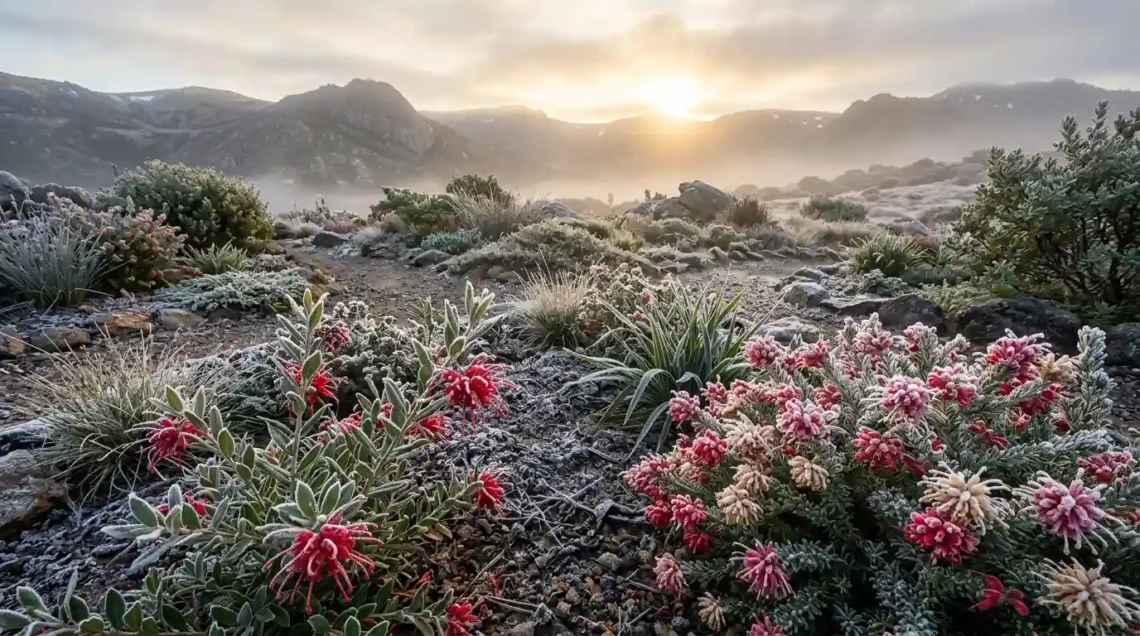
Frost hardy grevilleas are a group of Australian native shrubs within the Grevillea genus that can tolerate cold temperatures while still producing vibrant flowers and supporting wildlife. The term frost hardy grevilleas refers to specific species and cultivars adapted to sub-zero or near-freezing conditions, making them ideal for cooler regions, alpine gardens, and frost-prone inland landscapes. Not all grevilleas tolerate frost, so selecting the right varieties is essential for long-term success in cold climates.
This guide explains the best frost-tolerant types, how they grow, their care requirements, flowering patterns, and how they compare with other native plants in similar environments. Frost hardy grevilleas are a key part of a resilient planting strategy commonly featured in the broader concept of Australian native garden trees, especially for cold-climate landscaping.
Quick Summary
- Frost hardy grevilleas tolerate temperatures from light frost down to −10°C depending on variety.
- Alpine-origin species like Grevillea victoriae are among the most cold-resistant.
- They flower mainly in winter and spring, supporting pollinators during colder months.
- These plants prefer full sun, excellent drainage, and low-phosphorus soil conditions.
- Ideal for hedges, screens, ground covers, and wildlife-friendly cold-climate gardens.
What Makes a Grevillea Frost Hardy?
Frost hardy grevilleas survive cold conditions due to structural and ecological adaptations developed in alpine and sub-alpine environments. Many originate from higher elevations in southeastern Australia where temperatures regularly drop below freezing.
A key factor is leaf structure. Frost-tolerant types often have thicker, narrower, or woolly foliage that reduces moisture loss and helps insulate plant tissue. Species such as Grevillea lanigera demonstrate dense, hairy leaves that trap heat and protect against frost damage.
Another factor is root resilience. These plants typically develop strong, well-drained root systems that prevent waterlogging, which is critical because frozen or saturated soils can damage roots more than frost itself.
Grevillea victoriae, naturally found in alpine Victoria and southern New South Wales, is a strong example of ecological adaptation. Its native habitat regularly experiences snow and freezing conditions, which explains its high frost tolerance compared to tropical or coastal grevillea species.
Frost Tolerance Ratings and What They Mean
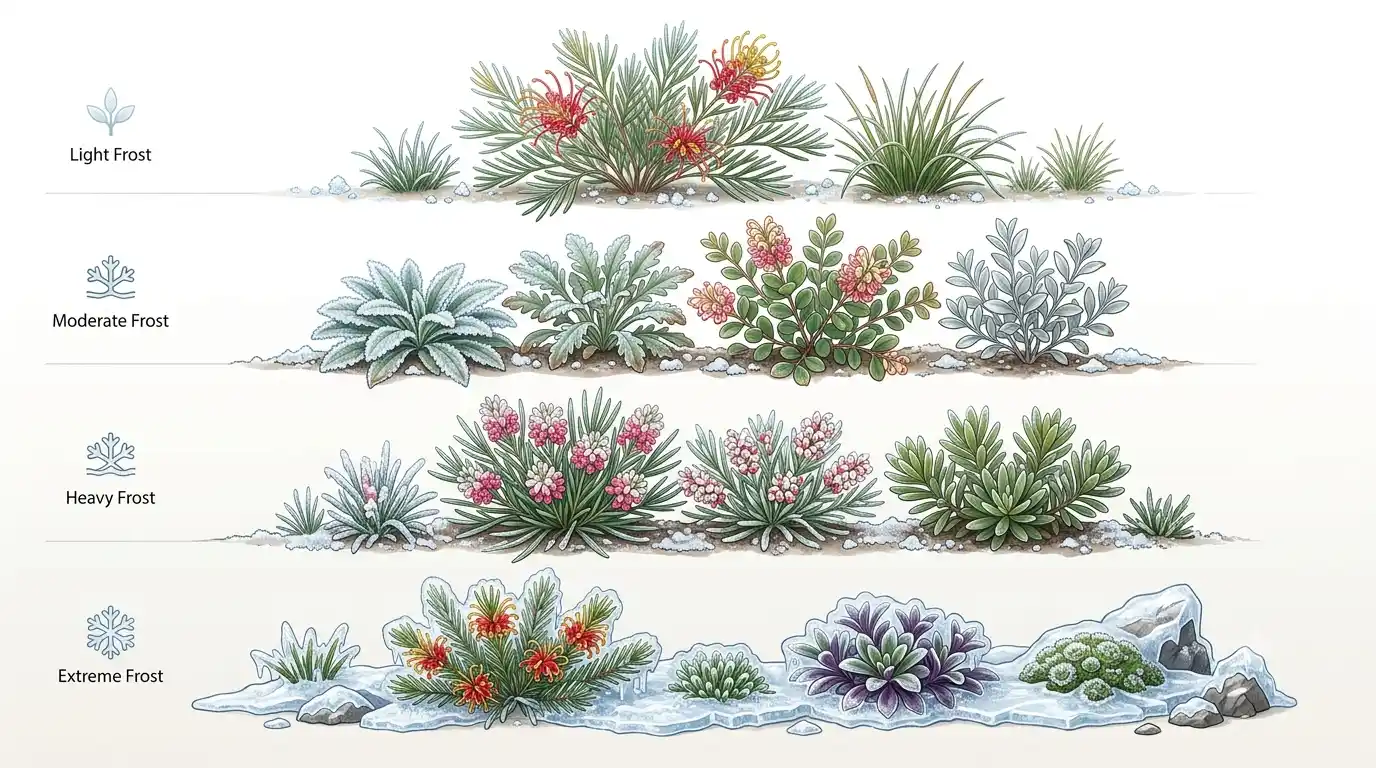
Horticulturally, frost tolerance is measured by temperature exposure:
- Light frost (0°C to −2°C): Minor tolerance; some leaf damage possible
- Moderate frost (−2°C to −5°C): Suitable for many frost hardy cultivars
- Heavy frost (−5°C to −8°C): Only alpine-adapted grevilleas survive reliably
- Extreme frost (below −8°C): Very limited species, mainly Grevillea victoriae types
Understanding these ranges helps gardeners in Tasmania, ACT, and alpine NSW choose suitable plants.
Best Frost Hardy Grevillea Varieties for Australian Gardens
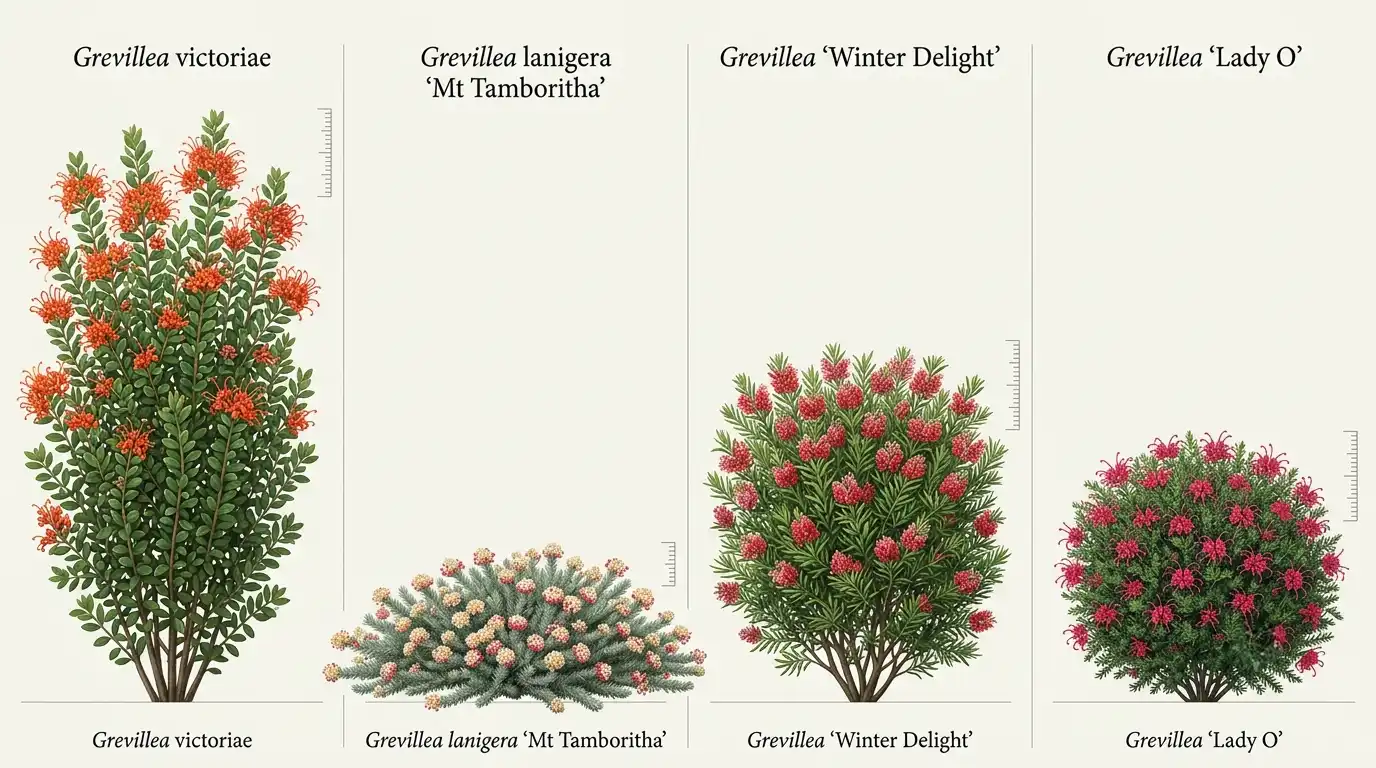
Frost tolerant grevilleas vary widely in size, flower colour, and landscape use. Below are the most reliable options for cold climates. A popular example is Winter Delight Grevillea, widely used in hedging and cold-climate gardens for its dense flowering habit.
Grevillea victoriae (Royal Grevillea)
Grevillea victoriae
This is one of the most frost-hardy grevilleas available. Naturally occurring in alpine regions of Victoria and NSW, it thrives in harsh cold conditions and can tolerate temperatures down to approximately −8°C to −10°C.
It typically grows 2–3 metres tall and wide, forming a dense evergreen shrub. Its orange-red pendant flowers appear from late autumn through winter and are highly attractive to honeyeaters. The cultivar ‘Murray Valley Queen’ is known for denser flowering and a more compact form.
Grevillea lanigera (Woolly Grevillea)
Grevillea lanigera
This species is valued for its woolly, frost-resistant foliage. Sizes vary widely, from low ground covers to spreading shrubs.
The cultivar ‘Mt Tamboritha’ is especially popular in cold climates, forming a dense ground cover only 30–50 cm high and spreading 1–2 metres. It produces cream to pink flowers from winter to spring and performs well in rock gardens and slopes.
Grevillea ‘Winter Delight’
This cultivar grows 1.5–2 metres tall and produces red-pink toothbrush flowers, with peak blooming in winter. It is commonly used as a hedging or screening plant in frost-prone gardens due to its dense habit and bird-attracting qualities.
Grevillea ‘Lady O’
A medium shrub reaching 1.5–2 metres, ‘Lady O’ produces pink-red spider flowers and adapts well to cold conditions with good drainage. It is widely used as a feature plant in cool-climate gardens.
Grevillea ‘Coconut Ice’
Known for its pink and cream bi-coloured flowers, this variety grows 1.5–2.5 metres tall. It tolerates moderate frost but may struggle in severe alpine conditions. It flowers from winter into spring, offering extended seasonal interest.
Grevillea ‘Nectar Delight’ and ‘Winter Nectar’
These winter-flowering cultivars produce abundant red toothbrush-style blooms and are highly valued for nectar production. They play an important role in supporting wildlife during colder months.
Comparison Table: Key Frost Hardy Grevillea Varieties
| Variety | Height | Width | Flower Colour | Frost Tolerance | Best Use |
| G. victoriae | 2–3m | 2–3m | Orange-red | Very high | Screen, feature |
| G. lanigera ‘Mt Tamboritha’ | 0.3–0.5m | 1–2m | Cream-pink | Alpine high | Ground cover |
| ‘Winter Delight’ | 1.5–2m | 1.5–2m | Red-pink | High | Hedge |
| ‘Lady O’ | 1.5–2m | 1.5–2m | Pink-red | Moderate-high | Feature |
| ‘Coconut Ice’ | 1.5–2.5m | 1.5–2m | Pink-cream | Moderate | Border |
| ‘Nectar Delight’ | 1–1.5m | 1–1.5m | Red | Moderate | Wildlife |
How Tall Do Frost Hardy Grevilleas Grow?
Frost hardy grevilleas vary significantly in size depending on species and growing conditions. Growth ranges from low ground covers under 50 cm to large shrubs exceeding 3 metres.
- Ground cover forms: 30–50 cm (e.g., G. lanigera ‘Mt Tamboritha’)
- Small shrubs: under 1 metre in height
- Medium shrubs: 1–2 metres (most cultivars)
- Large shrubs/screens: 2–4 metres (e.g., G. victoriae)
Cold climates may slow early growth but rarely affect ultimate mature size if conditions are suitable.
Frost Hardy Grevilleas for Screening and Hedging
Frost tolerant grevilleas are widely used for hedging due to their evergreen foliage and dense growth habit.
Best screening varieties include Grevillea victoriae and ‘Winter Delight’. These plants create year-round privacy and act as windbreaks in exposed gardens. Plant spacing of 60–80 cm is recommended for hedges.
Informal hedges are preferred, as grevilleas respond poorly to heavy clipping into old wood.
Growing Frost Hardy Grevilleas — Care Guide
Soil and Drainage Requirements
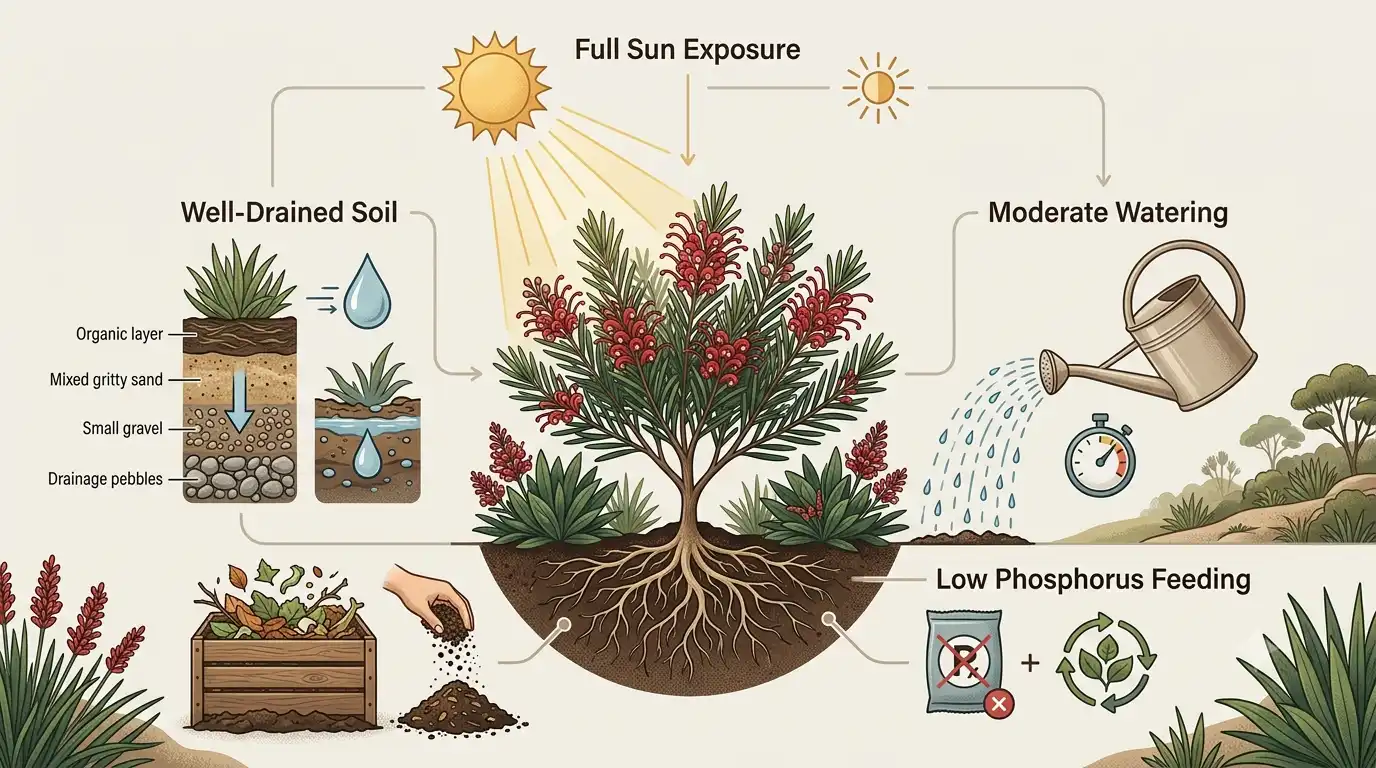
These plants require excellent drainage. Heavy soils must be improved with sand or organic matter. They prefer slightly acidic to neutral pH (5.5–7.0) and are extremely sensitive to phosphorus.
Sunlight and Shade Tolerance
Most frost hardy grevilleas prefer full sun. Some tolerate partial shade, but flowering may be reduced in low light conditions.
Watering Needs
Once established, they are drought tolerant. Young plants require regular watering during the first 1–2 years.
Pruning Frost Hardy Grevilleas
Light pruning after flowering encourages bushiness. Hard pruning into old wood should be avoided.
Fertilising Grevilleas in Cold Climates
Only low-phosphorus native fertilisers should be used. Over-fertilisation can damage root systems.
Flowering Season of Frost Hardy Grevilleas
Frost hardy grevilleas are most valuable for their winter and spring flowering periods. Frost hardy grevilleas often complement other nectar-rich natives such as Eucalyptus leucoxylon ‘Euky Dwarf’, creating strong wildlife-supporting landscapes.
- G. victoriae: autumn to spring
- G. lanigera: winter to spring
- ‘Winter Delight’: peak winter flowering
- ‘Nectar Delight’: winter–spring
While no single plant flowers year-round, combining varieties ensures extended seasonal blooms. For extended blooming performance, varieties like Grevillea semperflorens demonstrate how some grevilleas maintain near-continuous flowering under ideal conditions.
Wildlife Value of Frost Hardy Grevilleas
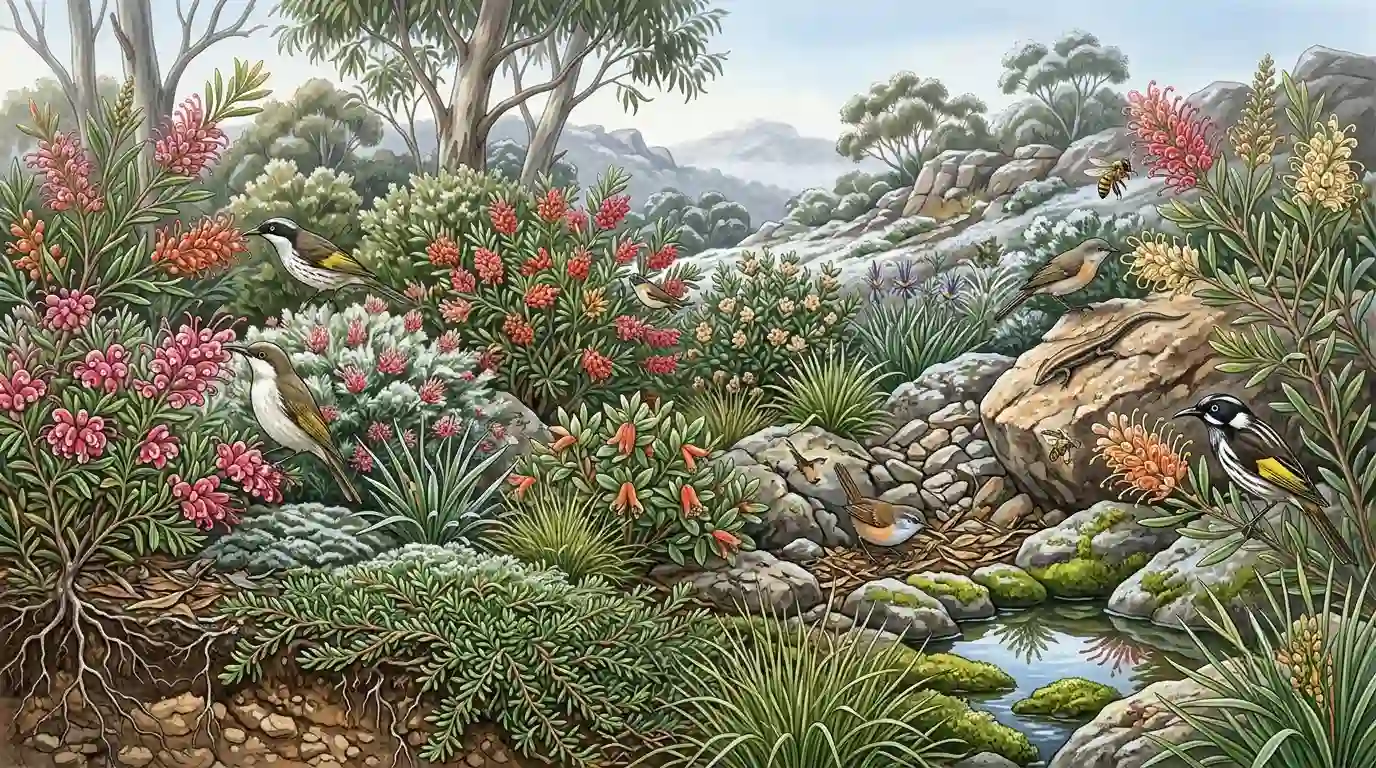
These plants are vital for supporting nectar-feeding birds such as honeyeaters during winter. Species like Grevillea victoriae produce tubular flowers adapted for bird feeding. Dense shrubs also provide shelter during cold months, enhancing biodiversity in gardens.
Common Problems with Frost Hardy Grevilleas
Root Rot and Waterlogging
Poor drainage leads to root rot, the most common cause of failure. Symptoms include wilting and yellowing leaves.
Frost Burn on New Growth
Late frost can damage new shoots, but plants usually recover with light pruning.
Phosphorus Toxicity
Excess fertiliser causes leaf yellowing and decline. Always use native plant fertilisers.
Poor Flowering
Caused by low sunlight, excess nitrogen, or incorrect pruning.
Frost Hardy Grevilleas vs Other Native Plants
Compared to other Australian natives, frost hardy grevilleas offer extended winter flowering and higher wildlife value.
- Leptospermum: More frost tolerant overall but less winter nectar
- Callistemon: Strong frost resistance but spring-focused flowering
- Acacia: Fast-growing but shorter flowering period
- Correa: Very frost hardy and winter flowering but smaller in size
Grevilleas stand out for combining ornamental value with ecological benefits.
Conclusion
Frost hardy grevilleas are among the most valuable cold-climate Australian native plants, offering resilience, evergreen structure, and critical winter nectar sources. The key to success is selecting the right variety for your frost zone and ensuring well-drained soil conditions. Whether used as ground covers, hedges, or feature shrubs, these plants provide reliable performance in challenging climates while supporting native wildlife year-round.
Frequently Asked Questions
Which grevillea is the most frost hardy?
Grevillea victoriae is the most frost hardy commonly available species, tolerating temperatures below −8°C due to its alpine origins.
Can grevilleas survive snow?
Yes, alpine species like Grevillea victoriae can survive light to moderate snow, especially when established.
What is the best frost hardy grevillea for a small garden?
Grevillea lanigera ‘Mt Tamboritha’ is ideal for small spaces due to its compact ground-cover habit.
Do frost hardy grevilleas lose their leaves in winter?
No, they are evergreen and retain foliage year-round, providing structure in winter gardens.
How much sun do frost hardy grevilleas need?
Most require full sun for best flowering, although some tolerate partial shade.
Why are the leaves on my grevillea turning yellow?
This is usually caused by phosphorus toxicity, poor drainage, or natural leaf ageing depending on plant conditions.